Are Cherry Blossom Trees the Same as Cherry Tree?
It’s a common question: Are Cherry Blossom Trees the Same as Cherry Trees? Many people are unsure because they look so similar, especially when covered in beautiful blossoms. This can be tricky for anyone who loves these trees, from people just starting to learn about them to seasoned gardeners. Don’t worry, we’ll break it down so that you can easily tell the difference. We’ll show you the essential details, making it super simple to know what you’re looking at next time you see these gorgeous trees. Let’s get started!
Blossoms and Fruit: The Main Differences
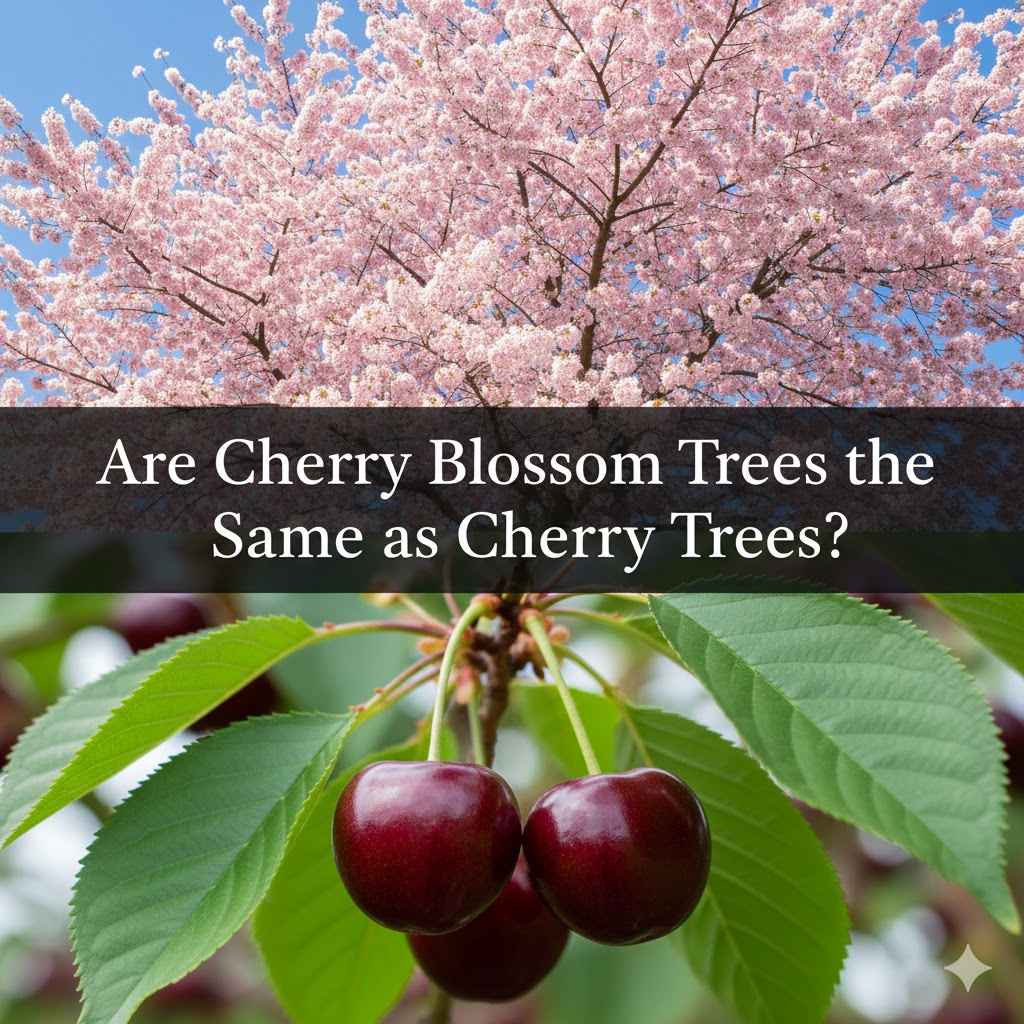
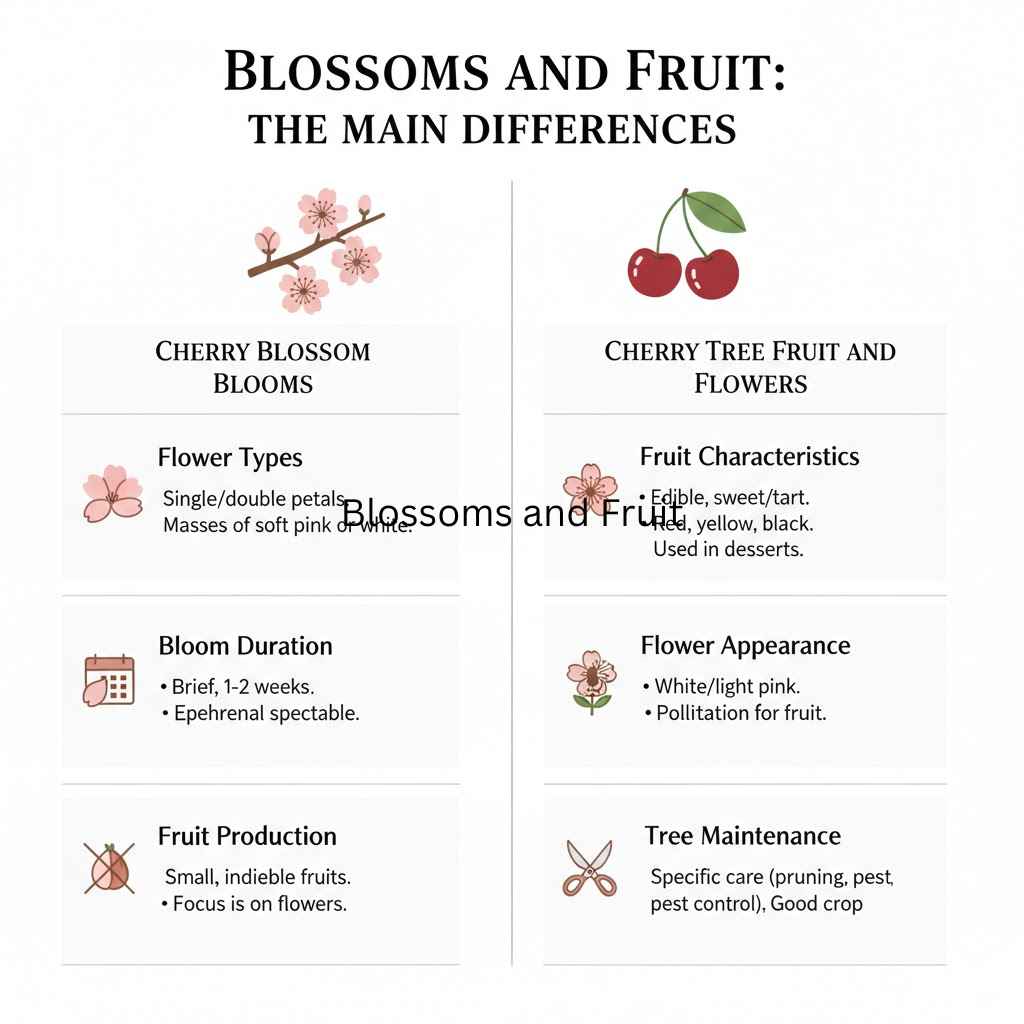
The easiest way to tell the difference between cherry blossom trees and cherry trees is to look at their blossoms and what they produce. Cherry blossom trees are grown mostly for their stunning flowers. These trees put on a spectacular show of color each spring. The flowers are usually the main reason people plant them. Cherry trees, on the other hand, are valued for their delicious fruit. While they also have lovely blossoms, the fruit is their primary purpose. This section will guide you through the key aspects that set these trees apart, ensuring you won’t be confused next time you encounter either type.
Cherry Blossom Blooms
Cherry blossom trees are celebrated for their incredible blossoms, which are the main event each spring. The flowers are usually a soft pink or white, and they appear in masses, covering the branches. This creates a breathtaking view, often associated with celebrations and festivals. The blooms typically last for a relatively short time, often just a couple of weeks, depending on the weather conditions. Think of it like a beautiful but fleeting spectacle that captures everyone’s attention. The tree’s appearance is almost entirely focused on floral display.
- Flower Types: Cherry blossom trees mainly feature single or double-petaled flowers. The double-petaled varieties have more petals, creating a fuller look. These flowers are often more visually striking than the single-petal versions.
- Bloom Duration: The blooming period is brief, typically lasting only a week or two. This limited time intensifies the appreciation for their beauty, drawing visitors to parks and gardens to witness this yearly event.
- Fruit Production: While some varieties of cherry blossom trees might produce small, inedible fruits, the focus is on flowers, and fruit production is not a key feature.
Imagine walking through a park where every tree is covered in delicate pink blossoms. The air is filled with a sweet fragrance, and people are taking pictures, celebrating the arrival of spring. This is the experience often associated with cherry blossom trees, making them a significant symbol of renewal and beauty. The blossoms’ ephemeral nature only adds to their allure.
Cherry Tree Fruit and Flowers
Cherry trees are mostly grown for their fruit, which is enjoyed worldwide. These trees also produce flowers, but the blossoms are secondary to the fruit. The fruit comes in different colors and flavors, like red, yellow, and even almost black. The blossoms are still lovely, usually white or light pink, but the fruits are what truly define the tree’s purpose. These trees have a practical function beyond their visual appeal, as they supply a popular and delicious food source.
- Fruit Characteristics: Cherry trees produce edible cherries that vary in flavor (sweet, tart) and color. These cherries are used in many desserts and snacks, as well as being eaten fresh.
- Flower Appearance: The flowers of cherry trees are similar in appearance to cherry blossom trees, but they often appear before or alongside the leaves. The flowers are critical in helping with the pollination necessary for fruit production.
- Tree Maintenance: Cherry trees may need specific care to guarantee they produce a good crop of fruit. This might include pruning, pest control, and proper watering.
Consider a fruit orchard with rows of cherry trees ready for harvest. The trees are full of ripe cherries. The trees offer a combination of beauty and function, with the fruit providing enjoyment and sustenance. The management of these trees often involves attention to pollination, as the fruit production is very much determined by this process.
The Different Varieties: Blossom vs. Fruit Trees
Several types of cherry trees exist, and they fall into two main groups: those grown for their flowers and those grown for their fruit. Each group has different varieties with unique characteristics. Understanding these varieties helps in identifying which tree you’re looking at and what its primary purpose is. From the stunning ‘Kwanzan’ cherry blossom to the sweet ‘Bing’ cherry, let’s explore these diverse types.
Common Blossom Tree Varieties
Cherry blossom trees come in many different varieties, each with unique characteristics that make them popular in parks and gardens. Some varieties are known for their vibrant colors, while others are appreciated for their unique shapes. These varieties are chosen for their beautiful floral displays, which brighten up urban and rural landscapes. Here are a few popular varieties, known for their stunning blooms.
- ‘Kwanzan’ Cherry: This variety is a popular choice due to its double pink flowers. These blossoms appear in abundant clusters, and the tree has a vase-shaped form. It’s often found in public spaces because of its striking appearance.
- ‘Yoshino’ Cherry: Known for its pale pink or white flowers, the ‘Yoshino’ is one of the most common cherry blossom trees in Japan. It blooms early in the spring, and its blossoms create a soft, delicate look.
- ‘Weeping Cherry’ (Prunus subhirtella ‘Pendula’): As its name suggests, this tree has branches that hang downwards. It offers a graceful look when covered with pink or white blossoms. Weeping cherries add an elegant touch to any garden.
A city park might have a row of ‘Kwanzan’ cherry trees lining a path. In early spring, these trees burst with bright pink blossoms, creating a memorable scenery. People frequently stop to take pictures under the trees. The beauty of these trees enhances the environment.
Common Fruit Tree Varieties
Many types of cherry trees are grown for their fruit, which is available in grocery stores and farmer’s markets around the world. These trees have varieties known for their specific fruit characteristics, such as sweetness, size, and color. These trees require careful cultivation and maintenance to get high-quality fruit. Different varieties are selected to extend the harvest season and offer a variety of flavors.
- ‘Bing’ Cherry: This is one of the most popular sweet cherry varieties, known for its large, dark red fruits. ‘Bing’ cherries are widely used for fresh consumption.
- ‘Rainier’ Cherry: ‘Rainier’ cherries are another sweet variety, noted for their golden yellow color with a red blush. These cherries are sweeter than ‘Bing’ cherries.
- ‘Montmorency’ Cherry: ‘Montmorency’ cherries are a tart variety that is perfect for pies, jams, and other cooked applications. These cherries are red and widely used in baking.
A farmer might have an orchard of ‘Bing’ cherries ready for harvest. The fruit would be picked, packed, and sent to markets, providing fresh cherries to consumers. The care given to these fruit trees, from pruning to irrigation, ensures a high yield of delicious cherries.
Geographical Considerations: Where They Grow
The places where cherry blossom trees and cherry trees are grown often depend on the climate and the tree’s needs. Cherry blossom trees tend to thrive in temperate climates, where they can get the right amount of sunlight and the cold winter needed for blooming. Fruit-bearing cherry trees require similar climates but also need specific conditions for fruit production. Taking note of where the trees grow shows you their adaptation to the environment.
Preferred Climates for Cherry Blossom Trees
Cherry blossom trees prefer climates that offer a balance of warmth and cold. They need a cold winter period to rest and a warm spring to bloom. These trees flourish in areas with moderate temperatures and adequate rainfall. They also prefer well-drained soil to help them avoid root rot.
- Temperate Zones: Cherry blossom trees do well in temperate zones. These regions usually experience four distinct seasons, with mild winters and warm summers.
- Sunlight and Soil: They need plenty of sunlight to bloom well. Well-drained soil is a must to keep the roots healthy.
- Examples: Many cities and regions with these conditions, such as Japan, Washington D.C., and parts of Europe, are great for cherry blossom trees.
The National Mall in Washington D.C. is famous for its cherry blossom trees. Each spring, thousands of visitors come to see the blossoms. The region’s climate, with its balanced seasons, perfectly meets the tree’s environmental needs.
Optimal Environments for Fruit Trees
Fruit-bearing cherry trees need climates that support both the growth of the tree and the development of the fruit. They also need sunlight, well-drained soil, and protection from strong winds. Because the fruit is for consumption, the absence of excessive moisture is helpful to keep the fruit in good condition. Proper care and the right location are critical for a successful harvest.
- Specific Requirements: Fruit trees require specific environmental conditions. They require cold winters for dormancy and warm summers for ripening fruit.
- Soil and Sun: Well-drained soil is very important to avoid root issues. Ample sunlight is also key for fruit development.
- Growing Regions: Regions like California, Washington State, and Oregon, which have ideal climates, are perfect for growing cherries.
Fruit farmers in Oregon choose to locate their cherry orchards in areas that have hot, dry summers and mild winters. This climate provides the necessary conditions for the cherry trees to produce high-quality fruit. Their strategic placement maximizes fruit yield.
Practical Tips for Identification
Identifying the difference between cherry blossom trees and cherry trees is straightforward if you know what to look for. Focusing on the flowers, fruit (if any), and tree shape can help you identify a tree quickly. Understanding these basic elements guarantees that you can tell these trees apart in many scenarios, from a casual walk in the park to a more serious study of trees.
Examining the Flowers
The flowers are the first thing to look at when identifying a cherry tree. The shape, color, and structure of the flowers give clues about which type of tree you are seeing. Pay attention to how the flowers are arranged on the branches and how the petals look. These details can help you tell them apart quickly.
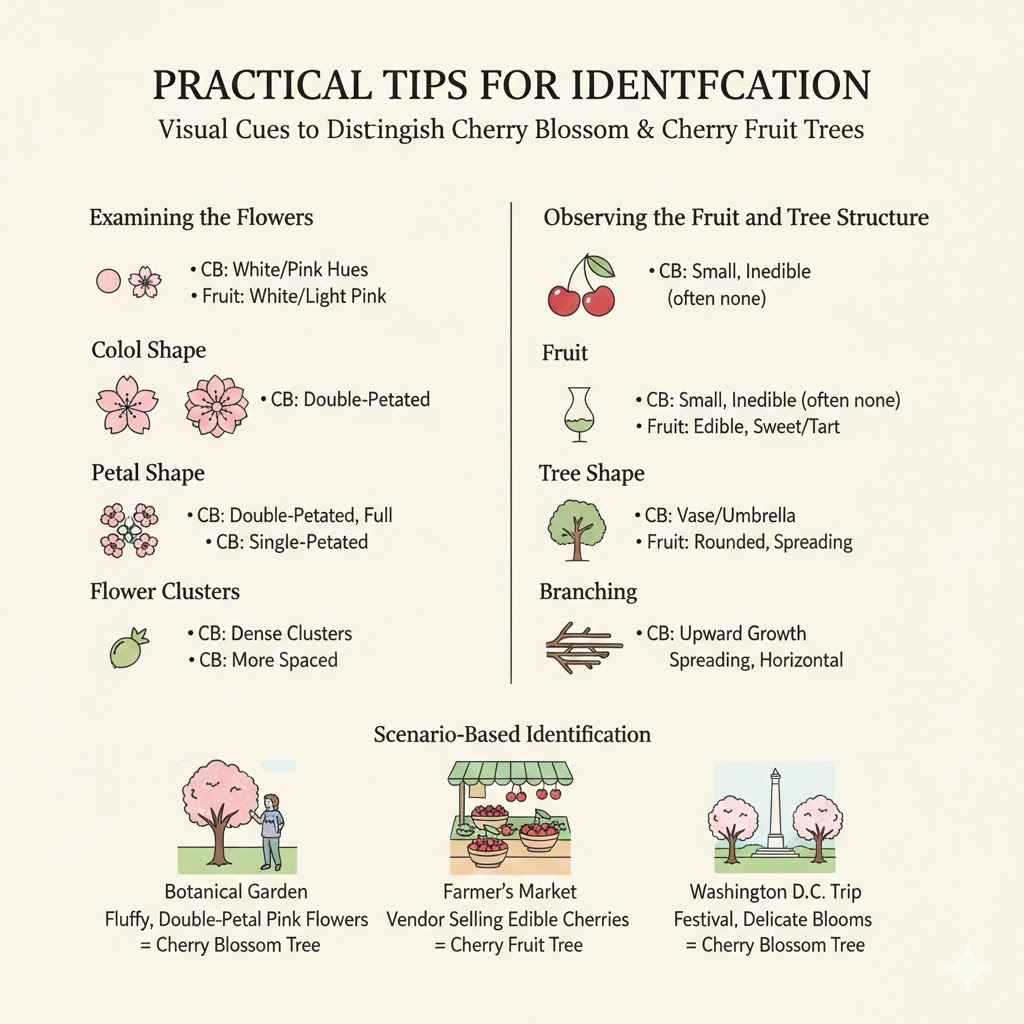
- Color: Cherry blossom flowers are usually white or shades of pink. Cherry tree flowers can also be white or light pink, but the colors can vary depending on the variety.
- Petal Shape and Arrangement: Cherry blossom flowers are often double-petaled, which creates a fuller and more visually appealing flower. Cherry tree blossoms are usually single-petaled.
- Flower Clusters: Cherry blossoms bloom in dense clusters along the branches. The flowers of cherry trees can be more spaced out, especially before the leaves appear.
Imagine you’re walking through a park in spring. If the blossoms are a vivid pink and form dense clusters, it’s most likely a cherry blossom tree. The full, almost fluffy look of the blossoms is a giveaway.
Observing the Fruit and Tree Structure
When the trees have fruit, identification becomes easier. Look at the type of fruit, as well as the shape of the tree and its growth pattern. These details help you figure out what kind of tree you are dealing with. Knowing the tree’s form and fruit characteristics helps in a quick identification.
- Fruit: If the tree has cherries, it is a fruit-bearing cherry tree. Cherry blossom trees might have small, inedible fruits or no fruit at all.
- Tree Shape: Cherry blossom trees often have a vase or umbrella shape. Fruit trees might have a more rounded shape, shaped by pruning for fruit production.
- Branching: Cherry blossom trees’ branches can often grow upwards. Fruit trees might have a more spread-out branch structure to support the weight of the fruit.
If you’re in a cherry orchard and notice the trees are trimmed to create easier access for harvesting the fruit, it’s a cherry tree. The fruit on these trees makes it very clear that they’re grown for a practical purpose.
Scenario-Based Identification
Let’s consider these examples:
- You are walking through a botanical garden and see a tree covered in fluffy, double-petaled pink flowers. The flowers are in dense clusters. You are most likely looking at a cherry blossom tree.
- You are visiting a farmer’s market and see a vendor selling ripe, red cherries. The vendor mentions where they come from. It would then be a fruit-bearing cherry tree.
- During a spring trip to Washington, D.C. you are surrounded by trees with delicate white or pale pink blossoms. These trees are part of a festival to celebrate their beauty. It is a good bet that you are observing a type of cherry blossom tree.
Frequently Asked Questions
Question: Can you eat the fruit from cherry blossom trees?
Answer: Usually, the fruit from cherry blossom trees is small, hard, and not very tasty. They’re not grown for their fruit, so you typically would not eat them. However, cherry trees are grown specifically for their edible fruit.
Question: Do cherry blossom trees have any other uses besides beauty?
Answer: Cherry blossom trees are mainly for aesthetic purposes, and their blossoms are used in celebrations and art. Cherry trees are used for their wood, which is fine-grained and used in furniture.
Question: Are cherry blossom trees easy to maintain?
Answer: Cherry blossom trees can be low maintenance, but they need regular care. This includes watering, pruning, and protection from pests and diseases to keep them healthy.
Question: What’s the life span of cherry blossom trees compared to cherry trees?
Answer: Both cherry blossom trees and cherry trees have similar lifespans, often living for several decades. Their actual lifespan depends on the species, growing conditions, and care provided.
Question: Why do cherry blossom trees bloom in spring?
Answer: Cherry blossom trees bloom in spring because of the seasonal changes. They need a period of cold dormancy over the winter. As the temperature rises in spring, the trees get the signal to produce blossoms.
Final Thoughts
So, Are Cherry Blossom Trees the Same as Cherry Trees? Now you know the main differences. Cherry blossom trees are all about those beautiful blooms, putting on a stunning show each spring. Cherry trees, on the other hand, are grown to give us delicious cherries, even though they also have nice flowers. To tell them apart, focus on the flowers, the fruit (or lack thereof), and the overall shape of the tree. By keeping an eye out for these key details, you can easily identify what type of cherry tree you’re looking at. Next time you see these trees, you will know exactly what makes them unique and what their main purpose is. Keep your eyes open, and you’ll become an expert in no time!