Are Cherry Blossom Trees The Same As Cherry Trees
It’s common to wonder if cherry blossom trees and cherry trees are the same thing. Many people see beautiful pink or white flowers and think “cherry blossoms!” but then see fruit on another tree and wonder if it’s also a cherry blossom tree. This can be a little confusing for beginners.
But don’t worry! This guide will make it super simple to know the difference. We’ll break it down step-by-step.
Get ready to learn about the lovely flowers and delicious fruits.
Understanding Cherry Blossom Trees vs Cherry Trees
Many people ask, are cherry blossom trees the same as cherry trees? This question often comes up because both types of trees are part of the Prunus genus, which also includes plums and peaches. Visually, they can look similar, especially when in bloom.
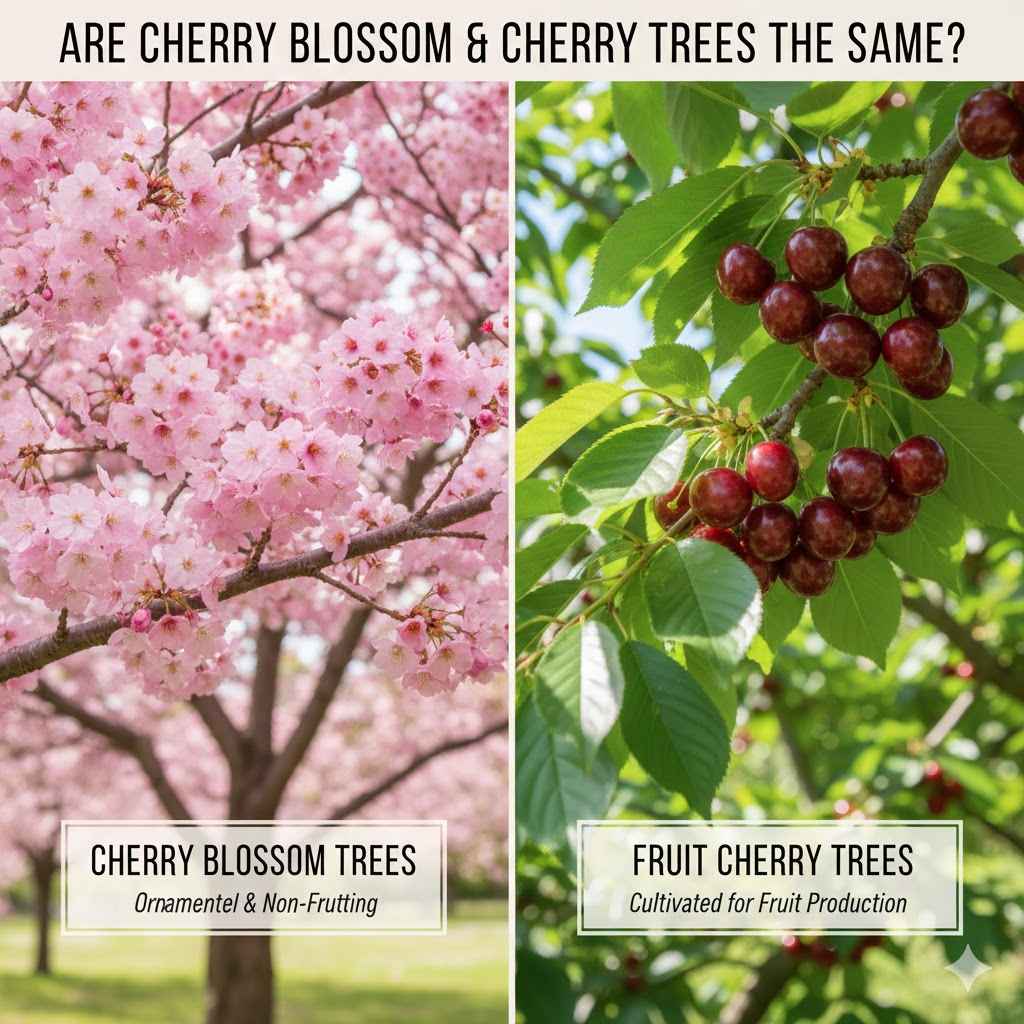
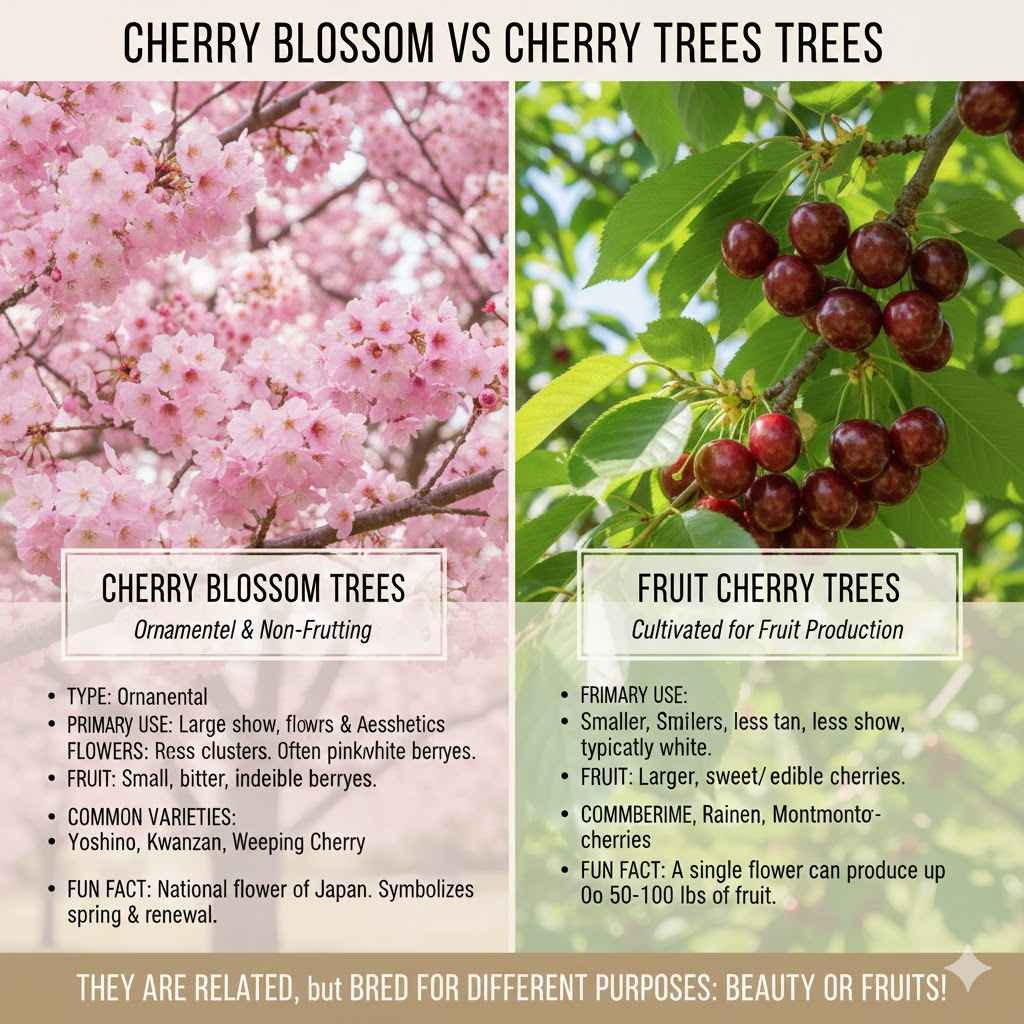
However, their primary purpose and characteristics differ significantly. Cherry blossom trees are cultivated for their stunning floral displays, often with multiple petals and vibrant colors, while cherry trees are grown for their edible fruit. This distinction is key to appreciating each type of tree for its unique beauty and utility.
The Purpose of Flowering Cherries
Flowering cherry trees, often called ornamental cherries, are primarily grown for their ornamental value. Their blossoms are the main attraction, signaling the arrival of spring with a breathtaking show of color. These trees are not typically bred for fruit production.
The flowers themselves are often more elaborate than those on fruit-bearing cherry trees, featuring a greater number of petals and a wider array of colors, from delicate pinks and whites to deep reds.
These trees are a beloved sight in many parks and gardens. They symbolize renewal and the ephemeral nature of beauty. Their blooming season is eagerly anticipated each year.
- Spectacular Blooms: The flowers are the star. They can last for a week or two, bringing joy and beauty to landscapes. Many varieties offer double or even triple layers of petals, creating a fuller, more dramatic effect than single-petaled blossoms.
- Ornamental Focus: The goal is visual appeal. Unlike fruit trees, their leaves might also be attractive, with some varieties offering bronze or burgundy foliage throughout the growing season.
- Non-Edible Fruit: While they do produce fruit, it’s usually small, bitter, and not considered edible or desirable for consumption. This fruit is a byproduct of their flowering process.
The Purpose of Fruit Cherries
Fruit cherry trees are cultivated specifically for their delicious, edible cherries. These trees are a staple in orchards and home gardens where people want to harvest their own fruit. While they do produce beautiful flowers, the blossoms are generally simpler and less showy than those on ornamental cherry trees.
The tree’s energy is directed towards producing high-quality fruit.
These trees are valued for their contribution to our diets. They offer sweet or tart cherries that can be enjoyed fresh, baked into pies, or preserved.
- Edible Fruit Production: The main purpose is to grow cherries that people can eat. The quality, size, and flavor of the fruit are paramount considerations for growers.
- Flavor Varieties: There are two main types of cherries grown for food: sweet cherries (like Bing or Rainier) and tart or sour cherries (like Montmorency). Each has distinct uses in cooking and eating.
- Flowering as a Bonus: The flowers on fruit cherry trees are typically white or pale pink, appearing in spring. They are beautiful but usually less abundant and less dramatic than ornamental cherry blossoms.
Key Differences in Appearance
When trying to answer “Are cherry blossom trees the same as cherry trees?”, looking at their appearance is very helpful. The most obvious difference is often in the flowers themselves, but leaf shape and overall tree structure can also provide clues. These visual distinctions help gardeners and nature enthusiasts tell them apart at a glance.
Flower Characteristics
The flowers are where you’ll see the biggest visual difference. Ornamental cherry blossoms are known for their sheer volume and diversity of color and form. They often appear in dense clusters, creating a stunning visual spectacle.
Some varieties even have a sweet fragrance.
In contrast, the flowers of fruit cherry trees are typically simpler. They are usually white or a very light pink and appear individually or in smaller groups. While pretty, they don’t create the same overwhelming floral display that ornamental trees are famous for.
- Petal Count: Ornamental cherries often have five petals, but many popular varieties boast double or even triple layers of petals, making them appear fuller and more intricate. Think of the fluffy, rose-like blooms found on some Japanese cherry trees.
- Color Range: While both can be pink and white, ornamental cherries offer a wider palette. You can find shades ranging from pure white and pale blush to vibrant fuchsia and deep rose. Some even have variegated petals.
- Bloom Time and Duration: While both bloom in spring, the exact timing and how long the blossoms last can vary by species and cultivar. Ornamental trees are often bred for a spectacular, albeit brief, show.
Leaf and Branch Structure
Beyond the flowers, subtle differences exist in the leaves and branches. Fruit cherry trees tend to have a more straightforward, open growth habit, often angled to maximize sunlight exposure for fruit development. Their leaves are typically ovate with serrated edges, a common characteristic of many fruit-bearing trees.
Ornamental cherries can exhibit a wider range of growth habits. Some are weeping, creating a graceful, cascading effect, while others are upright and vase-shaped. Their leaves can also vary, sometimes being more elongated or having a different color, such as bronze or dark red, adding to their ornamental appeal even after the flowers fade.
- Leaf Shape and Texture: Fruit cherry leaves are usually glossy and pointed with finely toothed edges. Ornamental cherry leaves can be more varied; some are smoother, while others might have a slightly different serration pattern or even a more matte finish.
- Branch Growth: Fruit trees often have branches that grow outward and upward, seeking light. Ornamental trees might have more varied branching patterns, including downward-hanging branches in weeping varieties or dense, twiggy growth in others.
- Bark Appearance: The bark on both types can be smooth and shiny, often with prominent horizontal lenticels (small pores). However, the color and texture can subtly differ between species and cultivars, sometimes offering a distinguishing feature.
Cultivation and Purpose
The reasons behind planting and nurturing these trees reveal their fundamental differences. Are cherry blossom trees the same as cherry trees? Not when you consider why people grow them.
One is for a feast for the eyes, the other for a feast for the palate.
Ornamental Cultivars
Many cultivars of cherry trees have been specifically developed over centuries for their stunning floral displays. These are the trees you see celebrated in Japan during Hanami (flower viewing) festivals. Their genetic makeup prioritizes flower production, beauty, and longevity of bloom over fruit.
These trees are often strategically planted in public spaces, parks, and residential gardens to create beautiful spring landscapes. Their impact is purely aesthetic.
- Breeding Goals: Breeders focus on petal shape, color saturation, bloom density, and the tree’s overall form (e.g., weeping, upright, spreading). The goal is maximum visual impact during the flowering season.
- Examples of Ornamental Cherries: Popular varieties include ‘Kanzan’ (known for its abundant, deep pink double flowers), ‘Yoshino’ (famous for its profuse white blooms that cover the tree), and ‘Kwanzan’ (another deeply colored, double-flowered type).
- Economic Value: The value of ornamental cherries lies in landscape design, tourism associated with blooming seasons, and the nursery trade that supplies these trees for ornamental purposes.
Fruiting Cultivars
Fruit cherry trees are the workhorses of the cherry-producing world. They are selected and bred for traits that lead to abundant harvests of high-quality, delicious cherries. Their value is directly tied to their yield and the desirability of the fruit.
Orchards are filled with these trees, and they are a popular choice for home gardeners seeking to grow their own fruit. Their bloom is a sign that a good harvest is on its way.
- Breeding Goals: The focus here is on fruit size, sweetness, tartness, firmness, disease resistance, and yield. Growers want trees that produce a lot of good-tasting cherries that store and ship well.
- Examples of Fruit Cherries: Common examples include ‘Bing’ (a popular sweet cherry known for its dark red color and firm flesh), ‘Rainier’ (a large, yellow sweet cherry with a delicate flavor), and ‘Montmorency’ (a widely grown tart cherry used for pies and preserves).
- Economic Value: The economic importance of fruit cherries is significant, contributing to the global fresh fruit market, processed food industry, and agriculture.
Scientific Classification and Genetics
To truly understand if cherry blossom trees are the same as cherry trees, a look at their scientific classification provides a deeper insight. While they share a common genus, their species and cultivar differences account for their distinct traits. This biological perspective clarifies their relationship.
The Genus Prunus
Both ornamental and fruit-bearing cherries belong to the genus Prunus. This is a large and diverse genus within the Rosaceae family, which also includes roses, apples, pears, and almonds. Members of the Prunus genus are characterized by their stone fruits (drupes) and their often showy spring blossoms.
Within this genus, different species and subspecies have been developed or naturally evolved for various purposes. This explains why trees that look somewhat similar can have vastly different outcomes, like producing beautiful flowers versus delicious fruit.
- Shared Ancestry: All cherries, whether ornamental or fruit-bearing, share a common ancestor within the Prunus genus. This shared lineage explains some of the overlapping characteristics, like their spring blooming habit and general tree structure.
- Diversification: Over thousands of years, selective breeding and natural selection have led to significant diversification within the Prunus genus. Different species and cultivars have been favored for their unique traits, such as flower color, fruit flavor, or growth habit.
- Species Examples: Some common cherry species include Prunus serrulata (Japanese flowering cherry), Prunus avium (wild or sweet cherry), and Prunus cerasus (sour or tart cherry). Many ornamental varieties are hybrids or cultivars derived from these species.
Species and Cultivar Differences
The distinction between ornamental and fruit cherries often lies at the species and cultivar level. For instance, many ornamental cherries are derived from species like Prunus serrulata (often called Japanese flowering cherry), which have been extensively bred for their flowers. Fruit cherries, on the other hand, are primarily derived from species like Prunus avium (sweet cherries) and Prunus cerasus (sour cherries).
Cultivars are specific varieties within a species that have been selected for particular traits. This is where the majority of differences lie. A breeder might cross two trees to get a new cultivar with exceptionally large flowers or a particularly sweet cherry.
| Category | Primary Genus | Common Species Origin | Main Purpose | Flower Appearance | Fruit Production |
|---|---|---|---|---|---|
| Cherry Blossom Tree | Prunus | Prunus serrulata (Japanese Flowering Cherry) | Ornamental (Flowers) | Abundant, often double-petaled, wide range of colors (pink, white, red) | Small, bitter, inedible fruit |
| Cherry Tree | Prunus | Prunus avium (Sweet Cherry), Prunus cerasus (Sour Cherry) | Fruit Production (Edible Cherries) | Simpler, single-petaled, white or pale pink | Large, sweet or tart, edible fruit |
- Species Selection: Horticulturalists have specifically chosen and cultivated certain cherry species for their flowering characteristics. For example, trees in the Cerasus subgenus are often associated with ornamental blooming.
- Cultivar Development: Within each species, numerous cultivars exist. For ornamental cherries, these cultivars are prized for variations in bloom color, petal count, and tree shape. For fruit cherries, cultivars are selected for fruit size, flavor, and yield.
- Hybridization: Many modern varieties, both ornamental and fruiting, are the result of hybridization, where breeders cross different species or cultivars to combine desirable traits. This intentional cross-breeding has led to the vast diversity seen today.
Identifying Your Cherry Tree
So, how can you tell if that tree you’re looking at is primarily for blossoms or for fruit? Even without being an expert botanist, there are several visual cues you can use. It’s about observing the tree throughout its seasons.
Observing in Spring
Spring is the most obvious time to differentiate. If the tree is covered in a riot of color, especially if the flowers are dense and multi-petaled, it’s likely an ornamental. If the blossoms are simpler, white or pale pink, and appear in less dense clusters, it might be a fruit cherry.
Consider the context. Is it planted in a formal garden known for its beauty, or is it in an orchard or a backyard where fruit production is a priority? This can offer clues.
- Flower Density: Are the branches absolutely laden with flowers, creating a cloud of color? This points towards an ornamental cherry. If the flowers are present but not the overwhelming main feature, it’s likely a fruiting variety.
- Flower Shape: Look closely at the individual flowers. Do they appear full and almost rose-like with many petals? This is characteristic of many ornamental types like ‘Kanzan’. Simple, five-petaled flowers are more common on fruit trees.
- Bloom Timing: While both bloom in spring, some ornamental varieties are bred for very early or very late blooms to extend the viewing season, sometimes appearing before or after fruit cherries.
Observing in Summer and Fall
If the tree has flowered, its summer and fall appearance can also be telling. Fruiting cherry trees will have developing or ripe cherries. Ornamental trees, if they produce any fruit at all, will have very small, insignificant fruits.
The leaves can also offer hints. While both have deciduous leaves, their color, shape, and how they emerge can sometimes differ.
- Fruit Presence: The most definitive sign in summer is the presence of cherries. If there are plump, colorful cherries that look edible, you have a fruit cherry tree. If there are only tiny, hard, often black or red drupes that look unappetizing, it’s almost certainly an ornamental.
- Leaf Color: Some ornamental cherry varieties have unique leaf colors, such as bronze, burgundy, or variegated patterns, even after the flowers have fallen. Fruit cherry leaves are typically green and standard for the species.
- Overall Structure: As mentioned earlier, the branching and overall shape of the tree might also differ, with ornamental trees sometimes having more unusual forms like weeping branches.
Common Misconceptions
The confusion around whether cherry blossom trees are the same as cherry trees is quite common. Many people assume that any tree with cherry blossoms must produce cherries. This is a logical assumption, but it’s not always accurate due to horticultural practices.
Another misconception is that all cherry trees produce beautiful flowers. While true that most do, the degree of beauty and abundance varies significantly between ornamental and fruit-bearing varieties.
“All Cherry Blossoms Mean Cherries”
This is the most frequent misunderstanding. The term “cherry blossom” is often used interchangeably with the flowers of any cherry tree. However, horticulturalists have developed countless varieties of cherry trees specifically for their blossoms, with little or no regard for fruit production.
These ornamental varieties might produce small, bitter fruits that are unsuitable for eating.
Think of it like roses. Some roses are bred for their scent, others for their long-lasting cut flowers, and some just for their beauty. They are all roses, but their purpose and specific qualities differ.
- Selective Breeding: The practice of selective breeding has created a divide. For centuries, people have chosen cherry trees that produced more abundant or more beautiful flowers, and separate lines of trees were chosen for better tasting fruit.
- Botanical vs. Common Names: Common names can be misleading. “Cherry blossom” often refers specifically to the flowers of ornamental cherries, but the term can also be used loosely for the blooms of fruit cherries.
- Purpose Over Produce: The energy of ornamental trees is channeled into creating flowers. This biological focus means they don’t prioritize developing substantial, edible fruit.
“All Cherries Come from Flowering Trees”
Conversely, people might see a fruit cherry tree and wonder if it’s also a “cherry blossom tree.” In a way, yes, it is. All cherry trees have blossoms. However, the term “cherry blossom tree” usually implies a tree where the flowers are the main attraction and are exceptionally showy.
Fruit cherry trees’ blossoms are beautiful, but they are typically secondary to the fruit production. Their role is to signal the start of the fruiting season rather than to be a landscape centerpiece in themselves.
- Dual Purpose vs. Single Purpose: Fruit cherry trees serve a dual purpose: beauty in spring and food in summer. Ornamental cherry trees are almost exclusively grown for their spring floral beauty.
- Horticultural Classification: In horticulture, “flowering cherries” or “ornamental cherries” are distinct categories from “fruit cherries.” This classification highlights their primary intended use.
- Visual Distinction: While both produce flowers, the sheer abundance and often elaborate nature of blooms on an ornamental tree set it apart from the simpler, more functional blossoms of a fruit tree.
Real-Life Examples
Let’s look at some real-world scenarios to make this distinction clearer. These examples show how these trees are used and appreciated in different contexts.
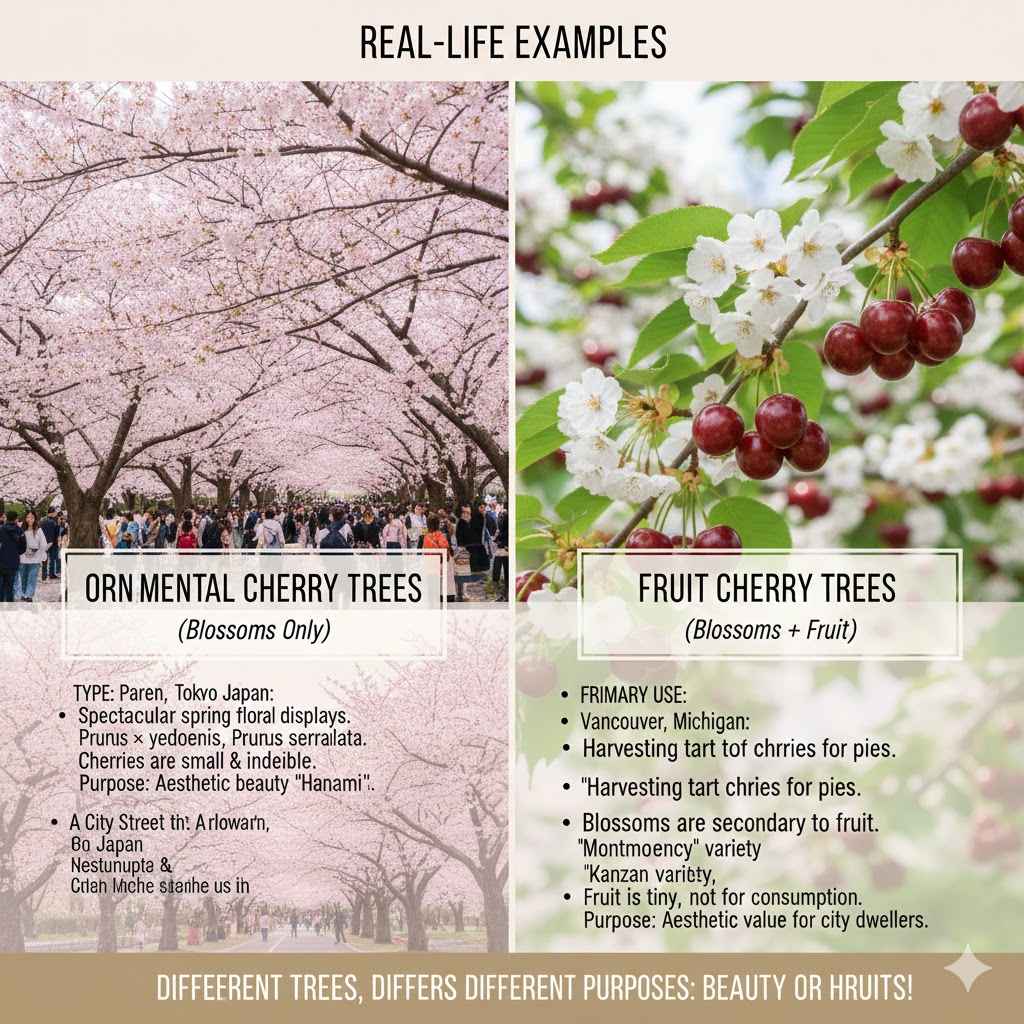
- Ueno Park, Tokyo Japan: This famous park is renowned for its thousands of cherry trees, particularly the Prunus × yedoensis (Yoshino cherry) and Prunus serrulata (Kanzan cherry). These trees are planted en masse for their stunning spring floral displays, attracting millions of visitors for “Hanami” or flower viewing. The cherries produced are small and inedible; the park’s beauty comes entirely from the blossoms.
- A Backyard Orchard in Michigan: A homeowner plants ‘Montmorency’ cherry trees. In spring, these trees are covered in beautiful white blossoms, a lovely sight. However, the homeowner’s main goal is to harvest tart cherries later in the summer for making pies and preserves. The blossoms are appreciated, but the fruit is the primary reward.
- A City Street in Vancouver, Canada: Many streets in Vancouver are lined with ornamental cherry trees, such as the ‘Kanzan’ variety. These trees provide spectacular splashes of pink and white each spring, beautifying the urban landscape. While they might produce a few tiny fruits, they are not considered for consumption, and their value is purely aesthetic for city dwellers.
Frequently Asked Questions
Question: Do cherry blossom trees produce edible cherries
Answer: Generally, no. Cherry blossom trees are cultivated for their flowers. They might produce small, bitter fruits that are not suitable for eating.
Question: Are all cherry trees considered cherry blossom trees
Answer: Not exactly. While all cherry trees have blossoms, the term “cherry blossom tree” typically refers to ornamental varieties grown for their spectacular flowers, not for fruit.
Question: What is the main difference between a cherry blossom tree and a fruit cherry tree
Answer: The main difference is their purpose. Cherry blossom trees are grown for their beautiful flowers, while fruit cherry trees are grown for their edible cherries.
Question: Can I eat the fruit from a flowering cherry tree
Answer: It is not recommended. The fruit from ornamental cherry trees is usually small, bitter, and not intended for consumption.
Question: How can I tell if my tree is a fruit cherry or a flowering cherry
Answer: Look at the flowers and fruit. Flowering cherries have abundant, often multi-petaled, colorful blooms. Fruit cherries have simpler, white or pale pink blossoms and produce edible cherries in the summer.
Conclusion
So, to answer the question Are cherry blossom trees the same as cherry trees? They are related but distinct. Cherry blossom trees are ornamental, grown for stunning flowers, not fruit.
Fruit cherry trees are cultivated for their delicious cherries, with beautiful but simpler blossoms. Knowing this difference helps you appreciate each type for what it offers.