Are Cherry Tomato Plants Determinate Or Indeterminate: Essential Guide
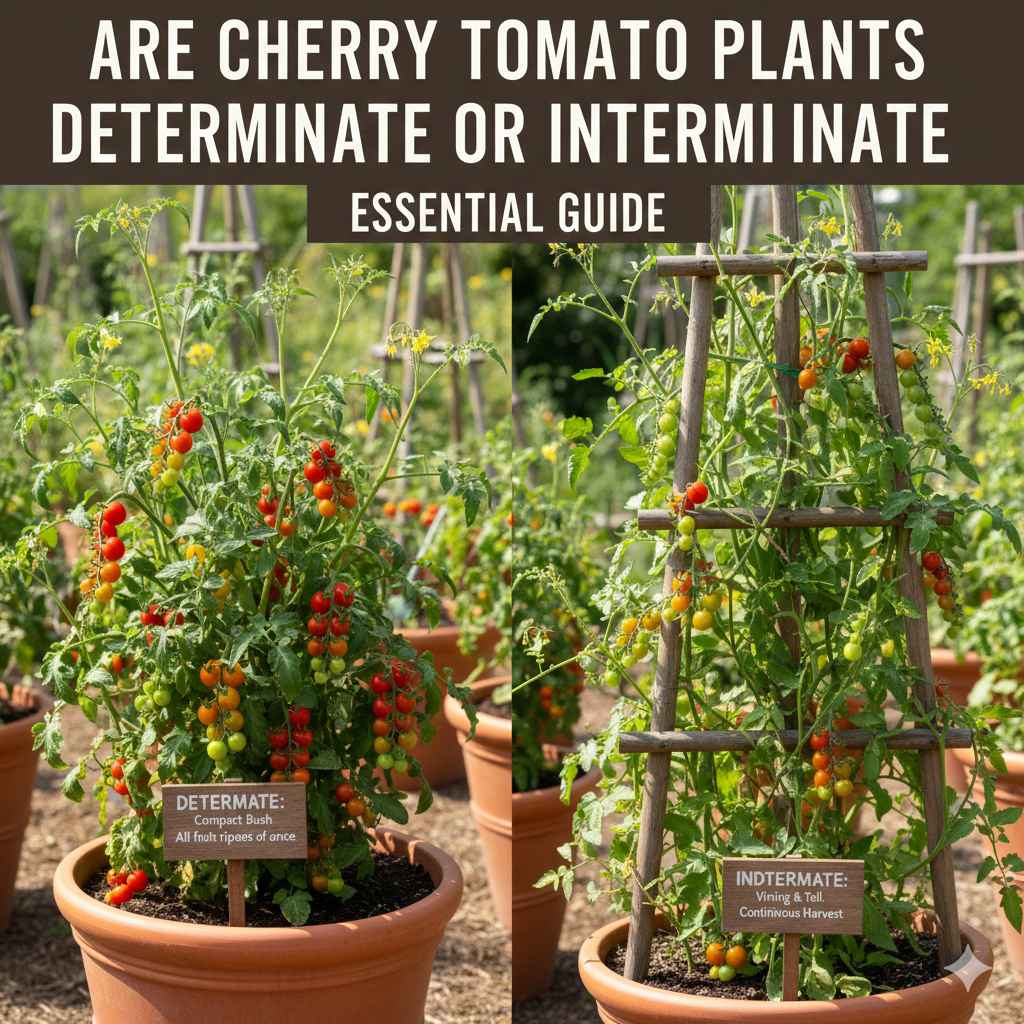
Cherry tomato plants are almost always indeterminate, meaning they keep growing taller and producing fruit all season long until frost hits. This requires staking or caging. Determinate varieties are bushier and fruit all at once. Knowing the difference is key to successful home gardening!
Welcome, friends! If you’ve ever planted a cherry tomato and wondered why it keeps stretching toward the sky instead of staying a neat little bush, you’re not alone. Figuring out if your tomato is a “determinate” or “indeterminate” type is one of those little gardening secrets that makes a huge difference. It affects how you cage it, prune it, and when you get to eat those sweet little snacks. Don’t worry; we are going to clear this up right now. By the end of this guide, you’ll know exactly what you have and how to give it the perfect support system. Let’s get your tomatoes thriving!
Why Knowing Determinate vs. Indeterminate Matters for Your Cherry Tomatoes
When you head to the garden center, you might see labels that seem like confusing garden jargon. Determinate and indeterminate describe how a tomato plant grows and produces fruit. This is the most important factor when choosing the right support structure, like a tomato cage or stake.
Think of it like building a shed. You wouldn’t use small shelving brackets to hold up the roof beams, right? You need the right materials for the job. Similarly, giving an indeterminate tomato a small cage designed for a determinate plant will result in a tangled, collapsing mess by mid-summer.
Choosing correctly saves you time, frustration, and helps you enjoy a much bigger harvest!
The Key Difference Explained Simply
The core difference comes down to growth habit:
- Determinate (Bushy): These plants grow to a specific, manageable height (usually 3–4 feet). They produce most of their fruit over a few weeks, and then growth slows down. They are great for containers or canning all at once.
- Indeterminate (Vining): These plants are the marathon runners of the garden. They keep growing taller and taller (often 6–10 feet or more) and produce fruit continuously until the first frost kills them off.
The Straight Answer: Are Cherry Tomato Plants Determinate or Indeterminate?
This is the million-dollar question for every cherry tomato grower. While exceptions always exist in nature, the general rule is simple and very reassuring:
Almost All Cherry Tomatoes Are Indeterminate
Yes, you read that right! Most popular cherry tomato varieties—like Sun Gold, Sweet 100, Black Cherry, and hundreds of others—are the vining, constantly growing, indeterminate type. This is why they produce those beautiful, endless strings of little red or yellow jewels all summer long.
If you bought a packet of seeds or a seedling labeled only as “Cherry Tomato” without any other descriptor, you should confidently assume it is an indeterminate variety and plan your support system accordingly. For context, the USDA notes that proper plant support is crucial for maximizing yield, especially for vining types (Source: Gardening Know How – often cited for general gardening practices).
Deep Dive: Understanding Indeterminate Cherry Tomato Growth
Since most of your cherry tomatoes will fall into this category, let’s focus on what this means for your gardening approach. Indeterminate plants are engineered by nature to keep seeking the sun.
Characteristics of Indeterminate Cherry Tomatoes
- Constant Growth: They produce a main central stem that keeps elongating.
- Fruiting Over Time: They set new flowers and fruit even while earlier fruit is ripening. You never have one big harvest; you have a steady supply.
- Height Requirement: They need serious vertical support. A standard 3-foot tomato cage will usually fail to contain them by August.
- Pruning Needs: They benefit from pruning the suckers (the little shoots that grow in the V between the main stem and a leaf branch) to focus energy on main stems and fruit production.
Tools and Setup for Indeterminate Champions
Because these plants are going to get tall and heavy with juicy fruit, setting up the support before you plant is the easiest path to success. Remember, it is much harder to put up a tall stake once the plant is already flopping over!
Essential Support Systems
- Heavy-Duty Cages: Look for cages that are at least 5–6 feet tall when fully deployed. Homemade cages made from concrete reinforcing wire (remesh) often work better than flimsy store-bought ones.
- Staking (The T-Post or Cattle Panel Method): For serious harvests, drive a sturdy T-post or a strong piece of lumber deep into the ground next to where the plant will be. You will tie the main stem loosely to this stake every 10–12 inches as it grows.
- Trellising: Running a strong horizontal wire between sturdy end posts (like for grapes or beans) allows you to weave the tomato vines through the wires vertically. This is excellent for airflow and keeping fruit off the ground.
Safety Tip: Always use soft ties, like old nylon stockings or specific tomato twine, when attaching the vine to the support. Never use wire or string that can cut into the stem as the plant thickens.
What About Determinate Cherry Tomatoes?
Even though they are less common, some cherry tomato varieties are bred to be determinate. If your seed packet or plant tag specifically says “Determinate,” or if it’s labeled for containers (like the popular ‘Patio’ type), you need a different approach.
Characteristics of Determinate Cherry Tomatoes
- Set Height: They usually top out around 3–4 feet.
- Concentrated Harvest: Most of the fruit ripens within a 2–3 week window.
- Less Pruning: They often require minimal pruning since they aren’t aggressively vining.
- Bush Shape: They naturally form a bushier, more compact structure.
Support for Determinate Types
These plants still need support, but it’s much easier:
- Use standard, 3-foot tall tomato cages placed right over the seedling when it’s small.
- A simple stake pushed into the ground near the base can work if the cage seems too bulky for your space.
Quick Comparison Table: Determinate vs. Indeterminate
Use this table as a quick reference guide when planning your garden layout. This helps you decide which support system to pull out of the shed!
| Feature | Indeterminate (Most Cherries) | Determinate (Fewer Cherries) |
|---|---|---|
| Growth Habit | Vining, continuous growth | Bushy, stops growing at maturity |
| Height Potential | 6 to 10+ feet | Usually 3 to 4 feet |
| Fruiting Pattern | All season long (continuous harvest) | Concentrated harvest (few weeks) |
| Support Needed | Tall cages (6ft+), strong stakes, or trellis | Standard 3-4ft cages or stakes |
| Pruning | Beneficial (remove suckers) | Minimal needed |
Identifying Your Plant Type: Simple Field Tests
What if you already planted your cherry tomatoes and lost the little plastic tag? No problem! You can usually tell what you have just by looking closely at the plant’s structure.
Test 1: Look at the Growth Tip
This is the most reliable test for a young, actively growing plant:
- Find the very top growing point (the terminal bud) of the main stem.
- Indeterminate plants will have a set of leaves at the tip, and a tiny new flower cluster will form just below those leaves. This means growth continues upward.
- Determinate plants will have a flower cluster forming right at the very tip of the main stem, effectively stopping upward growth at that point.
Test 2: Observe the Sucker Growth
Suckers are those small shoots that emerge in the “armpit” (axil) between the main stem and a leaf branch. They are your crystal ball:
- Indeterminate: Suckers grow rapidly and can eventually become a second main stem, leading to a very dense, tall plant. If you let them go, the plant gets huge.
- Determinate: Suckers will emerge, but they tend to stay smaller and often develop into flower clusters rather than aggressively growing vines.
Test 3: Check the Variety Source
If you remember where you got the seed or plant, a quick online search can confirm it. For example, if you search for “Tomato Variety Name indeterminate or determinate,” you will often find immediate confirmation from seed companies or university extension sites.
For instance, the University of Minnesota Extension often provides excellent local growing guides that classify common varieties based on growth habit, which is a fantastic resource for confirming your plant type (University Extension Resources).
Practical Application: Supporting Your Indeterminate Cherry Tomatoes Like a Pro
Since we established that your cherry tomato is likely indeterminate, let’s talk about how to manage its vertical ambition without causing damage. Think of this as building a strong frame for a growing tree.
Step-by-Step: Installing Tall Support for Vining Cherries
Do this when the plant is still small (under 18 inches) for the best results.
- Choose Your Support: Select a T-post, a 6-foot section of rebar, or a sturdy, tall tomato cage.
- Installation Location: Place the support roughly 6–8 inches away from the main stem of the tomato plant. You want it close enough to support the main stalk but far enough so you don’t sever roots during installation.
- Drive It Deep: If using a post or stake, drive it firmly into the ground—at least 18 inches deep—so it won’t wobble when the plant is heavy with fruit later in the season.
- The First Tie: Once the support is secure, take your soft tie material and loop it loosely around the main stem and the support. Tie it in a figure-eight pattern if possible, which helps prevent rubbing.
- Ongoing Training: As the plant grows another foot, add another tie point. Continue this process until the plant reaches the top of your support structure. For extra height, you can use the Florida Weave method or string supports horizontally between posts above the plant.
The Pruning Question for Indeterminates
Pruning indeterminate cherry tomatoes is optional but highly recommended, especially if you are using a single stake or cage. Pruning helps direct energy and improves air circulation, which helps prevent common fungal issues.
Where to Prune (Removing Suckers)
- Identify the small branch growing between the main stem and a leaf stem. This is the sucker.
- For a single-stem system (like a tall stake), pinch or snap off these suckers when they are small (less than 3 inches). This forces the plant to focus its energy on the main stalk and the existing fruit clusters.
- If you are growing a larger, multi-stem bush supported by a very large, wide cage, you can leave a few strong suckers to create a sturdier, bushier base, but generally, less is more for cherry tomatoes.
Common Pitfalls When Dealing with Vining Tomatoes
Knowing they are indeterminate helps you avoid these common rookie mistakes:
| Mistake | Why It Happens | The Fix |
|---|---|---|
| Using Small Cages | Assuming all tomatoes are bush varieties. | Install 6-foot supports early on. Bigger cages mean less work later. |
| Waiting to Stake | Wanting to wait until the plant is taller to decide on support. | Staking a large, leaning indeterminate tomato often breaks stems. Stake small! |
| Forgetting to Water | Vining plants are thirsty growers and produce fruit constantly. | Indeterminates need consistent deep watering to support all that growth. |
| Not Pruning | Afraid to cut anything off the plant. | Pruning suckers improves airflow and directs energy to making tasty fruit instead of dense, tangled leaves. |
When a Cherry Tomato Might Be Determinate
While the default is indeterminate, it is good practice to know the specific situations where you might encounter a determinate cherry:
- Container Specific Varieties: Breeders create determinate types specifically because they fit well in small pots or patio containers (e.g., ‘Tiny Tim’ or ‘Red Robin’). These plants are bred not to vine excessively.
- Seed Saver Heritage: If you are growing an heirloom variety passed down for generations that has always stayed compact, it might be a determinate mutation. Always check the original source if you can.
- Micro-Dwarf Types: These are hyper-compact varieties designed for windowsills. They will never get taller than a foot or two and fruit all at once.
If your plant looks like a small shrub that’s covered in fruit all at once and has stopped growing taller by mid-summer, congratulations—you have a determinate cherry! Enjoy that big, singular harvest.
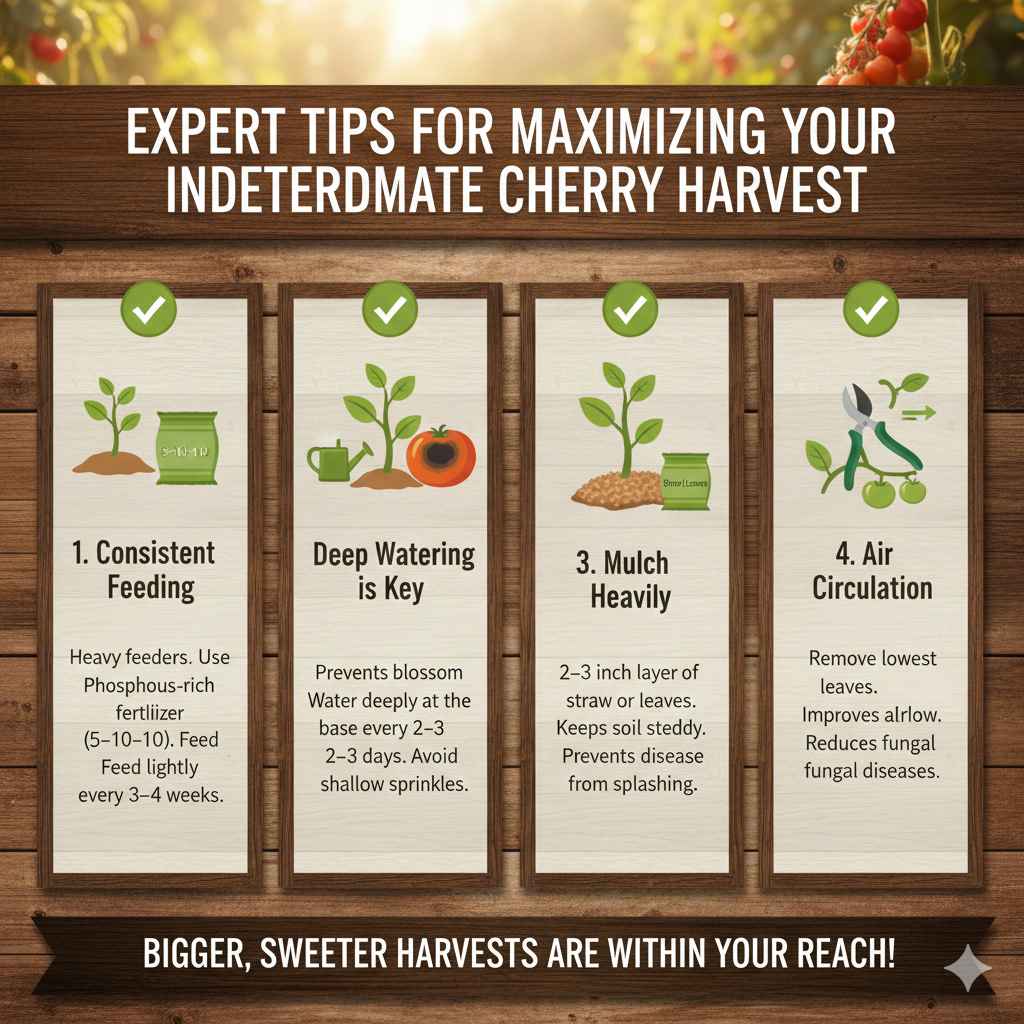
Expert Tips for Maximizing Your Indeterminate Cherry Harvest
As your vining cherry plants mature, here are a few confidence-boosting tips from my own garden to ensure you get the sweetest, biggest yield possible:
- Consistent Feeding: Indeterminates are heavy feeders because they produce for so long. Use a fertilizer higher in Phosphorus (the middle number, like 5-10-10) once fruit starts setting, and feed lightly every 3–4 weeks.
- Deep Watering is Key: Inconsistent watering (wet one day, bone dry the next) is the number one cause of blossom end rot, which leaves dark, sunken patches on the bottom of your tomatoes. Water deeply at the base of the plant every 2–3 days, rather than a shallow sprinkle every day.
- Mulch Heavily: Apply a 2–3 inch layer of straw, shredded leaves, or untreated grass clippings around the base of the plant (keeping it a few inches away from the actual stem). This keeps the soil temperature steady and prevents soil from splashing up onto the leaves, reducing disease spread.
- Air Circulation: Especially if you live in a humid climate, remove the lowest few sets of leaves once the plant is well-established. This allows air to move around the base and helps keep fungal diseases like early blight away.
Frequently Asked Questions (FAQ) About Tomato Growth Habits
Q1: If my indeterminate cherry plant gets too tall for my cage, what should I do?
A: Don’t panic! You can gently bend the top of the main stem over sideways and tie it to a lower part of the cage or stake, allowing it to continue producing fruit horizontally. It’s often called “tipping” the plant.
Q2: Do I have to prune suckers off my indeterminate cherry tomato?
A: No, you don’t have to, but it helps a lot. If you leave all the suckers, you get a huge, dense plant that may produce slightly less high-quality fruit and is more prone to disease because of poor airflow.