Are Cherry Tomatoes Determinate or Indeterminate
Lots of people wonder Are Cherry Tomatoes Determinate or Indeterminate when they start gardening. It can be a bit confusing because different tomato plants grow in different ways. Knowing the answer helps you pick the right plants for your garden and know how to care for them.
This guide will make it super simple. We will break it down step by step so you can grow the best cherry tomatoes ever.
Understanding Determinate vs Indeterminate Tomatoes
This section explains the basic differences between how determinate and indeterminate tomato plants grow. Understanding this is the first step to knowing Are Cherry Tomatoes Determinate or Indeterminate. It helps you plan your garden space and know when to expect fruit.
What Does Determinate Mean for Tomato Plants
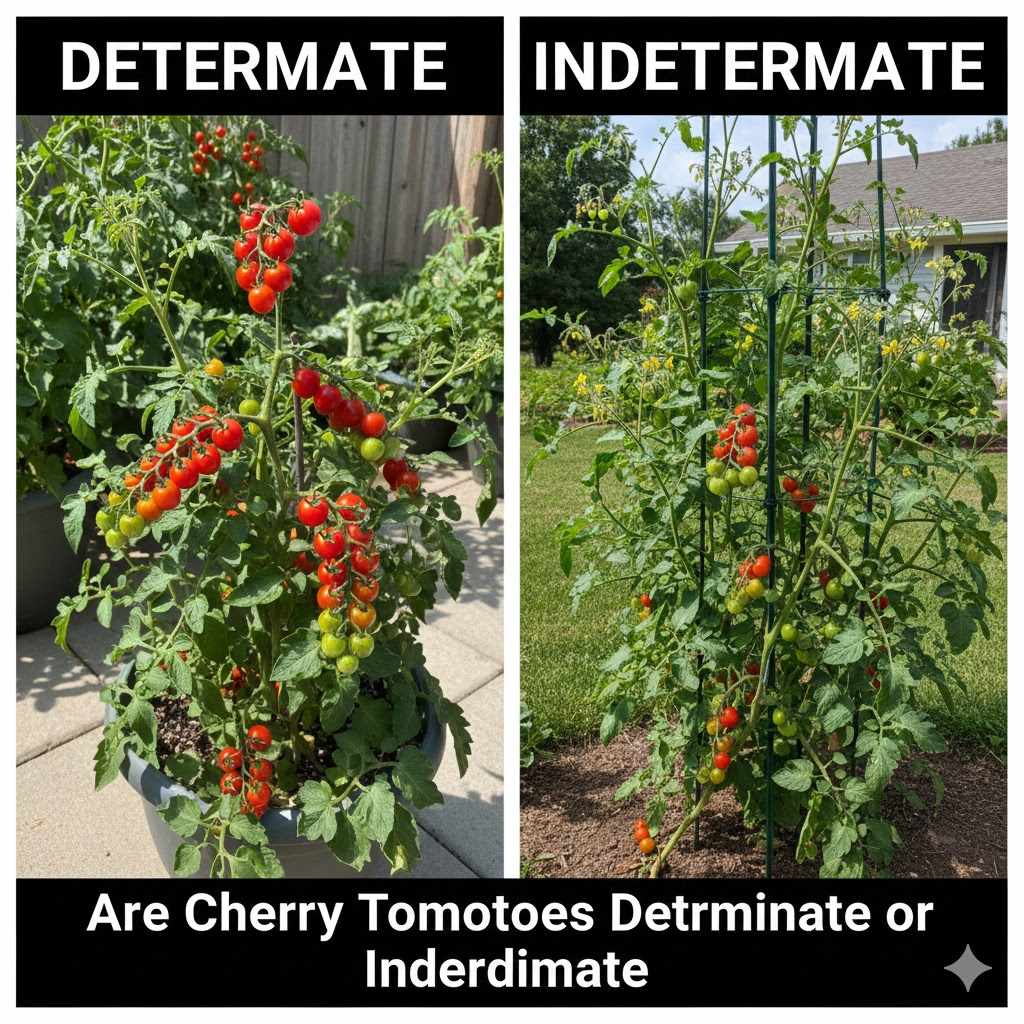
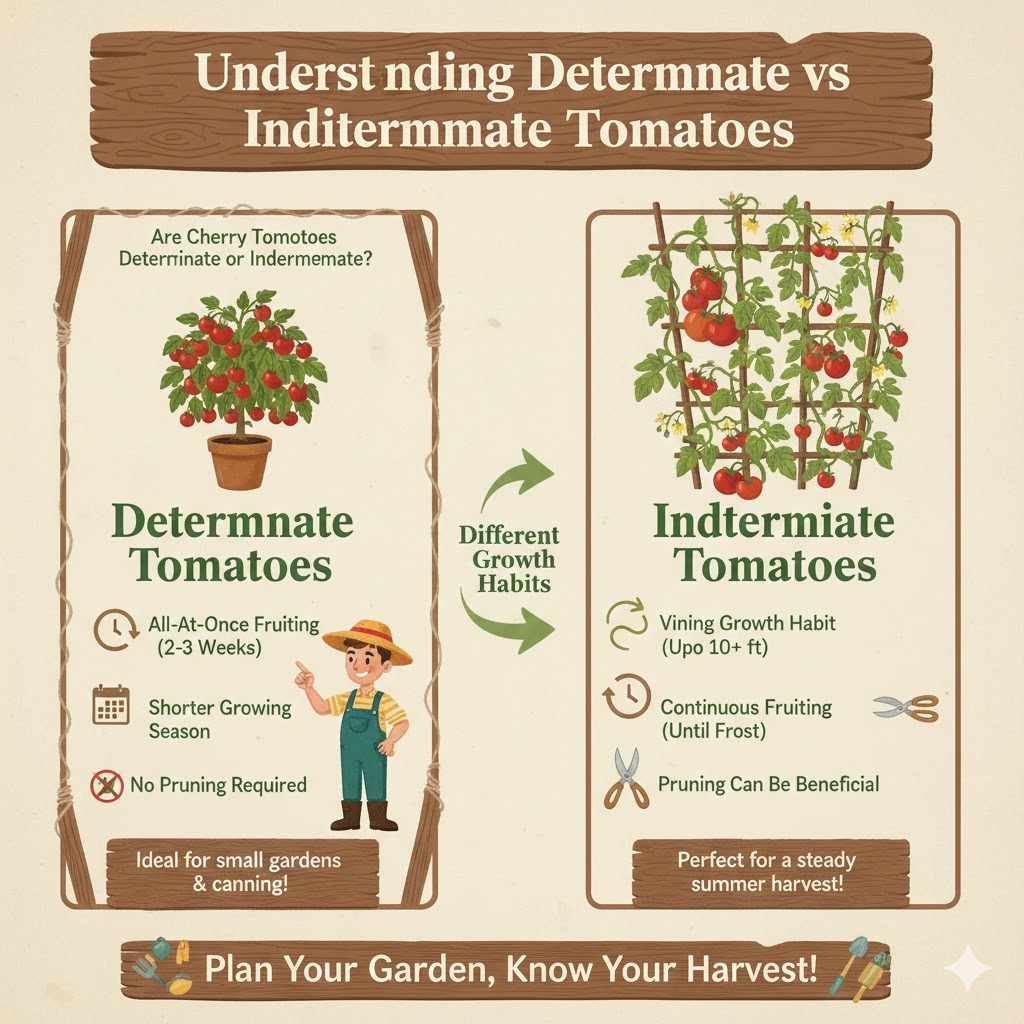
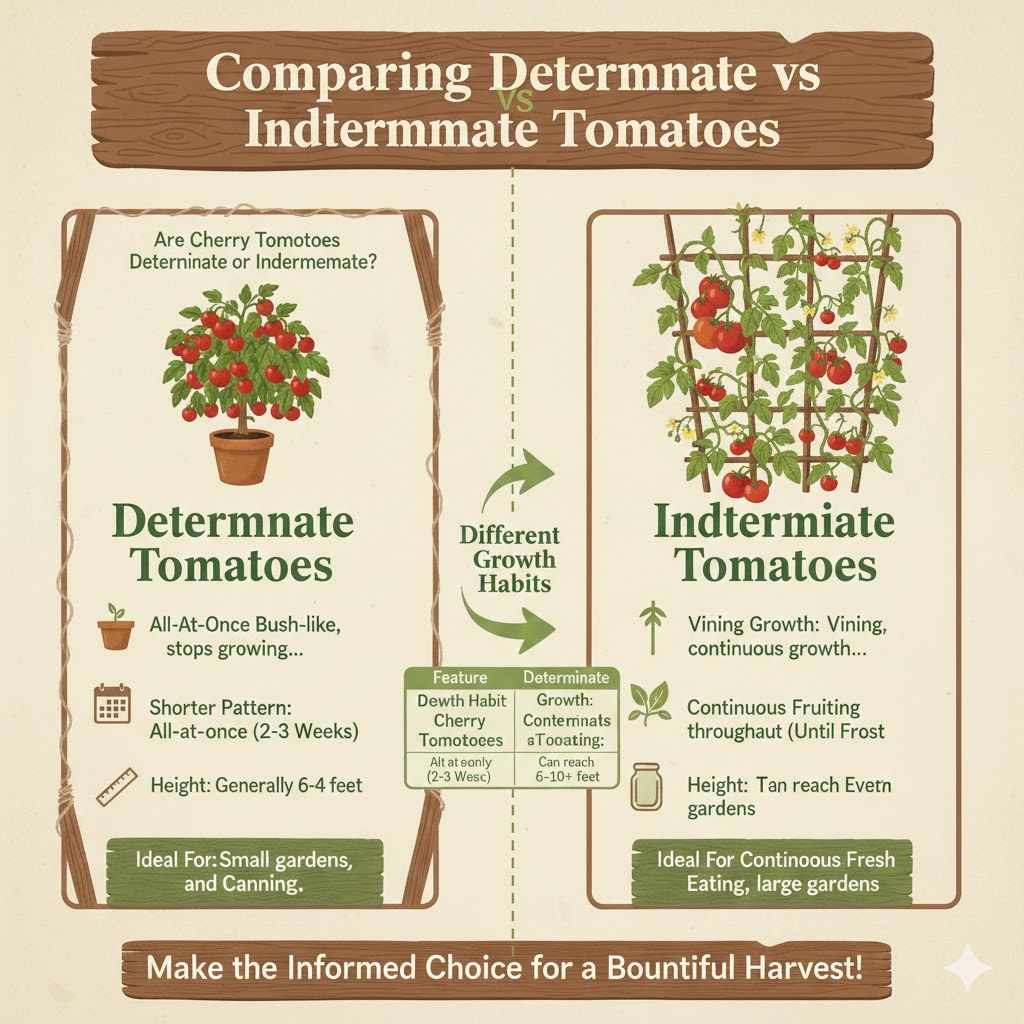
Determinate tomato plants are often called “bush” tomatoes. They grow to a certain size, set their fruit all at once, and then stop growing. This means you get a big harvest over a shorter period.
This type of growth is predictable and good for gardeners who want to preserve a lot of tomatoes at once, like for canning.
The plant reaches its mature height, usually between 3 to 6 feet, and then focuses all its energy on producing fruit. Once the last fruit has set, the plant generally dies back. This makes them ideal for smaller gardens or containers.
- Compact Growth Habit
- Determinate varieties tend to be more compact. This is because their genes tell them to stop growing after they produce flowers at the terminal bud. They won’t keep getting taller and longer like some other plants.
- This makes them easier to manage in small spaces.
- All-At-Once Fruiting
- A key characteristic is that they produce most of their fruit within a two- to three-week window. This synchronized ripening is a major advantage for gardeners who want to process their harvest. Think of canning or making large batches of sauce.
- Shorter Growing Season
- Because they fruit all at once, determinate plants often have a shorter overall productive season compared to indeterminate types. This can be beneficial in areas with shorter growing seasons.
- No Pruning Required
- Generally, determinate tomatoes do not require extensive pruning. Pruning them can actually reduce your overall yield because they produce fruit on the ends of their branches. Removing these ends means fewer tomatoes.
What Does Indeterminate Mean for Tomato Plants
Indeterminate tomato plants are the opposite. They keep growing and producing fruit throughout the entire growing season until the first frost. These are the vining types that can get very tall and need a lot of support.
If you want tomatoes all summer long, these are your go-to.
These plants will continue to grow taller and produce new leaves, flowers, and fruit continuously. They are known for their long harvest period, often lasting from early summer until frost. This makes them very popular for home gardeners.
- Vining Growth Habit
- Indeterminate tomatoes grow like vines. They can reach heights of 6 to 10 feet or even more if given the proper support. This requires sturdy cages, stakes, or trellises to keep them upright and off the ground.
- Continuous Fruiting
- Unlike their determinate cousins, indeterminate varieties produce fruit continuously. They will keep flowering and setting new fruit as long as conditions are favorable. This means a steady supply of fresh tomatoes over many weeks.
- Longer Harvest Period
- The harvest for indeterminate tomatoes lasts for a much longer duration. This is a significant advantage for gardeners who enjoy fresh tomatoes regularly throughout the summer and into the fall.
- Pruning Can Be Beneficial
- While not strictly required, pruning indeterminate tomatoes can help manage their growth and improve air circulation. Removing suckers (the small shoots that grow between the main stem and a branch) can direct the plant’s energy into producing larger fruit.
Are Cherry Tomatoes Determinate or Indeterminate
Now, let’s directly address the question: Are Cherry Tomatoes Determinate or Indeterminate? The answer is that cherry tomatoes can be EITHER determinate or indeterminate. It really depends on the specific variety you choose.
Many popular cherry tomato varieties are indeterminate, but there are also determinate cherry tomato types available. When you are looking at seed packets or plant tags, always check the description for this information.
This distinction is crucial for planning your garden layout and support systems. For example, an indeterminate cherry tomato plant will need a tall, strong stake or cage, while a determinate one might be happy with a smaller support. Understanding this will save you frustration and help you get the best harvest possible.
How Cherry Tomato Varieties Grow
This section will explore specific examples and explain how the determinate or indeterminate growth habit plays out in actual cherry tomato plants. We will look at why it matters for your gardening success. Understanding these growth patterns helps you make the best choices for your garden.
Common Indeterminate Cherry Tomato Varieties
Many well-loved cherry tomato varieties are indeterminate. These are the ones that will keep producing those sweet, bite-sized fruits all season long. They are great for snacking straight from the vine or adding to salads and other dishes throughout the summer.
Because they grow tall, they need good vertical support.
Some popular indeterminate cherry tomatoes include ‘Sungold’, ‘Sweet Million’, and ‘Black Cherry’. These varieties are known for their prolificacy and delicious flavors. Their vining nature means they require consistent watering and feeding to support continuous fruit production.
- ‘Sungold’ Cherry Tomato
- ‘Sungold’ is a very popular indeterminate cherry tomato known for its exceptionally sweet, tangerine-colored fruit. It produces heavily throughout the season. Its fruits are small, about 1 inch in diameter, and have a rich, fruity flavor.
- This variety is often praised for its disease resistance and vigorous growth.
- ‘Sweet Million’ Cherry Tomato
- ‘Sweet Million’ is another excellent indeterminate choice. It produces clusters of small, red cherry tomatoes that are remarkably sweet and juicy. This variety is known for its high yield and resistance to common tomato diseases like cracking and blossom end rot.
- It’s a reliable producer for a long season.
- ‘Black Cherry’ Tomato
- For those looking for something a little different, ‘Black Cherry’ is an indeterminate variety with unique dark, purple-red fruits. The flavor is rich and complex, with a hint of smokiness. These small tomatoes are great for adding visual appeal and depth of flavor to dishes.
- Support Needs for Indeterminate Cherry Tomatoes
- Because indeterminate varieties grow so large and produce fruit over a long period, they demand significant support. Sturdy cages, tall stakes, or well-constructed trellises are essential. Without adequate support, the vines can break under the weight of the fruit, leading to reduced yield and potential disease issues.
Regular tying to the support is also important.
Common Determinate Cherry Tomato Varieties
While many think of cherry tomatoes as vining plants, there are excellent determinate options too. These are perfect if you have limited space, want a concentrated harvest for canning, or prefer a tidier plant. They produce their fruit over a few weeks and then are done.
Examples of determinate cherry tomatoes include ‘Patio Princess’ and ‘Tiny Tim’. These are often bred for container gardening and smaller spaces. They offer convenience and a good yield for their size.
Their bush-like growth makes them easier to manage without extensive staking.
- ‘Patio Princess’ Cherry Tomato
- ‘Patio Princess’ is a determinate variety specifically bred for container growing. It produces a good amount of small, red cherry tomatoes. The plant stays relatively compact, usually reaching about 2 to 3 feet in height.
- This makes it an ideal choice for balconies, patios, or small gardens where space is a concern.
- ‘Tiny Tim’ Cherry Tomato
- ‘Tiny Tim’ is an extremely compact determinate cherry tomato, often growing no taller than 1 to 1.5 feet. It is perfect for small pots or as an edging plant. Despite its small size, it produces a surprising number of small, sweet red fruits.
- It is a favorite for beginner gardeners and children.
- Concentrated Harvest Benefits
- The main advantage of determinate cherry tomatoes is their concentrated harvest. If you plan to make a large batch of cherry tomato sauce or sun-dried tomatoes, this trait is highly beneficial. You get a lot of fruit ripened around the same time, simplifying the processing.
- Easier Management in Small Spaces
- Their bush-like growth habit makes determinate cherry tomatoes easier to manage in tight spaces. They typically do not require the same heavy-duty support systems as indeterminate varieties. A small stake or even just a small cage is often sufficient.
When to Plant and Harvest Cherry Tomatoes
Knowing when to plant and harvest your cherry tomatoes is key to success. This depends on your local climate and the specific variety you are growing. Always check the days to maturity on your seed packet.
For most regions, cherry tomatoes are planted after the last frost. Indeterminate varieties will provide fruit over a long period, while determinate varieties will offer a concentrated harvest. Harvesting when the fruit is fully colored and slightly soft to the touch ensures the best flavor.
- Planting Time
- Cherry tomatoes are warm-season crops. They should be planted outdoors after all danger of frost has passed and the soil has warmed up. This is typically in late spring or early summer, depending on your climate zone.
- Starting seeds indoors 6-8 weeks before the last frost can give you a head start.
- Harvesting Indeterminate Varieties
- Indeterminate cherry tomatoes will begin producing fruit a few weeks after the first flowers appear and will continue for months. You can pick them as soon as they reach their full color and are slightly yielding to the touch. Frequent picking encourages the plant to produce more fruit.
- Harvesting Determinate Varieties
- Determinate cherry tomatoes will ripen their crop over a shorter period, usually 2-3 weeks. You’ll see a flush of ripe fruit appear all at once. It’s best to harvest them as they ripen to enjoy their peak flavor and prevent over-ripening on the vine.
- Signs of Ripeness
- The best indicator of ripeness is color. Cherry tomatoes should be fully colored – deep red, yellow, orange, or even purple, depending on the variety. They should also feel slightly soft when gently squeezed.
If they are hard, they likely need more time. If they are very soft or mushy, they may be overripe.
Practical Gardening Tips for Cherry Tomatoes
This section offers practical advice on growing cherry tomatoes, regardless of whether they are determinate or indeterminate. Good soil, sunlight, and water are essential for a bountiful harvest. These tips will help you get the most from your plants.
Sunlight and Soil Requirements
Cherry tomatoes need plenty of sunshine to grow well and produce sweet fruit. Aim for at least 6 to 8 hours of direct sunlight per day. They also thrive in well-draining soil rich in organic matter.
This provides the nutrients they need to produce all those delicious fruits.
Amending your soil with compost before planting is highly recommended. This improves soil structure, water retention, and nutrient availability. A soil pH between 6.0 and 6.8 is ideal for tomato growth.
- Sunlight Needs
- Full sun is critical for healthy cherry tomato plants and abundant fruiting. Insufficient sunlight can lead to leggy plants with fewer flowers and reduced fruit production. Choose the sunniest spot in your garden for the best results.
- Soil Preparation
- Tomatoes are heavy feeders and benefit greatly from nutrient-rich soil. Before planting, incorporate a generous amount of compost or well-rotted manure into the planting area. This improves drainage and fertility.
- Raised beds can also be a good option for ensuring good drainage.
- Watering Needs
- Consistent watering is vital, especially during hot weather and when the plants are flowering and fruiting. Aim to keep the soil evenly moist but not waterlogged. Avoid overhead watering, which can encourage fungal diseases.
- Water at the base of the plant.
- Fertilization
- Tomatoes generally benefit from regular feeding. Use a balanced fertilizer when planting, and switch to one higher in phosphorus and potassium once the plants start to flower and set fruit. Follow the fertilizer package instructions carefully to avoid over-fertilizing.
Support and Staking
Providing adequate support for your cherry tomato plants is crucial, especially for indeterminate varieties. This prevents them from sprawling on the ground, which can lead to disease and pest problems, and makes harvesting easier.
For determinate varieties, a smaller cage or stake might suffice. Indeterminate varieties, however, will require robust trellising or tall, sturdy stakes to support their vining growth over the entire season. Ensure the support is strong enough to hold the weight of the plant and its fruit.
- Why Support is Important
- Proper support keeps the plant’s foliage and fruit up off the ground, which helps prevent soil-borne diseases and reduces pest infestations. It also improves air circulation around the plant, further reducing disease risk. Additionally, it makes harvesting much easier.
- Choosing the Right Support System
- For indeterminate cherry tomatoes, strong stakes that are at least 6-8 feet tall are recommended. Heavy-duty tomato cages or a trellis system are also excellent options. For determinate varieties, smaller cages or stakes around 3-4 feet tall are usually adequate.
- Installation and Maintenance
- Install stakes or cages at planting time to avoid disturbing the roots later. As the indeterminate plants grow, gently tie the main stems to the support using soft ties like garden twine or fabric strips. This guides the plant’s growth upwards.
- Pruning for Indeterminate Varieties
- While indeterminate tomatoes will grow without pruning, removing “suckers” (small shoots that grow in the V between the main stem and a branch) can improve air circulation and focus the plant’s energy on fruit production. However, don’t over-prune, as the leaves are needed for photosynthesis.
Pest and Disease Management
Like all plants, cherry tomatoes can be susceptible to pests and diseases. Early detection and prompt action are key to keeping your plants healthy and productive. Good gardening practices go a long way in preventing many issues.
Common issues include aphids, whiteflies, and fungal diseases like blight. Using companion planting, maintaining good air circulation, and avoiding overhead watering can help prevent many problems. Organic pest control methods are often effective and safe for home gardens.
- Common Pests
- Aphids are tiny, sap-sucking insects that can cluster on new growth. Whiteflies are small, white flying insects that can weaken the plant. Both can often be controlled by spraying them off with a strong stream of water or using insecticidal soap.
- Ladybugs are natural predators of aphids.
- Common Diseases
- Fungal diseases like early blight and late blight can cause spots on leaves and fruit. These are often exacerbated by wet conditions and poor air circulation. Good drainage and watering at the base of the plant are crucial preventative measures.
- Removing affected leaves promptly can help slow the spread.
- Preventative Measures
- Crop rotation, choosing disease-resistant varieties, and maintaining plant health through proper watering and fertilization are excellent preventative strategies. Companion planting with herbs like basil can also deter certain pests.
- Organic Solutions
- For organic control, insecticidal soaps, neem oil, and Bacillus thuringiensis (Bt) are effective against various pests. Always follow product instructions carefully. Healthy soil and healthy plants are the best defense against most problems.
Comparing Determinate and Indeterminate Cherry Tomatoes
This section provides a clear comparison to help you decide which type of cherry tomato is best for your garden. Understanding the pros and cons of each will ensure you make the right choice for your gardening goals.
Key Differences at a Glance
Here is a quick look at the main ways these two types of tomato plants differ. This table makes it easy to see the key distinctions when deciding Are Cherry Tomatoes Determinate or Indeterminate for your needs.
| Feature | Determinate Cherry Tomatoes | Indeterminate Cherry Tomatoes |
|---|---|---|
| Growth Habit | Bush-like, stops growing at a certain height | Vining, continues to grow and produce fruit |
| Fruiting Pattern | Fruits ripen all at once over 2-3 weeks | Fruits ripen continuously throughout the season |
| Height | Generally 2-4 feet | Can reach 6-10+ feet |
| Support Needs | Minimal support, small cage or stake | Requires tall, sturdy stakes, cages, or trellises |
| Ideal For | Small spaces, containers, canning, concentrated harvest | Continuous fresh eating, large gardens, long harvest season |
Which Type is Right For You
Choosing between determinate and indeterminate cherry tomatoes depends on your gardening style and what you want to achieve. If you have limited space or want to process a large amount of tomatoes at once, go for determinate. If you love fresh tomatoes all summer long and have space for support, indeterminate might be better.
Consider your climate too. Indeterminate varieties may produce more overall if you have a long growing season. Determinate varieties can be a good choice for shorter seasons as they produce their crop more quickly.
- For Small Gardens and Containers
- Determinate varieties are the champions of small spaces. Their compact, bushy growth makes them ideal for pots on a patio or a small raised bed. You can get a good yield without needing a lot of room.
- For Continuous Fresh Eating
- If your goal is to have a steady supply of cherry tomatoes for salads, snacks, and appetizers all summer long, indeterminate varieties are the way to go. They will keep producing as long as the weather is warm.
- For Canning and Preserving
- For gardeners who love to can, make sauces, or dry tomatoes, the concentrated harvest of determinate types is a huge advantage. It means you can process a large amount of fruit in a short period.
- For Ease of Management
- While both types require care, determinate plants are generally easier to manage. They don’t get as tall or as sprawling, meaning less need for intensive pruning and more straightforward support structures.
Frequently Asked Questions
Question: Do all cherry tomatoes grow tall
Answer: No, not all cherry tomatoes grow tall. Some varieties, known as determinate types, grow like bushes and stay much shorter. Indeterminate types are the ones that grow tall and vining.
Question: Can I grow cherry tomatoes in pots
Answer: Yes, you can definitely grow cherry tomatoes in pots. Determinate varieties are often best for containers because they are smaller. Make sure the pot is large enough and has drainage holes.
Question: How often should I water cherry tomatoes
Answer: Cherry tomatoes need consistent watering. Water them deeply every few days, or more often during hot, dry weather. The soil should feel moist but not soggy.
Question: What is a sucker on a tomato plant
Answer: A sucker is a small shoot that grows in the V-shape between the main stem of a tomato plant and one of its branches. Removing suckers on indeterminate tomatoes can help the plant focus energy on fruit, but it’s not always necessary.
Question: When should I pick my cherry tomatoes
Answer: Pick your cherry tomatoes when they are fully colored and feel slightly soft to the touch. This indicates they are ripe and have the best flavor. If they are hard, they need more time.
Summary
Whether cherry tomatoes are determinate or indeterminate depends entirely on the specific variety. Determinate types grow to a set size and produce fruit all at once, ideal for small spaces and concentrated harvests. Indeterminate types vine and produce fruit continuously throughout the season, best for long harvests and fresh eating.