Are LED Bulbs a Fire Hazard? Essential Safety
Quick Summary: Generally, LED bulbs are not a fire hazard and are significantly safer than older lighting types. When installed correctly and used as intended, their low heat output and durable design minimize fire risks. Always follow manufacturer guidelines and ensure proper ventilation to maintain safety.
Hey there, DIY enthusiasts and homeowners! Md Meraj here. When we’re working on our homes, whether it’s a quick fix or a bigger renovation, lighting is key. We want it to be bright, efficient, and safe. Lately, I’ve heard a question popping up more often: “Are LED bulbs a fire hazard?” It’s a totally valid concern, especially when we’re talking about electricity and our homes. You might be switching over to LEDs for their amazing energy savings and long life, but a little worry about safety is natural. Don’t let it dim your DIY spirit! In this guide, we’ll break down exactly how safe LED bulbs are, what can potentially cause issues, and how you can use them with total peace of mind. We’ll cover everything you need to know to keep your home bright and secure.
Understanding LED Technology and Heat
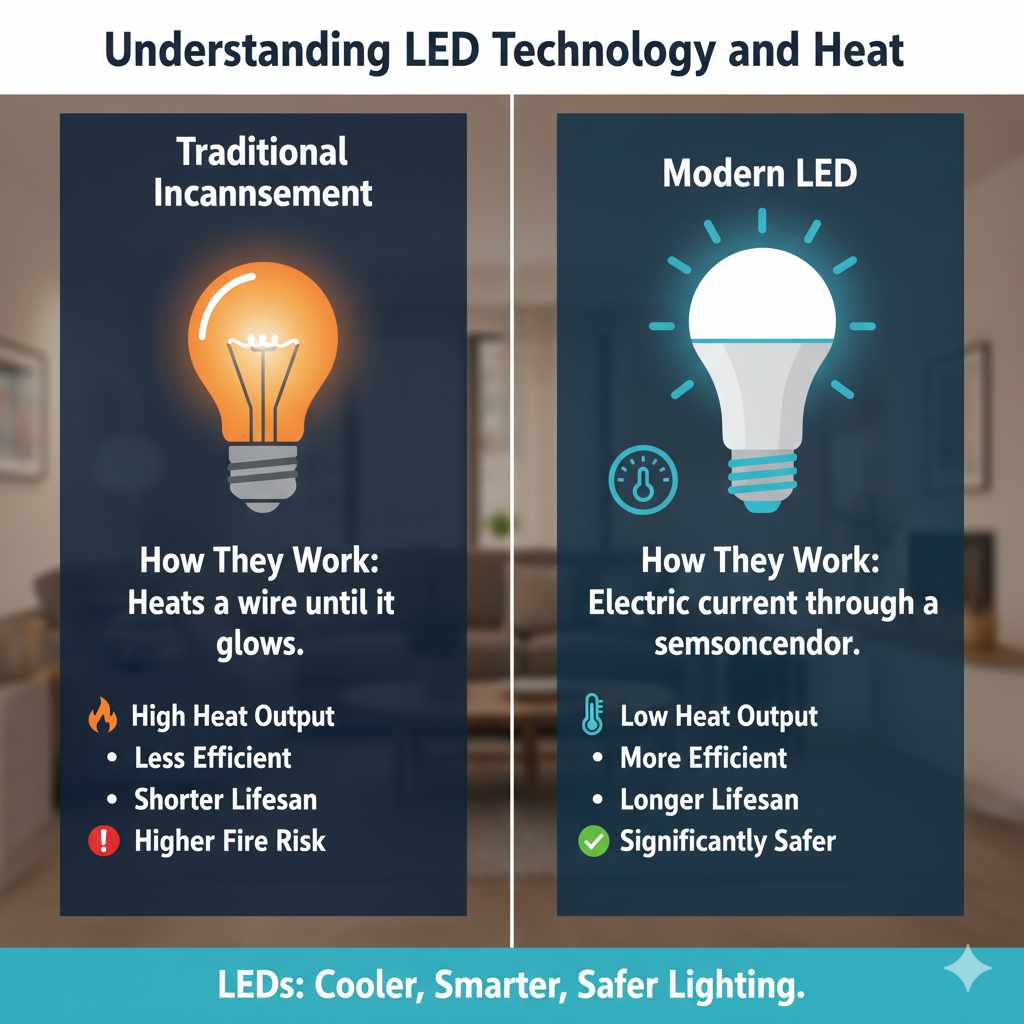
Before we dive into safety, let’s chat a bit about what makes LEDs different. Unlike old incandescent bulbs that worked by heating a tiny wire until it glowed (which is why they got so hot and often burned out!), LEDs are semiconductors. They produce light when an electric current passes through them. This process is much more efficient, meaning a lot less energy is wasted as heat. Think of it like a super-efficient engine versus a gas guzzler – LEDs are the efficient ones!
This difference in heat production is the biggest reason why LEDs are considered a much safer lighting option. Incandescent bulbs could get hot enough to scorch nearby materials, posing a fire risk. LEDs, on the other hand, operate at much lower temperatures. While they do produce some heat, it’s typically dissipated through a heat sink on the bulb itself, keeping the outer surface relatively cool to the touch.
The Real Risks: When Can LED Bulbs Become a Problem?
While LEDs are inherently safer, no electrical device is completely risk-free if misused or faulty. The primary concerns with LED bulbs, and indeed any light bulb, are usually related to installation, compatibility, and product quality, rather than the LED technology itself. Let’s look at the scenarios where you might encounter issues:
1. Incorrect Installation and Wiring
This is a big one for any electrical project. If an LED bulb isn’t installed correctly, or if the wiring in your fixture is faulty, it can lead to problems. Loose connections can cause arcing, which generates intense heat and can be a fire starter. Similarly, using the wrong type of dimmer switch or overloading a circuit can cause components to overheat.
- Loose Connections: Ensure the bulb is screwed in snugly but not overtightened. Check the socket for any signs of damage or corrosion.
- Faulty Fixtures: Always inspect the light fixture itself. If it looks old, damaged, or has frayed wires, it’s best to replace it or have it repaired by a qualified electrician before installing any new bulb.
- Incorrect Dimmer Switches: Not all LED bulbs are dimmable. If they are, they require specific LED-compatible dimmer switches. Using a standard dimmer with an LED bulb can cause flickering, damage the bulb, and potentially overheat the dimmer.
2. Overheating Due to Poor Ventilation
Even though LEDs produce less heat, they still generate some. If an LED bulb is installed in a fixture that doesn’t allow for adequate ventilation, the heat can build up. This is particularly true for enclosed fixtures like recessed lighting or lamps with shades that trap heat. When the heat can’t escape, the bulb’s components can be stressed, potentially leading to premature failure or, in rare cases, overheating that could damage the fixture or surrounding materials.
Key things to watch for:
- Enclosed Fixtures: Always check the bulb’s packaging for any warnings or recommendations regarding enclosed fixtures. Some LEDs are specifically designed for these applications, while others are not.
- Heat Dissipation: Ensure the heat sink on the LED bulb isn’t obstructed by anything within the fixture.
- Manufacturer Guidelines: Follow the wattage and type recommendations for the fixture. Don’t put a higher-wattage bulb than the fixture is rated for, even if it’s an LED.
3. Using the Wrong Bulb Type or Wattage
It might seem obvious, but using a bulb that’s not designed for a particular fixture is a common mistake. While LEDs use less energy for the same brightness (lumens), you still need to pay attention to the fixture’s maximum wattage rating. This rating is based on the heat the fixture can safely handle. If you replace an old 60-watt incandescent with an LED that produces the same amount of light but has a much higher equivalent wattage (e.g., a 10W LED that replaces a 60W incandescent), that’s usually fine. However, if you put a very high-output LED bulb into a fixture designed for low heat, you could still have issues if the fixture’s design can’t handle the heat generated by the LED’s internal components or its power supply.
Always check:
- Fixture’s Maximum Wattage: This is usually printed on the fixture itself.
- Bulb’s Actual Wattage: This is what the bulb consumes, not its incandescent equivalent.
- Bulb Base Type: Ensure the LED bulb base (e.g., E26, GU10) matches the socket in your fixture.
4. Faulty or Low-Quality LED Bulbs
Like any product, there are variations in quality. Very cheap, unbranded LED bulbs might cut corners on safety features, use lower-quality components, or lack proper insulation and heat management. These can be more prone to failure and, in rare instances, could pose a risk. Reputable brands invest in testing and quality control to ensure their products meet safety standards.
To minimize this risk:
- Buy from Reputable Brands: Stick to well-known manufacturers that have a track record of quality.
- Look for Certifications: Certifications like UL (Underwriters Laboratories) or ETL (Intertek) indicate that the product has been tested and meets safety standards.
- Read Reviews: See what other users say about the bulb’s reliability and performance.
5. Damaged LED Bulbs
If an LED bulb is physically damaged – cracked casing, exposed wires – it should not be used. Damaged components can short-circuit, overheat, or pose an electrical shock hazard. Treat a damaged bulb like any other damaged electrical item and dispose of it safely.
Comparing LED Safety to Other Bulb Types
To really appreciate how safe LEDs are, it’s helpful to see how they stack up against older lighting technologies. This comparison highlights why the shift to LEDs is a good move for home safety.
| Bulb Type | How it Works | Heat Output | Fire Hazard Potential | Energy Efficiency | Lifespan |
|---|---|---|---|---|---|
| Incandescent | Heats a tungsten filament until it glows. | Very High (can reach 200-250°C or 400-480°F) | High (can scorch nearby materials, filament can break and ignite dust) | Very Low | Short (approx. 1,000 hours) |
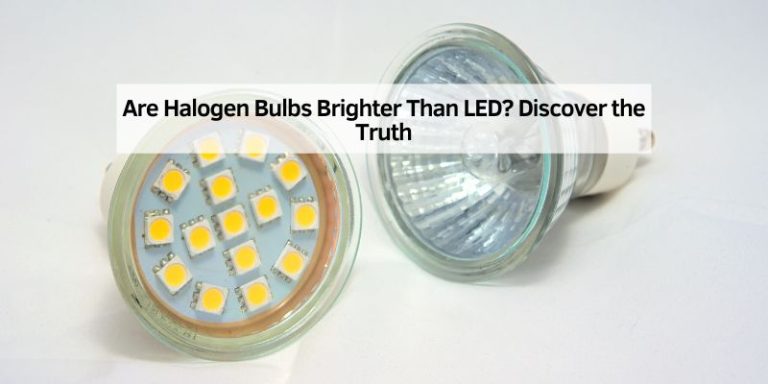
| Halogen | Similar to incandescent but with halogen gas to improve filament life. | High (still very hot) | Moderate to High (hot to touch, can scorch) | Low | Moderate (approx. 2,000 hours) |
| CFL (Compact Fluorescent Lamp) | Passes an electric current through gas, producing UV light that excites a phosphor coating. | Low to Moderate (warmer than LED, cooler than incandescent) | Low (but contains mercury; breakage is a concern) | Moderate to High | Moderate (approx. 8,000-15,000 hours) |
| LED (Light Emitting Diode) | Electrons pass through a semiconductor material, emitting light. | Very Low (cool to the touch on the exterior) | Very Low (inherently cooler, main risks are installation/quality) | Very High | Very Long (approx. 25,000-50,000+ hours) |
As you can see, LEDs are the clear winner when it comes to low heat output and reduced fire risk. The National Fire Protection Association (NFPA) often highlights electrical fires as a leading cause of home fires, and while faulty wiring is a major culprit, reducing heat sources from lighting is always a smart move. You can find more information on home electrical safety from the U.S. Fire Administration, a part of FEMA, at usfa.fema.gov.
Essential Safety Tips for Using LED Bulbs
Now that we understand the technology and potential pitfalls, let’s go over some practical, easy-to-follow safety tips. These are the kind of things I always tell my friends and family when they’re tackling home projects.
1. Read the Packaging and Fixture Labels
This is your first line of defense! Before you even buy or install a bulb, take a moment to read. The LED bulb packaging will tell you:
- The base type (e.g., E26, GU10).
- The wattage it consumes.
- Its light output (lumens) and color temperature.
- If it’s dimmable.
- Any specific warnings, like if it’s suitable for enclosed fixtures.
Likewise, your light fixture will have a label (usually inside the fixture, near the socket) indicating the maximum wattage it can safely handle and sometimes the type of bulb recommended. Always match your LED bulb to these specifications.
2. Ensure Proper Ventilation
This is crucial, especially for bulbs used in recessed cans, chandeliers, or other enclosed fixtures. If you’re unsure if your fixture provides enough ventilation for an LED, err on the side of caution. You can often find LEDs specifically designed for enclosed fixtures. If the bulb feels excessively warm to the touch after being on for a while, even if it’s an LED, it might indicate a ventilation issue or an incompatible fixture. It’s better to switch to a bulb designed for that application or ensure the fixture is properly ventilated.
3. Use LED-Compatible Dimmers
If you want to dim your lights, make sure both your LED bulbs and your dimmer switch are compatible. Standard incandescent dimmers are not designed to work with the low power draw of LEDs and can cause flickering, buzzing, premature bulb failure, or even damage to the dimmer and bulb. Look for dimmable LED bulbs and then purchase an LED-compatible dimmer switch. Many major electrical brands offer these, and they’re relatively easy to swap out if you’re comfortable with basic electrical work (or you can hire an electrician).
4. Install with Care
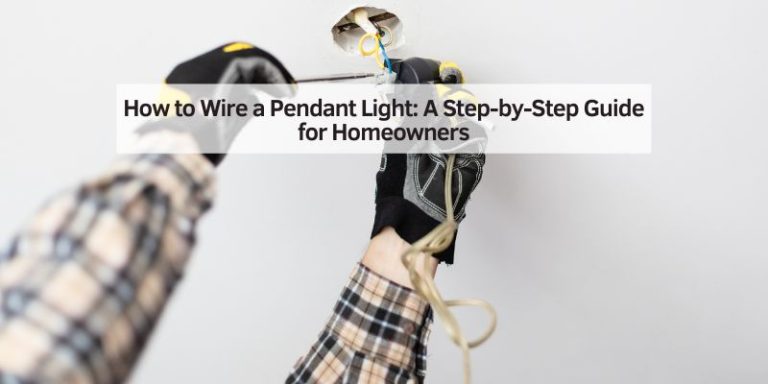
When replacing a bulb, always ensure the power is turned off at the switch or, even better, at the circuit breaker. This prevents accidental shocks. Screw the bulb in gently but firmly. Overtightening can damage the bulb or the socket. If you encounter resistance, stop and check that you’re using the correct bulb base and that the socket isn’t damaged.
5. Choose Quality Brands and Look for Certifications
As I mentioned, not all LEDs are created equal. Investing a little more in bulbs from reputable manufacturers can save you headaches and potential safety issues down the line. Look for certifications from organizations like UL, ETL, or Energy Star. These certifications mean the product has undergone rigorous testing for safety and performance. You can learn more about UL certification standards on their website, ul.com.
6. Replace Damaged Bulbs Immediately
If an LED bulb shows any signs of damage – cracks, loose parts, discoloration, or if it sparks or smells odd – turn off the power to that fixture immediately and replace the bulb. Do not attempt to repair a damaged LED bulb. Dispose of it safely according to local regulations for electronics.
7. Regular Fixture and Wiring Checks
While not specific to LEDs, it’s good practice to periodically inspect your light fixtures and visible wiring for any signs of wear, damage, or overheating. This is part of general home maintenance that contributes to overall safety, regardless of the type of bulbs you use.
Troubleshooting Common LED Issues
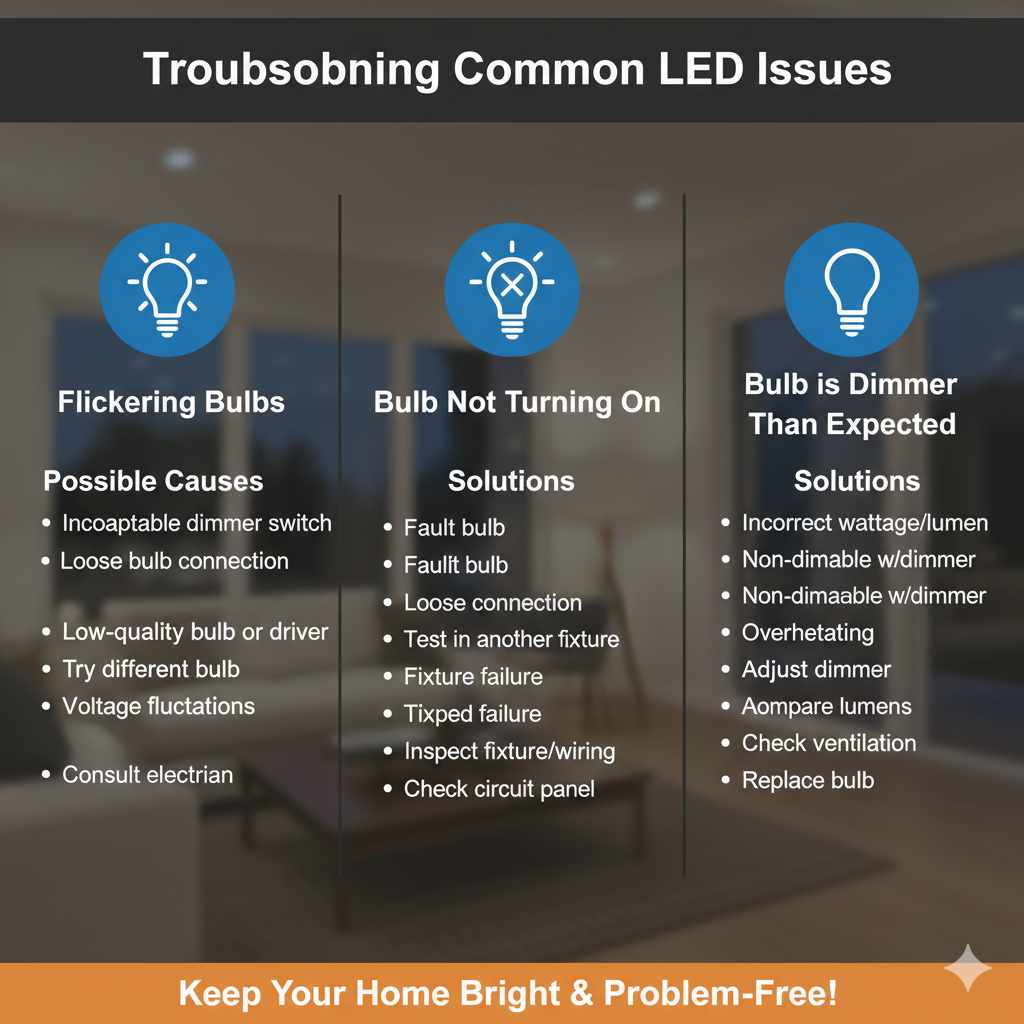
Even with the best practices, sometimes you might run into a hiccup. Here are a few common issues with LEDs and how to fix them:
Issue: Flickering Bulbs
Possible Causes:
- Incompatible dimmer switch.
- Loose bulb connection.
- Low-quality bulb or driver.
- Voltage fluctuations in your home’s wiring.
Solutions:
- Ensure you’re using an LED-compatible dimmer.
- Check that the bulb is screwed in securely.
- Try a different brand or model of LED bulb.
- If the problem persists across multiple bulbs in one area, consider having an electrician check your home’s wiring.
Issue: Bulb Not Turning On
Possible Causes:
- Bulb is faulty.
- Loose connection in the socket or fixture.
- The fixture itself has failed.
- The circuit breaker has tripped.
Solutions:
- Ensure the power is off, then try reseating the bulb.
- Test the bulb in another known working fixture.
- If the bulb works elsewhere, the issue is likely with the fixture or wiring.
- Check your circuit breaker panel.
Issue: Bulb is Dimmer Than Expected
Possible Causes:
- Incorrect wattage/lumen comparison.
- Using a non-dimmable bulb with a dimmer set too low.
- Overheating due to poor ventilation (can cause dimming).
- Faulty bulb.
Solutions:
- Compare lumens (brightness) rather than just equivalent wattage.
- If dimmable, ensure the dimmer is set appropriately.
- Check ventilation.
- Replace the bulb.
Frequently Asked Questions About LED Bulb Safety
Let’s tackle some of those common questions I hear:
Q1: Are LED bulbs safe to touch when they are on?
A: Yes, generally. While LEDs produce some heat, their exterior is usually cool enough to touch safely, unlike incandescent bulbs which can cause burns. However, always exercise caution and avoid touching the bulb base or internal components.
Q2: Can LED bulbs cause a fire if they overheat?
A: It’s extremely rare for a properly functioning, certified LED bulb to cause a fire due to overheating. The primary risks come from faulty wiring, incompatible fixtures, improper installation, or using very low-quality, uncertified products. Their low operating temperature makes them inherently safer than older lighting technologies.
Q3: What’s the difference between a dimmable and non-dimmable LED bulb?
A: Dimmable LED bulbs are designed with internal components that allow them to adjust their brightness when used with a compatible dimmer switch. Non-dimmable bulbs are not built to handle the fluctuating power from a dimmer and can flicker, fail prematurely, or even damage the dimmer if used together.
Q4: Should I worry about the heat sink on an LED bulb?
A: The heat sink is an important part of the LED’s design, helping to dissipate heat away from the light-emitting components. You don’t need to worry about it unless it’s being obstructed within a fixture, which could lead to overheating of the bulb’s internal electronics. Ensure it has airflow.
Q5: Are LED bulbs with mercury?
A: No, LED bulbs do not contain mercury. This is a significant safety advantage over CFL (Compact Fluorescent Lamp) bulbs, which do contain a small amount of mercury and require special disposal procedures.
Q6: How do I dispose of old LED bulbs?
A: While LEDs don’t contain hazardous materials like mercury, they do contain electronic components. It’s best to check with your local waste management or recycling center for specific guidelines. Many electronics recycling programs accept them.
Conclusion: Bright Light, Bright Safety
So, to wrap things up: are LED bulbs a fire hazard? The overwhelming answer is no, not when used correctly. Their advanced technology makes them incredibly efficient and, crucially, much cooler and safer than the bulbs that came before them. By understanding how they work, choosing quality products, and following simple installation and usage guidelines, you can enjoy the brilliant benefits of LED lighting in your home with complete confidence.
Remember to always check your fixtures, use compatible dimmers, ensure good ventilation, and opt for reputable brands with safety certifications. These steps are not just about preventing a fire hazard; they’re about ensuring the longevity and optimal performance of your lighting. With a little care and attention, you can make your home safer, brighter, and more energy-efficient. Happy DIYing, and stay safe!