Are LED Bulbs Worth It? Essential Guide
Yes, LED bulbs are absolutely worth it for most homeowners. They save you money on electricity bills, last much longer than old incandescent bulbs, and offer better light quality. This guide will show you exactly why and how to make the switch.
Ever stare at a pile of old light bulbs and wonder if there’s a better way? You’re not alone! For years, we’ve been replacing burnt-out bulbs, and it adds up. But what if I told you there’s a simple change that can save you money, reduce hassle, and even make your home look brighter and more inviting? That’s where LED bulbs come in. They might seem a little pricier upfront, but stick with me, and I’ll show you why they’re a smart investment for your home. We’ll break down everything you need to know, from understanding what they are to picking the right ones for every room.
Why Switch to LED Bulbs? The Big Picture
Switching to LED (Light Emitting Diode) bulbs is one of the easiest home improvement projects you can tackle. It doesn’t require any special tools or skills, and the benefits start adding up right away. Think of it like upgrading from an old, noisy hand saw to a smooth-cutting power tool – it just makes things better and easier!
Saving Money: Your Wallet Will Thank You
This is usually the biggest draw for most folks, and for good reason. LEDs are incredibly energy-efficient. This means they use much less electricity to produce the same amount of light compared to older bulb types.
Let’s look at how they stack up:
| Bulb Type | Energy Usage (for same brightness) | Lifespan |
|---|---|---|
| Incandescent | 100% (High) | ~1,000 hours |
| Halogen | ~75% (Medium) | ~2,000 hours |
| CFL (Compact Fluorescent Lamp) | ~25% (Low) | ~8,000 – 10,000 hours |
| LED (Light Emitting Diode) | ~15% (Very Low) | ~25,000 – 50,000 hours |
As you can see, LEDs use a fraction of the energy. The U.S. Department of Energy states that LEDs use at least 75% less energy than incandescent bulbs and last 25 times longer. Imagine cutting down your lighting energy costs by over three-quarters! Over the years, this translates into significant savings on your electricity bill. Plus, you won’t be buying replacement bulbs nearly as often, saving you money on those too.
Longevity: Less Hassle, More Light
Tired of climbing ladders to change bulbs in high-up fixtures? LEDs are built to last. While a traditional incandescent bulb might burn out in about a year with average use, an LED can last for 20 years or more. That’s a huge difference! Think about all the time and effort you’ll save not having to replace bulbs. This long lifespan also means fewer bulbs end up in the landfill, which is a win for the environment.
Light Quality: Brighter, Better, and More Options
Early energy-efficient bulbs sometimes had a reputation for harsh, unflattering light. LEDs have come a long way! Today, you can find LEDs that mimic the warm, cozy glow of incandescent bulbs or provide bright, clear light perfect for task areas. You have a lot more control over the color and brightness of the light in your home.
Durability: Built Tougher
Unlike glass incandescent bulbs, many LED bulbs are made with plastic, making them more resistant to breaking if dropped. They also don’t get as hot as incandescent bulbs, which can be a safety benefit, especially in homes with children or pets, or in enclosed light fixtures where heat can be an issue.
Understanding LED Basics: What You Need to Know
Before you head to the store, let’s quickly go over a few terms you’ll see on LED bulb packaging. Knowing these will help you pick the perfect bulb for any situation.
Lumens vs. Watts: Measuring Brightness
This is a common point of confusion. For years, we’ve used watts to describe how bright a bulb is. But watts actually measure energy consumption, not light output. LEDs use so little energy that their watt ratings are very low, even for bright bulbs.
Instead, you should look at lumens. Lumens measure the actual brightness of the light. The higher the lumen number, the brighter the bulb. Here’s a quick guide:
| Desired Brightness (Lumens) | Typical Incandescent Wattage | Typical LED Wattage |
|---|---|---|
| 450 lumens | 40W | 4-6W |
| 800 lumens | 60W | 8-12W |
| 1100 lumens | 75W | 12-15W |
| 1600 lumens | 100W | 15-20W |
So, if you want a bulb that’s as bright as your old 60-watt incandescent, look for an LED that produces around 800 lumens. The packaging will clearly state both the lumen output and the LED’s wattage.
Color Temperature: Setting the Mood
Color temperature describes the appearance of the light itself. It’s measured in Kelvin (K). This is where you can really customize the feel of your rooms.
- Warm White (2700K – 3000K): This is similar to the soft, yellowish light of traditional incandescent bulbs. It’s great for living rooms, bedrooms, and dining rooms where you want a cozy, relaxing atmosphere.
- Cool White / Bright White (3500K – 4100K): This light is whiter and more neutral. It’s good for kitchens, bathrooms, and workspaces where you need good visibility and a more alert environment.
- Daylight (5000K – 6500K): This light is very bright and has a bluish tint, mimicking natural daylight. It’s excellent for garages, workshops, or areas where you need maximum visibility and detail.
Think about the mood you want in each room. For example, in my workshop, I prefer a bright daylight bulb so I can see all the fine details when I’m working on a project. But in the living room, a warm white bulb makes it feel much more inviting.
Color Rendering Index (CRI): How True Are the Colors?
CRI is a scale from 0 to 100 that shows how accurately a light source reveals the true colors of objects. A higher CRI means colors will look more natural and vibrant.
Most LEDs have a CRI of 80 or higher, which is perfectly good for most home applications. If you work with colors a lot, like in an art studio or a craft room, you might want to look for LEDs with a CRI of 90 or above for the most accurate color representation. For general home use, 80+ is usually fine.
Bulb Shape and Base: Making Sure It Fits
Just like with older bulbs, LEDs come in many shapes and sizes. The most common shape is the A-shape (the classic bulb shape). You’ll also find smaller candelabra bulbs, floodlights, and more.
The base is the part that screws into the socket. The most common type is the medium screw base, often called an E26 base in North America. Make sure the base of the LED bulb matches the socket you have. Most standard household fixtures use E26 bases.
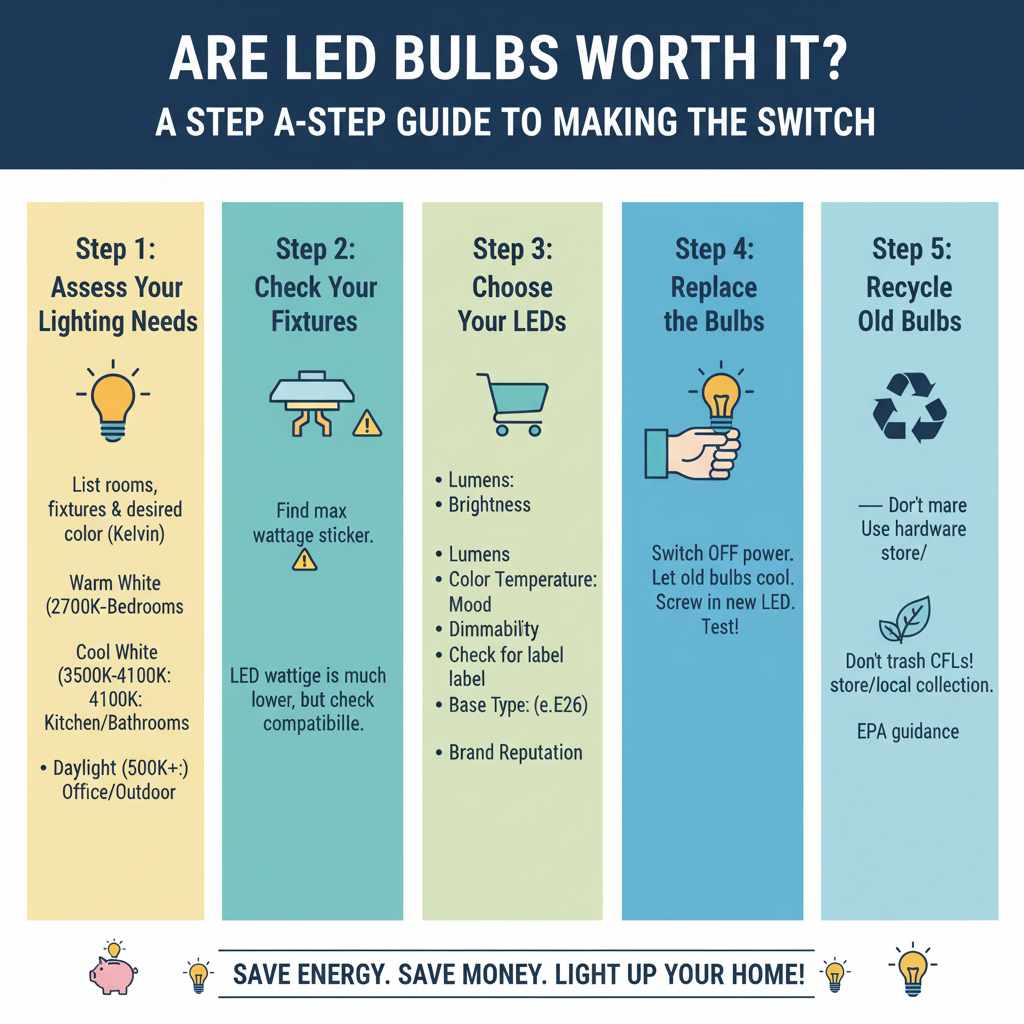
Are LED Bulbs Worth It? A Step-by-Step Guide to Making the Switch
Ready to start upgrading? It’s a simple process. Here’s how to make the switch smoothly:
Step 1: Assess Your Lighting Needs
Walk through your home and identify which bulbs you use most often or which ones burn out frequently. Make a list of the types of fixtures and the kind of light you want in each room.
- Living Room/Bedrooms: Aim for warm white (2700K-3000K) for a cozy feel. Consider dimmable LEDs if you have dimmer switches.
- Kitchen/Bathrooms: Bright white or cool white (3500K-4100K) is usually best for clarity.
- Home Office/Study: Daylight (5000K+) or bright white can help with focus and reduce eye strain.
- Outdoor/Garage: Daylight or cool white is good for visibility and security.
Step 2: Check Your Fixtures
Before buying, quickly check the maximum wattage your light fixture is rated for. While LEDs use much less wattage, it’s good practice to be aware of the fixture’s limits. You’ll usually find this information on a sticker inside the fixture itself. For example, a fixture might say “Max 60W.” Since a 60W equivalent LED might only use 8-10W, you’ll be well within the limit.
Step 3: Choose Your LEDs
Based on your assessment, start shopping. Look for:
- Lumens: Match the brightness you need.
- Color Temperature (Kelvin): Choose the mood you want.
- Dimmability: If you have dimmer switches, ensure the bulbs are specifically marked as “dimmable.” Not all LEDs are compatible with older dimmer switches, and using non-dimmable ones can cause flickering or damage.
- Base Type: Make sure it fits your socket (usually E26).
- Brand Reputation: Stick with reputable brands for better quality and reliability.
Step 4: Replace the Bulbs
This is the easiest part! Make sure the light switch is OFF. If the old bulb is hot, let it cool down first. Gently unscrew the old bulb and screw in the new LED bulb until it’s snug. Turn the switch on to test it.
Step 5: Recycle Old Bulbs Properly
Don’t just toss old bulbs in the trash, especially CFLs which contain a small amount of mercury. Many hardware stores and local recycling centers have collection programs for old bulbs. Check out resources like EPA guidance on CFL disposal for more information.
Are LED Bulbs Worth It? Pros and Cons
Like any technology, LEDs have their advantages and a few minor drawbacks to consider.
The Pros (Why They’re Great!)
- Massive Energy Savings: Significantly lower electricity bills.
- Exceptional Lifespan: Lasts for decades, reducing replacement frequency and cost.
- Lower Heat Output: Safer, reduces strain on fixtures, and can even lower cooling costs in summer.
- Instant On: No warm-up time like some older CFLs.
- Durable: More resistant to breakage.
- Environmentally Friendly: Uses less energy and lasts longer, reducing waste.
- Variety of Options: Wide range of brightness, colors, and features (like dimmability and smart capabilities).
The Cons (Things to Keep in Mind)
- Higher Upfront Cost: Individual LED bulbs can cost more than incandescent or CFL bulbs. However, this is quickly offset by energy and replacement savings.
- Dimmer Compatibility: You need to buy “dimmable” LEDs and ensure they work with your existing dimmer switch. Older dimmer switches might need upgrading for optimal performance with LEDs.
- Color Consistency: While much improved, some cheaper LEDs might have slight variations in color from batch to batch. Sticking with reputable brands helps avoid this.
- Directional Light: Some early LEDs were more directional, meaning light only came out in one direction. Modern LEDs are designed to emit light in a full 360-degree pattern, just like traditional bulbs.
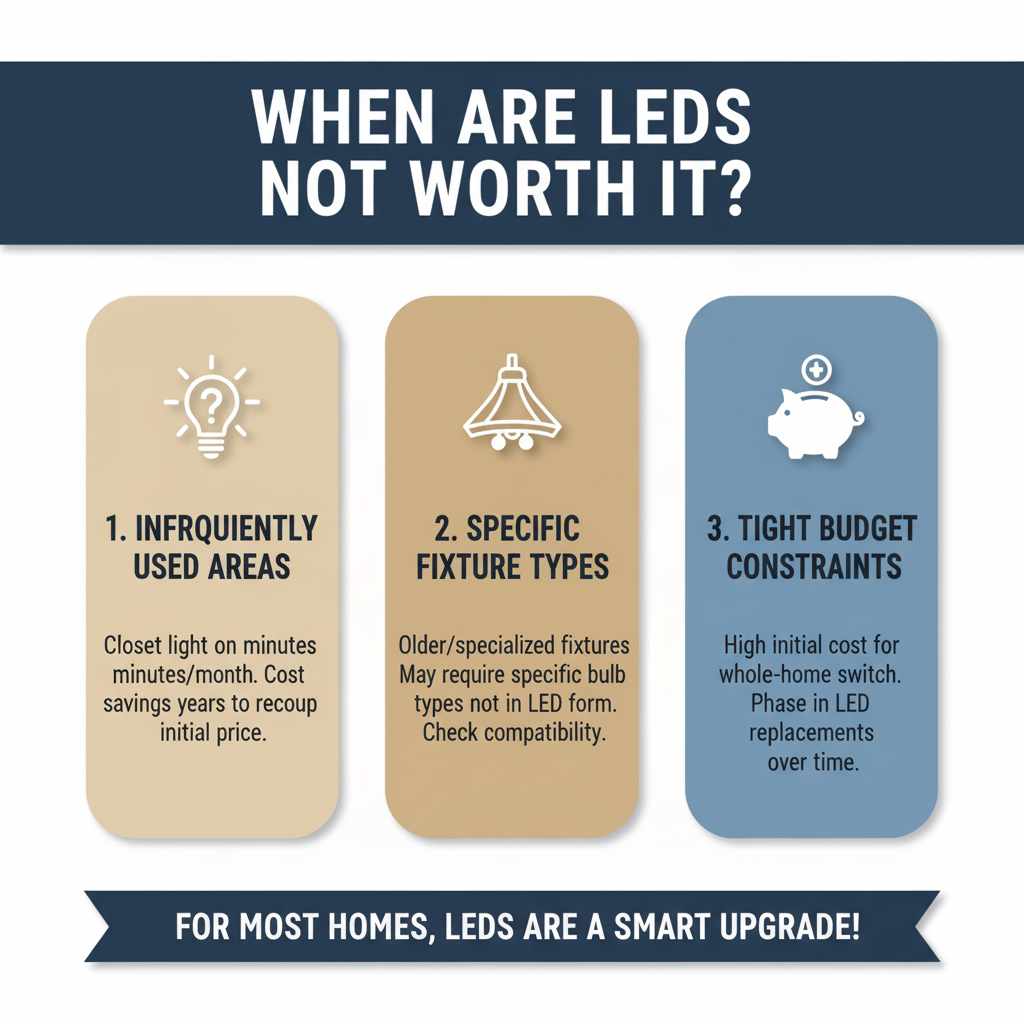
When Are LEDs NOT Worth It?
While LEDs are almost always a good choice, there are a couple of niche situations where you might pause:
- Very Infrequently Used Areas: If you have a closet light that is only on for a few minutes a month, the cost savings from an LED might take an extremely long time to recoup the higher initial price. However, the convenience of not having to replace it is still a factor.
- Specific Fixture Types: Some older or highly specialized light fixtures might have limitations or require specific bulb types that aren’t readily available in LED form. Always check compatibility.
- Budget Constraints: If your budget is extremely tight right now, you might phase in LED replacements over time rather than doing a whole-house switch at once.
For the vast majority of household lighting needs, the long-term savings and benefits of LEDs far outweigh any initial cost or minor considerations. It’s a worthwhile upgrade that pays for itself.
Frequently Asked Questions About LED Bulbs
Q1: How long do LED bulbs really last?
A: Most LEDs are rated for 25,000 to 50,000 hours of use. If you use a light for 3 hours a day, a 25,000-hour bulb could last over 22 years!
Q2: Do I need to replace my dimmer switches when I switch to LEDs?
A: Not always. You need to purchase “dimmable” LED bulbs. However, some older dimmer switches might not work well with LEDs, causing flickering or buzzing. If you experience problems, you might need to upgrade to an LED-compatible dimmer, which you can find at most hardware stores. You can learn more about dimmer compatibility from resources like Lutron’s LED compatibility guide.
Q3: Are LED bulbs safe for my home?
A: Yes, LED bulbs are very safe. They produce very little heat compared to incandescent bulbs, reducing the risk of burns or fire hazards. They also don’t contain mercury, unlike CFLs.
Q4: Can I put an LED bulb in any light fixture?
A: For most standard household fixtures (like lamps and ceiling lights with screw-in sockets), yes. Just make sure the LED bulb’s base type (usually E26) matches the socket and that the bulb shape fits physically. Always check the fixture’s maximum wattage rating, though LEDs use so little power that you’ll almost always be well under the limit.
Q5: What does “equivalent wattage” mean on LED packaging?
A: This refers to the brightness of the LED bulb compared to a traditional incandescent bulb. For example, an “800 lumen LED bulb” might be labeled as a “60W equivalent” because it produces the same amount of light as a 60-watt incandescent bulb, even though the LED itself only uses about 8-10 watts.
Q6: Do LED bulbs flicker?
A: Reputable, good-quality LED bulbs, especially those designed for home use, should not flicker noticeably. Flickering can sometimes occur if a non-dimmable LED is used with a dimmer, if the dimmer switch is incompatible, or if the bulb itself is of poor quality. If you notice flickering, try a different brand or check your dimmer compatibility.
Conclusion
So, are LED bulbs worth it? The answer is a resounding yes! They are a smart, practical, and cost-effective upgrade for virtually any home. The energy savings alone will pay for the bulbs over time, and the extended lifespan means you’ll spend less time on maintenance and more time enjoying your well-lit space. Plus, the improved light quality and variety of options allow you to create the perfect ambiance in every room.
Making the switch is simple, and the benefits are substantial. Start by replacing the bulbs you use most often or the ones that burn out the fastest. You’ll quickly see the difference in your energy bills and appreciate the convenience. Investing in LED lighting is an investment in your home and your wallet. Happy lighting!