Are LED Light Bulbs Polarity Sensitive? Essential Guide
Quick Summary:
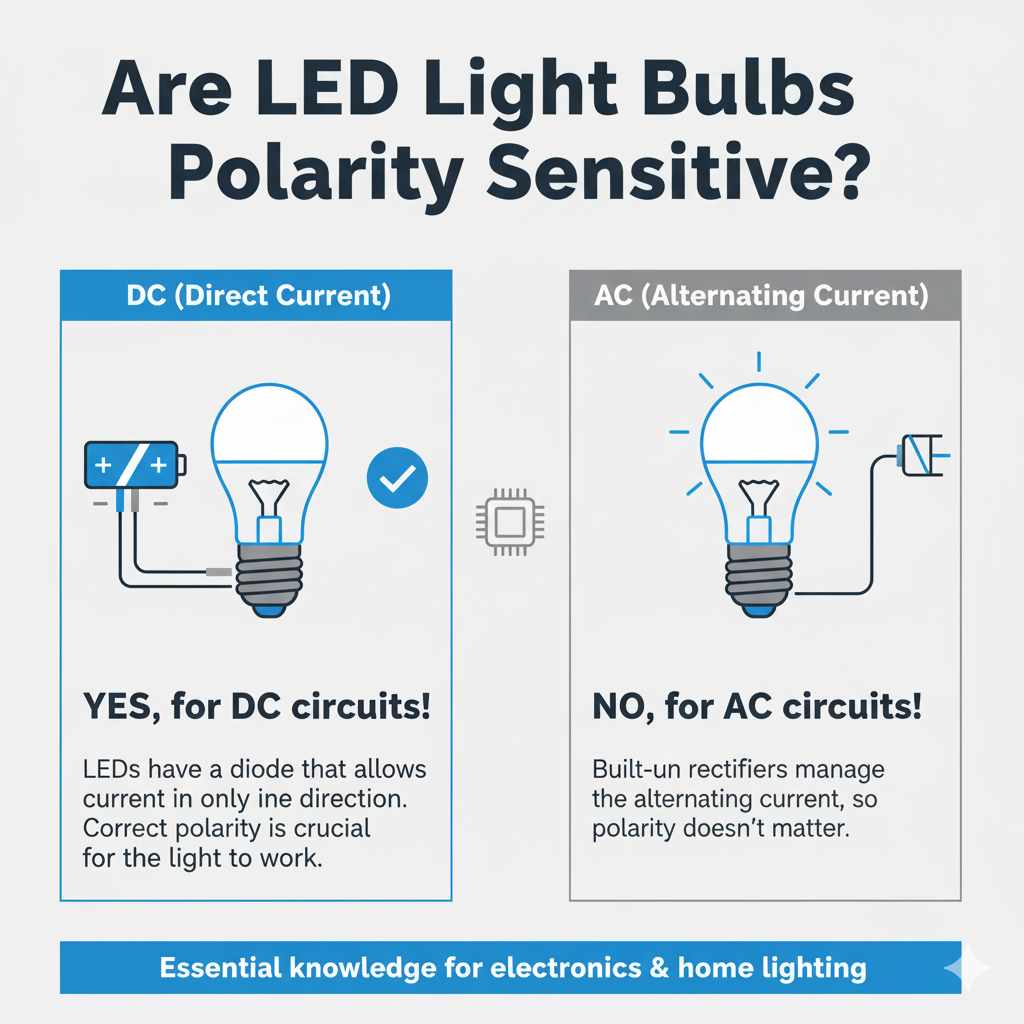
No, standard household LED light bulbs are not polarity sensitive. They are designed to work with the alternating current (AC) in your home, which means the electrical flow switches direction many times per second. You can install them in any orientation, and they will light up correctly. This guide explains why and what to look out for with specialized LEDs.
Ever found yourself staring at a new LED bulb, wondering if you need to be extra careful about how you screw it in? It’s a common question, especially when you’re used to older electronics where plugging things in the wrong way could cause problems. The good news is, for the vast majority of LED bulbs you’ll use in your home, you don’t need to worry about polarity at all. They’re designed to be as easy to install as the old incandescent bulbs, but with much better energy efficiency and longevity.
This guide will walk you through exactly why most LED bulbs aren’t polarity sensitive, what polarity actually means in electronics, and when you might encounter it. We’ll make sure you feel confident and informed, whether you’re simply swapping out a bulb in your living room or tackling a more involved lighting project. Let’s get your lights shining bright, the easy way!
Understanding Polarity: What It Means in Electronics
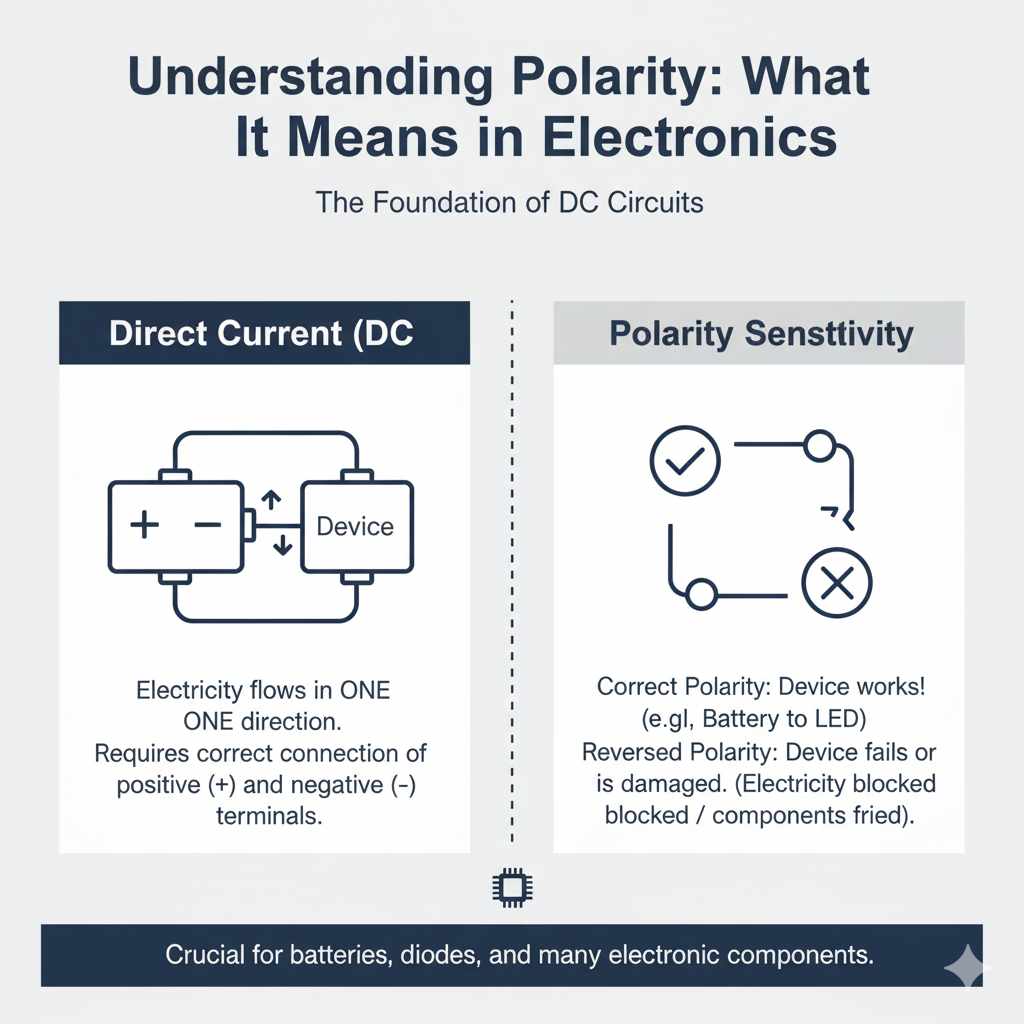
Before we dive into LED bulbs specifically, let’s quickly touch on what “polarity sensitive” means in the world of electronics. Think of it like a battery. Batteries have a positive (+) and a negative (-) terminal. For a simple circuit to work, you need to connect the positive terminal of the battery to the positive side of your device and the negative to the negative. If you get it wrong, the device simply won’t work, and sometimes, it can even get damaged. This is what we call polarity sensitivity.
In direct current (DC) circuits, the electricity flows in one direction, from positive to negative. Devices designed for DC often have specific connections for positive and negative inputs. If you reverse these, you’re essentially trying to force the electricity to flow the wrong way, which can break sensitive components.
Why Most Household LED Bulbs Aren’t Polarity Sensitive
The reason most LED bulbs you buy for your lamps, ceiling fixtures, and everyday use aren’t polarity sensitive comes down to the type of electricity powering your home. Your home is supplied with alternating current, or AC.
Unlike the direct current (DC) from a battery, AC electricity constantly reverses direction. In North America, this happens 60 times per second (60 Hz), and in many other parts of the world, it’s 50 times per second (50 Hz). Because the direction of the current is always changing, it doesn’t matter which way you connect the bulb, as it will be receiving current in both directions very rapidly. The internal electronics of the bulb are designed to handle this back-and-forth flow.
Inside a typical household LED bulb, there’s a small driver circuit. This circuit’s job is to take the high-voltage AC from your wall socket and convert it into the low-voltage DC that the LED chips need to produce light. This conversion process effectively smooths out the alternating current, so the LED chips themselves always receive a consistent, unidirectional flow of power, regardless of how the bulb is oriented in the socket. This makes them plug-and-play simple, just like their incandescent predecessors.
How Household AC Power Works
To really understand why polarity isn’t an issue, a quick look at AC power is helpful.
Imagine electricity as water flowing through a pipe. In a DC system, the water flows steadily in one direction. In an AC system, the water sloshes back and forth, reversing direction regularly. Your home’s wiring system is designed to deliver this sloshing, alternating flow.
The standard electrical outlets in your home provide this AC power. When you screw in a light bulb, you’re connecting it to this AC supply. The beauty of AC is that it’s efficient for transmitting electricity over long distances and powers many common household appliances without needing bulky transformers at every outlet. For a simple device like a light bulb, the alternating nature means it doesn’t care which wire is “positive” or “negative” at any given moment because those roles are constantly switching.
When Polarity Might Matter: Specialized LED Applications
While your everyday LED bulbs are polarity-agnostic, there are specific situations where polarity is crucial. These usually involve DC power sources or specialized LED setups.
1. Low-Voltage DC LED Strips and Modules
Many LED strips, accent lighting, and smaller LED modules are designed to run on low-voltage DC power, typically 12V or 24V. These often come with wires or connectors that you need to hook up to a DC power supply (like a transformer or battery). For these, there will be a clear positive (+) and negative (-) wire or terminal.
Connecting these incorrectly means the LEDs won’t light up. In most cases, this won’t damage the LEDs themselves, as they are often protected by built-in resistors. However, some more sensitive or higher-power modules could be damaged if reversed, so it’s always important to check the markings and connect them correctly.
For example, if you’re installing LED strip lighting under your kitchen cabinets, you’ll connect a 12V DC power adapter to the strip. The adapter will have a positive and negative output, and the strip will have corresponding positive and negative input points. Getting this wrong means no light. You can learn more about LED strip wiring from resources like SuperlightingLEDs, a reputable supplier of LED lighting solutions.
2. Automotive and RV Lighting
Vehicles and recreational vehicles (RVs) typically use 12V DC systems. If you’re replacing a bulb in your car’s interior dome light, brake light, or an RV’s internal lighting with an LED equivalent, polarity can matter. These bulbs often have specific connectors designed to fit into the vehicle’s wiring harness, and they expect a particular polarity. If you install an LED bulb backward, it simply won’t work. Some LED bulbs designed for automotive use have built-in polarity protection, but it’s best to assume they are polarity sensitive unless the packaging explicitly states otherwise.
3. Custom Electronics Projects and DIY Circuits
If you’re a hobbyist building your own electronic gadgets, using individual LEDs on a breadboard, or creating custom lighting circuits, you’ll absolutely need to pay attention to polarity. Individual LEDs are diodes, meaning they allow current to flow in only one direction. They have a positive leg (anode) and a negative leg (cathode). Connecting them incorrectly in a DIY circuit will prevent them from lighting up and could potentially damage them if there’s no current-limiting resistor in place.
The general rule for identifying the legs of an individual LED is that the longer leg is usually the anode (positive) and the shorter leg is the cathode (negative). The flat side of the LED’s casing also typically indicates the cathode side. For more detailed information on individual LEDs, resources like Electronics Tutorials offer in-depth explanations.
Identifying Polarity on DC Components
When you do need to worry about polarity, how do you identify it?
It’s usually quite straightforward. Look for markings on the component or its wiring:
- Positive (+): Often marked with a plus sign, “POS,” or sometimes indicated by a red wire.
- Negative (-): Often marked with a minus sign, “NEG,” “GND” (ground), or sometimes indicated by a black wire.
For LED strips, the PCB (Printed Circuit Board) usually has clear ‘+’ and ‘-‘ markings next to the connection points. For individual LEDs, as mentioned, the leg length and casing shape are the primary indicators.
Can Installing a Standard LED Bulb Backward Cause Damage?
This is a great question! For standard, screw-in household LED bulbs designed for AC power, the answer is almost universally no.
Because these bulbs are designed to work with alternating current (AC), and their internal driver circuitry converts this to the DC needed by the LEDs, they are inherently robust against incorrect installation in terms of polarity. The AC power itself is constantly switching, so there’s no fixed “positive” or “negative” to get wrong. Even if the bulb’s internal components were somehow sensitive to the direction of current at a specific instant, the rapid switching of AC would mean it’s only “wrong” for a fraction of a second before switching to the “correct” direction. The driver is built to handle this.
The only scenario where you might encounter an issue is if the bulb itself is faulty, or if there’s a problem with the light fixture’s wiring. But the act of screwing in a standard LED bulb into a standard AC socket the “wrong way” (if such a thing existed for AC) will not cause damage.
How to Check if an LED Bulb is Polarity Sensitive
If you’re unsure, especially with specialized bulbs, here’s how to find out:
- Read the Packaging: This is the first and most important step. Manufacturers will clearly state if a bulb is polarity sensitive or designed for DC applications. Look for terms like “DC only,” “12V,” “24V,” or specific polarity markings.
- Check the Bulb Itself: Sometimes, there are markings directly on the bulb or its base. For screw-in bulbs, this is rare because, as we’ve established, they are almost always designed for AC.
- Look at the Connector/Wires: If the bulb has wires or a specific connector (not a standard screw base), look for ‘+’ and ‘-‘ symbols. This is common for LED strips, automotive bulbs, and other DC-powered LEDs.
- Consult the Manufacturer’s Website: If you still can’t find information, visit the manufacturer’s website and look up the product specifications.
Table: Polarity Sensitivity Comparison
Here’s a quick comparison to help you remember:
| Type of LED Bulb/Application | Power Source | Polarity Sensitive? | Consequences of Incorrect Installation |
|---|---|---|---|
| Standard Household Screw-in LED Bulbs (e.g., A19, BR30) | Household AC (120V/240V) | No | None. Bulb will light up correctly. |
| Low-Voltage LED Strips (12V/24V) | DC Power Supply (Transformer, Battery) | Yes | LEDs will not light up. Potential damage to sensitive modules if reversed. |
| Automotive Interior/Exterior LEDs | Vehicle 12V DC System | Often Yes (check packaging) | Bulb will not light up. Potential damage to some bulbs. |
| Individual LEDs in DIY Circuits | DC Power Source (with resistor) | Yes | LED will not light up. Potential damage if connected directly to voltage without a resistor. |
Benefits of Using Standard LED Bulbs
Beyond the polarity question, it’s worth remembering why switching to standard LED bulbs is such a smart move for your home:
- Energy Efficiency: LEDs use significantly less energy than incandescent or even CFL bulbs, leading to lower electricity bills. According to the U.S. Department of Energy, LEDs use up to 75% less energy.
- Long Lifespan: They last much longer, often 15 to 25 times longer than traditional bulbs, meaning fewer replacements and less waste.
- Durability: LEDs are more resistant to shock and vibration because they don’t have filaments, making them a robust choice.
- Instant On: Unlike some older energy-efficient bulbs, LEDs reach full brightness immediately.
- Variety: They come in a huge range of shapes, sizes, color temperatures (warm white to cool white), and brightness levels to suit any application.
- Lower Heat Output: LEDs produce very little heat, which can help reduce cooling costs in warmer months and makes them safer to handle.
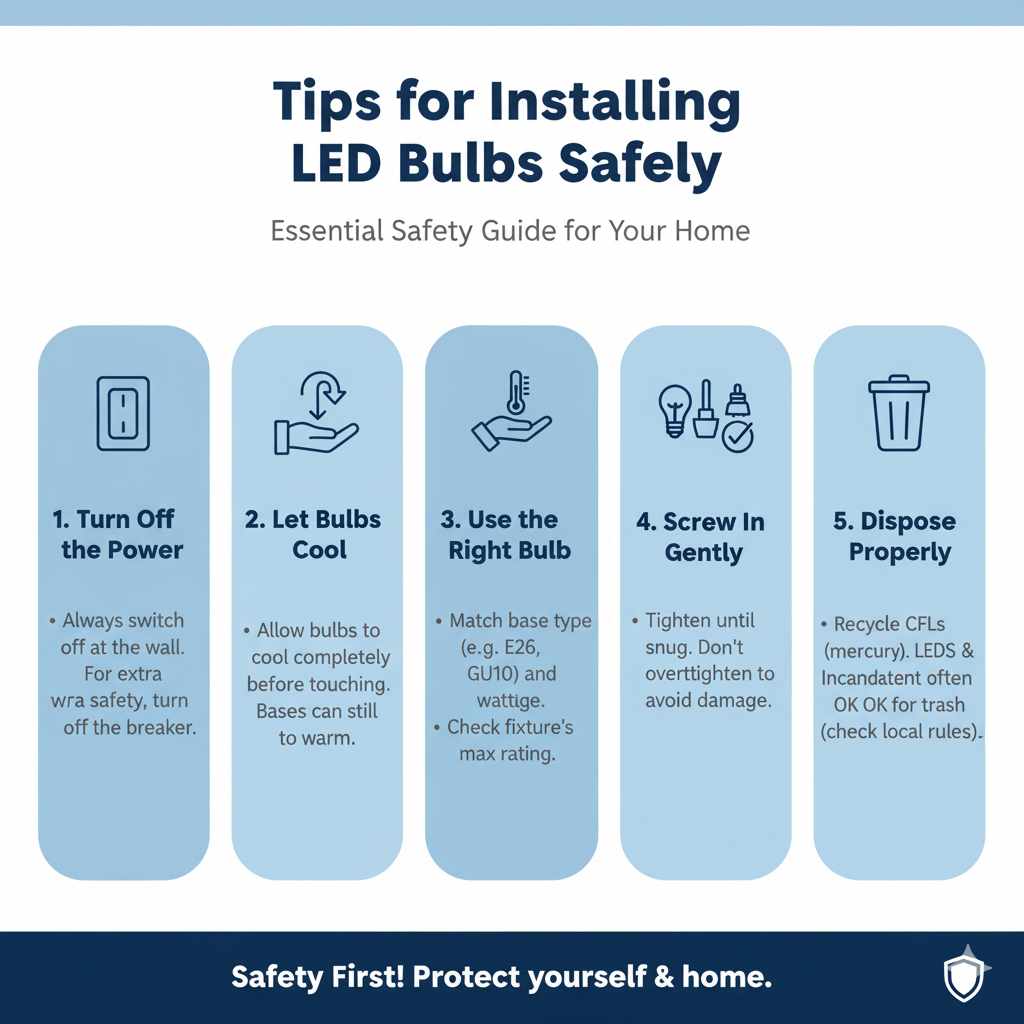
Tips for Installing LED Bulbs Safely
While polarity isn’t usually a concern for standard bulbs, safety always is!
- Turn Off the Power: Always switch off the light fixture at the wall switch before replacing a bulb. For extra safety, especially if you’re unsure, turn off the breaker that controls that circuit.
- Let Bulbs Cool: If you’re replacing a bulb that was recently on, let it cool down completely before touching it. Even though LEDs produce less heat, the base can still get warm.
- Use the Right Bulb: Ensure the new LED bulb has the correct base type (e.g., E26/E27 for standard screw-in, GU10 for some spotlights) and wattage rating for your fixture. Check the fixture for any maximum wattage limitations.
- Screw In Gently: Screw the LED bulb in until it’s snug. Don’t overtighten, as this can damage the bulb, the socket, or both.
- Dispose of Old Bulbs Properly: While LEDs are generally safe, older CFL bulbs contain a small amount of mercury and should be recycled. Incandescent and halogen bulbs can usually go in regular trash, but check local regulations.
Frequently Asked Questions (FAQ)
Q1: Do I need to worry about the positive and negative sides when screwing in an LED bulb?
A1: For standard LED bulbs that screw into your home’s light fixtures, no. They are designed for alternating current (AC) and are not polarity sensitive.
Q2: Can I use a 12V LED bulb in a standard 120V household socket?
A2: No, you cannot. A 12V LED bulb requires a 12V DC power source. Plugging it into a 120V AC socket will instantly destroy the bulb and could be a fire hazard. Always match the bulb’s voltage and power type (AC/DC) to your fixture.
Q3: What happens if I accidentally reverse the wires on an LED strip light?
A3: If you reverse the wires on a low-voltage LED strip, the LEDs will simply not light up. In most cases, this won’t cause permanent damage to the LEDs themselves, but it’s important to correct the wiring before turning on the power.
Q4: Are LED bulbs energy efficient?
A4: Yes, LED bulbs are highly energy efficient. They use significantly less electricity than incandescent bulbs, leading to lower energy bills and a reduced environmental impact.
Q5: How can I tell if an LED bulb is designed for DC power?
A5: Look at the packaging or the bulb itself. It will typically state “DC,” the voltage (e.g., 12V, 24V), and may have specific wire leads or connectors instead of a standard screw base.
Q6: My LED bulb flickers. Is this related to polarity?
A6: Flickering is usually not related to polarity for standard AC bulbs. It can be caused by a loose connection, an incompatible dimmer switch, a faulty bulb, or an issue with the fixture itself. Always ensure the power is off before checking connections.
Q7: Can I mix AC and DC LEDs in the same fixture?
A7: No, you should never mix AC and DC LEDs or attempt to power DC LEDs from an AC source without the correct adapter. Each type of LED requires a specific power source and voltage.
Conclusion
So, to put your mind at ease, the answer to “Are LED light bulbs polarity sensitive?” is a resounding no for the vast majority of bulbs you’ll encounter in your home. The standard screw-in LEDs that light up your living rooms, kitchens, and bedrooms are designed to work seamlessly with your home’s AC power, making them incredibly user-friendly. You can confidently screw them in without a second thought about positive or negative connections.
However, it’s always good to be aware of the exceptions. For specialized applications like LED strips, automotive lighting, or DIY electronics projects that use DC power, polarity is a critical factor. Always check the product information and markings to ensure you’re making the correct connections. By understanding these simple principles, you can continue to enjoy the benefits of modern LED lighting – saving energy, reducing waste, and enjoying bright, reliable light in your home. Happy lighting!