Are Ratcheting Wrenches Worth It? Your Guide for Automotive Enthusiasts
Hey there, friend! So, you’re wondering, are ratcheting wrenches worth it? I’m super excited to dive into this with you because it’s a question I’ve wrestled with myself as a car guy who’s spent countless hours under the hood. I still remember the first time I picked up a ratcheting wrench in my garage—it felt like a game-changer, but I wasn’t sure if it was worth the extra bucks.
After years of wrenching on everything from my old Chevy truck to my buddy’s project Mustang, I’ve learned the ins and outs of these tools. Whether you’re a weekend mechanic, a professional technician, or just love tinkering with cars, I’ve got you covered. Let’s sit down, like we’re hanging out in your shop with a cold soda, and I’ll break it all down in simple steps. This guide is packed with real-world tips for anyone in the USA looking to upgrade their toolbox. Ready to find out if ratcheting wrenches are your new best friend? Let’s get to it!
What Are Ratcheting Wrenches?
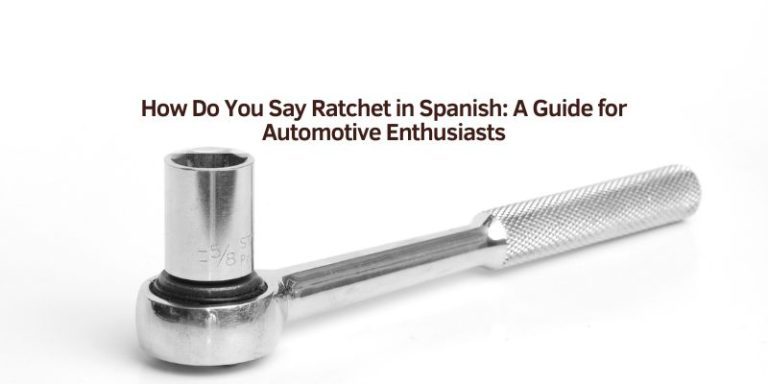
Ratcheting wrenches are combo wrenches with a twist—literally. One end has an open jaw, like a standard wrench, and the other has a box end with a ratcheting mechanism. This lets you turn bolts or nuts without lifting the wrench off, just by swinging it back and forth. I was blown away the first time I used one; it felt like magic compared to my old wrenches.
They come in metric and SAE (standard) sizes, just like regular wrenches, and you can get them individually or in sets. I started with a single 13mm for a specific job and ended up buying a whole set because I loved it so much. They’re built tough, usually from chrome-vanadium steel, and designed for tight spaces, which is perfect for automotive work.
Why Consider Ratcheting Wrenches for Automotive Work?
Cars are full of bolts in cramped spots—think engine bays or under dashboards. Ratcheting wrenches shine here because they save time and effort. I used one to swap out a starter motor in my truck, and it was a breeze compared to flipping a standard wrench over and over.
For us car folks, these wrenches are great for tasks like changing oil filters, tightening battery terminals, or assembling suspension parts. They’re faster than regular wrenches and more versatile than sockets in tight areas. I also love that they reduce knuckle-busting moments when you slip off a bolt. If you’re tired of slow, awkward wrenching, ratcheting wrenches are worth a look.
How Do Ratcheting Wrenches Work?
The magic is in the ratchet mechanism inside the box end. It has gears that let the wrench grip a bolt in one direction and slip freely in the other. You swing the wrench to tighten or loosen, then swing it back without turning the bolt. I practiced on a spare bolt to get the feel—it’s smooth and satisfying.
Some have a switch to reverse direction, while others require flipping the wrench over. My first set was non-reversible, and it worked fine, but I later got a reversible set for convenience. The open end works like a standard wrench, giving you two tools in one. I use the open end for quick starts and the ratchet for final tightening.
Types of Ratcheting Wrenches
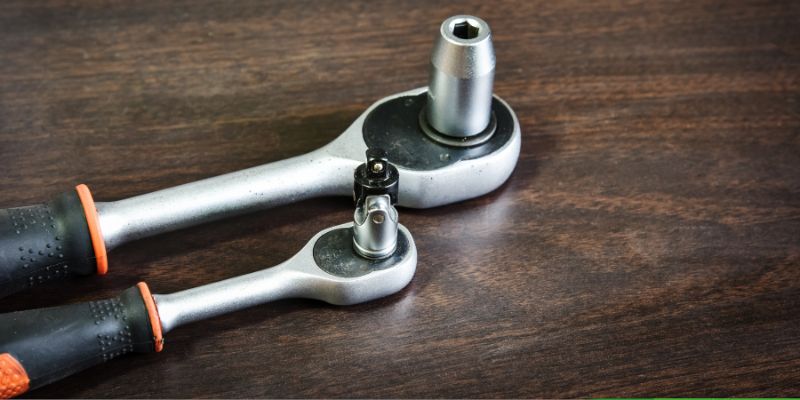
Not all ratcheting wrenches are the same, and I’ve tried a few kinds. Here’s what’s out there:
- Standard Ratcheting Wrenches: Box end ratchets, open end doesn’t. These are the most common. I use my 10-piece set for most car jobs.
- Reversible Ratcheting Wrenches: A switch lets you change direction without flipping. I got one for a tight alternator job, and it saved me tons of time.
- Flex-Head Ratcheting Wrenches: The box end pivots for angled access. I used one to reach a bolt behind my engine block.
- Stubby Ratcheting Wrenches: Short for super-tight spots. I keep a stubby 10mm in my glovebox for quick fixes.
- Double Ratcheting Wrenches: Both ends ratchet. These are rare but handy for specific tasks. I borrowed one once, but I don’t own any.
Each type has its place, depending on your job. I started with standard ones and added a flex-head later for tricky spots.
Benefits of Ratcheting Wrenches for Automotive Tasks
I’m hooked on ratcheting wrenches for good reasons. Here’s why they rock:
- Speed: You don’t lift the wrench off, so you work faster. I swapped a water pump in half the time with a ratcheting wrench.
- Tight Spaces: The ratchet works in spots where sockets or regular wrenches can’t fit. I used one under my dashboard to fix a loose bracket.
- Less Fatigue: No constant repositioning means less hand strain. My wrists thanked me after a long day of wrenching.
- Versatility: The open-end handles quick tasks, while the ratchet tackles tough bolts. I use both ends on most jobs.
- Durability: Good ones last forever. My five-year-old set still looks new despite heavy use.
For car work, these benefits make jobs smoother, whether you’re a pro or a DIYer like me.
Drawbacks of Ratcheting Wrenches
They’re not perfect, and I’ve hit a few snags. Here’s what to watch for:
- Cost: They’re pricier than standard wrenches. A good set costs $50-$150, while basic wrenches are $20. I saved up for mine but felt the pinch.
- Bulk: The ratchet end is thicker, so it might not fit in super-narrow spots. I had to use a regular wrench once for a tight fuel line.
- Strength Limits: They’re strong but can break if you over-torque. I stripped a cheap one by leaning too hard.
- Maintenance: Gears can gum up with grime. I clean mine with WD-40 after muddy jobs.
- Learning Curve: Takes practice to use smoothly. My first job was clunky until I got the rhythm.
These cons are minor compared to the pros, but they’re worth knowing before you buy.
Are Ratcheting Wrenches Worth the Cost?
This is the big question, and my answer is a big yes, for most people. A good set costs $50-$100, but it saves time and frustration. I spent $80 on a 12-piece set, and it’s paid off in faster repairs and fewer busted knuckles. If you work on cars often, like I do, they’re a no-brainer.
For occasional DIYers, the cost might sting. You could start with one or two sizes you use most, like 10mm or 13mm, for $10-$20 each. I did this before committing to a set. Professionals will love the speed and durability, especially for repetitive tasks. Either way, they’re a solid investment if you value efficiency.
Choosing the Right Ratcheting Wrenches
Picking the best wrench depends on your needs. I’ve bought a few duds, so here’s what I check:
- Material: Chrome-vanadium steel is tough and rust-resistant. My set’s held up through grease and rain.
- Gear Count: More gears (72 or higher) mean smoother ratcheting with less swing. My 72-tooth wrenches work in tight spots.
- Size Range: Sets cover 8 mm- 19 mm or 1/4”-3/4” SAE. I got a combo set for both metric and SAE to handle any car.
- Comfort: Look for grippy handles. My set has a textured grip, great for oily hands.
- Brand: Trusted names like GearWrench, Craftsman, or Tekton offer quality. I went with GearWrench and haven’t looked back.
- Warranty: Lifetime warranties are common. My set’s guaranteed, so I don’t worry about breaks.
A mid-range set costs $60-$100 and lasts years. I avoid no-name brands—my $10 knockoff broke fast.
How to Use Ratcheting Wrenches Properly
Using these wrenches is easy, but technique matters. I’ve learned some tricks to make them shine:
- Check Direction: For reversible wrenches, set the switch to tighten or loosen. I double-check to avoid stripping bolts.
- Start with Open End: Use the open end to break loose stuck bolts. I do this to avoid stressing the ratchet.
- Small Swings: Short back-and-forth motions work best. I use quick flicks in tight engine bays.
- Apply Steady Pressure: Don’t force it—let the gears do the work. I stripped a bolt once by pushing too hard.
- Clean After Use: Wipe off grease to keep gears smooth. I use a rag and WD-40 monthly.
Practice on a spare bolt to get the feel. I did this in my driveway and was a pro in no time.
Maintaining Your Ratcheting Wrenches
Good care keeps your wrenches working like new. I neglected mine once, and the gears got sticky—not cool! Here’s how I maintain them:
- Clean Regularly: Wipe with a rag after use. I soak mine in degreaser if they’re greasy.
- Lubricate Gears: A drop of WD-40 or light oil keeps them smooth. I do this every few months.
- Store Properly: Keep in a toolbox or pouch to avoid dings. My set came with a roll-up pouch.
- Check for Damage: Look for worn gears or cracks. I replaced a damaged 10mm under warranty.
- Avoid Water: Rust kills wrenches. I dry mine if they get wet during outdoor jobs.
My set’s five years old and still flawless because I take care of it. A quick wipe-down after each job does wonders.
Ratcheting Wrenches vs. Standard Wrenches
How do they stack up against regular combo wrenches? I’ve used both, so here’s the scoop:
- Speed: Ratcheting is way faster. I tightened a suspension bolt in seconds with a ratchet, versus minutes with a standard.
- Ease: Ratcheting reduces hand strain. My standard wrench left me sore after a long day.
- Space: Ratcheting needs less swing room. I used one in a packed engine bay where my standard wrench was useless.
- Cost: Standard wrenches are cheaper, around $20-$30 for a set. My ratcheting set cost $80.
- Strength: Standard wrenches handle more torque. I use them for super-stuck bolts to avoid breaking my ratchet.
For most car work, ratcheting wins, but I keep standard wrenches for heavy-duty tasks or as backups.
Ratcheting Wrenches vs. Sockets
Sockets are another go-to for car work, so how do ratcheting wrenches compare? I use both, and here’s my take:
- Access: Wrenches fit where sockets can’t, like flat surfaces or tight corners. I used a wrench for a battery terminal where my socket was too bulky.
- Speed: Sockets with a ratchet are fast, but wrenches don’t need a separate tool. I grab my wrench for quick jobs.
- Portability: Wrenches are slimmer and easier to carry. I keep a few in my glovebox, unlike my socket set.
- Torque: Sockets handle more force for big bolts. I use sockets for lug nuts but wrenches for smaller fittings.
- Versatility: Wrenches have an open end for extra options. I use the open end when a socket won’t grip.
I love both, but wrenches are my pick for tight spaces and quick tasks. Sockets rule for heavy jobs.
Best Uses for Ratcheting Wrenches in Automotive Work
These wrenches shine in specific car tasks. Here’s where I use them most:
- Engine Work: Tightening bolts on water pumps, alternators, or starters. I swapped a thermostat using a 10mm ratchet.
- Suspension: Adjusting shocks or control arms. I used a 15mm sway bar for my truck.
- Interior Fixes: Securing brackets or panels under the dash. A stubby 8mm saved me on a heater fix.
- Exhaust Systems: Tightening clamps or flanges. I used a flex-head for a tricky exhaust bolt.
- Battery Maintenance: Securing terminals or hold-downs. My 10mm ratchet makes this a breeze.
They’re not ideal for high-torque jobs like crankshaft bolts—I use a torque wrench for those. But for most car repairs, they’re a lifesaver.
My Experience with Ratcheting Wrenches
I’ve been using ratcheting wrenches for five years, and they’ve changed how I work. My first job was swapping an oil filter housing, and the wrench made it so fast that I was hooked. I’ve since used them on brakes, fuel lines, and even bike repairs. They’ve saved me hours and spared my hands from aches.
I started with a GearWrench set and added a few Tekton flex-heads for tough angles. My only regret is not buying them sooner—I wasted years wrestling with standard wrenches. They’re not cheap, but every penny’s been worth it for the time and ease they bring.
Tips for Getting the Most Out of Ratcheting Wrenches
I’ve picked up some tricks to maximize these tools:
- Start Small: Buy one or two sizes you use most, like 10mm or 13mm, to test them. I did this before getting a set.
- Use in Pairs: Two wrenches (one for the bolt, one for the nut) speed up jobs. I used two for a fuel pump swap.
- Combine with Sockets: Use sockets for initial loosening, then wrenches for tight spaces. I do this for suspension work.
- Keep Them Handy: Store a few in your car for roadside fixes. My 10mm and 13mm live in my Jeep.
- Practice Technique: Short, quick swings work best. I practiced to avoid over-torquing.
These tips make my wrenches even more effective, whether I’m in the garage or on the road.
Are They Worth It for Different Types of Users?
Let’s break it down by who you are:
- DIYers: If you work on cars a few times a year, one or two wrenches are enough. I started this way and loved the speed.
- Hobbyists: For regular car projects, a mid-range set is perfect. My set handles all my weekend builds.
- Professionals: If you wrench daily, invest in a high-end set with flex-heads or reversibles. I’ve seen pros swear by them.
- Beginners: They’re easy to use and build confidence. I gave a 10mm to my nephew, and he’s hooked on fixing his bike.
No matter your level, they add value if you work on cars. I’d just scale the investment to your needs.
Here’s a table comparing wrench types:
| Wrench Type | Best For | Pros | Cons | Price (Single) |
|---|---|---|---|---|
| Standard Ratcheting | General car work | Affordable, versatile | No direction switch | $10-$20 |
| Reversible | Tight spaces | Quick direction change | Pricier | $15-$25 |
| Flex-Head | Angled bolts | Reaches tough spots | Less torque | $20-$30 |
| Stubby | Super-tight areas | Compact | Limited leverage | $10-$20 |
Common Mistakes to Avoid
I’ve goofed up a few times, so let’s skip these pitfalls:
- Over-Torquing: Don’t lean too hard—gears can strip. I broke a cheap wrench this way.
- Using in Wrong Spots: Avoid super-tight spaces where the ratchet’s too thick. I switched to a standard wrench once for this.
- Skipping Maintenance: Clean and lube to avoid sticky gears. I learned this after a gritty wrench slowed me down.
- Buying Cheap: Low-quality wrenches break fast. My $10 knockoff lasted one job.
- Wrong Size: Double-check bolt sizes. I grabbed a 12mm instead of a 13mm once and wasted time.
Take it slow, and you’ll avoid my rookie mistakes. I laugh at them now, but they taught me a lot.
Why I Love Ratcheting Wrenches
These wrenches make car work fun and fast. They’re tough, reliable, and save my hands from torture. I feel like a pro every time I flick one in a tight spot. They’re perfect for automotive tasks, from quick fixes to big builds. My set’s been with me through countless repairs, and I can’t imagine my toolbox without them.
Wrapping It Up with a Tight Bolt
Hey, buddy, you’re now a ratcheting wrench expert! From picking the right set to using them like a pro, you’ve got all the know-how to make your car projects faster and easier. I remember my first clunky job with one, but now I grin every time I hear that ratchet click. Head to your shop, grab a wrench, and tackle that next repair with confidence. Whether you’re swapping a starter or just tightening a bolt, ratcheting wrenches will make it a breeze. So, hit the garage, turn some bolts, and enjoy the ride—I’m cheering you on!
FAQ: Your Questions Answered
Are ratcheting wrenches worth it for beginners?
Yes, they’re easy to use and speed up simple jobs. I gave one to my nephew, and he loves it.
Can ratcheting wrenches break easily?
Good ones are tough, but cheap ones can strip if you over-torque. I stick with trusted brands.
What’s the best brand for ratcheting wrenches?
GearWrench, Craftsman, and Tekton are solid. My GearWrench set’s been flawless for years.
Do I need a full set of ratcheting wrenches?
Not always—start with common sizes like 10mm or 13mm. I bought a set later for versatility.
Can ratcheting wrenches fit in tight spaces?
Yes, but the ratchet end is thicker, so check the clearance. I use stubby ones for super-tight spots.
How do I clean ratcheting wrenches?
Wipe with a rag and use WD-40 on gears if sticky. I clean mine monthly to keep them smooth.
Are ratcheting wrenches better than sockets?
They’re better for tight, flat spaces, but sockets handle more torque. I use both depending on the job.