Are There Different Strengths of Hot Glue Sticks?
When you’re crafting or fixing things, you might wonder if all hot glue sticks are the same. The question, Are There Different Strengths of Hot Glue Sticks?, comes up for many beginners. It can feel confusing to pick the right one.
Don’t worry, it’s simpler than you think! We’ll walk through it step-by-step so you know exactly what to look for. Get ready to learn about your glue sticks!
Different Strengths of Hot Glue Sticks Explained
Hot glue sticks are amazing tools for quick fixes and creative projects. They melt fast and bond surfaces together. But have you ever noticed that some glue projects seem stronger than others?
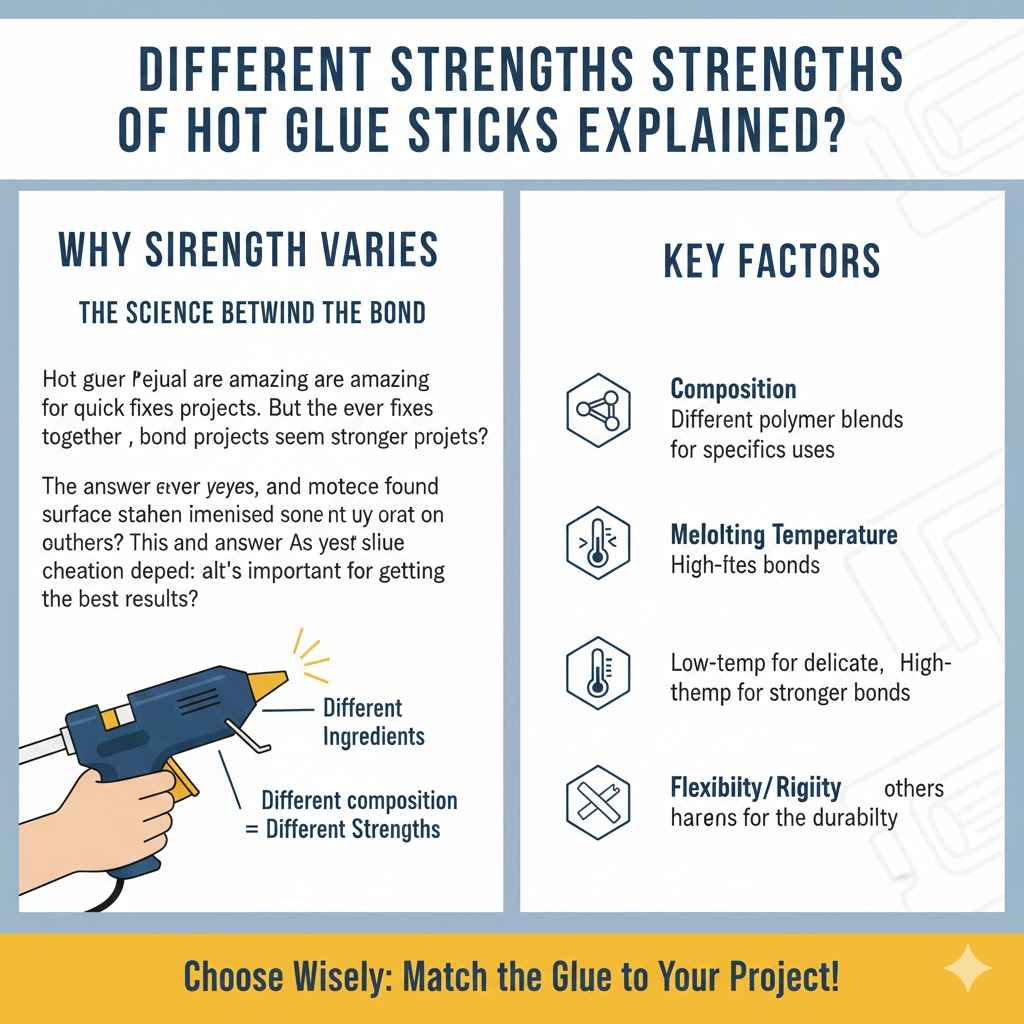
This leads to the common question: Are There Different Strengths of Hot Glue Sticks? The answer is yes, and it’s important for getting the best results.
Glue sticks aren’t just about how much glue comes out. They are made with different ingredients. These ingredients affect how strong the bond is once the glue cools and hardens.
Think of it like paint. You have basic paint and then specialized paints for different jobs, like outdoor use or metal. Hot glue sticks work in a similar way.
What Makes Hot Glue Sticks Strong or Weak?
The strength of a hot glue stick mostly comes down to its main ingredients. These are typically a type of plastic called polymer. Different polymers have different properties.
Some are more flexible, while others are very rigid and strong.
When hot glue melts, the polymers and other additives form a network as they cool. The type of polymer used will determine how tightly this network forms and how well it sticks to surfaces. Some common polymers in glue sticks include EVA (ethylene-vinyl acetate) and polyolefin.
EVA Based Glue Sticks
EVA-based glue sticks are the most common type you’ll find. They are great for general-purpose crafting and household repairs. EVA glue is known for its good adhesion to porous materials like wood, fabric, and paper.
It also offers a decent amount of flexibility, which is useful for projects that might bend or move slightly.
The strength of EVA glue can vary. Some formulations are designed for basic bonding, while others are enhanced for better heat resistance or stronger adhesion. For most everyday tasks, EVA glue sticks are perfectly adequate.
Polyolefin Based Glue Sticks
Polyolefin glue sticks, such as those made from polyethylene or polypropylene, offer a different set of properties. These are often considered stronger and more durable than standard EVA glue sticks. They tend to be more resistant to heat and moisture.
Polyolefin glue is excellent for bonding difficult surfaces like plastics, metals, and even some types of rubber. Because these materials can be less porous, a stronger, more resilient adhesive is needed to create a lasting bond. They create a very tough, almost plastic-like bond.
Specialty Glue Sticks
Beyond the basic types, there are also specialty hot glue sticks. These are formulated for very specific purposes:
- High-Temperature Glue Sticks: These are designed to withstand higher temperatures without softening or losing their bond. They are good for outdoor projects or items that might be exposed to heat.
- Low-Temperature Glue Sticks: These melt at a lower temperature, making them safer for use with delicate materials like foam, balloons, or thin fabrics. They are less likely to damage sensitive items. While they are “gentler,” they might not have the same structural strength as high-temp or all-purpose sticks.
- All-Temperature Glue Sticks: These are formulated to work well in both high and low-temperature glue guns, offering a good balance of adhesion and versatility.
- Glitter or Colored Glue Sticks: These are primarily for decorative purposes. Their adhesive strength is usually comparable to basic EVA glue sticks.
How to Identify Different Glue Stick Strengths
It’s not always easy to tell the strength of a glue stick just by looking at it. Packaging is your best guide. Here’s what to look for:
Read the Packaging
Manufacturers often specify the intended use or type of glue on the packaging. Look for terms like:
- “All-Purpose” or “General Use”
- “Heavy Duty” or “Industrial Strength”
- “Craft Glue”
- “Wood Glue” or “Fabric Glue” (though these are less common as specific hot glue stick types)
- “For Difficult Surfaces”
If the packaging mentions it’s made for plastics, metal, or other challenging materials, it’s likely a stronger formulation, possibly polyolefin-based.
Consider the Color
While not a definitive rule, color can sometimes offer a clue:
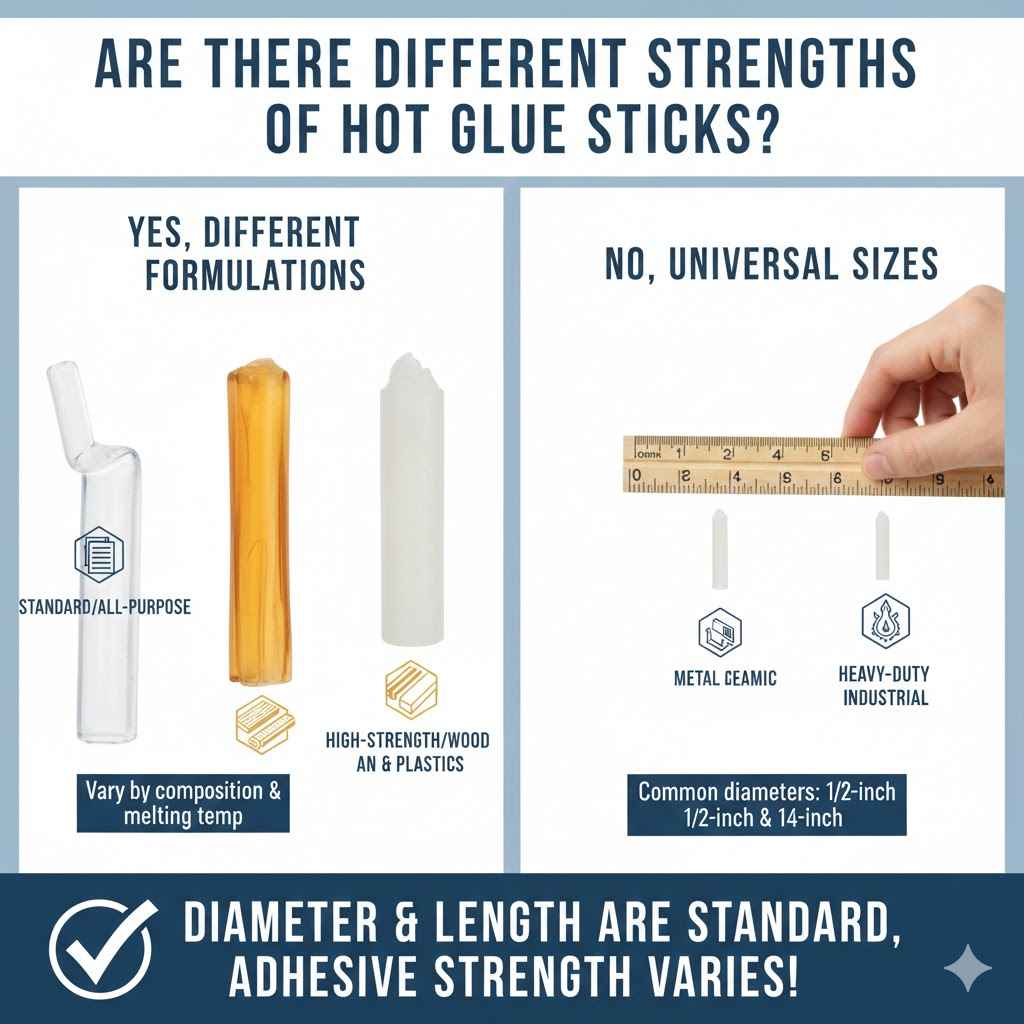
- Clear/Translucent: Often general-purpose, good for most crafts.
- White/Opaque: Can be stronger or designed for better coverage.
- Tan/Brown: Sometimes indicates a stronger, more industrial-grade glue.
However, always rely on the product description more than just the color.
Diameter and Length
The diameter and length of a glue stick don’t affect its strength. They only determine how much glue your glue gun can hold and how long it will last before needing a refill. Standard diameters are usually 0.27 inches (approx.
7mm) and 0.43 inches (approx. 11mm).
When Does Glue Stick Strength Matter Most?
The “strength” of a hot glue bond is really about its durability and how well it holds up over time and under stress. Here are situations where choosing the right strength is key:
Structural Repairs
If you’re trying to fix something that bears weight or needs to stay firmly in place, you’ll want a strong glue stick. This could be repairing furniture, reattaching a loose sole on a shoe, or securing a piece of trim.
Projects Involving Different Materials
Bonding dissimilar materials often requires a stronger, more versatile adhesive. For instance, attaching plastic to wood or metal to fabric might need more than a basic craft glue stick.
Outdoor or High-Heat Applications
If your project will be exposed to sunlight, rain, or higher temperatures, a standard glue stick might fail. You’ll need a high-temperature or specialized strong glue stick that can withstand these conditions.
Delicate Crafting
For very delicate materials like thin fabrics, foam, or certain plastics, you might actually want a less strong, lower-temperature glue. This isn’t about structural strength, but about avoiding damage to the material itself. So, strength can sometimes mean “too much” if not carefully chosen.
Testing Glue Stick Strength
Sometimes, the best way to know is to test. If you have a few different types of glue sticks, try bonding two scraps of the material you plan to use. Once the glue cools completely, try to pull the pieces apart.
See which glue stick requires the most force.
Another test is to bend the bonded pieces slightly. A strong bond will resist breaking. A weaker bond might crack or detach.
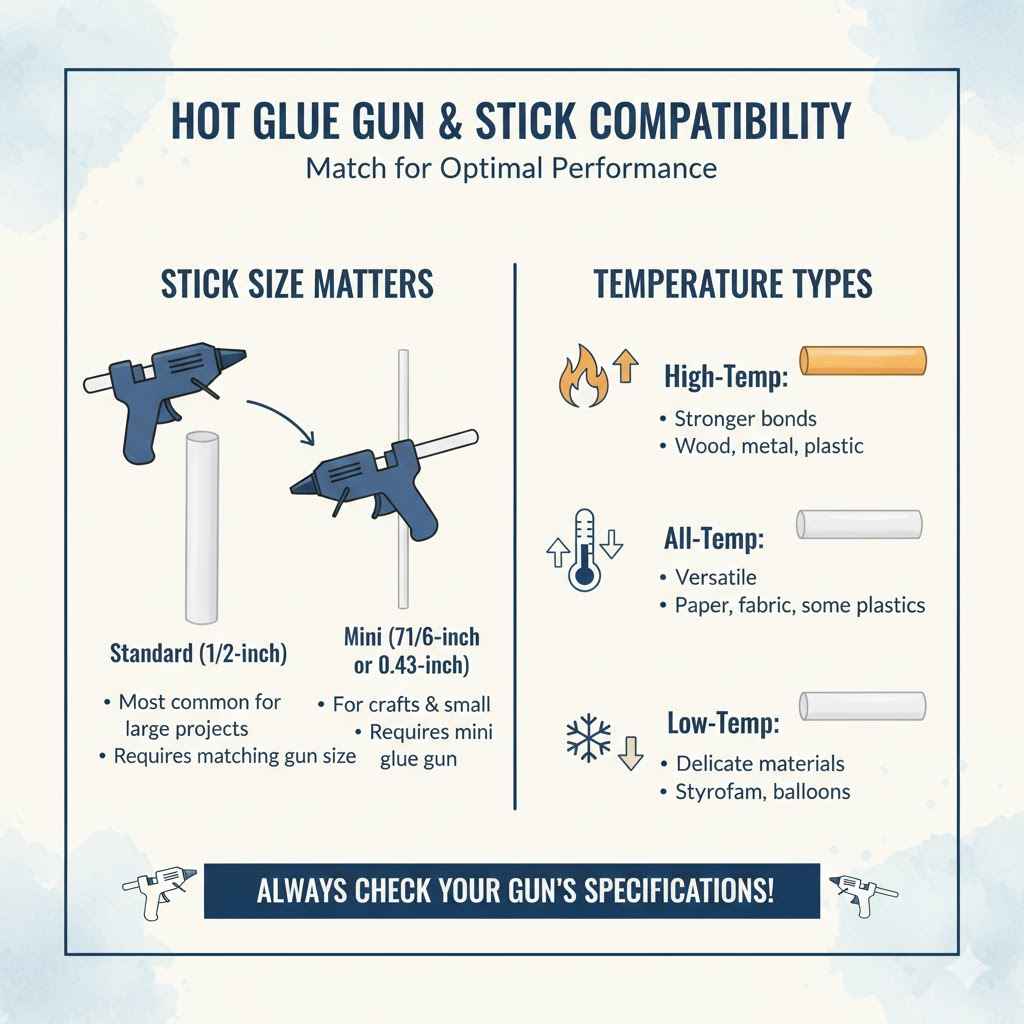
Hot Glue Gun Compatibility
It’s also important to make sure your glue stick is compatible with your glue gun. Most glue guns are designed for specific stick diameters. Using the wrong size can cause issues.
Also, some high-temperature glue sticks need a high-temperature glue gun to melt properly.
A low-temperature glue gun will melt low-temp sticks. It can also melt all-temperature sticks but might not get them as hot as a high-temp gun. A high-temperature glue gun can melt high-temp sticks and often also works with all-temperature and even some low-temp sticks, though it’s best to use the recommended type for optimal results.
Frequently Asked Questions
Question: Are all hot glue sticks the same size?
Answer: No, hot glue sticks come in different diameters and lengths. The most common diameters are about 0.27 inches (7mm) and 0.43 inches (11mm). Lengths can also vary.
Question: Can I use a strong glue stick on delicate materials?
Answer: Generally, no. Strong, high-temperature glue sticks can damage delicate materials like thin fabrics or foam. It’s better to use low-temperature glue sticks for such projects.
Question: How do I know if a glue stick is high strength?
Answer: Look for descriptions on the packaging that mention “heavy duty,” “industrial strength,” or suitability for bonding plastics, metal, or wood. Polyolefin-based glues are often stronger.
Question: Will a strong glue stick make my project last longer?
Answer: Often, yes. A stronger glue bond is more durable and less likely to break or detach over time, especially if the project is under stress or exposed to environmental factors.
Question: Where can I buy different strengths of hot glue sticks?
Answer: You can find various strengths of hot glue sticks at craft stores, hardware stores, and online retailers. Check product descriptions carefully.
Final Thoughts
So, yes, there are definitely different strengths of hot glue sticks. The strength comes from the materials used to make them, like EVA or polyolefin. For everyday crafts, standard sticks are usually fine.
For tougher jobs or tricky surfaces, look for specially labeled stronger or industrial-grade sticks. Choosing the right stick makes your projects hold up better. Happy gluing!