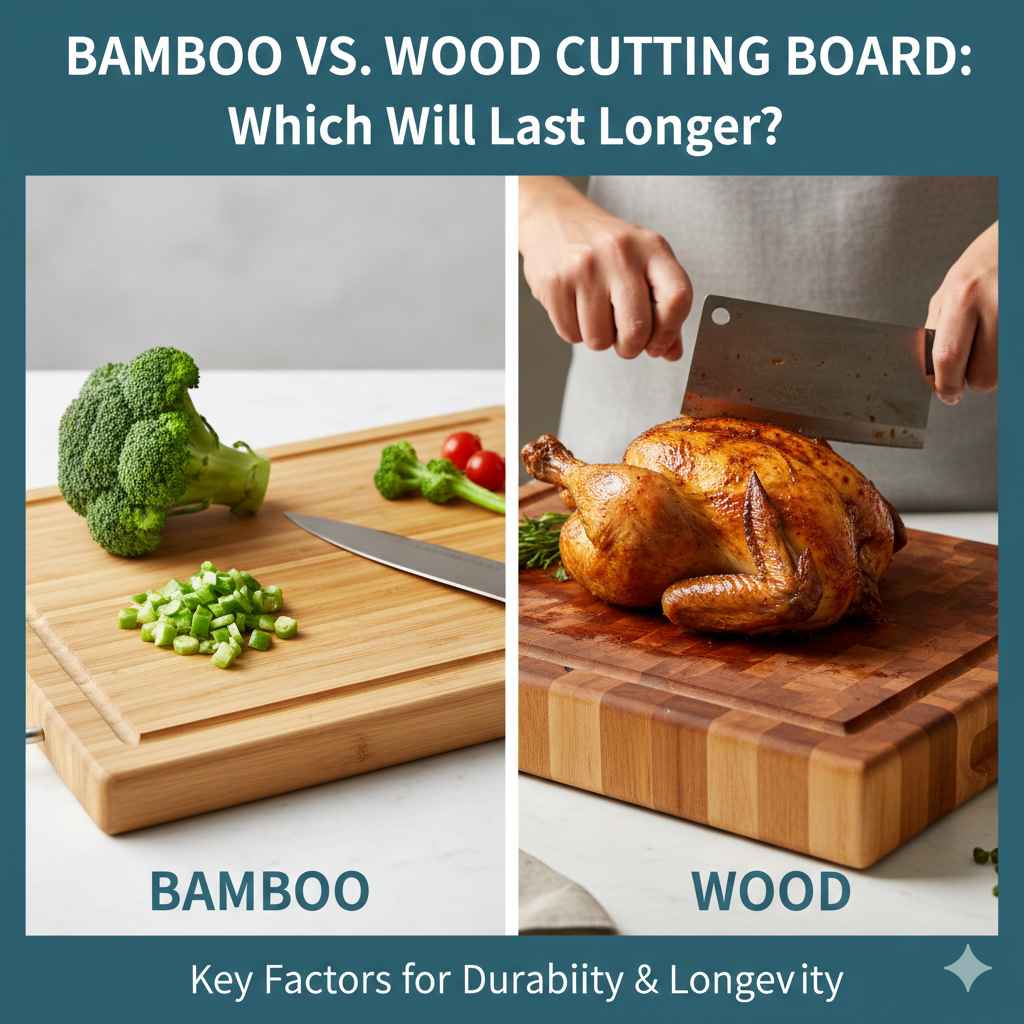
Bamboo vs Wood Cutting Board Which Will Last Longer: Key
A well-maintained hardwood cutting board, like one made from maple or walnut, will last longer than a bamboo cutting board. While bamboo is very hard and durable, its laminated construction can fail over time with exposure to water. A solid wood board can be sanded and refinished for decades, often lasting a lifetime.
Hello there! I’m Md Meraj, and I love helping folks feel more confident in their homes, whether that’s in the workshop or the kitchen. Today, we’re tackling a question I hear all the time: should you buy a bamboo or a wood cutting board? It feels like a simple choice, but you want something that will last, be kind to your knives, and look great on your counter. It can be confusing with all the different opinions out there.
Don’t worry. I’m here to clear things up. We are going to look at both materials side-by-side. We’ll talk about how they are made, how they hold up to daily chopping, and what it takes to keep them in great shape. By the end, you’ll know exactly which cutting board is the right long-term partner for your kitchen.
Choosing a cutting board is about more than just having a surface to chop vegetables on. It’s an investment in your kitchen tools, especially your knives. A good board protects your knife edges, provides a stable and safe cutting surface, and, with the right care, can last for many, many years. Let’s break down what makes a cutting board truly durable.
Understanding Cutting Board Longevity
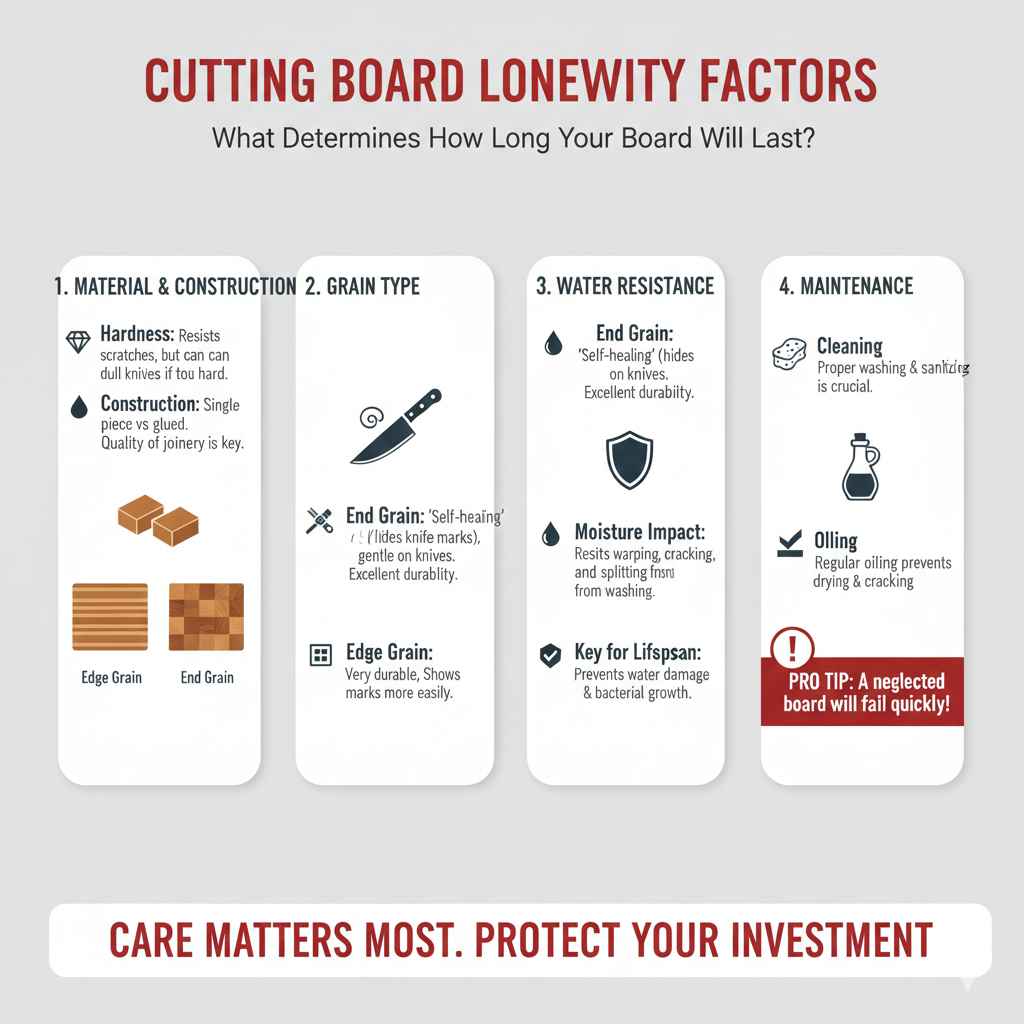
Before we compare bamboo and wood directly, it’s helpful to know what factors determine how long a cutting board will last. It isn’t just about how hard the material is. Longevity depends on a few key things:
- Material Hardness: A harder surface resists knife scratches better, but if it’s too hard, it can dull your knives quickly. There’s a sweet spot.
- Construction: Is the board made from a single piece of wood, or is it pieces glued together? The quality of this construction is critical.
- Grain Type: For wood boards, you’ll see “end grain” and “edge grain.” End grain boards are like a checkerboard of wood blocks and are known for being “self-healing” and gentle on knives. Edge grain boards are made of strips of wood laid side-by-side and are very durable and common.
- Water Resistance: A cutting board is constantly being washed. How well it stands up to moisture without warping, cracking, or splitting is a huge factor in its lifespan.
- Maintenance: How you care for your board matters most. A high-quality board that is neglected will fail much faster than a modest board that is properly cleaned and oiled.
Meet the Challenger: The Bamboo Cutting Board
Bamboo cutting boards have become incredibly popular over the last couple of decades, and for good reason. They are often seen as a green, eco-friendly option, and they have a modern, clean look. But how do they hold up in the long run?
What Exactly Is a Bamboo Board?
Here’s a fun fact that surprises many people: bamboo is not a wood, it’s a type of grass. It grows incredibly fast, making it a highly renewable resource. To make a cutting board, stalks of bamboo are cut into strips, processed, and then laminated together with heat, pressure, and a food-safe adhesive. This layered construction is key to both its strengths and its weaknesses.
The Pros of Choosing Bamboo
- Very Hard and Dense: Bamboo is harder than many hardwoods, including maple. This means it resists deep knife grooves very well, especially when it’s new.
- Naturally Water-Resistant: Bamboo absorbs less water than many woods, which helps prevent warping and cracking from moisture.
- Sustainable Choice: Because bamboo grows so quickly, it’s considered a very environmentally friendly material compared to slow-growing hardwood trees.
- Affordable: Generally, bamboo cutting boards are less expensive than high-quality hardwood boards of a similar size.
- Lightweight: They are typically lighter and easier to handle and store than a thick, solid wood board.
The Cons of Choosing Bamboo
- Tough on Knives: This is the biggest drawback for many cooks. The hardness of bamboo, combined with small amounts of silica found in the grass, can dull knife edges faster than wood.
- The Glue Factor: A bamboo board is held together by glue. Over years of use and washing, these glue seams can be a point of failure. If submerged in water or put in a dishwasher, the board can delaminate, meaning the strips start to separate.
- Can Be Brittle: While hard, bamboo can be more brittle than wood. A sharp drop on a hard floor is more likely to cause a bamboo board to crack or splinter.
- Difficult to Refinish: Unlike a solid wood board, you can’t really sand down a bamboo board to get a fresh new surface. The layered construction and grain pattern don’t lend themselves to refinishing.
Meet the Champion: The Traditional Wood Cutting Board
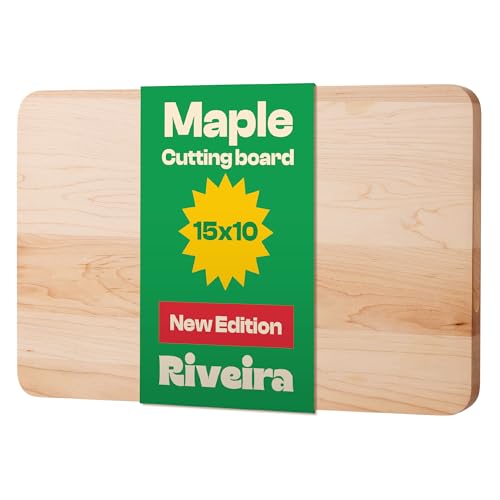
Wood cutting boards are the classic, time-tested choice for kitchens around the world. From professional chefs to home cooks, many swear by wood for its performance, feel, and timeless beauty. The most common woods used are hard, closed-grain woods like Maple, Walnut, and Cherry.
The Power of Hardwood
When we talk about wood cutting boards, we’re usually talking about hardwoods. These woods have a dense cell structure that makes them durable and less porous. This helps prevent them from absorbing too much moisture or bacteria, as long as they are properly cared for. The two main styles you’ll find are edge grain and end grain.
The Pros of Choosing Wood
- Kind to Your Knives: This is where wood truly shines. Wood has a natural give that cushions the blade of a knife. End-grain boards are especially gentle, as the wood fibers separate to accept the blade and then close back up, which also helps the board look better for longer.
- Extremely Durable and Long-Lasting: A thick, well-made hardwood board can literally last a lifetime, and even be passed down through generations. They are true kitchen workhorses.
- Can Be Restored: Has your board gotten covered in deep scratches and stains? No problem. A solid wood board can be sanded down to reveal a fresh, clean surface, making it look brand new again. You can do this many times over its life.
- Aesthetically Beautiful: There’s a natural warmth and beauty to a wood board that many people love. Woods like walnut, cherry, and maple each have their own unique color and grain pattern.
The Cons of Choosing Wood
- Requires Regular Maintenance: This is the most important part of owning a wood board. It needs to be regularly treated with mineral oil and board cream to keep it hydrated. If it dries out, it can warp or crack.
- Can Be Heavy: A large, thick wood cutting board can be quite heavy and cumbersome to move and clean.
- More Expensive Upfront: A high-quality hardwood board, particularly an end-grain one, is a significant investment compared to a typical bamboo board.
- Susceptible to Water Damage: You should never, ever let a wood board soak in water or put it in the dishwasher. This is the fastest way to ruin it.
Head-to-Head: Which Board Lasts Longer?
Now for the main event. If your number one priority is longevity—you want to buy one board and have it for a very, very long time—which one should you choose? Let’s compare them directly on the factors that matter most for a long life.
| Feature | Bamboo Cutting Board | Wood Cutting Board |
|---|---|---|
| Overall Durability | Good. Very hard surface, but the glue seams are a long-term weak point. | Excellent. A solid piece of hardwood is incredibly resilient and can handle decades of heavy use. |
| Knife Friendliness | Fair. The hardness can wear down knife edges more quickly. | Excellent. Wood fibers have a natural give that protects the blade’s sharpness. |
| Resistance to Cracking | Fair. Can be brittle and may crack if dropped or if glue fails. | Good. Can crack if allowed to dry out, but is generally less brittle than bamboo. |
| Ability to Be Refinished | Poor. Cannot be effectively sanded down to create a new surface. | Excellent. Can be sanded down multiple times over its life to look brand new. |
| Required Maintenance | Low to Medium. Needs occasional oiling but is less thirsty than wood. | Medium to High. Requires regular oiling and conditioning to prevent drying out. |
| Typical Lifespan | Good (5-10 years with proper care). | Excellent (20+ years, often a lifetime with proper care). |
Hardness Isn’t Everything
It’s easy to look at the hardness of bamboo and think it must be more durable. The Janka hardness test measures the force required to embed a steel ball into a material. Many types of bamboo used for cutting boards score higher on this test than hard maple. However, durability is about more than just surface hardness. It’s about the entire structure.
A wood cutting board is a solid block of interlocking wood fibers. A bamboo board is a composite of many small strips held together with adhesive. Over time, the constant cycle of getting wet and drying out, the expansion and contraction, and the stress of chopping all put a strain on those glue seams. This is almost always the point of failure for a bamboo board. A solid wood board doesn’t have this vulnerability. Its weakness is drying out, but that is something you can completely prevent with simple maintenance.
The Power of Restoration
The single biggest reason a wood board will outlast a bamboo board is the ability to be refinished. Imagine your cutting board after five years of heavy use. It will have knife marks, maybe a few stains, and a bit of wear and tear.
With a bamboo board, that’s pretty much how it will stay. You can clean it and oil it, but you can’t erase those deep marks.
With a solid wood board, you can take a simple sander or even a piece of sandpaper and a block, and in about 30 minutes, sand the entire surface down. When you’re done, you wipe it clean, apply a fresh coat of mineral oil, and it looks exactly like it did the day you bought it. This ability to essentially reset the clock gives wood an incredible advantage in the longevity race.
How to Care for Your Board to Maximize Its Life
Whichever board you choose, its lifespan is in your hands. Proper care is not difficult, but it is essential. Follow these simple rules to get the most out of your cutting board.
The “Do’s” of Cutting Board Care
- Clean It Promptly: After each use, wash your board with a little soap and warm water. Don’t let food sit on it for hours.
- Dry It Thoroughly: This is crucial. After washing, wipe the board dry with a towel. Then, let it air dry completely while standing on its edge. This allows air to circulate around all sides, preventing moisture from getting trapped.
-
Oil It Regularly: This is the most important step for longevity. Oil prevents the board from drying out and cracking. Use a food-safe mineral oil.
- For a new board, oil it once a day for the first week.
- After that, oil it about once a month, or whenever it looks dry and pale.
- Simply pour a generous amount of oil on the board and rub it in with a clean cloth. Let it soak in for a few hours or overnight, then wipe off any excess.
- Use a Board Cream: After oiling, applying a board cream (usually a mix of mineral oil and beeswax) adds an extra layer of protection. The wax helps seal the surface against moisture.
The “Don’ts” of Cutting Board Care
- NEVER put it in the dishwasher. The high heat and prolonged exposure to water will destroy a bamboo or wood cutting board, causing it to warp, crack, or delaminate.
- NEVER submerge it in water or let it soak in the sink. This will cause it to absorb too much water, leading to the same problems as a dishwasher.
- Don’t use vegetable oils (like olive or canola oil) to condition your board. They can go rancid over time, making your board smell bad. Stick to food-safe mineral oil.
For more detailed information on cleaning, you can always check food safety guidelines, like those provided by the USDA on cutting board safety.
The Final Verdict: Which Board Should You Buy?
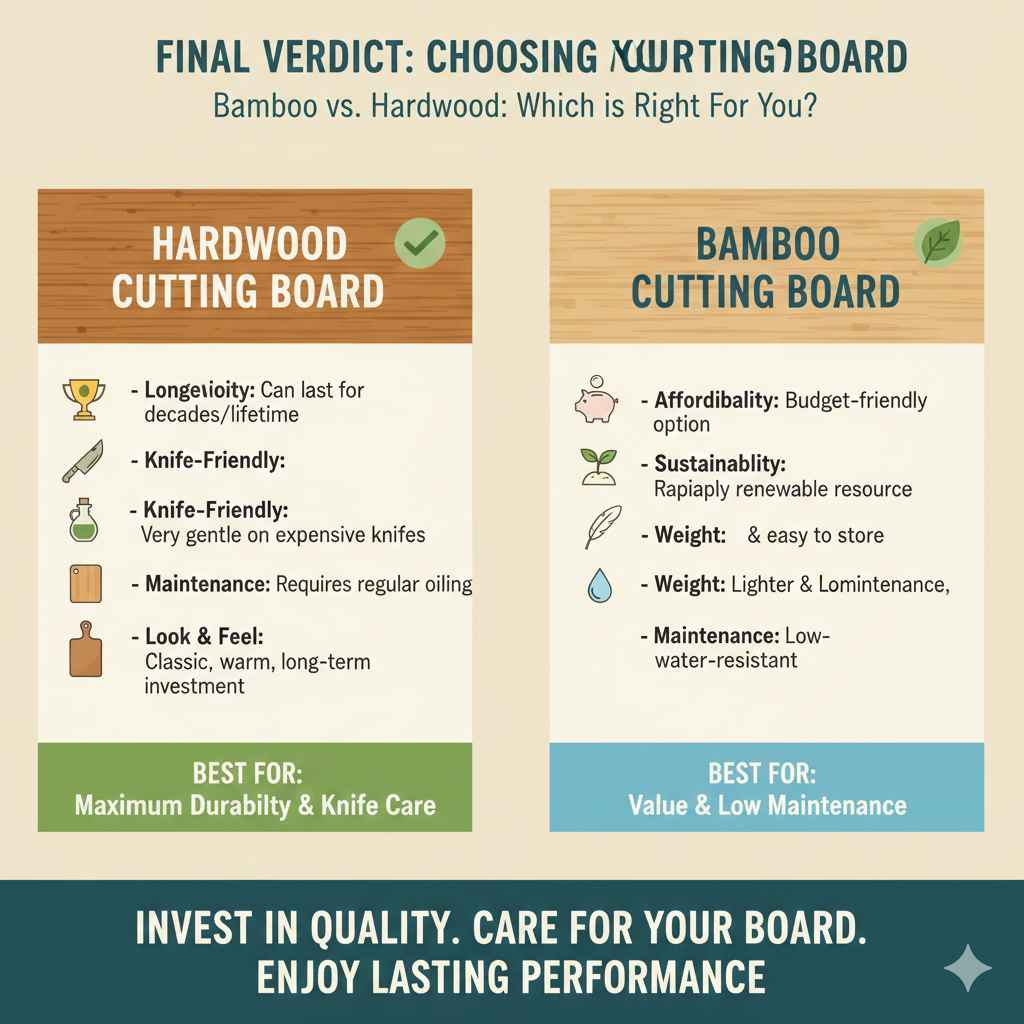
So, after all this, which cutting board will last longer? The clear winner for maximum longevity is a high-quality hardwood cutting board.
Choose a wood cutting board if:
- Your top priority is buying a board that can last for decades, or even a lifetime.
- You value having a board that is gentle on your expensive knives.
- You are willing to commit to the simple, regular maintenance of oiling it.
- You love the classic, warm look of natural wood and see the board as a long-term investment.
Choose a bamboo cutting board if:
- You are looking for a more affordable, budget-friendly option.
- Sustainability and using a rapidly renewable resource are important to you.
- You prefer a lighter-weight board that is easy to move and store.
- You want a board that is very low-maintenance and resistant to water spots.
Ultimately, both are great choices and are far superior to plastic for most tasks. A well-cared-for bamboo board can still give you many years of excellent service. But if the goal is to buy a board that you may never have to replace, a solid hardwood cutting board is the undisputed champion.
Frequently Asked Questions (FAQ)
1. Can you put a bamboo cutting board in the dishwasher?
No, you should never put a bamboo or wood cutting board in the dishwasher. The intense heat and water will cause the glue to fail and the strips to separate, ruining the board.
2. Is bamboo harder than wood?
Yes, in most cases, the type of bamboo used for cutting boards is harder than woods like maple and oak. This makes it resistant to scratches but also harder on your knife edges.
3. Which cutting board is better for my knives, bamboo or wood?
Wood is much better for your knives. The fibers in a wood board have a slight “give” that cushions the knife blade with every cut. End-grain wood boards are the absolute best for preserving a knife’s sharp edge.
4. How often do I really need to oil my cutting board?
A good rule of thumb is to oil it once a month. However, the best way to tell is just by looking at it. If the board looks pale, dry, or thirsty, it’s time for a coat of food-safe mineral oil.
5. Is bamboo really a more eco-friendly choice?
Yes, from a resource perspective, it generally is. Bamboo is a grass that can be harvested in just 3-5 years, compared to decades for hardwood trees. It regenerates quickly without needing to be replanted, making it a highly sustainable material.
6. Why does my cutting board smell, and how can I fix it?
Smells are usually from strong foods like garlic, onions, or fish. To get rid of them, you can scrub the board with coarse salt and half a lemon. The lemon juice helps neutralize odors, and the salt acts as an abrasive. Rinse well afterward.
7. Can a cracked wood cutting board be repaired?
Small cracks can sometimes be repaired. If the board is thoroughly dry, you can work food-safe wood glue into the crack, clamp it tightly, and let it dry for 24 hours. After it’s dry, sand the area smooth and re-oil the entire board. Large, deep cracks are often a sign that the board needs to be replaced.
Conclusion
In the friendly competition between bamboo and wood, the choice for the longest-lasting cutting board is clear: a well-made hardwood board is the investment that pays off over time. Its solid construction and ability to be sanded down and refinished give it a lifespan that bamboo simply can’t match. It’s a true kitchen heirloom in the making.
That doesn’t mean bamboo is a bad choice! It’s a fantastic, affordable, and eco-conscious option that will serve you well for years with the right care. The most important thing is to understand the trade-offs. You are choosing between the generational durability of wood and the sustainable, low-maintenance convenience of bamboo.
No matter which you pick, treat it with care. Wash and dry it properly, never let it soak, and give it a drink of oil when it looks thirsty. A little bit of love will ensure your cutting board—whether it’s bamboo or wood—remains a trusted and reliable tool in your kitchen for a long, long time. Happy chopping!