Board Footage Calculator: How to Figure Lumber Fast
I use a board footage calculator to do one thing fast: length × width × thickness ÷ 144 for each board, then I add 10% to 20% waste. I round up when lumber is rough, graded lower, or cut into short parts. Skip that, and you usually buy short, pay extra shipping, or run out mid-build. This guide shows board-foot math, common lumber-size conversions, and how to estimate total cost before you order.
What is a board foot?


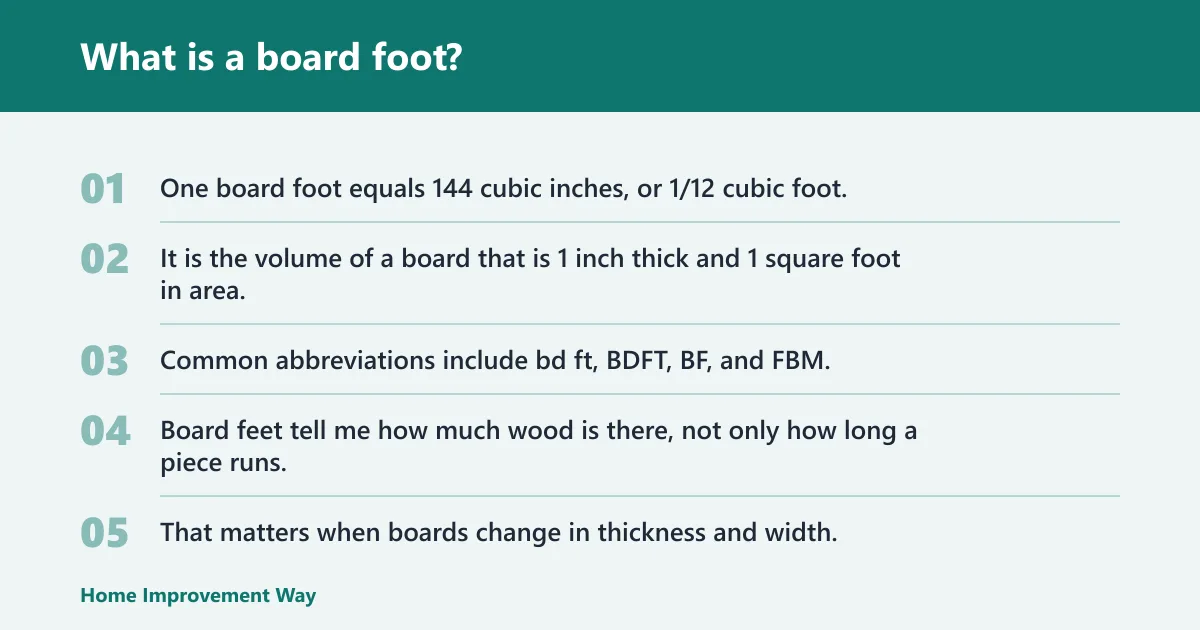
A board foot is a volume unit for lumber. One board foot equals 144 cubic inches, or 1/12 cubic foot. It is the volume of a board that is 1 inch thick and 1 square foot in area. Common abbreviations include bd ft, BDFT, BF, and FBM.
Why a board foot is a volume measure
Board feet tell me how much wood is there, not only how long a piece runs. That matters when boards change in thickness and width. A 1-by-12 and a 2-by-6 can both be 1 board foot per 1-foot length, because the unit tracks volume, not shape.
Board feet versus square feet and linear feet
Square feet measure area. Linear feet measure length only. Board feet measure volume. If you buy trim by the linear foot, the width and thickness stay out of the count. If you buy sheet goods by the square foot, thickness is not part of the basic area measure. Lumber buyers use board feet when those dimensions change the amount of wood being purchased.
📊 The board foot formula is length in feet times width in inches times thickness in inches divided by 12. Source: Board Foot Calculator.
How do you calculate board feet?
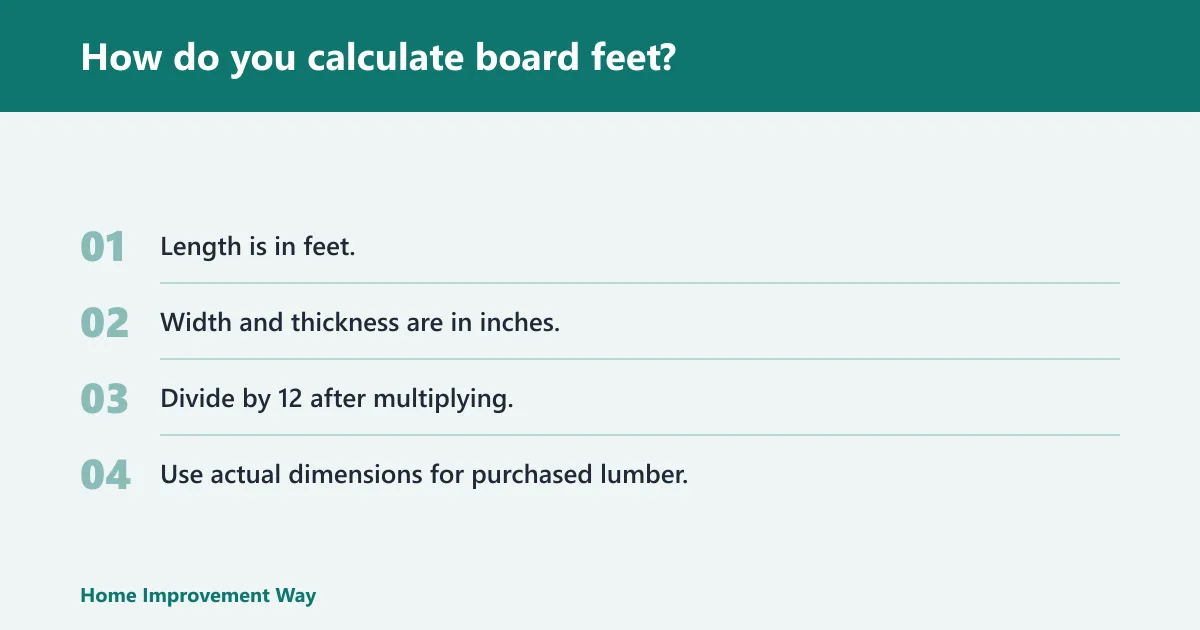
The standard board foot formula is length in feet times width in inches times thickness in inches divided by 12. Use the board’s actual dimensions, not the nominal size printed at the yard. For rectangular lumber, this gives a reliable volume count for pricing and ordering.
How to handle inches, feet, and decimals
Keep the length in feet and the other two dimensions in inches. If a board is 8 feet long, 10 inches wide, and 1.25 inches thick, the calculation is 8 × 10 × 1.25 ÷ 12. That equals 8.33 BF. Fractional inches can be entered as decimals when needed.
Nominal size versus actual size
Do not price a 2×4 as a full 2 inches by 4 inches. Nominal lumber sizes are trade names, not the finished dimensions on the rack. The actual thickness and width are what belong in the formula. If that distinction is ignored, the purchase estimate comes out too low.
Worked examples for common lumber sizes
A board foot calculation gets easier once common sizes are familiar. A 1-by-6 that is 8 feet long works out to about 4 board feet. A 2×4 that is 8 feet long uses actual dimensions, so the count is based on the real thickness and width, not the label.
- Length is in feet.
- Width and thickness are in inches.
- Divide by 12 after multiplying.
- Use actual dimensions for purchased lumber.
For rough buying, a quick conversion chart is often faster than recalculating every time. That is especially true when boards vary in length but share the same cross-section.
How do you use a board foot calculator?
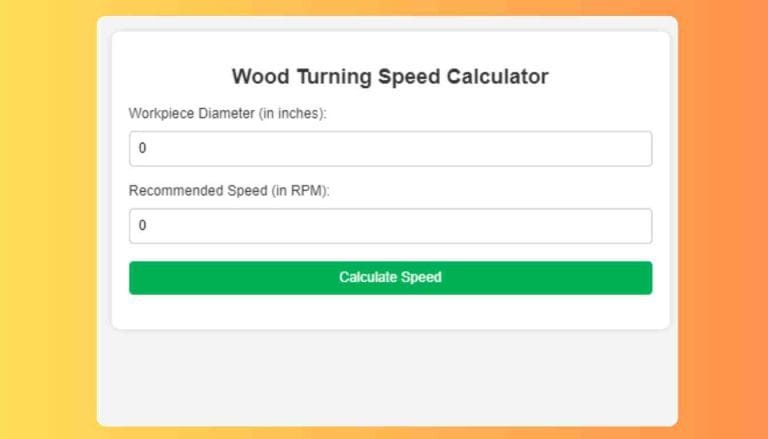
A board foot calculator takes thickness, width, and length, then returns board feet for one board or many boards at once. Good calculators also support a quantity field and an optional price per board foot so the output includes both volume and estimated cost. That is the useful part for ordering.
Inputs that matter
- Enter thickness in inches.
- Enter width in inches.
- Enter length in feet.
- Add quantity if you need multiple boards.
- Enter price per board foot if you want a cost estimate.
Reading the output
The calculator should return board feet for one board and the total for the full quantity. If price per board foot is entered, it should also show total cost. That helps when comparing rough hardwood, lower-grade stock, or mixed board lengths in one order.
Board feet are used when purchasing multiple boards of lumber in various sizes. That is why the calculator matters more for buying than for cutting. It gives a volume total first, then turns that volume into a price estimate.
How many board feet do you need for a project?
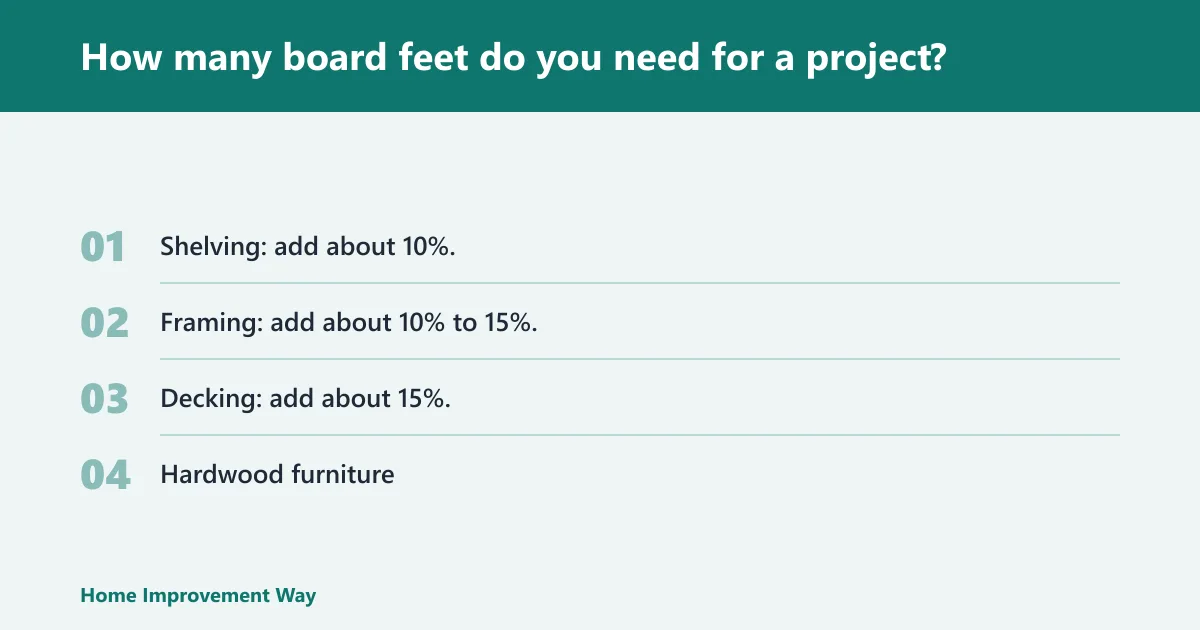
Project totals are usually higher than the visible finished size because real builds create offcuts, defects, and layout waste. A shelf project may need only a small overage. Framing and decking usually need more. Hardwood furniture often needs the most extra because grain matching and cut layout increase trim loss.
Waste factors by job type
Use the smallest waste factor that still leaves room for layout mistakes and defects. Straight rip cuts waste less than angled parts, short parts, or matching pairs. When boards are rough, twisted, or full of knots, add more.
- Shelving: add about 10%.
- Framing: add about 10% to 15%.
- Decking: add about 15%.
- Hardwood furniture: add about 20%.
When to add more than the usual overage
Add extra for defects, color matching, or short parts with many cuts. Add extra again if the lumber is rough sawn, because milling loss is real and the usable size shrinks after surfacing. If the order includes several species or grades, keep each group separate so the takeoff stays accurate.
Project ordering table: common sizes, waste, and sample cost
The table below converts common lumber sizes into board feet, then applies a practical waste factor by job type. The sample cost uses a board foot price of $4.15, with waste added before cost is calculated. It is a buying tool, not a cut list.
| Nominal size | Actual size used for BF | Length | Board feet each | Suggested waste | Total BF with waste | Sample cost at $4.15/BF |
|---|---|---|---|---|---|---|
| 2×4 | 1.5 in × 3.5 in | 8 ft | 3.50 | Framing: 10% | 3.85 | $15.98 |
| 1×6 | 0.75 in × 5.5 in | 8 ft | 2.75 | Shelving: 10% | 3.03 | $12.57 |
| 2×6 | 1.5 in × 5.5 in | 10 ft | 6.88 | Decking: 15% | 7.91 | $32.83 |
| 4/4 hardwood board | 1 in × 8 in | 6 ft | 4.00 | Furniture: 20% | 4.80 | $19.92 |
That table also shows why buyers round up. A clean count on paper can still come up short once boards are trimmed, jointed, or sorted around defects.
How much does a board foot cost?
Board-foot pricing usually covers the wood itself, not the full delivered job cost. Freight can change the total. So can grade, milling, and moisture content. The board foot price is the base number; the final invoice often includes other line items or hidden premiums in the unit rate.
What price per board foot usually includes
In hardwood yards and rough lumber sales, pricing by board foot makes sense because boards vary in width, thickness, and length. A seller can quote one number for a volume unit instead of pricing every board by the piece. That also helps compare mixed sizes in a single order.
Higher grade usually costs more because the usable yield is better. Planing, ripping, jointing, or kiln drying can also push the number higher. Freight is separate in many orders. Moisture content matters too; wetter stock can cost less up front and more later in movement, milling, or spoilage.
How to turn price per board foot into total cost
Multiply total board feet by the quoted price per board foot. If the order is 41.67 BF and the board foot price is $4.15, the example cost calculation totals $172.92. That is the base lumber price before freight, milling, or grade changes.
How do you calculate board feet in a log?
Log board footage is an estimate based on log diameter and log length, not the same thing as finished lumber volume. Use either a Doyle rule or an International 1/4-inch rule table to estimate yield. These methods are for log scaling, and they are not exact sawmill results.
Doyle rule and International 1/4-inch rule
Both rules translate log size into an estimated board-foot yield. The choice of rule matters because the estimate changes with the formula used. A large log can look generous on paper, then cut lower after slab loss, checking, or saw kerf is figured in.
Why log board footage is only an estimate
A log does not become clear, square boards without waste. Bark, taper, knots, sweep, and saw pattern all affect yield. That is why log board footage should be treated as a buying and valuation estimate, not a promise of finished lumber volume.
How many board feet are in a 2×4?
The answer depends on the 2×4’s actual length. A 2×4 is not 2 inches by 4 inches in finished size, so the real dimensions must be used. Once the actual width and thickness are entered, the board-foot formula gives the volume for that board length.
Quick buying rule for 2x4s
For a stack of 2x4s, count the pieces, use their actual length, and total the board feet before ordering. If the pieces will be cut into short parts, add waste for trim and defects. That keeps the order from running thin near the end of the project.
What is the difference between a board foot and a linear foot?
A board foot measures volume. A linear foot measures length only. One linear foot of 1x material is not the same as one linear foot of 2x material, because the amount of wood changes with width and thickness. Board feet correct for that difference, which is why they are used for lumber volume.
When each unit is useful
Use linear feet for trim, pipe, wire, and other length-only materials. Use board feet for rough lumber, hardwoods, and mixed board purchases. Use square feet for sheet goods or finished coverage. Mixing the three units in one estimate is a common way to underorder.
What is a board foot insulation?
Board foot insulation is a measurement of how much volume spray foam insulation can cover. It uses the same board-foot idea of volume, but the material is insulation rather than lumber. The unit helps compare coverage when foam thickness and area are both part of the calculation.
Frequently asked questions
How do you figure out board footage?
Use length in feet times width in inches times thickness in inches divided by 12. That formula gives board feet for rectangular lumber. If the order has several pieces, multiply one board’s result by the quantity, then add waste if the material will be cut or milled.
What is a board foot calculator?
A board foot calculator is a tool that turns lumber dimensions into board feet and, when a price is entered, into cost. Good versions handle quantity as well. That makes them useful for buying mixed board sizes, where a simple piece count does not tell the full story.
How many board feet do I need for my project?
Start with the finished dimensions, total the parts, then add waste for cutoffs, defects, and mistakes. Shelving may need about 10% extra. Framing often needs 10% to 15%. Furniture and projects with matching grain usually need more because good boards are sorted before cutting.
How do I calculate how many board feet I need?
List every part, calculate each board’s volume, and sum the results. If the project uses multiple lengths or widths, break the order into groups. Add extra for rough stock, short parts, and boards that may be rejected for knots or twist. Then convert the total into an order quantity.
How do you calculate board feet in a log?
Use log diameter and log length, then apply a log rule such as Doyle or International 1/4-inch. The result is an estimate of yield, not a guarantee of sawn lumber. Log board footage is useful for valuation and planning, but it should not be confused with finished board-foot counts.
How much does a board foot cost?
The cost depends on species, grade, milling, moisture, and freight. The board-foot price is the starting point. A quoted price can look fine until delivery or surfacing is added. For a clean comparison, convert every quote to a total board-foot cost before deciding.
What is the difference between a board foot and a linear foot?
A board foot counts volume. A linear foot counts length only. That means a 10-foot board can have very different board-foot values depending on its width and thickness. For buying lumber, board feet give a truer count when sizes vary from one board to the next.
Sponsored / affiliate links. As an Amazon Associate I earn from qualifying purchases. I may earn additional commission from eligible campaigns.