Bruce Hardwood Floor Cleaner Green Vs White Bottle Essential
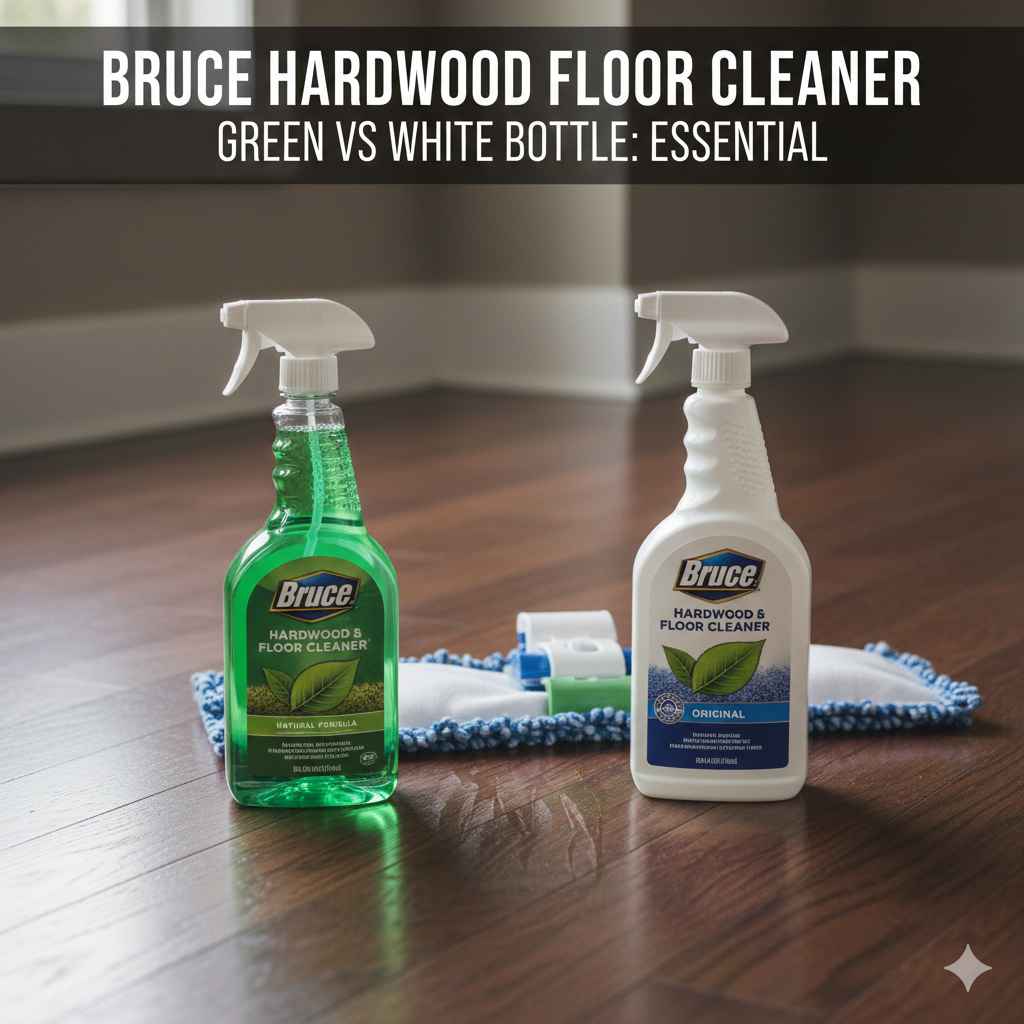
The Bruce Hardwood Floor Cleaner in the green bottle is a modern, water-based formula for newer polyurethane-finished hardwood and laminate floors. The white bottle is an older formula specifically for no-wax urethane-finished floors. For most homeowners with floors installed in the last 20 years, the green bottle is the correct and safer choice.
Hello there! I’m Md Meraj. Walking into a room with sparkling clean hardwood floors just feels good, doesn’t it? But standing in the store, staring at two different bottles of Bruce cleaner—one green, one white—can be confusing. You want to do the right thing for your beautiful floors, but you’re worried about making a mistake. It’s a common problem, and I’ve seen many homeowners feel this exact same way.
Don’t worry, you’re in the right place. We are going to clear this up together, nice and simple. In this guide, I’ll walk you through the difference between the green and white bottles, help you figure out which one is perfect for your floor, and show you how to use it for a perfect, streak-free shine. Let’s get your floors looking their absolute best!
Understanding Your Hardwood Floor Finish is Key
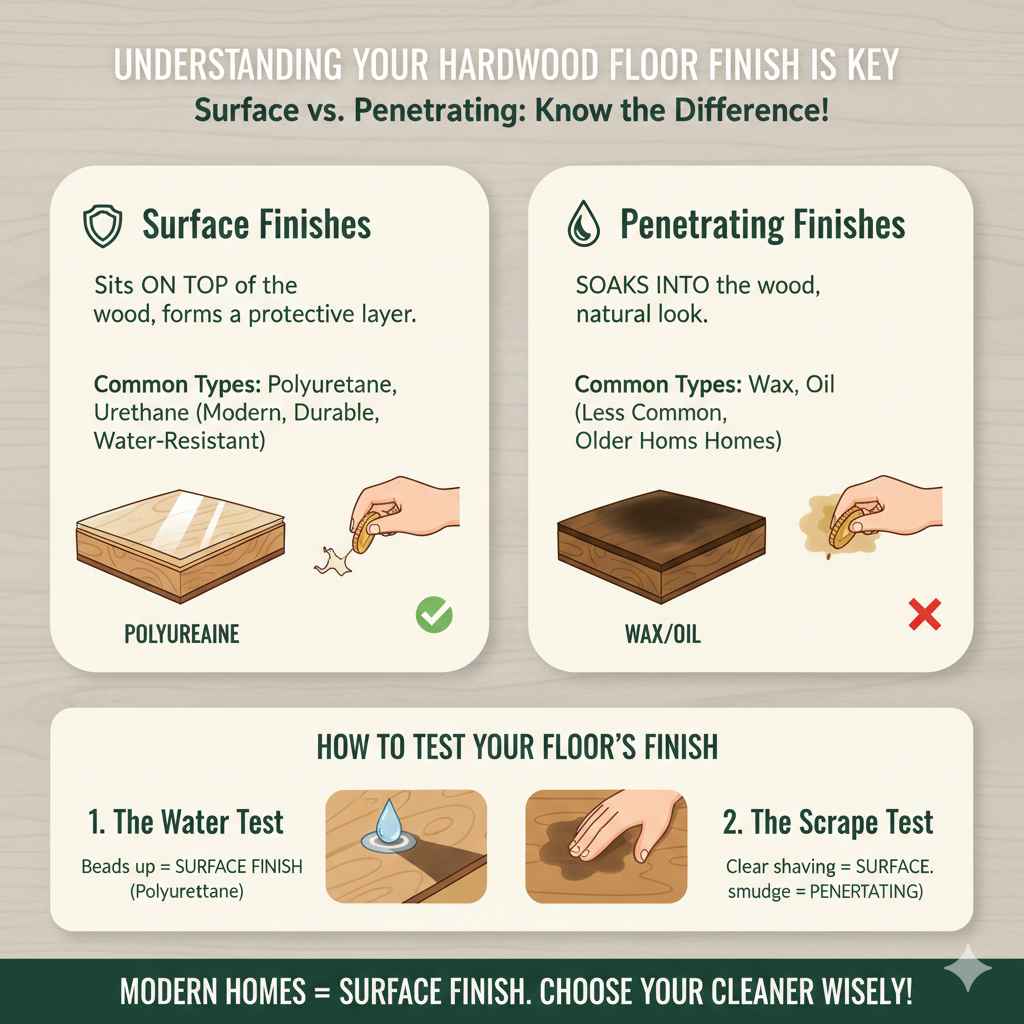
Before we even talk about the cleaners, we need to talk about your floor. The most important thing that decides which cleaner to use is your floor’s finish. Think of the finish as a protective coat that shields the wood. Most floor finishes fall into two main categories.
Surface Finishes (The Most Common)
These finishes sit on top of the wood, forming a hard, protective layer. If your floor has a slight sheen or gloss and was installed in the last 20-30 years, you likely have a surface finish. The most common type is polyurethane or urethane.
Polyurethane: This is the modern standard for hardwood floors. It’s durable, water-resistant, and easy to clean.
Urethane: A very common finish found on pre-finished and older “no-wax” floors.
Penetrating Finishes (Less Common Today)
These finishes, like wax or oil, soak into the wood itself rather than sitting on top. They often have a lower-sheen, more natural look. They require a bit more maintenance and are found in older, historic homes.
How to Test Your Floor’s Finish
Not sure what you have? Here’s a super simple test. Find a hidden spot, like under a sofa or in a closet.
The Water Test: Place a single drop of water on the floor. If the drop beads up and sits on the surface, you have a surface finish like polyurethane. If it soaks in after a few minutes and darkens the wood, you likely have a penetrating finish like wax or oil.
The Scrape Test: In that same hidden spot, gently scrape the surface with your fingernail or the edge of a coin. If a clear, plastic-like shaving comes up, it’s a surface finish. If you get a waxy or smudgy residue, it’s likely a waxed finish.
Knowing this will make choosing your cleaner incredibly easy. For nearly all modern homes, you’ll find you have a surface finish.
Meet the Contenders: Bruce Green Bottle vs. White Bottle
Now that you know a little more about your floor, let’s look at the two bottles. They might look similar, but they are designed for very different jobs. Using the wrong one can leave your floors looking dull or feeling sticky.
The Green Bottle: Bruce Hardwood & Laminate Cleaner
Think of the green bottle as the modern, all-around solution. This is a water-based cleaner specifically designed for today’s most common floor types. It’s gentle, effective, and very easy to use.
Key Features:
- Water-Based Formula: This means it’s gentle and evaporates quickly without leaving harsh chemicals behind.
- Ready-to-Use: No mixing required! Just spray and mop.
- Streak-Free and Residue-Free: It’s made to clean your floors without leaving behind a cloudy film or sticky feeling.
- Versatile: As the name says, it’s safe for both hardwood with a polyurethane finish and laminate flooring.
Best For:
The green bottle is the go-to choice for almost all modern floors, including:
- Hardwood floors with a polyurethane or urethane finish (this covers most floors installed after 1990).
- Engineered hardwood floors.
- Laminate flooring.
The White Bottle: Bruce No-Wax Hardwood Floor Cleaner
The white bottle holds an older, solvent-based formula. This was the standard for years, designed for older floors that had a urethane finish but were specifically labeled “no-wax.” It’s a stronger cleaner meant to dissolve certain types of dirt and buildup common on those specific floors.
Key Features:
- Solvent-Based Formula: A more traditional formulation that is very effective at breaking down grease and grime.
- For No-Wax Finishes Only: It’s specifically made for floors with a urethane finish that is not waxed.
- Deep Cleaning Power: It was known for its ability to cut through tough dirt on older floors.
It’s important to note that this formula is becoming harder to find, as most modern floors require the gentler, water-based green bottle cleaner.
Head-to-Head Comparison: Green vs. White Bottle
Let’s put them side-by-side so you can see the difference clearly. This simple table breaks it all down.
| Feature | Green Bottle (Hardwood & Laminate) | White Bottle (No-Wax Hardwood) |
|---|---|---|
| Primary Floor Type | Polyurethane-finished hardwood, laminate | Older, no-wax urethane-finished hardwood |
| Formula Base | Water-based | Solvent-based |
| Residue | Leaves no film or residue | Can leave a residue on modern finishes |
| Streak-Free | Yes, designed to be streak-free | Can cause streaks on the wrong floor type |
| Versatility | Excellent (works on laminate) | Limited (hardwood only) |
| Best Use Case | Regular cleaning of modern floors | Deep cleaning of specific older floors |
Which Bruce Cleaner is Right for Your Floor? A Simple Guide
Okay, let’s make this super simple. Based on what you know about your floor, here is how to choose the right bottle every time.
| If Your Floor Is… | The Correct Cleaner Is… | Important Note |
|---|---|---|
| A modern hardwood floor (installed after 1990) with any level of shine. | The Green Bottle | This is the safe, effective choice for over 95% of hardwood floors in homes today. |
| Laminate flooring of any kind. | The Green Bottle | The water-based formula is perfect for laminate and won’t damage the top layer. |
| An older hardwood floor (pre-1990) and you know it has a “no-wax” urethane finish. | The White Bottle (if you can find it) or The Green Bottle | You can still safely use the green bottle, which is often a better choice anyway to avoid residue. |
| A waxed hardwood floor (common in homes built before 1970). | Neither! | Waxed floors need a special cleaner or buffer. Using either Bruce cleaner will strip the wax and damage the finish. The National Wood Flooring Association offers great tips for maintaining different floor types. |
The bottom line: When in doubt, the green bottle is almost always the correct and safer choice for your floors.
How to Use Bruce Hardwood Floor Cleaner Correctly (Step-by-Step)
Getting a professional-looking clean is easy when you follow the right steps. Grabbing the right bottle is the first part; using it correctly is the second.
- Prepare the Floor: Before you get anything wet, you must remove all the loose dirt, dust, and pet hair. Use a soft-bristled broom or a vacuum with a hardwood floor attachment. If you skip this, you’ll just be pushing gritty dirt around, which can scratch your floor.
- Gather Your Tools: All you need is your bottle of Bruce cleaner (the green one for most of us!) and a good quality microfiber mop. A mop with a flat, washable pad is perfect. Avoid using string mops or sponge mops, as they hold too much water.
- Spray a Small Area: Lightly mist a 4×4 foot section of the floor. Don’t soak it! A fine mist is all you need. Over-saturating the floor with any liquid is bad for the wood.
- Mop with the Grain: Using your microfiber mop, wipe the sprayed area, moving your mop in the same direction as the wood planks. This helps prevent streaks and gets the cleaner into the tiny grooves of the wood.
- Work in Sections: Continue this process—spray a small section, mop it—until you’ve cleaned the entire floor. Working in manageable sections ensures the cleaner doesn’t dry before you can mop it up.
- Let It Dry: The cleaner evaporates very quickly. It should be dry to the touch in just a few minutes. There’s no need to rinse it off. Just let it air dry, and you’re done!
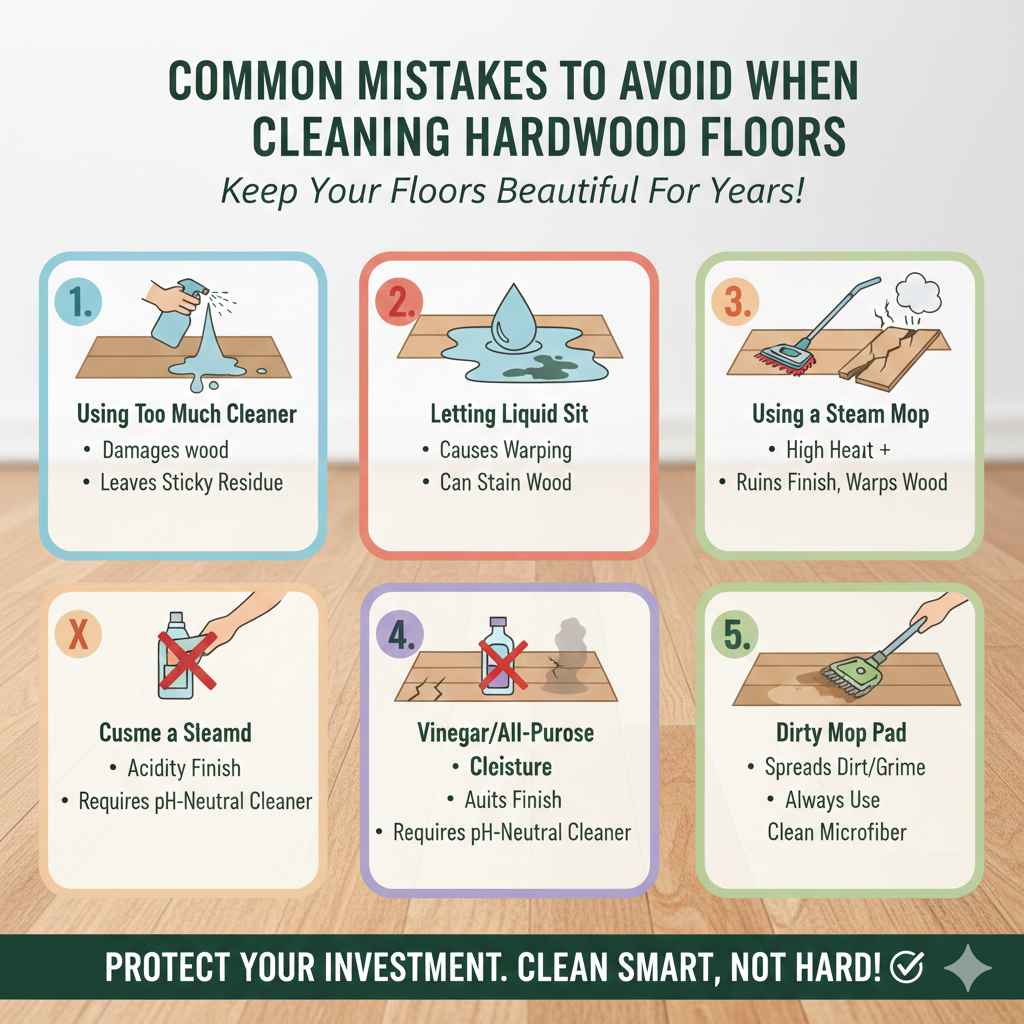
Common Mistakes to Avoid When Cleaning Your Hardwood Floors
I want you to feel confident every time you clean. Here are a few common mistakes I see people make. Avoiding them will keep your floors looking beautiful for years.
- Using Too Much Cleaner: More is not better! Using too much liquid can damage the wood and leave a sticky residue. A light mist is all it takes.
- Letting Liquid Sit on the Floor: Never let any liquid, even cleaner, pool or puddle on your hardwood floor. Wipe it up immediately. Wood can warp or stain if it gets too wet.
- Using a Steam Mop: Steam mops are fantastic for tile, but they are a disaster for hardwood. The high heat and moisture can force water deep into the wood and ruin the finish.
- Using Vinegar or All-Purpose Cleaners: While vinegar is a popular DIY cleaner, its acidity can break down and dull your floor’s finish over time. Stick to a pH-neutral cleaner made for hardwood.
- Not Using a Clean Mop Pad: Starting with a dirty mop pad is like trying to wash your hands with muddy water. You’ll just spread the old dirt around. Always use a clean, dry microfiber pad.
Following product guidelines is also a great safety habit. For general information on cleaning product safety, you can check resources from the U.S. Consumer Product Safety Commission.
Frequently Asked Questions (FAQ)
1. Can I mix the Bruce green and white cleaners?
No, you should never mix any cleaning products. The green bottle is water-based and the white is solvent-based; mixing them could create a useless or even harmful concoction and will definitely leave a sticky mess on your floors.
2. Is Bruce floor cleaner safe for pets and kids?
Once the floor is dry, it is considered safe for pets and kids to walk on. The green bottle formula, in particular, is low in volatile organic compounds (VOCs). However, it’s always best to keep kids and pets out of the room while you are cleaning and until the floor has completely dried.
3. Will the green bottle cleaner make my floor shiny?
Bruce Hardwood & Laminate Cleaner is designed to clean your floor without altering its original finish. It will not add an artificial shine or gloss. It reveals the natural beauty and sheen of your floor’s existing finish by removing dirt and grime.
4. How often should I clean my hardwood floors with Bruce cleaner?
For high-traffic areas like kitchens and entryways, cleaning once a week is a good idea. For less-used rooms like bedrooms or formal dining rooms, cleaning every two to four weeks is usually enough. The key is to sweep or vacuum regularly and clean as needed.
5. Can I use the green bottle on my vinyl plank flooring?
While the green bottle is formulated for hardwood and laminate, it is generally safe for luxury vinyl plank (LVP) floors because it is a pH-neutral, water-based cleaner. However, always test it in a small, hidden area first to be absolutely sure it agrees with your specific flooring.
6. What happens if I use the wrong cleaner on my floor?
Using the white bottle on a modern polyurethane floor may leave a dull, hazy, or sticky residue that is difficult to remove. Using the green bottle on a very old no-wax floor is less risky but might not clean as effectively as the original formula was designed to. The biggest risk is using either on a waxed floor, which can strip the finish.
7. Does Bruce floor cleaner expire?
Most cleaning products have a shelf life of about two years. While it may not “go bad” in a harmful way, an old cleaner can lose its effectiveness over time. If you have a very old bottle, it’s best to replace it with a fresh one for the best results.
Conclusion: Making the Right Choice for a Beautiful Floor
So there you have it! The mystery of the Bruce hardwood floor cleaner green vs white bottle is solved. It really all comes down to one thing: the finish on your floor. For the vast majority of us with modern hardwood or laminate, the green bottle is your trusted friend for a sparkling, residue-free clean.
You no longer have to feel uncertain when you’re in the cleaning aisle. You now have the knowledge to choose the right product with confidence and the steps to use it like a pro. Taking care of your hardwood floors doesn’t have to be complicated. With the right tools and a little bit of know-how, you can keep them looking new and beautiful for a lifetime. Happy cleaning!