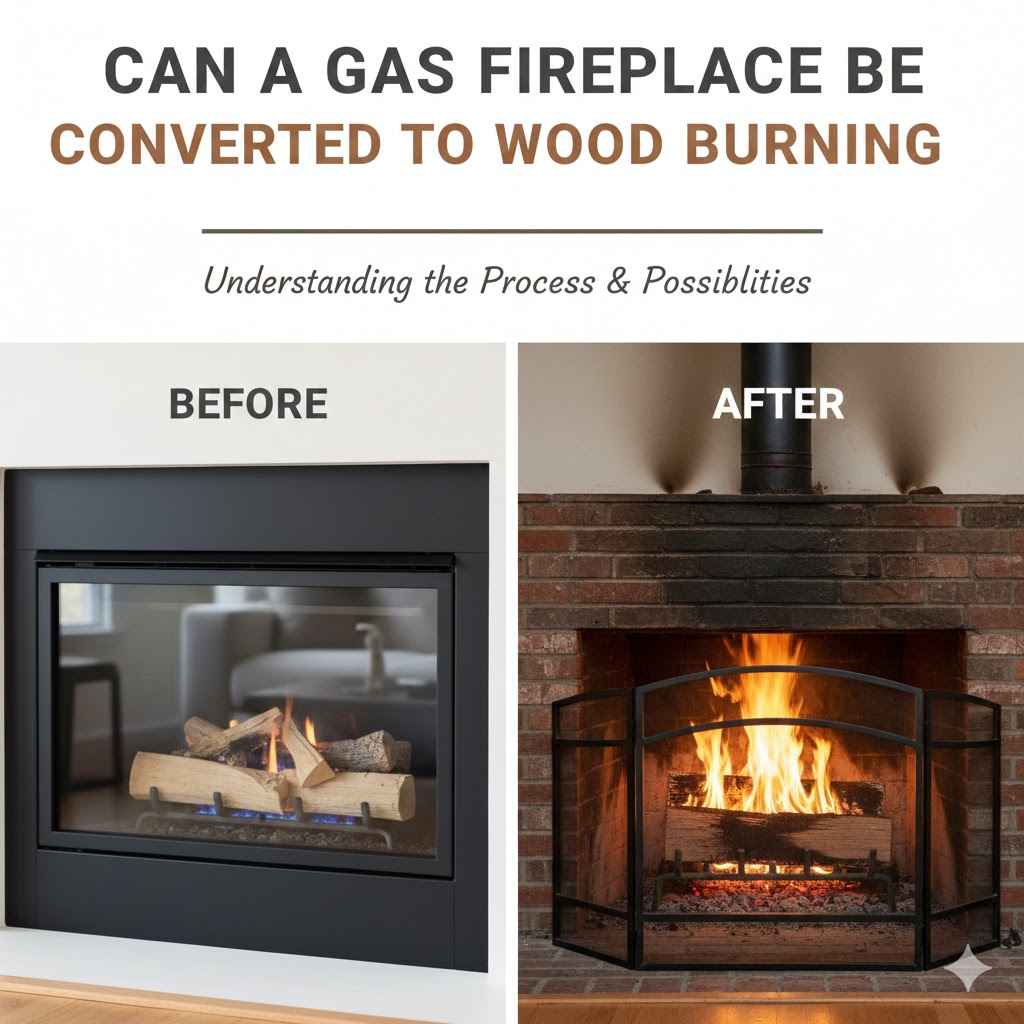
Can a Gas Fireplace Be Converted to Wood Burning
Many homeowners love the cozy glow of a fireplace. Sometimes, you might have a gas fireplace but wish for the crackle and scent of a real wood fire. This question, Can a Gas Fireplace Be Converted to Wood Burning?, often comes up for those looking to change their home’s ambiance.
It can seem tricky if you are new to home improvement. But don’t worry, we will walk through it step by step. We’ll make it easy to understand what’s involved.
Let’s get started on figuring out if your gas fireplace can become a wood-burning one.
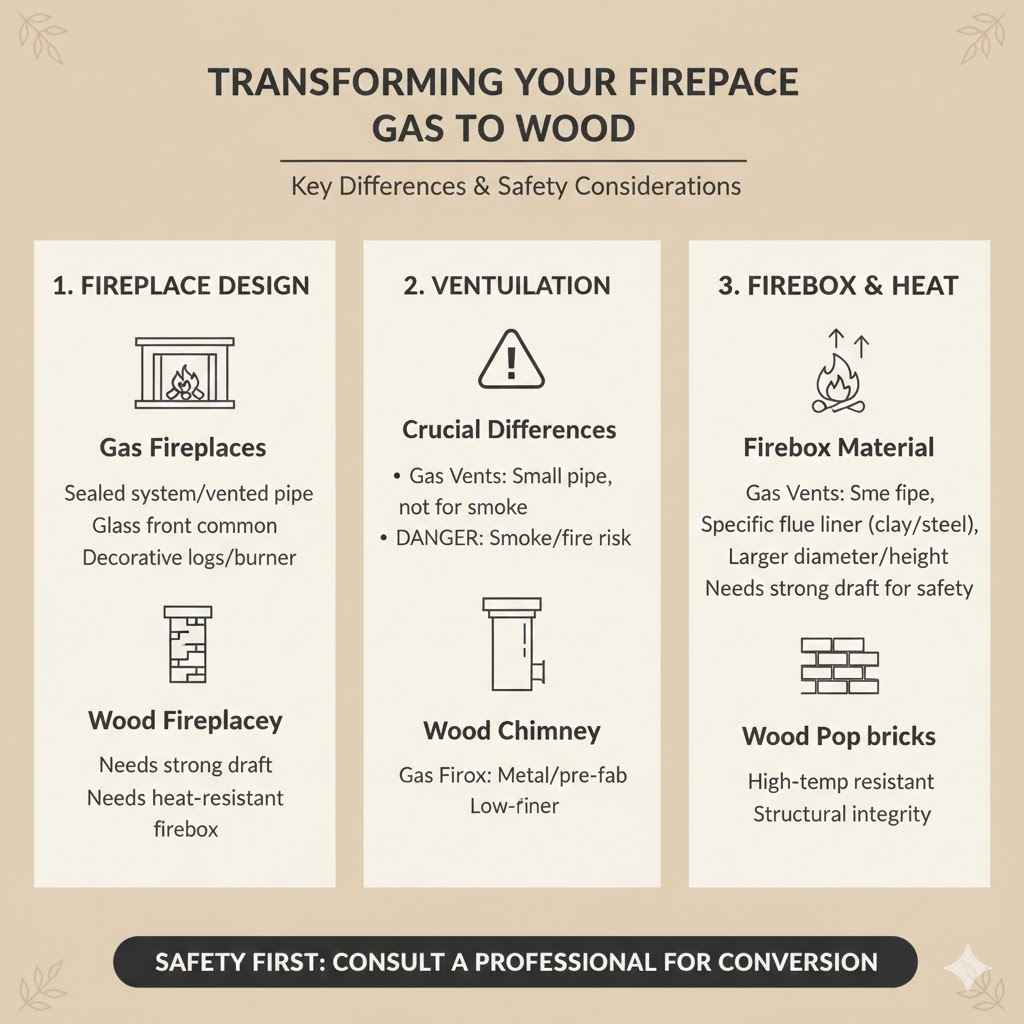
Transforming Your Fireplace Gas to Wood
The idea of converting a gas fi
Understanding Fireplace Design Differences
The core of any fi
Wood-burning fi
Ventilation Requirements for Wood Fires
Proper ventilation is arguably the most critical aspect when considering any fi
Gas fireplaces often use direct vent systems or vent through a smaller pipe. These systems are not designed to handle the volume or composition of smoke generated by burning wood. Attempting to vent a wood fire through a gas fireplace’s existing vent would be extremely dangerous, leading to smoke filling the home and a high risk of chimney fires.
A proper wood-burning chimney requires a specific flue liner, typically made of clay tiles, stainless steel, or cast-in-place concrete, to protect the chimney structure and prevent fires. The height and diameter of the chimney must also be carefully calculated based on the fireplace opening size and local building codes to ensure proper draft.
The Firebox and Heat Resistance
The firebox is where the fire actually burns. In gas fi
A wood-burning firebox needs to be lined with refractory bricks, which are specifically designed to withstand very high temperatures and thermal shock (rapid temperature changes). These bricks are laid in a way that allows for expansion and contraction without compromising the structural integrity of the fi
Is a Direct Conversion Possible
When people ask Can a Gas Fireplace Be Converted to Wood Burning?, they often imagine a straightforward swap. Unfortunately, in most cases, a direct conversion is not really feasible. This is because gas and wood fireplaces have fundamentally different safety and construction requirements.
The systems are engineered for distinct fuel types and produce different types of emissions and heat. Trying to force wood fuel into a system designed for gas is like trying to run a diesel engine on gasoline; it simply won’t work safely or efficiently, and can lead to dangerous situations.
The term “conversion” often implies a simple modification. However, changing from gas to wood typically involves replacing the entire unit or a significant portion of it. This includes the firebox, the venting system, and potentially structural reinforcements.
Essentially, you would be building a new wood-burning fi
Structural Integrity and Building Codes
Building codes are in place to ensure safety and prevent fires. When a gas fi
The structural integrity of the wall and surrounding structure is also a concern. Wood-burning fireplaces generate more heat and require a more substantial foundation or support system than many gas fireplaces, especially if they are inserts or ventless units. The chimney structure itself needs to be sound and capable of handling the weight and heat.
Building inspectors will scrutinize any work done on a fireplace, and a conversion project would require thorough inspection to ensure it meets all current safety standards for wood-burning appliances. This often involves a new chimney structure, which is a major undertaking.
The Safety Implications of a “Conversion”
Safety is the paramount concern. Attempting to burn wood in a gas fi
The risk of fire is significantly higher when a gas appliance is repurposed for wood. Manufacturers design gas fi
When is Replacement the Better Option
Given the significant safety concerns and structural requirements, the most practical and often the only safe approach when wanting a wood-burning fi
While it might seem more expensive upfront than a hypothetical “conversion,” a proper installation of a new wood-burning fi
Alternatives to Traditional Wood Burning
Even if converting a gas fi
Ventless Gas Fi
Ventless gas fi
The appeal of these units lies in their ease of installation and operation. They can be placed in almost any room, as they don’t require complex venting. Many ventless gas fireplaces feature highly realistic ceramic logs and flickering flames that closely resemble a real wood fire.
They are also very efficient heaters, providing supplemental warmth to a room. However, it’s important to note that some areas have restrictions on ventless appliances due to air quality concerns. Always check local building codes and regulations before considering a ventless option.
Electric Fi
Electric fi
Beyond their aesthetic appeal, many electric fi
Gas Fireplace Inserts for Enhanced Realism
If you already have a gas fi
These inserts are designed to fit into an existing fireplace opening, whether it’s a traditional masonry fireplace or a pre-fabricated metal one. They are generally more efficient than older gas fireplace models and offer a cleaner burn. While they still require a gas line and proper venting (often using the existing chimney if it’s suitable), they provide a significant improvement in visual appeal and ambiance compared to basic gas log sets.
They are a good option for those who want the convenience of gas but desire a more authentic wood-fire look and feel.
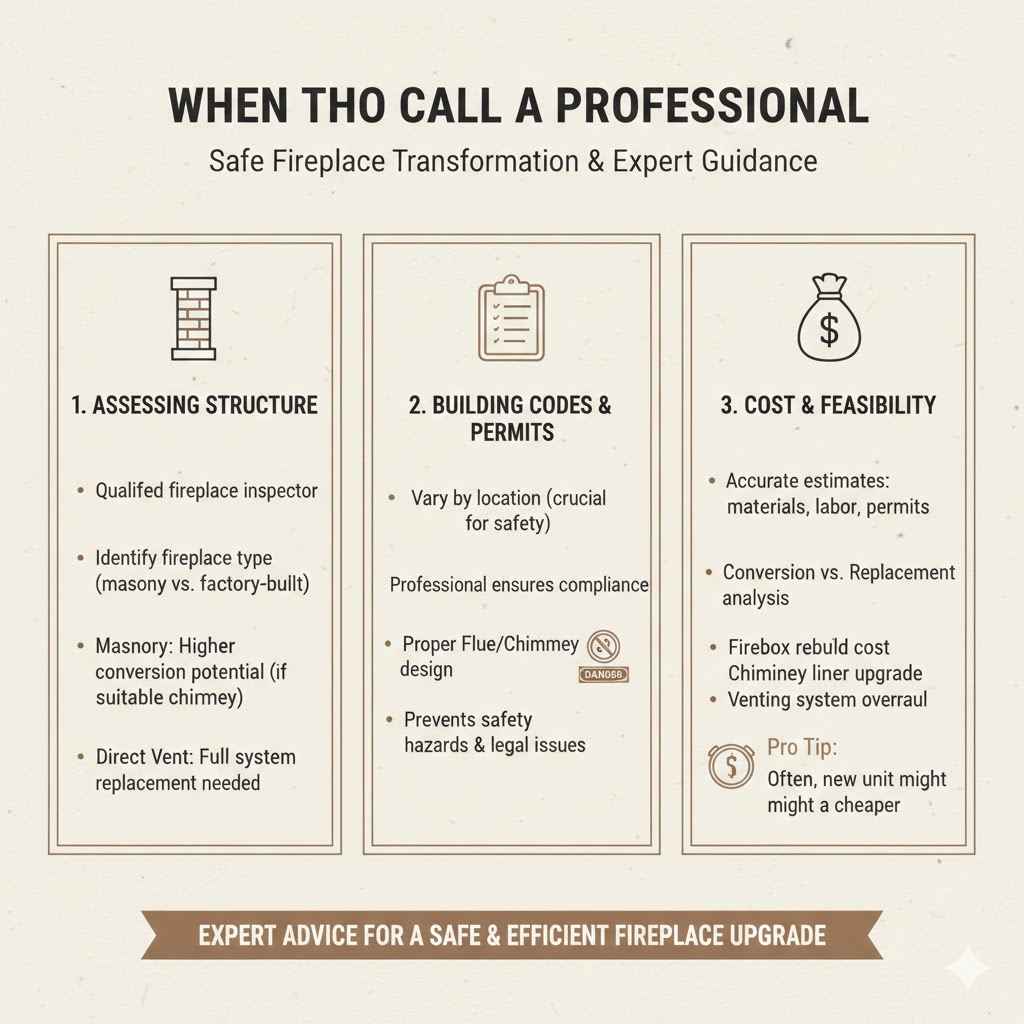
When to Call a Professional
Deciding whether to convert or
Assessing Your Current Fireplace Structure
A qualified fi
For instance, they can differentiate between a gas fireplace that is an ‘s a slightly higher chance that the masonry chimney itself might be suitable for a wood-burning application, provided it’s in excellent condition and can be properly lined. However, if the gas fireplace is a direct vent unit that exhausts through a small pipe, that entire system would need replacement for wood burning.
Understanding Building Codes and Permits
Building codes for fi
Working with a professional means you can trust that your fi
Cost and Feasibility Analysis
Professionals can provide accurate estimates for the cost of any proposed work. This includes the price of materials, labor, permits, and any necessary modifications to your home’s structure. They can also offer a realistic assessment of the feasibility of a conversion versus a full replacement.
Often, the cost of attempting a “conversion” that involves replacing the firebox, lining the chimney, and upgrading the venting can quickly approach or even exceed the cost of installing a completely new, factory-built wood-burning fireplace or a high-quality gas insert designed for realism.
This cost analysis helps homeowners make informed decisions. For example, if a professional determines that a gas fireplace’s existing chimney is in poor condition, requires a new liner, and the firebox needs complete rebuilding, the total expense might make a new, energy-efficient wood-burning stove or fireplace a more attractive option. They can present various solutions, from simple aesthetic upgrades to full installations, and outline the associated costs and benefits of each, allowing you to choose the path that best suits your budget and desires.
Frequently Asked Questions
Question: Can I just put wood logs in my gas fireplace?
Answer: No, you should never put wood logs in a gas fi
Question: What is the main difference between gas and wood fireplace venting?
Answer: Gas fireplaces often use direct vent systems or smaller pipes. Wood fireplaces require a large, Class A chimney designed to handle smoke, creosote, and high temperatures safely, creating strong draft for ventilation.
Question: Can a gas fireplace be safely converted to wood burning?
Answer: Generally, no. A direct conversion is not considered safe or practical due to fundamental differences in design, materials, and safety requirements for handling wood combustion versus gas combustion.
Question: What are some alternatives to a wood-burning fireplace?
Answer: Alternatives include highly realistic electric fi
Question: How do I know if I need a professional for my fireplace?
Answer: You should always consult a professional for any fireplace modifications or installations. They ensure safety, code compliance, and proper functioning of the appliance and its venting system.
Wrap Up
In summary, the question Can a Gas Fireplace Be Converted to Wood Burning? usually results in a “no” for practical and safe reasons. Converting a gas fireplace to wood is not a simple modification but a complex structural project. It often requires replacing the firebox and installing a completely new, safe venting system.
Professionals recommend replacing the entire unit or installing a new wood-burning fireplace for safety and performance. Consider realistic alternatives like electric or modern gas units if a wood fire is desired.