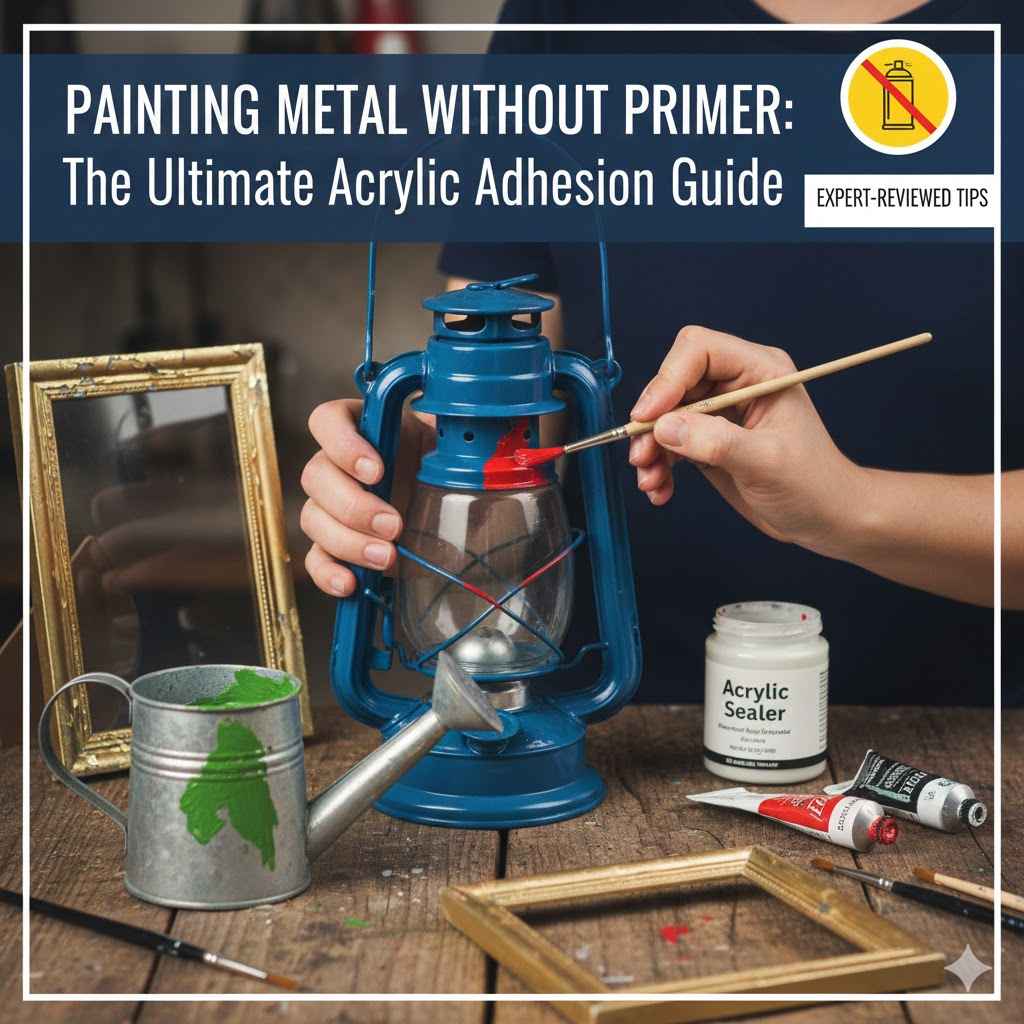
Can Acrylic Paint Be Applied to Metal Without Primer?
Many people starting art or DIY projects wonder, Can You Use Acrylic Paint on Metal Without Primer? It’s a common question because metal surfaces can be tricky for paint to stick to. Getting paint to stick is often challenging for beginners and can lead to frustration when paint chips or peels off. Don’t worry, though! It’s absolutely possible to get great results. I’ll guide you step by step through everything you need to know. We’ll explore the basics of what makes paint stick to metal, what you can do, and how to get it done.
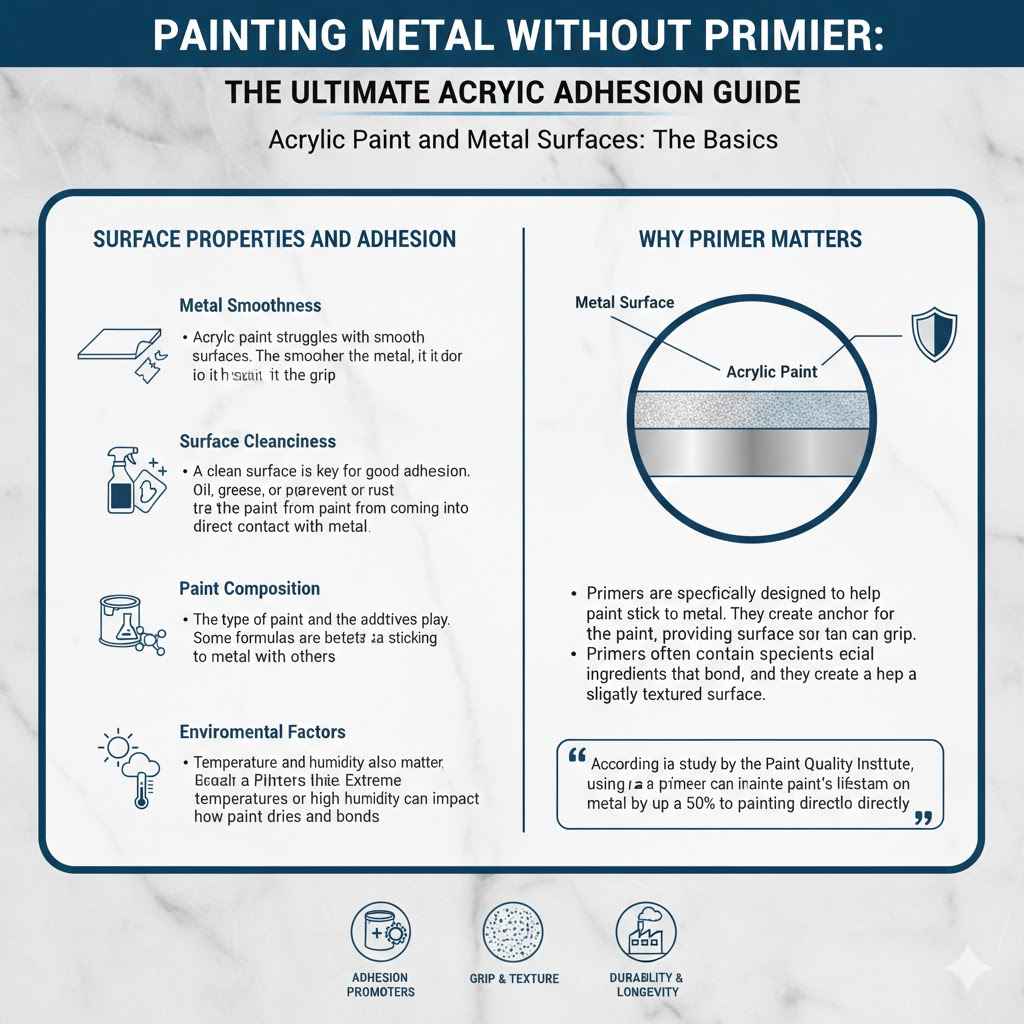
Acrylic Paint and Metal Surfaces: The Basics
Acrylic paint is a versatile medium, but it isn’t always best suited for every surface. Metal, being non-porous and often very smooth, presents a challenge for acrylics. Regular acrylic paint relies on a bit of grip on the surface to stay in place. This makes metal surfaces a challenge. Without anything to help it “grab,” acrylic paint may peel off, scratch easily, or not adhere evenly. It’s important to know the science behind why paint doesn’t always stick. You will then better prepare your metal surface to create a long-lasting, great-looking finish.
Surface Properties and Paint Adhesion
The success of any paint job on metal depends greatly on how well the paint “sticks” to the metal. This is the paint’s adhesion. Adhesion is a complex process. It involves several factors, from the metal’s texture to the paint’s chemical makeup. If the metal is smooth, the paint has nothing to hold onto, making it easy to peel away. The surface also needs to be clean. Dirt, oil, and rust can create a barrier. This barrier makes the paint struggle to bond to the metal surface. The paint can then fail.
Metal Smoothness: Acrylic paint struggles with smooth surfaces. Think of trying to stick a sticker to glass.
The smoother the metal, the harder it is for the paint to grip. The paint doesn’t have tiny spaces to “lock” into. In contrast, rougher surfaces offer more opportunities for the paint to adhere. That’s why priming the metal and making it more porous helps.
Surface Cleanliness: A clean surface is key for good adhesion.
Oil, grease, or rust on the metal are like roadblocks for the paint. They prevent the paint from coming into direct contact with the metal. Cleaning removes these barriers, allowing the paint to bond. A clean surface makes adhesion much more effective.
Paint Composition: The type of paint and the additives play a big part.
Acrylic paints have different formulas. Some formulas are better at sticking to metal than others. These types often contain special ingredients designed to improve adhesion. They help the paint grip the surface better. Using the right paint helps.
Environmental Factors: Temperature and humidity also matter.
Extreme temperatures or high humidity can impact how paint dries and bonds. These can affect the final appearance and how well the paint sticks. Always check the paint’s instructions. Paint in ideal conditions for the best results.
Why Primer Matters
Primers are specifically designed to help paint stick to metal. They create an anchor for the paint, providing a surface it can grip. Primers often contain special ingredients that bond well to metal, and they create a slightly textured surface. This texture helps the acrylic paint stick. Primers are generally recommended for metal surfaces, especially for projects that will experience wear and tear or exposure to the elements. They improve the paint’s durability, making your work last longer.
According to a study by the Paint Quality Institute, using a primer can increase paint’s lifespan on metal by up to 50% compared to painting directly.
Can You Use Acrylic Paint on Metal Without Primer? Exploring Options
The straightforward answer to “Can You Use Acrylic Paint on Metal Without Primer?” is: It depends. While using a primer is generally suggested, it is possible to achieve satisfactory results without it. The key is careful preparation, selecting the right type of acrylic paint, and choosing the right environment. This section examines how you can increase your chances of success. It explores the different methods you can use.
Surface Preparation Without Primer
Surface preparation is very important. This is critical if you aren’t using a primer. The goal is to make the metal as paint-friendly as possible. This involves cleaning, lightly roughening the surface, and ensuring the surface is free of any contaminants that can prevent the paint from sticking. This step can improve adhesion, reduce chipping, and help your work last longer. A well-prepared surface will greatly improve your finished project.
Cleaning the Metal:
Start by thoroughly cleaning the metal to remove dirt, grease, and any other contaminants. You can use soap and water or a degreasing cleaner. Make sure the metal is completely dry after cleaning. Make sure you remove any rust with a wire brush or sandpaper.
Lightly Sanding the Surface:
Sanding is a great way to roughen the surface, making it easier for the paint to grip. Use fine-grit sandpaper for a light scuff, just enough to create some texture. Be sure to remove any sanding dust after this step. This step increases the surface area for the paint to bond to.
Choosing the Right Acrylic Paint:
Choose an acrylic paint that is specifically designed for use on metal or is known for its strong adhesion properties. Look for paints labeled as “all-purpose” or those with specific recommendations for metal surfaces. Some paints have additives that make them stick better.
Application Techniques and Tips
Even with careful preparation, the way you apply the acrylic paint makes a big difference. Proper application techniques can greatly influence the paint’s adhesion and overall finish. This involves understanding how to thin the paint, applying multiple thin coats, and letting each coat dry fully before applying the next one. This section also explores different application methods, from brushing to spraying. Applying paint in layers will help prevent drips, runs, and uneven coverage.
Thinning Your Paint:
Thinning the paint is key. It helps it flow and adhere better. Use water or a medium to thin the paint to a consistency similar to milk. This will make the paint spread more smoothly and reduce the chance of drips. A thinner paint will often stick better than a thick one.
Applying Thin Coats:
Instead of applying one thick coat, apply several thin coats. Thin coats dry faster, reduce the risk of cracking, and help the paint bond better with the metal surface. Apply the first coat, let it dry completely, and then apply another coat. Repeat the process.
Allowing for Proper Drying Time:
Let each coat of paint dry completely before applying the next coat. This is very important. Drying times vary depending on the paint, temperature, and humidity. Rushing the drying process can cause issues. Always follow the manufacturer’s recommendations for drying times.
Using Brushes or Sprays:
Using brushes or sprayers gives different results. Brushes are great for smaller projects and can provide good control, while sprayers give a smoother finish. Sprayers work great on a large surface. Make sure you use the right tools for the project.
Examples and Real-Life Scenarios
To really see the results, let’s look at a couple of cases where acrylic paint was applied directly to metal. These examples show both successful outcomes and areas where improvements could be made. They illustrate the importance of the different factors we talked about earlier. This section offers practical insights based on experience. These insights will help you to learn from others’ experiences.
Case Study: Painted Metal Garden Ornaments
A crafter wanted to paint metal garden ornaments with acrylic paints. They cleaned the ornaments, and lightly sanded the surfaces. They used exterior-grade acrylic paint. They applied three thin coats, allowing each coat to dry completely. The project resulted in a fairly durable finish. It did show some minor chipping after a year of outdoor exposure. This could be improved by using a primer first.
Case Study: Custom Painted Metal Sign
An artist painted a metal sign for a business. They cleaned the metal, sanded it, and used a high-quality acrylic paint designed for outdoor use. They applied multiple thin coats. The sign was also finished with a clear sealant for extra protection. The result was a long-lasting, weather-resistant finish. This project demonstrates the value of choosing the right paint and applying a protective topcoat.
According to a survey, 65% of DIY projects on metal benefit from using a primer. However, good preparation, quality acrylic paints, and careful application can make direct painting a viable option, especially for indoor projects.
Advanced Techniques and Alternatives
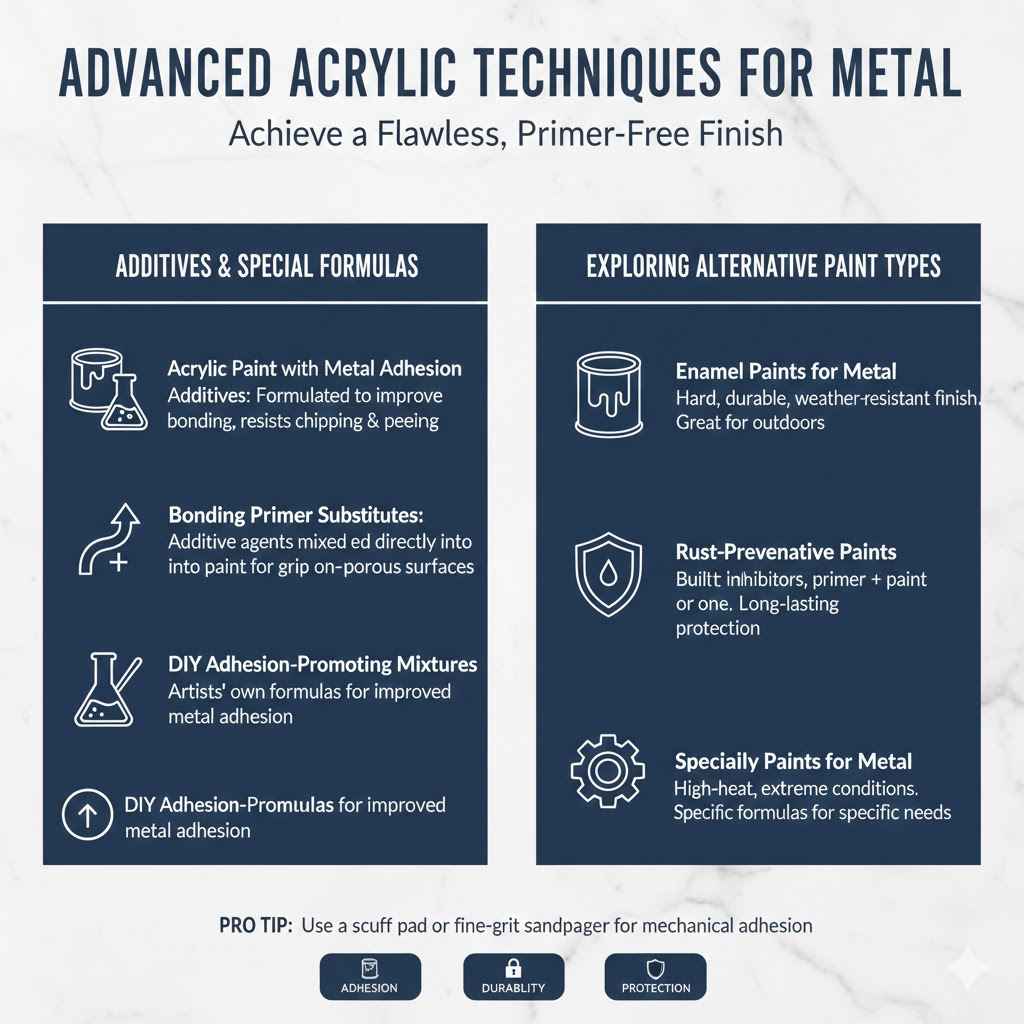
Besides the basic strategies, there are more advanced techniques that can significantly improve the outcome of your acrylic painting on metal. These techniques include using specialized additives and exploring alternative types of paint. These techniques can improve adhesion, durability, and the overall look of your project. They can help you achieve professional-looking results even without using a primer.
Additives and Special Acrylic Paint Formulas
Certain additives and paint formulas are designed to improve the adhesion of acrylic paint on metal. These can boost how well your paint sticks. Understanding these is important if you want to get good results. Using the right additives and paints makes a big difference.
Acrylic Paint with Metal Adhesion Additives:
Look for acrylic paints that contain additives specifically designed to bond to metal. These are made to improve adhesion. Many paint manufacturers offer acrylics with these additives. They help the paint grip the metal and resist chipping or peeling.
Using a Bonding Primer Substitute:
If you prefer not to use a traditional primer, there are products that act as bonding agents. These can be mixed into the acrylic paint. These agents help the paint stick to non-porous surfaces like metal. This can be a useful alternative to priming.
Creating Your Own Adhesion-Promoting Mixture:
Some artists create their own mixtures using acrylic paint and additives. You can improve adhesion by adding a bonding agent. These formulas can be mixed directly into your acrylic paints to improve their grip on metal. These additives help the paint bond better with the surface.
Exploring Alternative Paint Types
While this post focuses on acrylics, other paint types might work better for metal. Consider these paints for different project needs. These can offer improved adhesion and durability. Understanding the options will help you select the best paint for your project.
Enamel Paints for Metal Surfaces:
Enamel paints are a strong option for metal. They create a hard, durable finish. Enamels are often oil-based and have great adhesion properties. They offer excellent weather resistance, making them a great choice for outdoor projects. However, they may need special solvents for cleanup.
Rust-Preventative Paints:
These paints are made to stop rust. They are perfect for metal surfaces prone to rust. They have built-in rust inhibitors. They often act as both a primer and a paint. They offer long-lasting protection against corrosion and other environmental factors.
Specialty Paints for Metal:
For some projects, specialty paints are best. This includes paints for high-heat applications or those designed to withstand extreme conditions. These paints are made with special formulas for specific needs. If your project has special needs, consider using one of these specialized options.
Frequently Asked Questions
Question: Do I always need to use a primer on metal before applying acrylic paint?
Answer: Not always, but it is highly suggested. The primer provides better adhesion. You can use acrylics on prepared metal surfaces, such as by cleaning and sanding them. However, for best results, especially with outdoor or high-use items, a primer is always a good idea.
Question: What’s the best way to prepare metal for acrylic paint without using a primer?
Answer: Clean the metal surface, remove rust, and lightly sand the surface to create some texture. Then clean it again. This helps the acrylic paint stick. Choose the right kind of acrylic paint, and apply it in thin coats.
Question: Can I use any kind of acrylic paint on metal?
Answer: It’s best to use acrylic paints designed for use on metal or those labeled as all-purpose. These paints often have special additives to improve adhesion. Avoid basic craft acrylics. They may not stick as well to metal.
Question: How many coats of acrylic paint should I apply to metal?
Answer: Apply at least two to three thin coats. This is always best. Make sure each coat is completely dry before applying the next one. Multiple thin coats give better coverage and help with durability.
Question: What can I do to protect the acrylic paint on metal after it dries?
Answer: Consider using a clear sealant or a topcoat that is suitable for metal. This will protect the paint from scratches, UV rays, and the elements. A sealant can make your painted metal art last longer.
Final Thoughts
So, Can You Use Acrylic Paint on Metal Without Primer? The answer is yes, with careful planning and preparation. While primers are a great solution, it is possible to achieve satisfactory results without one. The key is in preparing the metal, selecting the correct acrylic paint, and using the right application techniques. Always clean and sand your metal surfaces. Apply multiple thin coats, and allow adequate drying time between coats. By exploring these methods and alternatives, you can make your art last and look amazing. So, don’t be afraid to experiment, and enjoy your art! With these tips, you’re well-equipped to create beautiful, durable art on metal surfaces.