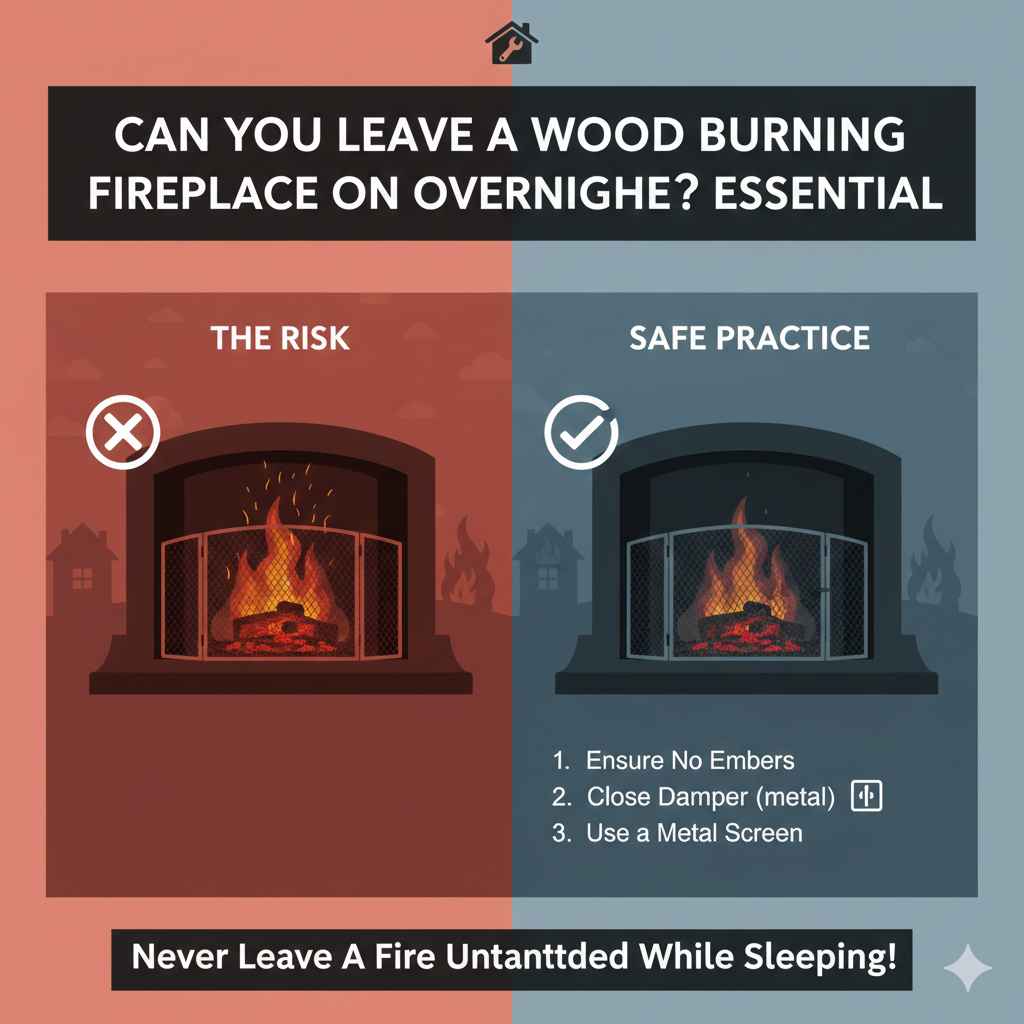
Can You Leave A Wood Burning Fireplace On Overnight? Essential
While you can leave a fire smoldering overnight by banking the coals, it is generally safer and more efficient to let the fire burn down completely before bed. Banking the coals saves heat but requires extreme caution and proper fireplace setup to prevent carbon monoxide buildup or chimney fires.
Have you ever woken up freezing because your lovely evening fire died out too soon? It’s a common thought: can I just bank this fire down and let it keep my room warm until morning? That desire for cozy, overnight warmth is totally understandable! However, managing a fire while you sleep brings up big safety questions. You want warmth without the worry. Don’t worry; we are going to walk through this step-by-step.
We will look at what experts say, the right tools you need, and the simple steps to keep your home cozy and safe. Ready to learn how to manage that lovely glow safely? Let’s dive into keeping your home warm without risking safety.
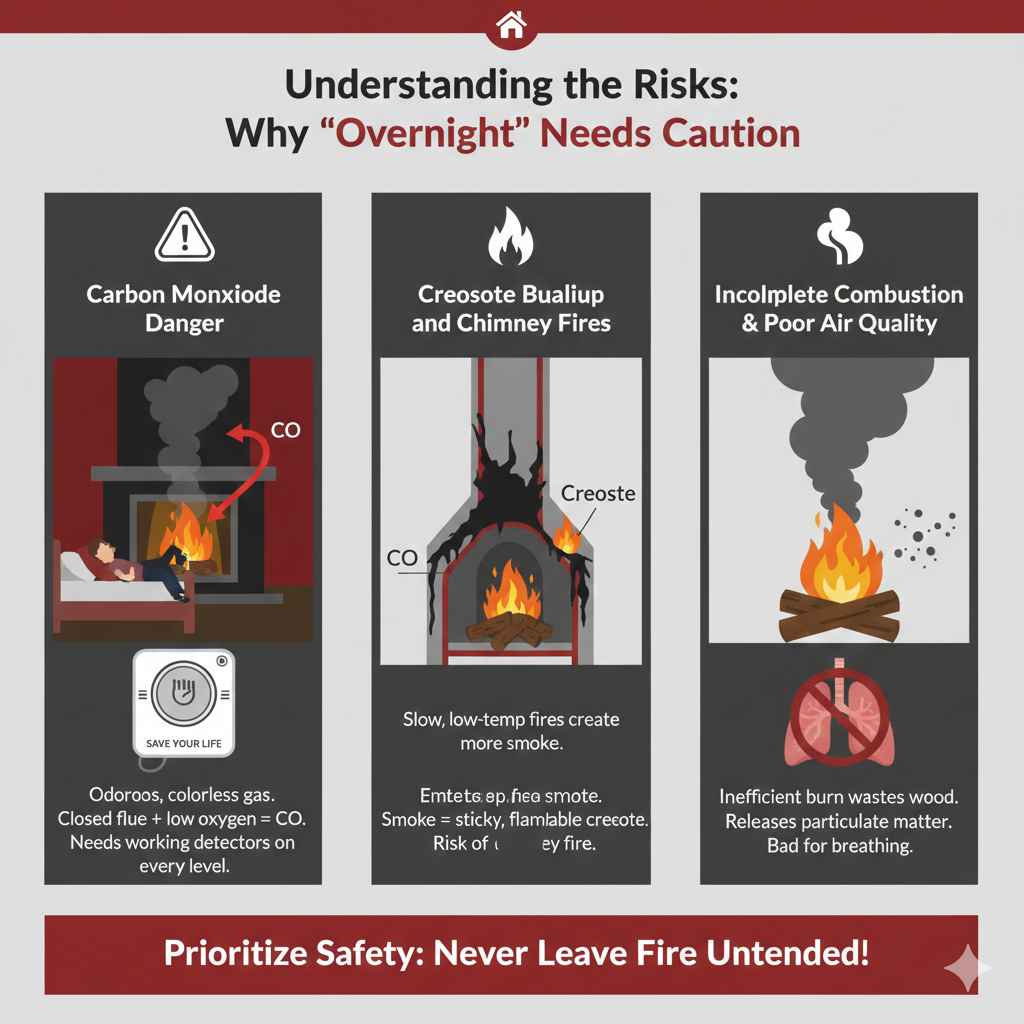
Understanding the Risks: Why “Overnight” Needs Caution
Leaving any fire unattended is a risk, but a wood-burning fireplace has specific hazards when left burning low overnight. For us DIYers who love a crackling fire, understanding these risks is the first step toward safe operation.
Carbon Monoxide Danger
This is the biggest concern. Carbon monoxide (CO) is an odorless, colorless gas created when wood burns without enough oxygen. When you close the flue too much to slow the burn overnight, you starve the fire, increasing CO production.
If your damper is not fully open, this gas can seep into your living space instead of safely exiting the chimney. CO poisoning can happen quickly while you sleep. This is why having working carbon monoxide detectors on every level of your home is absolutely non-negotiable. You cannot smell it, but your detector can save your life. For more information on CO safety, always check resources from the U.S. Fire Administration.
Creosote Buildup and Chimney Fires
When wood burns slowly and at lower temperatures—exactly what you are trying to achieve overnight—it produces more smoke. This smoke carries unburned particles up the chimney, where they cool and stick to the chimney walls. This sticky residue is called creosote.
Creosote is highly flammable. Over time, even a thin layer can catch fire, leading to a dangerous chimney fire. Banking a fire too aggressively overnight promotes the conditions that build up creosote faster than a hotter, cleaner-burning fire.
Incomplete Combustion and Poor Air Quality
A low, smoldering fire isn’t burning efficiently. This means you are wasting fuel (wood) and releasing more particulate matter into your home’s air, which isn’t great for breathing, especially for sensitive individuals.
The Safe Alternative: Banking the Fire vs. Leaving It Burning
The goal when trying to keep heat overnight is usually “banking the fire.” This means reducing the airflow so the fire smolders slowly, preserving hot coals that can be easily restarted in the morning, rather than letting the logs burn down to ash.
What is Banking a Fire?
Banking involves carefully reducing the oxygen supply to the established bed of hot coals just before you go to sleep. You are essentially putting the fire to bed, not letting it run a marathon.
Can You Leave It On Overnight? The Verdict
Technically, yes, if you bank it correctly. However, experts advise against leaving any fire completely unattended and burning low for more than a few hours. For DIY homeowners, the safest practice is to let the main logs burn down to a substantial bed of hot coals, close the damper partially (not completely), and check it first thing in the morning.
The safest approach, especially for beginners, is ensuring the visible flames are completely out, leaving only the hot coals. You can then wake up, stoke those coals, and easily restart the fire without the risks associated with a low-smoldering fire during deep sleep.
Essential Tools for Safely Banking Your Fire
If you decide to bank the fire to preserve coals, having the right tools makes the process safer and much easier. Think of these as your nighttime fire-tending kit.
- Sturdy Poker and Shovel: You need long-handled, robust tools to manage the coals without getting too close to the embers.
- Fireplace Ash Door/Screen: A tight-fitting screen or glass doors are essential to prevent stray sparks from escaping the firebox while you are adjusting the draft or sleeping.
- Heat-Resistant Gloves: For opening or closing heavy dampers or moving the screen. Safety first!
- Carbon Monoxide Detector: As mentioned, this is your most crucial piece of equipment when dealing with low burns or partial dampering.
- Quality Firewood: Well-seasoned hardwood burns longer and creates better, longer-lasting coals than softwood.
Step-by-Step Guide: How to Safely Bank Your Fire Overnight
If you have a well-built, functional fireplace and working CO detectors, follow these steps to bank the fire for overnight coal preservation. Remember, this process assumes you are going to bed shortly after completing these steps.
Step 1: Burn Hot and Long First
The key to good coals is a hot, clean burn beforehand. Before banking, add your final, large, dense pieces of hardwood about 2 to 3 hours before you plan to go to sleep. Let these logs burn fiercely until they have broken down into a substantial bed of glowing red embers, with almost no active flame licking them.
Step 2: Clear Out Excess Ash
You don’t want to bank the fire on a thick bed of white ash, as ash insulates the heat and prevents the coals underneath from staying hot. Use your shovel to gently scrape away any white or gray ash from the main coal bed, moving the glowing embers toward the center of the firebox.
Step 3: Restack the Coals
Use your poker to carefully arrange the hot coals into one compact pile in the center of the hearth. A tight mound retains heat much better than coals spread thinly across the floor.
Step 4: Introduce New Fuel Strategically (Optional)
If you want a bit more heat retention, place two or three smaller, dense pieces of wood directly on top of the central coal mound. You want these to slowly catch the heat and smolder, not burst into flame immediately. If your goal is minimal heat, skip adding more wood.
Step 5: Adjust the Damper (The Critical Step)
This is where precision matters. You must reduce airflow, but not eliminate it entirely.
- Check your damper position: If your fireplace has a lever or handle to fully open or close the flue, move it only about halfway, or even three-quarters of the way closed.
- The goal: You want to slow the draft so much that active flames die out, leaving only the coals glowing softly, but still allowing some fresh air in at the bottom to prevent massive CO buildup.
- Never fully close a damper on smoldering coals. If you can’t tell if air is getting in, leave the damper slightly more open than you think you should.
Step 6: Secure the Area
Place your fire screen or close your glass doors tightly. Ensure your chimney sweep has recently inspected your flue—a clean flue handles slow-burning smoke much better than a dirty one.
Step 7: Morning Check
When you wake up, open the damper completely first. Wait a few minutes to ensure good airflow. Then, use your poker to gently break up the coal mound and introduce a small piece of kindling or a rolled-up newspaper to reignite the embers easily.
When It Is Absolutely NOT Safe to Leave a Fire Overnight
Sometimes, banking the fire isn’t the best option. Knowing when to avoid this practice is crucial for home safety.
| Condition | Why It’s Dangerous for Overnight Banking |
|---|---|
| Older Masonry Fireplaces | Cracks in the masonry or flue liner are harder to spot and can allow smoke or embers to escape into wall voids when the fire burns slowly. |
| No Carbon Monoxide Detector | If you can’t detect CO, banking the fire is an unacceptable risk, regardless of how careful you are. |
| Rapid Creosote Buildup | If you haven’t had your chimney inspected or cleaned in over a year, slow burning will accelerate dangerous creosote formation. |
| Insert or Stove with Faulty Seals | Fireplace inserts or wood stoves rely on tight seals. If the gasket around the door or the glass is worn, smoke can leak into the room when the draft is reduced. |
| Unseasoned or Wet Wood | Wet wood smolders excessively and creates excessive, thick, toxic smoke, making banking much more dangerous. |
Modern Fireplace Inserts vs. Traditional Open Hearths
The type of fireplace you have greatly impacts how safely you can manage an overnight fire. Modern units are generally much better at slow, controlled burns.
Traditional Open Hearth Fireplaces
These are beautiful but less efficient. They rely on a large, open chimney opening. Banking them safely is difficult because it is very hard to control the precise amount of air getting to the coals. They tend to produce more smoke when damped down, increasing creosote risk.
Wood Stoves and Fireplace Inserts
These are designed for efficiency. They are sealed units with dedicated air intakes (primary and secondary air controls). Modern EPA-certified inserts (like those reviewed by the EPA) are built to burn wood slowly over many hours on a low setting without creating excessive smoke, provided you use the controls correctly.
If you have a high-quality insert, you have more confidence in banking the fire, as the air intake can be precisely dialed down, minimizing incomplete combustion compared to an open hearth.
Optimizing Your Wood for Overnight Coals
The wood you choose is just as important as how you arrange it. You are looking for wood that offers high density and low sap content.
The Best Wood Choices for Long-Lasting Coals
- Oak: The king of coal production. Oak burns hot and leaves behind dense, long-lasting coals.
- Hickory: Excellent density, produces intense heat and coals that last well into the night.
- Maple: A very dense hardwood that offers a great, long burn time.
Wood to Avoid for Overnight Banking
- Softwoods (Pine, Fir): These burn fast, create a lot of popping and sparks, and turn to white ash quickly. They do not leave usable coals.
- Green or Wet Wood: If the wood isn’t seasoned (dried) to below 20% moisture content, it spends its energy boiling off water rather than producing heat or good coals. It smokes terribly.
Tips for Maximizing Morning Heat Recovery
If you successfully banked your fire, the payoff is a pile of glowing embers in the morning. Here’s how to quickly turn those embers back into a cheerful fire without adding new wood immediately.
- Open the Damper Fully: Before adding any new fuel, ensure the chimney is ready to draw air. Wait 5–10 minutes after opening the damper to let the chimney warm up slightly.
- Break Up the Coal Bed: Use your poker to gently rake and break apart the central mound of embers. Spreading them slightly exposes more surface area to oxygen.
- Add Kindling and Small Sticks: Place very fine, dry kindling directly on top of the hottest, broken-up embers. The heat from below will ignite the kindling rapidly.
- Use the Primary Air Control (If Applicable): If you have an insert, open the primary air control (the intake vent near the bottom) wide open. This feeds the initial flare-up.
- Feed Slowly: Once the kindling is burning well, add pencil-sized sticks, then finger-sized sticks, before placing your first full log on the revitalized fire bed. This staged approach prevents you from overwhelming the fresh coals and smothering the rekindling effort.
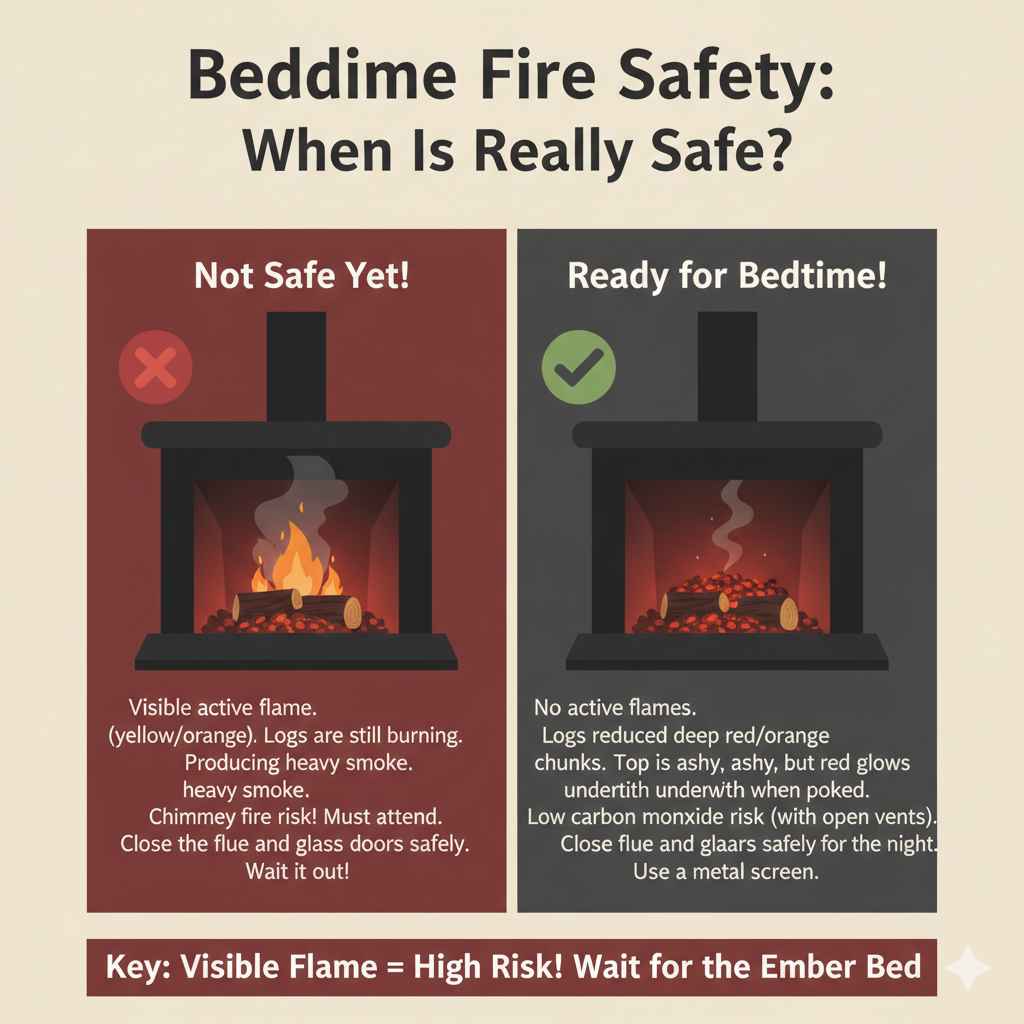
How to Tell if Your Fire Has Burned Down Enough for Bedtime
Knowing the difference between “low fire” and “safe coal bed” is key.
When you are ready to leave the fire for the night, you should see:
- No visible active flame (orange or yellow licking wood).
- The logs are completely blackened or reduced to glowing chunks.
- The embers are deep red to orange in color, not gray or ashy white.
- If you poke the fuel, you see more glowing embers underneath than charcoal or ash on top.
FAQ: Beginner Questions About Overnight Fires
Q1: If I bank the fire, how long can I safely leave it before checking on it in the morning?
A: If banked correctly in a well-maintained fireplace or stove, the coals can remain hot for 8 to 12 hours. However, for safety regarding CO, you should not leave it unattended for more than 4 to 5 hours without an adult checking the smoke/smell/CO alarm.
Q2: What is the safest way to put out a fire completely before going to sleep?
A: The safest method is to stop adding new wood about three hours before bedtime. Allow the existing logs to burn down to white ash naturally. If you must speed it up, carefully spray a small amount of water onto the remaining embers until they stop hissing, then cover them with a metal screen.
Q3: Can I use sand or dirt to smother my fireplace fire?
A: No, this is generally a bad idea for homeowners. Smothering coals with dirt or sand prevents the required draft, rapidly creating dangerous amounts of carbon monoxide. Furthermore, dirt contains moisture that can crack hot firebrick and metal components inside your fireplace over time.
Q4: Should I close the chimney damper completely when I go to bed?
A: Never fully close the damper on a fire that still has embers. Even if flames are out, embers produce trace amounts of CO. Closing the damper completely traps this gas. Only close it about 75% when banking coals, or wait until everything is cold ash before closing it fully.
Q5: I have a glass screen. Can I leave the glass doors closed all night?
A: If you have banked the fire properly (no active flames, only coals), you can generally keep the glass doors closed to retain heat. However, ensure your doors have small, slightly open vents or ensure the damper is open enough to maintain some draw. If the doors are completely sealed, closing them might stop the necessary airflow entirely, creating CO.
Q6: What is the difference between good coals and bad coals for banking?
A: Good coals are dense, deep red/orange, and hot to the touch (if poked). Bad coals are flaky, covered in white or light gray ash, and look dull. Good coals provide residual heat for hours; bad coals are basically ash and won’t restart easily.
Conclusion: Prioritizing Safety Over Long Hours of Heat
As a homeowner who loves the warmth of a wood fire, I completely understand the desire to keep that heat source going all night. However, after years of working with fireplaces, I can confidently tell you that while banking a fire to preserve coals is a valuable skill, leaving an actively burning, low fire unattended overnight is a risk that simply isn’t worth taking.
The risk of carbon monoxide leakage combined with the potential for slow-burning creosote fires outweighs the benefit of a slightly warmer bedroom in the morning. The best, most reliable, and frankly, most enjoyable method is to burn your wood hot in the evening until you have a solid, deep bed of red-hot coals. Carefully arrange those coals, partially restrict the airflow via the damper, and secure the area.
This approach ensures you have a robust heat source that remains warm for hours, giving you the perfect foundation for a quick, easy, and safe fire revival the moment your feet hit the cold floor in the morning. Remember your CO detector, know your wood, and always respect the embers. Happy, safe heating!