Can You Mix Paint With Polyurethane: The Ultimate Guide
You usually should not mix paint with polyurethane. Use separate layers instead, and only tint polyurethane with compatible colorants or compatible paint in tiny test batches when the product label allows it. Mixing the wrong binder or solvent can cause curdling, weak film build, poor adhesion, or a soft finish that never cures right. This guide shows when to mix, when to tint, and when to apply paint and polyurethane in separate coats based on binder type, cure stage, and finish goal.
Can you mix paint with polyurethane?

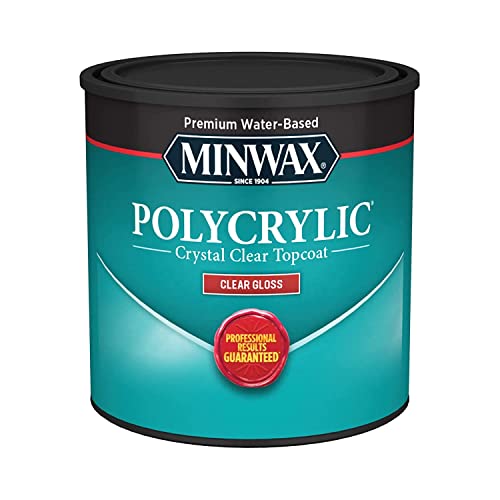

Usually, no. Mixing paint with polyurethane is not manufacturer-supported for any brand, and the result depends on the binder and carrier in both products. Water-based polyurethane is the closest workable DIY blend with water-based paint, but it is still an unsupported mix, not a guaranteed one.
Why the answer depends on binder and carrier
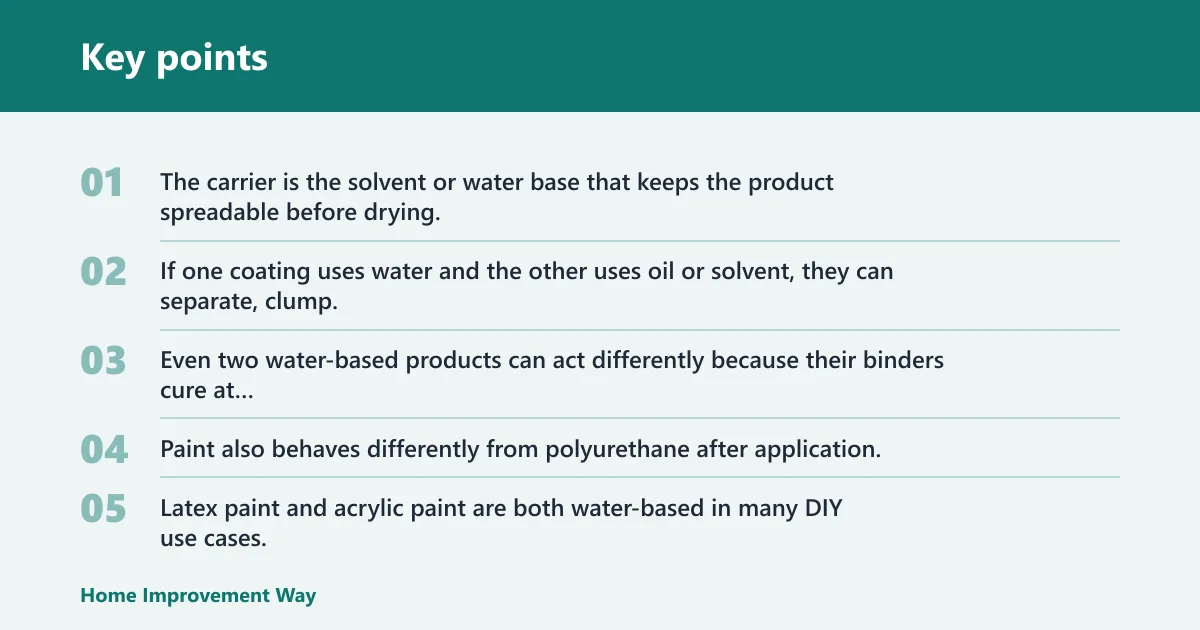
The carrier is the solvent or water base that keeps the product spreadable before drying. If one coating uses water and the other uses oil or solvent, they can separate, clump, or dry unevenly. Even two water-based products can act differently because their binders cure at different speeds and build different film structures.
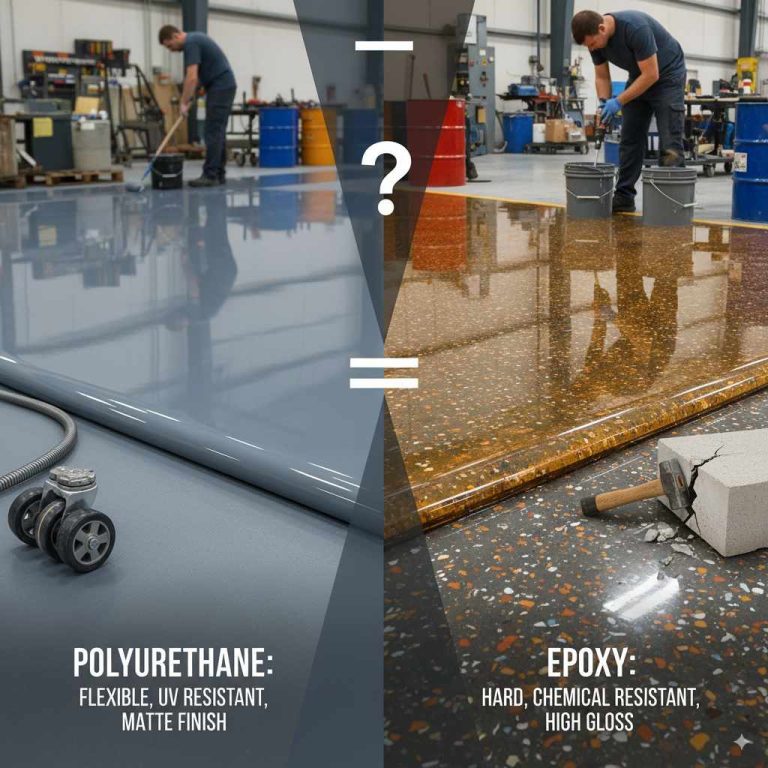
Paint also behaves differently from polyurethane after application. Latex paint and acrylic paint are both water-based in many DIY use cases, but they do not cure the same way as polyurethane. That difference matters when you try to force them into one blend.
Why most manufacturers do not support mixing
Mixing paint into polyurethane can change drying time, film hardness, flow, and clarity. The finish may look acceptable in the cup, then fail on the surface. A coating system that depends on curing is more predictable when each layer is applied for its intended job.
Compatibility by finish scenario
The table below turns the chemistry into a practical decision. It separates paint base, polyurethane base, cure stage, and the action that fits the situation best.
| Scenario | Paint base | Polyurethane base | Cure stage | Recommended action |
|---|---|---|---|---|
| 1 | Latex | Water-based | Fully cured | Separate coats are best; if you mix at all, treat it as a tiny test only. |
| 2 | Latex | Water-based | Still curing | Do not topcoat yet. Wait for full cure, which may take 14 to 60 days. |
| 3 | Latex | Oil-based | Fully cured | Avoid mixing. Use paint first, then a separate clear coat only if the system supports it. |
| 4 | Latex | Oil-based | Still curing | Do not mix and do not topcoat yet. Let the paint cure first. |
| 5 | Acrylic | Water-based | Fully cured | Closest to workable, but still unsupported. Use a test patch before any full application. |
| 6 | Acrylic | Water-based | Still curing | Wait. Mixed films often trap moisture or stay soft. |
| 7 | Acrylic | Oil-based | Fully cured | Do not mix. Apply separate coats only if the paint has fully cured and the product labels allow it. |
| 8 | Any paint base | Any polyurethane base | Unknown or partial cure | Stop and wait. Use a test patch only after cure is complete. |
What happens if you mix paint and polyurethane together?
You can get separation, curdling, tackiness, dulling, or a weak film that does not adhere well. The mix may seem usable at first, but the binder network can fail as the coating dries and cures. Pigment load also affects flow, leveling, and sheen, so a small color change can alter performance more than expected.
Separation and curdling from mismatched carriers
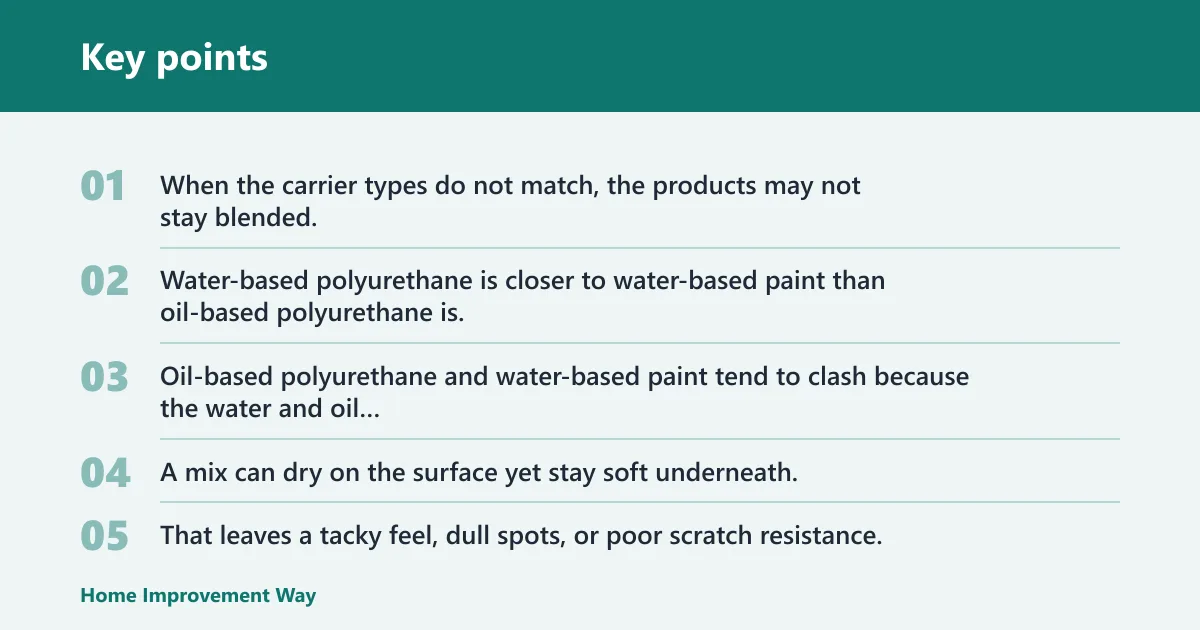
When the carrier types do not match, the products may not stay blended. Water-based polyurethane is closer to water-based paint than oil-based polyurethane is, but “closer” is not the same as compatible. Oil-based polyurethane and water-based paint tend to clash because the water and oil phases resist stable blending.
Tackiness, dulling, and weak adhesion after cure
A mix can dry on the surface yet stay soft underneath. That leaves a tacky feel, dull spots, or poor scratch resistance. On trim, cabinets, and furniture, those failures matter because sheen and leveling are part of the finished look. A cloudy or streaked coat on a cabinet door is usually easier to see than on a wall.
Say your 1-quart test batch starts smooth but turns stringy after a few minutes. That is a warning sign of incompatibility, not a reason to keep adding more polyurethane. A thicker mix often makes the coating fail more visibly, not less.
Why pigment load can upset finish performance
Raw paint carries binders, pigments, and additives meant for paint films, not clear topcoats. Too much pigment can reduce clarity, alter dry time, and weaken the film. That is why a clear polyurethane tinted with a proper colorant is safer than dumping in standard wall or trim paint.
Can you mix water-based polyurethane with latex paint?
Water-based polyurethane is the closest option to a workable blend with latex paint, but it is still not a guaranteed or supported mix. Water-based polyurethane is safe over most latex paint once fully cured, yet latex can still cause drying or curing problems if the coating is not ready or if the mix ratio is too paint-heavy.
What happens when latex paint is still curing
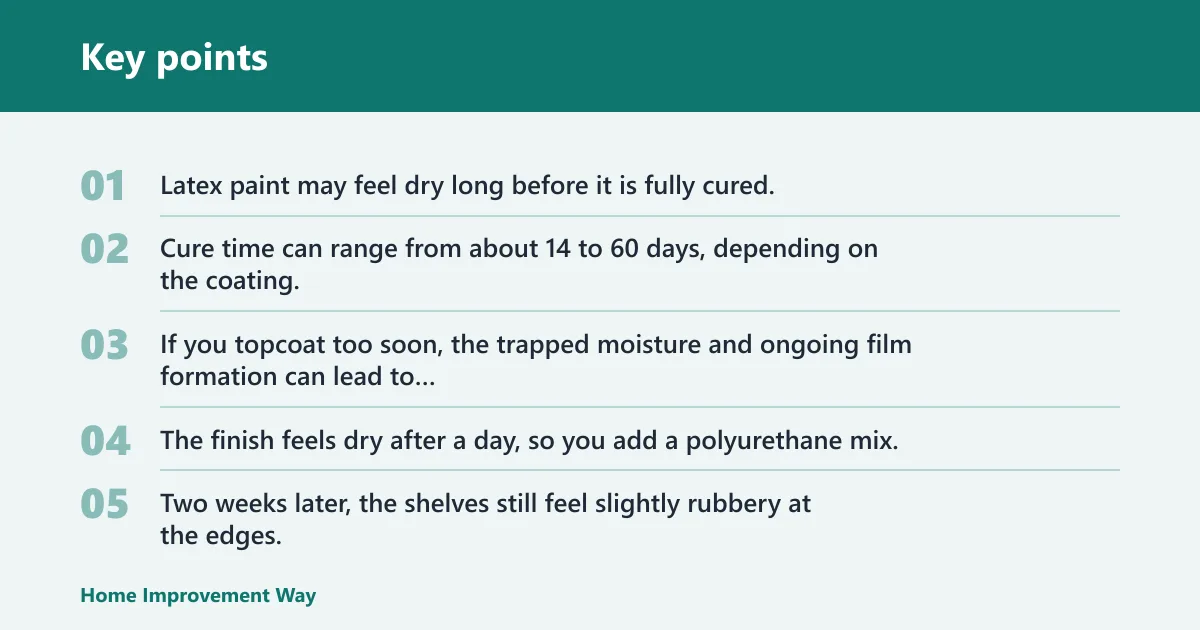
Latex paint may feel dry long before it is fully cured. Cure time can range from about 14 to 60 days, depending on the coating. If you topcoat too soon, the trapped moisture and ongoing film formation can lead to softness, wrinkling, or adhesion loss.
Picture a painted bookshelf in a humid room. The finish feels dry after a day, so you add a polyurethane mix. Two weeks later, the shelves still feel slightly rubbery at the edges. That is a cure issue, not a coverage issue.
Why water-based polyurethane is the closest match, not a guarantee
Water-based polyurethane dries clear and keeps the color underneath visible. That makes it the most sensible polyurethane base for a water-based paint system. Even so, the result still depends on the specific paint binder, the product’s additives, and whether the paint has fully cured.
Can you mix acrylic paint with polyurethane?
Acrylic paint is closer to workable with water-based polyurethane than oil-based paint is, and some DIY sources report that combination as possible. The Woodwork Place says water-based acrylic paint can mix with water-based polyurethane, but it is not best practice. Separate coats still give better control over color, sheen, and durability.
When acrylic paint is closer to workable
Acrylic paint is water-based in many DIY use cases, so it shares a carrier with water-based polyurethane. That shared carrier improves the odds of a temporary blend. It does not solve cure-stage problems, and it does not prevent a finish from going flat if pigment load is too high.
Why separate coats still give better control
Using paint first and polyurethane second lets each layer do one job well. Paint gives color and coverage. Polyurethane gives surface protection and sheen control. That separation matters on furniture and cabinets, where a blotchy mix can look worse than a plain painted surface with a clear topcoat.
What ratio of paint to polyurethane should I use?
There is no universal ratio that works across brands, binders, or surfaces. Reported DIY ratios run around one part poly to four parts paint, and PaintsGeek recommends a 10-20% paint to 80-90% polyurethane balance. Those figures are only rough references, not a guarantee of success.
Why ratios fail across brands
Two products labeled “water-based” can still contain different solids, resins, and additives. That is why a mixture that looks fine in one brand can curdle or dry poorly in another. If the goal is color, a better approach is to tint clear polyurethane with a small amount of universal colorant.
How to apply polyurethane over paint instead
For most projects, paint first and polyurethane second. Let the paint fully cure before topcoating. That order reduces the risk of lifting, softening, and poor adhesion, and it gives you a more predictable sheen on trim, cabinets, and furniture.
Step-by-step order for separate coats
- Apply the paint in thin, even coats.
- Let it cure fully, not just dry to the touch.
- Apply the polyurethane in a compatible base that fits the paint system.
A common mistake is stirring polyurethane into a can of paint and assuming it will dry at the same rate as the original paint. Dry-to-touch is not the same as cured. If the coating is still changing underneath, the topcoat can trap problems instead of protecting the surface.
How to tint polyurethane or use paint-plus-poly products
If you want a colored clear coat, tinting polyurethane with universal colorant is safer than adding raw paint. That approach keeps the blend closer to the product’s intended chemistry. For a one-step alternative, use a paint-plus-poly product or a factory-blended finish system.
Tinting clear polyurethane
Small-amount tinting is for color adjustment, not for creating opaque coverage. A tinted clear coat can shift warmth, reduce contrast, or add depth. It should still behave like polyurethane, with the colorant kept low enough that the film can form properly.
Factory-blended alternatives
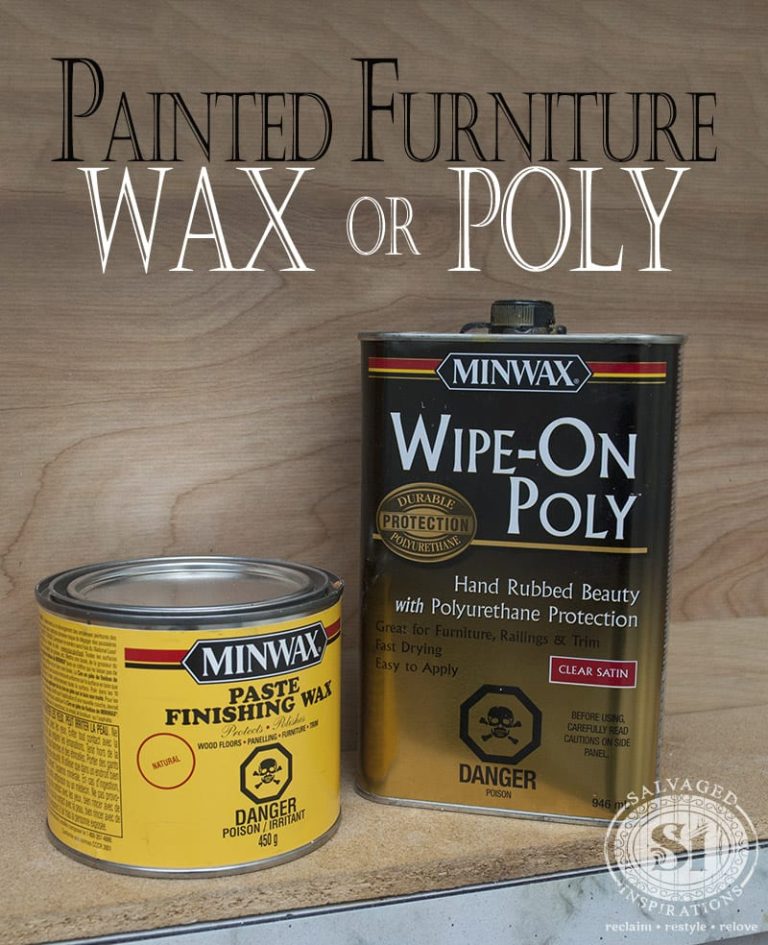
Polyurethane enamel is a factory-blended paint-plus-poly product. It is built to combine color and protective film in one system, which makes it more predictable than mixing products on your own. PaintsGeek also lists specialty products that already contain polyurethane.
Where Minwax PolyShades fits
Minwax PolyShades is a stain and polyurethane in one coat. It is a close supported alternative when you want color plus topcoat behavior, but it is not opaque paint. Think of it as a stain-and-clear system, not a substitute for a solid-color painted finish.
What happens if you add too much paint to polyurethane?
Too much paint can turn a topcoat into a weak, pigmented slurry. The result may lose clarity, dry slowly, streak, or stay tacky. Once the pigment load gets too high, the film may stop behaving like polyurethane and start behaving like a compromised paint blend.
Failure symptoms to watch
| Symptom | What it usually suggests | What to do |
|---|---|---|
| Separation | Carrier mismatch or poor blend stability | Stop mixing and test a different system. |
| Curdling | Binder conflict between products | Do not apply to the full surface. |
| Tackiness | Incomplete cure or overloaded film | Give the base more cure time and reassess. |
| Poor adhesion | Surface was not cured or product pair is incompatible | Sand, clean, and switch to separate coats. |
| Dulling | Pigment load or flattening from the mix | Reduce pigment or use a clear topcoat system. |
How to test before you commit
A simple three-step test patch can help reduce rework. Use it before you coat a door, table, or cabinet run. The goal is to find separation, curing problems, and appearance issues on a small area first.
- Mix a small sample. Keep it tiny and label the base products, carrier type, and ratio.
- Apply to scrap or an out-of-sight spot. Let it dry and then wait long enough to judge the cure, not just the surface feel.
- Check for failure signs. Look for separation, curdling, tackiness, poor adhesion, and dulling before you continue.
Frequently asked questions
Can water-based polyurethane be mixed with latex paint?
It is the closest option, but it is not a guaranteed or supported mix. Latex paint can cause drying or curing problems if it is not fully cured first. For most projects, applying paint and polyurethane in separate coats gives more reliable results.
Should I paint first or polyurethane first?
Paint first, then polyurethane after the paint has fully cured. That order protects the paint film and helps the topcoat adhere properly. For most trim, cabinets, and furniture projects, separating the layers gives better control than trying to build both functions into one mix.
Sponsored / affiliate links. As an Amazon Associate I earn from qualifying purchases. I may earn additional commission from eligible campaigns.