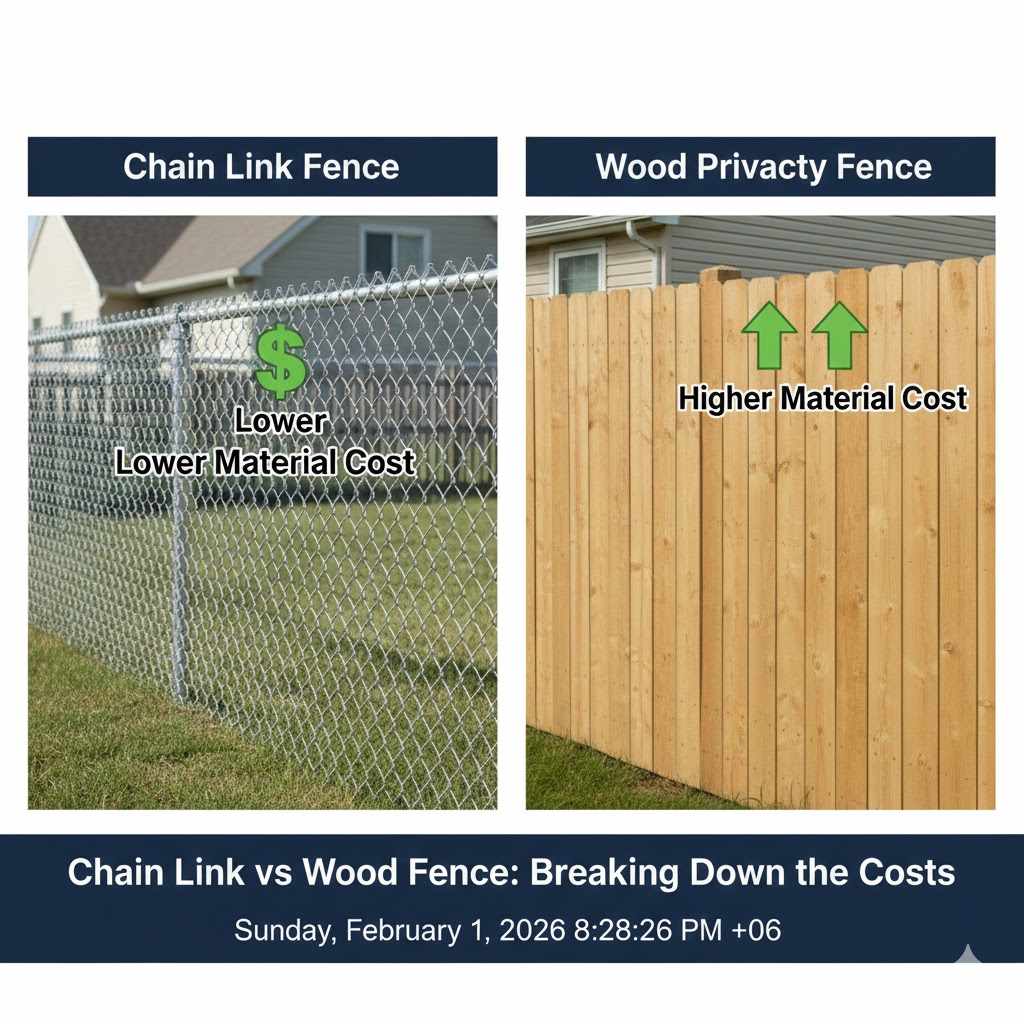
Chain Link vs Wood Fence: Breaking Down the Costs
Choosing a fence can be tricky. Deciding between a Chain Link vs Wood Fence: Cost Difference Explained is a common challenge for many homeowners. You might feel a little lost at first, wondering about prices, installation, and which one fits your needs best. Don’t worry, though! This guide breaks down the costs in a straightforward way, making it easy to see the differences. We’ll explore each type step-by-step so you can make a good choice for your property. Let’s start with the basics.
Choosing the Right Fence
Picking the right fence is an important decision, especially when you think about your home’s appearance and protection. It also depends on your budget. Chain link fences are often chosen for their affordability and easy setup, making them a popular option for many people. Wood fences, on the other hand, offer a classic look and more privacy. It’s important to think about factors like how long you want the fence to last, how much upkeep you can handle, and the look you want to achieve.
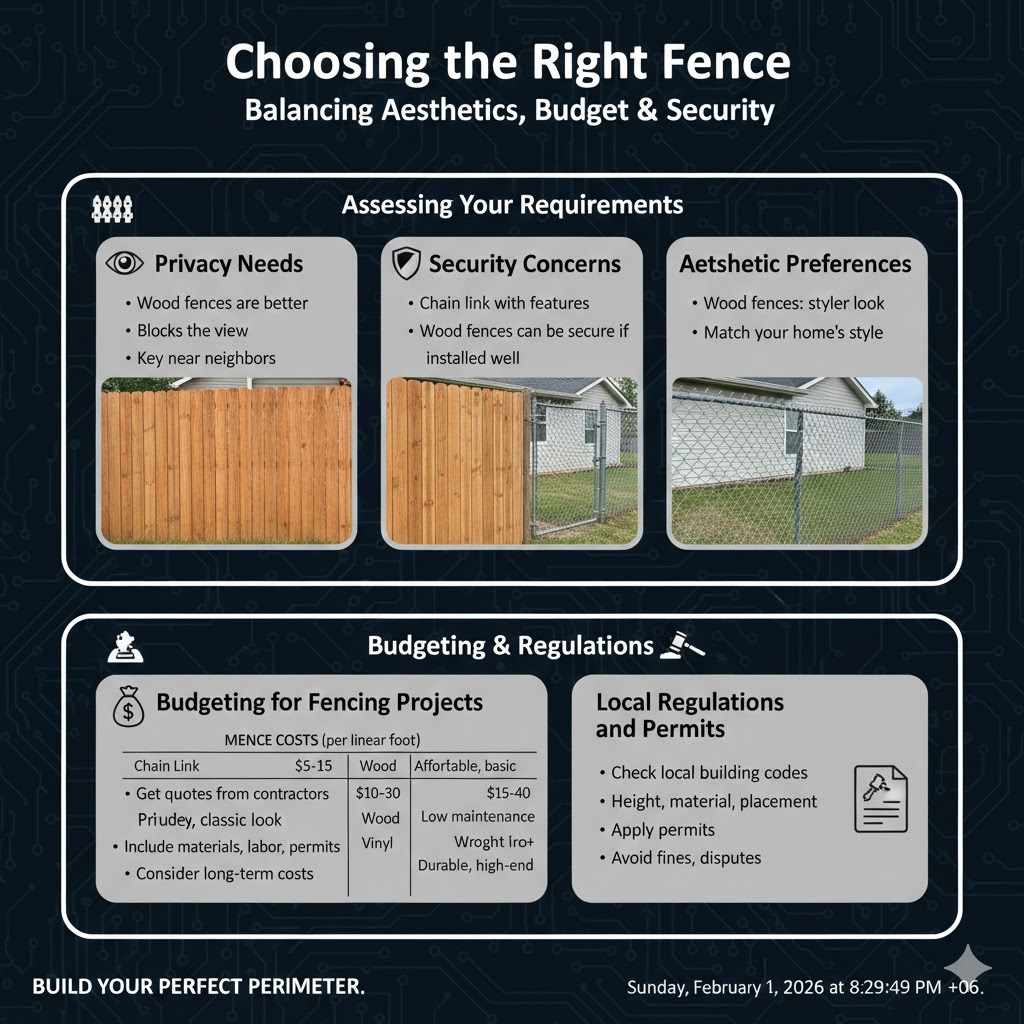
Assessing Your Requirements
Before you even start looking at fence options, consider why you need a fence. Are you looking to keep pets or kids safely in your yard? Do you need to increase privacy? Do you want to boost your property’s curb appeal? The purpose of your fence impacts the type you pick. Think about the style of your home, too. A modern house might look great with a sleek chain link fence, while a traditional home might suit a wooden picket fence. These initial thoughts guide your cost and material choices.
- Privacy Needs: If privacy is your main focus, wood fences are usually better. They block the view more effectively than chain link fences. This is key if you live close to neighbors or a busy street.
- Security Concerns: If security is very important, consider chain link fences with added security features. For example, you can add barbed wire. However, wood fences can be more secure if designed and installed well.
- Aesthetic Preferences: Wood fences come in various styles and finishes, allowing you to match the look of your home. Chain link fences are simpler in appearance. It’s all about choosing the aesthetic that you find most pleasing.
Budgeting for Fencing Projects
Your budget is a big factor when picking a fence. Set a clear budget range before you start exploring options. Fence costs change based on the materials, the size of your yard, and whether you do the work yourself. Get quotes from different contractors. Be sure to include all costs, such as material costs, labor fees, permits, and any extra features such as gates or decorative elements. Remember, cheaper is not always better. Think long-term costs, as more durable options might save you money in the long run.
For example, a homeowner in a suburban area might budget $2,000 to $5,000 for a chain link fence and $3,000 to $10,000 for a wooden fence. The figures depend on factors like the length of the fence and any extras. Also, remember to keep extra money in your budget for unexpected costs or changes during the project. Doing so ensures you’re prepared.
Local Regulations and Permits
Before you start your fence project, check local regulations. These can restrict fence height, the type of materials, or placement near property lines. Your city or county’s building department can provide these details. Apply for necessary permits before starting any work. This keeps you from penalties and ensures your fence meets local standards. Ignoring these rules can lead to fines, or you might need to change your fence later.
For example, some areas don’t permit fences higher than six feet. In other areas, the type of fence near the street may have restrictions. The permit process can take a few weeks, so plan ahead. You might need to have your property surveyed to mark the fence’s exact location correctly. This step prevents potential disputes with neighbors.
Comparing Fence Costs: Chain Link and Wood
The main cost difference when you pick between a Chain Link vs Wood Fence: Cost Difference Explained is the material and installation costs. Chain link fences generally cost less to buy and install. Wood fences often have higher material costs and labor fees, particularly for complex styles. Understanding these cost variations lets you make a wise decision based on your financial needs and the goals you have for your property.
Chain Link Fence Costs
Chain link fences are known for being cost-effective. The materials are generally less expensive than wood, and installation is usually faster. Prices depend on the height, the thickness of the chain link, and any extras like gates. You’ll also need to consider labor costs if you hire someone to install the fence.
- Material Costs: The cost of chain link rolls, posts, and fittings is usually low. The cost changes based on the type of metal used, with galvanized steel being common and more budget-friendly. Vinyl-coated chain link is a bit more expensive but provides more protection against the weather and gives a better appearance.
- Installation Costs: Professional installation costs can add to the total price. However, chain link fences are easier to install than wood. Thus, labor costs for chain link are usually lower. Some people do the work themselves. This can save money, but you’ll have to consider the time and effort required.
- Extras: Extras like gates, fence toppers, or decorative elements will add to the price. The type and number of gates affect the final cost. Adding privacy slats to a chain link fence can also add to the price.
Wood Fence Cost Analysis
Wood fences can be more expensive than chain link fences. The price depends on the wood type, the design, and the size of your yard. Labor costs are often higher because wood fences need more work during installation. Wood fences give a classic look, but the costs are important to take into account. They are also known for boosting property value.
- Wood Type Matters: The type of wood affects the cost. Cedar and redwood are usually pricier but last longer and look nicer. Pressure-treated pine is a more budget-friendly option. Choose a wood type based on your budget and desired appearance.
- Design Complexity: The style of the fence matters. Basic picket fences are generally less expensive to build than complex designs, such as shadowbox or privacy fences. The more detailed the design, the more labor and materials are needed.
- Installation Costs: Installation costs are usually higher for wood fences due to the work involved. Labor costs can be reduced if you install the fence yourself. However, wood fences need more skills than chain link fences.
Cost Comparison Table
To help you understand the differences better, consider this table showing general cost comparisons. Remember, prices can change based on the specific location and current market rates.
| Feature | Chain Link Fence | Wood Fence |
|---|---|---|
| Material Cost (per linear foot) | $10 – $30 | $15 – $50+ |
| Installation Cost (per linear foot) | $5 – $15 | $10 – $40+ |
| Average Total Cost (per linear foot) | $15 – $45 | $25 – $90+ |
| Lifespan | 15-20 years | 10-25+ years (depending on wood type and maintenance) |
These figures show a general comparison. Always get multiple quotes and check local prices. The figures provide a good starting point for budgeting.
Maintenance and Durability: Chain Link Versus Wood Fences
The difference between a Chain Link vs Wood Fence: Cost Difference Explained also involves the care needed to maintain the fence. Wood fences need regular maintenance. You will need to paint, stain, or seal them. This keeps them looking good and protects them from the weather. Chain link fences are easier to maintain, requiring less effort over time. How long your fence will last also depends on the materials and how well you take care of it.
Chain Link Fence Durability and Upkeep
Chain link fences are generally durable and need less care than wood fences. They resist weather conditions well. However, they can rust if the protective coating is damaged. Routine inspections can help you find and fix any issues before they become serious problems. With proper care, chain link fences can last for many years, making them a practical choice.
- Rust and Corrosion: The primary issue with chain link fences is rust. This is especially true in humid or coastal areas. Regularly check for signs of rust. Remove it quickly to stop the damage from spreading.
- Cleaning: Chain link fences can be cleaned with soap and water. This removes dirt, mold, and mildew. Cleaning keeps the fence looking good and keeps it from being damaged.
- Repairing Damage: Although durable, chain link fences can be damaged by weather or impacts. Small damage can be repaired quickly with the correct tools. This may involve replacing sections of chain link or repairing posts.
Wood Fence Maintenance
Wood fences need more care, but they can offer great looks and add value to your home. This is important to consider in the Chain Link vs Wood Fence: Cost Difference Explained. The level of maintenance needed depends on the wood type and the conditions of your location. Regular upkeep is key to keeping the fence in good shape. This includes painting, staining, and sealing. You will also want to watch for signs of rot or insect damage.
- Painting or Staining: Painting or staining protects the wood from the elements. This also enhances its appearance. This should be done every few years to maintain the fence. The frequency depends on your location’s climate.
- Rot and Insect Damage: Wood fences can be vulnerable to rot and insects. Check the fence regularly for signs of damage. If damage is found, you will need to replace the affected parts. Using treated wood can help prevent these problems.
- Cleaning: Clean the fence to remove dirt, mold, and mildew. Use a mild soap and water solution. Avoid using high-pressure washers, which can damage the wood.
Impact of Climate and Environmental Factors
Your local climate is very important. Coastal areas with salt air can affect both fence types. Chain link fences can corrode quickly, while wood fences may need extra protection to prevent moisture damage. In areas with extreme weather, like heavy snow or high winds, both fences need to be built to handle these conditions. Regular inspection and care can increase the life of your fence, whatever type you choose.
Here are some examples:
- Coastal Areas: In coastal locations, the salt air can speed up corrosion in chain link fences. Using vinyl-coated chain link can help. Wood fences in these areas need regular sealing and care to stop moisture damage.
- Extreme Temperatures: Areas with extreme heat or cold can affect both types of fences. High heat can cause wood to dry out and crack. Cold weather can impact the ground, possibly affecting fence posts.
- High Winds and Storms: Fences in areas with strong winds and storms must be built to withstand these conditions. Proper post depth and material choices are critical. Consider adding supports to the fence for extra stability.
Installation and DIY Considerations
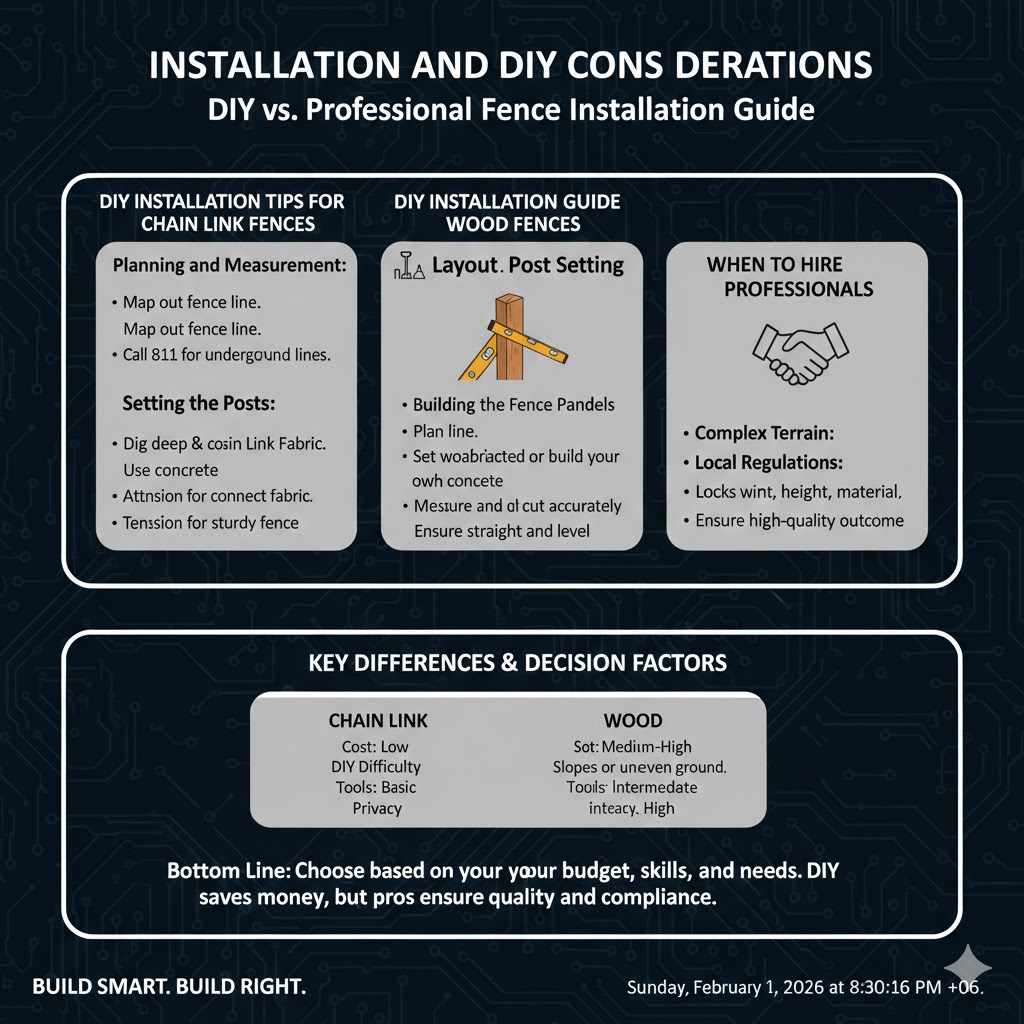
Considering installation impacts the Chain Link vs Wood Fence: Cost Difference Explained. If you are handy, you might install the fence yourself and save money on labor. Both chain link and wood fences can be DIY projects. Chain link is often easier, while wood fences may need more skill and tools. Assess your abilities and the time you have before deciding.
DIY Installation Tips for Chain Link Fences
Installing a chain link fence yourself can save money. Begin with the correct planning. Accurate measurements are critical to ensuring the fence fits your yard well. The materials are usually available at any local hardware store. With planning and the right tools, you can successfully install a chain link fence yourself.
- Planning and Measurement: Map out your fence line and measure carefully. Mark where posts will be. Call your local utility company to mark the location of underground lines.
- Setting the Posts: The posts are very important for the fence’s stability. Dig holes deep enough, and use concrete to set them. Make sure the posts are straight before the concrete sets.
- Attaching the Chain Link Fabric: Unroll the chain link fabric and connect it to the posts and framework. Use the correct tools and tension the fabric correctly. This makes the fence sturdy and level.
DIY Installation Guide for Wood Fences
Installing a wood fence involves more steps and expertise than chain link. The installation requires skills and an investment of time. The results can be very rewarding if the work is done correctly. If you’re new to this, watch videos or ask an experienced person for advice.
- Layout and Post Setting: Similar to chain link, carefully plan the fence line. Set wooden posts using concrete. Ensure the posts are correctly aligned and level for a good result.
- Building the Fence Panels: Prefabricated panels can be used to speed up the process. You can also build your panels. Be sure to measure and cut the wood accurately.
- Attaching the Panels: Fasten the panels to the posts. Use the right hardware, such as screws or nails. Be sure the panels are straight and level. This is key to a beautiful look.
When to Hire Professionals
Hiring professionals is sometimes best. You may need them if you lack experience or don’t have the time. Professional installation also guarantees that the fence is done correctly. Professionals are also aware of any local rules or regulations. This avoids potential problems in the future.
Here are a few scenarios where it makes sense to hire someone:
- Complex Terrain: If your yard has challenging terrain, such as slopes or uneven ground, hiring a professional can be beneficial. They know how to deal with these conditions.
- Local Regulations: Professionals know local regulations, which can be hard to follow yourself. This keeps you from any problems.
- Lack of Time or Experience: If you are short on time or lack the skills, hiring a professional will make the project easier. It will save you time and provide a high-quality outcome.
Frequently Asked Questions
Question: Is a chain link fence cheaper than a wood fence?
Answer: Yes, chain link fences usually cost less to buy and install compared to wood fences.
Question: How long does a chain link fence typically last?
Answer: A chain link fence can last for 15 to 20 years, depending on the care and environment.
Question: Which fence offers more privacy, a chain link or a wood fence?
Answer: Wood fences typically provide more privacy because they have a solid barrier.
Question: Can I install a fence myself?
Answer: Yes, both chain link and wood fences can be installed yourself, though wood fences are more difficult.
Question: What maintenance does a wood fence need?
Answer: Wood fences need regular painting or staining, as well as checking for rot or insect damage.
Final Thoughts
When you explore a Chain Link vs Wood Fence: Cost Difference Explained, remember to balance the cost with your requirements. Chain link fences are a budget-friendly option, with easy installation and low upkeep. Wood fences give a classic look and offer greater privacy, though they need more work to maintain and cost more upfront. Think about the style of your home, local regulations, and the protection you need from your fence.
Consider how much time you have to maintain the fence, too. Compare quotes from different contractors if you’re not doing the work yourself. When you have all these factors in mind, you can choose a fence that fits your needs and budget. Make a plan, get prepared, and start building!