Dark Paint Roller Marks: Why Deep Colors Show Lap Lines
Dark and deep paint colors show roller lap marks more than light colors because they contain more concentrated pigment and less of the reflective, hiding fillers (like titanium dioxide) that lighter paints use in bulk, so any variation in film thickness reflects light differently and reads as a visible line. This guide covers why lap marks show up worse in deep colors, roller technique that prevents them, and the paint-specific factors (sheen, formulation) that make some dark colors worse than others.
Why Pigment Concentration Is the Real Cause
Light and mid-tone paints get most of their opacity from titanium dioxide, a highly reflective white pigment used in large amounts, which scatters light evenly and hides small thickness variations in the film. Deep colors use far less titanium dioxide and rely instead on concentrated colorant, which absorbs light rather than scattering it. That means a spot where the roller applied slightly more or less paint, or where a second pass slightly overlapped a nearly-dry edge, shows up as a visible difference in sheen and depth of color, exactly the kind of variation white paint would hide completely.
Maintaining a Wet Edge Is the Actual Fix
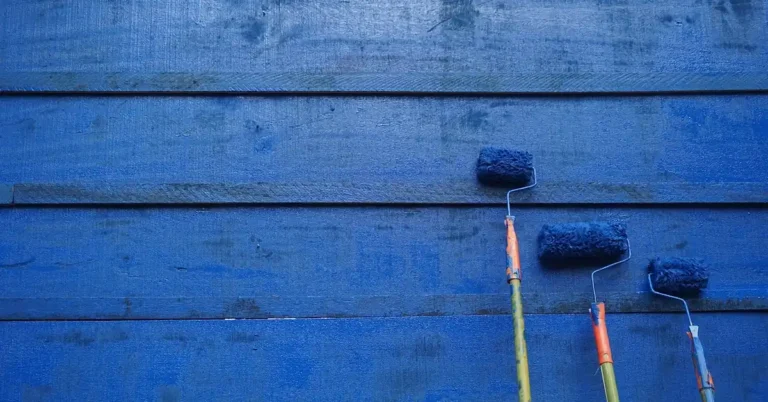
Lap marks form when you roll over an edge of paint that has already started to flash (begin drying) before you overlap it with a new stroke. The fix is working fast enough, and in a small enough section at a time, that every new roller pass overlaps into paint that’s still wet, blending seamlessly instead of layering on top. In practice that means rolling full height sections on a wall (top to bottom) rather than working in small random patches, and not stopping mid-wall for more than a minute or two once you’ve started a section.
Roller Technique: Load, Direction, and Pass Count
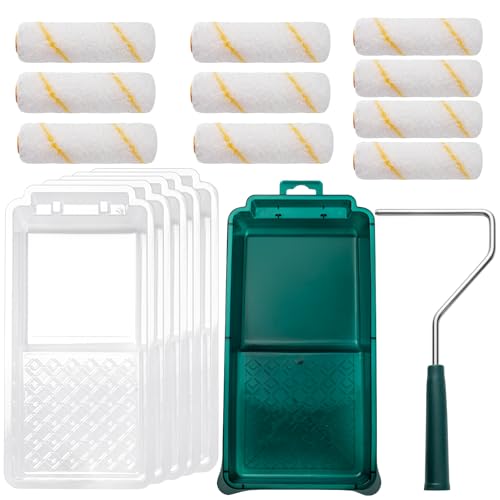
Load the roller fully and distribute it with a few strokes on the higher part of the roller tray grid before it ever touches the wall, so you’re not depositing an uneven glob on the first stroke. Apply in a large “W” or “N” pattern to spread paint before smoothing, then finish each section with light, even strokes in one direction, lifting the roller gradually at the end of each pass rather than stopping abruptly, which is what leaves a hard edge. Two thinner, even coats consistently hide lap marks better than one thick coat applied unevenly.
Sheen and Formulation Make It Worse or Better
Higher-sheen finishes (satin, semi-gloss) reflect light more directly and make any thickness variation more visible than a flat or matte finish, which scatters light more diffusely and forgives minor technique flaws. Many paint brands now sell dedicated “deep base” or “ultra deep” formulas specifically engineered with better flow and self-leveling additives to reduce lap marks compared to a standard base tinted to full saturation; using the correct base for the color depth (not just any base tinted extremely dark) measurably reduces the problem before technique even comes into play.
Roller Nap and Paint Additives That Help
A roller nap that’s too short for the wall texture applies paint unevenly and dries faster, worsening lap marks; a 3/8-inch nap is a reasonable standard for smooth interior walls. A paint conditioner/extender additive slows drying time slightly, giving you a longer window to maintain a wet edge, especially useful in warm rooms or with fast-drying acrylic formulas. Painting in cooler conditions, or avoiding direct sun and blowing HVAC vents across the wall while it’s wet, also extends open working time.
Frequently Asked Questions
Can I fix lap marks after the paint has dried?
Usually not by spot-touching; touch-ups tend to create a new, separate lap mark. The reliable fix is a full new coat applied wall to wall with a maintained wet edge.
Does using a paint sprayer avoid lap marks entirely?
Sprayers reduce them significantly because they apply a thinner, more even film with no roller texture, but overlapping spray passes too slowly can still cause banding, particularly in deep colors.
Is flat paint really less likely to show lap marks than satin in a dark color?
Yes, flat sheens diffuse light instead of reflecting it directly, which hides minor film thickness differences much better than satin or semi-gloss in the same dark color.
Sponsored / affiliate links. As an Amazon Associate I earn from qualifying purchases. I may earn additional commission from eligible campaigns.