Do Air Ratchets Require Impact Sockets? A Deep Dive for Home DIYers
Hey there, friend! If you’re tinkering in your garage or tackling a home improvement project, you’ve probably wondered about the tools you’re using. One question that pops up a lot is, “Do air ratchets require impact sockets?” I’ve spent plenty of time exploring this topic, both in my own workshop and through chats with other DIY enthusiasts.
Let me walk you through everything I’ve learned in a way that’s clear, practical, and easy to follow. Whether you’re a seasoned pro or just starting out, this article will help you make sense of air ratchets, impact sockets, and how they work together. Let’s dive in!
What Is an Air Ratchet, Anyway?
Picture this: you’re under your car, trying to loosen a stubborn bolt. Your hand ratchet is slow, and your arm’s getting tired. That’s where an air ratchet comes in. It’s a pneumatic tool powered by compressed air, designed to make tightening or loosening bolts and nuts faster and easier. I first used one years ago when I was swapping out an alternator, and let me tell you—it was a game-changer.
Air ratchets are lightweight, compact, and perfect for tight spaces. They deliver steady, controlled torque, which is the force that turns the fastener. Unlike impact wrenches, which hit with short, powerful bursts, air ratchets provide a smooth, continuous motion. This makes them ideal for automotive work, furniture assembly, or any project with lots of bolts.
But here’s the thing: the tool is only as good as the sockets you pair with it. So, do you need special sockets, like impact sockets, to use an air ratchet safely and effectively? Let’s break it down.
Understanding Impact Sockets and Why They Matter
Before we answer the big question, let’s talk about impact sockets. If you’ve ever shopped for tools, you’ve probably seen these beefy, black sockets next to the shiny chrome ones. Impact sockets are built tough. They’re made from a special type of steel, usually chrome-molybdenum (or “chromoly”), which is thicker and more durable than the chrome-vanadium steel in regular sockets.
Why are they so sturdy? Because they’re designed to handle the intense, hammering force of impact tools, like impact wrenches or drivers. These tools deliver high torque in short bursts, which can shatter a regular socket. I learned this the hard way when I tried using a cheap socket with an impact wrench years ago—it cracked right in half!
Impact sockets have a few distinct features:
- Thicker walls: They absorb shock without breaking.
- Darker finish: Often coated with black oxide to resist corrosion.
- Flexibility: They’re less brittle, so they can handle vibrations.
Regular sockets, on the other hand, are thinner, shinier, and more prone to cracking under heavy force. Knowing the difference is key to figuring out what your air ratchet needs.
Do Air Ratchets Really Need Impact Sockets?
Now, let’s get to the heart of it: do you have to use impact sockets with an air ratchet? The short answer is no, you don’t always need them—but it depends on what you’re doing. Let me explain.
Air ratchets don’t deliver the same intense, hammering force as impact wrenches. Instead, they apply steady, moderate torque. Most air ratchets produce between 25 and 80 foot-pounds of torque, which is much lower than the 200+ foot-pounds you’d get from an impact wrench. Because of this, regular chrome sockets can often handle the job just fine.
I’ve used regular sockets with my air ratchet for years on tasks like assembling furniture or working on small engines. Never had a problem. But there’s a catch. If you’re dealing with rusted bolts, overtightening, or heavy-duty jobs, you might push your air ratchet to its limits. That’s when things get risky.
Here’s why:
- Overtightening: Air ratchets make it easy to apply too much force, especially if you’re not paying attention. This can stress a regular socket and cause it to crack.
- Vibration: Even though air ratchets don’t “impact” like impact wrenches, they still vibrate. Over time, this can weaken a regular socket.
- Safety: A cracked socket can send shards flying, which is the last thing you want in your workshop.
So, while you can use regular sockets for light tasks, impact sockets are a safer bet for tougher jobs or frequent use. They’re built to take the stress, so you don’t have to worry about a socket failing mid-project.
When Should You Use Impact Sockets with an Air Ratchet?
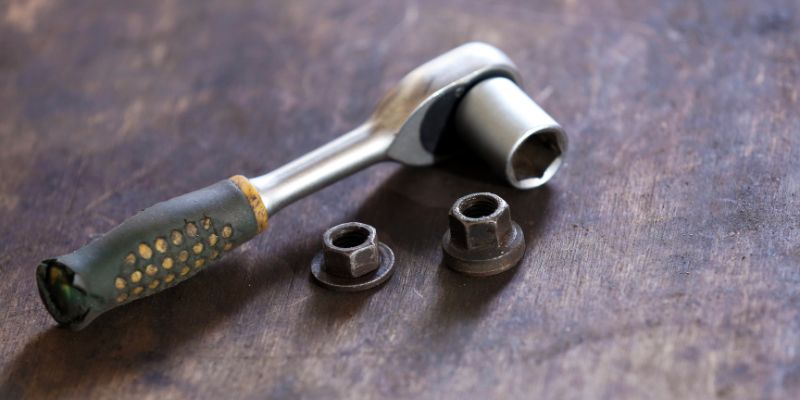
I know what you’re thinking: “Okay, so when do I actually need impact sockets?” Great question! Here are some scenarios where I’d recommend reaching for impact sockets:
- Heavy-duty projects: If you’re working on something like a car suspension or large machinery, impact sockets can handle the higher torque and tougher bolts.
- Rusted or stuck fasteners: When bolts are corroded, you might need to lean on your air ratchet harder. Impact sockets won’t crack under the pressure.
- Frequent use: If you’re using your air ratchet daily, regular sockets might wear out faster. Impact sockets are more durable for long-term use.
- Safety first: If you just want peace of mind, impact sockets are less likely to break, no matter the task.
On the flip side, regular sockets are fine for:
- Light tasks, like assembling a grill or tightening small bolts.
- Occasional use, where you’re not pushing the tool too hard.
- Budget projects, since regular sockets are cheaper.
Here’s a quick table to help you decide:
| Situation | Regular Sockets | Impact Sockets |
|---|---|---|
| Light tasks (e.g., furniture) | ✅ | Optional |
| Heavy tasks (e.g., car repair) | Risky | ✅ |
| Rusted bolts | Risky | ✅ |
| Frequent use | Wear out faster | ✅ |
| Budget-friendly | ✅ | More expensive |
Pros and Cons of Using Impact Sockets with Air Ratchets
Let’s weigh the pros and cons to help you make an informed choice. I’ve used both types of sockets with my air ratchet, so I can share what I’ve noticed.
Pros of Impact Sockets
- Durability: They last longer, especially for tough jobs. I’ve had the same set of impact sockets for years, and they’re still going strong.
- Safety: Less chance of cracking, which means fewer risks in the workshop.
- Versatility: You can use them with other tools, like impact wrenches, so they’re a great investment.
- Peace of mind: You don’t have to second-guess whether your socket can handle the job.
Cons of Impact Sockets
- Cost: They’re pricier than regular sockets. A good set can set you back $50 or more, while basic chrome sockets might cost half that.
- Weight: They’re heavier, which might slow you down on delicate tasks.
- Size: The thicker walls can make them bulkier, so they might not fit in super-tight spaces.
Regular sockets, while cheaper and lighter, just don’t hold up as well under stress. For me, the extra cost of impact sockets is worth it for the safety and longevity.
How to Choose the Right Sockets for Your Air Ratchet
Picking the right sockets feels overwhelming at first, but it’s simpler than you think. Here’s what I’ve learned from trial and error:
- Check the drive size: Air ratchets typically use 1/4-inch, 3/8-inch, or 1/2-inch drives. Make sure your sockets match the drive size of your tool. My air ratchet is a 3/8-inch drive, so I stick with 3/8-inch sockets.
- Look at torque ratings: Check your air ratchet’s manual for its max torque. If it’s over 50 foot-pounds, impact sockets are safer for heavy jobs.
- Consider your projects: If you’re mostly doing light DIY tasks, regular sockets might be enough. For automotive or industrial work, go with impact sockets.
- Invest in quality: Cheap sockets, whether regular or impact, are more likely to fail. Brands like Craftsman, Tekton, or Snap-On have served me well.
- Mix and match: You don’t need to buy all impact sockets. I keep a set of both types—regular for light work, impact for heavy stuff.
Pro tip: If you’re buying impact sockets, get a set with both standard and metric sizes. You never know what kind of bolt you’ll run into!
Tips for Using Your Air Ratchet Safely
Whether you go with impact or regular sockets, using your air ratchet the right way keeps you safe and extends the life of your tools. Here’s what I always keep in mind:
- Don’t overtighten: Air ratchets are fast, so it’s easy to overdo it. Stop when the bolt feels snug, and finish by hand if needed.
- Inspect your sockets: Before every job, check for cracks or wear. A damaged socket is an accident waiting to happen.
- Use the right air pressure: Most air ratchets work best at 90 PSI. Too much pressure can strain your sockets and tool.
- Wear safety gear: Gloves and safety glasses are non-negotiable. I’ve had bolts slip before, and trust me, you don’t want debris in your eyes.
- Maintain your tool: Keep your air ratchet oiled and clean. A well-maintained tool is less likely to cause problems.
I once skipped inspecting a socket because I was in a rush, and it slipped off a bolt mid-job. Lesson learned—take the extra minute to double-check!
Common Mistakes to Avoid
We all mess up sometimes, but here are some pitfalls I’ve seen (and made) when using air ratchets and sockets:
- Using damaged sockets: If a socket is chipped or cracked, toss it. It’s not worth the risk.
- Mixing drive sizes: Trying to use a 1/4-inch socket on a 3/8-inch ratchet won’t end well. Double-check compatibility.
- Ignoring torque limits: Pushing your air ratchet beyond its torque rating can damage both the tool and the socket.
- Skipping maintenance: A dirty or dry air ratchet can seize up or deliver uneven torque, which stresses your sockets.
Avoid these, and you’ll save yourself time, money, and frustration.
My Personal Take: Why I Lean Toward Impact Sockets
After years of using air ratchets for everything from car repairs to building custom furniture, I’ve come to prefer impact sockets. Sure, they cost more, but they’ve saved me from headaches and potential injuries. I still keep regular sockets around for quick, light jobs, but when I’m tackling something serious—like swapping out a car’s brake rotors—I grab my impact sockets without hesitation.
The durability and safety are hard to beat. Plus, I love that I can use the same sockets with my impact wrench when I need extra power. It’s like having a trusty sidekick that’s ready for anything.
Conclusion
So, do air ratchets require impact sockets? Not always, but they’re often the smarter choice. If you’re working on light projects or just starting out, regular sockets can get the job done. But for heavy-duty tasks, frequent use, or when safety’s a priority, impact sockets are worth the investment. They’re tougher, safer, and built to last.
I hope this guide has cleared up any confusion and given you the confidence to pick the right tools for your next project. Whether you’re fixing up your car, assembling furniture, or tackling something totally new, the right sockets make all the difference. Grab your air ratchet, choose your sockets wisely, and get to work—you’ve got this!
Got more questions? Check out the FAQs below for quick answers to common concerns.
Can I use regular sockets with an air ratchet?
Yes, you can use regular sockets for light tasks. They’re fine for low-torque jobs like assembling furniture or tightening small bolts. But for heavy-duty work or rusted bolts, they might crack under stress. I’d switch to impact sockets for those tougher jobs to stay safe.
Are impact sockets worth the extra cost?
In my opinion, absolutely. Impact sockets are more durable and safer, especially for frequent or heavy use. They’re pricier, but they last longer and can be used with other tools like impact wrenches. Think of them as a long-term investment for your workshop.
How do I know if my air ratchet needs impact sockets?
Check your air ratchet’s torque rating in the manual. If it’s over 50 foot-pounds or you’re working on tough bolts, impact sockets are safer. Also, if you’re doing automotive repairs or dealing with rusted fasteners, impact sockets are the way to go.
Can impact sockets be used with hand tools?
Yes, you can use impact sockets with hand ratchets or wrenches. They’re just as effective, though they’re heavier and bulkier than regular sockets. I sometimes use them with a hand ratchet when I need extra durability for a stubborn bolt.
What happens if a socket cracks while using an air ratchet?
A cracked socket can slip, damage the bolt, or even shatter, sending pieces flying. That’s why I always inspect my sockets before starting a job. If you notice any cracks, replace the socket immediately to avoid accidents.