Do Ceiling Fans Increase Home Value? Proven Essential
Do ceiling fans increase home value? Yes, they absolutely can! Installing ceiling fans is a smart, affordable home improvement that boosts comfort, lowers energy bills, and makes your home more attractive to buyers. They’re a proven essential for modern living and a great DIY project.
Thinking about home upgrades and wondering if something as simple as a ceiling fan can make a difference? You’re not alone! Many homeowners wonder if everyday additions like ceiling fans are worth the effort and expense when it comes to selling their house. It’s a common question, especially when you’re looking for projects that offer a real return. The good news is, ceiling fans are more than just a way to keep cool on a hot day; they are a proven essential that can genuinely enhance your home’s appeal and even its market value. Let’s dive into how these rotating blades can be a fantastic investment for your home.
The Comfort and Cost-Saving Appeal of Ceiling Fans
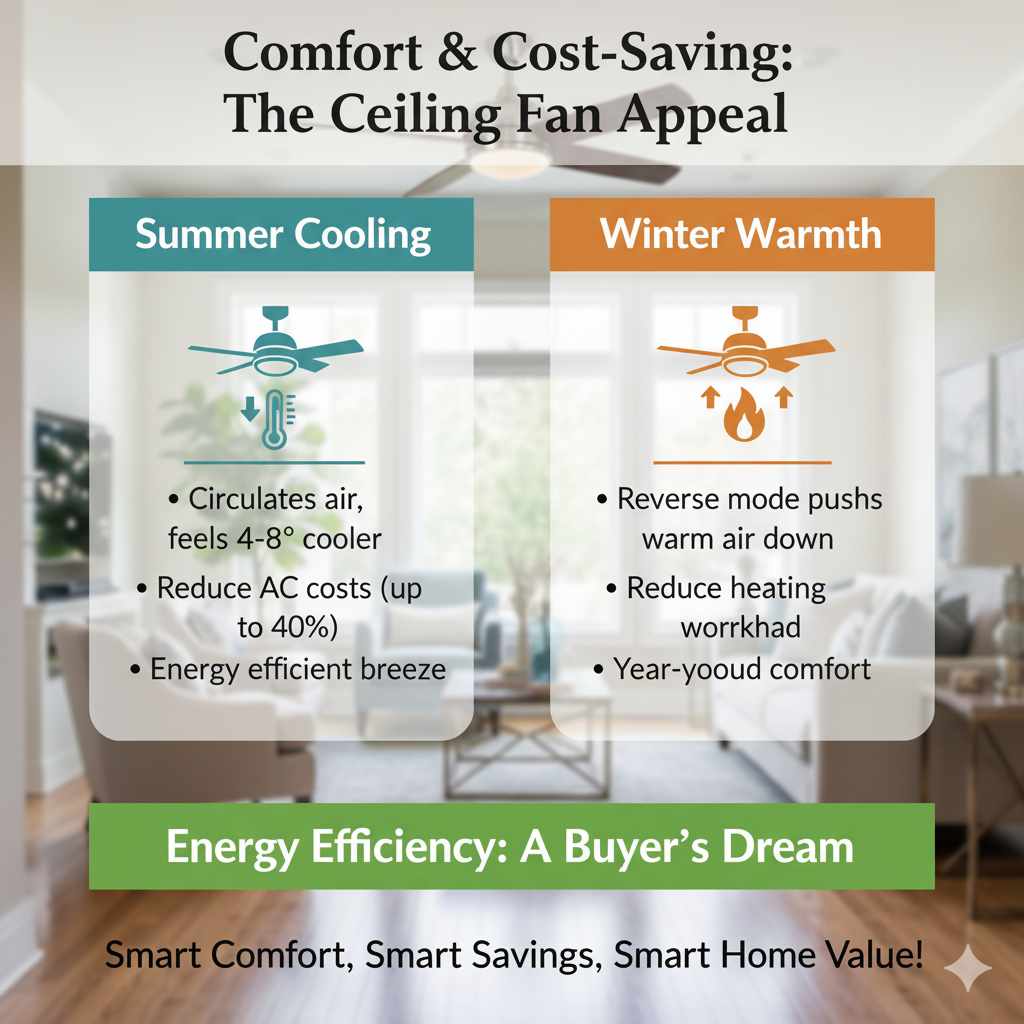
When potential buyers walk through a home, they’re looking for comfort and practicality. Ceiling fans deliver on both fronts. They circulate air, creating a pleasant breeze that makes rooms feel cooler without relying solely on air conditioning. This can significantly reduce your energy bills, a major selling point for any homebuyer. In summer, a ceiling fan can make a room feel up to 4-8 degrees cooler, allowing you to raise your thermostat by a few degrees and still feel comfortable. This energy efficiency is a big win!
Beyond the summer cooling effect, many ceiling fans also offer a reverse mode for winter. By gently pushing warm air that rises to the ceiling back down into the living space, they can help make your home feel warmer and reduce the workload on your heating system. This year-round functionality makes them a highly desirable feature.
Energy Efficiency: A Buyer’s Dream
Energy efficiency is a buzzword in today’s housing market. Buyers are increasingly conscious of their environmental impact and their monthly utility costs. Ceiling fans are a star player in this arena. According to the U.S. Department of Energy, using ceiling fans can help reduce your air conditioning costs by up to 40%.
Think about it: instead of cranking up the AC, you can use a fan to create a cooling breeze. This means less electricity consumed, lower bills, and a greener home. When you’re preparing to sell, highlighting the energy-saving features of your home, like efficient ceiling fans, can be a powerful persuasive tool. It shows you’ve invested in smart, cost-effective solutions that benefit future owners.
Do Ceiling Fans Increase Home Value? The Direct Answer
Yes, ceiling fans can increase home value, though it’s often more about enhancing marketability and buyer appeal than a direct dollar-for-dollar increase. Here’s how they contribute:
- Improved Aesthetics: Modern ceiling fans come in a wide variety of styles, finishes, and designs, from sleek, minimalist models to more traditional, ornate ones. They can act as a stylish focal point in a room, complementing your decor.
- Enhanced Comfort: As discussed, the comfort provided by circulating air is a major draw. A home that feels comfortable and inviting is more likely to sell quickly.
- Energy Savings: The tangible benefit of lower utility bills is a significant plus for buyers and can make your home stand out.
- Modern Feature: In many markets, ceiling fans are considered a standard or expected feature, especially in bedrooms and living areas. Their presence signals a well-maintained and updated home.
- Added Functionality: The dual-season functionality (cooling in summer, air circulation in winter) adds another layer of appeal.
While it’s hard to put an exact number on the value increase, real estate agents often note that well-placed and attractive ceiling fans contribute positively to a home’s perceived value and desirability. They are a relatively low-cost improvement with a high return in terms of buyer satisfaction.
The ROI of Ceiling Fans: A Smart Investment
When we talk about Return on Investment (ROI) for home improvements, ceiling fans are a winner, especially for DIYers. The cost of a decent ceiling fan can range from $50 to $300 or more, depending on the brand, features, and style. Installation, if you’re doing it yourself, is essentially free beyond the cost of the fan itself and perhaps a few basic tools. Even if you hire an electrician, the cost is typically a few hundred dollars.
Compare this to other renovations, like a kitchen or bathroom remodel, which can cost tens of thousands of dollars and don’t always guarantee a dollar-for-dollar return. Ceiling fans offer a much more accessible way to make your home more attractive and functional. They are a proven essential that buyers appreciate and often look for.
Where to Install Ceiling Fans for Maximum Impact
Strategic placement is key to getting the most out of your ceiling fan installation. Here are the prime locations:
- Bedrooms: This is arguably the most important room for a ceiling fan. Good airflow helps create a comfortable sleeping environment, which is a huge plus for potential buyers.
- Living Rooms & Family Rooms: These are central gathering spaces where comfort is paramount. A ceiling fan can make these areas more enjoyable year-round.
- Kitchens: Especially in kitchens that tend to get warm from cooking, a ceiling fan can help improve air circulation and make the space more pleasant.
- Home Offices: If you have a dedicated home office, a ceiling fan can help maintain a comfortable temperature, improving focus and productivity.
- Sunrooms & Enclosed Patios: These spaces can get very hot, and a ceiling fan is often a necessity to make them usable during warmer months.
When installing, ensure the fan is appropriately sized for the room. A general rule of thumb is one fan for every 100-150 square feet. For example, a 10×10 room (100 sq ft) would benefit from a 36-inch fan, while a 15×15 room (225 sq ft) might need a 52-inch fan.
Choosing the Right Ceiling Fan: Style Meets Function
With so many options available, choosing the right fan can seem daunting. Keep these factors in mind:
- Room Size: Match the fan’s blade span to the room dimensions.
- Ceiling Height: For standard 8-foot ceilings, a flush-mount or low-profile fan is best. For higher ceilings, you’ll need a downrod to bring the fan to an optimal height (typically 7-9 feet from the floor).
- Style and Finish: Select a fan that complements your home’s existing decor. Think about the materials and colors that will best enhance the room.
- Motor Quality: A good quality motor will ensure quiet operation and longevity. Look for fans with DC motors for maximum energy efficiency and quietness.
- Features: Consider fans with integrated LED lights, remote controls, or smart home compatibility if those features appeal to you.
A stylish fan can be a decorative element, while a practical one ensures comfort. Finding the balance is key.
DIY Installation: A Beginner-Friendly Project
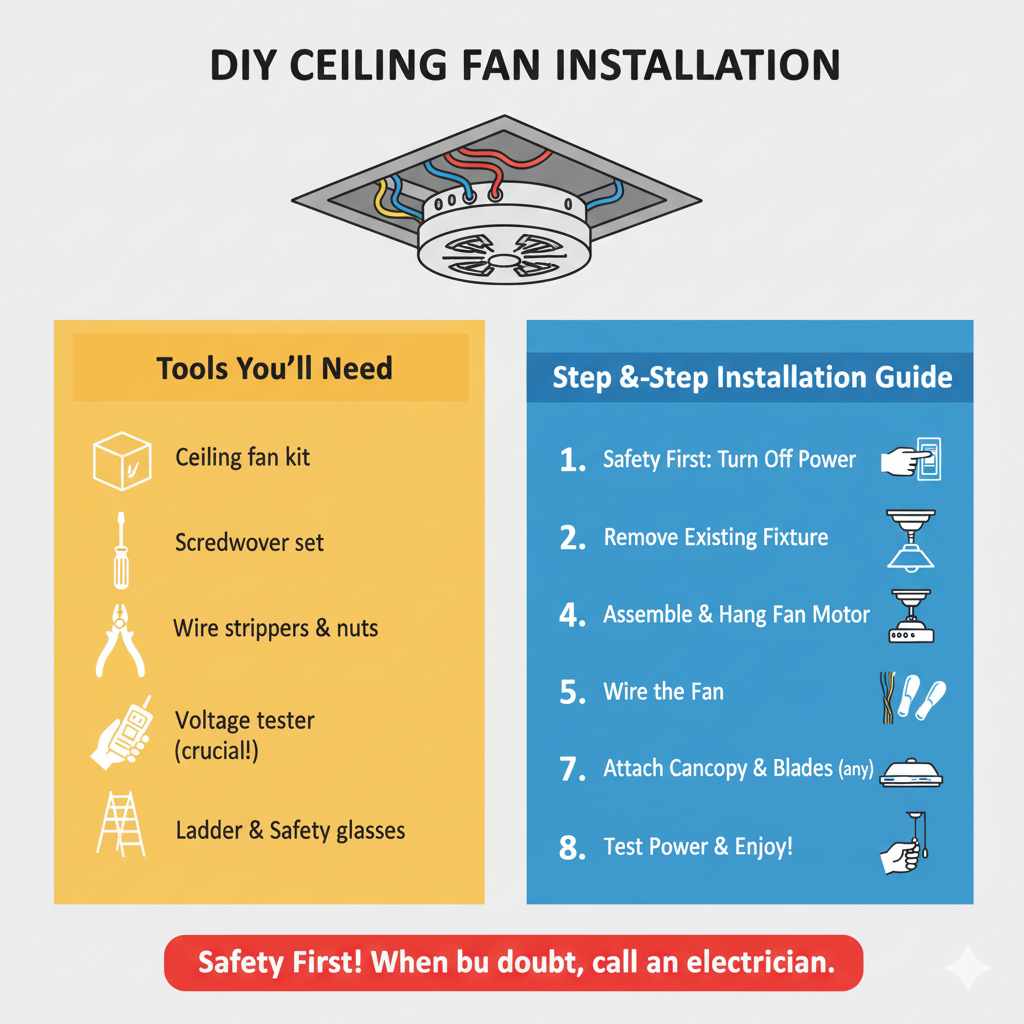
Installing a ceiling fan is a project many homeowners can tackle themselves with a bit of guidance. Safety first! Always turn off the power to the circuit at your breaker box before you begin. Here’s a simplified breakdown of the steps:
Tools You’ll Need:
- Ceiling fan kit
- Screwdriver set (Phillips and flathead)
- Wire strippers
- Wire nuts
- Voltage tester (non-contact is easiest)
- Ladder
- Safety glasses
- Optional: Pliers, stud finder
Step-by-Step Installation Guide:
- Safety First: Turn Off Power. Go to your breaker box and switch off the power to the room where you’ll be working. Use your voltage tester to confirm the power is off at the existing light fixture or wiring location.
- Remove Existing Fixture. Carefully remove the old light fixture. You’ll likely need to unscrew a canopy or mounting bracket. Disconnect the wiring, noting how it was connected (usually black to black, white to white, and ground to ground).
- Install the Mounting Bracket. Your new fan will come with a mounting bracket. Secure this firmly to the electrical box in the ceiling. Ensure the box is rated for ceiling fan support, as fans are heavier than light fixtures. If it’s not, you’ll need to replace it with a fan-rated box, often secured to a ceiling joist. This is a critical safety step.
- Assemble the Fan. Follow the manufacturer’s instructions to assemble the fan motor, downrod, and blades. This often involves feeding wires through the downrod and attaching the blades to the motor housing.
- Hang the Fan Motor. Most mounting brackets have a hook or a way to temporarily hang the motor assembly while you make the electrical connections. This makes wiring much easier and safer.
- Wire the Fan. Connect the wires from the ceiling to the fan motor. Typically, you’ll connect the house’s hot wire (usually black) to the fan’s hot wire (often black or blue for light), the house’s neutral wire (white) to the fan’s neutral wire (white), and the house’s ground wire (bare copper or green) to the fan’s ground wire. Use wire nuts to secure connections.
- Attach the Canopy. Once wired, lift the fan motor off the hook and slide the canopy up to cover the mounting bracket and wiring. Secure it with the provided screws.
- Attach the Fan Blades. If you didn’t attach them earlier, now is the time to screw the fan blades onto their respective arms and then attach the arms to the motor.
- Install the Light Kit (if applicable). If your fan has a light kit, connect its wiring and attach it according to the instructions.
- Turn Power Back On and Test. Go back to your breaker box and turn the power back on. Test the fan and light at all speeds using the pull chains or remote.
Remember, if you’re unsure about any part of the electrical work, it’s always best to consult a qualified electrician. Safety is paramount, and electrical work can be dangerous if not done correctly. Resources like This Old House offer excellent visual guides for DIYers.
Comparing Ceiling Fans: Features and Benefits
Not all ceiling fans are created equal. Understanding the different types and features can help you make an informed choice that will appeal to potential buyers.
| Feature | Description | Benefit for Home Value |
|---|---|---|
| Motor Type | AC (Alternating Current) vs. DC (Direct Current) | DC motors are more energy-efficient and quieter, appealing to eco-conscious buyers and those who value peace. |
| Blade Span | Diameter of the fan’s rotation (e.g., 42″, 52″, 60″) | Properly sized fans provide optimal airflow for the room, enhancing comfort and perceived value. |
| Mounting Options | Standard (downrod), Flush-mount, Angled | Accommodates various ceiling heights and styles, ensuring a fit for any room. |
| Integrated Lighting | Built-in LED or incandescent light kits | Combines two essential fixtures into one, saving ceiling space and adding convenience. |
| Smart Home Compatibility | Wi-Fi enabled, app control, voice commands | Appeals to tech-savvy buyers and adds a modern, high-tech feature. |
| Reverse Function | Ability to rotate blades clockwise or counter-clockwise | Provides year-round comfort (cooling in summer, heat circulation in winter), enhancing energy efficiency claims. |
| Style & Finish | Modern, traditional, industrial, rustic; various materials (wood, metal, plastic) | Enhances room aesthetics and complements interior design, making the home more visually appealing. |
The Aesthetic Edge: Style Matters
Beyond pure function, the look of a ceiling fan plays a significant role in how it impacts your home’s value. A dated, clunky fan can detract from a room’s appearance. Conversely, a sleek, modern fan can elevate the space. When choosing fans, consider how they will integrate with your home’s overall style.
For instance, in a modern home, a fan with clean lines, brushed nickel, or matte black finishes, and perhaps integrated LED lighting, will be a strong selling point. In a more traditional setting, a wood-finish fan with a classic design might be more appropriate. Think of them as functional art pieces that contribute to the home’s ambiance.
Common Concerns and FAQs
Let’s address some common questions homeowners have about ceiling fans and their impact.
Q1: Do I really need a ceiling fan in every room?
While not strictly necessary in every single room, installing fans in key areas like bedrooms, living rooms, and home offices provides the most benefit. They are highly desirable features in these spaces.
Q2: How much does it cost to install a ceiling fan?
The cost of the fan itself can range from $50 to $300+. DIY installation saves on labor, but if you hire an electrician, expect to pay anywhere from $150 to $400 per fan for professional installation, depending on your location and the complexity of the job.
Q3: Will a ceiling fan make my room colder?
Ceiling fans don’t actually lower the temperature of a room; they create a wind chill effect by moving air across your skin, making you feel cooler. This allows you to set your thermostat higher and save on energy costs.
Q4: What if I have low ceilings? Can I still install a ceiling fan?
Yes, you can! For ceilings 8 feet or lower, look for “flush-mount” or “low-profile” ceiling fans. These are designed to mount directly to the ceiling without a downrod, maximizing headroom.
Q5: Are ceiling fans noisy?
Well-maintained and properly installed fans, especially those with quality motors (like DC motors), operate very quietly. Any rattling or wobbling usually indicates an imbalance, loose screws, or a faulty motor, which can often be fixed.
Q6: Do ceiling fans use a lot of electricity?
Compared to air conditioning, ceiling fans are incredibly energy-efficient. A typical ceiling fan uses about 50-75 watts of electricity, while an air conditioner can use 1500 watts or more. Using a fan can significantly reduce your overall energy consumption.
Q7: Should I replace an old ceiling fan before selling my house?
If your existing ceiling fan is dated, noisy, or doesn’t work properly, it’s a good idea to replace it. A modern, attractive fan is a much better selling point than an old, inefficient one. It shows you’ve maintained the property.
Conclusion: A Simple Upgrade with Big Returns
So, do ceiling fans increase home value? The answer is a resounding yes, in terms of making your home more comfortable, more energy-efficient, and more attractive to a wider range of buyers. They are a proven essential for modern living, offering tangible benefits that resonate with today’s homeowners.
Whether you’re looking to make your current home more enjoyable or preparing to sell, installing or updating ceiling fans is a smart, often DIY-friendly project that delivers significant value. They are an affordable way to enhance aesthetics, improve comfort, and showcase your home’s commitment to energy savings. By strategically placing stylish and functional fans, you’re not just adding a fixture; you’re adding a compelling reason for buyers to fall in love with your home. Happy installing, and enjoy the comfort and value they bring!