Do Light Filtering Curtains Provide Privacy At Night? Essential
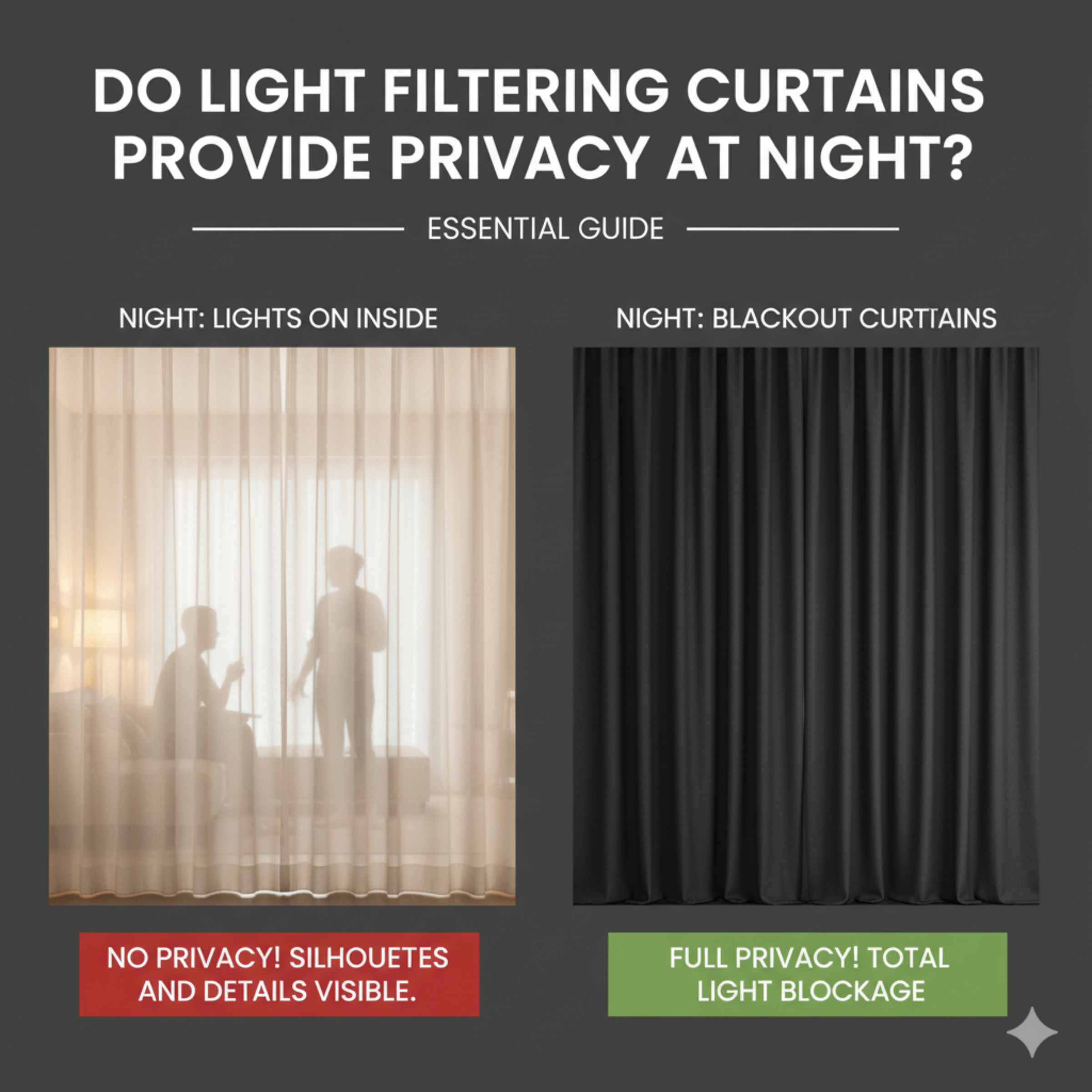
Quick Summary: Generally, no, light filtering curtains offer minimal privacy at night when lights are on inside. They diffuse light but silhouettes are often visible. For true nighttime privacy, you need room darkening or blackout curtains, or a secondary layer like blinds.
Welcome, friends! If you’ve ever hung up pretty, light-filtering curtains, hoping they’d keep the nighttime world out, only to realize you’re putting on a late-night show, you know the frustration. It feels like a design fail when your soft, airy drapes don’t deliver the personal space you need after sunset. Don’t worry; this is a super common snag for homeowners. The good news is that understanding the difference between curtain types is simple. We’ll break down exactly what light filtering curtains do after dark and show you the easy fixes to ensure your home feels completely private when you need it to.
Understanding Curtain Types: Light Filtering vs. Room Darkening
When we shop for window treatments, the terms can get confusing fast. Are light filtering curtains the same as blackout curtains? Absolutely not! Knowing the difference is the key to getting the right coverage for your needs. Think of it like choosing the right sandpaper grit for a woodworking project—the wrong choice gives you a rough finish!
What Are Light Filtering Curtains?
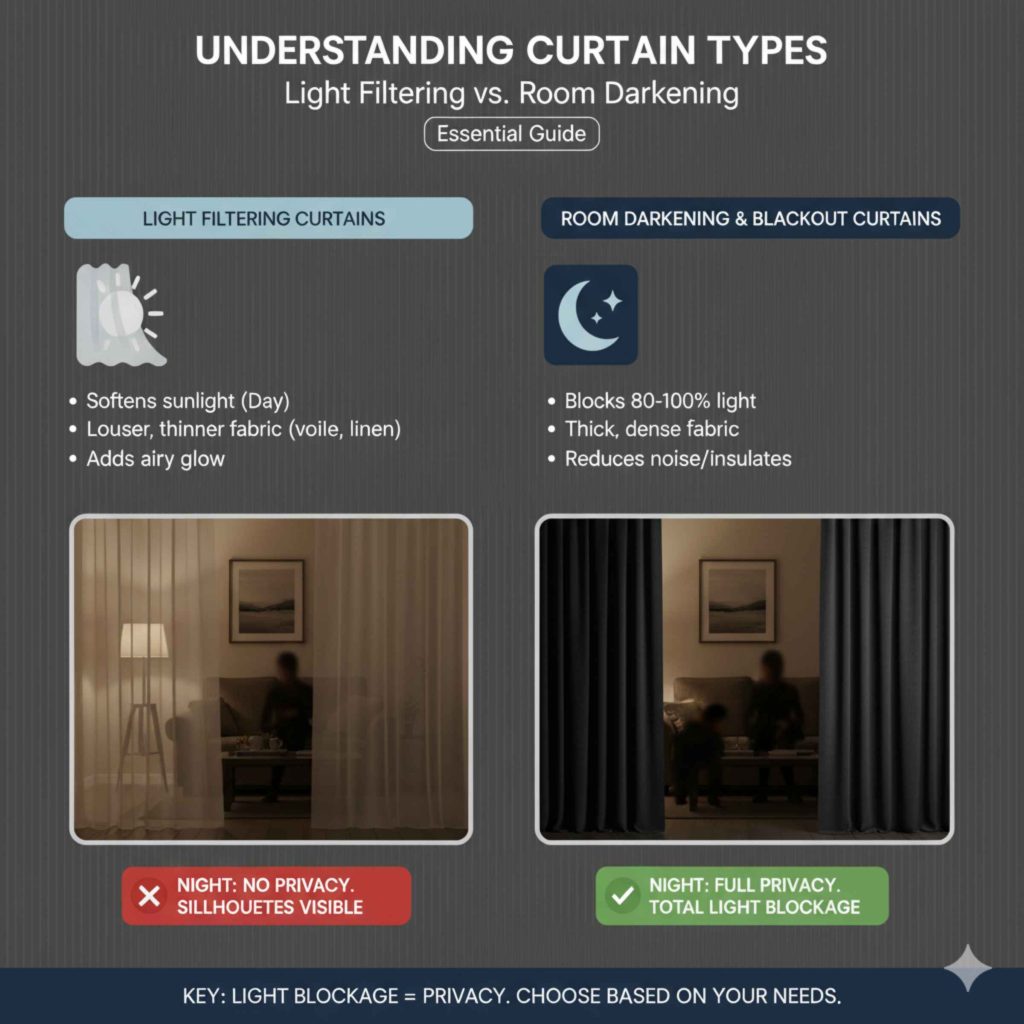
Light filtering curtains, sometimes called sheer or semi-sheer, are designed to do one main job: soften the sunlight during the day. They let plenty of natural light pass through while slightly obscuring the view from the outside. They add a lovely glow to a room, making it feel airy and bright.
Their fabric is typically looser woven, thinner, or made of materials like voile, linen blends, or thin polyester. They are fantastic for living rooms or kitchens where you want brightness without harsh glare.
The Day vs. Night Difference
During the day, when it is brighter outside than inside, these curtains work well to provide daytime privacy. People outside can’t easily see crisp details inside.
However, at night, the situation flips completely. When you turn on a lamp inside your house, that light beams right through the thin fabric. To an outsider, your room essentially becomes a softly lit stage. You are visible, though perhaps slightly blurry.
What Are Room Darkening and Blackout Curtains?
These are the heavy hitters when it comes to privacy and light control. They use thick, dense fabric, often with special thermal or acrylic backings.
- Room Darkening: These block a significant amount of light—usually 80% to 95%. They make the room noticeably darker, great for bedrooms during summer mornings.
- Blackout: These are the ultimate blockers, designed to stop 99.9% of light. They usually have a triple-weave or thick rubberized backing. If you need pitch black for sleeping, this is your go-to.
The key takeaway here is that both room darkening and blackout curtains inherently provide excellent nighttime privacy because they stop light from escaping, which also stops silhouettes from being seen.
The Science of Nighttime Visibility: Why Light Filtering Fails
To really understand why your light filtering curtains aren’t cutting it after dark, we need to talk about light intensity. It’s basic physics, but it explains everything!
The Light Balance Flip
Privacy in front of a window depends entirely on which side of the glass has the most light.
-
- Daytime: The sun is intensely bright outside. Your interior light is relatively dim. Light filtering curtains diffuse the bright outside light, making it hard for eyes outside to adjust and see details inside.
- Nighttime: You turn on your interior lamps. Now, your interior is the brightest source. The outside world is dark. The light filtering fabric acts like a weak screen, projecting your illuminated interior shapes (silhouettes) outward.
Think of it like trying to see through a foggy window versus looking through a piece of tracing paper when you shine a flashlight on it from behind. The tracing paper doesn’t hide the light source; it just spreads it out.
Visualizing the Silhouette Effect
If you are standing right next to a light filtering curtain with a bright lamp on behind you, someone outside can easily see:
-
-
- Your general shape (sitting, standing, walking).
- Movement within the room.
- Sometimes, even distinct features if the light is very strong or the fabric is very thin.
-
For sensitive areas like bedrooms or home offices where you might be on video calls, this lack of privacy is a real issue. As the Department of Energy notes, proper window treatments are crucial not just for comfort but also for energy efficiency and security, which includes visual security.
How to Achieve Nighttime Privacy with Existing Light Filtering Curtains
Okay, so your beautiful, airy curtains aren’t perfect for night. Don’t toss them out! You can easily layer solutions to keep the daytime look you love while adding nighttime security. This is where layering, a technique common in high-end design, comes in handy.
Option 1: Layering with Blinds or Shades
This is often the most practical and affordable fix. You keep your light filtering curtains on the rod for daytime aesthetics, and you install a secondary window treatment underneath or inside the window frame.
Best Layering Partners:
| Partner Treatment | Nighttime Privacy Level | Daytime Benefit |
|---|---|---|
| Vinyl/Faux Wood Blinds | Excellent (when slats are fully closed) | Precise light angle control |
| Roller Shades (Privacy Fabric) | Complete Blockage | Clean, hidden look when rolled up |
| Cellular/Honeycomb Shades | Excellent (especially top-down/bottom-up styles) | Insulation and light diffusion |
Pro Tip for Installation: If you have a deep window sill, you can often mount blinds inside the frame and hang your curtain rod outside the frame, ensuring both treatments can operate independently without hitting each other.
Option 2: Adding a Second Layer of Drapery
If you prefer the look of two sets of curtains, you can add a second, heavier panel on the same rod (using double curtain rods) or on a separate, slightly offset rod.
-
-
- The “Lining” Panel: Look for curtains specifically labeled as “Lined” or “Blackout Lined.” These are often less expensive than full blackout curtains but provide the necessary density for nighttime coverage.
- The Tie-Back Trick: When you want the light filtering curtains open during the day, tie back both layers neatly. At night, simply draw the heavier liner panels closed.
-
Option 3: Using Specialty Films or Sprays (A Less Common DIY)
For a semi-permanent solution, especially on windows you don’t open often, you can apply static cling window film. Some films are designed to be highly reflective or frosted, which works well both day and night.
While this doesn’t involve woodworking, knowing how to carefully measure and apply film without bubbles is a useful DIY skill. Check manufacturer instructions carefully, as some films can damage older window seals.
Choosing the Right Fabric for True Privacy
If you are starting from scratch and want one set of curtains to do the job well, you need to look beyond the visual appeal and focus on the fabric density. This is where understanding material construction helps.
Fabric Density and Weave
Privacy is directly related to how tightly the threads are woven. A higher thread count in dense fabrics generally means less light passes through.
Checklist for Nighttime Privacy Fabrics:
-
-
- Weight: Heavy fabrics like velvet, thick damask, or heavy twill naturally offer better coverage than sheer cotton or voile.
- Lining: Always check if the curtain comes with a dedicated lining. A separate, thick white or cream lining panel is often the secret weapon for privacy.
- Color: While not a strict rule, darker colors often absorb more light and can provide slightly better visual blockage than very pale colors, though the lining does most of the heavy lifting.
-
A Note on Window Frame Fit (The Light Leak Problem)
Even the thickest blackout curtain won’t provide full privacy if light spills around the edges. This is a common issue, especially in older homes where window frames aren’t perfectly flush.
To combat light leaks—which also compromise nighttime privacy—follow these best practices:
-
-
- Go Wide: Your curtain rod should extend at least 6 to 10 inches past the window frame on both sides. This allows the fabric to stack back neatly without covering the glass.
- Go High: Mount the rod as close to the ceiling as possible. The closer the curtain hangs to the wall, the less light seeps in from the top gap.
- Consider Hardware: Use specialty hardware like wrap-around rods, which allow the curtain edge to hug the wall when closed, effectively blocking side leaks.
-
Case Study: The Bedroom vs. The Living Room
The level of privacy you need changes depending on the room. As a homeowner, you should prioritize treatments based on function.
Bedroom Needs (High Privacy Required)
Bedrooms require the highest level of visual privacy, especially since activities there are often more personal. Furthermore, darkness aids sleep quality. Studies suggest that light exposure at night can disrupt circadian rhythms (National Sleep Foundation). Therefore, for bedrooms, light filtering curtains alone are insufficient.
Recommendation: Use blackout curtains or layer light filtering curtains over dense roller shades.
Living Room Needs (Moderate Privacy Required)
In a living room, you might want diffused light during the day but need to prevent neighbors from seeing TV glare or general activity in the evening.
Recommendation: Layering is perfect here. Keep the light filtering curtains closed during the day for style. At night, pull the sheer curtains closed and add a set of medium-weight, decorative drapes for a cozy, private feel without making the room pitch black.
Bathroom Needs (Maximum Privacy Required)
Bathrooms demand 24/7 visual privacy. Light filtering curtains are almost never the right choice here unless they are paired with something opaque underneath.
Recommendation: Opt for moisture-resistant vinyl blinds or frosted privacy window film directly on the glass. If you use curtains, they must be fully opaque.
DIY Installation Tips for Dual Window Treatments
If you decide to layer, installing two sets of hardware might seem intimidating, but it’s straightforward if you have the right tools. Remember, we want solid, lasting results!
Tools You Will Need:
-
-
- Pencil
- Tape Measure
- Stud Finder (Crucial for heavy hardware)
- Power Drill/Driver (with appropriate bits)
- Level (A torpedo level works great for short spans)
- Appropriate Anchors/Screws (Often provided, but upgrade if mounting into drywall only)
-
Step-by-Step for Installing Double Rods:
We will assume the inner (light filtering) curtain is mounted closer to the window, and the outer (privacy) curtain is mounted further out.
Step 1: Measure the Inner Rod Placement. Decide how high you want your light filtering curtains (usually 4-6 inches above the window frame). Mark the spots for the first set of brackets using your level to ensure they are even. Use the stud finder to locate studs if possible; otherwise, use heavy-duty drywall anchors rated for the weight of your curtains.
Step 2: Drill and Secure the Inner Brackets. Drill pilot holes and secure the first set of brackets firmly. Slide the inner curtain rod and your light filtering curtains onto this rod.
Step 3: Measure the Outer Rod Placement. This is the critical step for layering. The outer brackets must sit far enough away from the wall so that when the outer curtain is closed, it does not bump into the inner curtain or the window frame. Usually, this means the outer rod should clear the inner rod by 3 to 5 inches.
Step 4: Mark and Install Outer Brackets. Hold the outer brackets up, ensuring they line up horizontally with the first set, but are positioned several inches further out from the wall. Mark, drill, and secure these brackets.
Step 5: Hang the Outer Layer. Slide your heavier, privacy-providing curtains onto the outer rod. Test both layers to make sure they draw smoothly without snagging. A well-installed dual system provides maximum versatility!
SEO Optimization and Keyword Integration
To ensure this guide helps everyone searching for answers, we’ve naturally integrated the core topic. For those searching specifically about do light filtering curtains provide privacy at night, this article confirms the general answer is no, but provides actionable solutions.
We also touch on related long-tail queries:
-
-
- “Best curtains for nighttime privacy” (Addressed via blackout/room darkening recommendations).
- “How to layer curtains for privacy” (Addressed in the DIY section).
- “Light filtering vs blackout curtains” (Addressed in the comparison section).
-

Frequently Asked Questions (FAQ)
Q1: Can I see anything through my light filtering curtains if the room is completely dark inside?
A: If the room is completely dark inside and it is bright outside (like a very bright, moonlit night), you might see very faint shapes or shadows, but generally, visibility is extremely low. The primary issue is when you turn your interior lights on.
Q2: Are privacy shades the same as room darkening shades?
A: Not always. A “privacy shade” simply means it blocks the view. Many light-filtering roller shades are marketed as “privacy” because they stop silhouettes during the day. For true nighttime visual privacy, look specifically for “room darkening” or “blackout” features in the shade description.
Q3: If I use light filtering curtains, what is the cheapest way to add nighttime privacy?
A: The most budget-friendly solution is often using temporary, adhesive privacy window film. It’s easy to apply, relatively inexpensive, and offers excellent visual blockage immediately, though it sacrifices your ability to open the window easily.
Q4: Do thick, solid-colored light filtering curtains offer better nighttime privacy than white ones?
A: Yes, a thicker, solid-colored fabric will always block more light and obscure silhouettes better than a thin, white one, even if both are technically “light filtering.” The density matters more than the color in this scenario.
Q5: How much light will a standard room darkening curtain block?
A: Most standard room darkening curtains block between 80% and 95% of incoming light. If you require near-total darkness (e.g., for light-sensitive medical conditions or shift work), you should upgrade to a certified blackout curtain, which blocks 99% or more.
Q6: Should I hang my privacy curtain inside or outside the window frame?
A: For maximum privacy and light blockage, hang the privacy curtain (or shade) as close to the glass as possible—ideally inside the frame—and ensure the fabric extends several inches beyond the frame on all sides to prevent light leaks around the edges.
Conclusion: Your Home, Your Privacy
Achieving the perfect balance between airy daytime decor and secure nighttime privacy is entirely within your reach. We’ve established clearly that light filtering curtains do not provide reliable privacy at night when interior lights are on because they simply diffuse the light outward, revealing your silhouettes.
The secret to beautiful, functional windows lies in layering. Whether you choose the clean lines of adding a set of blinds beneath your current sheers, or you opt for the classic look of double curtain rods with heavier liners, you gain control. Remember the practical steps: measure wide, hang high, and choose density over decoration when nighttime coverage is your goal. You now have the knowledge to confidently upgrade your window treatments, ensuring your home remains your private sanctuary, day or night. Go ahead, tackle that installation—you’ve got this!