Engineered Wood vs Plywood: Essential Guide
Engineered wood and plywood are both popular wood panel products. Plywood is made from thin layers of wood veneer glued together, while engineered wood encompasses a broader category including products like MDF and particleboard, made from wood fibers, particles, or veneers bonded with adhesives. Choosing the right one depends on your project’s needs for strength, stability, cost, and appearance.
Choosing the right wood panel for your DIY project can feel like navigating a maze. You’ve probably stood in the lumber aisle, staring at stacks of plywood and wondering about those other panels labeled “engineered wood.” What’s the real difference? And which one will give you the best results without breaking the bank? It’s a common puzzle for woodworkers, but don’t worry! I’m here to help you sort it all out. We’ll break down engineered wood vs plywood in a way that’s easy to understand, so you can confidently pick the perfect material for your next creation. Get ready to build with confidence, because by the end of this guide, you’ll know exactly what you’re working with!
What Exactly is Engineered Wood?
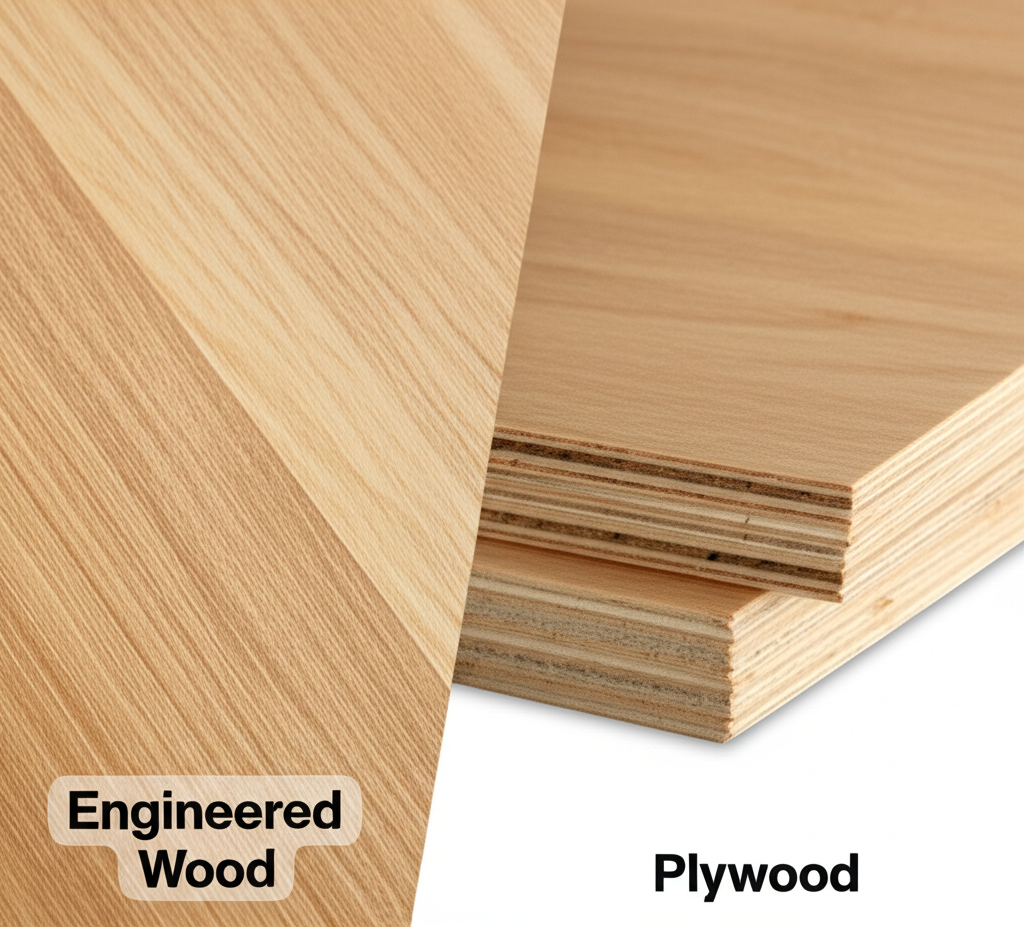
Engineered wood is a fascinating category of wood-based products. Think of it as wood that’s been enhanced or manufactured using wood fibers, particles, or veneers, all bound together with adhesives and heat. This process creates materials that can offer specific advantages over traditional solid lumber, like increased stability and consistent performance. It’s a smart way to utilize wood resources effectively and create materials with predictable properties for a wide range of applications, from furniture making to structural components.
The Big Umbrella: Understanding Engineered Wood Categories
Under the broad umbrella of “engineered wood,” you’ll find several distinct types, each with its own characteristics and uses. Understanding these differences is key to making an informed choice for your woodworking projects. Let’s take a closer look at some of the most common types:
- Plywood: As we’ll discuss in more detail, plywood is a foundational type of engineered wood. It’s made by layering thin sheets of wood veneer, with the grain of each layer oriented perpendicular to the adjacent layers. This cross-graining is what gives plywood its exceptional strength and stability.
- Medium-Density Fiberboard (MDF): MDF is created by breaking down hardwood or softwood into wood fibers, often in a defibrator, mixing them with wax binder and resin binder, and forming panels by applying high temperature and pressure. It’s known for its smooth, uniform surface, making it excellent for painting, laminating, and veneering. MDF is dense and stable but can be heavy and is susceptible to moisture damage if not sealed.
- Particleboard (Chipboard): Particleboard is made from wood particles, such as wood chips, shavings, or sawdust, that are bonded together with synthetic resin or other suitable binders. It’s generally less dense and strong than plywood or MDF and is often used in furniture construction, underlayment, or as a core material for countertops. It’s also sensitive to moisture.
- Oriented Strand Board (OSB): OSB is made from wood strands or wafers that are arranged in cross-oriented layers, similar to plywood, and then bonded together with adhesives under pressure and heat. OSB is commonly used in construction for sheathing, subflooring, and roofing due to its strength and cost-effectiveness. It’s not typically chosen for visible furniture applications due to its rough surface.
- Glued Laminated Timber (Glulam): Glulam is a structural product made from layers of dimension lumber bonded together with durable, waterproof adhesives. It’s used in beams, headers, and columns, offering significant strength and the ability to be formed into curved shapes. While engineered, it’s more of a structural building material than what you’d typically find at a local lumber yard for DIY furniture.
- Cross-Laminated Timber (CLT): CLT is a solid-engineered wood panel product made from layers of lumber stacked crosswise and bonded with structural adhesives. It’s used in larger structural applications, like walls, floors, and roofs in buildings.
For most DIYers and home projects, when people talk about “engineered wood” in contrast to plywood, they are often referring to MDF and particleboard. Plywood itself is technically a type of engineered wood, but it has such distinct characteristics that it’s usually discussed separately.
Plywood: The Layered Workhorse
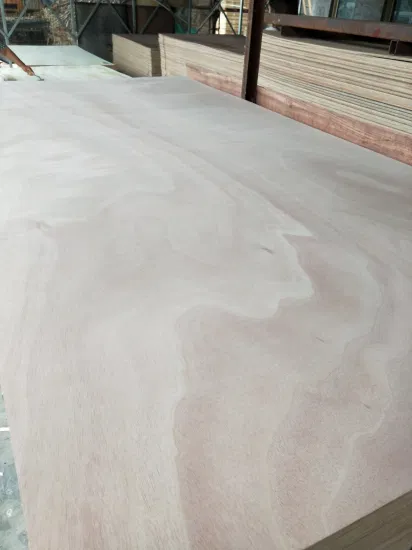
Plywood has been a staple in woodworking and construction for decades, and for good reason. Its unique construction, made from thin, rotary-cut veneers of wood glued together with the grain of adjacent layers oriented at right angles to each other, gives it remarkable properties. This cross-graining technique is the secret sauce that makes plywood strong, stable, and resistant to shrinking, swelling, and cracking. It’s incredibly versatile and can be found in countless applications, from the sturdy subfloor beneath your feet to the beautiful cabinetry in your kitchen.
How Plywood is Made: A Peek Behind the Scenes
The process of making plywood is quite ingenious, focusing on maximizing strength and stability by alternating the grain direction of each layer, or “ply.” Here’s a simplified look at how it’s done:
- Log Preparation: Large logs are debarked and soaked in hot water to soften them.
- Rotary Cutting: The softened logs are mounted on a lathe and spun against a large knife, peeling off a continuous thin sheet of wood veneer. This is much like unrolling a paper towel, but with wood!
- Veneer Drying and Grading: The thin veneer sheets are dried and inspected for defects.
- Gluing: Adhesive is applied to the surface of each veneer sheet.
- Assembly: The glued veneers are stacked, alternating the direction of the grain for each layer. Typically, an odd number of plies are used for balance.
- Pressing: The assembled stack of veneers is placed in a large hydraulic press, where it’s subjected to high heat and pressure to cure the adhesive and bond the layers together permanently.
- Sanding and Finishing: Once cooled, the plywood panel is sanded smooth, trimmed to size, and sometimes treated or coated.
This meticulous layering and gluing process is what gives plywood its impressive strength-to-weight ratio and dimensional stability.
Types of Plywood: More Than Just One Sheet
Not all plywood is created equal! The type of wood used for the veneers and the grade of the veneers themselves determine the plywood’s suitability for different tasks. Here are some common classifications you’ll encounter:
- Hardwood Plywood: Made from hardwoods like oak, maple, or birch. It’s strong, durable, and often used for furniture, cabinetry, and decorative paneling where appearance is important. The face veneers are typically smooth and attractive.
- Softwood Plywood: Made from softwoods like fir, pine, or spruce. It’s generally less expensive and widely used in construction for subflooring, wall sheathing, and roofing. Common grades include CDX (Construction grade, suitable for exterior use with a “C” or “D” grade face and “X” for exterior glue).
- Marine Plywood: Constructed with waterproof glue and select, defect-free veneers. It’s designed for use in high-moisture environments, such as boat building. It’s a premium product with a higher cost.
- Aircraft Plywood: A high-quality, strong, and lightweight plywood, often made from birch, used in aircraft construction and other applications requiring high strength-to-weight ratios.
When you’re at the lumber yard, you’ll often see plywood designated by its intended use or grade, like “AC,” “BC,” or “CDX.” The letters refer to the quality of the face (A being the best, D the worst) and the back veneer, and the “X” indicates exterior glue. For DIY projects where appearance matters, look for “A” or “B” face grades.
Engineered Wood vs Plywood: The Direct Comparison
Now that we’ve got a good understanding of what engineered wood and plywood are, let’s put them head-to-head. The key differences often come down to their construction, properties, and therefore, their best uses. It’s not about one being universally “better,” but rather which one is better suited for your specific project needs.
Key Differences at a Glance
Here’s a breakdown of how these materials stack up against each other:
| Feature | Plywood | Engineered Wood (MDF/Particleboard) |
|---|---|---|
| Construction | Thin wood veneers glued in alternating grain directions. | Wood fibers (MDF) or particles (Particleboard) bonded with adhesives. |
| Strength | High tensile strength, good shear strength, less prone to warping. | Generally lower tensile strength, can be brittle, very stable dimensionally. |
| Moisture Resistance | Varies by glue type (exterior glue is better); susceptible to swelling if not sealed. | Very susceptible to moisture damage; swells significantly and can disintegrate if not protected. |
| Weight | Generally lighter than MDF for the same thickness. | MDF is dense and heavy; particleboard is lighter but still can be dense. |
| Surface Finish | Can have visible wood grain, requires sanding and finishing for a smooth look. | MDF has a very smooth, uniform surface ideal for painting/veneering; particleboard surface can be rougher. |
| Machining | Can chip or splinter if not cut with sharp blades or proper technique. | MDF cuts very cleanly; particleboard can be abrasive to tools. |
| Cost | Generally mid-range, depending on grade and type. | Particleboard is typically the cheapest; MDF is often slightly more expensive than basic plywood. |
| Edge Finishing | Edges show the alternating plies, can be attractive or require edge banding. | Edges are uniform, easy to finish with edge banding or paint. |
When to Choose Plywood
Plywood is your go-to choice when you need strength, stability, and a material that can handle stress. Its cross-grained construction makes it inherently strong in multiple directions, which is why it’s so popular for:
- Structural Applications: Subflooring, wall and roof sheathing in construction.
- Cabinet Boxes: Its rigidity and strength make it excellent for the main structure of cabinets.
- Shelving: Especially for heavier loads, plywood provides excellent support without sagging.
- Furniture Frames: For sturdy bases or internal structures of furniture.
- Outdoor Projects: Using exterior-grade plywood with appropriate sealing.
- Projects Requiring Screw Holding: Plywood generally holds screws better than MDF or particleboard, especially in the edges.
When to Choose Engineered Wood (MDF/Particleboard)
Engineered wood, particularly MDF and particleboard, shines when you need a smooth, stable surface for finishing or when cost is a primary concern, and structural strength isn’t paramount. They are excellent for:
- Cabinet Doors: MDF provides a perfectly smooth surface for painting or applying veneer, leading to a high-end finish.
- Decorative Panels: For wall treatments or decorative elements where a smooth, paintable surface is desired.
- Laminate or Veneer Projects: MDF is an ideal substrate for laminates and veneers due to its uniform surface and lack of grain pattern.
- Affordable Furniture: Particleboard is often used in ready-to-assemble furniture and budget-friendly cabinetry.
- Molding and Trim: MDF can be routed into intricate profiles for decorative trim.
- Projects Where Warping is a Concern: Due to their dense, uniform structure, MDF and particleboard are highly resistant to warping.
It’s important to remember that MDF and particleboard require careful handling around moisture. Always seal exposed edges and surfaces thoroughly if there’s any chance of water contact. For more information on wood properties and their uses, resources like Forest Products Laboratory (FPL) offer extensive data on wood science.
Working with Plywood: Tips for Success
Plywood is a joy to work with once you understand its quirks. Its layered nature means you need to be mindful of how you cut and join it to avoid tear-out and ensure strong connections. Here are some tips to help you get the best results:
Cutting Plywood
The key to a clean plywood cut is using the right blade and technique. The alternating grain layers can cause chipping, especially on the top surface.
- Use a Sharp Blade: Always use a sharp, high-tooth-count blade designed for plywood or fine crosscuts. A dull blade will tear the wood fibers.
- Blade Angle: A standard 5-degree hook angle is usually good. For cleaner cuts, some prefer a negative or zero hook angle, though this requires more power.
- Support the Cut: Ensure the plywood is well-supported on both sides of the cut. Use a zero-clearance insert on your table saw if possible.
- Score the Cut Line: Lightly score the cut line with a utility knife or the blade of your saw before making the full cut. This can help score the top veneer and prevent tear-out.
- Cut from the Good Side: When using a table saw, position the plywood so the blade enters the waste side first. This means the “show” face should be on the bottom. For a circular saw, the show face should be on top.
- Masking Tape: Applying a strip of painter’s tape along the cut line can also help reduce tear-out.
Joining Plywood
Plywood’s strength allows for various joinery methods:
- Screws: Plywood holds screws well. Pre-drilling pilot holes is recommended, especially near edges, to prevent splitting. Use screws specifically designed for woodworking.
- Nails: Ring-shank or spiral nails provide good holding power.
- Glue: Wood glue (PVA glue) is very effective. Clamp joints securely while the glue dries.
- Joinery Techniques: Dadoes, rabbets, and box joints work well with plywood, offering strong, attractive joints.
Finishing Plywood
The finish you choose depends on the grade of plywood and your desired look.
- Sanding: Sand plywood smooth, working through progressively finer grits (e.g., 120, 180, 220). Always sand with the grain.
- Filling Grain: If using a veneer with an open grain pattern (like birch or oak), you might want to use a grain filler for a perfectly smooth finish, especially if painting.
- Priming and Painting: For paint-grade plywood, a good primer is essential for an even finish.
- Staining: Stains can sometimes appear blotchy on plywood due to the varying densities of the wood layers. Using a pre-stain wood conditioner can help achieve a more uniform color.
- Sealing: Always seal plywood, especially edges, with a clear coat, varnish, or poly to protect it from moisture and wear.
Working with Engineered Wood (MDF/Particleboard): Tips for Success
MDF and particleboard are generally easier to work with in terms of achieving a smooth finish, but they have their own set of considerations, particularly regarding dust and moisture.
Cutting Engineered Wood
The dust generated from cutting MDF is a significant concern, and particleboard can be abrasive.
- Dust Collection is Crucial: MDF dust is very fine and can be harmful if inhaled. Always use a high-quality dust mask or respirator, and ideally, a good dust collection system connected to your saw. For more on shop safety, check out resources like the OSHA general industry safety standards.
- Use Carbide-Tipped Blades: For particleboard, use blades with carbide tips. These are harder and more resistant to wear from the glues and resins in the material.
- Sharp Blades for Clean Cuts: Just like with plywood, sharp blades are essential for clean cuts and to minimize dust.
- Zero-Clearance Inserts: These are highly recommended for table saws to support the material from underneath and reduce chipping.
- Support Your Material: Ensure panels are well-supported to prevent sagging or breakage during the cut.
Joining Engineered Wood
Joining MDF and particleboard requires a bit more care than plywood due to their composition.
- Screws: While they hold screws, MDF and particleboard have less holding power than plywood. Pre-drilling is essential, and using screws designed for particleboard or MDF can improve grip. Avoid over-tightening, which can strip the material. Screws driven into the edges of MDF can be prone to splitting.
- Glue: PVA wood glue works well. For stronger joints, consider using specialized adhesives or reinforcing with biscuits or dowels.
- Edge Banding: Because the edges of MDF and particleboard are uniform and can be less attractive, edge banding is commonly used to cover them and provide a finished look.
- No Mechanical Fasteners in Edges: It’s generally not advisable to rely solely on screws or nails driven into the edges of MDF or particleboard for structural integrity.
Finishing Engineered Wood
This is where MDF truly shines.
- Sanding: MDF sands exceptionally well and produces a very smooth surface. Always wear a dust mask.
- Painting: MDF is the king of paint-grade projects. Its smooth, uniform surface takes paint beautifully. A good quality primer followed by your chosen paint will yield professional-looking results.
- Veneering and Laminating: MDF is an excellent substrate for applying wood veneers or plastic laminates, creating furniture and surfaces that mimic solid wood or have durable finishes.
- Moisture Protection: This cannot be stressed enough. If your project might encounter any moisture, seal all surfaces and edges of MDF and particleboard thoroughly with a good quality sealant, primer, or paint. Water-based finishes are generally fine, but water can cause swelling and damage.
Plywood vs. Engineered Wood: Making the Right Choice for Your Project
Deciding between plywood and engineered wood often comes down to a few key factors:
Budget Considerations
If budget is your primary concern, particleboard is usually the cheapest option. Basic construction-grade plywood (like CDX) is also very affordable and widely available. MDF falls somewhere in the middle, often being slightly more expensive than basic plywood but less costly than higher-grade hardwood plywoods. Premium plywoods like marine-grade are significantly more expensive.
Project Requirements
- Strength and Durability: For projects that need to bear weight, resist bending, or withstand significant stress (like shelving, cabinet carcasses, or structural components), plywood is generally the superior choice. Its cross-grain construction provides excellent strength in all directions.
- Surface Finish: If you’re aiming for a flawless painted finish, MDF is often the best option due to its smooth, uniform surface. For projects where the natural wood grain is desired and attractive, hardwood plywood is a great choice.
- Moisture Exposure: Neither material performs well in prolonged wet conditions without proper sealing. However, plywood with exterior glue (often marked “EXT”) will generally withstand incidental moisture better than MDF or particleboard, which can swell and disintegrate. Always seal edges regardless of the material.
- Ease of Machining: MDF cuts very cleanly with minimal tear-out, making it easy to route and shape. Plywood can be prone to tear-out if not cut carefully. Particleboard can be abrasive to tools.
- Weight: MDF is quite dense and heavy. Plywood is generally lighter than MDF of the same thickness.
Think about how the final piece will be used. Will it be painted? Will it hold heavy items? Will it be exposed to any moisture? Answering these questions will guide you to the most suitable material.
Frequently Asked Questions (FAQs)
Q1: Can I use MDF for outdoor projects?
No, MDF is not suitable for outdoor projects. It is highly susceptible to moisture damage, swelling, and disintegration when exposed to the elements. Always use exterior-grade plywood or other weather-resistant materials for outdoor applications.
Q2: Which is stronger, plywood or MDF?
Plywood is generally stronger and more durable than MDF, especially in terms of tensile strength and resistance to bending or breaking under stress. Plywood’s cross-grained construction provides excellent structural integrity.
Q3: Which is better for painting, plywood or MDF?
MDF is generally considered better for painting because it has a perfectly smooth, uniform surface without any wood grain or knots. This allows for a flawless, high-quality painted finish with minimal prep work compared to plywood.
Q4: Can I use particleboard for cabinet carcasses?
You can use particleboard for cabinet carcasses, especially for budget-friendly projects, but it’s not as strong or durable as plywood. It’s more prone to sagging under heavy loads and has less screw-holding power. If using particleboard, ensure adequate support and consider reinforcing joints.
Q5: What kind of glue should I use for plywood and engineered wood?
Standard PVA wood glue is effective for both plywood and most engineered wood products for interior use. For applications requiring greater moisture resistance, use a waterproof or water-resistant wood glue, particularly with exterior-grade plywood.
Q6: Does plywood warp?
While plywood is much more stable than solid wood, it can still warp under certain conditions, especially if it’s of lower quality or exposed to uneven moisture. Proper storage and handling, along with good joinery and finishing practices, help minimize warping.
Q7: Is one material significantly heavier than the other?
Yes, MDF is typically significantly heavier and denser than plywood of the same thickness. Particleboard can also be quite dense, though its weight can vary more depending on the manufacturing process and density rating.
Conclusion
Navigating the world of wood panels can seem complex, but understanding the fundamental differences between engineered wood and plywood empowers you to make the best choice for your woodworking projects. Plywood, with its layered strength and stability, remains a top contender for structural integrity and projects requiring robust performance.
Meanwhile, engineered wood products like MDF offer a smooth, consistent surface ideal for fine finishes and decorative applications, often at a competitive price point. By considering your project’s specific needs—whether it’s strength, finish, moisture resistance, or budget—you can confidently select the material that will help you achieve beautiful, lasting results. Keep these guidelines in mind, and you’ll be building with precision and confidence in no time!