How Much Does It Cost: Essential Wood Floor Secrets
The cost to refinish wood floors typically ranges from $2.50 to $6.00 per square foot for standard DIY methods or professional sanding/refinishing. DIY saves money on labor, but high-quality materials and tool rentals will influence your final price. Know your floor’s condition first!**
Welcome! Deciding to refinish your wood floors can feel like a big step, especially when dollar signs start swirling in your head. It’s one of the biggest home investments, and knowing the true cost upfront is key to staying on budget. Don’t worry; you don’t need a construction degree to figure this out! I’m Md Meraj, and I’ll break down every single cost factor, from the sandpaper to the final glossy coat. We’ll demystify pricing so you can confidently decide whether to grab your orbital sander or call in the pros. Ready to uncover the real price tag?
Understanding the True Cost of Wood Floor Refinishing
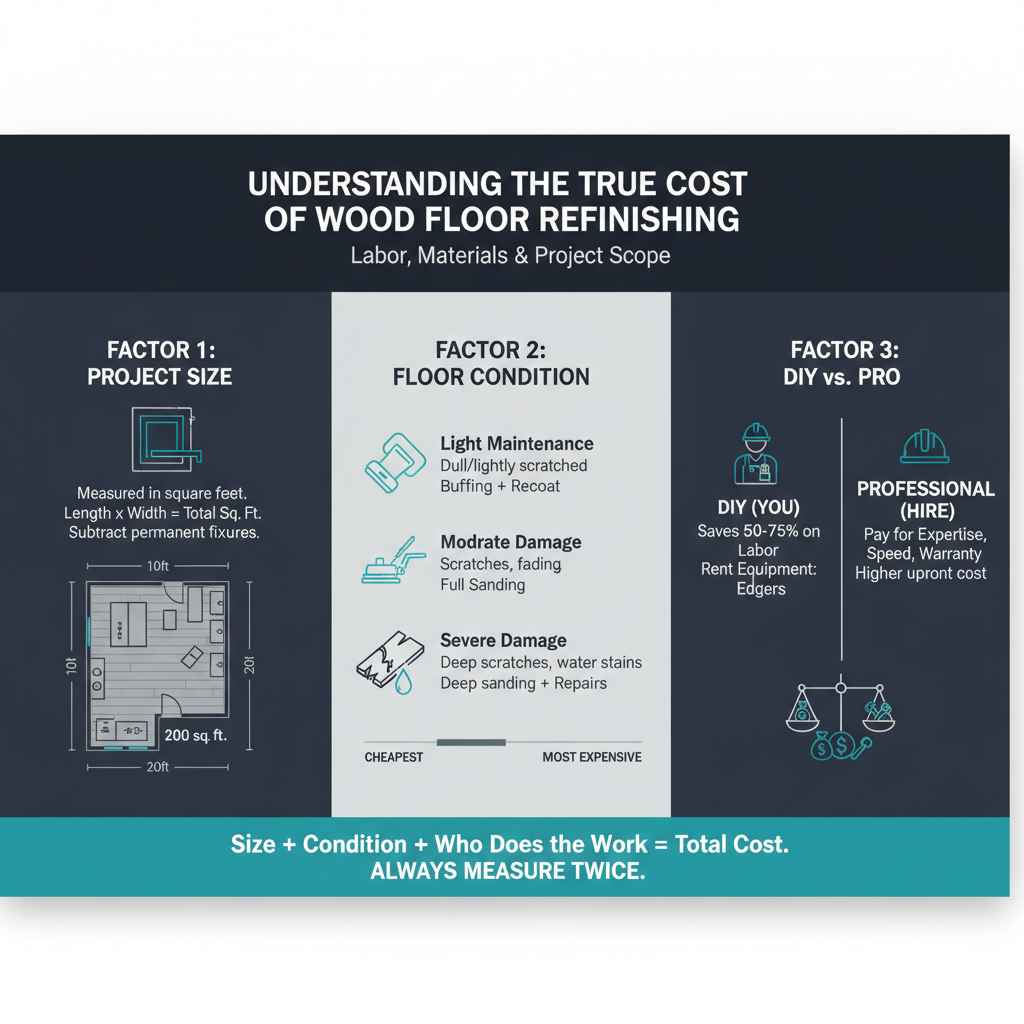
When we talk about refinishing wood floors, the cost isn’t just one number. It depends heavily on three big things: the size of the room, the current condition of the wood, and, most importantly, who is doing the work—you or a professional team.
Many homeowners ask, “How much does it cost to get wood floors refinished?” The answer involves both labor and materials. If you DIY, you swap out the big labor cost for rental fees and material expenses. If you hire a pro, you pay for their expertise, insurance, and speed. We need to look at both paths clearly.
Factor 1: The Size of Your Project
Everything in flooring is measured in square feet. To get an accurate budget, you must measure your space. Measure the length and the width of the room and multiply those two numbers together. That gives you the square footage. Don’t forget to subtract the area taken up by permanent fixtures like kitchen islands or built-in cabinets.
A small room (say, 200 sq. ft.) will have a much lower absolute cost than an entire first floor (2,000 sq. ft.), even if the price per square foot remains the same. Always measure twice!
Factor 2: Floor Condition – The Hidden Cost Driver
The existing state of your floor dictates how much work—and therefore, how much cost—is involved. Floors are usually categorized into three conditions:
- Light Maintenance (The Cheapest): The finish is dull or slightly scratched, but the wood underneath is fine. This might only need a light buffing and a fresh coat of sealant (often called a “screen and recoat”).
- Moderate Damage (The Average): There are noticeable scratches, some fading, and maybe a few deep gouges, but no major water damage or structural issues. This requires full sanding.
- Severe Damage (The Most Expensive): Floors are deeply scratched, have severe water stains, discoloration, or show gaps. This requires deep sanding, possible board replacement, and extensive stain work.
Factor 3: DIY vs. Professional Installation
This is where your budget swings dramatically. As a DIYer, you save 50% to 75% on labor costs. However, you must factor in equipment rental, which can be substantial if you don’t own professional-grade sanders.
Professionals charge for speed, quality assurance, and the ability to handle complex issues like old glue or tricky corners. They also usually guarantee their work.
DIY Refinishing Costs: What You Pay Out-of-Pocket
If you are determined to save money and build some serious DIY confidence, refinishing yourself is achievable. However, you must budget carefully for tools and supplies. Renting equipment is the biggest upfront cost here.
Essential Equipment Rental Costs (The Big Rental Hit)
For a standard 500 sq. ft. room, you will need industrial-strength sanders. Do not rely on small orbital sanders; you need power and consistency.
| Equipment Needed | Typical Daily Rental Cost (Estimate) | Purpose |
|---|---|---|
| Drum or Belt Sander (Large Areas) | $75 – $125 per day | Aggressive removal of old finish. |
| Edger Sander (Perimeter/Edges) | $50 – $85 per day | Finishing tight corners and edges. |
| Buffer/Polisher (Optional Buff & Recoat) | $40 – $60 per day | For light maintenance jobs only. |
| Shop Vacuum (High Power) | $30 – $50 per day | Essential for dust cleanup between coats. |
Meraj’s Tip on Rentals: Always rent equipment for a full weekend (Friday evening to Monday morning). Renting for three days often costs the same as two, allowing you time for setup, sanding, and applying the first coat without rushing. Rushing leads to uneven finishes!
Material Costs: What Goes Into the Can
Materials are crucial because using cheap finishes results in floors that scratch again quickly. Quality materials cost more but last longer.
A. Sandpaper and Screening Supplies
This is often underestimated. You need multiple grits of sandpaper for the drum sander (coarse to fine) and the edger. For a 500 sq. ft. project requiring full sanding, budget $75 to $150 just for sandpaper discs and belts.
B. Stains and Sealers (The Finish)
This is the heart of your cost, as the price varies based on the type of finish you select:
- Oil-Based Polyurethane: Traditionally the most durable, but it smells strong and takes a long time to dry (often 8–12 hours between coats). Expect to pay $40–$60 per gallon.
- Water-Based Polyurethane: Dries faster (2–4 hours) and has lower VOCs (less smell), making it better for active households. It’s often more expensive, $60–$90 per gallon.
- Hardwax Oils (Natural Finish): Becoming popular for a matte, natural look. These soak into the wood. Cost is high, often $80–$120 per gallon, but you use less product overall.
For an average room, you’ll likely need 2–3 gallons of sealer for three coats. Always buy a little extra!
The DIY Cost Summary Example (500 Sq. Ft. Full Sand & Refinish)
For a moderate DIY job, here is a typical budget breakdown for 500 square feet:
| Cost Category | Estimated Low Range | Estimated High Range |
|---|---|---|
| Equipment Rental (3 Days) | $250 | $400 |
| Sandpaper/Consumables | $75 | $150 |
| Stain (if needed) | $40 | $80 |
| Polyurethane Finish (3 Coats) | $180 | $300 |
| Safety Gear (Respirators, Suits) | $40 | $75 |
| TOTAL ESTIMATE (DIY) | $585 | $1,005 |
Dividing the high estimate by 500 sq. ft. gives you roughly $2.00 per square foot. This is significantly cheaper than professional labor but requires your time and sweat!
Professional Refinishing Costs: What the Experts Charge
When you hire a professional contractor, the cost shifts entirely to labor, expertise, and premium materials. Professionals often get bulk discounts on high-end finishes, which can sometimes offset part of their charge.
Professional pricing is usually quoted in a range per square foot. This range depends heavily on the location (costs are higher in major metropolitan areas) and the complexity of the job.
Average Professional Refinishing Cost Ranges
Generally, full sanding and refinishing costs range from $3.00 to $6.00 per square foot.
Cost Breakdown: Light Maintenance vs. Full Sanding
Professionals almost always charge less for a “Screen and Recoat” (light maintenance) because it involves no heavy sanding and minimal dust.
| Service Type | Typical Professional Cost Range (Per Sq. Ft.) | What It Includes |
|---|---|---|
| Screen & Recoat (Light Buff) | $1.50 – $2.50 | Light buffing, cleaning, two coats of finish. No stain applied. |
| Full Sand & Refinish (Standard) | $3.00 – $5.00 | Sanding down to bare wood, staining (standard color), 2-3 coats of oil-based poly. |
| Full Sand & Premium Finish (Water-based/Oils) | $5.00 – $7.00+ | Deep sanding, stain customization, high-end, low-VOC water-based finishes or specialty oils. |
For a large area, say 1,500 square feet, at an average professional rate of $4.00 per square foot, the total project cost would be $6,000. This price includes everything: labor, equipment, materials, and cleanup.
Hidden Costs in Professional Quotes
When comparing quotes, make sure you know what is excluded:
- Board Replacement: If boards are cupped or severely damaged, replacing them adds $5 to $15 per board depending on wood type.
- Subfloor Issues: Contractors may charge extra if they discover underlying moisture problems or structural movement that needs addressing before finishing.
- Paint/Trim Removal: If you want the floors done right, the baseboards must be removed and reinstalled. Some contractors charge extra for this labor.
- Staircases: Stairs take significantly more time than flat floors. A standard staircase can cost anywhere from $400 to $800 to finish properly.
For best practices on hiring, always check resources like the National Association of the Remodeling Industry (NARI) for contractor vetting tips.
Specialty Wood Floors and Cost Adjustments
Not all wood floors are the same! Exotic woods or specialty installations immediately impact the price, whether you DIY or hire someone.
Exotic and Hard Woods
Woods like Brazilian Cherry or Tigerwood are denser than standard Oak or Maple. They require more aggressive sanding belts, specialized blades (if replacing boards), and sometimes different finishing chemicals. Expect a 15% to 30% cost increase for these materials.
Engineered Wood Floors: A Different Calculation
This is vital information! Engineered wood floors have a thin veneer (the actual wood layer) over a plywood core. You cannot sand them as deeply as solid hardwood.
If the veneer layer is very thin (less than 1/8 inch), you often CANNOT sand it without exposing the core layer. In these cases, the only option is often a light buff and recoat, which saves money, but deep sanding is off the table. Always check your floor’s veneer thickness!
Dealing with Old Finishes (Lye or Shellac)
Older homes might have floors finished with shellac, wax, or even older acidic finishes that are notoriously difficult to sand properly. If your contractor suspects these, they might need to use chemical strippers first, adding significant labor time and material costs.
The Cheapest Way: Can You Refinish Without Sanding?
For the beginner homeowner who wants low cost and low risk, avoiding full sanding is the goal. Yes, sometimes you can skip the heavy sanding, but only if the finish layer is mostly intact.
Method 1: Deep Cleaning and Buffing (Screen & Recoat)
If your floor finish has lost its shine but doesn’t have deep scratches, you can use a commercial floor buffer (often rented alongside sanders) with a fine abrasive screen pad. This process gently ‘scuffs up’ the old polyurethane so the new coat can bond to it.
Cost Savings: Huge. You save the cost of expensive sanding belts and the time it takes to run a drum sander over the whole floor.
Method 2: Chemical Abrasion (Only for Certain Finishes)
For light scratches on certain oil-based polyurethane finishes, specialized chemical abrasion products can slightly etch the surface, allowing a fresh coat of finish to flow and blend imperfections. This requires specialized knowledge to ensure the new coat adheres correctly. If done wrong, the new finish peels right off!
Safety First: Don’t Skimp on Protection
Wood floor sanding creates a massive amount of fine dust—dust that penetrates everything and can damage your lungs. This isn’t just sweeping dust; it’s abrasive silica particles. Whether you DIY or hire a pro, understand the safety costs.
For DIYers, the cost of a high-quality, N95 or P100-rated respirator is non-negotiable. Do not try to use a simple paper dust mask.
Professionals should include containment measures in their quote, such as:
- Sealing off HVAC vents.
- Using plastic sheeting to seal doorways.
- Running specialized air scrubbers during sanding.
According to the Occupational Safety and Health Administration (OSHA) standards, proper ventilation and respiratory protection are mandatory when dealing with fine particulate matter in construction environments.
Tool Deep Dive: Renting vs. Buying for DIYers
If you plan on doing more than one small room refinishing project in the next five years, you might consider buying some tools. Renting is almost always cheaper for a single job, but if you tackle the basement next year, buying pays off.
| Tool | Rental Cost (3 Days) | Purchase Cost (Mid-Range Quality) | Verdict |
|---|---|---|---|
| Random Orbital Sander (Light Work Only) | $40 | $120 – $250 | Buy if you do many small projects; rent for bulk sanding. |
| Professional Floor Sander (Drum) | $100/day | $1,500 – $3,000+ | Always rent. Too expensive to buy for one job. |
| High-Powered Shop Vac | $45 | $150 – $400 | Consider buying if you do any DIY work regularly. |
Why you usually rent the big sander: Industrial floor sanders are heavy, hard to maneuver safely, and require specific expertise. Renting comes with the benefit that the rental shop will usually show you the basics, which is crucial for first-timers.
The Timeline Cost: Time is Money
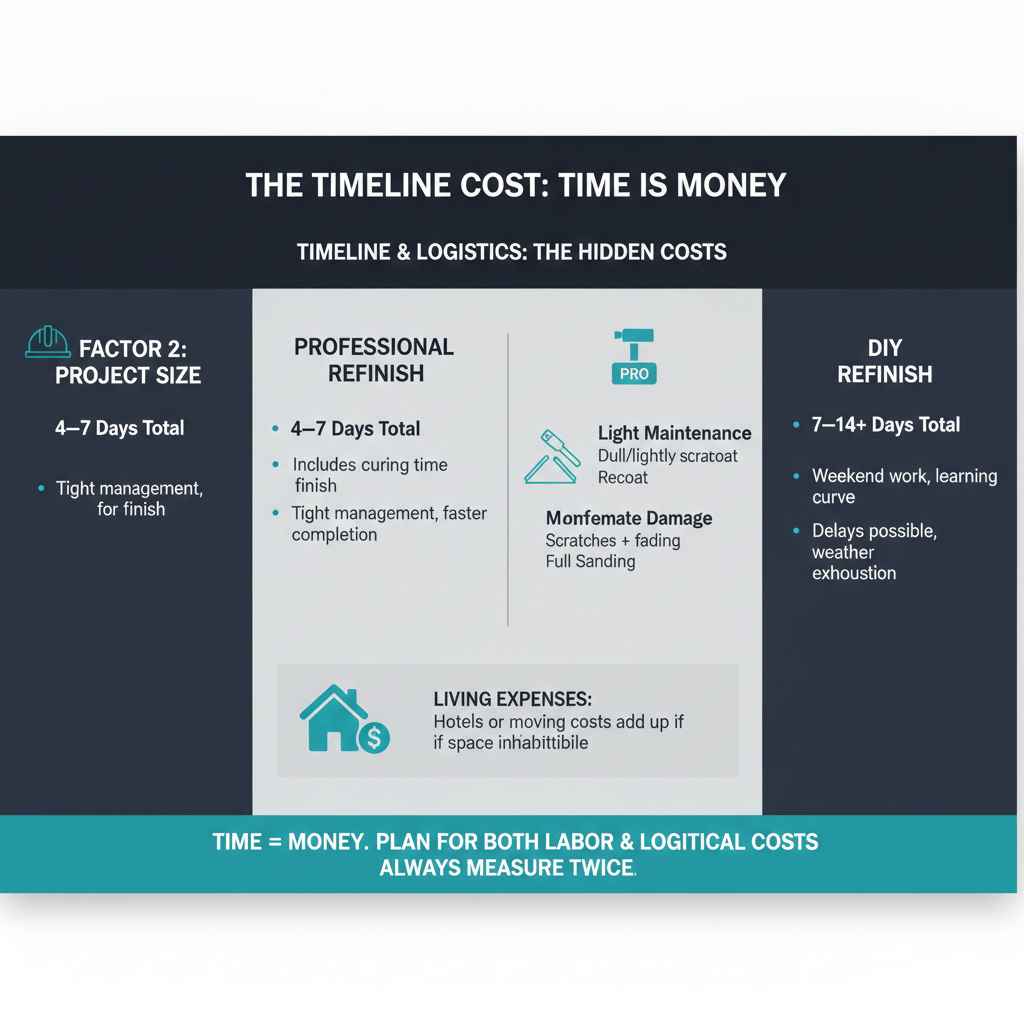
If you are calculating the cost of your time, a full professional refinish usually takes 4–7 days, depending on finish type (oil-based needs days to cure). As a DIYer, this process easily stretches to 7–14 days, especially on weekends.
If you need to live in that space, you need to account for hotel costs or moving expenses, which add to the overall expense budget. Professionals manage this timeline tightly; DIYers often have delays due to weather, exhaustion, or learning curves.
Frequently Asked Questions (FAQ) About Wood Floor Costs
Q1: What is the absolute cheapest way to make old wood floors look better?
The cheapest method is a thorough deep clean, followed by a screen and recoat using a water-based polyurethane. This avoids full sanding entirely and costs only for the cleaner and the finish material, usually under $1.00 per square foot for materials only.
Q2: Should I pay extra for water-based or oil-based polyurethane?
Pay for what suits your lifestyle. Oil-based is very durable but stinks terribly and takes days to dry fully. Water-based dries fast, has low odor, and is much more pet-friendly once cured, making the higher upfront cost often worth it for quicker access to your room.
Q3: Can I just stain my floors without sanding them first?
No, you cannot effectively stain un-sanded floors. Stain needs raw, bare wood fibers to penetrate evenly. If you put stain over the old finish, it will look blotchy, peel, or refuse to dry properly. You must sand down past the old finish first.
Q4: How much does it cost to install new wood flooring instead of refinishing?
Installation costs vary wildly, but generally, installing solid hardwood runs between $8 to $15 per square foot (materials and labor combined). This is significantly more expensive than refinishing, which typically costs $3 to $6 per square foot.
Q5: What DIY finish takes the longest to dry between coats?
Traditional oil-based polyurethane is the slowest. You must wait a minimum of 8 hours, sometimes 24 hours, before light traffic or starting the next coat. This slow cure time extends the entire project timeline.
Q6: Are there costs associated with getting rid of the sanding dust?
Yes! If you rent the sanders, the rental company often charges a significant fee (sometimes $50–$100) to dispose of the dust bags and abrasive materials collected from their machines. If you DIY, you are responsible for bagging this dust safely and disposing of it according to local waste guidelines, as it’s hazardous debris.
Q7: If my floors have been painted, can I still refinish them?
Yes, but it’s expensive. Painted floors require aggressive sanding (using the coarse grits mentioned earlier) to remove the thick paint layer completely before you can even see the wood grain underneath. Expect costs to lean toward the higher end of the professional scale ($6+ per sq. ft.) or require more rental time and abrasive belts for DIYers.
Choosing Your Path: Balancing Cost and Quality
We’ve walked through the costs associated with every step—from the humble sandpaper belt to the premium contractor’s quote. When making your final decision, look at the return on investment (ROI) for your effort.
The ROI of DIY Confidence
If you are handy, willing to dedicate two full weekends, and meticulously follow safety protocols, the DIY route offers incredible cost savings. You might pay $1.50 per square foot in materials and rentals, saving thousands on labor. The “cost” here is your sweat equity and a learning curve.
The ROI of Professional Expertise
If you need a flawless, factory-level finish, have an extremely large area (over 2,500 sq. ft.), or simply do not have the time, hiring a professional is the better investment. Their ability to deliver consistent results quickly often justifies the $4.00 to $6.00 per square foot fee. They also handle all the heavy lifting, environmental containment, and cleanup.
Conclusion: Taking the Next Confident Step
Figuring out “how much does it cost to refinish wood floors” boils down to measuring your space and deciding how much work you want to take on. Remember that the price is directly tied to the health of the existing finish. Don’t be afraid to get three separate professional quotes, and if you choose the DIY route, budget 20% more than your initial estimate for unexpected costs like extra sandpaper or longer rental periods.
Wood floors are beautiful features that last generations. With clear cost estimates and realistic expectations, you are now fully equipped to tackle this project—whether you hire the best crew in town or roll up your own sleeves. You’ve got this!