Face Cord Wood Measurements Simple Guide
Figuring out how much firewood you need can be confusing. Many people wonder about a face cord of wood and its exact measurements. This is a common sticking point for new firewood buyers.
Don’t worry; we’ll clear up all the confusion with a straightforward explanation. You’ll know exactly what you’re getting. Let’s break down the Face Cord of Wood: Exact Measurements Explained.
What Is a Face Cord of Wood
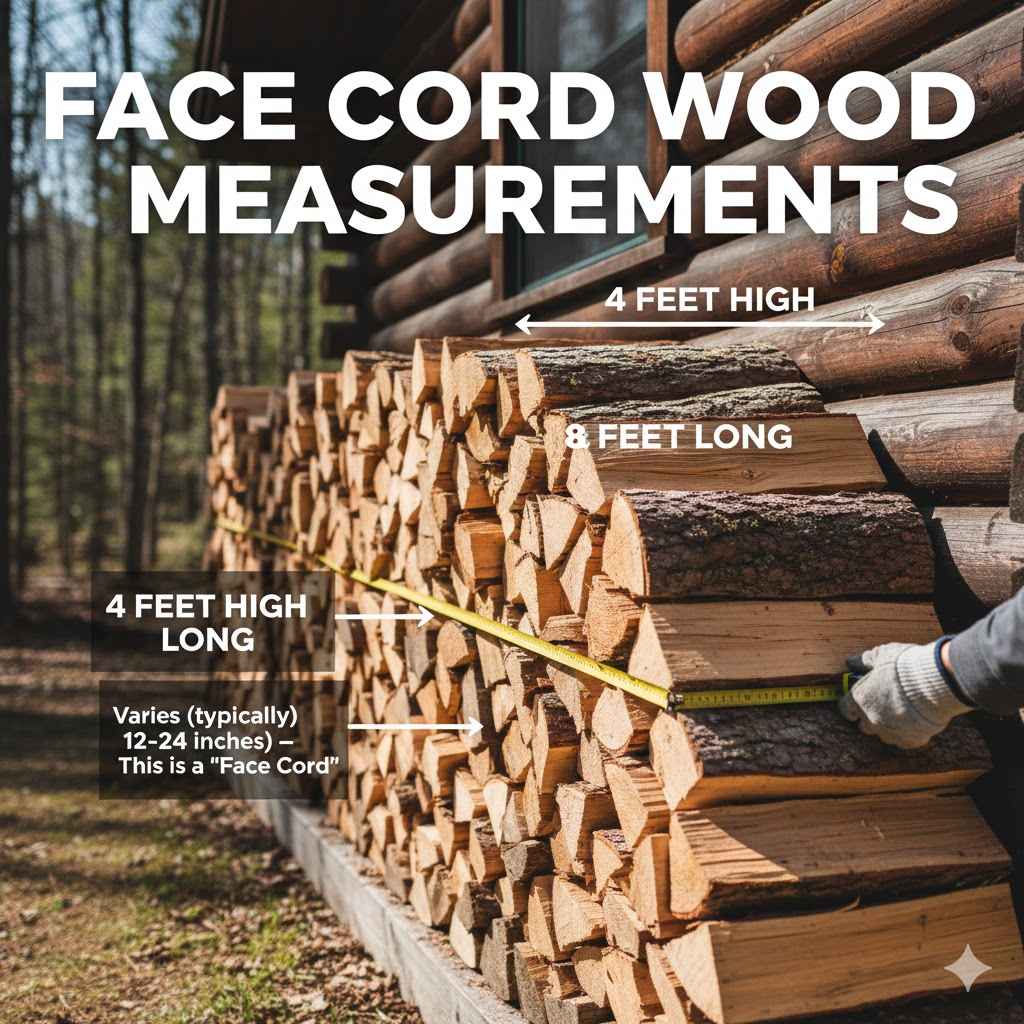
A face cord of wood is a common way firewood is sold, but its size can vary. It’s essentially a stack of firewood that measures 4 feet high and 8 feet long. The depth of the stack is the key variable that can change.
This often leads to misunderstandings about the actual volume of wood you receive. Understanding the dimensions helps you get a fair deal and the right amount of fuel for your needs. We will explore the standard and variable aspects of this measurement.
The Standard Dimensions
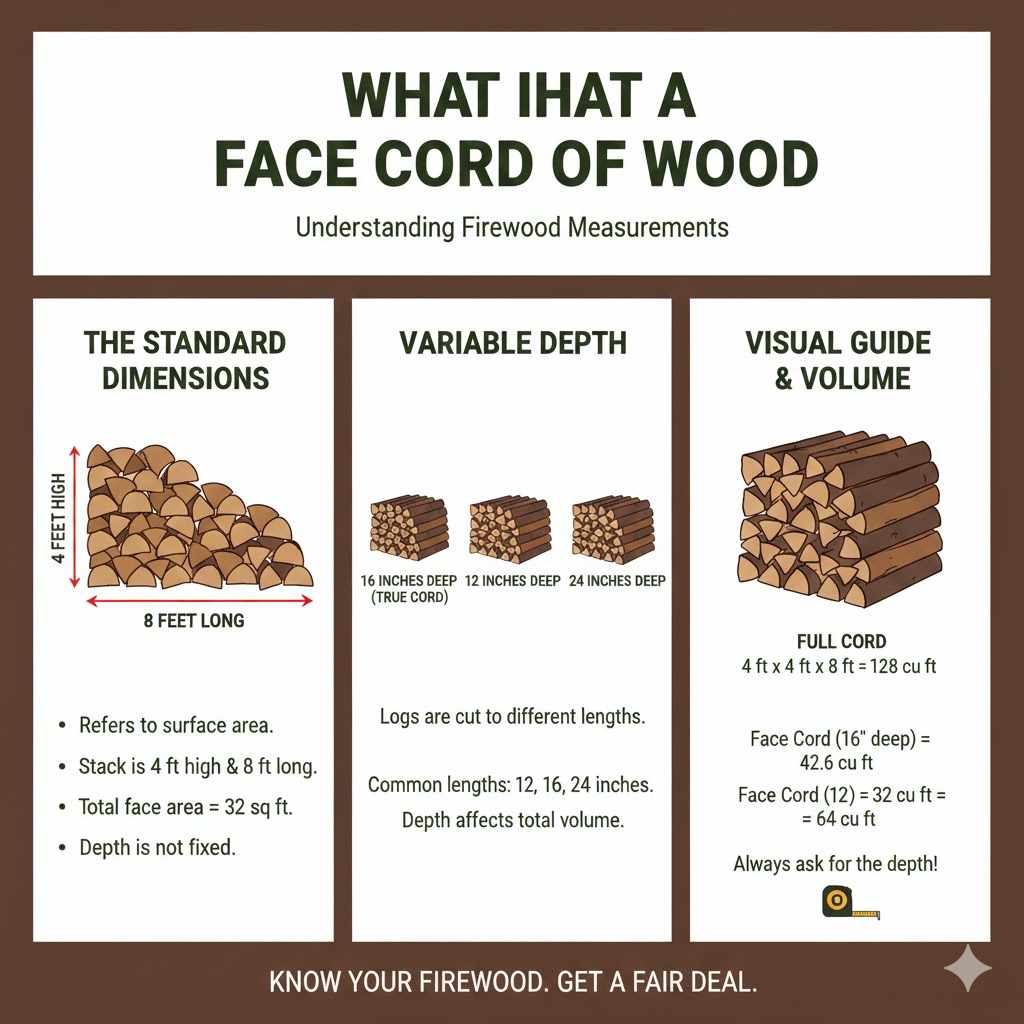
The term “face cord” refers to a specific surface area of a woodpile. The face of the stack is 4 feet high and 8 feet long. This gives a total face area of 32 square feet.
It’s like looking at one side of a large, flat wall of wood. This measurement is consistent for any face cord, regardless of its depth. It’s the visual aspect that gives it its name.
Imagine you are looking at a stack of lumber at a lumberyard. The dimensions you see from the front are the face. A face cord uses this idea but applies it to firewood.
The key is that the depth is not fixed by the term “face cord” itself. This is where the potential for confusion arises for many buyers.
Why Face Cord Measurements Can Be Tricky
The main challenge with a face cord is its inconsistent depth. While the height and length are usually 4 feet by 8 feet, the thickness of the stack can change. Some sellers might stack wood loosely, while others stack it more tightly.
This means two “face cords” could contain different amounts of actual wood. It’s like buying a bag of chips; the bag might look full, but the amount of chips inside can differ.
This lack of a standard depth means a buyer might think they are getting a certain amount of wood, but end up with less. It’s important to clarify the depth with your seller. This ensures you are comparing apples to apples.
Without this clarification, you might overpay or not have enough firewood for the winter. We will look at how to determine the real volume.
The Difference from a Full Cord
A full cord of wood is a much larger and more standardized unit. It measures 4 feet high, 8 feet long, and 4 feet deep. This results in a total volume of 128 cubic feet of stacked wood.
When wood is cut and stacked for a full cord, there are gaps between the logs, so the actual solid wood volume is less. This is a widely accepted standard in the industry.
In contrast, a face cord is only 4 feet high and 8 feet long, with a variable depth. If a face cord is stacked 16 inches deep (which is a common depth for individual logs), it would contain approximately one-third of a full cord. This is because 16 inches is one-third of 48 inches (4 feet).
This comparison helps to put the size of a face cord into perspective.
Calculating the Volume of a Face Cord
To truly understand what you are buying, you need to calculate the actual volume of wood in a face cord. This involves measuring its depth. Once you have the depth, you can convert the face cord measurement into a more precise cubic foot measurement.
This allows for better comparison between different sellers and woodpile sizes.
Measuring the Depth
The depth is the crucial missing piece in the standard face cord measurement. You need to measure how deep the stack of firewood is. A tape measure is the best tool for this.
Measure from the front face of the woodpile to the very back. This measurement is usually taken in inches.
For example, if you measure the depth and it’s 16 inches, that’s a key piece of information. If it’s 24 inches, that’s different. The deeper the stack, the more wood you have in your face cord.
Always try to get a consistent depth measurement across the length of the pile.
Converting to Cubic Feet
Once you have the depth, you can calculate the volume in cubic feet. The formula for volume is Height x Length x Depth. For a face cord, the height is 4 feet and the length is 8 feet.
So, the volume is 4 feet x 8 feet x Depth (in feet).
Remember to convert your depth measurement from inches to feet. To do this, divide the number of inches by 12. For example, 16 inches divided by 12 equals approximately 1.33 feet.
So, a face cord that is 16 inches deep would be 4 feet x 8 feet x 1.33 feet = 42.56 cubic feet of stacked wood.
Understanding Stacked vs. Solid Wood Volume
It’s important to remember that these calculations represent the volume of the stacked wood, not the solid wood. When firewood is stacked, there are always air spaces between the logs. The actual amount of solid wood is less than the stacked volume.
The amount of air space can vary depending on how the wood is cut and stacked.
Smaller, unevenly cut pieces will create more air space than larger, uniformly cut pieces. This is why even with cubic foot calculations, there’s still some estimation involved. However, measuring the stacked volume and depth gives you a much clearer picture than just the “face cord” term alone.
Common Face Cord Sizes and Calculations
Several common depths are associated with face cords, making it easier to estimate the amount of wood you are getting. Knowing these common sizes can help you quickly assess a deal. Understanding these conversions is key to making informed purchasing decisions.
The 16-Inch Deep Face Cord
A 16-inch deep face cord is a very common size. This depth is often chosen because standard firewood racks are about 16 inches deep. When you have a face cord that is 4 feet high, 8 feet long, and 16 inches deep, it contains approximately 42.67 cubic feet of stacked wood.
This is roughly one-third of a full cord (128 cubic feet / 3 = 42.67 cubic feet).
This conversion is helpful because many people think of a face cord as a fraction of a full cord. If you regularly purchase firewood by the full cord, this gives you a good baseline. A 16-inch deep face cord is a practical amount for many homeowners for a season’s use.
It’s easier to handle and store than a full cord.
The 24-Inch Deep Face Cord
A 24-inch deep face cord is less common but still encountered. This depth is closer to half of a full cord’s depth. A face cord measuring 4 feet high, 8 feet long, and 24 inches deep contains approximately 64 cubic feet of stacked wood.
This is about half of a full cord (128 cubic feet / 2 = 64 cubic feet).
If you are offered a face cord and the seller doesn’t specify the depth, and you measure it to be 24 inches deep, you are getting significantly more wood than a 16-inch deep face cord. This is why always measuring the depth is so important. It directly impacts the quantity and value of your purchase.
The 32-Inch Deep Face Cord
A 32-inch deep face cord is quite substantial and approaches a full cord in volume. A face cord that is 4 feet high, 8 feet long, and 32 inches deep contains approximately 85.33 cubic feet of stacked wood. This is about two-thirds of a full cord (128 cubic feet * 2/3 = 85.33 cubic feet).
When you encounter a face cord of this depth, it represents a significant amount of firewood. It’s crucial to confirm this depth with your supplier. This size can be a good option if you have ample storage space and a high demand for firewood.
It’s a way for sellers to offer a larger quantity without calling it a “full cord.”
How to Get the Best Value
Getting the best value when buying firewood involves more than just knowing measurements. It requires clear communication with your seller and a good understanding of what you are paying for. Educating yourself on these details prevents you from being shortchanged.
Always Ask for Depth Specification
The most important step is to always ask your firewood supplier about the depth of their face cords. If they sell by the face cord, they should be able to tell you the depth or the approximate cubic feet. Reputable sellers will be transparent about these details.
Don’t be afraid to ask for clarification.
If a seller is vague or unwilling to provide depth information, it might be a red flag. You want to ensure you are getting a fair amount of wood for your money. A simple question about depth can save you a lot of confusion and potential disappointment later on.
It’s a fundamental part of the Face Cord of Wood: Exact Measurements Explained.
Compare Price Per Cubic Foot
To truly compare prices between different firewood vendors, calculate the price per cubic foot of stacked wood. Once you know the cubic feet in a face cord and its price, you can find this number. For example, if a 16-inch deep face cord costs $100, the price per cubic foot is $100 / 42.67 cubic feet = $2.34 per cubic foot.
If another seller offers a 24-inch deep face cord for $140, its price per cubic foot is $140 / 64 cubic feet = $2.19 per cubic foot. In this scenario, the 24-inch deep face cord is a better deal. This method allows for accurate comparisons, regardless of how the wood is advertised.
Consider Log Length and Size
The length of the logs also matters. Most firewood is cut to lengths that fit easily into fi
The diameter of the logs can also influence how tightly they pack. Larger, uniform logs might leave more consistent air gaps than a mix of very small and very large pieces. This affects the stacked volume calculation.
However, for most buyers, focusing on depth and length is sufficient.
Real-World Scenarios and Examples
Let’s look at a couple of examples to see how face cord measurements play out in real life.
Scenario 1: A New Homeowner Buys Firewood
Sarah just bought her first home and has a fireplace. She needs firewood for the winter. She sees an ad for “Face Cords of Firewood $150.” She calls the seller and asks about the size.
The seller says it’s 4 feet high and 8 feet long. Sarah asks, “What’s the depth?” The seller replies, “About 16 inches.”
Sarah knows that a 16-inch deep face cord is about one-third of a full cord. She estimates she might need about 3 face cords for the winter. She calculates the total cubic feet: 3 face cords * 42.67 cubic feet/face cord = 128.01 cubic feet.
This is roughly equivalent to a full cord of wood. She feels confident this will be enough and the price seems fair.
Scenario 2: A Seasoned Firewood User
Mark has been heating with wood for years. He sees an ad for “Firewood Sale – Face Cords $120.” He calls the seller and asks for the depth. The seller says they stack it 20 inches deep.
Mark knows this is a bit deeper than the common 16 inches.
He calculates the cubic feet for this face cord: 4 ft x 8 ft x (20/12) ft = 4 ft x 8 ft x 1.67 ft = 53.44 cubic feet. He usually buys full cords for $300. He calculates the price per cubic foot for the seller’s offer: $120 / 53.44 cubic feet = $2.25 per cubic foot.
He compares this to his usual price: $300 / 128 cubic feet = $2.34 per cubic foot. Mark realizes this is a better deal per cubic foot and decides to buy two of these 20-inch deep face cords.
Tips for Storing Your Firewood
Once you have your firewood, proper storage is essential. Good storage practices ensure your wood burns efficiently and lasts longer. It also helps prevent issues like mold and rot.
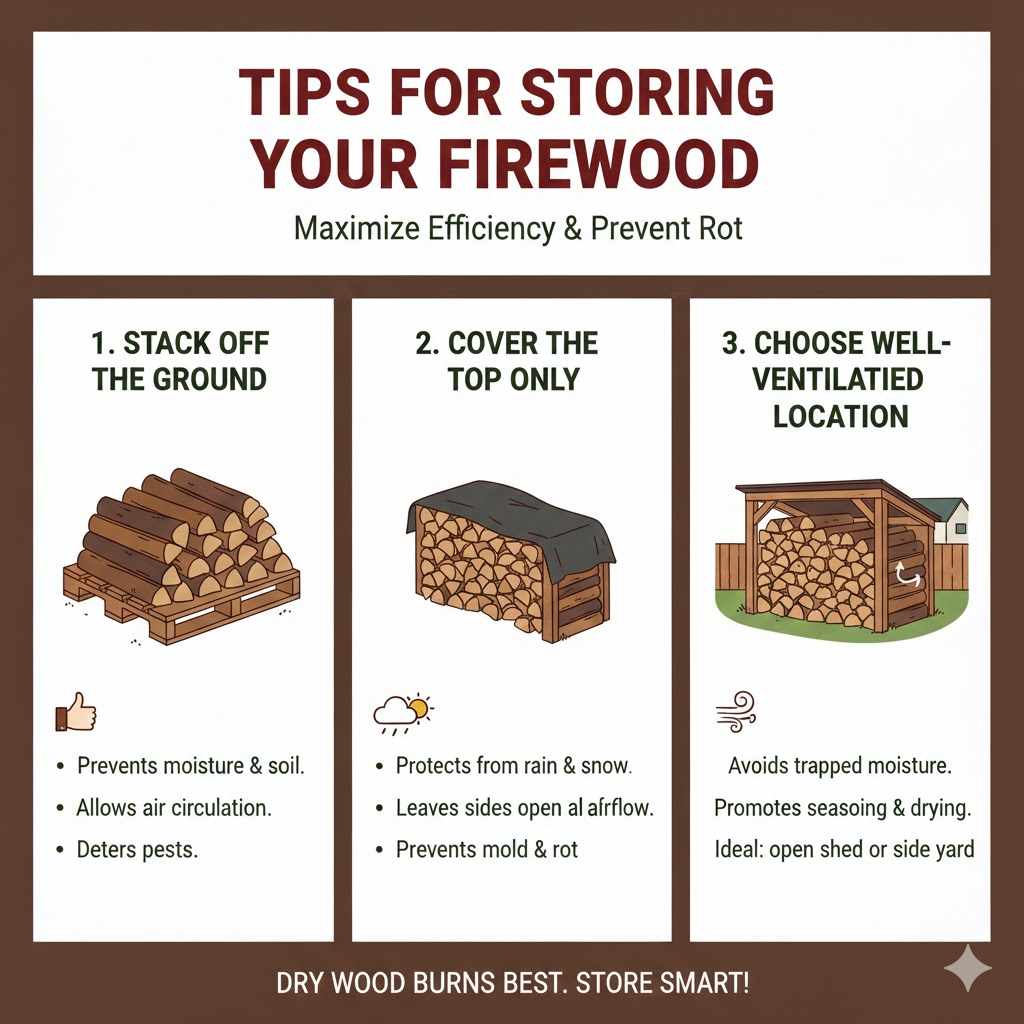
- Stack your wood off the ground. Use pallets or a dedicated wood rack to keep it elevated. This allows air to circulate underneath and prevents moisture from the soil from soaking into the wood. It also helps deter pests.
- Cover the top of the stack. Use a tarp or a specialized firewood cover to protect the wood from rain and snow. However, leave the sides open to allow for airflow. Moisture from the top can still be a problem, even if the wood is dry when you buy it.
- Choose a well-ventilated location. Avoid storing wood directly against buildings or fences, as this can trap moisture and hinder airflow. A more open area, like the side of your house or a dedicated wood shed, is ideal. Good ventilation helps the wood season and dry out completely.
Frequently Asked Questions
Question: Is a face cord always the same amount of wood
Answer: No, a face cord has a standard height of 4 feet and length of 8 feet, but the depth can vary, meaning the total volume of wood can differ.
Question: How many face cords make a full cord
Answer: Typically, three 16-inch deep face cords are equivalent to one full cord, but this depends on the exact depth of the face cords.
Question: What is the standard depth of a face cord
Answer: There isn’t a single standard depth for a face cord, but 16 inches is very common. It’s always best to ask your seller.
Question: Why is it important to know the depth of a face cord
Answer: Knowing the depth allows you to calculate the actual volume of wood you are buying and compare prices accurately with other sellers.
Question: Can I estimate the number of face cords I need
Answer: Yes, by estimating your winter heating needs and knowing the cubic foot equivalent of a face cord (based on its depth), you can make a good estimate.
Summary
Understanding a face cord of wood means knowing its 4×8 foot face and its variable depth. Always ask for the depth to calculate cubic feet. This ensures you pay a fair price and get the amount of firewood you need for cozy warmth.
Measure, compare, and buy with confidence.