How Can You Get Spray Paint off Your Hands Safely Today?
Use warm soapy water on fresh spray paint, oil-based cleaner for tacky paint, and isopropyl alcohol or hand cleaner for dry paint. Stop if skin stings. Scrubbing too hard can dry, crack, or irritate skin, and solvent use can spread the mess. This guide shows which method to choose by dryness level and skin sensitivity, plus the safe step-by-step process.
How fast can you remove spray paint from your hands?
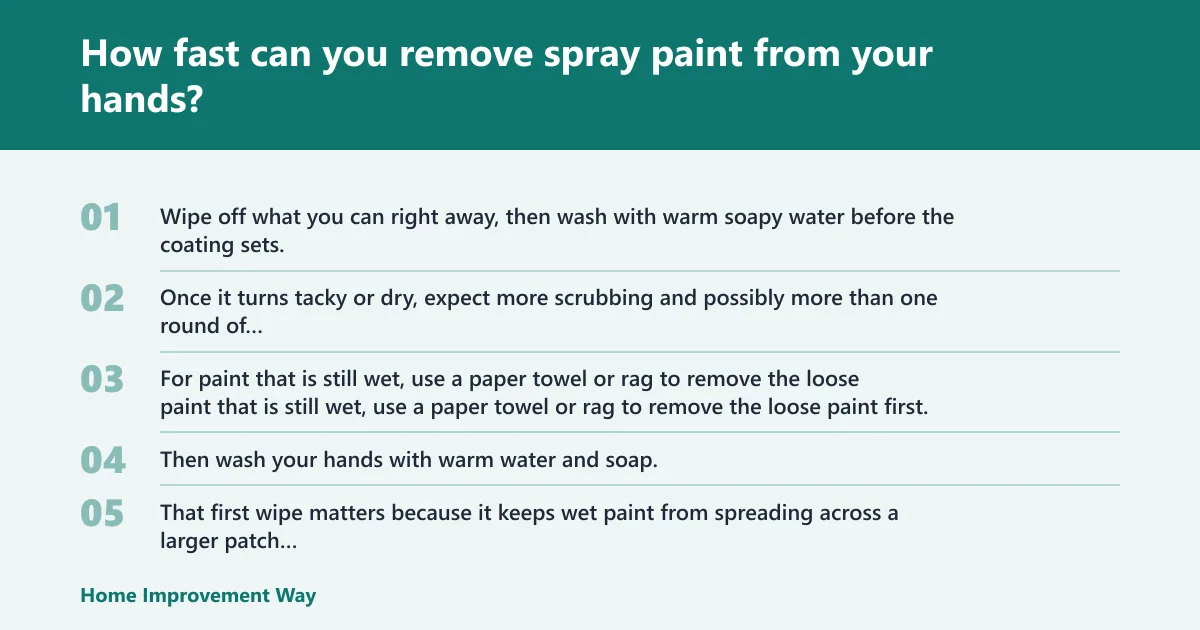


Fresh spray paint usually comes off easiest. Wipe off what you can right away, then wash with warm soapy water before the coating sets. Once it turns tacky or dry, expect more scrubbing and possibly more than one round of cleaning. If your skin burns, stop and switch methods.
Fresh paint: wipe first, then wash
For paint that is still wet, use a paper towel or rag to remove the loose paint first. Then wash your hands with warm water and soap. That first wipe matters because it keeps wet paint from spreading across a larger patch of skin.
Tacky paint: move to an oil-based cleaner
When the spray paint feels sticky but is no longer wet, oil may work better than soap alone. Oil loosens the paint film so it can be rubbed away without heavy scrubbing. This is the stage where a gentle oil wash often keeps skin from getting raw.
Dried paint: expect a scrub, not a single rinse
Dry spray paint clings more tightly. At that point, a mild oil-and-baking-soda paste or another cleaner may be needed, followed by a careful wash. If the paint has fully cured, one quick rinse will rarely remove it.
When to stop and switch methods
If the skin turns red, feels hot, or starts stinging, stop scrubbing. Back off, wash with soap and water, and choose a milder method or let the paint wear off naturally. Broken skin needs extra caution.
Does oil remove spray paint from skin?
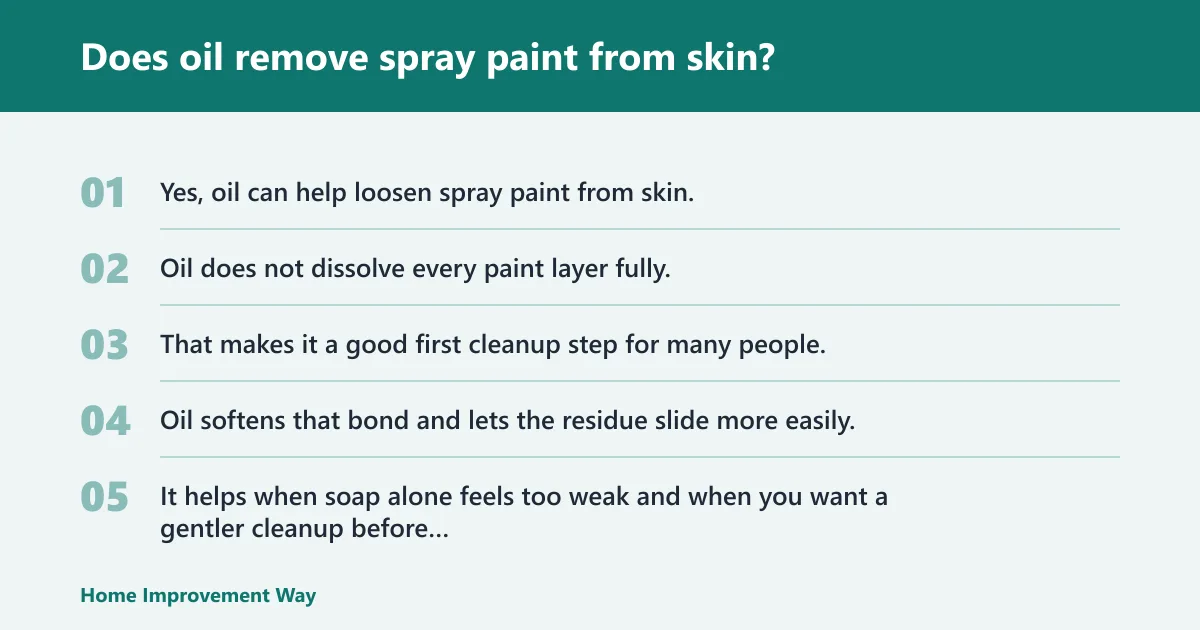
Yes, oil can help loosen spray paint from skin, especially when the paint is fresh or tacky. Oil does not dissolve every paint layer fully, but it can break the grip enough to lift residue without hard rubbing. That makes it a good first cleanup step for many people.
Why oil helps loosen paint
Spray paint sticks to skin as it dries. Oil softens that bond and lets the residue slide more easily. It helps when soap alone feels too weak and when you want a gentler cleanup before moving to stronger products.
Vegetable oil and olive oil as substitutes
Vegetable oil can be used instead of coconut oil, and olive oil is another acceptable substitute. Both are common nonpolar oil options that can help loosen paint from the skin. If coconut oil is not available, either one is worth trying before harsher removers.
Baby oil for a milder cleanup
Baby oil is another reader-suggested option, especially for people who want a softer cleanup step. A wet washcloth, warm water, and baby oil can help lift paint without heavy abrasion. After the oil step, soap and warm water should follow to remove the residue.

How do you mix coconut oil and baking soda?
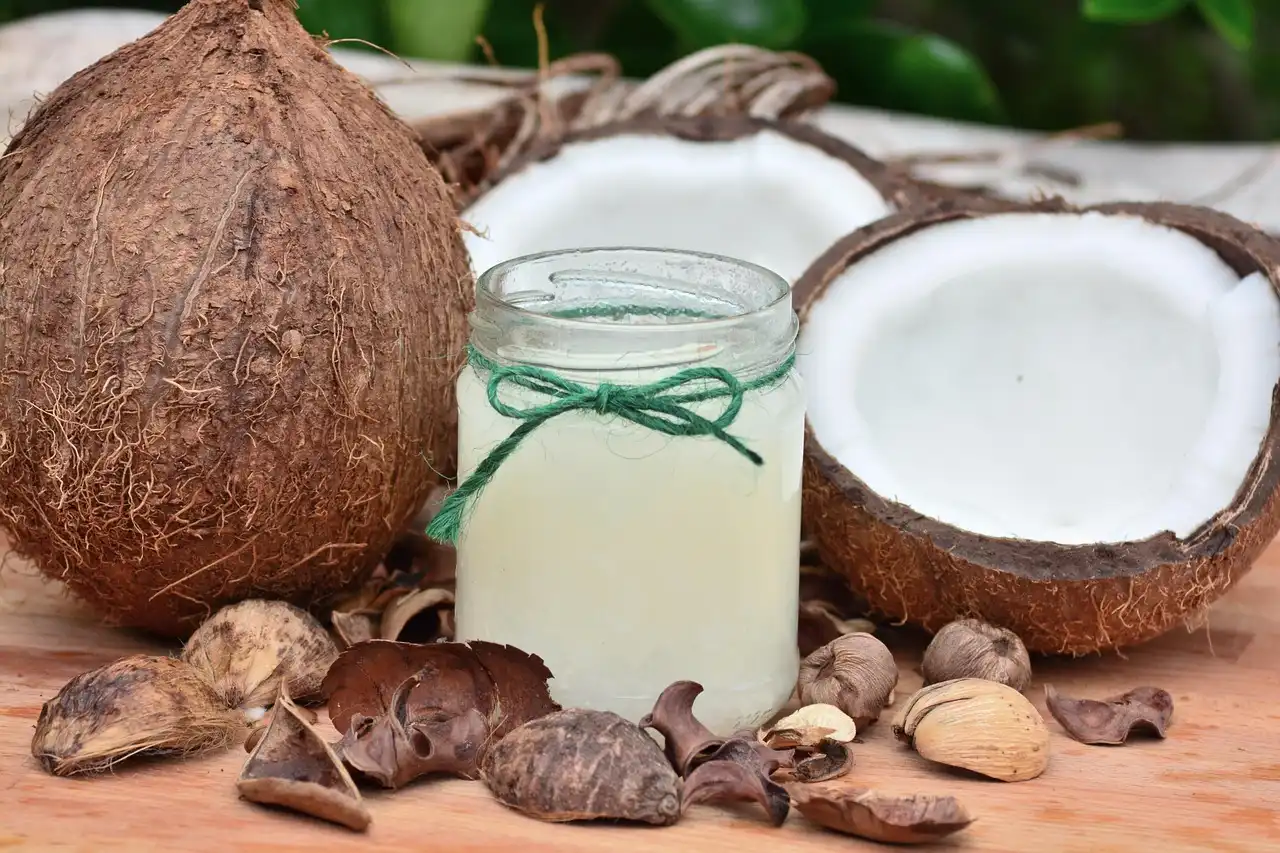
Mix half a cup of coconut oil with half a cup of baking soda to form a scrub. The oil gives the mixture slip, and the baking soda adds mild abrasion. Used gently, it can remove dried paint without the harsh feel of stronger solvents.
Use half a cup of coconut oil
The shared recipe uses half a cup of coconut oil. Warm it slightly if needed so it stirs easily, but do not make it hot. The goal is a spreadable base that clings to the paint, not a runny oil wash.
Add half a cup of baking soda
Blend in enough baking soda until it forms a thick paste. If it feels too dry, add a little more oil. If it feels too loose, add a bit more baking soda. The paste should stay on the skin long enough to rub the paint loose.
How to rub the paste without irritating skin
Apply the paste to the painted areas and rub with light pressure. Short passes work better than hard scrubbing. Rinse, check the skin, and repeat once or twice if needed. If the skin starts to feel sore, stop and wash the area clean.
What should you do if the paste does not work?
If the coconut oil and baking soda paste does not remove the paint, wash the hands again with warm water and soap, then try a different household option carefully. For stubborn dried paint, a stronger cleaner may help, but irritation means it is time to stop and let the rest wear off.
Try soap and warm water again
Sometimes the first oil scrub loosens only the top layer. Another wash with warm soapy water can remove what the paste lifted. That is worth trying before stepping up, especially if the skin is sensitive or the paint is only partly dry.
Move to a stronger household option carefully
Some people reach for hand cleaner or isopropyl alcohol when the paint has already dried. Those options can work better on stubborn residue, but they can also dry the skin fast. Use only on intact skin, and rinse well afterward.
When to stop because your skin is getting sore
Stop as soon as the skin starts to sting, crack, or look raw. At that point, more scrubbing usually causes more harm than benefit. Wash gently, apply a bland moisturizer if available, and let the remaining paint shed over time.
How do you clean spray paint around fingernails?
Fingernails and cuticles trap paint more than open skin does. An old toothbrush can help loosen the edge of the paint around the nail without requiring more abrasion over the whole hand. Work slowly, rinse often, and do not dig at the cuticle.
Use an old toothbrush for nail edges
An old toothbrush was used to scrub paint from around fingernails, and that is a practical move because the bristles can reach the sidewalls and nail edge. Use gentle strokes after applying oil, soap, or the baking soda paste.
Work along the cuticle, not hard on the skin
Keep the brush on the nail margins and paint edge, not on broken skin. The cuticle area is delicate, so hard pressure can cause irritation fast. A light brushing motion is usually enough to lift softened paint.
Rinse and repeat before the paint sets deeper
After brushing, rinse with warm water and soap. If color remains under the nail edge, repeat the oil step and brush again. The sooner this is done, the less likely the paint is to settle into the creases.
Is nail polish remover a good idea?
Nail polish remover can help with spray paint, especially if it contains acetone, but it is not the first choice for hands. It can dry and irritate skin quickly, so it should be used sparingly, on intact skin, and followed by a thorough wash.
When acetone may help
Acetone can cut through stubborn paint residue that oil will not fully move. It may be useful on small patches or around nails where other methods stall. Use the smallest amount needed and keep it away from cracked skin.
Why it is not the first choice for hands
Hands have more skin than a nail surface, and that means more area to dry out. Nail polish remover is often stronger than necessary for casual cleanup. For most people, oil or soap is a better first pass.
How to avoid over-drying or irritating skin
If you use nail polish remover, wash the area soon afterward with soap and warm water. Do not keep reapplying it to the same spot. If the skin burns, turns red, or feels tight, stop immediately.
What works best for sensitive skin, kids, and larger spots?
For sensitive skin, kids, and larger areas, start with the mildest method that can still do the job. Use warm water, soap, and a little oil before any abrasive scrub. If the skin is broken or already irritated, keep scrubbing to a minimum and let the paint wear off.
Choose the mildest method first
Oil, baby oil, or warm soapy water are usually the safest starting points. Large areas are easier to irritate, so a gentle wipe is better than repeated hard rubbing. Test a small spot first if the skin is very sensitive.
Use less scrubbing on red or broken skin
Broken skin should not be scrubbed with baking soda, toothbrush bristles, or acetone. That can make the area sting and slow healing. Wash gently, dry the skin, and avoid anything that feels sharp or hot.
When to wash, stop, and let the paint wear off
If the paint is thin and the skin is already irritated, it may be better to stop early. A few washes and time often do the rest. That is better than chasing every bit of color and ending up with damaged skin.
Method comparison: what works best for fresh paint, dried paint, and nails
The best method depends on the paint stage and the skin around it. Fresh spray paint responds to soap and water. Dried paint usually needs oil, a scrub, or a stronger cleaner. Around nails, a toothbrush helps more than fingers alone.
| Method | Fresh paint | Dried paint | Sensitive skin | Fingernail cleanup |
|---|---|---|---|---|
| Warm soapy water | Pass | Fail | Pass | Fail |
| Coconut oil and baking soda paste | Pass | Pass | Mixed | Pass |
| Olive oil or vegetable oil | Pass | Mixed | Pass | Pass |
| Baby oil with warm water and soap | Pass | Mixed | Pass | Pass |
| Nail polish remover | Mixed | Pass | Fail | Pass |
Best pick by paint stage and skin sensitivity
For fresh paint, warm soapy water is the best start. For tacky paint, oil usually works best. For dried paint, the oil-and-baking-soda paste is a solid next step, with nail polish remover reserved for stubborn spots on intact skin. For sensitive skin, keep it mild.
Frequently asked questions
How do you get spray paint off your hands fast?
The fastest method is to wipe off wet paint right away, then wash with warm soapy water. If the paint is already tacky, add oil before washing. Once it dries, a scrub becomes necessary, and that takes longer. Stop if the skin starts to sting.
Does oil remove spray paint from skin?
Yes, oil helps loosen spray paint from skin because it softens the bond between the paint and the surface of the skin. It works best on fresh or tacky paint. Vegetable oil, olive oil, and baby oil are all reasonable household choices when coconut oil is not available.
Will baking soda and coconut oil take off spray paint?
They often will, especially on dried or stubborn spots. The oil loosens the paint, while the baking soda adds gentle abrasion. The shared recipe uses half a cup of coconut oil and half a cup of baking soda. Keep the scrubbing light and stop if the skin gets sore.
Can you use nail polish remover on spray paint from hands?
Yes, but it should be a backup, not the first move. Nail polish remover, especially one with acetone, can strip paint but also dry and irritate skin fast. Use it sparingly on intact skin, then wash with soap and water right away.
What removes dried spray paint from skin?
Dried spray paint usually needs oil, a baking soda scrub, or another stronger household cleaner. Soap alone often is not enough. For small areas, repeated gentle passes work better than aggressive scrubbing. If the skin is broken or stinging, stop and let the rest wear off.
Is butter good for removing spray paint from skin?
Butter can work for some people, and readers have reported that it removed spray paint from skin. It is a soft household option when nothing else is nearby. Use it the same way you would use oil: rub gently, then wash with warm water and soap.
How do you clean spray paint around fingernails?
Apply oil or the baking soda paste, then use an old toothbrush to work around the nail edge and cuticle. Do not dig into the skin. Rinse, inspect, and repeat if needed before the paint settles deeper under the nail.
What should I use if I do not want chemicals on my skin?
Start with warm water, soap, and an oil such as coconut oil, olive oil, vegetable oil, or baby oil. That is the gentlest path for most people. If the paint remains and the skin is getting irritated, it may be better to stop scrubbing and let the rest wear off.
Sponsored / affiliate links. As an Amazon Associate I earn from qualifying purchases. I may earn additional commission from eligible campaigns.