How Do You Remove Super Glue: Essential Genius
To remove super glue (cyanoacrylate), start by gently softening the hardened adhesive with acetone (nail polish remover) for hard surfaces, or use warm, soapy water and patience for skin or fabric. Always test solvents in an inconspicuous spot first, work slowly, and never force the removal to avoid damaging the underlying material.
We’ve all been there. You’re fixing a broken ceramic mug or quickly gluing a piece back onto a project, and suddenly, that tiny drop of super glue finds its way onto your favorite shirt, your kitchen countertop, or worse—your fingertips! Super glue, or cyanoacrylate, dries incredibly fast and creates a bond stronger than wood itself. It can feel like a permanent mistake.
Don’t panic! This is a super common frustration for every DIYer. The good news is that super glue is strong, but it’s not invincible. With the right simple household products and a little patience, you can safely lift that sticky mess away.
This guide will walk you through the safest, most effective methods for tackling super glue removal, whether it’s stuck on wood, skin, fabric, or hard plastic. Let’s get that mess gone so you can get back to building!
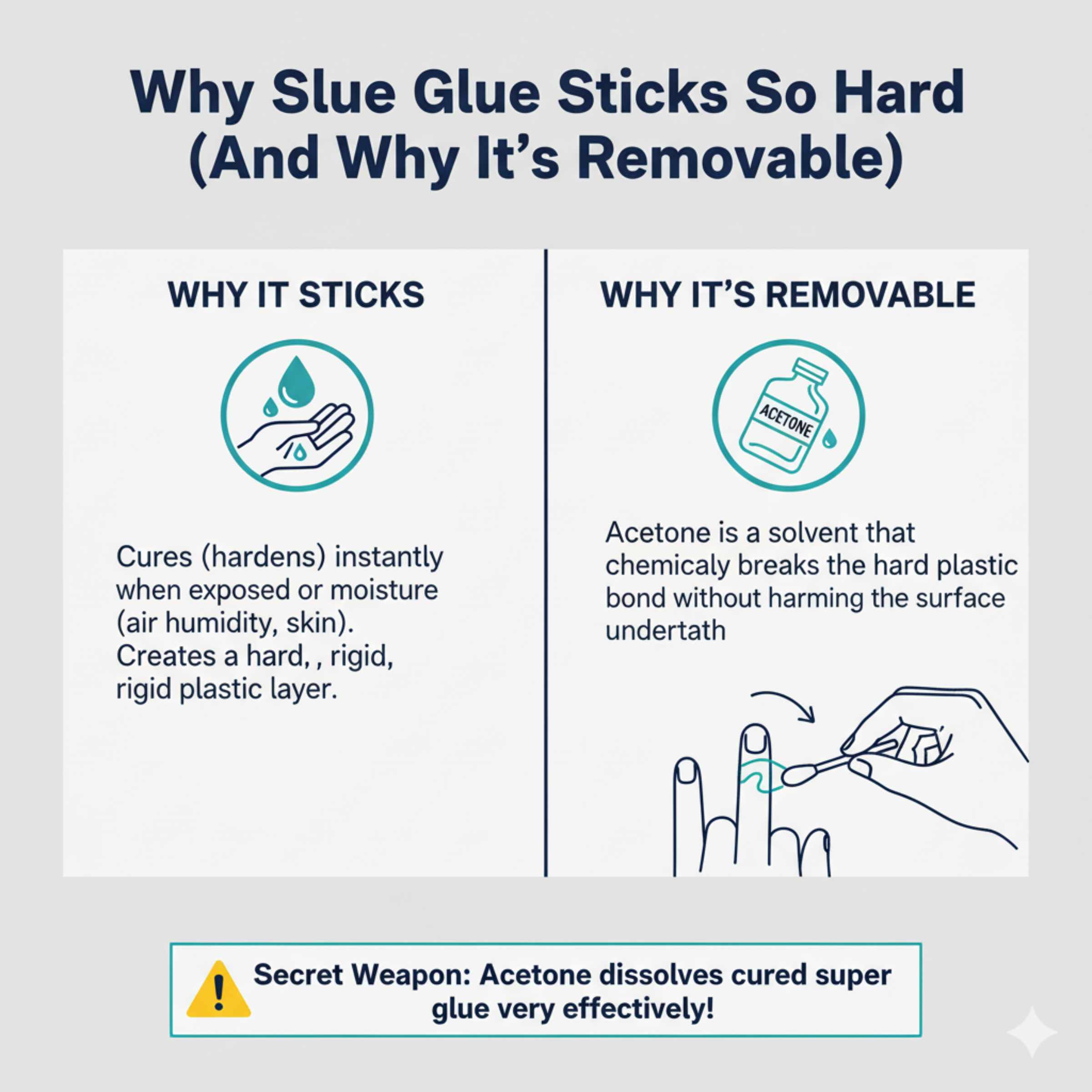
Why Super Glue Sticks So Hard (And Why It’s Removable)
Understanding what super glue is helps us know how to defeat it. Super glue is special because it cures (hardens) instantly when exposed to even small amounts of moisture—like the humidity in the air or the moisture on your skin.
This rapid bonding process creates a hard, rigid plastic layer. To remove it, we need to chemically break down that plastic bond without harming the surface underneath. For homeowners, the secret weapon is usually a chemical called acetone. Acetone is a solvent, meaning it dissolves other substances, and thankfully, it dissolves cured super glue very effectively.
Essential Tools and Supplies for Glue Removal
Before you start scrubbing, gather your materials. Having these items handy makes the process much smoother. Remember, we want gentle action, not aggressive scraping.
What You Will Need:
- Acetone (found in most pure nail polish removers).
- Warm, soapy water (mild dish soap works great).
- Plastic scraper or old credit card (avoid metal).
- Cotton balls or clean, white cloths.
- Fine-grit sandpaper (220 grit or higher, only for hard, non-porous surfaces).
- Cooking oil or petroleum jelly (for skin).
Method 1: Removing Super Glue from Skin (The Most Common Mishap)
It happens every time! You touch two fingers together, or you accidentally glue your thumb to the workpiece. Luckily, your skin is resilient, and this is one of the easiest fixes, though it requires patience.
Step-by-Step Skin Removal:
- Soak the Area: Fill a small bowl with warm, soapy water. Add a few drops of dish soap. Submerge the glued area (like your fingers) completely for about five to ten minutes. This softens the bond slightly.
- Try Rolling: Gently try to roll or wiggle the stuck skin apart. Do not pull hard! If it doesn’t move easily, stop pulling immediately.
-
Apply Oil or Acetone (Use Caution):
- For Mild Sticking: Rub petroleum jelly, baby oil, or cooking oil around the edges of the glue spot. Gently massage it in. The oils help break the bond.
- For Tough Spots: Dampen a cotton ball with pure acetone (nail polish remover). Dab it directly onto the glue for about a minute. Acetone dissolves the glue quickly but can dry out your skin, so use it sparingly.
- Peel Slowly: Once the glue feels softer or begins to flake, gently roll the edges away from the skin. Work in small sections.
- Rinse and Moisturize: Wash the area thoroughly with soap and water to remove all chemical residue, and apply lotion, as acetone can be drying.
Method 2: Removing Super Glue from Hard Surfaces (Wood, Plastic, Laminate)
This is where precision matters most. Removing glue from a beautiful finished wood table or a plastic electronic casing requires a delicate touch to avoid scratching the finish.
Crucial First Step: Test Your Surface
Before you introduce any solvent, you must check how the surface reacts. Acetone can permanently dull or damage certain plastics and finishes. Dip a cotton swab in acetone and dab a tiny, hidden spot (like the underside of a table edge). If the color or finish changes after 30 seconds, STOP using acetone immediately. Move to Method 2B.
Method 2A: Acetone Treatment (For Durable Surfaces)
This works excellently on glass, ceramic, metal, and most high-quality laminate countertops.
- Prepare the Area: Gently scrape away any thick, raised glue blobs using a plastic razor blade or the edge of an old credit card. Use light pressure, angling the scraper almost flat against the surface.
- Apply Acetone: Soak a clean cloth or cotton ball with acetone. Place it directly onto the remaining glue stain. Let it sit for at least one to three minutes to allow the solvent time to penetrate the bond.
- Gently Agitate: After soaking, use the corner of the cloth or the plastic scraper to gently rub the glue residue. It should start to flake or turn white and gummy.
- Wipe Clean: Wipe the area clean with a fresh cloth dampened with water.
- For Wood/Laminate: If you are removing glue from a finished wood surface or laminate countertop, immediately wipe the area with a clean, damp cloth afterward to stop the acetone from dulling the protective finish. Follow up with furniture polish if necessary.
Method 2B: Non-Acetone Removal (For Sensitive Surfaces)
If acetone damaged your test patch or if you are working with very soft plastics, use this gentler approach. This relies more on heat and mechanical action.
- Heat Application: Use a hairdryer set to medium heat. Hold it a few inches from the glue for about 30 seconds. The goal is to slightly soften the glue bond, not melt the surface underneath.
- Scrape Carefully: While the glue is warm (and slightly pliable), use your plastic scraper or credit card edge to lift the edges.
- Soapy Water Soak: For residue left behind, soak a cloth in very hot, soapy water and press it onto the spot for several minutes to loosen the remaining adhesive.
- Scrubbing: Use a soft cloth or non-abrasive scrubbing pad (like the soft side of a kitchen sponge) to rub the loosened residue away.
Method 3: Removing Super Glue from Fabric and Clothing
Fabric is tricky because glue can soak deep into the fibers, and many fabrics react poorly to harsh chemicals like acetone.
The Golden Rule for Fabric: Never Put It in the Dryer!
Heat from a dryer will permanently set the glue stain, making removal nearly impossible. Work on the stain while the fabric is still fresh or damp.
Fabric Removal Steps:
- Chill the Glue: Place the stained garment in a plastic bag and put it in the freezer for at least an hour. Freezing makes the hardened glue brittle and easier to crack off the surface fibers.
- Scrape Gently: Once frozen solid, take the item out and immediately use a dull knife or the edge of a credit card to chip away as much of the brittle glue as possible. Work from the outside of the stain inward.
- Acetone Test (If Safe): If the fabric is sturdy (like denim or cotton), test acetone on an inside seam first. If safe, use a cotton swab dampened with acetone to dab only the remaining glue spots. Do not soak the fabric.
- Alternative for Delicates: If the fabric is delicate (silk, wool, acetate), use specialized fabric glue remover products or try rubbing the area with vinegar before washing.
- Wash Normally: After treating the stain, wash the garment according to its care label. Air dry to confirm the stain is gone before using the dryer.
Method 4: Removing Glue from Wood Finishes (Protecting Your Project)
Wood requires the most respect during glue removal. Whether it’s cured wood glue or super glue, you must preserve the stain and topcoat (varnish, polyurethane, or oil).
Comparison of Wood Cleaning Agents
Here is a quick look at what works best and where to use it on wood:
| Agent | Best For | Caution |
|---|---|---|
| Acetone | Spot-treating cured super glue on polyurethane or lacquer (briefly). | Can strip finishes quickly; use sparingly and immediately wipe off. |
| Mineral Spirits | Softening sticky residue on raw or oiled wood. | Not effective on fully cured super glue; use as a lubricant. |
| Heat (Hairdryer) | Loosening fresh, thicker spots before they fully harden. | Too much heat can damage the wood itself. |
The Wood Restoration Process:
- Start with Heat: Apply gentle, brief heat from a hairdryer to soften the glue spot.
- Scrape Softened Glue: Use a plastic scraper or the edge of a wooden stir stick (never metal) to gently lift the bulk of the glue while it’s warm.
- Target the Residue: If residue remains on a sealed surface (like a table top), use the acetone-dampened cotton ball technique from Method 2A. Work extremely fast—15 seconds max—and wipe immediately with a cloth dampened with mineral spirits or clean water.
- If the Finish is Damaged: If the glue lifted the finish or left a dull spot, you will need to lightly sand that small area with very fine sandpaper (e.g., 320 grit) and then apply a matching touch-up finish (like a small dab of clear varnish or wood wax) to blend it in.
Pro Tip: Dealing with Oily Residue on Countertops
If you are working on removing how do you remove super glue from laminate countertops and are using oils or petroleum jelly (especially if you skipped acetone), you might be left with a greasy film. Don’t worry; this is normal!
To clean up the oil residue:
- Mix one part white vinegar with two parts water in a spray bottle.
- Spray the affected area generously.
- Wipe clean with a microfiber cloth. The vinegar cuts through the oil residue perfectly without harming the laminate surface.
Safety First: When Working with Solvents
As your home improvement guide, I always stress safety. Acetone is a powerful solvent, and while generally safe for brief contact, you must treat it with respect.
- Ventilation is Key: Always work in a well-ventilated area. Open a window or turn on an exhaust fan.
- Keep Away from Heat: Acetone is highly flammable. Keep it far away from open flames, pilot lights, or extreme heat sources.
- Protect Your Eyes: Wear safety glasses, especially when scraping, to prevent small glue or solvent flakes from splashing into your eyes.
- Skin Protection: For larger spills or if you have sensitive skin, wear nitrile gloves when handling acetone.
Troubleshooting Common Super Glue Issues
Sometimes, the first attempt doesn’t quite work. Here are answers to the tricky spots:
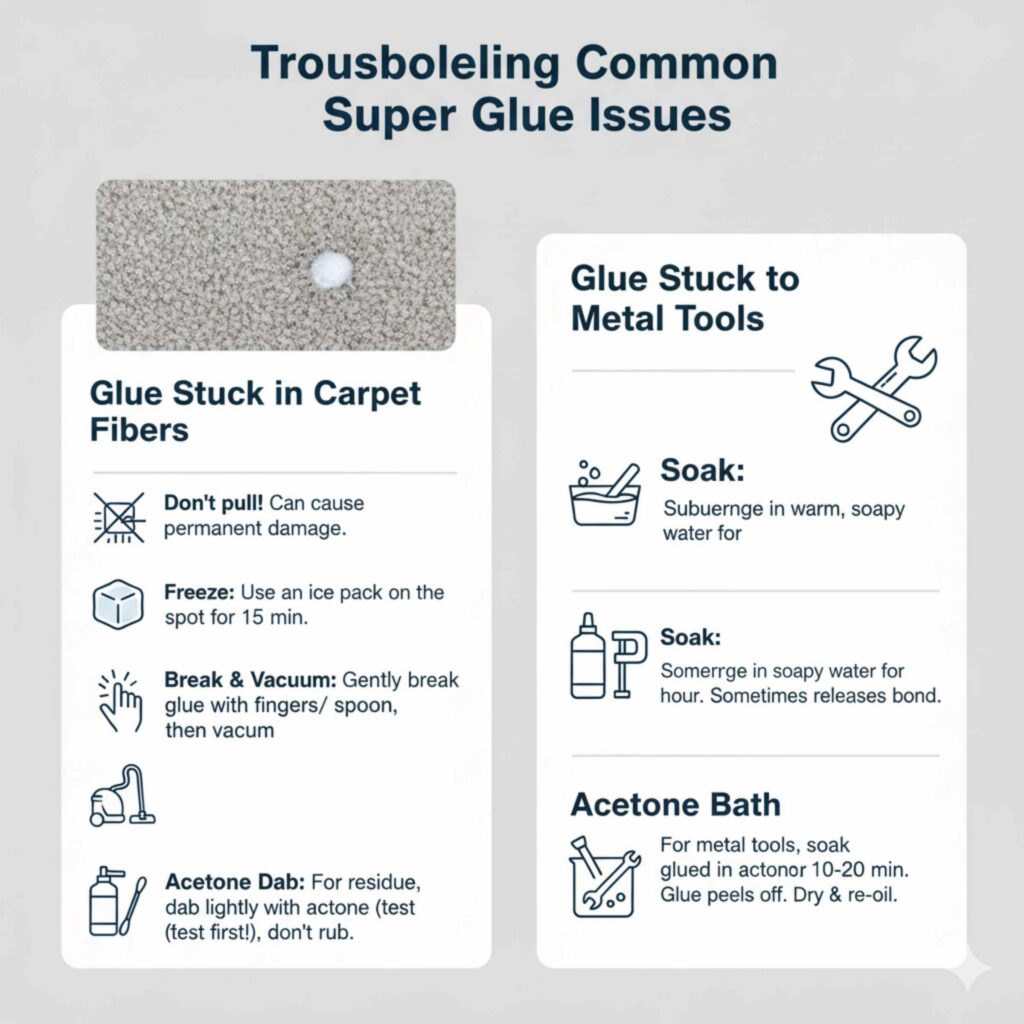
Glue Stuck in Carpet Fibers
If super glue lands on the carpet, don’t pull! Pulling the carpet fibers can cause permanent damage.
- Freeze the area using an ice pack placed in a plastic bag directly on the glue spot for 15 minutes.
- Once brittle, gently break up the glue with your fingers or a dull spoon. Vacuum up the pieces.
- If residue remains, dab the area lightly with acetone (test an inconspicuous spot of the carpet first!). Blot, don’t rub.
Glue Stuck to Metal Tools
If you accidentally glue a clamp shut or seal a drill bit in place, you have two great options:
- Soak: Submerge the tool part in warm, soapy water for an hour. This sometimes releases the bond if the tool is just sitting in water.
- Acetone Bath: For tools that can handle it (like steel wrenches), soak the glued area in a small cup of acetone for 10–20 minutes. The glue should peel right off. Dry and re-oil metal tools after this process to prevent rust.
Frequently Asked Questions (FAQ) for Beginners
Q1: Can I use vinegar instead of acetone to remove super glue?
A: Vinegar is a mild acid and works best for breaking down the stickiness on skin or very light, fresh residue on durable surfaces. It is generally not strong enough to dissolve fully cured super glue from hard surfaces like plastic or glass.
Q2: How long do I need to let the acetone sit on the glue?
A: For most tough spots, allow the acetone-soaked cotton ball to sit directly on the glue for at least one to three minutes. This soaking time is crucial for the solvent to penetrate the hard plastic bond.
Q3: Is super glue removable from granite or marble countertops?
A: Yes, but proceed with extreme caution. Granite and marble are porous. Use acetone very quickly and only on the glue spot. Immediately wipe clean and neutralize with a water rinse. Avoid letting acetone sit for long periods as it can etch or dull the polished sealer.
Q4: What is the safest way to remove dried super glue from my fingernails?
A: The best safe method is soaking your hands in warm, soapy water first. Then, apply cooking oil or petroleum jelly around the edges and gently roll the skin apart. If that fails, use a cotton ball with acetone applied only to the nail itself, not the surrounding skin, for 30 seconds.
Q5: Will sanding the dried glue off my project always work?
A: Sanding works well for removing thick glue blobs from very hard materials like metal or ceramic. However, on wood, plastic, or painted surfaces, sanding risks creating a noticeable scratch or divot, so only use very fine sandpaper (220 grit or higher) as a very last resort.
Q6: Can I use rubbing alcohol (isopropyl alcohol) on super glue?
A: Rubbing alcohol is much weaker than acetone. It might work on very new, thin glue spots, but it is generally ineffective against fully cured, hardened super glue. Stick to acetone for reliable results on hard surfaces.
Conclusion: Super Glue Mistakes Aren’t Permanent
Super glue may bond fast and hard, but as you’ve seen throughout this guide, it’s far from impossible to remove. With the right approach—whether that’s acetone for hard surfaces, warm soapy water and oils for skin, freezing for fabric, or gentle heat for wood—you can safely undo most glue mishaps without damaging what’s underneath.
The most important lessons to remember are simple: match the removal method to the surface, always test first, work slowly, and never force the glue off. Rushing or scraping aggressively is what causes permanent damage—not the glue itself. A little patience goes a long way.
By understanding how cyanoacrylate works and using common household tools correctly, you can handle everything from stuck fingers to glue spots on countertops or clothing with confidence. The next time super glue ends up where it shouldn’t, you’ll know exactly what to do—and your project, surface, or skin will thank you for it!