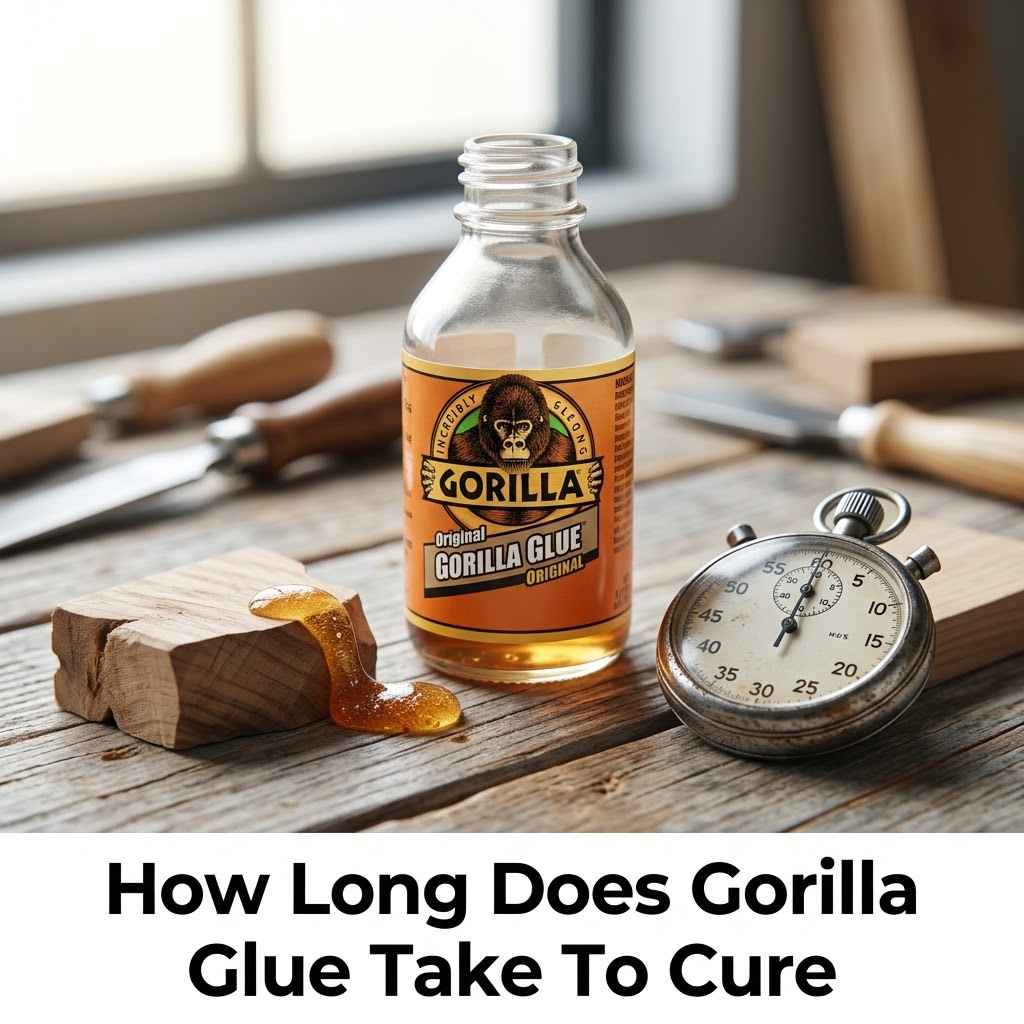
How Long Does Gorilla Glue Take To Cure
Getting a project just right can sometimes be tricky, especially when you’re working with strong glues. Many people wonder, “How Long Does Gorilla Glue Take to Cure?” This question pops up a lot because Gorilla Glue is super strong and can be a bit mysterious to beginners. You want your project to hold together perfectly, and waiting is the hardest part!
Don’t worry, though. This guide will make it super simple. We’ll walk through everything you need to know to get the best results, step by step.
Let’s find out what makes Gorilla Glue so reliable.
Understanding Gorilla Glue Curing Times
Knowing how long Gorilla Glue takes to cure is super important for anyone using it for projects. This glue is known for its incredible strength and versatility, but its unique curing process can sometimes catch people off guard. For beginners, the idea of “curing” might seem a bit complex, especially when dealing with different types of Gorilla Glue.
This section will break down the main factors that influence how long your glue needs to set. We want to give you a clear picture so your projects turn out exactly as you plan.
What is Gorilla Glue Curing
Curing is the process where a glue hardens and reaches its full strength. For Gorilla Glue, this usually involves a chemical reaction. Unlike some simpler glues that just dry out, Gorilla Glue often needs moisture to cure properly.
This is a key difference that explains why its hardening time can vary.
When Gorilla Glue is exposed to air, it starts to absorb moisture. This moisture triggers a chemical reaction within the glue. It’s this reaction that causes the glue to expand slightly and then harden into a very strong bond.
This expansion is what makes it great for filling gaps, but it also means you need to be aware of it during the curing process.
The temperature and humidity of your environment play a big role in this moisture absorption. In humid conditions, the glue will absorb moisture faster, leading to a quicker cure. In very dry air, it might take longer for the glue to get enough moisture to fully harden.
Understanding this helps you predict and manage the drying time.
The Role of Moisture in Curing
Moisture is the secret ingredient for most Gorilla Glues. Polyurethane glue, which is what original Gorilla Glue is made of, needs water molecules to kick off its hardening process. When you apply the glue, it starts to react with the humidity in the air and any moisture present on the surfaces you are joining.
This reaction causes the glue to expand as it cures, creating a strong, rigid bond. It’s this expansion that allows it to fill small gaps and irregularities between surfaces. If there isn’t enough moisture, the glue might not cure properly, leading to a weaker bond or even a glue that remains sticky.
For best results, you might sometimes need to lightly mist one or both surfaces with water before applying the glue, especially in very dry environments. This ensures there’s enough moisture available for the glue to cure fully and reach its maximum strength.
Temperature and Humidity Effects
Both temperature and humidity significantly impact how long it takes for Gorilla Glue to cure. Higher humidity levels mean more moisture in the air, which speeds up the curing process. Colder temperatures, on the other hand, tend to slow down chemical reactions, including the curing of Gorilla Glue.
For instance, in a warm, humid room, you might find Gorilla Glue cures much faster than it would on a cool, dry day. This is why following the instructions and considering your environment is so important. The glue’s packaging usually gives a general curing time, but this is often based on average conditions.
If you’re working in a basement that’s cool and dry, the glue might need extra time. Conversely, if you’re working outdoors on a steamy summer day, it might set faster than expected. Being aware of these conditions helps you avoid issues like the glue not bonding properly or accidentally disturbing a bond that isn’t quite ready.
General Curing Times for Original Gorilla Glue
Original Gorilla Glue is a very popular choice, and its curing time is a key factor for users. It’s known for needing a bit of patience to reach its full strength. This glue expands as it cures, making it great for filling gaps, but this expansion process takes time.
Typically, you can expect the initial set of original Gorilla Glue to happen within about 1 to 2 hours. During this time, the glue will harden enough that it won’t be sticky to the touch. However, this is just the beginning of the curing process.
The glue will continue to cure and gain strength for the next 24 to 72 hours. Full strength, meaning it can withstand maximum stress and strain, is usually achieved after about 24 hours. However, for critical applications where the bond will be under heavy load, it’s often recommended to wait the full 72 hours.
- Initial Set Time: This is when the glue becomes tack-free. For original Gorilla Glue, this is typically 1 to 2 hours. You can gently test a small edge to see if it’s no longer sticky.
- Clamp Time: While the glue is setting, it’s best to keep the pieces held together. The recommended clamp time for original Gorilla Glue is usually around 4 hours. This ensures the parts don’t shift as the glue expands and cures.
- Full Cure Time: This is when the glue reaches its maximum strength. For original Gorilla Glue, this takes about 24 hours. For the absolute strongest bond, especially for heavy-duty projects, waiting up to 72 hours is a good idea.
Factors Affecting Original Gorilla Glue Cure
Several elements can influence how quickly original Gorilla Glue sets and hardens. The amount of glue used is a big one; more glue means a longer curing time because there’s more material to react and harden.
The types of surfaces being glued also matter. Porous materials, like wood or fabric, can absorb moisture from the glue and the air faster than non-porous surfaces, such as metal or plastic. This can sometimes lead to quicker curing on porous materials.
Air circulation plays a part too. Good airflow can help introduce moisture to the glue, aiding the curing process. Conversely, if the glued area is sealed off, it might take longer for the glue to absorb enough moisture to cure fully.
Real-World Example A Broken Wooden Chair Leg
Imagine a wooden chair leg that has split. You clean the surfaces, apply original Gorilla Glue, and clamp the leg together. If it’s a humid day, the glue might feel firm to the touch within an hour.
However, you’d still want to keep it clamped for at least 4 hours and avoid putting weight on it for a full 24 hours to ensure it’s completely cured and strong.
Understanding Fast-Cure Gorilla Glue
Fast-Cure Gorilla Glue is designed for situations where you need a strong bond in a shorter amount of time. This makes it a great option for quick repairs or projects where waiting a full day isn’t practical. Its formulation allows for a quicker chemical reaction, reducing the overall curing time.
While it cures much faster than the original formula, it’s important to remember that “fast-cure” doesn’t mean instant. You still need to allow sufficient time for the glue to reach its full strength to ensure a reliable bond. Understanding its specific setting and curing times will help you use it effectively.
This type of glue is especially useful for DIY enthusiasts, crafters, and even professionals who need to complete tasks efficiently. Knowing the difference between fast-cure and other Gorilla Glue products will help you choose the right product for your needs and achieve the best results without unnecessary waiting.
Fast-Cure Setting and Full Cure Times
Fast-Cure Gorilla Glue sets much more rapidly than the original formula. You’ll typically notice it becoming tack-free and firm within about 30 minutes. This is a significant reduction from the 1-2 hours for the original Gorilla Glue’s initial set.
However, the “full cure” time is still important for achieving the maximum bond strength. While it’s ready for light use much sooner, the glue continues to harden and strengthen over a longer period. For Fast-Cure Gorilla Glue, full strength is usually reached within 4 to 6 hours.
This means you can often complete a project in a single session with Fast-Cure Gorilla Glue, whereas you might have to wait until the next day with the original. This speed makes it ideal for quick fixes or projects where you need to move on to the next step without a long delay.
- Tack-Free Time: Fast-Cure Gorilla Glue is usually tack-free and ready for light handling in about 30 minutes. This is a key advantage for speedy repairs.
- Clamp Time: To ensure the best bond, clamping is still recommended. For fast-cure, this is typically around 30 minutes to 1 hour.
- Full Cure Time: The glue reaches its maximum strength in about 4 to 6 hours. This is when the bond can withstand the most stress.
When to Choose Fast-Cure Gorilla Glue
Fast-Cure Gorilla Glue is the go-to choice when time is a critical factor. If you have a small repair that needs to be done quickly, like fixing a broken household item or a craft project, this glue will save you a lot of waiting.
It’s also excellent for situations where you need to hold pieces together for a short period before moving on. For example, if you are assembling multiple components and need one part to set quickly so you can attach the next, fast-cure is ideal.
However, it’s important to note that Fast-Cure Gorilla Glue might not be the best choice for very large gaps or for applications requiring extreme flexibility, as its expansion properties might differ slightly from the original. Always check the product’s specific instructions for best results.
Other Gorilla Glue Products and Their Curing Times
Gorilla Glue offers a variety of adhesive products, and each has its own specific curing characteristics. Understanding these differences ensures you select the right glue for your project and know what to expect in terms of drying time.
Beyond the original and fast-cure formulas, there are specialized glues like Gorilla Wood Glue, Gorilla Super Glue, and Gorilla Construction Adhesive. Each is formulated for different materials and bonding needs, which naturally affects how long they take to set and harden.
This variety means you can find a Gorilla Glue product that’s perfect for almost any task. We’ll explore some of these other popular options and their typical curing timelines to help you make informed decisions for your next DIY or repair job.
Gorilla Wood Glue
Gorilla Wood Glue is specifically designed for woodworking applications. It creates a strong, durable bond on all types of wood. Unlike original Gorilla Glue, it doesn’t expand much, making it ideal for projects where precise fit is important.
The initial set time for Gorilla Wood Glue is relatively quick, often within 20-30 minutes. This means you can often remove clamps within that timeframe. However, for the bond to reach its full strength, it typically requires about 24 hours to cure completely.
This glue is also water-resistant, which is a major benefit for furniture or outdoor projects. The 24-hour full cure ensures it can withstand daily wear and tear, moisture, and other environmental factors without failing.
- Clamp Time: You can usually remove clamps after 20-30 minutes.
- Full Cure Time: For maximum strength, allow 24 hours.
- Key Features: Water-resistant, creates a strong bond on wood, minimal expansion.
Gorilla Super Glue (Cyanoacrylate)
Gorilla Super Glue, also known as cyanoacrylate, is famous for its extremely fast bonding capabilities. It’s perfect for small repairs where you need an instant hold on non-porous surfaces.
Super glue works by reacting with moisture on the surfaces being bonded. This reaction causes it to harden almost instantly. You’ll often feel the bond set within seconds of applying the glue and pressing the pieces together.
While it sets very quickly, the absolute maximum strength can take up to 24 hours to achieve. However, for most common uses, the initial bond formed within seconds is more than sufficient. It’s important to work quickly and precisely when using super glue, as there’s little room for error once the pieces are joined.
Gorilla Construction Adhesive
Gorilla Construction Adhesive is a heavy-duty adhesive designed for demanding building projects. It’s formulated to bond a wide variety of materials, including wood, concrete, metal, and more, providing a very strong and durable hold.
The curing time for construction adhesive is longer due to its thick consistency and the large amounts often used in construction. It typically takes about 24 hours for the adhesive to set enough to bear significant weight or stress. However, the full cure, where it reaches its ultimate strength, can take several days, often up to 7 days.
This longer cure time is necessary for the adhesive to fully harden and create a bond that can withstand the rigors of construction. It’s crucial to follow the manufacturer’s instructions regarding clamping, support, and cure time for this product to ensure the best results.
| Gorilla Glue Product | Initial Set Time | Full Cure Time (Approx.) | Key Application |
|---|---|---|---|
| Original Gorilla Glue | 1-2 Hours (tack-free) | 24-72 Hours | General purpose, gap filling, strong bonds |
| Fast-Cure Gorilla Glue | 30 Minutes (tack-free) | 4-6 Hours | Quick repairs, projects needing speed |
| Gorilla Wood Glue | 20-30 Minutes (clamp removal) | 24 Hours | Woodworking, furniture, water-resistant |
| Gorilla Super Glue | Seconds (initial bond) | Up to 24 Hours | Small object repairs, quick fixes |
| Gorilla Construction Adhesive | 24 Hours (set for weight bearing) | Up to 7 Days | Heavy-duty building projects, diverse materials |
Tips for Achieving Optimal Cure Times
Getting the best possible cure for your Gorilla Glue project involves more than just applying the glue and waiting. A few smart practices can significantly improve the strength and durability of your bond. Paying attention to the environment and how you prepare your materials are key steps.
Even with the best glue, improper application or poor environmental conditions can lead to a weakened bond or extended cure times. This section will cover practical tips to ensure your Gorilla Glue cures properly, every time. We aim to make sure your projects last and hold up as expected.
Preparing Surfaces for Bonding
Proper surface preparation is essential for any adhesive, and Gorilla Glue is no exception. Before you apply any glue, make sure the surfaces you’re joining are clean, dry, and free of dust, oil, or grease. Any contaminants can prevent the glue from adhering properly, leading to a weak bond.
For porous materials like wood, you might want to lightly roughen the surface with sandpaper. This creates more tiny grooves for the glue to grip onto. For non-porous surfaces, ensure they are wiped down with a solvent like rubbing alcohol and allowed to dry completely.
For original Gorilla Glue, which requires moisture to cure, lightly misting one or both surfaces with water can help. Be careful not to make the surfaces soaking wet, just slightly damp. This provides the necessary moisture for the glue to begin its expansion and curing process efficiently.
Proper Clamping and Support
Clamping is vital for most Gorilla Glue applications, especially for original Gorilla Glue and wood glue. Clamping applies pressure, which holds the pieces firmly together while the glue expands and cures. Without proper clamping, the glue’s expansion could push the pieces apart, resulting in a weak or uneven bond.
Ensure you use enough clamps to apply even pressure across the entire joint. For original Gorilla Glue, which expands, you want to apply enough pressure to control this expansion and direct it where you want it, while still allowing for some minimal expansion to fill small gaps.
For glues like Super Glue or Wood Glue, which have less expansion, clamping ensures a tight fit. This contact is critical for the glue to form a solid bond. Follow the recommended clamp time for each specific Gorilla Glue product to avoid disturbing the bond before it has had a chance to set.
Environmental Considerations
As mentioned, temperature and humidity play a significant role in how Gorilla Glue cures. Try to work in conditions that are optimal for the specific glue you are using. For original Gorilla Glue, a moderate temperature (around 70°F or 21°C) and moderate humidity (around 50%) are generally ideal.
If you’re in a very dry environment, you might need to increase humidity to help the glue cure. You can do this by lightly misting the air around the glued area with water or by placing a damp cloth nearby (but not touching the glue). In very humid conditions, the glue might cure faster than expected, so be ready.
Avoid extreme temperatures, as they can interfere with the chemical reaction. For instance, if it’s too cold, the glue may not cure properly at all. If it’s excessively hot, the glue might set too quickly on the surface, leaving the interior uncured.
Real-World Scenario A Leaky Birdhouse Repair
Suppose you’re fixing a small leak in a wooden birdhouse. You use Gorilla Wood Glue on the seam. You clean the wood, apply the glue, and clamp the pieces for about 25 minutes.
The glue feels firm, but you know it needs a full 24 hours to be truly waterproof. You place the birdhouse in a sheltered spot that has decent air circulation and moderate temperature so it can cure properly without being directly exposed to harsh weather or extreme dryness.
Troubleshooting Common Curing Issues
Sometimes, even with the best intentions, Gorilla Glue projects don’t go as planned. You might find that your glue isn’t hardening as expected, or you’re encountering sticky spots. These issues can be frustrating, but they often stem from a few common problems that are easily fixed.
Understanding why these problems occur is the first step to solving them. This section will help you identify common issues with Gorilla Glue curing and provide practical solutions. We’ll cover what to do if your glue seems to be taking too long to cure or if it’s not hardening at all.
Glue Not Hardening Fully
If your Gorilla Glue isn’t hardening completely, it’s usually due to a lack of moisture. Original Gorilla Glue, in particular, needs moisture from the air to cure. If you’re working in a very dry environment, the glue might remain sticky or gummy.
Another reason could be using too much glue. While Gorilla Glue expands, excessive amounts can lead to a situation where the outer layer hardens, but the core remains uncured for a very long time, or even indefinitely. This is less common but possible.
You might also have an old or degraded product. Over time, glues can lose their effectiveness, especially if they haven’t been stored properly. Check the expiration date if available, and ensure the cap was sealed tightly between uses.
- Insufficient Moisture: The most common cause. Increase humidity by lightly misting with water or placing a damp cloth nearby.
- Too Much Glue Applied: For very thick applications, the center might not cure. Consider applying thinner layers or using a faster-curing product if possible.
- Expired or Degraded Product: Old glue may not cure. Try a fresh tube.
Sample Scenario A Dry Basement Project
You’re repairing a wooden picture frame in a dry basement. You apply original Gorilla Glue and wait, but it remains sticky after 24 hours. The issue is likely the low humidity.
To fix this, you could lightly mist the glued area with water after cleaning off the sticky residue and reapplying a thin layer of glue. Then, place a damp cloth near the frame for a few hours to keep the humidity up while it cures.
Glue Expands Too Much
Gorilla Glue is known for its expansion, which is great for filling gaps. However, sometimes this expansion can be problematic if you don’t account for it. If the glue expands excessively, it can ooze out of the joint, creating a mess and potentially weakening the bond if it’s not contained.
This usually happens when too much glue is applied or when the clamped pieces don’t have enough pressure. Over-clamping can sometimes restrict the expansion, but under-clamping allows it to spread out too much. It’s a balance.
To control expansion, always start with less glue than you think you need. You can always add more if necessary. Ensure your clamps are providing firm, even pressure.
For very precise work, consider using a glue with less expansion, like Gorilla Wood Glue or Super Glue.
What to Do About Excess Expansion
If you find Gorilla Glue has expanded too much and is oozing out, it’s best to deal with it while it’s still somewhat pliable. You can carefully trim away the excess with a sharp utility knife or scraper. For original Gorilla Glue, once it’s fully cured, it becomes very hard and can be sanded down.
If the expansion has pushed the pieces apart incorrectly, you might need to remove the partially cured glue, clean the surfaces, and reapply. This is why proper clamping pressure and amount of glue are so important in the first place.
Sticky Residue After Curing
A sticky residue after the glue has cured can be very frustrating. This often indicates that the glue did not cure fully. As discussed, this is typically due to insufficient moisture for original Gorilla Glue or environmental conditions that hindered the curing process.
Sometimes, if the glue has been applied too thickly, the outer layer might seem dry, but the interior can remain sticky for a prolonged period. This can also happen if the glued items were handled or stressed too early, before the full cure.
To remove sticky residue, you can try scraping it off. For some types of residue, a solvent like acetone (nail polish remover) might help, but always test on an inconspicuous area first, as it can damage some finishes. If the residue is stubborn, you may need to gently sand the area.
Dealing with Uncured Glue
If you have a large amount of uncured glue, you might need to try and remove as much of it as possible. For original Gorilla Glue, this can sometimes be achieved by gently prying the pieces apart if the bond is not yet strong, or by carefully cutting away the soft material.
After removing the excess, ensure the surfaces are clean. Then, reapply a thin layer of glue, making sure there is adequate moisture and that the pieces are securely clamped. Patience is key; allow the proper cure time for the new application.
Frequently Asked Questions About Gorilla Glue Curing
Question: How long does it take for original Gorilla Glue to cure completely
Answer: Original Gorilla Glue typically reaches its full strength in about 24 hours, but it can continue to cure and gain maximum strength for up to 72 hours. It becomes tack-free in 1 to 2 hours.
Question: Can I speed up the curing process for Gorilla Glue
Answer: Yes, for original Gorilla Glue, you can speed up curing by increasing humidity. Lightly misting the surfaces with water or placing a damp cloth nearby can help. Fast-Cure Gorilla Glue is also available for quicker bonding.
Question: What happens if I don’t let Gorilla Glue cure long enough
Answer: If you don’t let Gorilla Glue cure long enough, the bond will not be as strong as it should be. This can lead to the joint failing under stress, especially for heavy-duty applications.
Question: Is Gorilla Wood Glue waterproof
Answer: Gorilla Wood Glue is water-resistant, making it suitable for many outdoor projects and applications where it might encounter moisture, though not fully waterproof for prolonged submersion.
Question: How long does Gorilla Super Glue take to set
Answer: Gorilla Super Glue sets very quickly, often within seconds of application, making it ideal for instant fixes. Full strength is typically achieved within 24 hours.
Conclusion
Understanding How Long Does Gorilla Glue Take to Cure is key to successful projects. Original Gorilla Glue needs 24-72 hours for full strength, needing moisture to work. Fast-Cure options get to full strength in just 4-6 hours.
Other products like Wood Glue or Super Glue have their own timelines. Always prepare surfaces well and clamp items securely. Pay attention to temperature and humidity for the best bond.
With a little patience and the right technique, your Gorilla Glue projects will hold strong.