How Long Does It Take For Wood To Become Petrified? Epic
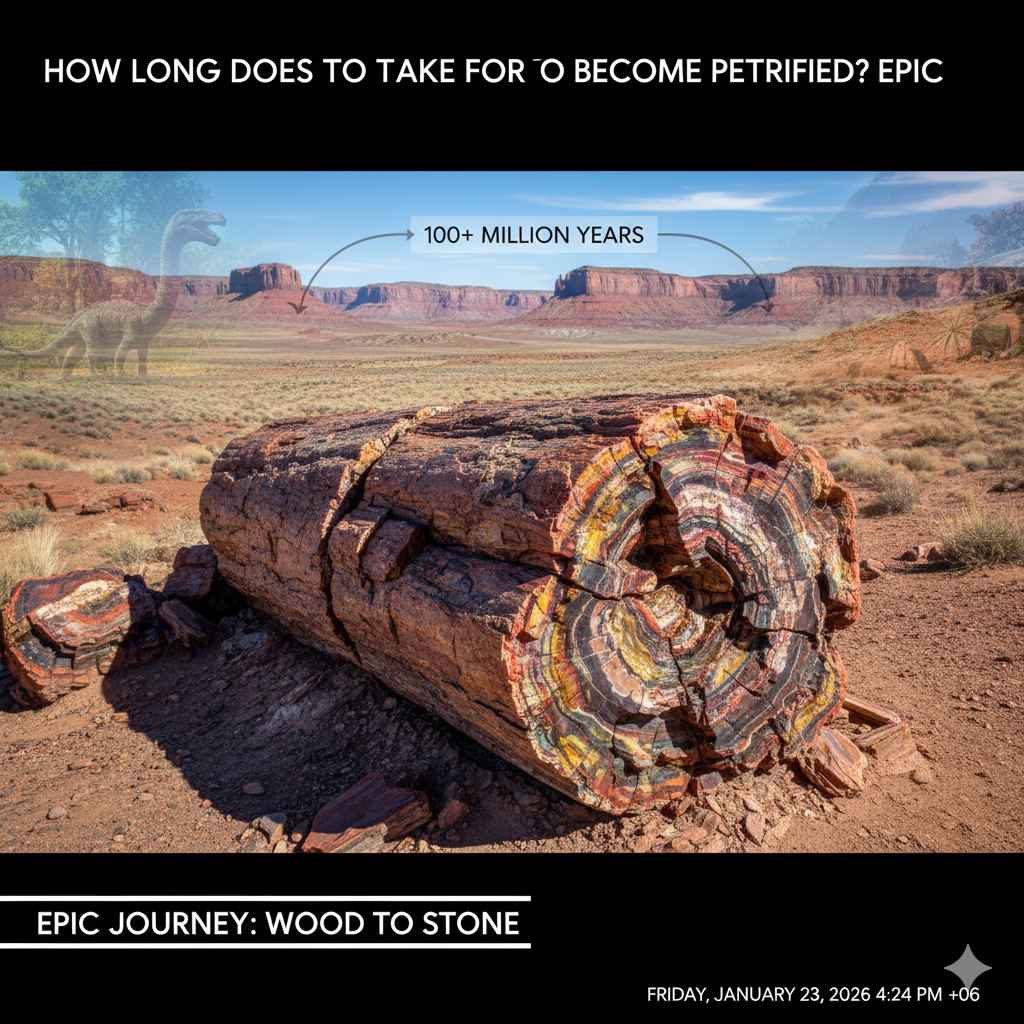
Petrified wood forms over millions of years through a natural process called permineralization. For wood to become petrified, it must be rapidly buried in sediment, like volcanic ash or mud, which protects it from decay. Mineral-rich water then seeps through, slowly replacing the wood’s organic fibers with stone, creating a perfect fossil.
Have you ever seen a piece of petrified wood and wondered how a tree turned into a beautiful, solid rock? It looks like wood, with all its rings and textures, but it’s as heavy and hard as stone. This amazing transformation isn’t a quick trick of nature; it’s an epic journey that takes an almost unimaginable amount of time. It’s one of nature’s coolest magic tricks!
Many folks wonder if this is something that can be recreated or if it takes just a few hundred years. The truth is far more incredible. In this guide, I’ll walk you through the fascinating process of how wood becomes petrified, why it takes so long, and what conditions need to be just right. Let’s unravel this ancient mystery together!
What Exactly Is Petrified Wood?
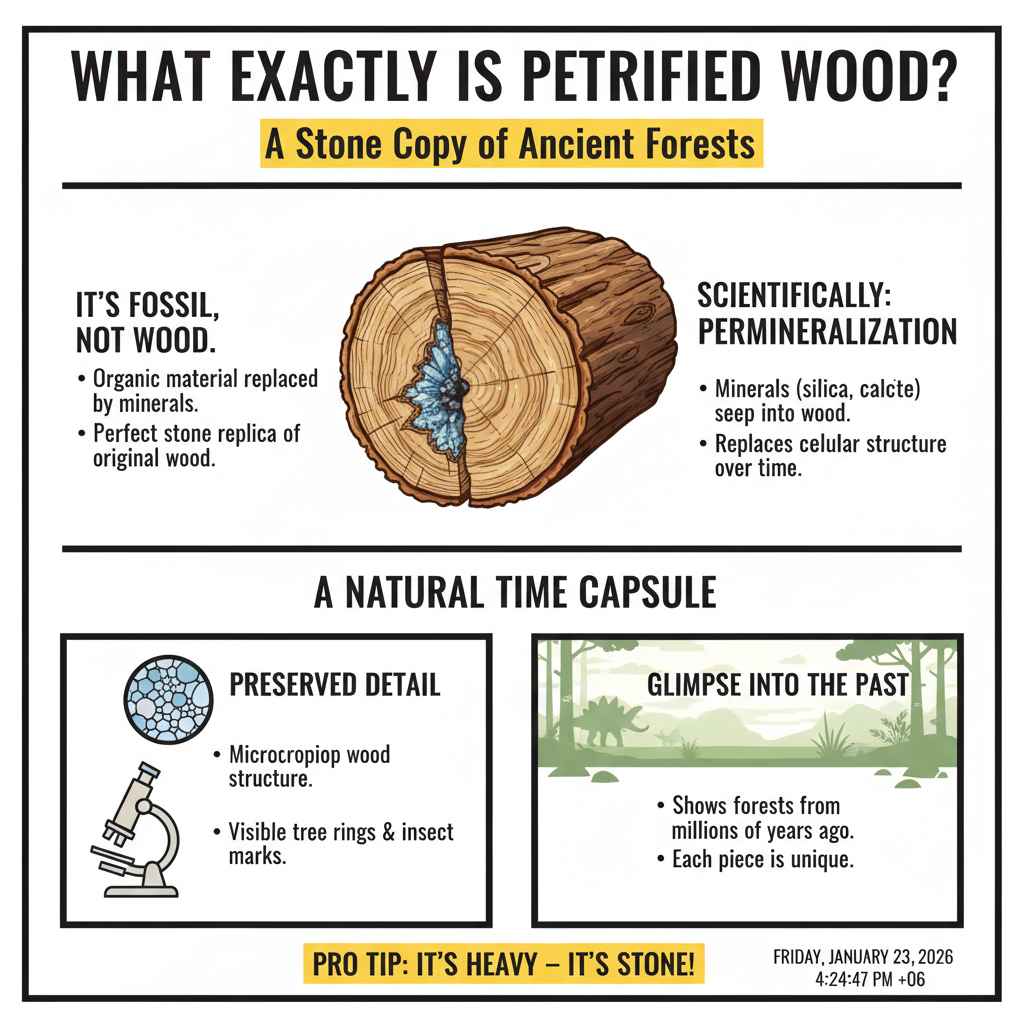
Before we dive into the timeline, let’s get clear on what we’re talking about. Petrified wood is a type of fossil. It’s not wood anymore, but rather a perfect stone copy of what was once wood. Think of it this way: imagine you have a wooden block. Now, imagine replacing every single tiny wood fiber with a grain of sand, one by one, until the entire block is made of sand but still holds its original shape. That’s essentially what happens during petrification.
The process, scientifically known as permineralization, preserves the wood’s original structure down to the microscopic level. You can often see the tree rings, the cellular structure, and even the marks left by insects from millions of years ago. It’s a natural time capsule, giving us a stunning glimpse into ancient forests that existed long before we did.
The Step-by-Step Journey to Becoming Stone
Turning a tree into stone isn’t a simple process. It requires a perfect storm of conditions to happen just right. If even one step is missed, the wood will simply rot away and disappear forever. Here is the incredible journey a piece of wood takes to become petrified.
Step 1: Rapid Burial Without Oxygen
The first and most critical step is that the wood must be buried quickly. A tree might fall into a river and be swept away, getting covered by mud and silt. Or, a volcano might erupt, blanketing an entire forest in a thick layer of ash. The key here is to seal the wood off from oxygen.
- Why is no oxygen so important? Oxygen is the fuel for decay. Microorganisms like bacteria and fungi need oxygen to break down organic material. By burying the wood in sediment, you cut off the oxygen supply and hit the “pause” button on the decomposition process.
- What works best for burial? Volcanic ash is one of the best materials for this. It’s fine-grained, rich in silica (a key ingredient we’ll talk about next), and it can cover a huge area very quickly. Mudflows and swampy sediments also work well.
Step 2: The Mineral Bath
Once the wood is safely buried and protected from decay, the next phase begins. Groundwater, rich in dissolved minerals, starts to seep through the sediment and into the wood itself. This isn’t just plain water; it’s a mineral cocktail carrying the building blocks of stone.
The most common mineral involved in petrification is silica, which is the same stuff that makes up quartz. However, other minerals like calcite, pyrite, and even opal can also be involved. The type of mineral in the water will later determine the colors and final appearance of the petrified wood.
Step 3: The Great Mineral Exchange
This is where the real magic happens, but it happens incredibly slowly. As the mineral-rich water flows through the wood’s porous structure, it deposits those minerals into the empty spaces within the cells. At the same time, the original organic material of the wood (the cellulose and lignin) begins to slowly dissolve away.
It’s a molecule-by-molecule replacement process:
- A molecule of wood fiber dissolves.
- A molecule of silica (or another mineral) takes its place.
This happens over and over again for millions of years. Because this exchange is so gradual and precise, the original cell structure of the wood is perfectly preserved. It’s like creating an intricate mosaic, where each tiny tile is carefully replaced with a new one of a different material, but the final picture remains exactly the same.
Step 4: Time, Pressure, and Patience
This process of replacement cannot be rushed. It requires an immense amount of time under the right geological conditions. Over millions of years, as more layers of sediment build up on top, the pressure increases. This pressure helps compact the material and solidify the minerals into hard stone, like quartz.
Eventually, the original piece of wood is completely gone, and what’s left is a solid rock fossil that has perfectly replicated its shape and structure. The final step is for geological forces, like erosion, to bring this hidden treasure back to the surface for us to find.
So, How Long Does It Take for Wood to Become Petrified? The Real Answer
Now for the big question: how long does all of this take? The short and simple answer is: millions of years.
There isn’t one single number, because the exact timing depends on a variety of factors. Most petrified wood we find today is from the Triassic, Jurassic, and Cretaceous periods, which means it’s anywhere from 65 to 250 million years old. While the replacement process might begin much sooner, creating a stable, fully petrified fossil that can withstand the test of time is a process that unfolds on a geological timescale.
Some studies suggest that under absolutely perfect, lab-like conditions, the process could theoretically happen faster, perhaps in tens of thousands of years. However, in nature, with all its variables, it takes much, much longer. The famous logs at the Petrified Forest National Park in Arizona, for example, are over 200 million years old!
Factors That Influence the Speed of Petrification
Not all wood petrifies at the same rate. The “speed” (and we’re using that term very loosely here) depends on several key environmental factors. Think of it like baking a cake—if your oven temperature is off or you use the wrong ingredients, the result will be very different.
| Factor | How It Affects Petrification |
|---|---|
| Mineral Concentration | The more minerals (like silica) dissolved in the groundwater, the “faster” the replacement process can occur. Water with low mineral content would take much longer or might not work at all. |
| Burial Conditions | The speed and depth of burial are critical. The wood needs to be sealed away from oxygen very quickly to prevent rot. A sudden burial in volcanic ash is ideal. Slow burial in a shallow swamp is less effective. |
| Type of Wood | Denser woods with strong cellular structures tend to petrify better because they hold their shape longer, allowing more time for the mineral exchange to happen before collapsing. |
| Water Flow and pH | The acidity or alkalinity (pH) of the water can affect how quickly both the wood dissolves and the minerals precipitate out of the solution. A steady, slow flow of water is needed to continuously supply fresh minerals. |
| Temperature and Pressure | Higher temperatures and pressures, found deep underground, can speed up the chemical reactions involved in dissolving the wood and crystallizing the minerals into hard stone. |
Can You Make Petrified Wood at Home?
This is a question I get a lot, especially from curious DIYers. It would be amazing if you could toss a piece of wood in a special solution and have a beautiful stone fossil a few weeks later. Unfortunately, true petrification is one process you can’t replicate in your garage.
The conditions—immense pressure, specific mineral cocktails, and millions of years—are simply impossible to recreate at home. Scientists have been able to speed up a similar process in a lab, but it’s a highly complex procedure. One study from the Pacific Northwest National Laboratory managed to create a ceramic-like material from wood in a matter of days using extreme heat and chemicals, but this is not the same as natural petrification. The result is a man-made material, not a natural fossil.
There are some DIY projects that involve soaking wood in solutions like sodium silicate (water glass) to make it harder or more fire-resistant. This is sometimes called “mineralizing” wood, but it’s not petrification. It only coats or fills some of the wood fibers, rather than replacing them entirely.
The Beautiful Colors of Petrified Wood
One of the most stunning aspects of petrified wood is its incredible range of colors. These colors are not from the original tree; they are determined by the trace elements that were present in the mineral-rich water during the petrification process. Each mineral acts like a natural dye, painting the fossil from the inside out.
| Mineral Present | Color It Creates |
|---|---|
| Pure Quartz (Silica) | White or gray |
| Iron Oxides | Red, brown, yellow, and orange (like rust) |
| Manganese | Pink or orange |
| Manganese Oxides | Black or dark gray |
| Copper, Cobalt, or Chromium | Green or blue |
| Carbon | Black |
A single piece of petrified wood can have multiple colors, indicating that the mineral composition of the groundwater changed over the millions of years it was being formed. It’s a beautiful record of the area’s geological history, locked in stone.
Where Can You See This Natural Wonder?
Petrified wood can be found all over the world, but some locations are famous for their vast and colorful deposits. These places are often protected, as they are irreplaceable fossil sites.
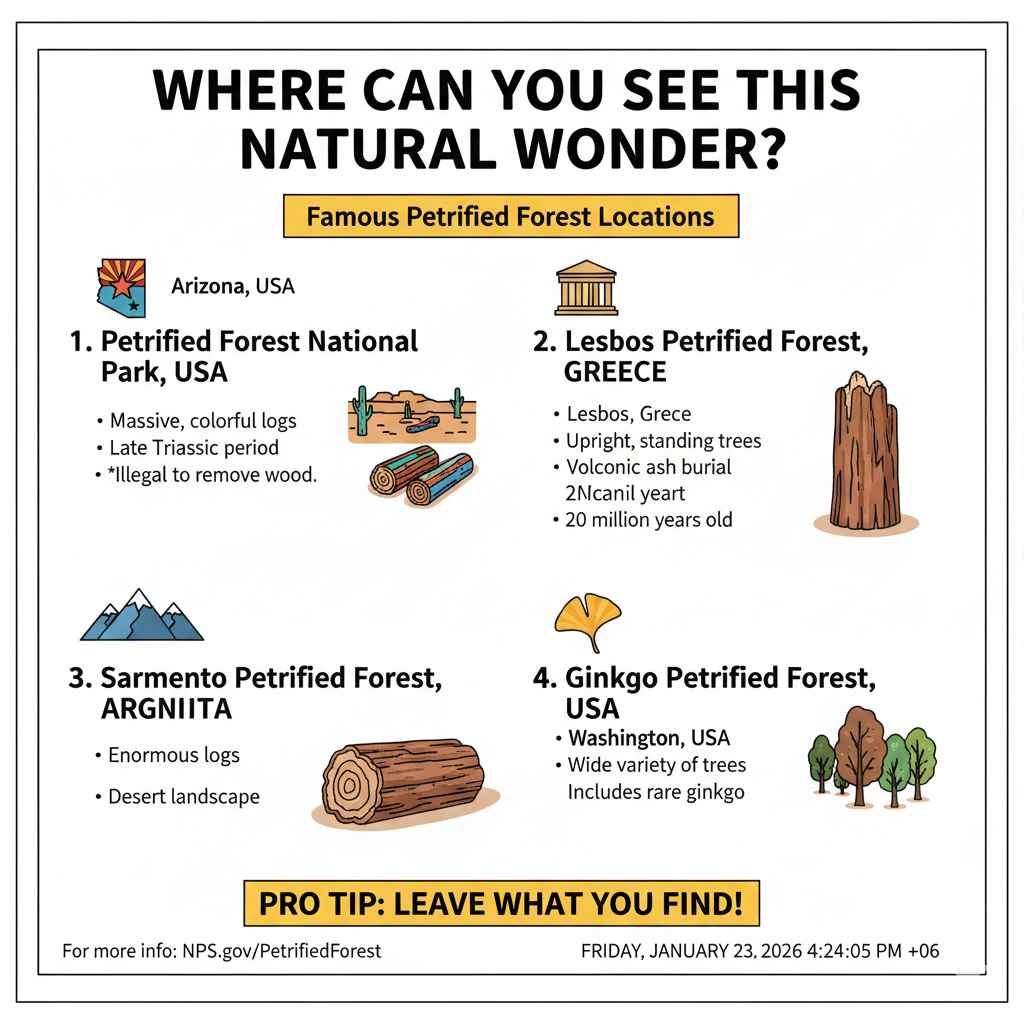
- Petrified Forest National Park, Arizona, USA: This is arguably the most famous location, with a massive concentration of colorful petrified logs from the Late Triassic period. Remember, it is illegal to remove any petrified wood from the park.
- Lesbos Petrified Forest, Greece: A protected site with towering, petrified trees still standing upright, buried by volcanic ash 20 million years ago.
- Sarmiento Petrified Forest, Argentina: Located in Patagonia, this site features enormous petrified logs lying on the desert floor.
- Ginkgo Petrified Forest State Park, Washington, USA: This park is unique because it contains petrified wood from a wide variety of tree species, including the rare ginkgo.
When visiting these areas or any public land, it’s crucial to follow the rules about collecting. As the National Park Service reminds us, it’s important to “leave what you find” so that these natural treasures can be enjoyed by future generations. Many areas have strict regulations, and taking fossils from protected lands can result in heavy fines.
Frequently Asked Questions (FAQ)
Is petrified wood rare?
While the conditions required for petrification are rare, petrified wood itself can be found in many places around the world. However, high-quality, colorful, and well-preserved specimens are much rarer and can be quite valuable.
Is petrified wood still considered wood?
No. Although it perfectly preserves the look and structure of wood, all the original organic material has been replaced by minerals. It is technically a fossil or a rock.
Can petrified wood burn?
No, petrified wood cannot burn. Since it is made of minerals (mostly silica, which is quartz), it has the properties of a stone. It will not catch fire like regular wood.
What is the difference between petrified wood and a regular fossil?
Petrified wood is a specific type of fossil. The term “fossil” refers to any preserved remains, impression, or trace of a once-living thing from a past geological age. Petrified wood is a “permineralized” fossil, where the original material has been replaced by minerals, preserving its structure.
How can you tell if wood is petrified?
There are a few easy ways to tell. Petrified wood is much heavier than regular wood of the same size. It feels hard and cool to the touch, like a rock. If you look closely, you can often see the crystalline structure of the minerals, but it will still have the visible grain and rings of a tree.
Is it illegal to collect petrified wood?
It depends on where you are. Collecting petrified wood from National Parks and most State Parks is illegal. However, it is legal to collect reasonable amounts for personal use on some public lands managed by the Bureau of Land Management (BLM) and in designated areas. Always check local regulations before collecting anything.
How hard is petrified wood?
Petrified wood is very hard. Since it’s mostly quartz, it typically has a hardness of around 7 on the Mohs scale. For comparison, steel is around 4-5, and a diamond is a 10. This is why it can be polished to a beautiful, glass-like finish.
Conclusion: A Monument to Time
The journey from a living tree to a stone fossil is one of nature’s most spectacular and time-consuming transformations. It’s a process that spans millions of years, requiring a perfect sequence of events: a swift burial, a long bath in mineral-rich water, and an immense amount of time and pressure. It’s a powerful reminder of how slow and patient our planet can be in creating things of incredible beauty.
So, the next time you see a piece of polished petrified wood, take a moment to appreciate its epic story. You’re not just looking at a pretty rock; you’re holding a piece of an ancient forest, a snapshot of a world that existed long before us, carefully preserved in stone. It’s a true testament to the power of time, and one of the coolest things you can have on your workshop shelf!