How Long Does Rubio Monocoat Last Once Opened? Storage Tips
Opened Rubio Monocoat can often stay usable for a while if it is sealed well, kept cool, and kept free of dust, water, and contamination from old finish; if it has thickened, skinned, or formed lumps, discard it. Bad storage wastes money and can leave a sticky, uneven finish that never cures right. This guide explains storage, reuse checks, discard signs, and how the coating’s on-floor life differs from the can’s shelf life.
How long Rubio Monocoat lasts once opened
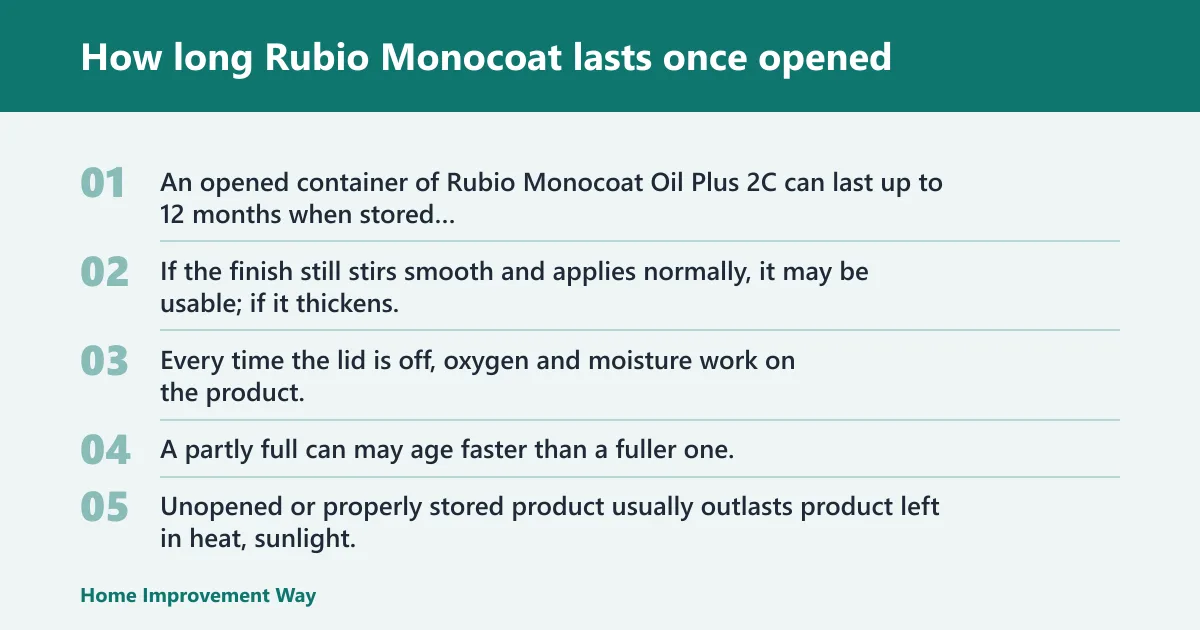


An opened container of Rubio Monocoat Oil Plus 2C can last up to 12 months when stored properly, but the practical answer depends on how much air sits in the container, how often it is opened, and whether heat or sunlight has gotten to it. If the finish still stirs smooth and applies normally, it may be usable; if it thickens, separates, or behaves oddly, retest before using it on a whole project.
What shortens opened life fastest
Air exposure is the big one. Every time the lid is off, oxygen and moisture work on the product. Heat speeds the change. Sunlight does too. A partly full can may age faster than a fuller one, so headspace can matter more than people expect.
Unopened or properly stored product usually outlasts product left in heat, sunlight, or an unsealed container. That is true for Oil Plus 2C and for the smaller leftovers after a job.
Does decanting help
Yes, often. The leftover product can be transferred to a smaller container to reduce air space, which slows quality loss after partial use. The new container still needs a tight lid and clean interior walls. Do not move product into a dirty cup, a wet can, or a container with old finish crusted inside.
How should you store an opened container?
Store opened Rubio Monocoat in a cool, dry place away from direct sunlight and heat sources, with the lid sealed tightly after each use. Label the container with the date of opening, and keep contamination out of the can. That simple routine protects the finish far better than leaving a half-used container on a warm shelf.
Best storage habits after each use
- Wipe the rim clean before closing the lid.
- Seal the lid tightly right away.
- Move the container back to a cool, dry storage spot.
- Keep it out of sunlight and away from heaters, garages that bake in summer, and uninsulated sheds.
- Label the opening date if it is not already marked.
What storage conditions matter most
Temperature swings and air space do the most damage. A steady cool room is better than a garage that cycles from hot to cold. The goal is simple: reduce oxygen contact, avoid heat, and keep dirt or solvent contamination out of the remaining product.
What are the signs Rubio Monocoat has gone bad?
Signs of degradation include changes in consistency, smell, or application results. If the product has turned stringy, grainy, lumpy, skin-coated, or much thicker than expected, that is a warning. A sour, stale, or otherwise changed smell is another warning. Poor spread, odd drag, or weak curing behavior means it needs a closer look before more wood is coated.
Texture changes to watch for
Healthy product should stir to a uniform, workable feel. Thickening, clumping, partial gelling, or separated layers that do not blend back together cleanly are trouble signs. A little settling is not the same as a failed container. Lumps that stay after mixing are.
Odor and application behavior
Odor changes often show up before the product looks ruined. If the smell shifts sharply or the finish behaves differently on a test board, stop and check the rest of the container. A product that wipes poorly, leaves streaks, or refuses to cure like the fresh material did should not be trusted on the main surface.
Use this storage and discard checklist
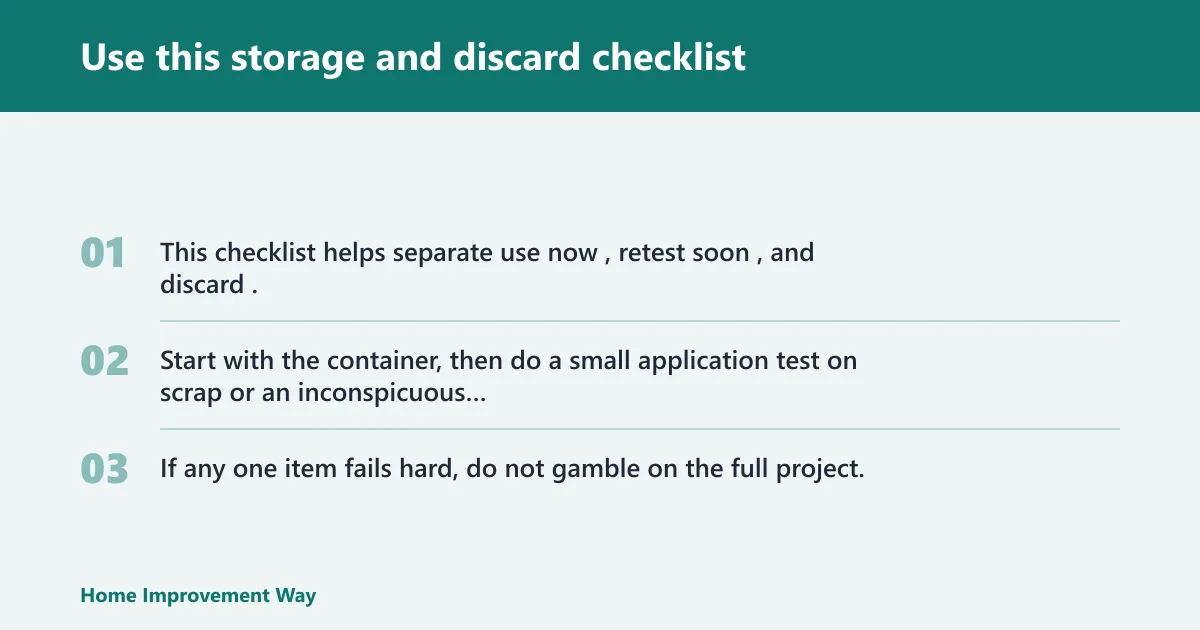
This checklist helps separate use now, retest soon, and discard. Start with the container, then do a small application test on scrap or an inconspicuous area. If any one item fails hard, do not gamble on the full project.
| Check | Pass condition | Fail condition | Decision |
|---|---|---|---|
| Lid seal | Lid closes tightly and stays seated | Lid loose, warped, or hard to close | Use now if tight; retest if minor issue; discard if cannot seal |
| Headspace | Little air above product or moved to smaller container | Large air gap in a half-used can | Retest soon if otherwise normal; decant if needed |
| Storage temperature | Kept cool and dry, away from heat and sun | Stored hot, frozen, or in full sun | Retest soon if brief exposure; discard if heat damage is obvious |
| Separation | Stirs back to a uniform mix | Lumps, skin, or layers that remain after mixing | Use now if smooth after mixing; discard if not |
| Odor | Smells normal for the product | Sharp, sour, stale, or unusual odor | Retest soon if mild; discard if strong change |
| Texture | Flows and wipes like the last known good batch | Too thick, stringy, gritty, or gelled | Retest soon if slight; discard if severe |
| Application test | Spreads evenly and cures normally on a sample | Streaks, poor wipe-off, tacky feel, or odd cure | Use now if normal; discard if the test fails |
Does unopened Rubio Monocoat expire?
Unopened Rubio Monocoat usually lasts longer than opened product, especially when stored correctly. A sealed can still needs clean, dry storage away from heat and direct sunlight, since storage conditions can affect quality over time. If the container is dented, leaking, badly rusted, or has been exposed to freezing or excessive heat, replacement may be smarter than risk on a finished surface.
How unopened compares with opened product
The difference is air. Once the can is opened, oxidation and contamination become part of the clock. A sealed can is better protected, but it is not immune to poor storage. Keep it labeled and inspect the closure before use.
How maintenance products fit into the timeline
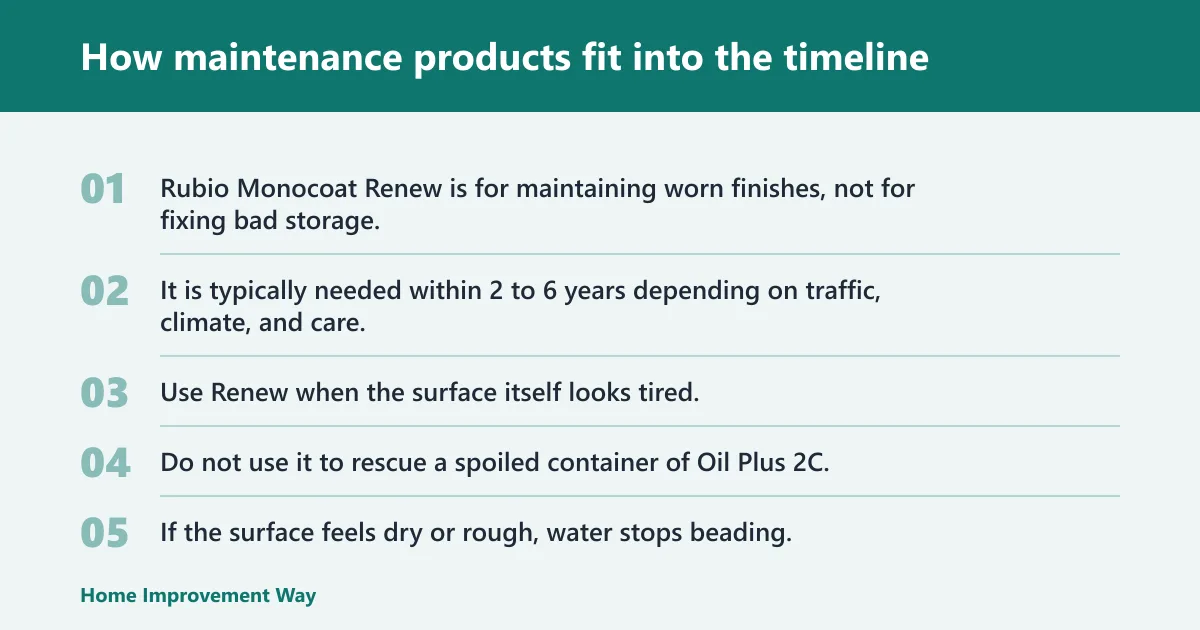
Rubio Monocoat Renew is for maintaining worn finishes, not for fixing bad storage. It is typically needed within 2 to 6 years depending on traffic, climate, and care, and Rubio Monocoat also recommends maintenance every three to five years on average. Use Renew when the surface itself looks tired. Do not use it to rescue a spoiled container of Oil Plus 2C.
When the floor or furniture needs maintenance
If the surface feels dry or rough, water stops beading, or the finish looks worn in heavy-use zones, the problem is usually maintenance, not expired product. The coating on the wood is aging in service. The unopened can on the shelf is a separate issue.
How Soap and Surface Care Spray fit in
Rubio Monocoat Soap is a universal wood cleaner for oil-finished surfaces. The soap concentrate mixes with water at 100:1, and Special Hardwood says the soap can be stored up to 12 months. Do not freeze it. Surface Care Spray is the ready-mixed spot-cleaning option for convenient cleaning on Rubio Monocoat finishes.
That cleaning cycle does not extend the storage life of an opened Oil Plus 2C container. It helps the finished wood perform as intended. Full cure and liquid resistance is reached at five days, and standing water should be wiped up rather than left sitting.
What should you do if opened Rubio Monocoat thickens or separates?
If opened Rubio Monocoat thickens or separates, inspect the container, mix it thoroughly, and test it on a small scrap before using it on the whole project. If the material returns to a smooth, normal consistency and the test applies and cures normally, it may still be usable. If lumps, odor changes, or poor application behavior remain, discard it.
Practical response in order
- Open the can and check for skin, lumps, or separated layers.
- Stir until the contents look uniform.
- Smell the product for odor changes.
- Apply a small amount to scrap wood or a hidden spot.
- Watch wipe-off, dry-down, and cure behavior.
- Use the full batch only if the sample behaves normally.
Frequently asked questions
How long does Rubio Monocoat last once opened?
Opened Rubio Monocoat can last up to 12 months when stored properly, but some containers remain useful longer in practice if they stayed cool, sealed, and uncontaminated. The real check is condition, not the calendar alone. If it still stirs smooth and applies normally, it may be worth a small retest.
How should opened Rubio Monocoat be stored?
Keep the lid tightly sealed after each use, store the container in a cool, dry place, and keep it away from sunlight and heat. Minimize air exposure as much as possible. Label the opening date so you know how long it has been sitting after the first use.
Can I use Rubio Monocoat after 12 months?
Possibly, but only after inspection and a test application. The 12-month mark is a storage guide, not an automatic failure date. If the product is still smooth, odor is normal, and the sample behaves well, it may still be usable. If not, discard it.
What are signs Rubio Monocoat has gone bad?
Look for thickening, stringing, skin formation, lumps, unusual odor, or poor application behavior. If the finish no longer wipes evenly or cures the way a fresh container does, treat that as a warning. A small test on scrap wood is safer than risking an entire floor or table.
Should I transfer Rubio Monocoat to a smaller container?
Yes, if there is a lot of leftover product. Moving it to a smaller, clean container reduces headspace and slows degradation from air exposure. Seal it tightly and label the new container with the opening date. Do not transfer into a dirty or wet vessel.
How do temperature and air exposure affect Rubio Monocoat shelf life?
Heat speeds up product breakdown, sunlight adds stress, and extra air in the container gives oxidation more room to work. That combination shortens usable life fastest. Cool, dry storage with minimal headspace is the best way to keep leftover product in usable shape.
Sponsored / affiliate links. As an Amazon Associate I earn from qualifying purchases. I may earn additional commission from eligible campaigns.