How Long to Let Wood Dry After Washing
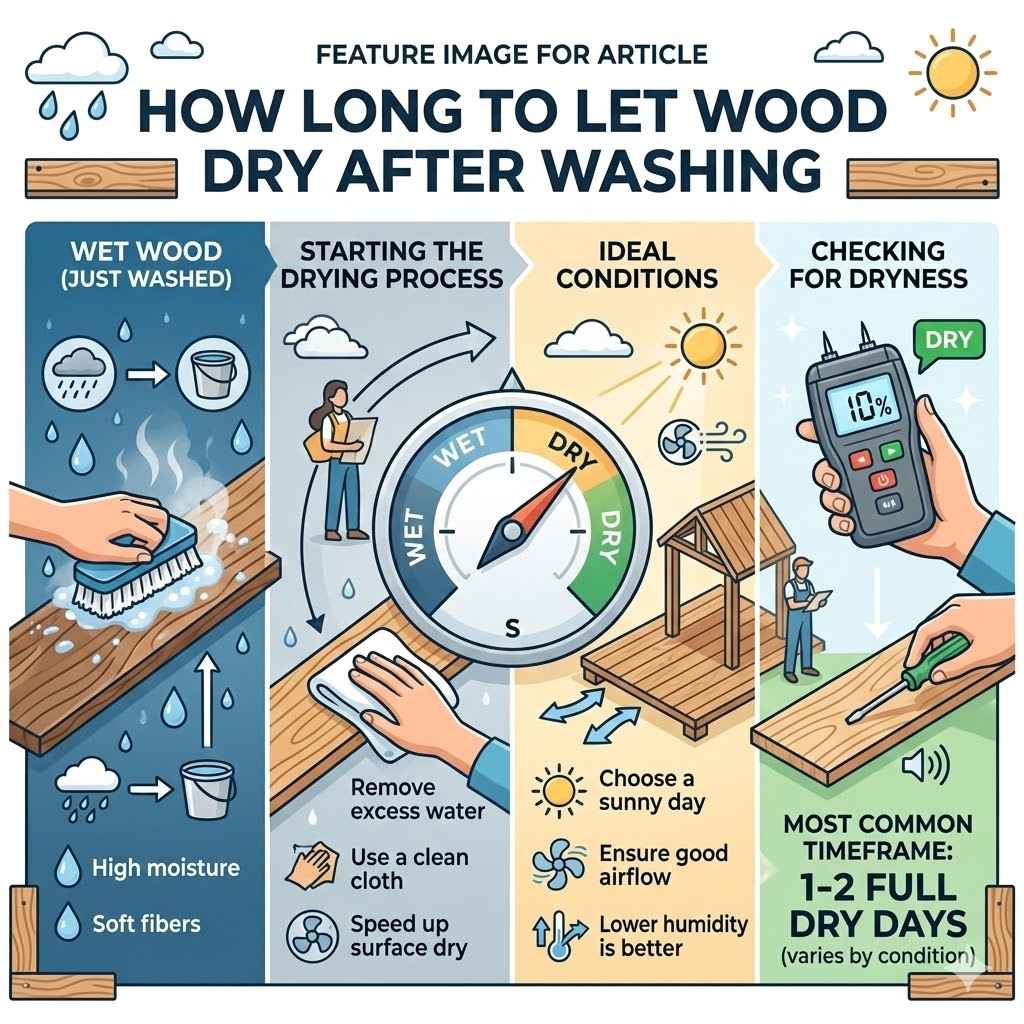
Many folks wonder how long to let wood dry after pressure washing. It can feel like a tricky step, especially if you’re new to cleaning your deck or fence. You want to get to the next step, like staining or sealing, but you’re not sure when the wood is ready.
Don’t worry, it’s simpler than you think! This guide will walk you through it step by step. We’ll cover what makes the wood dry faster and what you need to watch out for.
Figuring out how long to let wood dry after pressure washing is key for the best results when you reapply finishes. If you seal or stain wood that’s still too wet, the new coating won’t stick well. This can lead to peeling, flaking, and even rot down the road.
It’s like trying to paint a damp wall; the paint just won’t hold. The goal is to let the wood release most of its moisture so it can properly accept the new protective layer. This natural process takes time.
Factors Affecting Drying Time
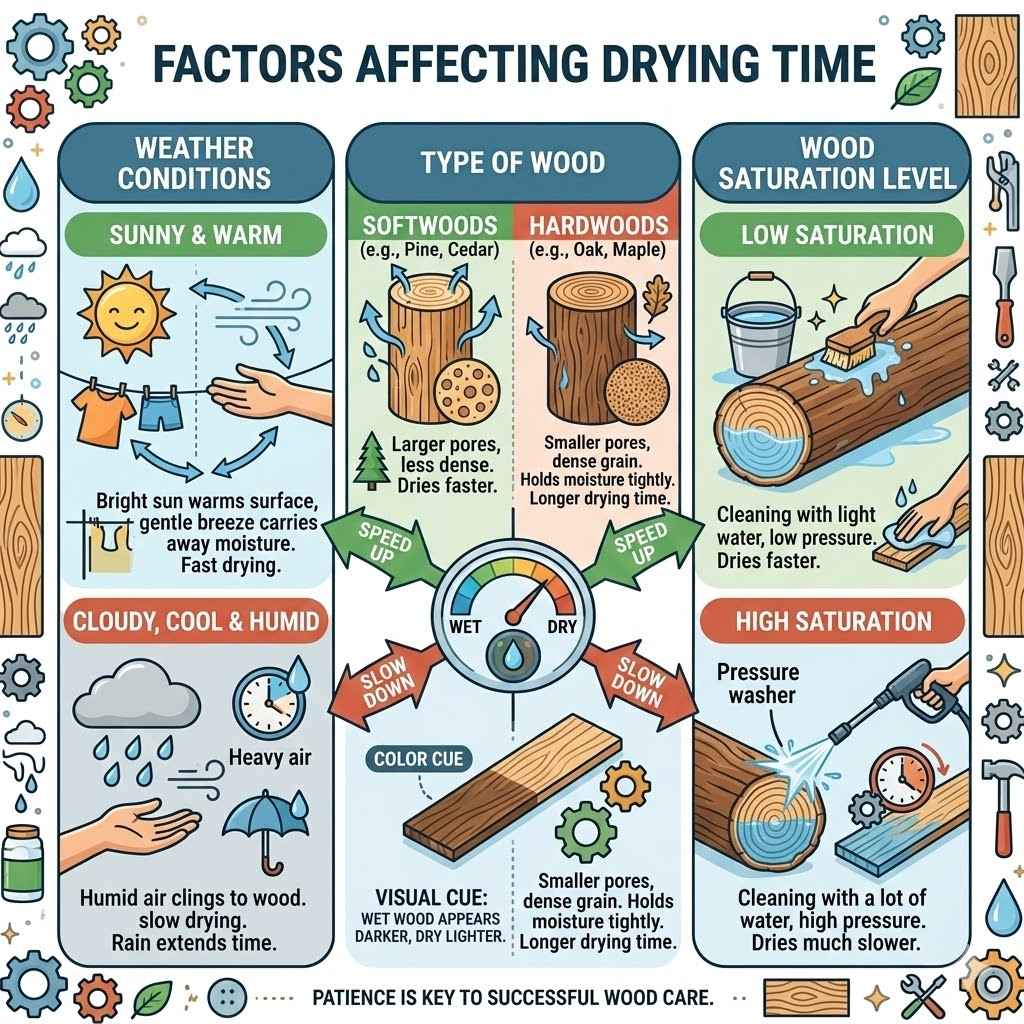
Several things can speed up or slow down how quickly your wood dries. Think about the weather: sunny, warm days with a gentle breeze are your best friends. High humidity, on the other hand, makes things take much longer.
The type of wood also plays a role. Denser hardwoods, like oak, tend to hold moisture longer than softer woods, like pine. The amount of water used during washing matters too.
If you used a lot of water or the pressure washer was very strong, it might take a bit more time for the wood to dry out completely.
Weather Conditions
Sunny and warm weather is ideal for drying wood. A bright sun will help warm the wood’s surface, encouraging water to evaporate. A light breeze helps carry away the moist air that forms above the wood.
This constant air circulation is crucial for effective drying. Without it, the humid air can cling to the wood, slowing down the process. Think of it like hanging clothes on a line on a windy day versus a still, damp day.
On the flip side, cloudy, cool, or humid days will significantly extend the drying time. If it’s raining, your wood won’t dry at all until the rain stops. You might even have to wait an extra day or two after the rain if the air is still heavy with moisture.
This is why patience is a big part of successful wood care.
Type of Wood
Different types of wood absorb and release moisture at different rates. Softwoods, like pine and cedar, have larger pores and a less dense structure. This allows water to escape more easily.
They usually dry faster than hardwoods.
Hardwoods, such as oak, maple, and walnut, are much denser. Their smaller pores and tighter grain mean water is held more tightly within the wood fibers. This makes them take longer to dry out after getting wet.
When working with hardwoods, you’ll need to be extra patient and allow for ample drying time.
Wood Saturation Level
The level of saturation is directly tied to how much water your wood absorbed during the pressure washing. If the cleaning process involved a lot of water, or if the pressure was set very high and drove water deep into the wood, it will naturally take longer to dry. Some wood sealers or stains can be applied to damp wood, but most require it to be completely dry.
You can sometimes tell how saturated the wood is by its color. Very wet wood often appears darker than dry wood. As it dries, it will lighten in color.
This visual cue can be helpful, but it’s not the only thing to consider when determining dryness.
How to Check If Wood Is Dry
There are a few easy ways to check if your wood is dry enough. The simplest is just to touch it. If it feels cool or damp to the touch, it still has moisture.
You can also look for color changes; dry wood is usually lighter than wet wood.
A more scientific method is using a moisture meter. These handy tools are specifically designed to measure the moisture content in wood. You just press the prongs into the wood surface, and it gives you a reading.
Most stains and sealers recommend a moisture content of 15% or less for proper application.
The Water Drop Test
A very practical and easy test is the water drop test. Take a small amount of water and sprinkle it onto the wood surface. If the water beads up and sits on top, the wood is likely dry enough.
This means the surface has a good ability to repel water, which is a good sign. It indicates that any existing finish, or the wood itself, is ready to accept a new coating.
However, if the water soaks into the wood quickly, leaving a dark spot, it means the wood is still too wet. The water is being absorbed into the wood fibers. You’ll need to wait longer for it to dry.
This test is a great way to get a quick check without any special tools.
Using a Moisture Meter
A wood moisture meter is a very accurate way to know precisely how dry your wood is. These devices have small pins that you insert into the wood. They then measure how much electricity can pass through the wood, which relates directly to the amount of water present.
Different meters have different ways of displaying the results, but most give a percentage reading.
For most wood finishing projects, you’ll want the wood’s moisture content to be below 15%. Some products might specify an even lower percentage, like 12%, so it’s always good to check the product instructions. If the reading is too high, you know you need to wait longer before proceeding.
Typical Drying Times After Pressure Washing
The actual time wood needs to dry can vary a lot. It’s not a one-size-fits-all answer. However, we can give you some general timelines.
These are based on average conditions and wood types. Always remember to adjust these based on what you’re seeing and feeling.
General Timeline Recommendations
As a general rule, plan for at least 24 to 48 hours of good drying weather after you pressure wash your wood. This means sunny skies and moderate temperatures. If the weather is less than ideal, or if you have hardwoods, you might need to wait longer, perhaps up to 72 hours or even a full week in some cases.
It’s always better to wait a bit longer than to apply a finish too soon.
Consider this: if you wash your deck on a Friday, you might not be ready to stain it until Sunday or Monday, depending on the weather. This buffer time ensures that the moisture has had a real chance to escape from the wood’s core.
Impact of Temperature and Humidity
Higher temperatures and lower humidity are your best friends for drying wood. When it’s hot and dry, water evaporates from the wood surface very quickly. This is because the air can hold more moisture and is not already saturated.
Conversely, high humidity means the air is already full of water vapor. This slows down evaporation considerably. On a cool, humid day, the wood might feel dry to the touch on the surface, but the interior could still be quite moist.
For instance, a deck cleaned on a humid summer evening might still feel damp the next morning, even if the sun comes out.
When to Reapply Stain or Sealant
The goal is to apply your finish when the wood is ready. This is after it has dried thoroughly. Applying stain or sealant too early is one of the most common mistakes people make.
It can lead to a finish that doesn’t last. You want that new protective layer to bond directly to the wood fibers.
Ideal Moisture Content for Finishing
Most wood stains and sealers perform best when the wood has a moisture content of 15% or lower. Some manufacturers recommend even lower, around 12%. This is where a moisture meter is incredibly useful.
It takes the guesswork out of the process and gives you a precise reading.
If you don’t have a moisture meter, the water drop test is a good alternative. If water beads up, it’s generally a good indicator. However, a meter provides more certainty, especially for premium finishes or expensive wood projects.
Signs the Wood Is Ready for Finish
Visually, the wood should look lighter in color than when it was freshly washed and still wet. It should feel dry and not cool to the touch. If you press your hand firmly onto the wood, no moisture should transfer to your skin.
The water drop test, as mentioned, is a strong visual cue. If the water beads up, it’s usually a sign that the surface is ready to accept a new finish. If the water darkens the wood and soaks in, you need more drying time.
Tips to Speed Up Wood Drying
While nature usually dictates drying times, there are a few things you can do to help the process along. These tips can make a noticeable difference, especially if you’re on a schedule.
Maximizing Airflow
Good airflow is perhaps the most important factor in drying. Make sure there are no obstructions around the wood, like thick bushes or furniture that block the wind. If you’re drying a deck, ensure all the furniture is removed so air can circulate underneath and around it.
Consider using fans. Large industrial fans placed strategically can help move air across the surface of the wood. This mimics a good breeze and can significantly reduce drying time.
This is especially helpful if you’re dealing with still, humid air or if your wood is in a shaded area.
Sun Exposure
Sunlight is a natural dryer. If possible, position your wood or ensure your structure gets maximum sun exposure. Darker colored wood will absorb more heat from the sun, which speeds up evaporation.
Lighter colored wood will still benefit from the sun’s warmth, though it might not heat up as much.
If you have wooden items like chairs or tables, try to move them into a sunny spot. For larger structures like decks or fences, you can’t move them, but you can ensure that any nearby trees or shrubs aren’t casting excessive shade on them during the prime drying hours of the day.
Avoid Sealing Too Soon
This is more of a “don’t” than a “do,” but it’s crucial. The temptation to finish the project quickly can be strong. However, sealing wood that is still too wet is a recipe for disaster.
The sealant or stain will trap moisture inside the wood. This can lead to mold, mildew, and premature decay of the wood and the finish itself.
Think of it like putting a lid on a pot of boiling water and expecting it to cool down quickly. The trapped steam has nowhere to go. The same applies to moisture within wood.
It needs an escape route, and the finish needs to be applied when that escape is no longer needed.
Common Mistakes to Avoid
When tackling wood projects, especially after pressure washing, people often make a few common errors. Knowing these can save you time, money, and frustration down the line. It’s all about being aware of what can go wrong and taking steps to prevent it.
Applying Finish on Damp Wood
We’ve touched on this, but it bears repeating. Applying stain or sealant to damp wood is a major mistake. The moisture prevents the finish from penetrating the wood properly.
Instead of bonding, it sits on the surface or within the outer layer of fibers. This leads to a finish that peels, cracks, or wears away much faster than it should.
Imagine trying to stick tape to a wet surface. It just won’t adhere well. The same principle applies to wood finishes.
The wood needs to be dry so the finish can grip the wood fibers effectively and create a durable protective layer.
Not Letting Wood Dry Long Enough
Patience is truly a virtue here. Some people rush the process because they want to see the finished product or use the area again. However, insufficient drying time is a primary cause of finishing failures.
Wood breathes, and it needs to release moisture. Pressure washing saturates it, and it needs time to re-acclimate.
A good rule of thumb is to add an extra day to your drying time if you’re unsure or if the weather has been inconsistent. It’s a small investment of time that can lead to a finish that lasts for years. Think of the long-term benefits of doing it right the first time.
Using the Wrong Cleaning Products
Sometimes, people use harsh chemicals when pressure washing that can affect how the wood dries or accepts finishes. For example, leaving too much cleaner residue on the wood can interfere with the sealant or stain. Always rinse thoroughly after washing.
Additionally, some cleaning solutions can alter the wood’s pH, which might impact how certain finishes adhere. It’s best to use cleaners specifically designed for wood or to ensure you rinse the wood extensively after any cleaning to remove all traces of the product.
Expert Advice for Optimal Drying
Professionals have developed a few tried-and-true methods for ensuring wood is properly dried after washing. These practices are simple but highly effective. They focus on maximizing natural drying conditions and using tools to verify dryness.
Professional Practices
Experienced contractors often schedule wood washing and finishing projects with weather in mind. They look for a clear forecast with several days of sun and moderate temperatures. If the weather is unpredictable, they might postpone the job or have a backup plan.
They also always use a moisture meter. This isn’t just for convenience; it’s for ensuring quality and durability of the finish. A professional knows that relying on touch or sight alone can be misleading.
A concrete reading provides confidence before applying expensive finishes.
Case Study: A Deck Makeover Gone Right
Sarah wanted to refresh her old cedar deck. She pressure washed it on a sunny Saturday. The wood looked much brighter and cleaner.
She wanted to stain it Sunday, but the weather turned humid and cloudy. On Sunday, the deck still felt a bit cool and the water drop test showed water soaking in. She waited another day, until Monday afternoon, when it was sunny and breezy.
The water drop test then showed beading, and a moisture meter read 12%. She applied the stain, and it soaked in beautifully. A year later, the stain still looks great, showing the benefit of waiting.
This careful approach avoided the common pitfalls. Sarah’s deck ended up with a finish that was durable and looked professionally done. The extra wait paid off with a beautiful, long-lasting result.
Scenario: Fence Repair and Refinishing
Mark repaired a section of his wooden fence. He decided to pressure wash the entire fence to make it look uniform. He washed it on Wednesday.
Thursday was rainy and cool. Friday morning was still damp. By Friday afternoon, the sun came out.
He did the water drop test and noticed water still soaking in some areas. He decided to wait until Saturday morning. By then, the fence was dry to the touch, water beaded up, and the moisture meter read 14%.
He then applied a new coat of sealant. This ensured the fence would be protected from the elements for years to come.
Mark’s approach shows how to adapt to changing conditions. He didn’t rush, and the fence received the protection it needed. This saved him from potential issues down the line, like peeling or rot.
The Importance of Proper Wood Drying Post-Washing
Understanding how long to let wood dry after pressure washing is more than just a procedural step. It’s a critical component in ensuring the longevity and aesthetic appeal of your wooden structures. When wood is saturated, it’s in a vulnerable state.
Applying finishes prematurely compromises the entire project. It can lead to costly repairs and a reduced lifespan for decks, fences, and other outdoor wood elements.
Ensuring Finish Adhesion
The primary reason for letting wood dry is to guarantee that any new coatings, like stains or sealants, can adhere properly. Wood finishes are designed to bond with dry wood fibers. Moisture acts as a barrier, preventing this essential connection.
Think of it like trying to glue two wet pieces of paper together; the bond will be weak and prone to tearing.
When wood is dry, the finish can penetrate slightly and form a strong, lasting bond. This is what protects the wood from UV rays, moisture damage, and general wear and tear. A well-adhered finish means your wood will look good and last much longer.
Preventing Mold and Mildew Growth
Trapped moisture within wood is a breeding ground for mold and mildew. When you seal damp wood, you essentially create a perfect environment for these organisms to thrive. They feed on the wood and the finish, causing unsightly stains, structural damage, and even health issues.
Allowing the wood to dry completely before applying a finish helps eliminate this risk. It ensures that any moisture that can escape does escape. The protective finish then acts as a barrier against new moisture and the elements, keeping mold and mildew at bay.
Extending the Lifespan of Wood
Proper drying and finishing are fundamental to extending the life of your wooden assets. Wood is a natural material that is susceptible to decay when exposed to the elements without adequate protection. Pressure washing cleans it, but it also temporarily weakens its resistance.
By allowing the wood to dry and then applying a quality finish, you are reinforcing its natural defenses. This prevents premature rot, warping, and splintering. A well-maintained wooden structure can last for decades, whereas one that is improperly treated might need replacement much sooner.
Long-Term Cost Savings
While it might seem like waiting adds time to your project, it actually saves you money in the long run. A finish applied to properly dried wood will last much longer. This means you won’t have to recoat or repair your wood as frequently.
Imagine a deck that needs refinishing every two years versus one that only needs it every five or six years. The savings in materials and labor are significant. Investing that extra drying time upfront is a wise financial decision for the upkeep of your property.
Understanding Wood Moisture Content
Wood is hygroscopic, meaning it absorbs and releases moisture from its surroundings. Pressure washing forces water into its pores. This moisture content needs to return to a stable level for finishing.
Understanding this concept is key to successful wood care.
The Role of Wood Cells
Wood is made up of tiny cells. When wood is dry, these cells are relatively empty or contain very little moisture. When wood gets wet, water fills these cells.
Pressure washing can drive water deep into these cellular structures, especially in softer woods.
For finishes to bond, the wood needs to be in a state where these cells are ready to accept the coating. If they are still full of water, there’s no room for the finish to penetrate. The finish will essentially be “sitting on top” of the water, leading to poor adhesion.
Equilibrium Moisture Content (EMC)
Wood naturally tries to reach an equilibrium moisture content (EMC) with its environment. This means it will absorb or release moisture until its internal moisture level matches the surrounding air’s humidity and temperature. Pressure washing disrupts this balance by adding excess moisture.
The drying process allows the wood to slowly release this excess water back into the air, moving towards its EMC. This is why environmental factors like humidity and temperature are so critical. On a hot, dry day, the wood can more easily release moisture to reach its EMC.
When to Consult a Professional
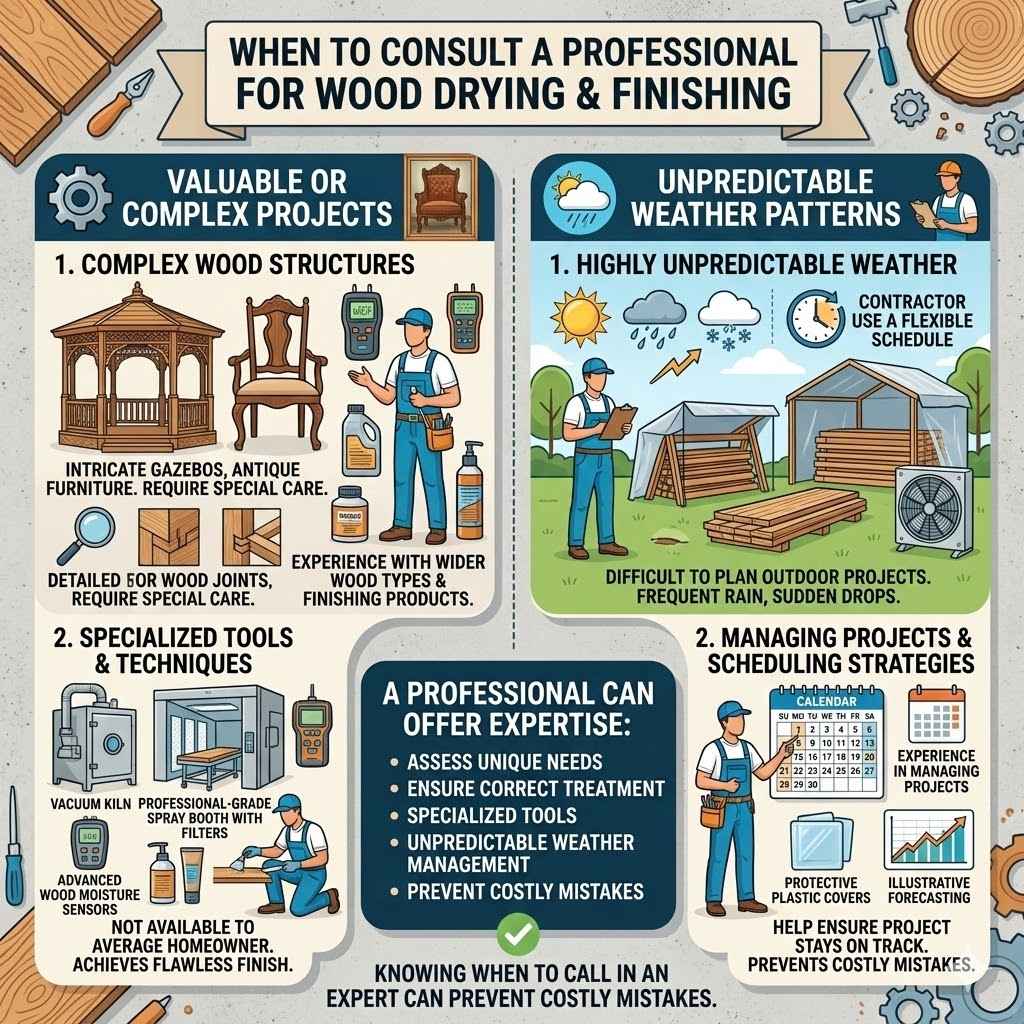
While most DIYers can handle wood drying and finishing, there are times when professional help is beneficial. If you’re dealing with a particularly valuable or complex project, or if you’re unsure about the wood’s condition, a professional can offer expertise.
Complex Wood Structures
Some wooden structures, like intricate gazebos or antique furniture, require special care. Professionals have experience with a wider range of wood types and finishing products. They can assess the unique needs of these items and ensure they are treated correctly.
They also have access to specialized tools and techniques that might not be available to the average homeowner. This can be crucial for achieving a flawless finish on challenging projects. Knowing when to call in an expert can prevent costly mistakes.
Unpredictable Weather Patterns
If you live in an area with highly unpredictable weather, it can be difficult to plan outdoor wood finishing projects. Frequent rain or sudden drops in temperature can derail your efforts. A professional contractor will have experience managing projects under such conditions.
They might use temporary shelters or have alternative scheduling strategies to ensure the wood dries properly. Their expertise in weather forecasting and project management can be invaluable in these situations. They can help ensure your project stays on track, even with challenging weather.
Frequently Asked Questions
Question: How long does it take for wood to dry after pressure washing in humid weather
Answer: In humid weather, wood can take significantly longer to dry. Instead of 24-48 hours, it might take 72 hours or even up to a week. High humidity means the air is already full of moisture, slowing down evaporation from the wood’s surface.
Question: Can I use a leaf blower to speed up wood drying
Answer: Yes, a leaf blower can help! It increases airflow across the wood’s surface, which helps to move away the moist air and speed up evaporation. It’s a good tool to use, especially if there’s no natural breeze.
Question: What is the ideal moisture content for wood before staining
Answer: The ideal moisture content for most wood stains and sealers is 15% or less. Some manufacturers recommend 12% or even lower, so it’s always best to check the specific product’s instructions for best results.
Question: Will dark stained wood dry faster than light stained wood
Answer: While dark colors absorb more heat from the sun, which can aid in drying, the primary factors affecting drying time are humidity, temperature, and airflow, not the color of the wood itself. The wood’s density and saturation level play a bigger role.
Question: Can I pressure wash my deck and stain it the next day
Answer: It’s generally not recommended to stain your deck the very next day after pressure washing. You need to allow at least 24-48 hours for the wood to dry properly, especially if the weather isn’t perfectly sunny and breezy. Checking the moisture content is the best way to be sure.
Conclusion
Knowing how long to let wood dry after pressure washing ensures your finishes last. Wait at least 24 to 48 hours, and more if it’s humid or cool. Use the water drop test or a moisture meter.
Dry wood properly to prevent mold and ensure your stain or sealant bonds well. This patience protects your wood and keeps it looking great for years to come.