How Many Recessed Lights: Essential 15 Amp Circuit Guide
Quick Summary: Generally, you can safely install 10-12 standard 12-watt LED recessed lights on a single 15-amp circuit. This calculation ensures you stay well within the 80% safety guideline, preventing tripped breakers. Always factor in the wattage of each light and consider other devices on the same circuit for accurate planning.
Ever looked up at those sleek, modern recessed lights and wondered how many you can actually install without causing electrical headaches? It’s a common question for anyone looking to brighten up their home. You want that beautiful, even lighting, but the thought of overloading a circuit and tripping breakers can be a bit daunting. Don’t worry, I’m here to help you figure it out simply and safely. We’ll break down exactly how to calculate the right number of recessed lights for your 15-amp circuit, making sure your new lighting looks great and works perfectly.
We’ll cover everything from understanding circuit breakers to calculating wattage, ensuring you feel confident in tackling this part of your home improvement project. Let’s get your home beautifully lit!
Understanding Your Electrical Circuit: The Basics
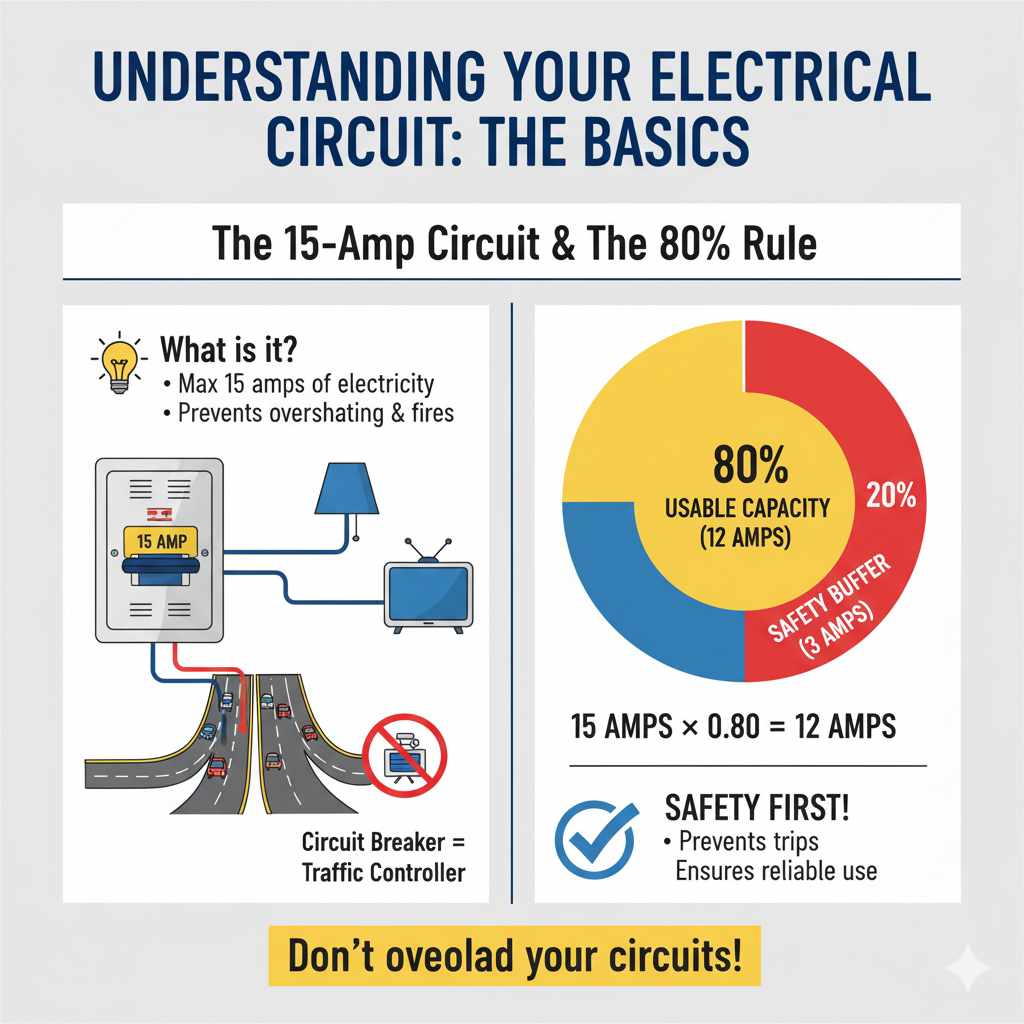
Before we start placing lights, it’s super important to understand what a 15-amp circuit is and why it matters. Think of your home’s electrical system like a highway. The circuit breaker is like a traffic controller, making sure too many cars (electricity) don’t try to go down a road (circuit wire) at once. If too much electricity flows, the breaker steps in and stops it to prevent overheating and potential fires. A 15-amp circuit is designed to handle a maximum of 15 amps of electrical current.
The National Electrical Code (NEC) recommends that you only load a circuit to 80% of its capacity for continuous use. This is a crucial safety rule. For a 15-amp circuit, this means you should aim to use no more than 12 amps (15 amps 0.80 = 12 amps). This 80% rule is there to give you a buffer and prevent the breaker from tripping unnecessarily, especially if you have other devices plugged into the same circuit.
Understanding this 80% rule is the first step to ensuring your lighting project is safe and successful. It’s all about preventing problems before they start!
Recessed Lights and Wattage: What You Need to Know
When we talk about how many lights can go on a circuit, the key number we need is the wattage of each light. Wattage is a measure of how much electrical power a device uses. The higher the wattage, the more electricity it draws.
In the past, most recessed lights used incandescent bulbs, which were quite power-hungry. However, today, LED (Light Emitting Diode) recessed lights are the most popular choice. LEDs are fantastic because they use significantly less energy (wattage) than old incandescent bulbs while providing excellent light. This means you can often install more LED lights on a single circuit compared to older types of bulbs.
For example, a typical LED recessed light might use only 9 to 12 watts, whereas an older incandescent bulb could use 60 watts or more. This huge difference is why LEDs are so great for home lighting projects and why the number of lights you can install has increased so much.
To figure out the total wattage for your lights, you’ll simply multiply the wattage of one light by the number of lights you plan to install. For instance, if you have 10 LED lights, each using 10 watts, your total wattage would be 100 watts (10 lights 10 watts/light).
Calculating the Number of Recessed Lights for a 15 Amp Circuit
Now, let’s put it all together to figure out how many lights you can safely install. We’ll use the 80% rule and the wattage of your LED lights.
Step 1: Determine the Safe Amperage Load
As we discussed, a 15-amp circuit should not be loaded beyond 80% of its capacity for continuous use. So, the maximum safe amperage you should aim for is:
15 amps 0.80 = 12 amps
Step 2: Convert Amps to Watts
To figure out how many watts your lights can consume on this circuit, we need to know the voltage in your home. In North America, standard household voltage is 120 volts. The relationship between watts, amps, and volts is given by the formula:
Watts = Volts Amps
So, for your 15-amp circuit (at 80% load):
Maximum Watts = 120 Volts 12 Amps = 1440 Watts
This means the total wattage of all the lights on this circuit should not exceed 1440 watts.
Step 3: Calculate the Number of Lights
Now, you can determine how many lights fit within that 1440-watt limit. You’ll need to know the wattage of the specific LED recessed lights you plan to use. Let’s use a common example of 12-watt LED recessed lights.
Number of Lights = Maximum Watts / Wattage per Light
Number of Lights = 1440 Watts / 12 Watts/Light = 120 Lights
Wait, 120 lights? That sounds like a lot! This calculation shows the absolute maximum you could power if only the lights were on that circuit. However, in reality, circuits often power more than just one type of fixture. This is where practical application and safety come in.
A More Realistic Approach
While the math gives us a high number, it’s crucial to be practical. Electrical codes and best practices suggest a more conservative approach, especially for DIYers. It’s common to see recommendations for around 10-12 standard 12-watt LED recessed lights per 15-amp circuit, leaving plenty of room for other small loads and ensuring the breaker doesn’t get close to its limit.
Here’s a handy table to give you an idea:
| Light Wattage (per LED light) | Maximum Lights (1440 Watts) | Recommended Number of Lights (Conservative) |
|---|---|---|
| 9 Watts | 160 lights | 13-15 lights |
| 10 Watts | 144 lights | 12-14 lights |
| 12 Watts | 120 lights | 10-12 lights |
| 15 Watts | 96 lights | 8-10 lights |
This table helps visualize how different wattages affect the number of lights. For most standard 12-watt LED recessed lights, aiming for 10-12 lights per 15-amp circuit is a safe and common practice. It’s always better to err on the side of caution when it comes to your home’s electrical system.
Factors to Consider Beyond Just Lights
The calculation above assumes that the circuit is only powering your recessed lights. In reality, this is rarely the case. Many circuits in your home are shared. For example, the lighting circuit in a room might also power the ceiling fan, outlets for lamps, or even devices plugged into those outlets.
Here are some important factors to consider:
- Other Fixtures on the Circuit: Does the same circuit power other lights, like wall sconces or a ceiling fan? If so, you need to subtract the wattage of those fixtures from your available 1440 watts.
- Outlets: If the circuit also powers electrical outlets, you need to be mindful of what might be plugged into them. A vacuum cleaner, a hairdryer, or even a space heater can draw a significant amount of power, quickly exceeding the safe limit.
- Continuous Loads: The 80% rule is especially important for “continuous loads,” which are defined as loads expected to operate for 3 hours or more. While lights aren’t always on for 3 hours straight, it’s a good safety margin to keep in mind.
- Wire Gauge: Ensure that the wiring in your home is appropriate for the load. Standard 15-amp circuits typically use 14-gauge wire, while 20-amp circuits use 12-gauge wire. Using the wrong gauge can be a fire hazard. You can usually find the wire gauge stamped on the wire itself, or by checking the breaker. A 15-amp breaker should always be paired with 14-gauge wire or larger. You can learn more about wire gauges and their uses from resources like Energy.gov’s home lighting guide, which touches upon efficiency.
- Dimmer Switches: If you plan to use dimmer switches, make sure they are compatible with your LED lights and that the dimmer itself has a wattage rating that can handle the total load of the lights connected to it.
When in doubt, it’s always best to consult your home’s electrical panel to identify which outlets and lights are on the same circuit. Sometimes, the breaker panel will have labels, but if not, you might need to do some testing (carefully!) or consult an electrician.
Step-by-Step: Planning Your Recessed Lighting Installation
Here’s a straightforward plan to help you through the process of deciding how many recessed lights to install:
- Identify the Circuit: Go to your electrical panel and identify the breaker that controls the area where you want to install lights. If the panel isn’t labeled, you might need to turn breakers off one by one and check which lights or outlets lose power. It’s helpful to have someone assist you with this step.
- Check for Other Loads: Once you’ve identified the circuit, determine what else is connected to it. Are there outlets? Other lights? Note them down.
- Determine Wattage of Lights: Choose the specific LED recessed lights you want to use. Check their packaging or specifications for their wattage. For example, you might choose 10-watt LED recessed lights.
- Calculate Total Wattage Limit: For a 15-amp circuit, the safe continuous load is 1440 watts (120V 12A).
- Calculate Available Wattage: If there are other fixtures on the circuit, calculate their total wattage. Subtract this from 1440 watts to find out how many watts are left for your recessed lights.
- Determine Number of Lights: Divide the remaining available wattage by the wattage of a single recessed light.
- Apply the 80% Rule (Again, for Safety): Even after calculating, take a step back. If your calculation results in a number close to the maximum, consider reducing the number of lights by 10-20% for added safety and to avoid nuisance tripping. For a 15-amp circuit, aiming for a total load well under 12 amps is a wise move.
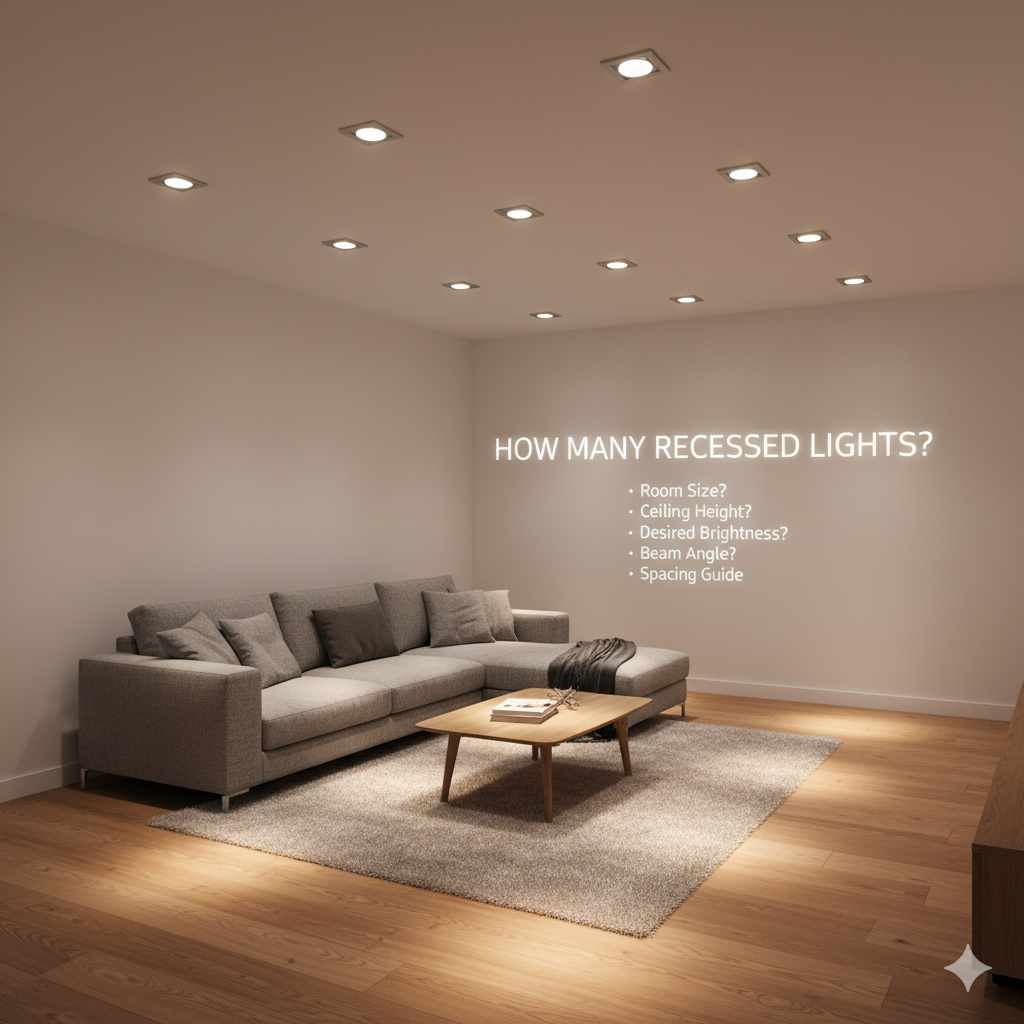
- Consider Light Spacing: Beyond electrical capacity, you also need to consider light spacing for even illumination. A common rule of thumb is to space recessed lights apart by a distance equal to half the ceiling height. For example, on an 8-foot ceiling, you’d space lights about 4 feet apart. This ensures good light distribution without creating dark spots or overly bright areas.
By following these steps, you can confidently determine the right number of recessed lights for your circuit.
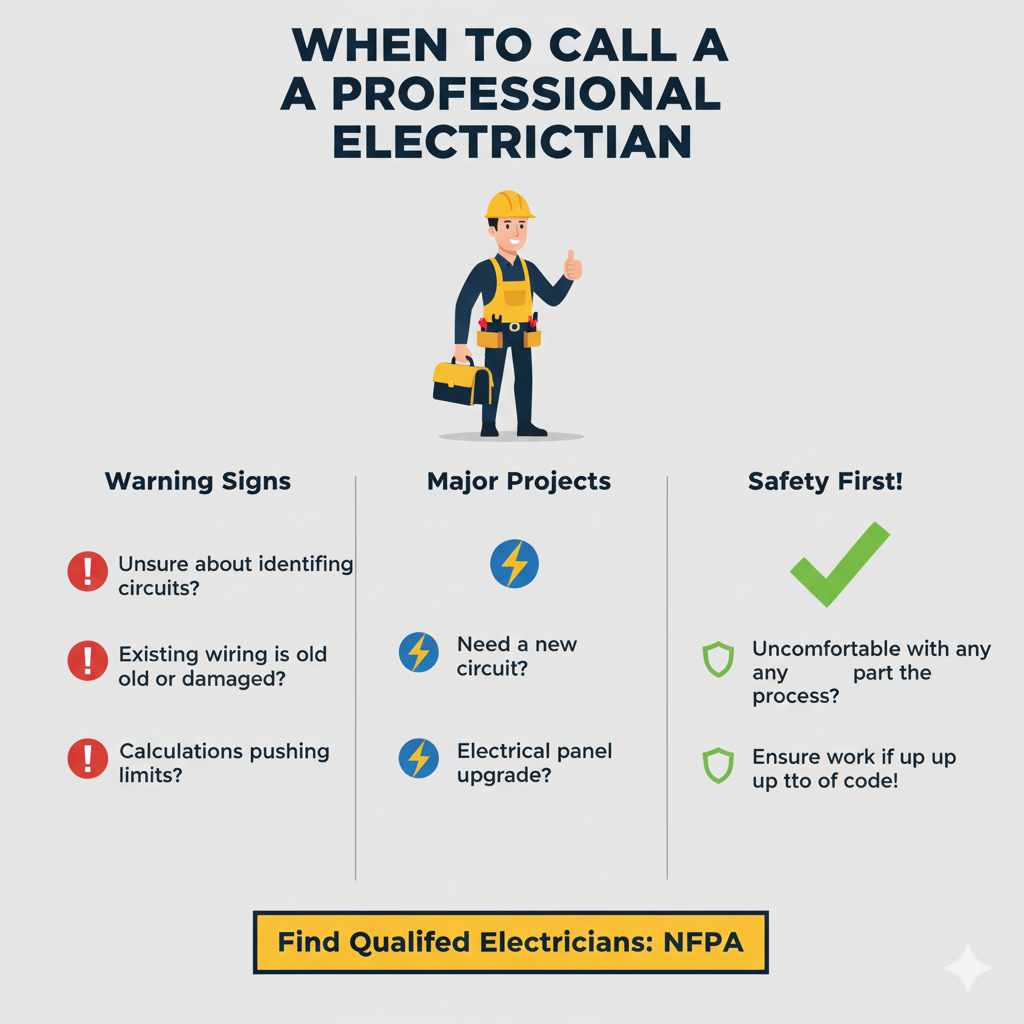
When to Call a Professional Electrician
While many home improvement tasks can be tackled by DIYers, electrical work requires caution. It’s always a good idea to call a licensed electrician if:
- You are unsure about identifying circuits or checking wiring.
- The existing wiring seems old or damaged.
- You need to add a new circuit or upgrade your electrical panel.
- Your calculations suggest you are pushing the limits of the circuit.
- You are uncomfortable with any part of the process.
An electrician has the expertise to ensure the work is done safely and up to code. They can also advise on the best lighting design for your space. You can find resources for finding qualified electricians through organizations like the National Fire Protection Association (NFPA), which sets electrical safety standards.
Frequently Asked Questions (FAQ)
Q1: How many 60-watt equivalent LED recessed lights can I put on a 15-amp circuit?
A standard 60-watt incandescent bulb equivalent in LED is usually around 9-12 watts. So, for 12-watt LEDs, you can safely install about 10-12 lights on a 15-amp circuit, keeping the 80% rule in mind.
Q2: Do I need to worry about the type of wire in my circuit?
Yes, absolutely. A 15-amp circuit should ideally use 14-gauge copper wire. If you have older aluminum wiring or the wrong gauge, it’s a serious safety concern. Always ensure the wire gauge matches the breaker’s amperage rating. The Occupational Safety and Health Administration (OSHA) provides extensive information on electrical safety standards.
Q3: What happens if I put too many lights on a 15-amp circuit?
If you overload the circuit, the circuit breaker will trip, cutting off power to prevent overheating and potential fire hazards. If this happens repeatedly, it can damage the wiring or the breaker itself.
Q4: Can I mix different wattage LED lights on the same circuit?
Yes, you can mix different wattages, but you’ll need to calculate the total wattage of all the lights combined to ensure it doesn’t exceed your safe limit (1440 watts for a 15-amp circuit, or more practically, aim for under 1200 watts total load).
Q5: Does a dimmer switch use extra power?
A dimmer switch itself uses a small amount of power, but its main job is to control the flow of electricity to the lights. You must ensure the dimmer’s wattage rating is sufficient for the total wattage of all the lights connected to it. Always check the dimmer’s specifications.
Q6: How do I find out what’s on my circuit?
You can identify what’s on a circuit by carefully turning off breakers one by one and checking which lights and outlets lose power. If your panel isn’t labeled, you might need to use a voltage tester or consult an electrician.
Conclusion
Figuring out how many recessed lights you can install on a 15-amp circuit doesn’t have to be complicated. By understanding the 80% safety rule, calculating the wattage of your LED lights, and considering any other devices on the same circuit, you can make an informed decision. For most standard 12-watt LED recessed lights, aiming for around 10-12 fixtures per 15-amp circuit is a safe and practical guideline. Remember, safety comes first, and if you ever feel unsure, don’t hesitate to call a qualified electrician. With careful planning, you can achieve that beautiful, modern lighting you’ve envisioned for your home!