How Many Sq Ft in a Box of Wood Flooring
When you’re picking out new wood flooring, one question pops up a lot: How Many Sq Ft in a Box of Wood Flooring? It can feel a bit tricky at first, especially if you’re new to DIY projects. You want to buy just enough without having way too much left over.
This guide will make it super simple. We’ll walk through it step by step so you know exactly what to get. Let’s get your floor project started right!
Understanding Wood Flooring Box Sizes
Figuring out how much flooring you need is super important for any home renovation. Knowing the exact amount of square footage in a box of wood flooring helps you plan your budget and avoid extra trips to the store. It’s a common question because different brands and styles come in different box sizes.
This section will break down what you need to look for on the packaging and how to do the simple math yourself.
What Determines the Sq Ft in a Box
The square footage covered by a single box of wood flooring isn’t random. It’s based on the dimensions of the individual planks or tiles and how they are packed. Manufacturers aim to make these boxes a convenient size for transport and handling, while also providing a usable amount of material for homeowners.
- Plank Dimensions: The length and width of each piece of wood flooring are the primary factors. Longer and wider planks mean fewer pieces are needed to cover a square foot, so a box might hold fewer planks but cover more area. For example, a plank that is 6 inches wide and 48 inches long covers 2 square feet. A box filled with these would need fewer planks than a box with 3-inch wide planks to reach the same total square footage.
- Thickness and Core Material: While not directly impacting square footage, the thickness of the flooring and its core material (like solid wood, engineered wood with a plywood core, or laminate) can affect how many pieces fit into a box. Denser materials might mean fewer pieces. However, the coverage is almost always stated based on the top surface area.
- Packaging Efficiency: How the planks are stacked and arranged within the box plays a role. Manufacturers try to pack them as tightly and efficiently as possible. This ensures that the box isn’t excessively large or heavy, making it easier for consumers to manage. Imagine trying to lift a box that’s too big; it would be very awkward.
Common Box Coverages
You’ll find that most wood flooring boxes are designed to cover a standard amount of space. This makes it easier for buyers to estimate. While variations exist, knowing the typical ranges can help you quickly gauge your needs.
- Standard Boxes: Many manufacturers offer boxes that cover 10, 12, 15, or 20 square feet. A 12-square-foot box is very common, especially for engineered hardwood and laminate flooring. Solid hardwood might sometimes come in slightly smaller boxes due to its weight.
- Luxury Vinyl Plank (LVP): LVP, which often mimics wood, also tends to come in boxes covering similar ranges, typically 10 to 25 square feet. The exact amount depends on the size of the LVP planks. Larger format planks will mean fewer pieces per box but a higher square footage coverage.
- Specialty or Large Format Tiles: If you’re looking at wood-look tiles or very wide and long wood planks, the box coverage might differ. It’s always best to check the specific product details. Some larger format options might come in boxes covering 18 or even 22 square feet.
Calculating Your Flooring Needs Accurately
Once you know the square footage a box covers, the next step is to calculate how many boxes you actually need for your project. This involves measuring your space and adding a little extra for cuts and waste. Getting this right means you won’t run out of flooring mid-project or buy way more than you can use.
Measure Your Room
Before you even think about buying flooring, you need to know the size of the area you want to cover. This is the most fundamental step in any flooring project.
- Length and Width: Measure the length of your room and its width. For a simple rectangular room, multiply these two numbers together to get the square footage. For example, a room that is 10 feet long and 12 feet wide is 10 x 12 = 120 square feet.
- Irregular Shapes: If your room isn’t a perfect rectangle, break it down into smaller, regular shapes like rectangles or squares. Measure each section and calculate its square footage. Then, add all these numbers together for your total room square footage. An L-shaped room can be split into two rectangles.
- Obstructions: Be mindful of any areas that won’t be covered by flooring, such as built-in cabinets or fireplace hearths. Measure these and subtract their area from your total room square footage if they are truly part of the floor space that won’t receive new flooring. However, it’s usually better to measure the whole area and let waste account for small discrepancies.
Adding for Waste and Cuts
It’s almost impossible to lay flooring without some waste. You’ll need to make cuts for walls, doorways, and around obstacles. Adding a percentage for this “waste factor” is crucial.
- Standard Waste Factor: For most straight-lay installations of wood or laminate flooring, a waste factor of 10% is standard. This means you take your room’s square footage and multiply it by 1.10. So, for a 120-square-foot room, you’d need 120 x 1.10 = 132 square feet of flooring.
- Complex Layouts: If you plan to install your flooring in a diagonal pattern, herringbone, or around many complex shapes, you’ll need a higher waste factor, typically 15% or even 20%. Diagonal installations often result in more offcuts.
- Calculating Boxes Needed: Once you have your total square footage needed (including waste), divide that number by the square footage per box. For example, if you need 132 square feet and each box covers 15 square feet, you’d calculate 132 / 15 = 8.8. Since you can’t buy parts of a box, you’ll always round up to the next whole number. In this case, you would need 9 boxes.
Sample Scenario
Let’s say you have a living room that measures 14 feet by 16 feet. You’ve decided on a beautiful engineered wood flooring that comes in boxes covering 18 square feet each. You plan a standard straight installation.
- First, calculate the room’s square footage: 14 feet x 16 feet = 224 square feet.
- Next, add a 10% waste factor: 224 square feet x 1.10 = 246.4 square feet. You need at least 246.4 square feet of flooring.
- Now, determine how many boxes you need: 246.4 square feet / 18 square feet per box = 13.69 boxes.
- Since you must buy whole boxes, round up to the nearest whole number. You will need to purchase 14 boxes of flooring. It’s always better to have a little extra than to run out.
Where to Find Sq Ft Information on Flooring Boxes
It’s important to know where to look for this vital information. Manufacturers make it easy to find if you know what you’re searching for. This will help you make informed decisions at the store or when shopping online.
Reading the Packaging
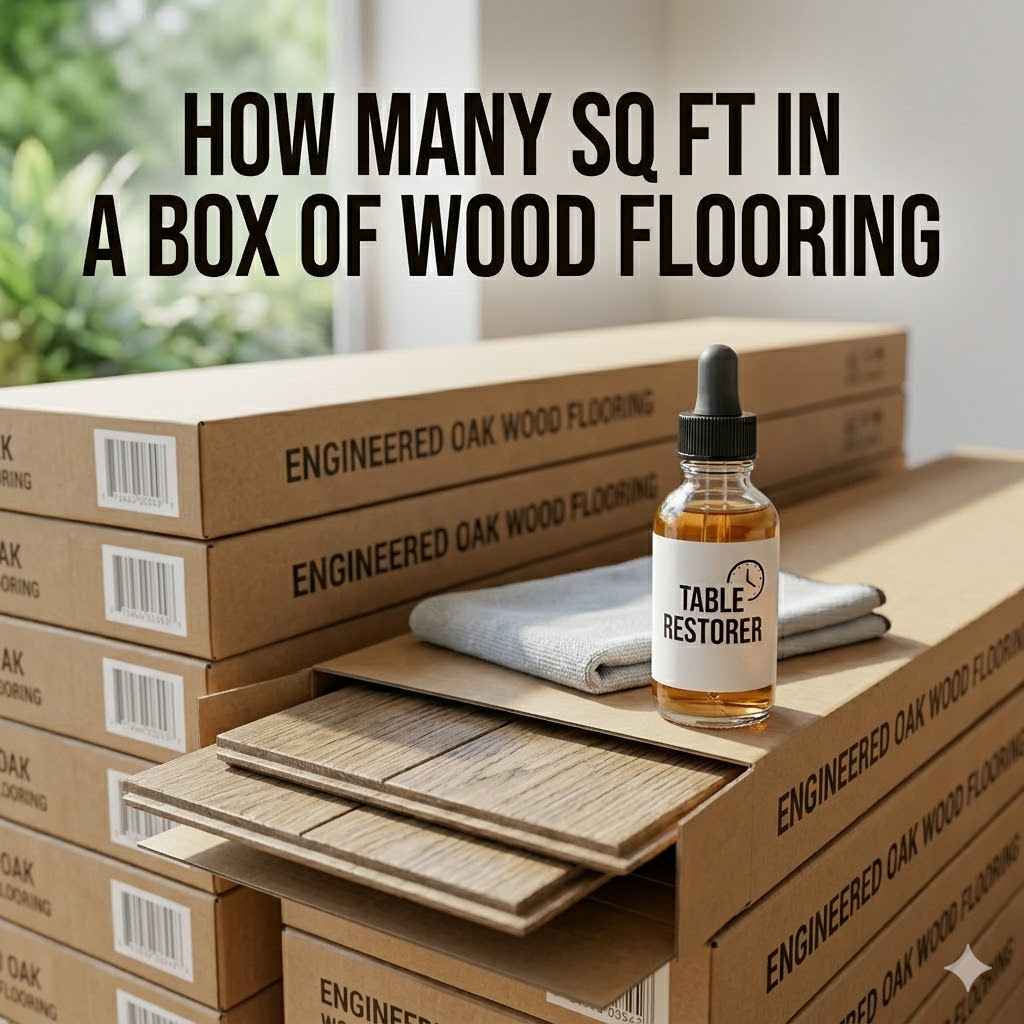
Flooring boxes are usually printed with a lot of information. The square footage coverage is one of the most prominent details. You’ll typically find it listed clearly on the front or side of the box.
- Box Labeling: Look for phrases like “Covers X Sq Ft,” “X Sq Ft Per Box,” or simply “X Sq Ft.” This number is key. For instance, a box might say “Covers 19.69 Sq Ft.” This is the figure you’ll use in your calculations.
- Barcode Area: Often, the barcode and product details are on the shorter ends of the box. This is a common place for the square footage to be clearly displayed.
- Manufacturer’s Specifications: If you can’t find it directly on the box, check the manufacturer’s website. Every product should have a specifications sheet or product details page that lists the coverage per box.
Online Retailer Information
When shopping for flooring online, the square footage per box is usually listed in the product description. This is crucial for comparing different options.
- Product Details Section: Online stores almost always have a dedicated “Specifications” or “Product Details” section for each flooring item. This section will explicitly state how many square feet a box covers.
- Comparison Tools: Many websites offer tools to help you compare flooring options side-by-side. The square footage per box is usually a standard metric shown in these comparisons.
- Calculators: Some online retailers even provide flooring calculators. You enter your room dimensions, and they automatically suggest how many boxes you need, taking into account the product’s box coverage and a waste factor.
Understanding Different Flooring Types
The type of wood flooring you choose can influence the box size and coverage. Each type has its own standard packaging practices.
- Solid Hardwood: Often comes in boxes that cover around 15-20 square feet. Solid wood can be heavier, so boxes might be kept at a manageable weight.
- Engineered Hardwood: Very similar to solid hardwood, engineered wood boxes typically range from 15-25 square feet. The construction can allow for more efficient packing.
- Laminate Flooring: Laminate is generally lighter than hardwood, so boxes might cover a wider range, often from 10-25 square feet.
- Luxury Vinyl Plank (LVP): LVP also varies, with boxes typically covering 15-25 square feet. The size of the planks is the main driver here.
Factors Affecting Actual Coverage
While manufacturers provide a stated square footage per box, your actual coverage can vary slightly. It’s good to be aware of these factors to avoid surprises.
Installation Pattern
The way you lay your flooring has a significant impact on how much material you use.
- Straight Lay: This is the most basic installation where planks are laid parallel to one of the walls. It generally results in the least amount of waste. For a 120 sq ft room, you’d calculate 120 sq ft * 1.10 (for 10% waste) = 132 sq ft needed. If boxes are 15 sq ft, you’d need 132/15 = 8.8 boxes, rounding up to 9.
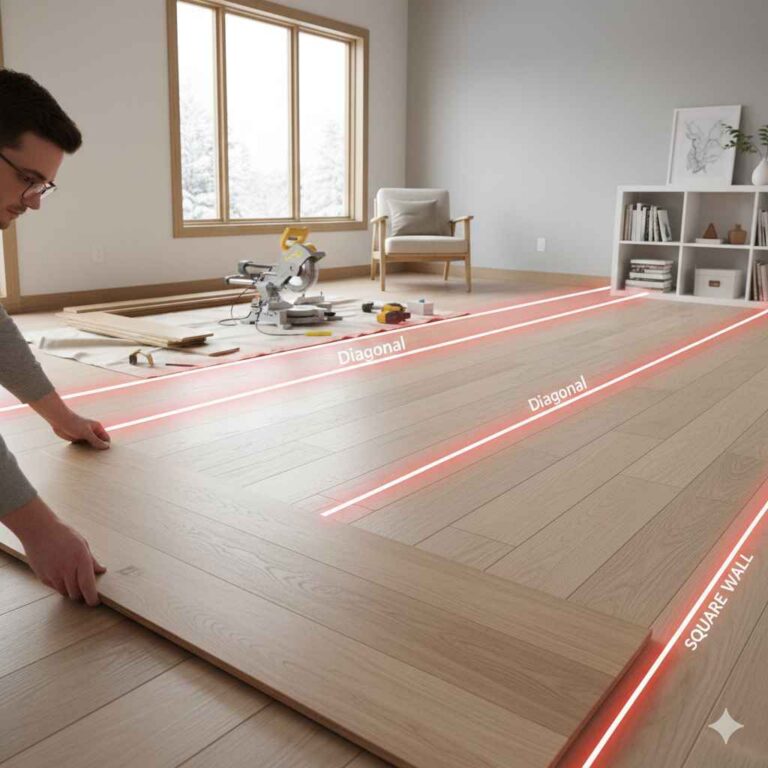
- Diagonal Lay: Installing planks at a 45-degree angle to the walls looks stylish but requires more cuts and results in more waste. For this pattern, a waste factor of 15% or even 20% is recommended. Using the same 120 sq ft room, 120 sq ft * 1.15 (for 15% waste) = 138 sq ft. If boxes are 15 sq ft, you’d need 138/15 = 9.2 boxes, rounding up to 10.
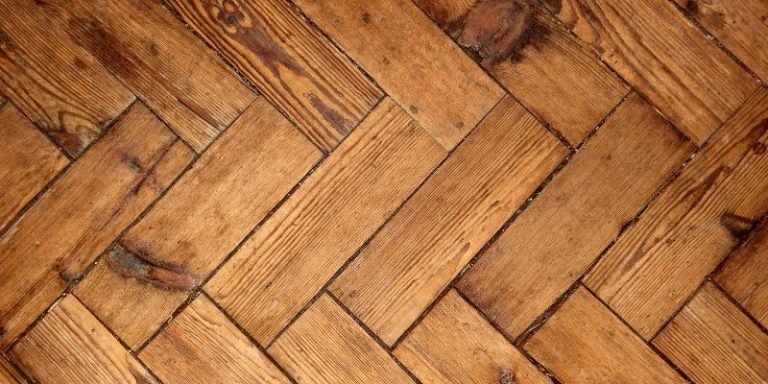
- Herringbone or Other Patterns: More intricate patterns like herringbone require significantly more cuts and planning. The waste factor can go up to 25% or more. Always consult with your installer or manufacturer recommendations for these complex layouts.
Plank Size and Shape
The dimensions of the individual planks directly influence the total coverage per box.
- Wide vs. Narrow Planks: Wide planks (e.g., 7-8 inches) cover more area per piece than narrow planks (e.g., 3-4 inches). Therefore, a box of wide planks will contain fewer pieces but may cover the same or more square footage than a box of narrow planks. For example, a 7-inch wide plank (0.58 ft) that is 48 inches long (4 ft) covers 0.58 4 = 2.32 sq ft. A 3-inch wide plank (0.25 ft) that is 48 inches long (4 ft) covers 0.25 4 = 1 sq ft.
- Long vs. Short Planks: Longer planks also contribute to higher coverage per piece. If planks are 60 inches (5 ft) long and 6 inches wide (0.5 ft), each plank covers 2.5 sq ft. If they are 36 inches (3 ft) long and 6 inches wide (0.5 ft), each plank covers 1.5 sq ft.
- Bevels and Edges: The design of the plank edges, such as whether they have a micro-bevel, can slightly affect the visible surface area once installed. However, manufacturers typically account for this in their stated coverage.
Room Shape and Obstacles
Irregular room shapes and areas with many obstructions increase the need for cuts.
- Many Angles and Curves: Rooms with bay windows, curved walls, or many built-in features will require more piecing and cutting of planks. This leads to higher waste percentages. For instance, fitting flooring around a curved fireplace hearth involves many small, irregularly shaped cuts.
- Doorways and Transitions: Every doorway, transition strip, and vent will need cuts. The more of these features your room has, the more material you’ll use for cuts.
- Stairs: If your flooring project includes stairs, this will significantly increase waste. Stair treads and risers require precise cuts and often involve cutting planks lengthwise, which can be wasteful. It is common to need an extra 20-30% for stairs alone.
Potential for Damaged Planks
While rare with reputable brands, some planks might arrive with minor defects or damage from shipping.
- Manufacturing Defects: Sometimes, a plank might have a slight warp, a noticeable knot in an undesirable place, or a scratch that makes it unsuitable for a prominent position. These are often caught and discarded during installation.
- Shipping Damage: The edges of the box are most vulnerable during transit. Planks along the edges might be chipped or broken. It’s wise to inspect planks before you start laying them.
- Buffer Stock: The waste factor you add helps to cover these potential issues. It’s always good practice to order slightly more than your calculated need to account for such minor losses and unforeseen circumstances. A common rule of thumb is to buy enough for 10-15% overage, and even more for complex jobs.
Real-World Examples and Statistics
Seeing how others have approached flooring projects and looking at some data can provide valuable context. These examples illustrate how the square footage in a box translates to real-world projects.
Case Study 1: Small Bedroom Project
Sarah wanted to update her guest bedroom, which measured 10 feet by 12 feet. She chose a beautiful oak-look laminate flooring sold in boxes covering 20 square feet each. She planned a simple straight-lay installation.
- Room size: 10 ft x 12 ft = 120 sq ft.
- Adding 10% for waste: 120 sq ft x 1.10 = 132 sq ft needed.
- Boxes required: 132 sq ft / 20 sq ft per box = 6.6 boxes.
- Sarah rounded up and bought 7 boxes. She ended up with enough flooring and had a few planks left over for future repairs, confirming the accuracy of the 10% waste factor for her simple room.
This case shows how a standard calculation works well for straightforward projects. The leftover material is always a good bonus.
Case Study 2: Large Living Area with Angles
David was redoing his open-plan living and dining area. The total area was approximately 300 square feet, but it had a bay window and several awkward corners. He selected a wide-plank engineered hardwood that came in boxes covering 18 square feet.
Given the complex shape and potential for more cuts, David decided to use a 15% waste factor.
- Room size: 300 sq ft.
- Adding 15% for waste: 300 sq ft x 1.15 = 345 sq ft needed.
- Boxes required: 345 sq ft / 18 sq ft per box = 19.17 boxes.
- David rounded up and purchased 20 boxes. After installation, he found he had just a few planks remaining, validating the higher waste percentage for his more challenging room layout.
This example highlights the importance of adjusting the waste factor based on the room’s complexity. Choosing a higher waste percentage prevented David from running short.
Statistics on Flooring Waste
Industry professionals often cite statistics regarding flooring waste to emphasize the importance of proper estimation. A study by the National Wood Flooring Association suggests that typical waste percentages for residential installations range from 5% to 20%. For standard installations of planks or tiles, 10% is a common benchmark.
However, for complex patterns or rooms with many irregular shapes, this can increase significantly. For instance, installing parquet flooring can result in waste figures as high as 25-30%. Understanding these figures helps homeowners budget more realistically.
For example, if a project requires 500 square feet of flooring, a 10% waste factor means ordering 550 square feet, while a 20% factor requires 600 square feet – a difference of 50 square feet, or about 3-4 additional boxes of 15 sq ft flooring.
Comparing Box Sizes for Cost-Effectiveness
Sometimes, different brands or styles might offer varying square footage per box, even for similar-looking flooring. This can impact your total cost. It’s wise to compare not just the price per box but the price per square foot.
| Flooring Option | Price Per Box | Sq Ft Per Box | Price Per Sq Ft |
|---|---|---|---|
| Option A (Laminate) | $60 | 20 Sq Ft | $3.00 |
| Option B (Laminate) | $55 | 15 Sq Ft | $3.67 |
| Option C (Engineered Wood) | $80 | 18 Sq Ft | $4.44 |
| Option D (Engineered Wood) | $95 | 22 Sq Ft | $4.32 |
As the table shows, Option B looks cheaper per box ($55 vs $60 for Option A), but it actually costs more per square foot ($3.67 vs $3.00). When buying a large quantity, this difference adds up. Always divide the box price by the square footage per box to find the true cost-per-square-foot.
Frequently Asked Questions
Question: How many square feet is a standard box of wood flooring?
Answer: There isn’t one single “standard” size, but many common wood flooring boxes cover between 10 to 25 square feet. A very frequent coverage you’ll see is 12, 15, or 20 square feet per box.
Question: Do I need to add extra flooring for cuts?
Answer: Yes, absolutely. You should always add extra flooring to account for cuts around walls, doorways, and obstacles. A 10% waste factor is standard for straight installations, and more may be needed for diagonal or complex patterns.
Question: What if I buy too much flooring?
Answer: If you buy too much, you might be able to return unopened boxes to the store, depending on their return policy. It’s always good to check this policy before purchasing. Having a bit of extra is better than running out.
Question: Does the thickness of the flooring affect box coverage?
Answer: No, the thickness of the flooring itself does not directly change the square footage a box covers. Coverage is based on the length and width of the planks. Thickness mainly affects the feel and durability of the floor.
Question: Where can I find the square footage information for a specific flooring product?
Answer: You can find the square footage information on the flooring box itself, usually printed clearly on the packaging. It is also listed in the product description on the retailer’s website.
Summary
Knowing How Many Sq Ft in a Box of Wood Flooring is vital for smart shopping. Always check the box or product listing for the exact coverage. Measure your room carefully and add a waste factor of 10% or more for cuts.
Divide your total needed square footage by the box coverage and round up to the nearest whole box. This simple process ensures you buy the right amount of flooring for a successful project.