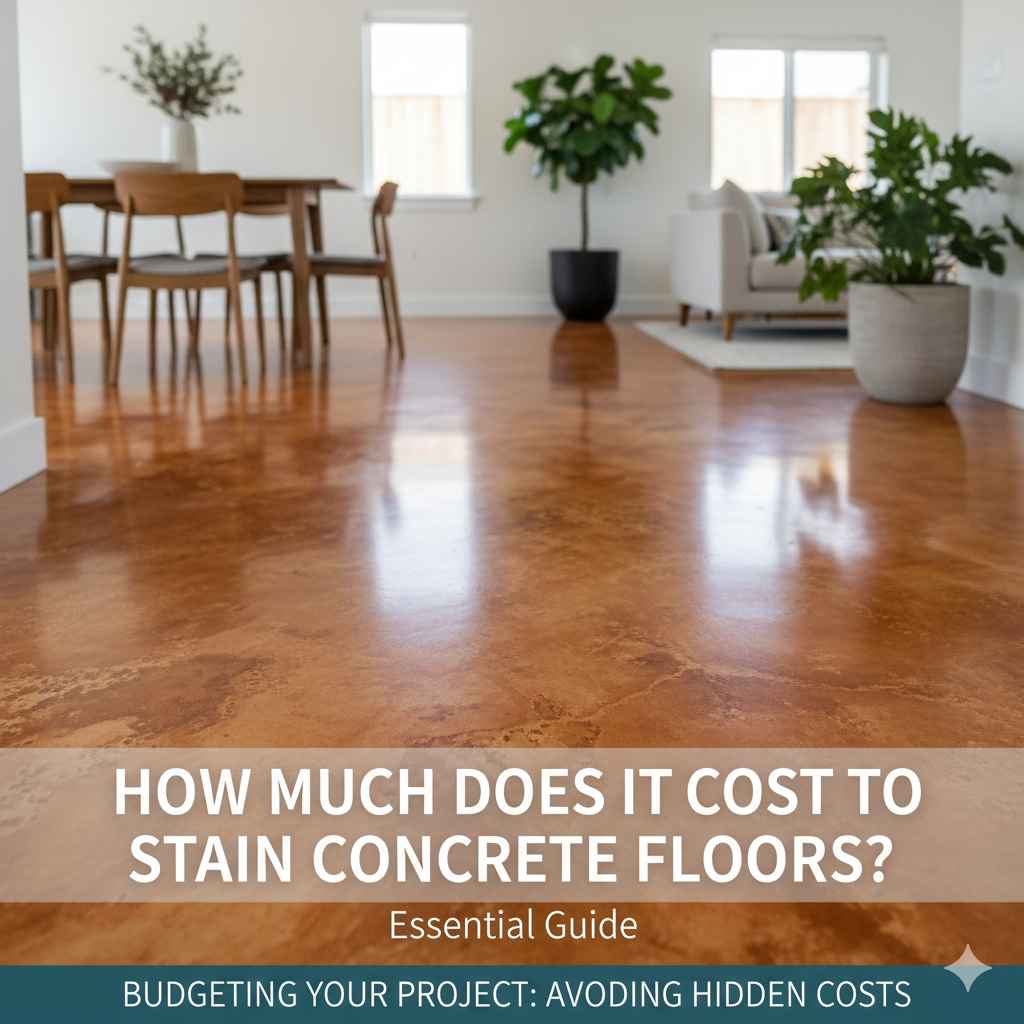
How Much Does It Cost Do Stained Concrete Floors? Essential
The total cost to do stained concrete floors ranges widely, typically from $3 to $15 per square foot for DIY application to $10 to $30+ per square foot when hiring professional contractors, depending on the finish and surface preparation needed.
Welcome! Thinking about upgrading those dull, gray basement or garage floors? Stained concrete is a fantastic way to add rich color and a high-end look without the high price tag of tile or hardwood. But like any home project, the big question is always: what will this really cost? It can feel overwhelming trying to guess if you need $500 or $5,000. Don’t worry! I’m here to break down every dollar involved, from the tools you need to the chemicals you buy. We will look at both doing it yourself (DIY) and hiring an expert so you can make the best, most confident decision for your budget and your home.
Let’s dive in and figure out exactly how much it costs to achieve those beautiful, durable stained concrete floors you’ve been dreaming of.
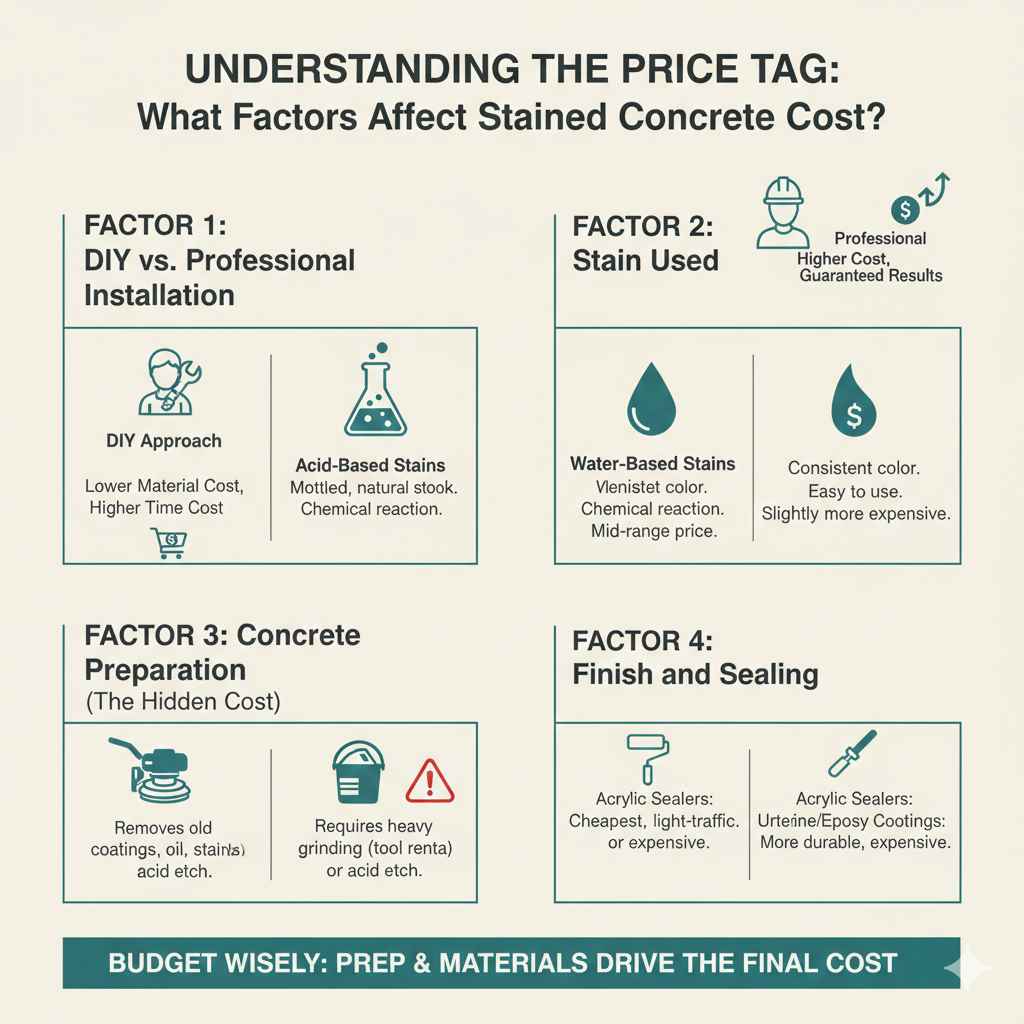
Understanding the Price Tag: What Factors Really Affect Stained Concrete Cost?
When budgeting for stained concrete, it’s not a one-size-fits-all price. The final cost is like a recipe—it depends on the ingredients you choose and how much prep work is required. Think of these factors as levers you can pull to control your spending.
Factor 1: DIY vs. Professional Installation
This is the single biggest factor influencing the total cost. Doing the work yourself saves you the labor cost, which is often 50% or more of a professional quote. However, DIY means buying all the tools and taking the time to learn the technique.
DIY Approach: Lower Material Cost, Higher Time Cost
If you’re comfortable with mixing chemicals, using grinders, and handling sealers, you only pay for the materials, cleanup supplies, and your time. This is the most affordable route.
Professional Approach: Higher Cost, Guaranteed Results
Hiring a pro ensures the concrete is perfectly cleaned, etched, and sealed. They come with industrial grinders and sprayers, meaning faster, often more consistent results. You pay a premium for their expertise and efficiency.
Factor 2: Type of Stain Used
The stain is the heart of the color, and different types have different price points and application challenges. We generally see two main types:
- Acid-Based Stains: These penetrate the concrete, creating a mottled, natural stone look. They react chemically, offering unique colors. They are generally mid-range in price but require careful handling (safety gear!).
- Water-Based Stains: These are easier to use, offer more consistent color, and often have fewer fumes. They can be slightly more expensive per gallon than acid stains, but cleanup is a breeze.
Factor 3: Concrete Preparation (The Hidden Cost)
This is where many beginners underestimate the budget. Concrete floors are rarely perfect right out of the box. If your slab is old, stained with oil, or has existing coatings, you must remove them first. This step determines how well the stain adheres.
If you need heavy grinding (to remove old epoxy or paint), you might need to rent a floor grinder—a significant upfront rental cost. If the concrete is already clean and relatively new, you might just need a good acid etch wash, which is much cheaper.
Factor 4: Finish and Sealing
Staining only provides color; sealing provides protection and shine. You must seal stained concrete to prevent wear, staining, and moisture penetration. The sealer choice affects the final cost:
- Acrylic Sealers: The cheapest option, often used for lighter-traffic areas.
- Urethane or Epoxy Coatings: More durable, offering better scratch and chemical resistance, making them the most expensive sealants.
Cost Breakdown: DIY Stained Concrete (Per Square Foot Estimates)
If you are ready to grab your safety goggles and tackle this yourself, here is a realistic breakdown of what the materials will cost you per square foot. These estimates are based on a standard 1,000 sq. ft. area where the concrete is already fairly clean and only needs light mechanical preparation (like scrubbing and light etching).
| Item Category | Estimated Cost Range (Per Sq. Ft.) | Notes for Beginners |
|---|---|---|
| Stain Materials (Acid or Water-Based) | $0.50 – $2.50 | Includes the cost of the stain, mixing water, and perhaps a practice scrap piece. |
| Concrete Prep & Etching Agents | $0.25 – $1.00 | Muriatic acid substitute or commercial cleaner/etcher. |
| Sealer (High-Quality Urethane) | $1.50 – $4.00 | Crucial for longevity; don’t skimp here! |
| Application Tools (Brushes, Rollers, Sprayers) | $0.30 – $1.00 | Disposable brushes, rollers, and a pump sprayer. (Some tools can be reused.) |
| Safety Gear (Gloves, Respirators, Goggles) | $0.10 – $0.30 | Essential when working with chemical stains. |
| TOTAL DIY Material Cost (Estimated) | $2.65 – $8.80 Per Sq. Ft. | Does not include floor grinding rental. |
Key takeaway for DIY: If you need to rent a diamond floor grinder (for heavy prep work), you need to add about $100–$300 for the rental fee, plus the cost of diamond pads (which wear down quickly). This rental cost can easily push your per-square-foot DIY total closer to the lower end of the professional range if you have a small area.
Cost Breakdown: Hiring a Professional Staining Contractor
When you hire a contractor, their quote includes all the materials listed above, plus their labor, insurance, expertise, and specialized equipment (like industrial vacuums and grinders). Contractors usually provide a bundled price per square foot.
| Job Type | Estimated Total Cost Range (Per Sq. Ft.) | What’s Usually Included |
|---|---|---|
| Basic Water-Based Stain & Sealer (Light Prep) | $10.00 – $15.00 | Cleaning, light etching, simple stain application, one coat of acrylic sealer. Suitable for clean slabs. |
| Standard Acid Stain & High-Performance Seal (Moderate Prep) | $15.00 – $22.00 | Includes mild grinding, acid staining for depth, and a durable urethane or epoxy topcoat. |
| Custom/Decorative Staining (Heavy Prep) | $22.00 – $35.00+ | Complex patterns, multiple colors, heavy grinding to expose aggregate, and premium, multi-layer sealing systems (e.g., metallic epoxies). |
Professionals base their quotes on the complexity. A basement floor that is already smooth and empty will cost less than a garage floor covered in years of car oil and tire marks. Always ask what preparation level is included in their bid!
Detailed Cost Analysis: Tools and Equipment
If you choose the DIY path, buying or renting tools is a big initial hurdle. Here is what you might need, focusing on what a beginner needs versus what a pro uses.
Essential DIY Tools You Must Have
You can’t just pour the stain on the floor! You need specific tools to apply and seal correctly. If you skip these, your floor will look streaky and uneven.
- Safety Gear: Chemical-resistant gloves, full-face respirator (especially for acid stains), eye protection. Never skimp on safety!
- Concrete Cleaner/Degreaser: To remove surface dirt and oil.
- Etching Solution: Often a safer, powdered muriatic acid alternative.
- Pump Sprayers: At least two—one for the etcher/cleaner, one for the stain. Get a plastic model compatible with chemicals (HDPE).
- Brushes and Rags: For spot treatment and cleanup.
- Hose and Pressure Washer: For thorough rinsing between steps.
- High-Quality Sealer Rollers: Specific lamb’s wool or microfiber rollers designed for thick sealants.
When to Rent a Concrete Grinder
For a truly professional finish where the stain penetrates deeply and evenly, you often need to open the pores of the concrete. This is done by grinding off the old sealer, curing compounds, or the top layer of dusty concrete (laitance).
For a homeowner doing a garage, renting a walk-behind floor grinder costs roughly $150–$300 per day. You will also need to rent an industrial HEPA vacuum system (often bundled with the grinder) to keep the dust under control. Dust management is crucial; silica dust is dangerous. Always check the safety recommendations from organizations like the Occupational Safety and Health Administration (OSHA) regarding concrete dust exposure.
Stain Type Comparison: Cost vs. Durability
Choosing between acid and water-based stains impacts your application cost, time, and the final look. Here is a comparison to help you decide which fits your budget and needs best.
| Feature | Acid Stain | Water-Based Stain |
|---|---|---|
| Chemical Reaction | Yes (permanent reaction) | No (topical color) |
| Aesthetic | Mottled, natural, stone-like, unpredictable | Consistent, vibrant, more uniform color |
| Ease of Use (DIY) | Difficult; requires quick work and precision | Easier; slower drying allows for blending |
| Fumes/Smell | Very strong (requires excellent ventilation) | Low odor |
| Typical Material Cost | Slightly lower per gallon | Slightly higher per gallon |
Budgeting for the Finishing Touches: The Sealer
As Md Meraj, I always tell people: staining is the fun part, but sealing is the most important part for longevity. A cheap sealer applied over expensive stain means you’ll be redoing the floor in two years. Investing in a good sealer prevents premature wear.
Sealer Cost Considerations:
- Coverage Rate: Most sealers cover about 250–400 sq. ft. per gallon, per coat. Most floors need two coats minimum.
- Solvent-Based vs. Water-Based: Solvent-based (like urethanes) offer superior durability and high gloss but have strong odors and require excellent ventilation during application. Water-based sealers are easier for beginners but sometimes slightly less durable over many years of heavy traffic.
- Gloss Level: Matte, Satin, Semi-Gloss, or High-Gloss finishes are generally the same price, but ultra-high-performance industrial sealers (like polyurethanes) cost significantly more per gallon.
Pro Tip for Beginners: When using a water-based stain, a water-based acrylic sealer is often the easiest pairing. If you choose an acid stain, a high-solids urethane sealer will provide the best chemical resistance, but be prepared for intense fumes during application.
Saving Money on Your Stained Concrete Project
You don’t have to spend a fortune to get a great floor. Here are practical ways to shave dollars off the total cost without sacrificing quality.
1. Master Surface Prep Yourself
If your concrete is new (poured within the last year) and hasn’t been treated with a curing compound, you might be able to skip the expensive grinder rental. A thorough power wash, degreasing, and chemical etch might be all you need. Save the $200 grinder fee by doing the prep by hand with strong scrubbing pads and cleaner.
2. Buy Stain and Sealer in Bulk (If Applicable)
If you have a large area (over 1,500 sq. ft.), buying five-gallon buckets of stain and sealer instead of one-gallon cans almost always results in a lower per-gallon price. Compare the unit costs carefully.
3. Choose Simpler Color Schemes
The cost increases dramatically when you introduce multiple colors, masking tape patterns, or complex mottling techniques. A single, solid color applied evenly is the least expensive and least labor-intensive application.
4. Seal Smartly
For an interior basement or laundry room that won’t see heavy abuse, an economical, high-quality acrylic sealer might suffice. Save the premium urethane sealer for high-traffic areas like the main garage bay. A good rule of thumb is to apply two thin coats of sealer rather than one thick coat for better adhesion and fewer streaks.
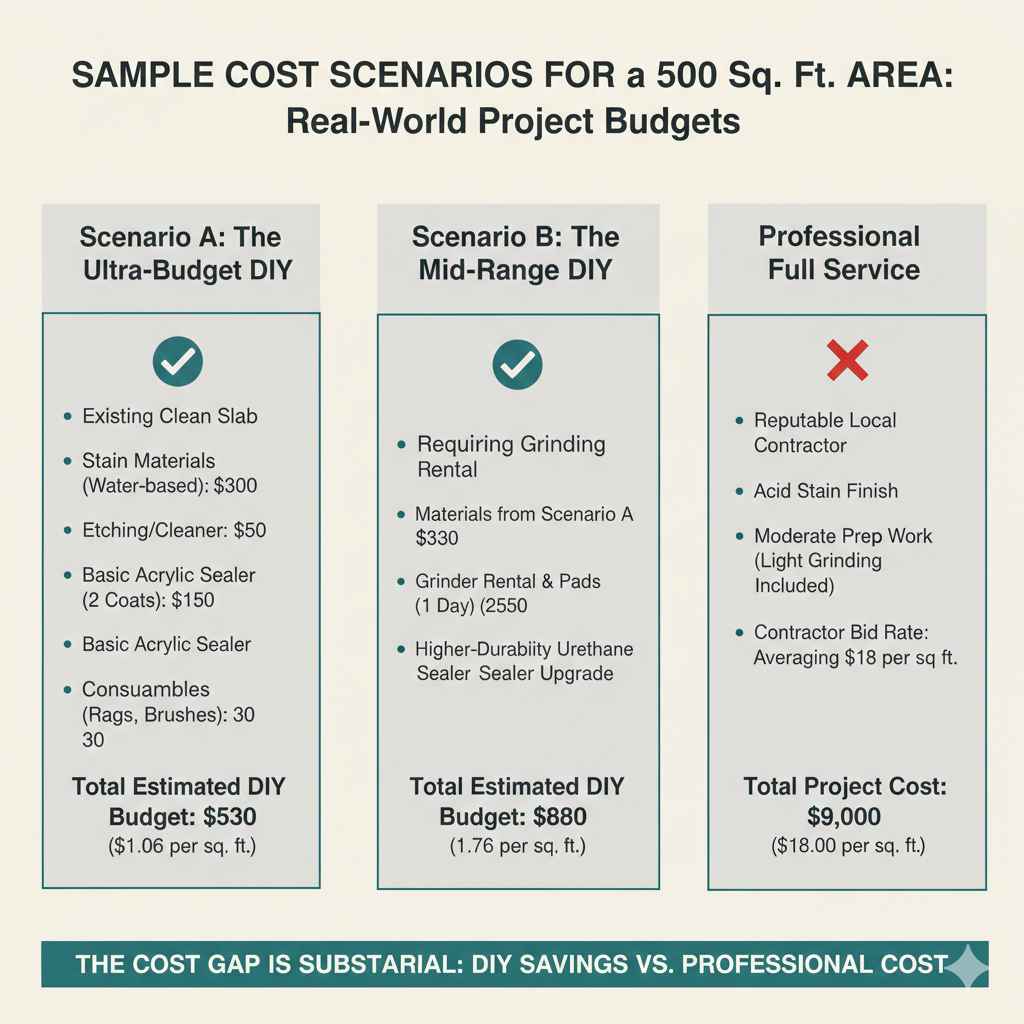
Sample Cost Scenarios for a 500 Sq. Ft. Area
Let’s put these numbers into perspective for a typical homeowner project—a 500-square-foot garage or basement area. This helps ground the abstract per-square-foot numbers into real-world project budgets.
Scenario A: The Ultra-Budget DIY (Existing Clean Slab)
This assumes the concrete is smooth, clean, and requires only basic etching. You borrow a pump sprayer and already own basic safety gear.
- Stain Materials (Water-based): $300
- Etching/Cleaner: $50
- Basic Acrylic Sealer (2 Coats): $150
- Consumables (Rags, Brushes): $30
- Total Estimated DIY Budget: $530 (Approx. $1.06 per sq. ft.)
Scenario B: The Mid-Range DIY (Requiring Grinding Rental)
This assumes you need to rent a grinder for a few hours to remove an old tire mark sealant and achieve good adhesion.
- Materials from Scenario A: $530
- Grinder Rental & Pads (1 Day): $250
- Higher-Durability Urethane Sealer Upgrade: $100
- Total Estimated DIY Budget: $880 (Approx. $1.76 per sq. ft.)
Scenario C: Professional Full Service
Hiring a reputable local contractor for a durable acid stain finish on a 500 sq. ft. area that requires moderate prep work (light grinding included).
- Contractor Bid Rate: Averaging $18 per sq. ft.
- Total Project Cost: 500 sq. ft. x $18/sq. ft. = $9,000
- Total Estimated Professional Budget: $9,000 (Approx. $18.00 per sq. ft.)
As you can see, the cost gap between DIY and professional work is substantial, emphasizing why preparation choices heavily influence your final savings.
Frequently Asked Questions (FAQ) for Beginners
Q1: Is stained concrete cheaper than epoxy coating?
A: Generally, yes. Simple acid or water-based staining with a basic acrylic sealer is cheaper than a full 2- or 3-coat epoxy garage floor system. Epoxy costs tend to start around $18–$25 per square foot installed because it involves thicker layering and specialized preparation.
Q2: How long does the staining process take for a beginner?
A: For a beginner, plan for at least three full days for a 500 sq. ft. area: Day 1 is cleaning/etching and rinsing. Day 2 is staining and rinsing. Day 3 is the first coat of sealer, allowing a full day for curing before applying the second coat on Day 4. Professionals can often compress this into two days.
Q3: Can I stain over old paint or existing tile adhesive?
A: No, you absolutely cannot stain over most paints, sealers, or adhesive residue effectively. The stain must penetrate the concrete. If there is a coating on top, that coating must be removed—usually via mechanical grinding or heavy chemical stripping—which significantly increases your prep cost and time.
Q4: What is the cheapest way to color my concrete floor?
A: The absolute cheapest way is DIY using a low-cost water-based stain on a slab that requires zero grinding and only a simple etching. However, this saves money upfront at the expense of long-term durability and the rich look acid stains offer.
Q5: How much does sealing cost if I do it myself?
A: High-quality, durable urethane or epoxy floor sealer, applied in two coats by a DIYer, usually runs between $3.00 and $5.00 per square foot for materials. Remember to factor in the cost of specialized rollers and application tools.
Q6: Do I need a respirator for acid staining?
A: Yes, a respirator rated for acid vapors (usually an N95 combined with organic vapor cartridges) is non-negotiable when working with acid stains, especially when mixing the chemicals. Always prioritize your lung safety over cutting corners on gear costs.
Conclusion: Confidence in Your Concrete Budget
Deciding how much to spend on stained concrete floors comes down to balancing your labor (time) against professional expertise. If you are looking for the absolute lowest cost, a thorough DIY approach using water-based materials on a clean, unsealed slab can keep material costs under $3 per square foot. If you want that deep, variegated, stone-like finish that lasts for decades, prepare to invest closer to $15–$22 per square foot, either through your own time managing heavy prep work or by trusting an experienced contractor.
Remember the vital steps: preparation dictates success, and sealing dictates longevity. By understanding where every dollar goes—from the safety gear you wear to the quality of the urethane you roll on—you gain the confidence to negotiate better or execute a flawless DIY job. You now have the essential knowledge to budget accurately and turn that boring slab into a stunning feature of your home. Go ahead, start planning those beautiful new floors!