How Much Does It Cost to Replace Hardwood Floors?
Thinking about replacing your hardwood floors can feel a bit confusing, especially if it’s your first time. You want to know the numbers, but it’s hard to get a clear picture. This guide makes it easy.
We will break down all the costs involved, step by step, so you know exactly what to expect. Get ready to understand your flooring project.
Understanding Hardwood Floor Replacement Costs
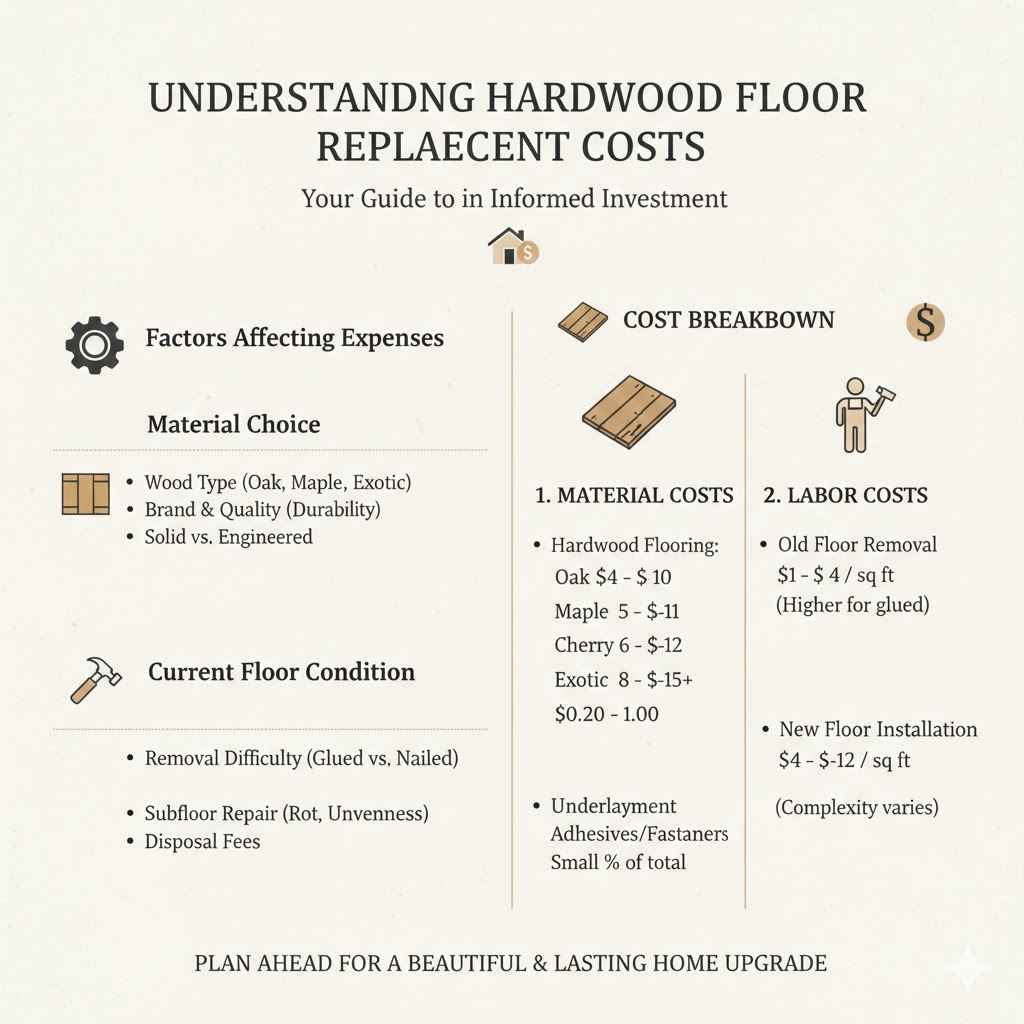
Replacing hardwood floors is a significant home improvement project. Many homeowners wonder, “How Much Does It Cost to Replace Hardwood Floors?” This question is common because the price can change a lot depending on many factors. It’s not just about the new wood; you also have to think about labor, removal of the old floor, and any extra prep work needed for your subfloor.
For beginners, this can seem like a lot to figure out.
This section will guide you through the main costs you’ll encounter. We’ll look at the price of different types of hardwood, how labor costs add up, and other expenses that can affect your total budget. Knowing these parts helps you plan better and avoid surprises.
We want to give you a clear view of your expenses.
Factors Affecting Hardwood Replacement Expenses
Several things can make the cost of replacing hardwood floors go up or down. The type of wood you choose is a big one. Some woods are much more expensive than others.
For example, exotic hardwoods from faraway places usually cost more than domestic woods like oak or maple. The brand and the quality of the wood also play a role. Higher quality wood often means better durability and a nicer look, but it comes at a higher price tag.
Think about how long you want the floors to last and how much foot traffic they will get. These details help you decide on the best wood for your home and budget.
The condition of your current floors and subfloor matters too. If your old hardwood is glued down, it can be harder and take longer to remove than if it was nailed down. This means more labor time, which increases the cost.
Sometimes, the subfloor underneath might have damage, like rot or unevenness. Fixing these issues before installing new floors is important for a good result. It adds to the total price but prevents future problems.
Always plan for these potential extra costs.
Material Costs for New Hardwood Flooring
The materials you buy are a big part of the overall cost of replacing hardwood floors. The most significant material cost is the new hardwood flooring itself. You can find hardwood in many varieties, each with its own price range.
Solid hardwood planks are made from a single piece of wood, while engineered hardwood has a top layer of real wood veneer over plywood layers. Solid hardwood is generally more expensive and can be sanded down many times over the years. Engineered hardwood is often more stable in areas with humidity changes and can be slightly less expensive.
Here are some common types of wood and their typical price ranges per square foot:
- Oak Hardwood: Oak is a very popular choice because it’s strong and looks good. It usually costs between $4 to $10 per square foot for the material. Red oak and white oak are common, with slight price differences.
- Maple Hardwood: Maple is another durable domestic wood. It tends to be a bit harder than oak and can cost between $5 to $11 per square foot for the material. Its smooth grain makes it a favorite for modern homes.
- Cherry Hardwood: Cherry wood has a rich, warm color that darkens beautifully with age. It’s softer than oak or maple and is usually priced between $6 to $12 per square foot for the material.
- Exotic Hardwood (e.g., Brazilian Cherry, Walnut): These woods often come from tropical regions and offer unique colors and grain patterns. They can be very hard and durable. Prices typically range from $8 to $15 per square foot for the material, sometimes even more for rare species.
Besides the wood planks, you’ll also need to buy underlayment. This material goes between the subfloor and the hardwood. It helps with sound insulation and can provide a moisture barrier.
Underlayment typically costs between $0.20 to $1.00 per square foot. You might also need special adhesives or fasteners depending on how your new floor is installed. These add a small percentage to your material costs but are essential for a proper installation.
Labor Costs for Removal and Installation
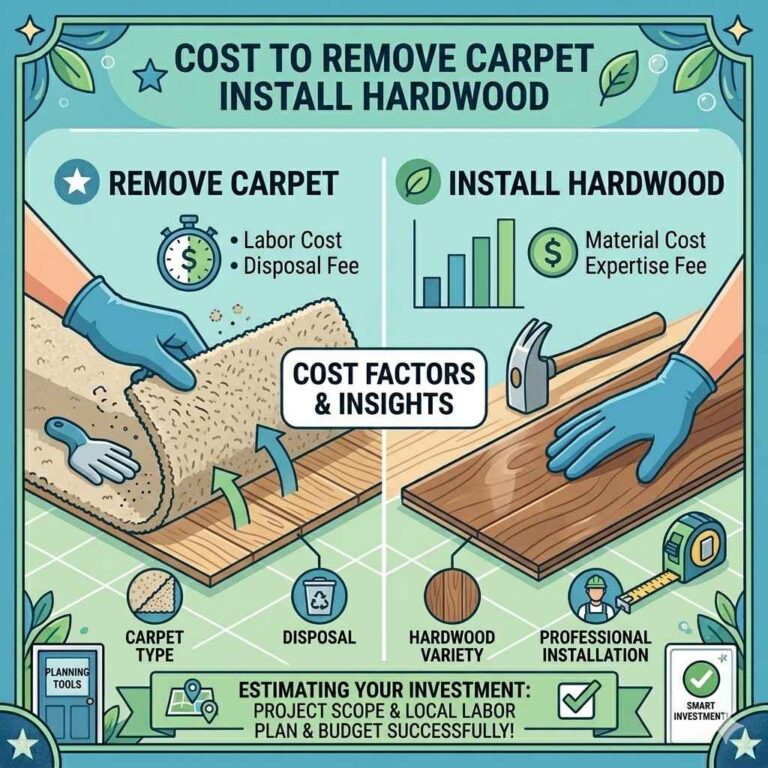
Labor costs are often a substantial part of how much it costs to replace hardwood floors. This includes two main parts: removing the old flooring and installing the new hardwood. The price for labor can vary greatly depending on where you live and the company you hire.
Removing old hardwood floors typically costs between $1 to $4 per square foot. This price depends on how the old floor was installed. If it was nailed down, it’s usually easier and cheaper to remove than if it was glued down.
Removing glue can be a messy and time-consuming process, requiring special tools and more effort, which increases the labor cost. Sometimes, the old flooring can be salvaged for reuse, but this is rare for a full replacement. The contractors will also need to dispose of the old materials properly, and this disposal fee can sometimes be included in the removal cost.
Installing new hardwood floors is a skilled job. The average cost for professional installation can range from $4 to $12 per square foot. This cost covers the time and expertise of the installers.
It includes preparing the subfloor, laying the planks, and making sure everything is level and secure. The complexity of the room layout, like many corners or small spaces, can also increase installation time and cost. Some installers charge an hourly rate, while others give a flat price per square foot.
Always get detailed quotes that break down removal and installation separately.
Comparing Hardwood Flooring Options and Their Costs
When you’re looking at how much it costs to
We will compare solid hardwood and engineered hardwood. We will also touch on different wood species and their typical cost ranges. This comparison helps you see where your money is going and what you are getting for it.
It’s about finding the best value for your home.
Solid Hardwood vs. Engineered Hardwood
Solid hardwood flooring is made from a single, solid piece of wood. This means each plank is exactly what it appears to be, all the way through. Because it’s solid wood, it can be sanded and refinished many times over its lifespan.
This is a major advantage if you want to update the look of your floors in the future or repair scratches and dents. However, solid hardwood is more sensitive to changes in humidity and temperature. It’s best suited for main living areas on the ground floor or upper levels of a home that have stable climate control.
Engineered hardwood flooring is constructed with multiple layers. It has a top layer of real hardwood veneer (usually 0.5mm to 4mm thick) glued to several layers of plywood or high-density fiberboard (HDF) underneath. This construction makes engineered hardwood more stable and less prone to expanding or contracting with changes in humidity and temperature.
Because of this, it can be installed in basements or other areas where moisture levels might be higher. While it can be sanded and refinished, it typically only allows for one or two refinishing sessions, depending on the thickness of the veneer. It is often slightly less expensive than solid hardwood.
Here’s a quick comparison of their costs per square foot:
| Flooring Type | Material Cost Per Sq Ft | Installation Cost Per Sq Ft | Total Estimated Cost Per Sq Ft |
|---|---|---|---|
| Solid Hardwood | $4 – $15+ | $4 – $12 | $8 – $27+ |
| Engineered Hardwood | $3 – $12+ | $4 – $12 | $7 – $24+ |
The total cost includes both the material and the installation. As you can see, engineered hardwood can sometimes be a more budget-friendly option, especially if you are looking at mid-range to higher-end wood species. However, the longevity of solid hardwood, with its multiple refinishing capabilities, can offer better long-term value for some homeowners.
Wood Species and Their Price Points
The specific type of wood you choose has a significant impact on how much it costs to replace hardwood floors. Different wood species have varying levels of hardness, grain patterns, and natural colors, all of which influence their market price.
- Oak: As mentioned before, oak is a standard and highly sought-after wood. Red oak typically costs a bit less than white oak. Its Janka hardness rating (a measure of wood hardness) is around 1290 for red oak and 1360 for white oak, making it quite durable.
- Maple: Maple is another very hard wood with a Janka rating of around 1450. Its light color and subtle grain make it a good choice for modern interiors. The material cost is often comparable to oak or slightly higher.
- Hickory: Hickory is one of the hardest domestic woods available, with a Janka rating of up to 1820. This makes it incredibly resistant to dents and scratches. Its strong, varied grain patterns and color variations are visually appealing, and it can be pricier, often in the $6 to $13 per square foot range for material.
- Pine: Pine is a softer wood with a much lower Janka rating (around 690 to 870). It’s less expensive, often costing $3 to $7 per square foot for material. While beautiful, it scratches and dents more easily, which might not be ideal for high-traffic areas unless you prefer a rustic, worn look.
- Walnut: Walnut offers a deep, rich brown color and beautiful grain. It’s softer than oak or maple, with a Janka rating around 1010. Its luxurious appearance makes it a premium choice, with material costs ranging from $7 to $14 per square foot.
The price also depends on the grade of the wood. Higher grades have fewer knots and imperfections, leading to a more uniform look and a higher price. Lower grades might have more natural character, including knots and color variations, which can be appealing to some but will cost less.
Finishing and Installation Styles
The way your new hardwood floors are finished and installed also affects the final cost. Most hardwood floors are sold unfinished and then sanded and finished on-site after installation. This allows for a perfectly smooth, seamless look and lets you choose the exact stain color and finish type you want.
On-site finishing usually involves multiple steps: sanding, staining (optional), sealing, and applying top coats. This process can add $2 to $5 per square foot to the total cost.
Alternatively, you can buy prefinished hardwood floors. These are stained and sealed in a factory before they are shipped to you. Prefinished floors are often quicker to install because there’s no on-site finishing needed.
They also tend to have more durable finishes, as factory conditions are more controlled. However, prefinished floors might have visible bevels between planks, creating a more textured look, and the selection of stain colors might be more limited. The material cost for prefinished hardwood is often slightly higher than unfinished, but you save on on-site finishing labor.
Installation styles can also vary. The most common is a standard plank installation, where planks are laid parallel to each other across the room. Other styles, like herringbone or chevron patterns, involve laying the planks at angles to create intricate designs.
These patterns require more cutting and precise work, significantly increasing labor costs. A complex pattern like herringbone can add $5 to $15 per square foot or more to the installation cost compared to a standard straight lay.
Additional Costs to Consider for Hardwood Replacement
Beyond the wood itself and basic labor, several other expenses can come up when you’re replacing hardwood floors. It’s important to budget for these potential costs to avoid unexpected financial strain and ensure your project goes smoothly from start to finish.
This part will cover things like preparing your subfloor, the cost of transitioning to other flooring types, and potential issues with baseboards. Knowing these can help you get accurate quotes and a realistic budget. It’s all about being prepared.
Subfloor Preparation and Repair
The subfloor is the foundation of your new hardwood floors. If it’s not in good condition, your new floors won’t look or perform as well as they should. Subfloor preparation and repair can be a significant, and sometimes unexpected, cost.
A properly prepared subfloor needs to be clean, dry, level, and structurally sound.
Common subfloor issues include:
- Unevenness: If the subfloor is not level, your new hardwood planks might creak or feel bouncy. Minor unevenness can sometimes be fixed by sanding high spots or filling low spots with a leveling compound. This might add $1 to $3 per square foot to the labor cost.
- Damage: Water damage can cause the subfloor to rot or warp. If the subfloor is severely damaged, sections of it may need to be replaced entirely. This is a more involved repair and can cost anywhere from $5 to $20 per square foot for materials and labor, depending on the extent of the damage.
- Creaking Floors: Sometimes, subfloors can become loose over time, causing creaks. Additional screws might be needed to re-secure the subfloor to the joists, which is usually a minor cost, perhaps $0.50 to $1 per square foot.
- Existing Flooring Removal Residue: If the previous flooring was glued down, remnants of the adhesive may remain. These must be removed or smoothed out before installing new hardwood, adding to the preparation time and cost.
Most flooring installers will include a basic level of subfloor prep in their quote, but they should also clearly state what isn’t included. It is always a good idea to have your installer inspect the subfloor thoroughly before they start and discuss any potential issues and their associated costs.
Transitions to Other Flooring Types
Most homes have different types of flooring in various rooms. When replacing hardwood floors, you’ll need to consider how the new wood will meet existing flooring in adjacent rooms, such as tile, carpet, or vinyl. This connection point, called a transition, needs to be seamless and properly installed to avoid tripping hazards and to look neat.
The cost of transitions depends on the type of flooring they are connecting to and the method of installation. For instance, transitioning from hardwood to carpet might involve a simple transition strip. However, transitioning to tile or stone might require a specialized reducer strip that bridges the height difference and material change.
These transition strips themselves can cost anywhere from $10 to $50 or more per piece, depending on the material (wood, metal, plastic) and length.
The labor to install these transition pieces is usually a part of the overall flooring installation cost, but complex transitions can take more time. If the subfloor heights are significantly different between the two flooring types, additional work may be needed to make the transition smooth. This could involve adding shims or using a thicker underlayment on one side, potentially adding $1 to $5 per linear foot to the labor cost for the transition area.
A common scenario is replacing hardwood in a living room that opens into a kitchen with tile. If the tile is thicker than the new hardwood, a custom-made transition piece or a significant adjustment might be needed to prevent a sharp step. If the old hardwood was installed at a specific height, and the new flooring is thinner or thicker, the transition might be more noticeable and require extra attention.
Baseboard and Trim Work
When new hardwood floors are installed, it’s often necessary to remove and reinstall or
Removing and reinstalling baseboards typically costs around $1 to $3 per linear foot. This includes carefully prying them off the wall, storing them, and then reattaching them once the new flooring is in place. If the baseboards are damaged during removal or if you choose to
The cost of new baseboards varies greatly depending on the material and style. Standard pine baseboards might cost $1 to $4 per linear foot for the material, while more elaborate profiles or hardwood options can cost $5 to $15 or more per linear foot. Installation labor for new baseboards would be in addition to the flooring labor, adding another $2 to $5 per linear foot.
It’s also important to consider other trim work, such as door casings or quarter-round molding, which may also need adjustment or replacement. These elements contribute to the overall finished look of your room, so factoring in their potential cost is wise when planning how much it costs to replace hardwood floors.
Calculating Your Total Hardwood Floor Replacement Budget
Now that we’ve looked at the individual components, let’s put it all together to get a better idea of your total budget. Knowing how much it costs to replace hardwood floors is key to planning your project effectively.
We’ll provide a sample budget to help you visualize the expenses. This will give you a concrete example of how the numbers can add up. It’s about practical planning.
Sample Budget Breakdown for a 15×15 Foot Room
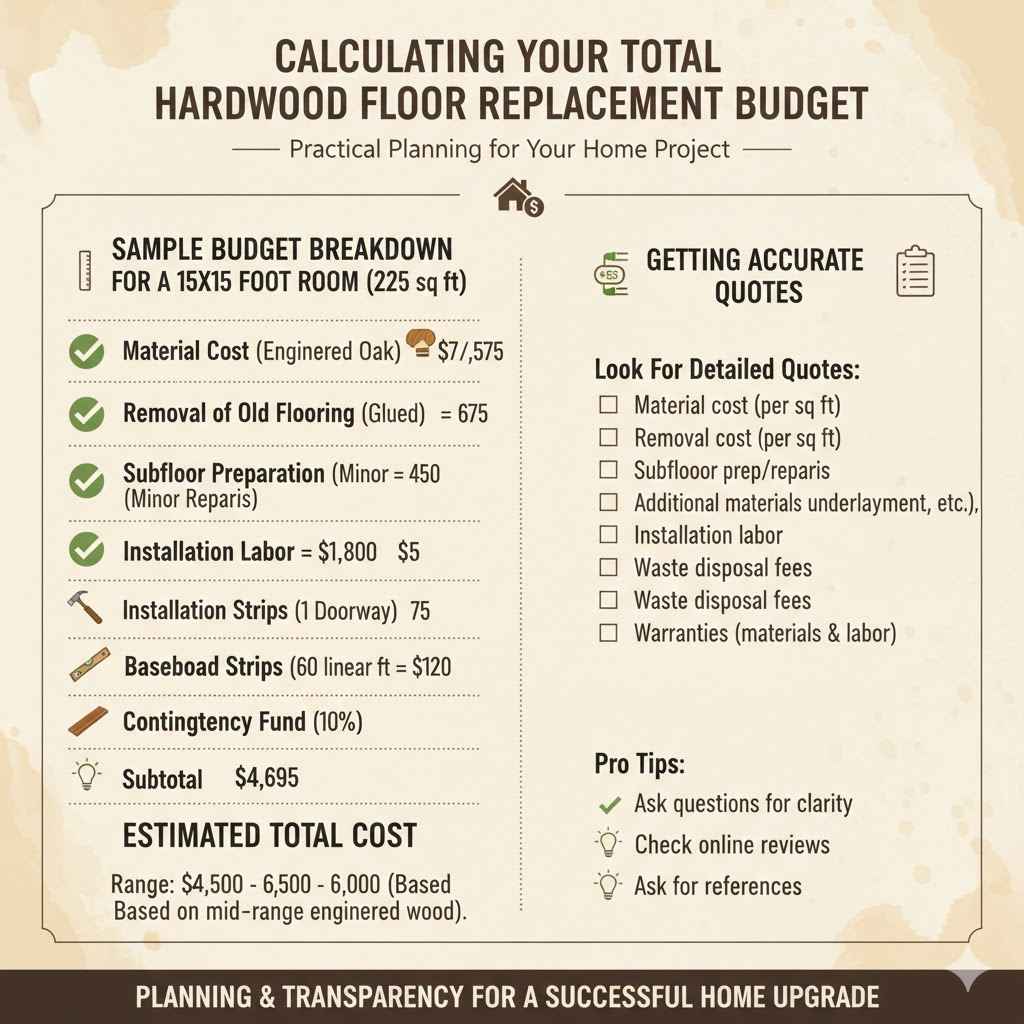
Let’s imagine you have a room that is 15 feet by 15 feet. This means it’s 225 square feet. We’ll use mid-range estimates for our calculation.
Here’s a possible breakdown:
- Material Cost (Mid-Range Engineered Hardwood): Let’s say you choose a good quality engineered oak. At $7 per square foot for the material, for 225 sq ft, this would be 225 * $7 = $1,575.
- Removal of Old Flooring: Assuming the old floor was glued down and requires moderate effort, let’s estimate $3 per square foot. For 225 sq ft, this is 225 * $3 = $675.
- Subfloor Preparation: We’ll budget $2 per square foot for minor leveling and cleaning. For 225 sq ft, this is 225 * $2 = $450.
- Installation Labor: For mid-range engineered hardwood, installation might be around $8 per square foot. For 225 sq ft, this is 225 * $8 = $1,800.
- Transition Strips: If you have one doorway transition, budget around $75 for the material and installation.
- Baseboard Reinstallation/Minor Repair: Let’s estimate $2 per linear foot for baseboard work. If you have 4 walls, each 15 feet long, that’s 60 linear feet. 60 * $2 = $120.
- Contingency Fund (10%): It’s always wise to add a buffer for unexpected issues. 10% of the estimated costs is a good practice. Total so far is $1,575 + $675 + $450 + $1,800 + $75 + $120 = $4,695. A 10% contingency would be $469.50.
Estimated Total Cost: $4,695 + $469.50 = $5,164.50
So, for a 15×15 foot room, you could expect to spend roughly between $4,500 and $6,000, depending on the specifics. This example uses engineered hardwood; solid hardwood would likely be higher, especially for premium species.
Getting Accurate Quotes
To get the most accurate idea of how much it costs to
When you get a quote, make sure it’s detailed. It should clearly break down:
- The cost of the flooring material per square foot.
- The cost of removal of the old flooring per square foot.
- The cost of subfloor preparation and any potential repairs needed.
- The cost of installation labor per square foot.
- The cost of any additional materials like underlayment, adhesives, or transition strips.
- Any fees for waste disposal.
- Details about warranties on both materials and labor.
Ask lots of questions. If something in the quote isn’t clear, ask for an explanation. A good contractor will be happy to walk you through every detail.
Also, check online reviews and ask for references from past clients to ensure you’re hiring someone reliable and skilled.
Frequently Asked Questions
Question: What is the cheapest way to replace hardwood floors?
Answer: The cheapest way often involves choosing less expensive wood species like pine or a budget-friendly engineered hardwood. Doing some of the prep work yourself, like clearing the room of furniture, can also save a little. Looking for sales or off-season deals on flooring materials can help reduce costs.
Sometimes, opting for laminate or vinyl plank flooring that mimics the look of hardwood can be significantly cheaper, but it’s not a true hardwood replacement.
Question: Can I install hardwood floors myself to save money?
Answer: Yes, you can save money by installing hardwood floors yourself if you have the right tools and skills. However, it requires precision, especially for cutting planks to fit and ensuring they are laid correctly. Mistakes can be costly, potentially ruining expensive materials or leading to a poor finish.
If you’re not experienced, it might be better to hire professionals for installation to ensure quality and longevity.
Question: How long does it take to replace hardwood floors?
Answer: The time it takes to replace hardwood floors can vary greatly depending on the size of the area, the complexity of the room, and the type of installation. For a standard room, removal and installation typically take 3 to 7 days. This includes removing the old flooring, preparing the subfloor, installing the new hardwood, and allowing for any necessary drying or curing time for finishes.
Answer: Yes, hidden costs can include necessary subfloor repairs (like fixing rot or unevenness), replacing damaged baseboards or trim, and dealing with unusual transition needs to other flooring types. Unexpected issues found during demolition are the most common source of hidden costs. It’s always best to budget about 10-15% extra for unexpected problems.
Question: How does the cost of replacing hardwood floors compare to other flooring types?
Answer: Replacing hardwood floors is generally more expensive than installing materials like vinyl plank, laminate, or carpet. However, it is often considered a worthwhile investment due to its durability and aesthetic appeal, which can increase home value. Hardwood’s long lifespan and ability to be refinished multiple times can make its long-term cost competitive.
Summary
Replacing hardwood floors involves several cost factors, from the wood type and installation style to essential subfloor prep and finishing. Prices vary widely, but a general estimate for removal and installation can range from $7 to $27+ per square foot. Planning carefully and getting detailed quotes will help you manage your budget effectively.