How Often Should Hardwood Floors Be Refinished
Many homeowners wonder about their wood floors. They look great, but sometimes they need a refresh. Figuring out How Often Should Hardwood Floors Be Refinished? can be tricky, especially if you’re new to home care.
You see scuffs, dull spots, or maybe even deeper scratches and think, “What now?” It’s a common question, and the answer isn’t a single number. This guide will make it super simple. We’ll walk through it step by step so you know exactly when and how to bring back that beautiful shine.
Understanding Hardwood Floor Refinishing Frequency
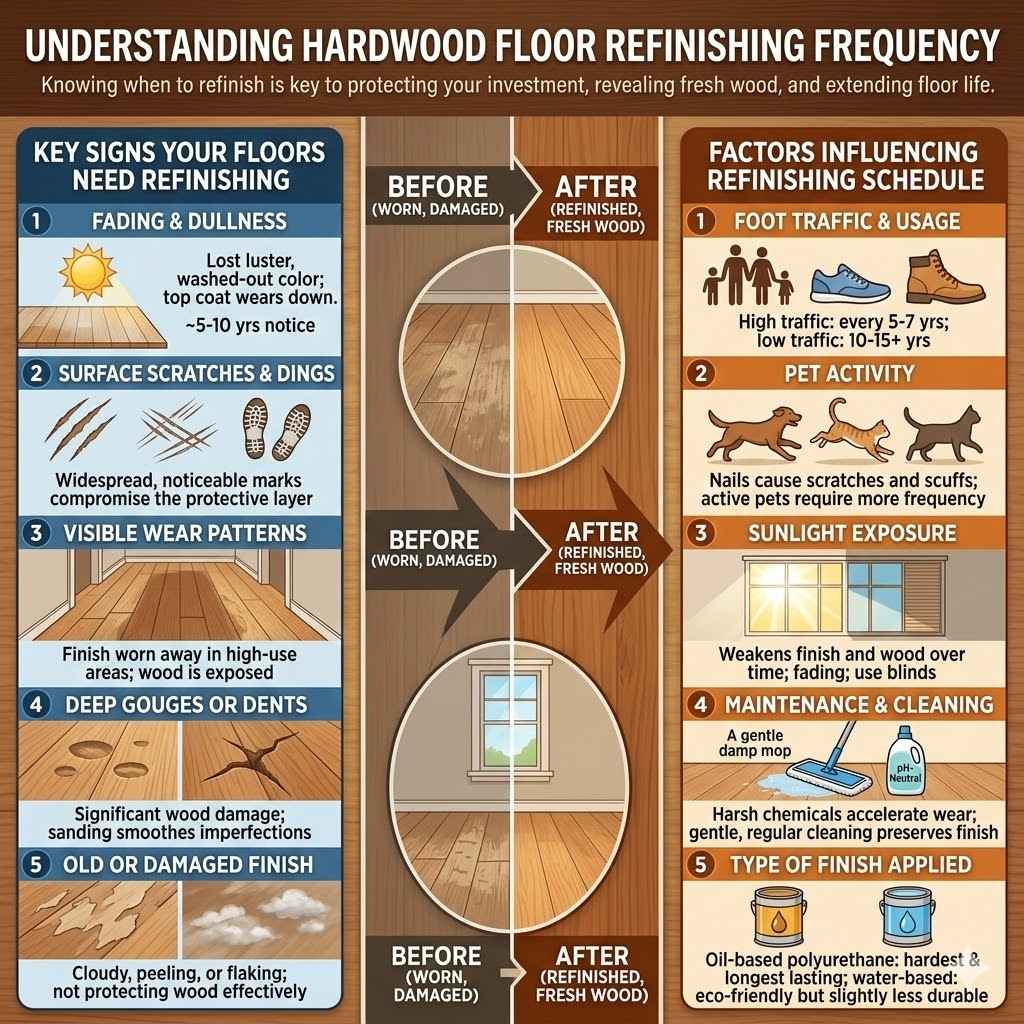
Knowing when to refinish your hardwood floors is important for keeping them looking their best. It’s not just about making them look pretty; it’s also about protecting your investment. Refinishing removes old finishes, scratches, and damage, revealing fresh wood.
This process can significantly extend the life of your floors. Many people find it hard to decide if it’s time or if a simple cleaning will do. We will explore the key signs and factors that help answer How Often Should Hardwood Floors Be Refinished? to avoid guesswork.
Signs Your Floors Need Refinishing
Your hardwood floors give clues when they are ready for a refresh. Paying attention to these signs helps you act before minor issues become big problems. A floor that needs refinishing often looks worn out.
It might have lost its original luster and appears dull.
Fading and Dullness
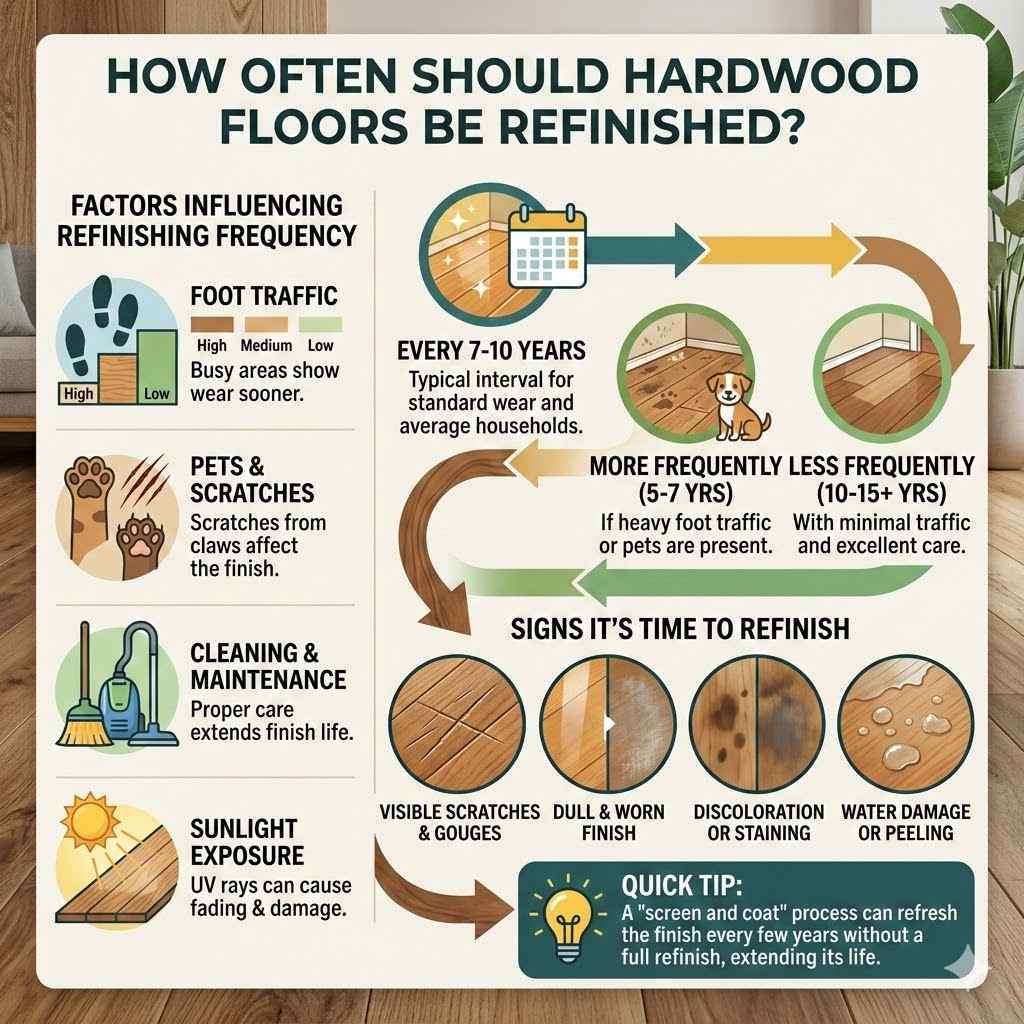
This is one of the most obvious signs. Over time, foot traffic, sunlight, and cleaning products wear down the protective top coat of your hardwood floors. If your floors have lost their shine and look consistently dull even after a good cleaning, it’s a strong indicator they need attention. The color might also seem washed out. A typical homeowner might notice this change over several years, often between five to ten years, depending on use.
Surface Scratches and Dings
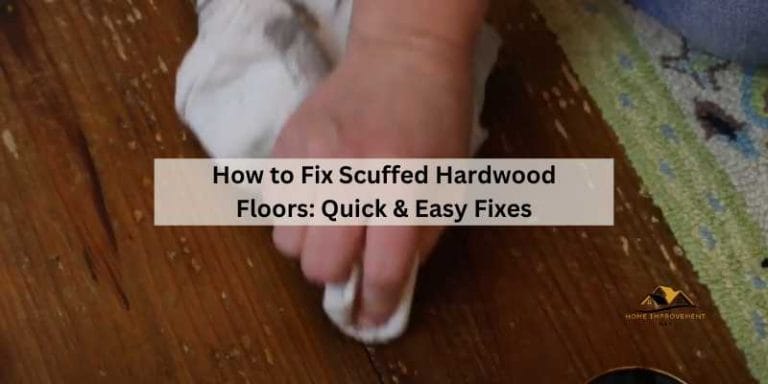
Light scratches are normal with hardwood floors. However, when these scratches become widespread and noticeable, especially on the surface of the finish, it’s a sign the protective layer is compromised. Deeper scratches that go into the wood itself also warrant refinishing. These marks interrupt the smooth surface and can accumulate dirt, making them look worse.
Visible Wear Patterns
In high-traffic areas like hallways, entryways, or living rooms, you might see areas where the finish is worn away. This often looks like a lighter or more scuffed area compared to less-used parts of the floor. These wear patterns mean the wood is exposed and vulnerable to further damage.
Deep Gouges or Dents
While minor scratches are common, significant gouges or dents mean the wood itself has been damaged. Refinishing can help smooth out these imperfections by sanding them away. If you can easily feel these indentations with your hand or they are visually striking, refinishing is likely necessary.
Old or Damaged Finish
Sometimes, the finish itself starts to fail. This can manifest as a cloudy appearance, peeling, or flaking. If the finish is no longer clear and smooth, it’s not protecting the wood effectively, and refinishing is the best solution.
Factors Influencing Refinishing Schedule
Several things affect how often you’ll need to refinish your hardwood floors. It’s not just about how old the floors are. The way you live in your home plays a huge role.
Think about how many people and pets are in your house. Also, consider the type of activities that happen on the floors.
Foot Traffic and Usage
High-traffic areas will wear down floors faster. If your home has a lot of people coming and going, or if you have pets with sharp nails, your floors will need attention more often. A busy family home might need refinishing every 5-7 years. A quieter home with fewer occupants might stretch that to 10-15 years.
Pet Activity
Pets can be tough on hardwood floors. Their nails can cause scratches and scuffs, even with regular nail trimming. If you have dogs or cats, especially larger or more active ones, you might find yourself refinishing more frequently. Scratch-resistant finishes can help, but they aren’t invincible.
Sunlight Exposure
Direct sunlight can fade and dry out hardwood floors over time. While it doesn’t directly cause the need for refinishing in the same way as scratches, prolonged sun exposure can weaken the finish and the wood itself. Using blinds or curtains can help protect your floors.
Maintenance and Cleaning Habits
How you clean your floors matters a lot. Using harsh chemicals or abrasive cleaning tools can damage the finish and accelerate wear. Regular, gentle cleaning with the right products will help preserve the finish and extend the time between refinishing. For instance, always use a damp (not wet) mop and pH-neutral cleaners.
Type of Finish Applied
Different finishes have varying durability. Polyurethane finishes, especially oil-based ones, tend to be harder and last longer than some older types of finishes. Water-based polyurethanes are more environmentally friendly but may wear a bit faster. Knowing what finish you have can help you estimate its lifespan.
The Refinishing Process Explained
Refinishing hardwood floors might sound like a big job, but it’s a straightforward process when broken down. It involves several key steps that work together to restore your floors. The goal is to remove the old, damaged surface and apply a new protective layer.
Understanding these steps helps demystify How Often Should Hardwood Floors Be Refinished? by showing the work involved.
Sanding the Floors
Sanding is the most critical part of refinishing. It removes the old finish and any minor imperfections. This step requires specialized equipment and careful technique to ensure an even result.
Drum Sanding
This is the primary tool for removing the old finish. A drum sander uses a rotating drum to hold sandpaper. It’s powerful and effective for taking off layers quickly. This process requires skill because going too deep or unevenly can damage the wood. Multiple grits of sandpaper are used, starting with coarse grit to remove the old finish and progressing to finer grits for a smooth surface. A typical floor might take a few hours to sand, depending on its size and condition.
Edge Sanding
The drum sander cannot reach tight areas like corners or along walls. For these spots, an edger sander is used. This tool is smaller and circular, allowing it to get into those hard-to-reach places. Like the drum sander, it uses different sandpaper grits to match the main sanding.
Detail Sanding
For very tight corners or intricate areas that even the edger can’t handle, a detail sander or an orbital sander might be used. This ensures the entire floor surface is uniformly prepared for the new finish.
Dust Containment
Modern sanding equipment is designed to minimize dust. However, some dust is inevitable. Good practices include sealing off the room with plastic sheeting and using vacuums with HEPA filters. Professional refinishers often use dust containment systems that capture up to 99% of airborne dust.
Staining (Optional)
After sanding, the wood is bare and ready for a new look. Staining is optional but allows you to change or enhance the color of your floors.
Choosing a Stain Color
Wood stains come in a vast range of colors, from natural wood tones to dark browns, grays, and even custom colors. The color you choose will dramatically change the appearance of your room. It’s a good idea to test a few colors in an inconspicuous area first to see how they look in your home’s lighting.
Applying the Stain
Stain is typically applied with a foam applicator, brush, or cloth. It’s worked into the wood grain and then excess is wiped off. The longer the stain sits before wiping, the darker the color will be. Even coats are important to avoid blotchiness.
Understanding Stain Types
Oil-based stains penetrate the wood deeply and offer rich color. Water-based stains dry faster and have less odor. Gel stains sit more on the surface and can be good for achieving specific looks or on certain types of wood. Each type has its pros and cons regarding application, drying time, and final appearance.
Applying the Finish
The finish is the protective layer applied over the bare wood or stain. It shields the floor from wear and tear and gives it its sheen.
Types of Finishes
The most common finishes are polyurethane. There are oil-based and water-based versions. Oil-based polyurethane is very durable and provides a rich, amber tone. Water-based polyurethane dries faster, has lower VOCs (volatile organic compounds), and stays clear without yellowing. Other options include hardwax oils, which offer a more natural look and feel, and are easier to spot-repair.
Number of Coats
Typically, two to three coats of finish are applied. Each coat needs to dry completely before the next is applied. The final coat determines the sheen of the floor – matte, satin, semi-gloss, or high-gloss. Higher gloss finishes can show scratches more readily than matte or satin finishes.
Application Methods
Finishes are usually applied with a high-quality applicator pad, roller, or brush. It’s crucial to apply thin, even coats, working with the wood grain. Over-application can lead to puddling and an uneven finish.
Drying and Curing Times
Each coat of finish needs time to dry before the next is applied. However, “curing” is a longer process. While you can walk on the floor with socks after 24-48 hours, it can take up to 30 days for the finish to fully harden and reach its maximum durability. During this curing period, avoid heavy furniture, rugs, and abrasive cleaning.
Determining the Ideal Refinishing Interval
Deciding How Often Should Hardwood Floors Be Refinished? involves looking at a few key factors. It’s a balance between the floor’s condition, how it’s used, and your personal preference for appearance. There isn’t one magic number that fits every home.
General Timeframes and Considerations
Most hardwood floors, with proper care, can go for many years between full refinishes. However, usage is the biggest factor.
Typical Lifespan Between Refinishes
For most homes, a full refinish is needed every 7 to 15 years. This is a broad range because usage varies so much. A busy household with kids and pets might be closer to the 7-year mark. A less active household might go 10-15 years or even longer. It’s about the wear and tear the floor actually experiences.
When to Consider a Screen and Recoat
A less intensive option than a full refinish is a screen and recoat. This process lightly abrades the existing finish without sanding down to the bare wood. It’s ideal when the finish is dull or has minor scratches but the wood itself is not significantly damaged. This can often be done every 3-5 years, extending the life of the finish and delaying a full refinish. A 2018 survey by the National Wood Flooring Association indicated that roughly 60% of homeowners surveyed were unaware of the screen and recoat option.
Assessing Wear in High-Traffic Areas
Pay close attention to areas that get the most foot traffic. If you notice a significant difference in wear between your hallway and a spare bedroom, those high-traffic zones are your first indicator. If the wear in these areas is deep and consistent, it’s likely time for a full refinish.
Real-Life Examples
Let’s look at a couple of scenarios to illustrate when refinishing might be needed.
The Smith Family Home: The Smiths have two young children and a golden retriever. Their hardwood floors in the living room and kitchen are about 8 years old. They notice that in the main walkway from the front door to the kitchen, the finish is quite dull and there are numerous light scratches from the dog’s nails. The bedrooms, used less often, still look good. They decide to opt for a screen and recoat to refresh the high-traffic areas, which should give them another 3-5 years before a full refinish is truly needed.
Mr. Henderson’s Apartment: Mr. Henderson lives alone and works from home. His hardwood floors are 12 years old and were installed with a high-quality oil-based polyurethane. He cleans them regularly with recommended products and rarely has guests. The floors are still quite shiny with only a few minor scuffs. He decides he can wait another 3-5 years before even considering a screen and recoat, let alone a full refinish. His floors are a great example of how careful maintenance can extend the lifespan of the finish significantly.
DIY vs. Professional Refinishing
Deciding whether to tackle hardwood floor refinishing yourself or hire a professional is a significant decision. Both options have their own set of pros and cons to consider. Understanding these differences is key to a successful outcome, no matter which path you choose.
The DIY Approach
Taking on floor refinishing yourself can be rewarding and potentially save money. However, it requires a significant investment of time, effort, and the right tools.
Cost Savings
The primary motivation for DIY is often cost. Renting sanders and buying supplies can be cheaper than hiring a professional, especially for smaller areas. A rough estimate for renting equipment and buying materials for a 500 sq ft room might range from $300-$600, whereas professional services could be $1,000-$3,000 or more.
Time Commitment
DIY refinishing is labor-intensive. It can take several days to a week or more, depending on your schedule and the size of the job. You’ll need to move all furniture, complete the sanding, staining (if applicable), and applying multiple coats of finish, with drying times in between.
Equipment Rental
You’ll need to rent a drum sander, an edger, and possibly a buffer. These machines can be heavy and require some physical strength to operate. It’s important to learn how to use them properly to avoid damaging your floors. Rental costs can vary, but expect to pay $50-$100 per day per machine.
Learning Curve and Risk of Error
Wood floor sanding and finishing require skill. Mistakes like uneven sanding, blotchy staining, or poor finish application can be costly to fix and may require professional intervention anyway. It’s essential to watch tutorials and read instructions carefully.
The Professional Approach
Hiring professionals offers convenience and expertise, ensuring a high-quality result.
Expertise and Quality Finish
Professional floor refinishers have the experience and knowledge to achieve a flawless finish. They know how to use the equipment correctly, prepare the surface perfectly, and apply stains and finishes evenly for a beautiful, long-lasting result. Their specialized equipment often produces a smoother finish than DIY rentals.
Time and Convenience
Professionals work efficiently, typically completing the job much faster than a DIYer. This means less disruption to your home life. You can often get your floors back in usable condition within a few days.
Warranty and Guarantees
Reputable professional companies offer warranties on their work. This provides peace of mind, knowing that if any issues arise shortly after the job is completed, they will be addressed. This can save you significant stress and expense in the long run.
Access to Premium Products
Professionals often have access to higher-grade finishes and specialized tools that may not be readily available to the average consumer. This can translate into a more durable and aesthetically pleasing final product.
Maintaining Your Refinished Floors
After investing time and money into refinishing your hardwood floors, proper maintenance is crucial. This will help preserve the new finish and extend the time until the next refinishing is needed. Consistent care is key to keeping your floors beautiful for years.
Daily and Weekly Care
Simple, regular cleaning habits make a big difference in the longevity of your floors.
Regular Sweeping or Vacuuming
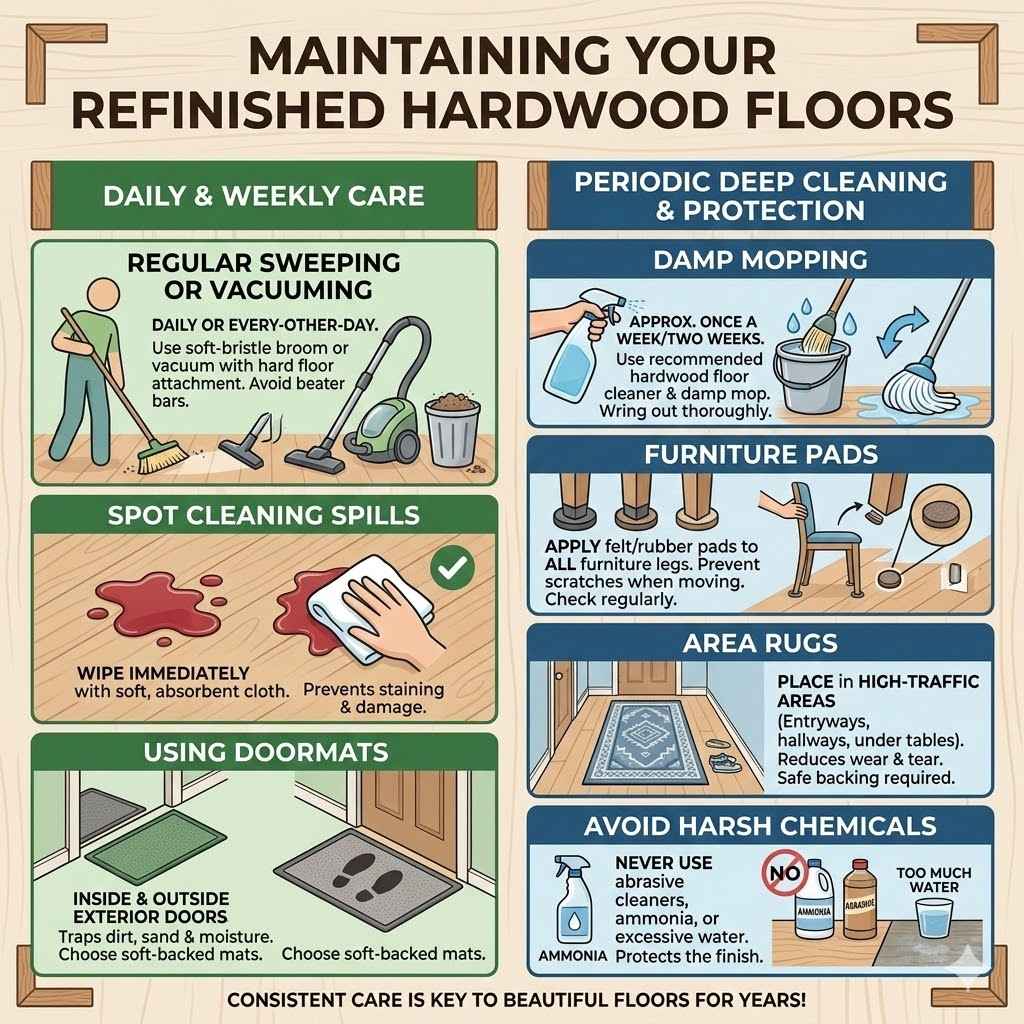
Use a soft-bristle broom or a vacuum cleaner with a hard floor attachment for daily or every-other-day cleaning. This removes dust, dirt, and grit that can scratch the finish. Avoid vacuums with beater bars, as these can damage the wood.
Spot Cleaning Spills
Wipe up spills immediately with a soft, absorbent cloth. Allowing liquids to sit on the floor can cause staining or damage to the finish, especially if it’s a sticky substance.
Using Doormats
Place doormats both inside and outside all exterior doors. This traps dirt, sand, and moisture before they can be tracked onto your hardwood floors. Choose mats with a soft backing that won’t scratch the floor.
Periodic Deep Cleaning and Protection
Beyond daily care, occasional deeper cleaning and protective measures are essential.
Damp Mopping
Use a recommended hardwood floor cleaner and a damp (not wet) mop. Wring out the mop thoroughly before use. Excess water can seep into the wood and cause warping or damage. Most manufacturers recommend cleaning approximately once a week or every two weeks, depending on household traffic.
Furniture Pads
Apply felt or rubber pads to the bottom of all furniture legs, especially chairs, tables, and sofas. This prevents scratches when furniture is moved. Check these pads regularly, as they can wear down or collect grit.
Area Rugs
Strategically placed Area Rugs in high-traffic areas like entryways, hallways, and under dining tables can significantly reduce wear and tear. Ensure the rug backing is safe for hardwood floors, as some rubber backings can discolor the finish.
Avoiding Harsh Chemicals
Never use abrasive cleaners, ammonia-based products, or excessive water on your hardwood floors. These can dull the finish, strip protective coatings, or damage the wood. Stick to products specifically designed for hardwood floors.
Frequently Asked Questions
Question: How do I know if my hardwood floors just need cleaning or a full refinish?
Answer: If the surface looks dull but still has a consistent sheen, and there are only very light surface scratches, a deep cleaning and possibly a screen and recoat might be enough. If you see significant wear patterns, deep scratches, gouges, or the finish itself is peeling or cloudy, it’s likely time for a full refinish.
Question: Can I refinish engineered hardwood floors?
Answer: Yes, but it depends on the thickness of the wear layer. Engineered hardwood has a thin top layer of real wood. If this layer is too thin, it cannot be sanded down multiple times for refinishing.
Always check the manufacturer’s specifications or consult a professional.
Question: How long does it take to refinish hardwood floors?
Answer: A full refinishing job typically takes about 3-7 days, depending on the size of the area, the drying time of the products used, and whether staining is involved. The floors are usually not fully walkable for about 24-48 hours, and furniture should not be replaced for up to 30 days while the finish fully cures.
Question: What is the difference between a screen and recoat and a full refinish?
Answer: A screen and recoat lightly abrades the existing top coat of finish and applies a new coat. It’s for floors with minor wear and dullness. A full refinish involves sanding down to the bare wood to remove all old finish and scratches, allowing for restaining and multiple new coats of finish.
It’s for floors with deeper damage or a desire for a color change.
Question: How often should I wax my hardwood floors?
Answer: Most modern hardwood floors are finished with polyurethane or similar sealants and do not require waxing. Wax can build up, create a slippery surface, and prevent future refinishing with polyurethane. If your floors have an older wax finish, you must strip the wax before applying a new sealant or refinishing.
Summary
Knowing How Often Should Hardwood Floors Be Refinished? depends on wear and tear, not just a calendar date. Watch for dullness, scratches, and worn areas. A screen and recoat can help every few years.
Full refinishing is for deeper damage and is usually needed every 7-15 years. Proper cleaning and protection are key to a longer-lasting finish.