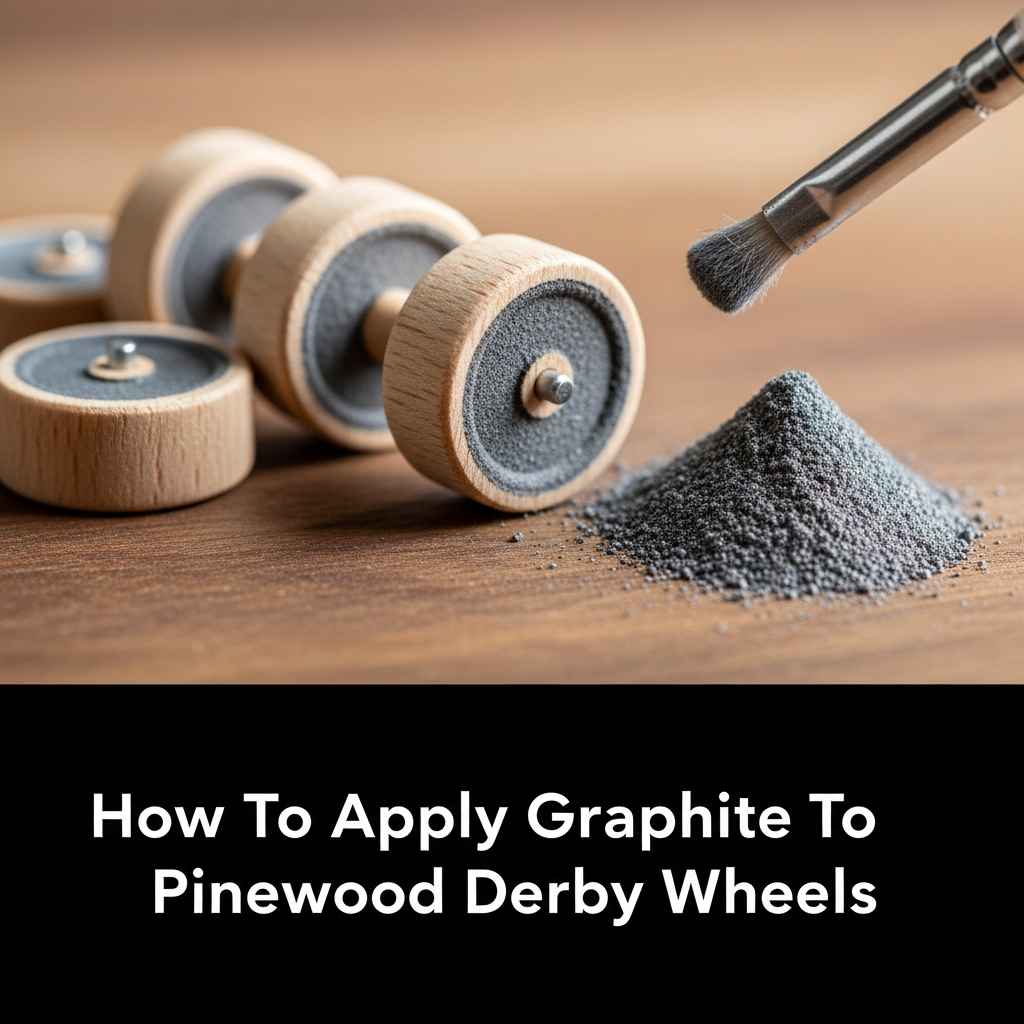
How To Apply Graphite To Pinewood Derby Wheels
Getting your Pinewood Derby car ready for race day can be a lot of fun. Sometimes, figuring out the best way to make your car go fast can feel a little tricky, especially when it comes to the wheels. Learning how to apply graphite to Pinewood Derby wheels is something many new racers wonder about.
It’s a simple step that can make a big difference. Don’t worry, we’ve got a straightforward guide to help you get your wheels spinning perfectly. Let’s get your car ready to win!
Prepare Your Pinewood Derby Wheels For Graphite
Before you even think about adding graphite, making sure your wheels are properly prepared is super important. This step sets the stage for the graphite to do its best work. Clean wheels mean the graphite can stick better and reduce friction more effectively.
This might seem like an extra bit of effort, but it truly makes a noticeable difference on the track. We’ll go over what you need to do to get your wheels in top shape.
Inspect And Clean Your Wheels
Take a close look at your Pinewood Derby wheels. You want to make sure they are clean and smooth. Any little bits of plastic or dust can cause problems later.
Running your finger over the inside bore of the wheel where the axle goes is a good idea. If you feel any rough spots, you can gently smooth them with very fine sandpaper. The goal is a clean, smooth surface for the graphite to work on.
A clean wheel is a fast wheel.
Imagine your wheel like a clean plate. If you try to put sauce on a dirty plate, it won’t stick well, and it won’t taste as good. The same idea applies here.
Dust and debris act like dirt on the plate, stopping the graphite from creating that super-smooth surface that helps your car glide down the track. Think of this cleaning as making the perfect surface for the graphite to bond with.
Gather Your Graphite Application Tools
To do this job right, you’ll need a few simple things. The most important is, of course, dry graphite powder. You can get this at most hobby stores or online.
Don’t use the graphite from a pencil; it’s not the same and won’t work as well. You’ll also want something to help you apply it, like a small brush or a cotton swab. A clean cloth for wiping away any extra is also helpful.
Having these ready makes the process smooth.
- Dry Graphite Powder: This is the magic ingredient. Make sure it’s specifically for lubrication and not from art supplies.
- Applicator Tool: A fine brush, a cotton swab, or even a clean finger can work to get the graphite into the wheel bore.
- Cleaning Cloth: A soft, lint-free cloth is best for wiping away excess graphite.
Using the right tools makes a big difference. A fine brush allows you to precisely put the graphite right where it needs to go inside the wheel’s hub. A cotton swab is also good for reaching into tight spots.
If you just dump the graphite, a lot will be wasted, and it won’t get into the nooks and crannies that matter most for reducing friction. Being precise with your tools helps you use less graphite and get better results.
The Best Methods For Applying Graphite
Now comes the exciting part: putting the graphite to work. There are a couple of popular ways to do this, and each has its own benefits. The key is to get the graphite deep into the wheel’s bore where it contacts the axle.
This might take a little patience, but the effort pays off with a faster car. We’ll explore the most effective techniques to ensure your wheels are ready to roll.
Method 1 The Direct Application Technique
This is the most straightforward way to apply graphite. You simply put a small amount of graphite directly into the wheel bore. Then, you use your applicator tool to work it in.
Spin the wheel around the axle a few times to help the graphite spread evenly. It’s simple and effective for most Pinewood Derby cars. The goal here is to ensure every part of the inside of the wheel hub gets a good coating.
To start, take a tiny pinch of graphite powder. Use your finger or applicator to put it into the hole of the wheel where the axle goes. Then, gently push the axle through the wheel.
Now, spin the wheel back and forth on the axle. Do this for about 30 seconds. You should feel the wheel start to spin more freely as the graphite spreads.
Wipe away any excess graphite that comes out.
Method 2 The Axle Coating Method
Another popular method involves coating the axle itself with graphite before inserting it into the wheel. This ensures the axle is well-lubricated. You can dip the tip of the axle into the graphite or use your applicator to spread it on.
Once the axle is coated, carefully insert it into the wheel bore. Again, spin the wheel to distribute the graphite. This approach guarantees the axle is the primary lubricated part.
For this method, put a good amount of graphite onto a clean surface. Roll the tip of your axle in the graphite until it’s well-coated. Then, gently insert the coated axle into the wheel.
Make sure the graphite is distributed all around the axle. Spin the wheel a few times to spread it inside the wheel bore. This way, you’re applying lubrication directly to the surface that will be rubbing against the wheel.
Method 3 The Graphite Paste (Advanced)
Some racers like to create a graphite paste. This involves mixing a small amount of graphite powder with a lubricant like light machine oil or even a tiny bit of wax. The paste helps the graphite stick better and can provide longer-lasting lubrication.
You apply this paste to the wheel bore or axle. However, this method requires careful mixing and application to avoid over-lubrication.
To make the paste, put a very small amount of graphite powder on a clean surface. Add just one or two tiny drops of your chosen lubricant. Mix it with a toothpick until it forms a thick paste.
Then, apply a thin layer of this paste to the inside of the wheel bore or to the axle. Be careful not to use too much lubricant, as it can attract dirt. Spin the wheels to distribute the paste.
Why Graphite Works Its Magic
Graphite is amazing for Pinewood Derby cars because of its unique properties. It’s a natural mineral made of carbon atoms arranged in layers. These layers can easily slide past each other, which is why graphite is a fantastic dry lubricant.
When you apply it to your wheels and axles, it creates a super-smooth surface that greatly reduces friction. Less friction means your car can roll faster and further down the track.
Think of it like tiny, slippery flakes. These flakes get between the metal axle and the plastic wheel. Because the flakes are so slippery, they let the axle and wheel move against each other with almost no resistance.
This is much better than just plain metal on plastic, which creates a lot of drag. The dry nature of graphite also means it won’t attract as much dirt as oily lubricants, which can slow your car down.
The Science of Friction Reduction
Friction is the force that opposes motion when two surfaces rub against each other. In Pinewood Derby racing, friction happens where the axle meets the wheel bore and where the outside of the wheel meets the track. Reducing friction is the primary goal of lubrication.
Graphite works by creating a low-friction interface between these surfaces. The layered structure of graphite allows these layers to shear easily, minimizing resistance.
At a microscopic level, surfaces are not perfectly smooth; they have tiny bumps and valleys. When two surfaces touch, these bumps catch on each other, creating friction. Graphite fills in these tiny gaps and coats the surfaces with slippery layers.
This makes it much easier for the surfaces to slide past each other. The more effective the graphite is at creating this slippery barrier, the less energy your car loses to friction, leading to higher speeds.
Benefits Of Using Dry Graphite
One of the biggest advantages of using dry graphite is its cleanliness. Unlike oily lubricants, graphite doesn’t tend to attract dust and dirt. This is crucial in Pinewood Derby racing, where debris on the track can significantly slow down a car.
A clean, fast car is usually the winner, and graphite helps keep your car’s critical friction points free from performance-hindering grime. It’s a simple yet powerful advantage.
Dry graphite also offers excellent performance over a wide range of temperatures. This means your car’s speed won’t be as affected by whether the race is held in a cool gymnasium or a warmer environment. Its ability to remain effective without becoming sticky or gummy makes it a reliable choice for consistent race performance.
This reliability is a key reason why many experienced racers swear by graphite.
Comparison Of Lubricants
While graphite is a top choice, it’s useful to know how it stacks up against other lubricants. Oily lubricants, like WD-40 or motor oil, can provide good initial lubrication but attract dirt. Silicone-based lubricants are another option, offering a smoother feel and less dirt attraction than oils, but they may not last as long as graphite.
Some racers even use specialized racing lubricants, but for simplicity and effectiveness, dry graphite is hard to beat.
| Lubricant Type | Pros | Cons | Best For |
|---|---|---|---|
| Dry Graphite Powder | Clean, low friction, good temperature range, easy to apply | Can be messy if not handled carefully, might need reapplication | Pinewood Derby wheels and axles |
| Light Machine Oil | Good initial lubrication, readily available | Attracts dirt and dust, can become gummy | General purpose lubrication, not ideal for racing |
| Silicone Lubricant | Smooth feel, good water resistance, less dirt attraction than oil | May not last as long as graphite, can be more expensive | Various applications needing smooth sliding |
A study on lubricant effectiveness for model cars found that dry graphite consistently outperformed oily lubricants in terms of reduced friction over sustained runs. The study noted that the powdered nature of graphite allowed it to penetrate and coat the bearing surfaces more effectively, creating a longer-lasting, lower-resistance interface. This is because the dry particles don’t clump together or get easily displaced by contaminants like oil can.
Applying Graphite To Your Pinewood Derby Car Axles
The wheels are only half the story. Your axles are the other critical component where friction can rob your car of speed. Applying graphite to the axles ensures that the entire moving assembly of your wheel and axle system is as slick as possible.
Just like with the wheels, proper preparation and application are key to getting the best results. We’ll guide you through the steps to make your axles race-ready.
Preparing The Axles
Before you apply graphite to the axles, it’s important to make sure they are clean and smooth. Any burrs or rough spots on the axle can create friction. You can gently polish the axles with very fine-grit sandpaper or a polishing cloth.
The smoother the axle, the better the graphite will be able to create a low-friction surface. Think of the axle as a perfectly smooth rod for the wheel to spin on.
If your kit came with metal axles, they are usually pretty smooth already. However, sometimes there can be tiny manufacturing imperfections. Running your finger along the axle shaft where the wheel sits will help you detect any roughness.
If you find any, a few gentle passes with some 600-grit or finer sandpaper can smooth them right out. Always clean the axle after sanding to remove any grit.
Applying Graphite Directly To Axles
Once your axles are clean and smooth, it’s time to apply the graphite. You can do this in a few ways. A common method is to put a small amount of graphite powder onto a clean surface and then roll the axle through it, coating the entire shaft.
Make sure to get it into the area that will be inside the wheel bore. Some people also like to use a fine brush to apply the graphite directly onto the axle.
After coating the axle, you’ll want to insert it into the wheel. Then, spin the wheel on the axle for about 30 seconds. This helps spread the graphite evenly.
You should feel the resistance decrease as you spin. Wipe away any excess graphite that might squeeze out from under the wheel. A well-lubricated axle is essential for a fast Pinewood Derby car.
It’s all about making that metal-on-plastic connection as slick as can be.
Tips For Maximum Performance
For the best results, it’s often recommended to apply graphite a day or two before the race. This gives the graphite time to work its way into the microscopic pores of the metal and plastic. This ‘settling time’ allows for optimal lubrication.
Avoid over-applying graphite, as too much can actually attract dirt and create drag. A thin, even coating is usually perfect. Remember, less can be more when it comes to graphite.
Some racers even go a step further and lightly polish their axles with a very fine grit sandpaper (like 1200 grit or higher) to make them as smooth as possible. This creates a perfect surface for the graphite to adhere to. You can also use a polishing compound after sanding for an ultra-smooth finish.
The key is to create a surface that is almost frictionless, and graphite is the perfect partner for such a surface.
Here are some final tips for maximizing your graphite application:
- Apply graphite the night before the race. This allows it to settle and work its magic.
- Use a very small amount of graphite. A little goes a long way.
- Spin the wheels on the axles after application to ensure even distribution.
- Wipe away any excess graphite that might fall off.
- Reapply graphite before each race heat if possible, especially if you have multiple heats.
A common scenario is a racer who applies graphite right before the race. While it helps, the graphite hasn’t had time to fully embed itself into the surfaces. This means it might not provide the peak performance it could.
By applying it earlier, you allow the graphite particles to bond better, creating a more durable and efficient lubricating layer that lasts longer throughout the race.
Common Mistakes To Avoid
Even with simple steps, it’s easy to make small errors that can affect your car’s speed. Being aware of these common pitfalls can help you avoid them and ensure your Pinewood Derby car performs at its best. We’ll cover the most frequent mistakes racers make when applying graphite so you can race with confidence.
Using The Wrong Type Of Lubricant
As mentioned before, pencil lead graphite is not the same as dry graphite powder. Pencil lead is a mixture of graphite and clay, designed for writing, not lubrication. Using the wrong type means you won’t get the smooth, low-friction surface needed for speed.
Always use specialized dry graphite lubricant, available at hobby shops or online.
Another mistake is using too much lubricant. Whether it’s graphite or oil, excessive amounts can attract dust and debris. This dirt then acts like sandpaper, increasing friction instead of decreasing it.
It’s like trying to run through mud; it slows you down. A thin, even coating is all you need. You want the surfaces to be slippery, not sticky with excess material.
Over-Lubricating Or Under-Lubricating
Finding the right balance is key. Too little graphite means the surfaces will still have significant friction. Too much, and you risk attracting dirt or creating drag.
The ideal is a thin, even coating that fills the microscopic imperfections without excess. This often comes with practice and observing how your wheels feel and spin.
If you under-lubricate, your car might feel a bit “sticky” when you spin the wheels. The sound might be more of a squeak or a dull roll. If you over-lubricate, you might see a lot of graphite dust or oil coming off the wheel, and it might feel slightly sluggish because the excess is creating drag or attracting dirt.
The sweet spot is a smooth, quiet spin.
Not Preparing The Wheels And Axles
Skipping the cleaning and polishing steps is a common oversight. If you apply graphite to dirty wheels or rough axles, you’re trapping dirt and imperfections, which will hinder performance. The graphite can’t lubricate effectively if it’s applied over existing friction sources.
Always start with clean, smooth surfaces for the best possible outcome.
Imagine painting a wall without cleaning it first. The paint won’t stick well, and you’ll see all the dirt and imperfections through the paint. Similarly, applying graphite to an unprepared surface means the graphite can’t create that perfect, smooth layer that reduces friction.
It’s like putting a slippery coat over a bumpy, dirty surface; it won’t be as effective as a slippery coat on a perfectly smooth surface.
Frequently Asked Questions
Question: How much graphite should I use
Answer: You only need a very small amount. A tiny pinch is usually enough for each wheel and axle. Too much graphite can attract dirt.
Question: Can I use graphite pencil lead
Answer: No, pencil lead is not the same as dry graphite lubricant and will not work as effectively.
Question: When is the best time to apply graphite
Answer: Applying graphite a day or two before the race is ideal. This gives it time to settle and provide maximum lubrication.
Question: Do I need to reapply graphite after every race
Answer: For optimal performance, especially in multiple heats, reapplying graphite before each race is recommended, but ensure you don’t over-lubricate.
Question: How do I clean excess graphite
Answer: Gently wipe away any excess graphite with a clean, dry cloth. Avoid using any liquids to clean graphite.
Summary
Learning how to apply graphite to Pinewood Derby wheels is a key skill for any racer. By cleaning your wheels and axles, using the right tools, and applying graphite properly, you can significantly reduce friction. Remember to avoid common mistakes like using the wrong lubricant or over-applying.
A well-lubricated car is a fast car.