How To Clean A Wooden Cutting Board With Vinegar Safely
Many people wonder if it’s safe to clean a wooden cutting board with vinegar. It seems like a simple solution, but sometimes simple things can be tricky. This guide will show you exactly how to Clean a Wooden Cutting Board With Vinegar Safely.
We’ll break it down into easy steps so you can feel confident in keeping your kitchen tools clean and healthy. Get ready to learn a simple method that will make your cutting boards shine.
Why Choose Vinegar For Cleaning Wooden Cutting Boards
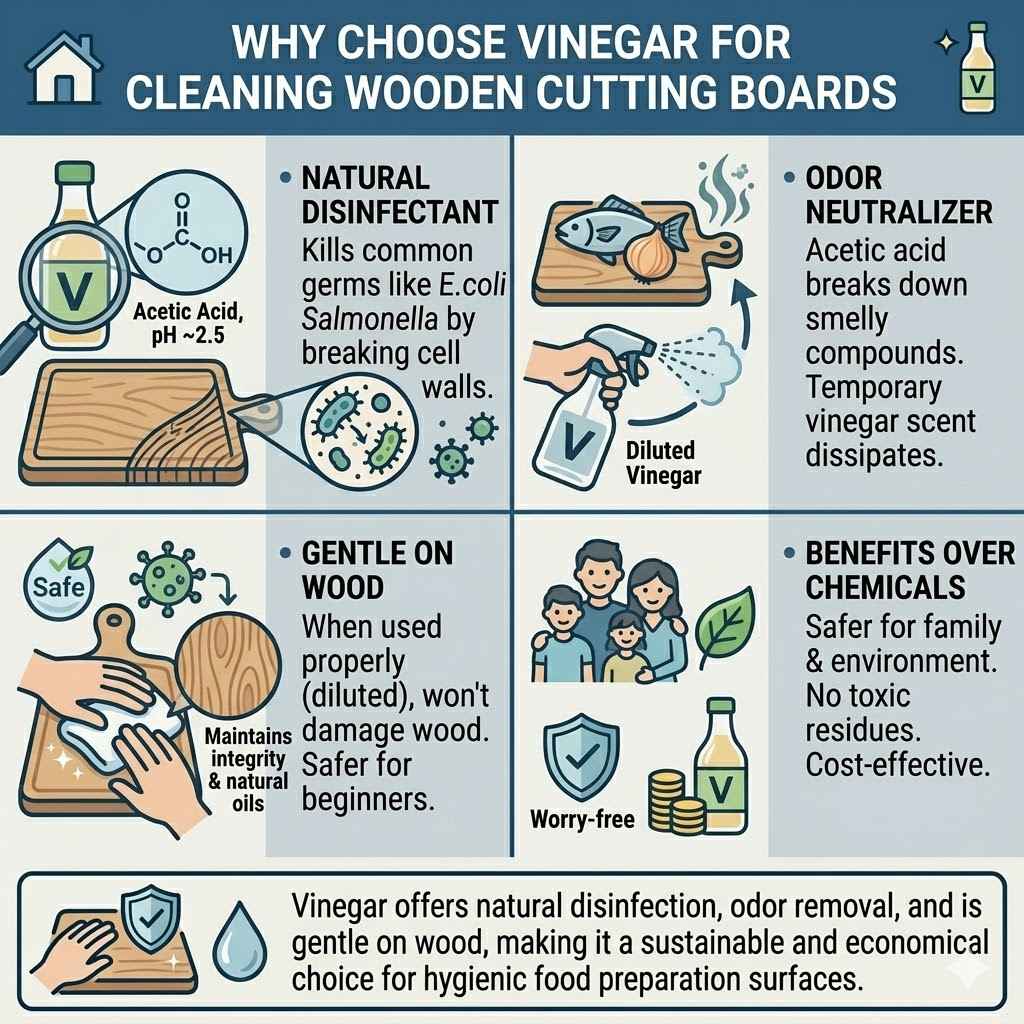
Vinegar is a popular choice for cleaning kitchen items because it’s a natural disinfectant. It can help kill germs and get rid of odors without harsh chemicals. For wooden cutting boards, this is especially good because wood can soak up liquids and smells.
Using vinegar helps tackle these issues effectively. It’s also something most people already have in their pantry, making it a convenient option.
Many beginners might hesitate to use vinegar on wood. They might worry about the smell or if it could damage the wood. But when used correctly, vinegar is a gentle yet powerful cleaner.
It lifts away food bits and neutralizes smells from things like onions or garlic. This makes your cutting board fresh and ready for its next use. We will explore how to use it properly so your boards stay in great shape.
The Science Behind Vinegar’s Cleaning Power
Vinegar is made mostly of acetic acid. This acid is what gives vinegar its cleaning and disinfecting properties. When acetic acid comes into contact with bacteria or viruses, it can break down their cell walls.
This process kills the germs, making surfaces cleaner. The acidity of vinegar also helps to break down grease and grime, which is useful for cleaning up after cooking.
For instance, studies have shown that diluted vinegar can effectively kill common household bacteria like E. coli and Salmonella. These are germs that can sometimes end up on cutting boards.
The concentration of acetic acid in common white vinegar is usually around 5%. This is strong enough to clean but not so strong that it will damage most materials, including wood, when used properly. It’s a natural way to ensure your food preparation surfaces are hygienic.
Vinegar also works by neutralizing odors. Many foods have strong smells, like garlic, onions, or fish. These smells can linger on wooden cutting boards.
The acetic acid in vinegar reacts with the smelly compounds, breaking them down and replacing them with a milder, temporary vinegar smell that dissipates quickly. This leaves your cutting board smelling fresh, not like the last meal you prepared on it.
Benefits Of Using Vinegar Over Harsh Chemicals
Using vinegar offers several key benefits, especially when compared to common chemical cleaners. For starters, it’s a natural product, meaning it’s much safer for your family and the environment. You don’t have to worry about inhaling toxic fumes or leaving behind residues that could get into your food.
This makes it a worry-free option for your kitchen.
Furthermore, vinegar is very affordable. A bottle of white vinegar costs much less than specialized kitchen cleaners. This makes it an economical choice for keeping your kitchen clean.
It’s a simple, effective, and budget-friendly way to maintain your cutting boards. You get great cleaning results without spending a lot of money or exposing yourself to unnecessary chemicals.
- Natural Disinfection: Vinegar’s acetic acid kills many common germs that can grow on food preparation surfaces. This helps prevent cross-contamination and keeps your food safer. It’s a reliable method for sanitizing without resorting to strong chemicals that might linger.
- Odor Removal: Strong food smells can stick to wood. Vinegar is excellent at breaking down these odor molecules. After cleaning with vinegar, your cutting board will smell fresh and clean, ready for any type of food preparation.
- Gentle On Wood: When diluted and used correctly, vinegar is gentle on wood. It cleans without stripping away natural oils or causing damage. This helps maintain the longevity and appearance of your wooden cutting boards over time.
- Eco-Friendly Choice: As a natural substance, vinegar is biodegradable and poses little risk to the environment. It’s a sustainable cleaning option that aligns with a more natural lifestyle.
How To Clean A Wooden Cutting Board With Vinegar Safely
Cleaning your wooden cutting board with vinegar is a straightforward process. The key is to use the right concentration of vinegar and to rinse and dry the board properly. This method ensures effective cleaning without causing harm to the wood.
Let’s walk through the steps that will leave your cutting board spotless and fresh.
Step By Step Guide To Vinegar Cleaning
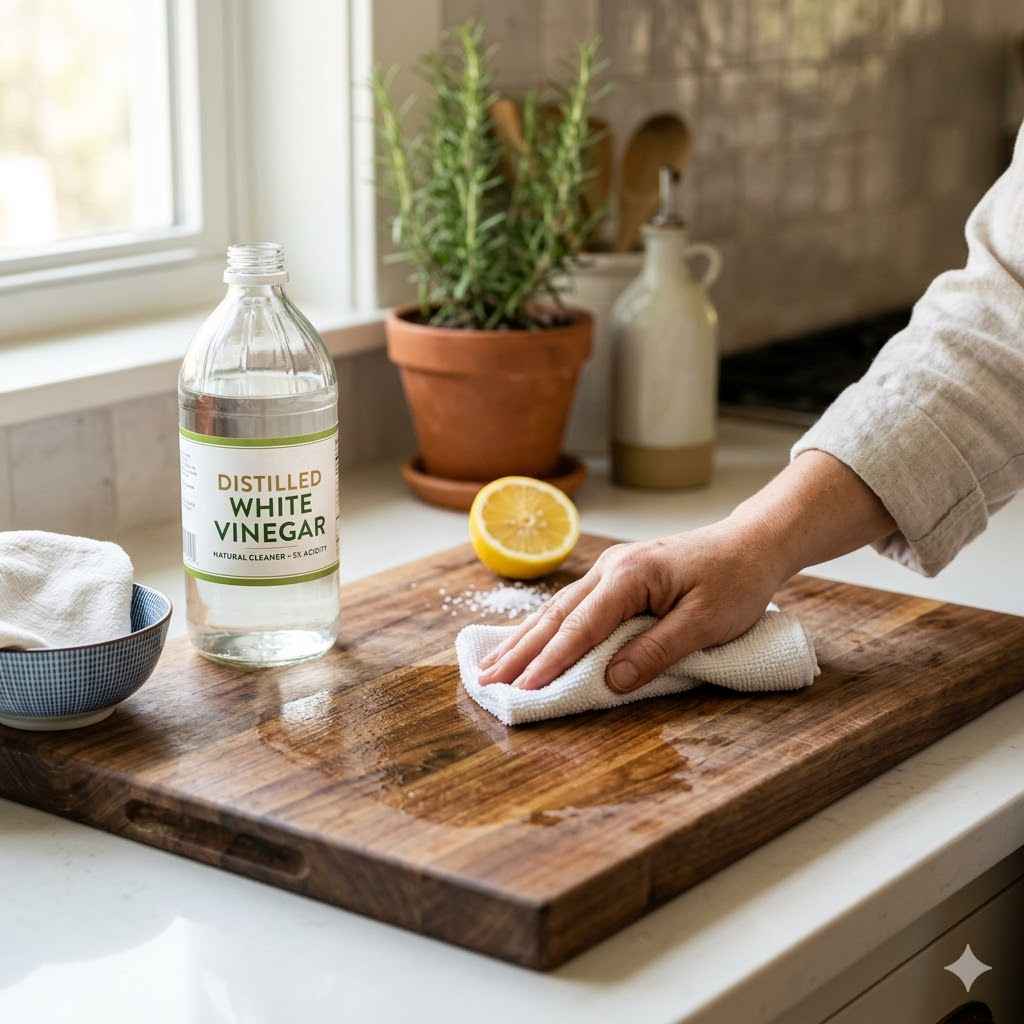
First, you’ll want to gather your supplies. You will need a bottle of white vinegar, some water, a clean cloth or sponge, and a dry towel. Having everything ready makes the process quick and easy.
This simple setup is all you need to get started.
- Rinse the Board: Start by rinsing your cutting board under cool running water. This helps to wash away any loose food particles and crumbs. Do not soak the board, as excessive water can damage wood. Just a quick rinse to clear off the surface debris is enough.
- Apply Vinegar Mixture: In a small bowl, mix equal parts white vinegar and water. For example, you can use half a cup of vinegar and half a cup of water. This dilution is important for protecting the wood while still being effective at cleaning and disinfecting.
- Wipe Down the Board: Dip your clean cloth or sponge into the vinegar-water mixture. Wring it out slightly so it’s damp, not dripping wet. Wipe down the entire surface of the cutting board, paying special attention to any stained or smelly areas. Let the mixture sit on the board for about 5-10 minutes to allow it to work its magic.
- Scrub if Needed: For tougher spots or stubborn odors, you can use a soft-bristled brush or the rough side of a sponge to gently scrub the surface. Be careful not to scrub too hard, as this can scratch the wood. The vinegar solution should help loosen most residues.
- Rinse Again: After letting the vinegar sit, rinse the cutting board thoroughly with cool running water. Make sure all traces of the vinegar solution are washed away. This is important to remove the vinegar smell and any loosened grime.
- Dry Thoroughly: This is a critical step for wood. Use a clean, dry towel to wipe down the cutting board. Then, stand the board on its edge or prop it up so that air can circulate around it. Allow it to air dry completely. Never put a wooden cutting board in the dishwasher or leave it lying flat while wet, as this can lead to warping or cracking.
Once the board is completely dry, it’s ready to be used again. You can also choose to condition it with food-grade mineral oil after it’s dry. This helps protect the wood and keeps it from drying out.
Following these steps ensures you Clean a Wooden Cutting Board With Vinegar Safely and effectively.
Understanding Vinegar Dilution And Its Importance
The dilution of vinegar is key to its safe and effective use on wooden cutting boards. Using undiluted vinegar, while very effective for cleaning and disinfecting, can be too harsh for wood. The high concentration of acetic acid can potentially dry out the wood, leading to cracking or warping over time.
It can also leave a stronger, more lingering smell that some people find unpleasant.
A 1:1 ratio of white vinegar to water is generally considered the best balance. This dilution still provides enough acidity to kill bacteria and neutralize odors but is gentle enough to prevent damage to the wood fibers. Think of it like this: a little bit of acid goes a long way in cleaning, and too much can be counterproductive for natural materials like wood.
This gentle approach helps preserve the integrity of your cutting board.
By diluting the vinegar, you are essentially creating a milder cleaning solution. This solution is powerful enough to tackle everyday kitchen messes and germs but won’t strip away the natural oils present in the wood. These oils are essential for keeping the wood hydrated and preventing it from drying out and becoming brittle.
So, the simple act of mixing vinegar with water significantly extends the life of your cutting board.
How Long To Let Vinegar Sit On The Board
The amount of time you let the vinegar mixture sit on the cutting board is also important for its effectiveness. Letting it sit for a short period, usually between 5 to 10 minutes, allows the acetic acid to work on breaking down grime and killing germs. This is enough time for the cleaning process to begin without allowing the vinegar to sit for too long and potentially affect the wood negatively.
Leaving the vinegar on for longer than 10-15 minutes is generally not necessary for typical cleaning tasks. The primary goal is to allow the disinfecting and deodorizing properties of the vinegar to act upon the surface. Overexposure could lead to the wood becoming too saturated, which, as mentioned, can cause issues like swelling or drying out later.
Therefore, timing is a small but significant part of the process.
If you have a particularly tough stain or odor, you might let it sit for a couple of minutes longer, but always err on the side of caution. The quick rinse and dry steps are just as crucial as the sitting time. The combination of these steps ensures a safe and effective clean for your wooden cutting board.
Maintaining Your Wooden Cutting Board After Cleaning
Once you’ve cleaned your wooden cutting board, taking a few extra steps can help it last much longer. Proper care ensures it stays hygienic, beautiful, and functional for years to come. These maintenance tips are simple but make a big difference.
The Importance Of Seasoning Or Oiling Your Board
Wood, being a natural material, can dry out. This is especially true after it’s been washed, even with gentle methods like using vinegar. Drying out can cause wood to become brittle, leading to cracks and splits.
Seasoning or oiling your cutting board helps to replenish the natural oils in the wood and create a protective barrier.
This protective layer helps repel moisture, preventing the wood from absorbing stains and odors as readily. It also makes the board more resistant to bacteria. Think of it like moisturizing your skin; it keeps the wood healthy and supple.
Regularly oiling your board will keep its surface smooth and prevent it from looking dull or dry.
Using food-grade mineral oil is highly recommended. Other oils, like vegetable oil or olive oil, can go rancid over time and develop an unpleasant smell. Mineral oil is stable and won’t go bad.
You can find it easily at most grocery stores or pharmacies. Apply it liberally, let it soak in, and wipe off any excess.
Here’s a simple oiling routine:
- Ensure the board is completely dry after washing.
- Apply a generous amount of food-grade mineral oil to all surfaces of the board using a clean cloth.
- Rub the oil into the wood using gentle, circular motions.
- Let the board sit for at least a few hours, or preferably overnight, to allow the oil to penetrate deeply.
- Wipe off any excess oil with a clean, dry cloth.
You should oil your board about once a month, or more often if it starts to look dry. This simple practice is a cornerstone of proper wooden cutting board care and ensures you can continue to Clean a Wooden Cutting Board With Vinegar Safely and maintain its quality.
Common Mistakes To Avoid
When cleaning and maintaining wooden cutting boards, there are a few common mistakes that people often make. Avoiding these will help keep your boards in the best possible condition.
One major mistake is putting wooden cutting boards in the dishwasher. The high heat and prolonged exposure to water in a dishwasher are terrible for wood. They can cause the wood to warp, crack, and split.
The harsh detergents can also strip away any natural oils, leaving the wood dry and vulnerable. Always hand wash your wooden boards.
Another mistake is not drying the board thoroughly. Leaving a wooden cutting board wet for too long can lead to water damage. It can cause the wood to swell and then shrink unevenly, leading to warping.
Standing the board on its edge to air dry is the best method. This allows air to circulate on all sides and ensures it dries evenly.
Over-washing is also a mistake. While it’s important to clean your board after each use, you don’t need to scrub it vigorously every single time. For light use, a quick wipe with a damp cloth might be enough.
For more thorough cleaning, use the vinegar and water method as described. Excessive washing, especially with harsh soaps, can wear down the wood over time.
Finally, failing to oil the board is a very common error. As we discussed, wood needs moisture to stay healthy. Skipping the oiling step means the wood will gradually dry out, becoming more prone to damage.
Regular oiling is not optional; it’s a vital part of maintenance for any wooden cutting board.
When To Replace Your Cutting Board
Even with the best care, wooden cutting boards eventually show signs of wear and tear. Knowing when it’s time to replace yours is important for maintaining hygiene in your kitchen.
One of the most significant indicators is deep, persistent knife grooves. While some minor scoring is normal, if the grooves are so deep that they are hard to clean and trap food particles, it’s time for a new board. These deep cuts can harbor bacteria that are difficult to remove, even with thorough cleaning.
It’s a food safety concern.
Another sign is if the board starts to warp or crack significantly. While minor warping might sometimes be addressed by oiling, severe warping or large cracks indicate that the wood has been compromised. These boards are difficult to use safely and can break apart.
A warped board won’t sit flat, making chopping uneven and potentially dangerous.
Discoloration that won’t come out is also a clue. If you have persistent stains that even the vinegar treatment can’t lift, it might be time for a replacement. Likewise, if a board develops an odor that you can’t get rid of after cleaning, it’s best to replace it.
Odors can sometimes signal the presence of bacteria.
If your board has become very thin from repeated sharpening and cleaning, it might also be nearing the end of its useful life. A thin board is more likely to break. Generally, a well-maintained wooden cutting board can last for many years, but these signs are clear indicators that a replacement is needed for hygienic and functional reasons.
Alternative Natural Cleaning Methods
While vinegar is a fantastic option, other natural methods can also be used to clean and sanitize wooden cutting boards. These alternatives offer similar benefits without harsh chemicals, giving you flexibility based on what you have available or your preferences.
Using Lemon And Salt For Cleaning
Lemon and salt is another classic, natural cleaning duo for wooden cutting boards. The acidity of the lemon helps to cut through grease and grime, while the salt acts as a mild abrasive to scrub away residue. Together, they can also help to deodorize the board.
To use this method, sprinkle a generous amount of coarse salt over the surface of your cutting board. Then, cut a lemon in half and use the cut side of the lemon to scrub the salt into the wood. You can use the lemon as a scrubber, pressing down firmly.
The juice will combine with the salt to create a paste that lifts away food particles and odors.
Let this mixture sit on the board for a few minutes. The natural bleaching properties of lemon juice can also help lighten some minor stains. After it has sat, scrape off the salt and lemon pulp.
Then, rinse the board thoroughly with cool water and dry it completely, just as you would after using vinegar. This method is particularly good for removing strong smells.
This method is effective because the citric acid in lemon juice is a natural disinfectant and degreaser. The salt provides a physical scrubbing action, helping to dislodge food particles that might be stuck in the wood grain or knife marks. It’s a two-pronged attack against dirt and odors, making your cutting board fresh and clean.
Baking Soda Paste For Stubborn Stains
Baking soda is a mild alkali that is excellent at absorbing odors and is a gentle abrasive. When mixed with water to form a paste, it can be a powerful tool for tackling stubborn stains and lingering smells on your wooden cutting board.
To make a baking soda paste, mix about three parts baking soda with one part water in a small bowl. You want a thick, spreadable paste, not too runny. Apply this paste generously to any stained or smelly areas of the cutting board.
You can use your hands or a soft cloth to spread it evenly.
Let the paste sit on the board for about 10-15 minutes. For tougher stains, you can gently scrub the paste into the wood with a soft-bristled brush or a damp sponge. The baking soda will absorb odors and gently lift stains from the wood surface.
After the paste has had time to work, rinse the board thoroughly with cool water to remove all traces of the baking soda paste. Again, it is crucial to dry the board completely afterward, either by towel drying and then air drying. This method is a great follow-up if vinegar alone doesn’t completely eliminate a stubborn smell or stain.
Baking soda’s effectiveness comes from its chemical properties. As an alkali, it can help neutralize acidic food odors. Its fine, granular texture also makes it an effective but gentle scrubber, capable of lifting away grime without scratching the wood.
This combination makes it a versatile cleaning agent for kitchen items.
Comparing Natural Cleaning Methods
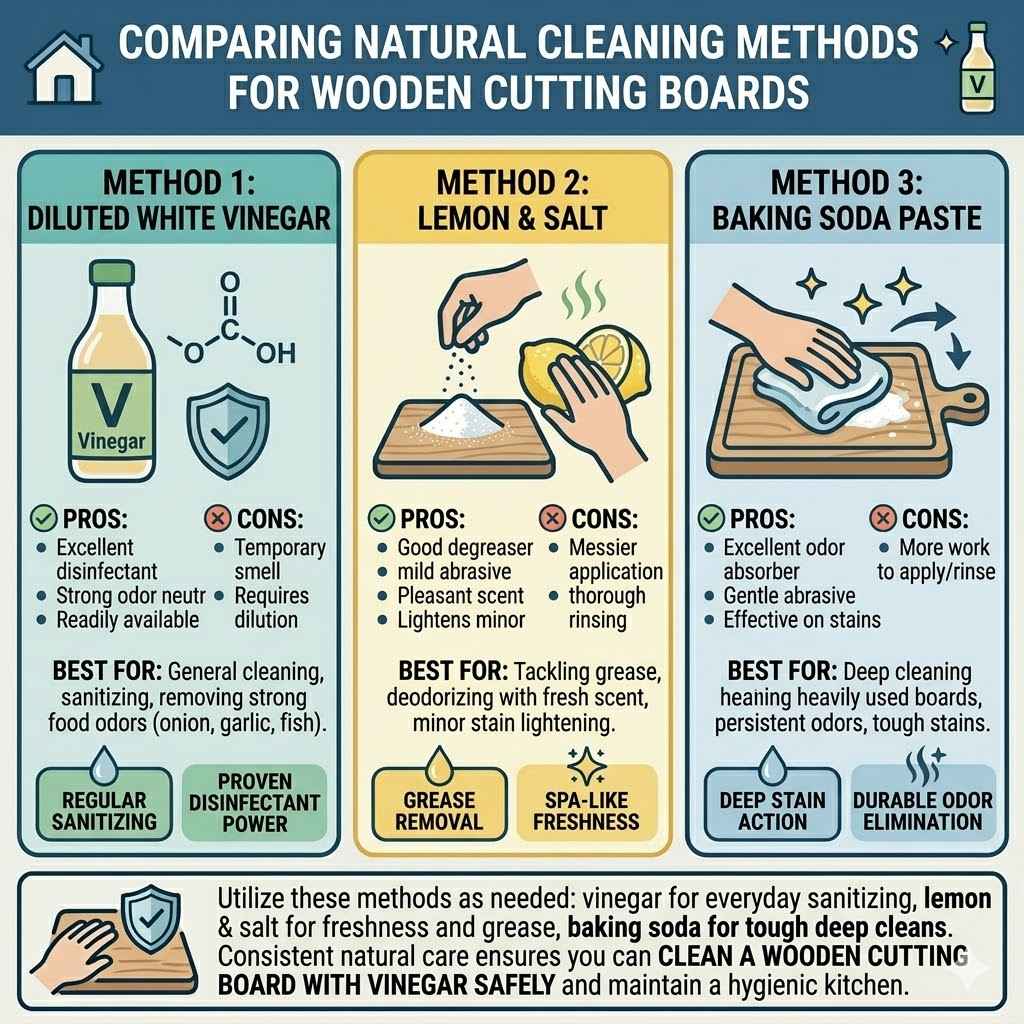
When it comes to keeping your wooden cutting boards clean and hygienic, both vinegar and lemon/salt are excellent natural options. Each has its own strengths, and sometimes the best choice depends on the specific cleaning challenge you’re facing.
| Method | Pros | Cons | Best For |
|---|---|---|---|
| White Vinegar (Diluted) | Excellent disinfectant, strong odor neutralizer, readily available, cost-effective. | Can leave a temporary smell, needs dilution to protect wood. | General cleaning, sanitizing, removing strong food odors (onion, garlic, fish). |
| Lemon & Salt | Good degreaser, mild abrasive, pleasant scent, helps lighten minor stains. | Can be messier to apply, salt needs thorough rinsing, less potent disinfectant than vinegar. | Removing grease, general cleaning, deodorizing with a fresh scent, minor stain lightening. |
| Baking Soda Paste | Excellent odor absorber, gentle abrasive, effective on stubborn stains. | Can be a bit more work to make and apply, needs thorough rinsing. | Tough stains, persistent odors, deep cleaning of heavily used boards. |
Vinegar is arguably the most powerful natural disinfectant among these options. Its acetic acid content makes it highly effective at killing a broad spectrum of bacteria and viruses. For kitchens where food safety is a top priority, using diluted vinegar regularly is a great practice.
It provides peace of mind without the risks associated with chemical cleaners.
Lemon and salt offer a more pleasant, spa-like experience for your cutting board. The fresh citrus scent is a welcome change from harsh chemical smells. It’s also very effective at tackling grease, which can build up on boards used for meats or fatty foods.
The salt’s scrubbing action helps ensure that all residues are removed.
Baking soda is the go-to for tough situations. If you have a cutting board that has seen heavy use and developed some stubborn marks or smells that other methods haven’t fully addressed, baking soda paste is your best bet. It offers a deeper clean without being overly abrasive.
Ultimately, the best approach might be to use these methods as needed. For everyday cleaning and deodorizing, diluted vinegar or lemon and salt are perfect. For occasional deep cleaning of stubborn issues, baking soda paste can be a lifesaver.
All these methods ensure you can Clean a Wooden Cutting Board With Vinegar Safely and maintain a hygienic kitchen.
Frequently Asked Questions
Question: Can I use apple cider vinegar to clean my wooden cutting board
Answer: Yes, you can use apple cider vinegar. It works similarly to white vinegar because it also contains acetic acid. Just remember to dilute it with water, just like you would white vinegar, to protect the wood.
Question: How often should I clean my wooden cutting board with vinegar
Answer: It’s a good idea to clean your cutting board with vinegar after each use, especially if you’ve cut raw meat or strong-smelling foods. For general cleaning, a quick wipe with soap and water might suffice, but a vinegar rinse is great for sanitizing and deodorizing.
Question: Will vinegar leave a strong smell on my cutting board
Answer: Vinegar does have a smell, but it’s temporary. Once you rinse the board thoroughly and let it air dry, the vinegar smell should dissipate quickly. If you’re sensitive to the smell, using a diluted solution and rinsing well is key.
Question: Can I use vinegar on a bamboo cutting board
Answer: Yes, you can use diluted vinegar on bamboo cutting boards as well. Bamboo is also a type of wood and benefits from natural cleaning methods. Always dilute the vinegar and dry the board thoroughly afterwards.
Question: Is it safe to use vinegar on a cutting board that I use for bread
Answer: Yes, it is safe. Vinegar is a natural disinfectant and deodorizer. Cleaning your bread board with diluted vinegar ensures it stays hygienic, and the smell will fade as it dries.
You might not even need to do it after every bread use, but it’s good for occasional deep cleaning.
Summary
Cleaning a wooden cutting board with vinegar safely is simple and effective. Diluting vinegar with water creates a powerful yet gentle cleaner. It disinfects, removes odors, and maintains the wood’s integrity.
Proper rinsing and thorough drying are crucial steps for longevity. Regular oiling further protects your board, ensuring it remains hygienic and beautiful for years of culinary adventures.