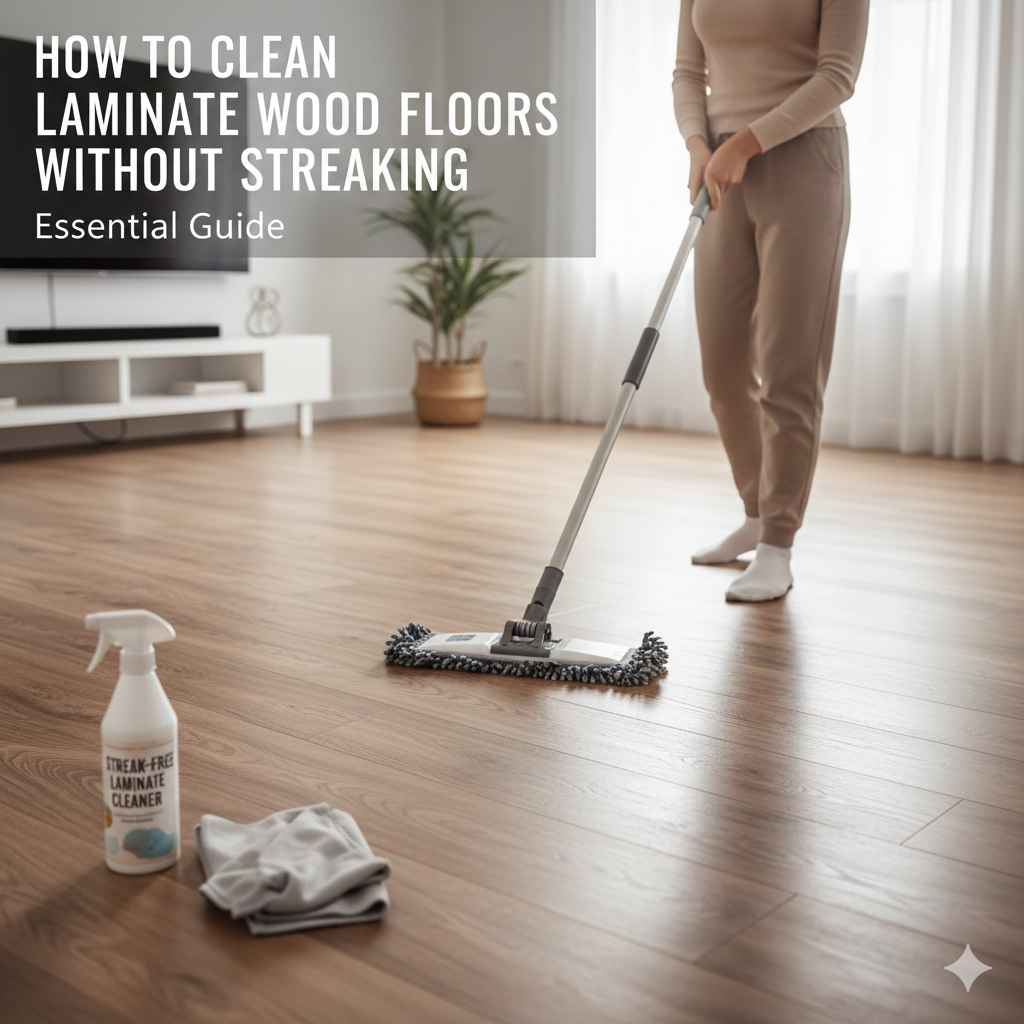
How To Clean Laminate Wood Floors Without Streaking: Essential Guide
To clean laminate wood floors without streaking, use a damp (not wet) mop with a pH-neutral, wood-specific cleaner or a vinegar and water solution (1/2 cup white vinegar to 1 gallon of water). The key is minimal moisture and thorough drying. Never use abrasive pads, wax, or excessive water, as this damages the laminate’s protective layer and causes dull streaks.
Laminate wood floors look fantastic when they are clean and shiny. They bring warmth and style to any room. But have you ever spent time mopping only to step back and see hazy streaks all over your beautiful floor? It’s frustrating! Streaking happens easily on laminate because of how this material is constructed. Too much water or the wrong cleaner leaves a film behind, dulling that lovely shine.
Don’t worry; getting that streak-free shine is completely achievable, even for beginners. I’ve guided many folks through this exact problem. We are going to tackle this together, step-by-step, so you can keep your laminate looking brand new without spending hours battling streaks. Ready to transform those dull floors into dazzling ones?
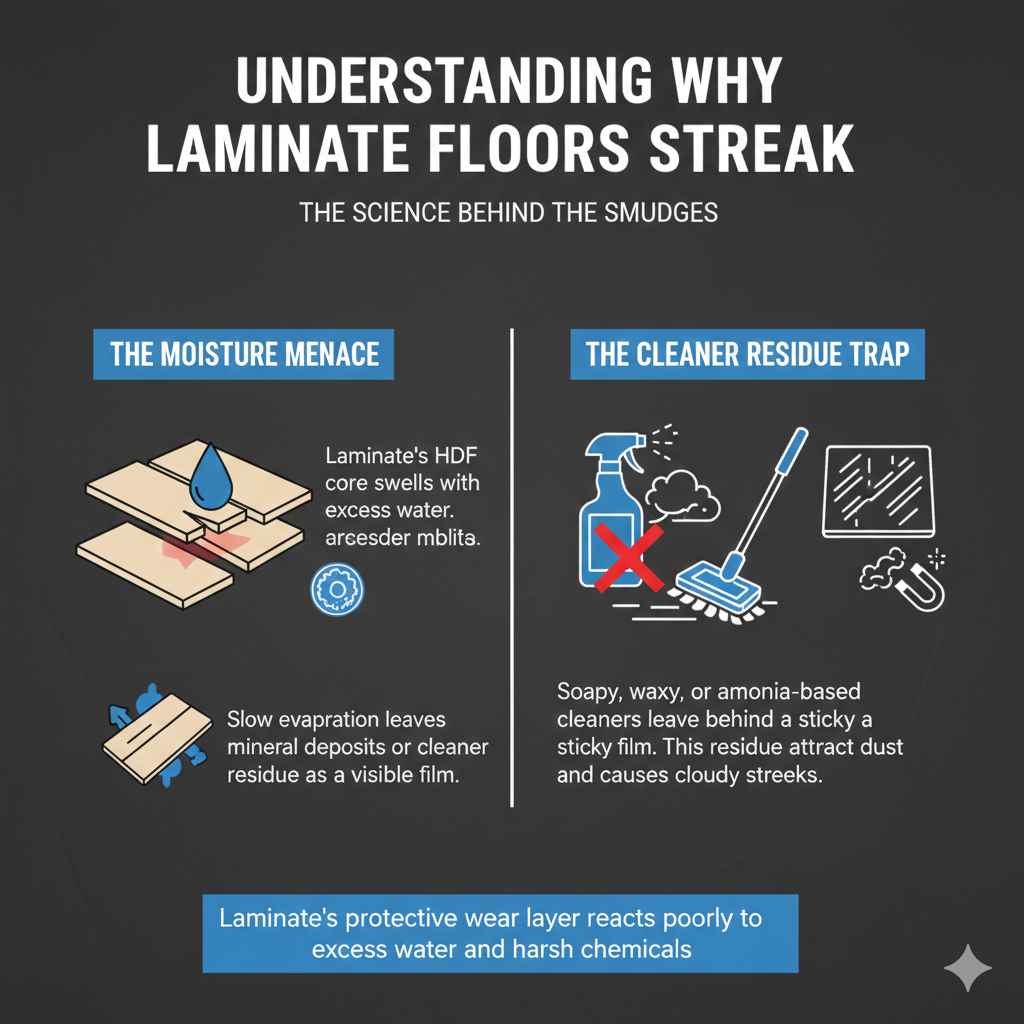
Understanding Why Laminate Floors Streak
Before we grab the mop, let’s quickly understand why those annoying streaks appear in the first place. Knowing the “why” helps us prevent the problem next time. Laminate flooring isn’t real solid wood; it’s a composite board topped with a photographic layer and sealed with a tough, clear wear layer (often made of melamine resin).
The Moisture Menace
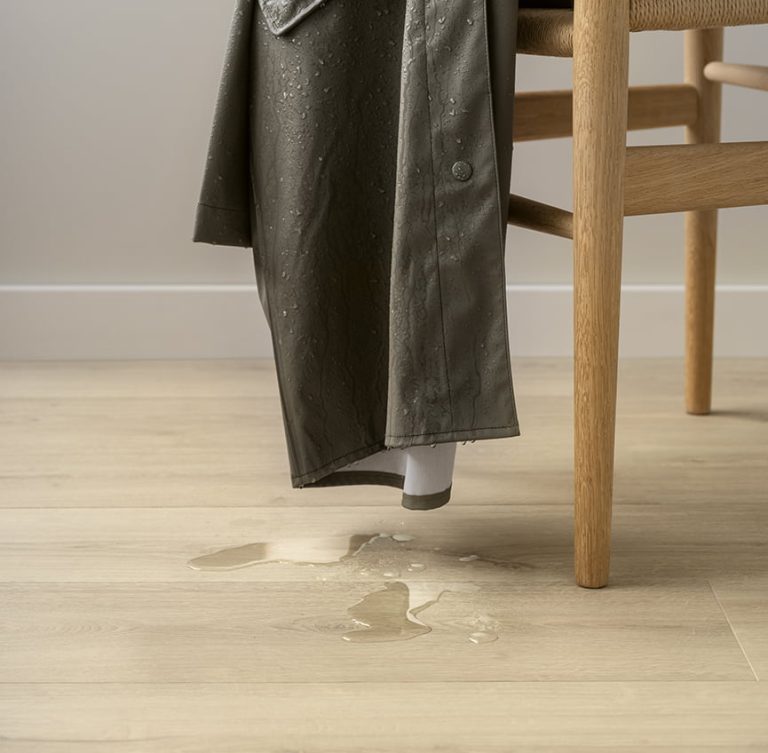
Laminate’s biggest enemy is standing water. Unlike hardwood, which can be refinished, laminate core material is usually high-density fiberboard (HDF). If water seeps through the seams—even a damp mop leaves behind residual moisture—the core swells, causing the planks to buckle or cup. More immediately relevant to our streaking issue, excess water evaporates slowly, often leaving behind mineral deposits or cleaner residue as a film on the surface. That film is what you see as a streak.
The Cleaner Residue Trap
Many common household cleaners—especially ammonia-based products, oil soaps, or anything containing wax—don’t play nicely with the protective wear layer of laminate. They break down the finish or simply leave a soapy residue that dries unevenly. This residue acts like a magnet for dust and causes the cloudy, streaky look.
Essential Tools and Supplies for Streak-Free Cleaning
Using the right tools is half the battle won. You need tools that clean effectively but use minimal moisture and don’t deposit sticky films. Think of this as preparing your battlefield for a clear victory!
The Cleaning Arsenal You Need:
- Microfiber Mop or Pad: These are far superior to traditional string mops because they absorb water quickly and clean surfaces effectively with just moisture.
- Two Buckets: One for your cleaning solution and one dedicated solely to clean rinse water.
- Vacuum or Soft-Bristle Broom: Essential for removing grit first.
- High-Quality, pH-Neutral Laminate Cleaner: Specialized cleaners designed specifically for laminate floors.
- Distilled Water (Optional but Recommended): If your tap water is very hard, distilled water prevents mineral deposits from causing streaks.
Md Meraj’s Tip: Always check your manufacturer’s warranty guide. Sometimes, using the wrong cleaner can actually void the warranty, which is an expensive mistake we want to avoid!
Step-by-Step Guide to Cleaning Laminate Floors Without Streaking
We will approach this in three phases: preparation, cleaning, and finishing. Follow these steps closely, and I promise you’ll see a difference immediately.
Phase 1: Preparation – Removing the Grit
Never start cleaning laminate when there is loose dirt or grit on the floor. These particles act like sandpaper under your mop, scratching the protective layer and dulling the finish, which makes future streaking worse. Safety first for your floors!
- Clear the Room: Move lighter furniture, area rugs, and anything easily relocatable out of the area you plan to clean.
- Sweep or Vacuum Thoroughly: Use a vacuum cleaner with a soft floor attachment or a soft-bristle broom. Make sure to get into all the edges and corners where dust accumulates. Do not use a rotating beater bar attachment on your vacuum, as this can scratch the surface.
- Spot Clean Tough Stains: For sticky spots (like dried soda or muddy paw prints), address them now before the full mopping. Use a soft cloth dampened with the cleaning solution and gently scrub the spot. Do not let the spot soak.
Phase 2: The Cleaning Process – Mastering the Damp Mop
This is the critical part where we prevent streaking. The magic word here is “damp,” not “wet.” Your mop should feel almost dry to the touch.
Option A: Commercial Laminate Cleaner
- Dilute Per Instructions: Follow the directions on your specialized laminate cleaner bottle precisely. Over-concentrating the cleaner leaves residue, leading right back to streaks.
- The Dunk and Wring: Dip your microfiber mop head into the cleaning solution. Then, wring it out until it barely drips. If you are using a spray mop, apply a light mist to a small area—don’t soak the floor.
- Mop in Sections: Work in manageable 4×4 foot sections. Mop using overlapping strokes, moving in the direction of the plank lines, not across them. This helps the minimal moisture evaporate evenly.
- Rinse Often: As your mop pad picks up dirt, replace it with a clean one or rinse it thoroughly in your separate rinse bucket (if using a two-bucket system) to ensure you aren’t just spreading dirty water around.
Option B: Simple Vinegar Solution (For General Cleaning)
If you prefer a DIY approach, white distilled vinegar is an excellent, affordable degreaser that usually evaporates cleanly. (Always patch test this first, especially if your manufacturer advises against vinegar).
- Mixing Ratio: Mix about 1/2 cup of white distilled vinegar into one gallon of warm water. Using distilled water here is best if your home has hard water.
- Follow Mopping Steps: Use the same rigorous wringing technique described above. The solution should be damp enough to lift dirt but evaporate within 30 seconds.
Phase 3: Drying and Finishing
If the floor dries slowly, streaks are inevitable. Speeding up the drying process seals in the clean finish.
- Immediate Buffing: If you see any area that looks damp after a minute, immediately take a clean, dry microfiber cloth or towel and gently buff that area dry. This is your streak insurance policy.
- Air Circulation: Turn on ceiling fans, open windows slightly (if the weather permits), or use portable fans to speed up air movement over the floor.
- Return Furniture: Once completely dry (give it 15–20 minutes before heavy traffic), carefully replace your furniture.
What NOT to Use on Laminate Floors (The Streaking Culprits)
Avoiding harsh chemicals and excessive moisture is key to long-term floor health and a streak-free appearance. As a guide who values safe, long-lasting DIY results, I strongly advise against these common cleaning mistakes:
| Cleaning Agent | Why It Causes Streaks/Damage |
|---|---|
| Ammonia-based Cleaners (like some glass cleaners) | Can dull the finish over time and strip the protective layer. |
| Oil Soaps or Waxes (like Murphy’s Oil Soap) | Leaves a heavy, sticky film that attracts dust and creates a hazy streak when polished improperly. |
| Steel Wool or Abrasive Scrubbers | Will scratch the wear layer, creating permanent dull spots. |
| Steam Mops | Injects excessive heat and moisture directly into the seams, leading to warping and delamination. |
| Too Much Water | The number one cause of visible mineral deposit streaks when the water evaporates. |
Advanced Troubleshooting: Dealing with Existing Streaks
What if you inherited a streaky floor, or your last cleaning session went wrong? Don’t panic! We can often remove that dull film left behind by incorrect cleaners.
Stripping the Residue
If the streaks are caused by old cleaner residue, you need a mild solvent action to lift that film without damaging the laminate. The goal is to ‘strip’ the surface clean.
- Prepare a Mild Solution: Mix one gallon of warm water with 1/4 cup of white distilled vinegar and one teaspoon of clear dish soap (ensure it has no moisturizing agents or oils).
- Use a Dedicated Cloth: Instead of a mop, use a clean, flat microfiber cloth dipped in this solution. Wring it out until it is barely damp.
- Wipe Down: Work in very small sections, wiping the floor firmly to lift the old film.
- Immediate “Rinse”: This is the crucial step. Immediately follow up the soapy wipe with a separate cloth dampened only with plain distilled water. This lifts the soap residue the vinegar solution might have loosened.
- Dry Immediately: Use a third, completely dry microfiber cloth to buff the area dry right away. Repeat this process section by section until the entire floor is clear.
For homeowners looking for authoritative advice on floor maintenance, organizations like the HGTV Home Improvement resources often provide generalized durability guides that reinforce the need for gentle cleaning on synthetic surfaces.
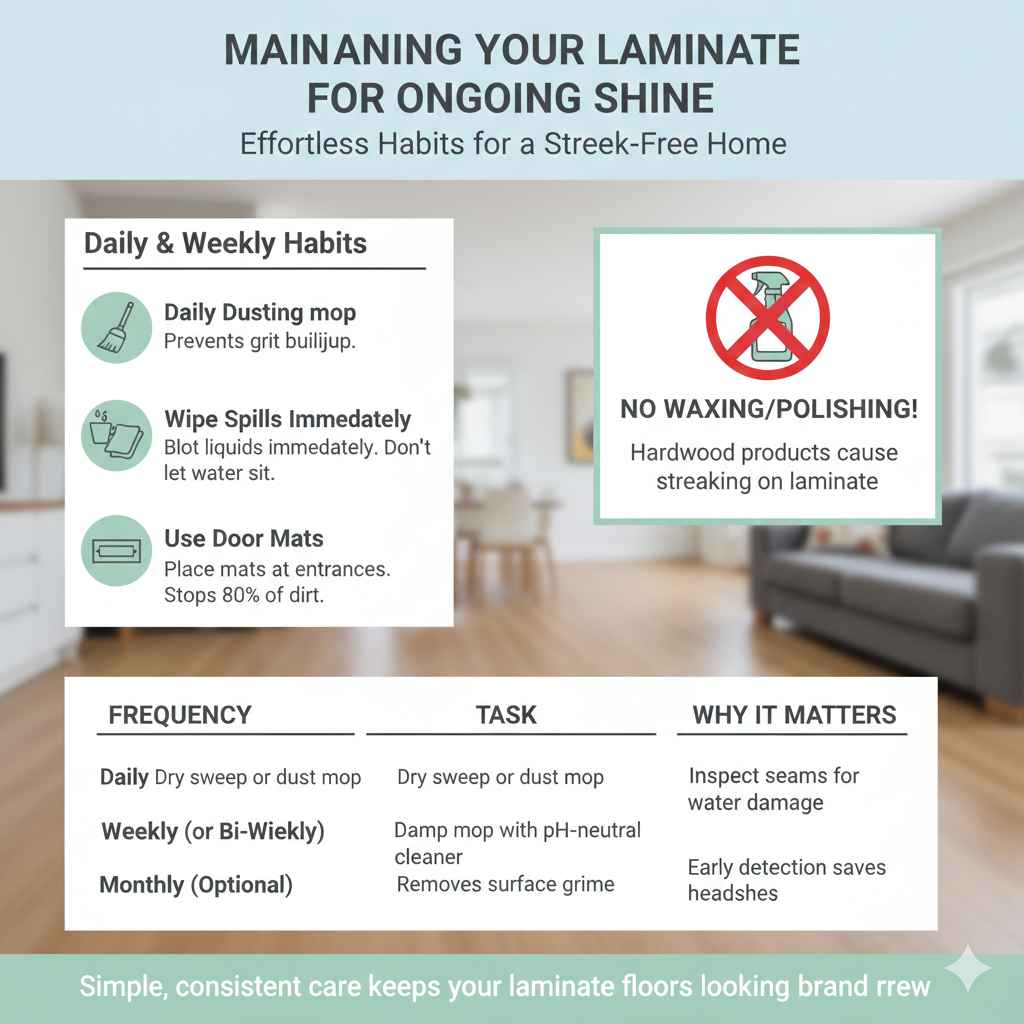
Maintaining Your Laminate for Ongoing Shine
Preventing streaks is always easier than fixing them. By making small changes to your daily habits, you can keep your floors pristine with minimal effort.
Daily and Weekly Habits for Success
- Daily Dusting: A quick run with a dry microfiber mop daily prevents grit buildup, which means less intensive cleaning later.
- Wipe Spills Immediately: If a drink spills, grab a towel and blot it up immediately. Do not let liquids sit, even for a few minutes.
- Use Door Mats: Place high-quality mats both outside and inside exterior doors. This catches about 80% of the dirt and moisture tracked in by shoes.
The Importance of Regular Maintenance
Laminate floors generally do not require waxing or polishing. Trying to add shine back with commercial sprays marketed for hardwood floors will almost certainly lead to residue buildup and streaking on laminate. The shine comes from the sealed wear layer itself!
Here is a simple routine suggestion:
| Frequency | Task | Why It Matters |
|---|---|---|
| Daily | Dry sweep or dust mop. | Prevents abrasive grit from settling. |
| Weekly (or Bi-Weekly) | Damp mop with pH-neutral cleaner (minimal moisture). | Removes surface grime before it becomes sticky residue. |
| Monthly (Optional) | Inspect seams for signs of moisture penetration or discoloration. | Early detection of water issues saves major headaches. |
Frequently Asked Questions (FAQ) about Laminate Floor Cleaning
Q1: Can I use a wet mop on laminate floors?
A: No, never use a soaking wet mop. Laminate is susceptible to water damage. Always wring your mop until it is barely damp—just enough moisture to clean, not enough to leave puddles.
Q2: Is Windex safe to use on laminate wood floors?
A: Generally, no. Windex contains ammonia, which can degrade the glossy protective coating on your laminate planks over time, leading to haziness and potential streaking.
Q3: How often should I deep clean my laminate floors?
A: For most homes, a thorough damp mopping once a week or every two weeks is plenty, depending on foot traffic. Daily dusting with a dry mop is more important for streak prevention.
Q4: What is the best DIY cleaner if I don’t want to buy a special product?
A: A simple solution of one gallon of water mixed with 1/2 cup of plain white distilled vinegar works well for most general cleaning and helps cut through light grease without leaving residue, provided your manufacturer approves it.
Q5: My floor looks shiny but streaky. What did I do wrong?
A: You likely used too much cleaner, or the cleaner you used contained waxes or oils. The streaky look is the residue drying unevenly. Use the mild stripping method (vinegar, water, and a tiny bit of dish soap) followed by a plain water rinse and immediate drying.
Q6: Can I use hydrogen peroxide to clean my laminate floors?
A: Hydrogen peroxide is usually too harsh for the laminate wear layer and is generally not recommended by manufacturers. Stick to pH-neutral cleaners or mild vinegar solutions for daily care.
Conclusion: Confidence in Your Clean Floors
Cleaning your laminate wood floors without those frustrating streaks boils down to respecting the material. Laminate flooring is tough, but it demands specific care: minimal water and residue-free cleaning agents. Remember, preparation is paramount—get rid of the grit first. Then, ensure your mop is only slightly damp, clean in small sections, and promote fast drying.
You now have the confidence and the exact steps to keep your investment looking fantastic year after year. Armed with a good microfiber mop and the knowledge of what to avoid, you’ll ditch the streaky frustration for good. Go ahead, enjoy that streak-free shine—you earned it!