How to Clean Yellowed Faux Wood Blinds
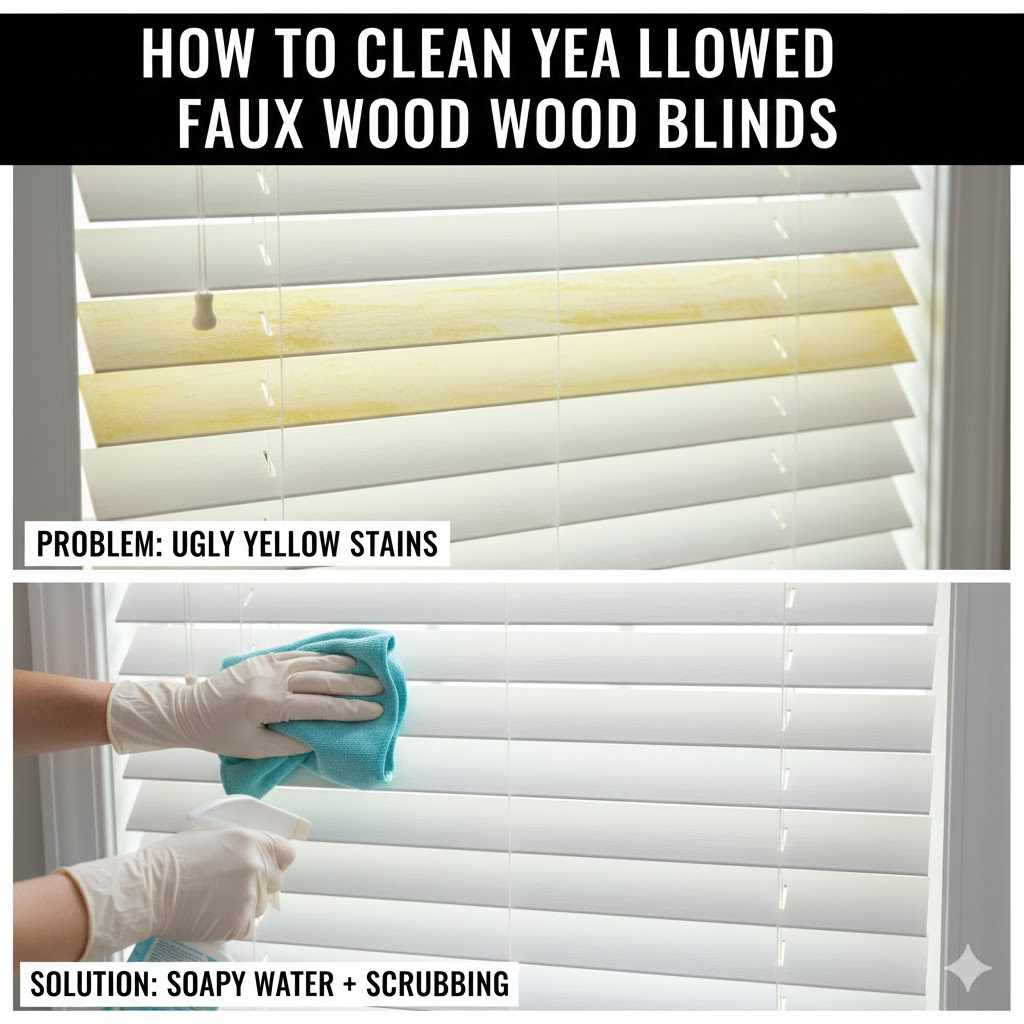
Yellowed faux wood blinds can make a room look tired. Many folks wonder if cleaning them is hard, especially if they’re new to it. You might think it’s a big chore, but it’s really not!
We’ll show you exactly how to get those blinds looking bright and new again. Follow these simple steps, and you’ll be happy with the results. Let’s get started on making your windows shine.
Easy Ways How to Clean Yellowed Faux Wood Blinds
Yellowing on faux wood blinds is a common problem that can make even the newest blinds look old. This happens over time due to sun exposure, smoke, or even just general dust and grime buildup. The good news is that with the right methods, you can restore their original color and make your windows look fresh again.
This section will cover the basic principles and popular methods for tackling this issue.
Understanding Why Blinds Yellow
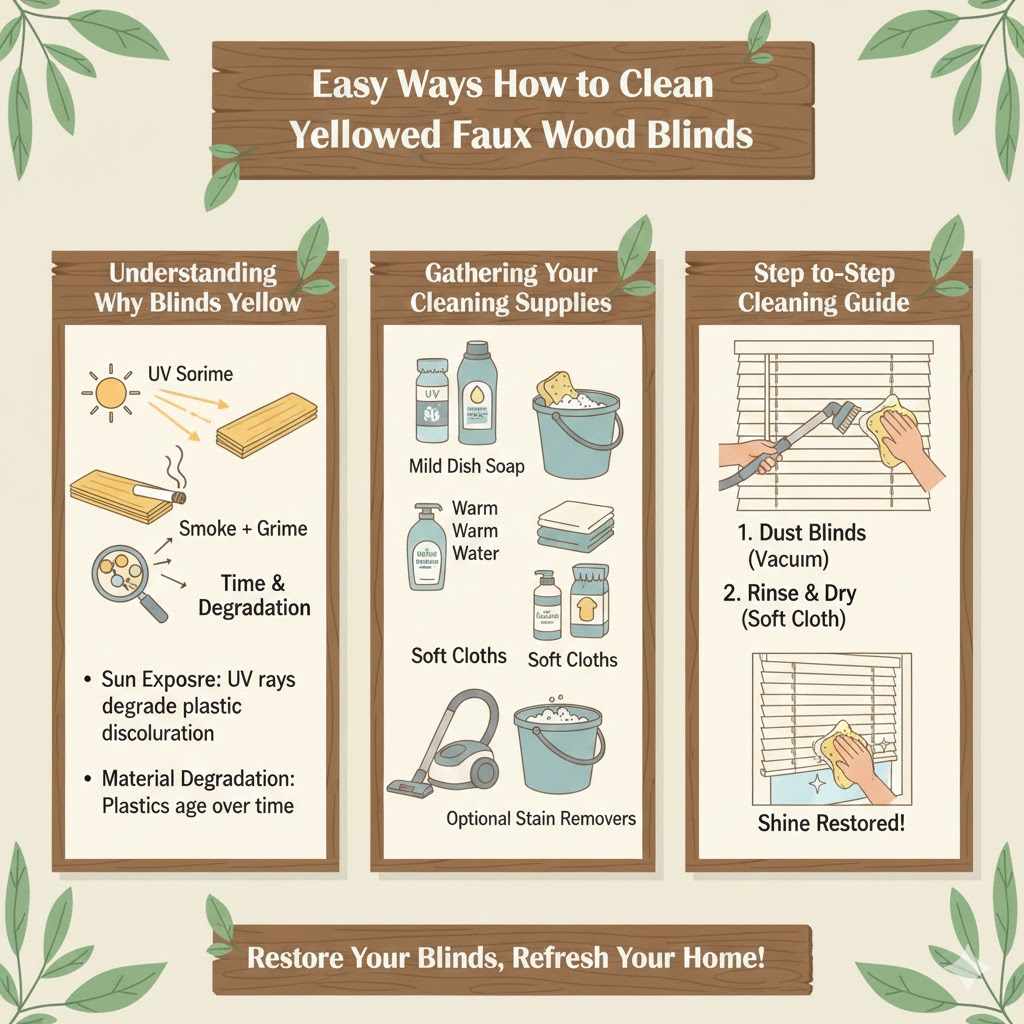
Faux wood blinds are often made from PVC or other plastics. Over time, these materials can break down or react with environmental factors, leading to yellowing. The main culprits are ultraviolet (UV) rays from the sun, which degrade the plastic polymers.
Smoke from cooking or cigarettes also contains compounds that can stain and discolor plastics. Additionally, airborne particles and grease can settle on the blinds and, when combined with heat or light, contribute to a yellowed appearance. It’s a gradual process, so you might not notice it until the yellowing is quite visible.
- Sun Exposure: Direct sunlight is a primary cause of yellowing. UV rays break down the chemical bonds in the plastic, causing a color change. Even indoors, prolonged exposure can have an effect.
- Smoke and Grime: If you cook often or have smokers in the house, the smoke particles can stick to the blind material. Over time, these particles oxidize and cause discoloration. Grease from cooking can also attract dust, creating a sticky film that yellows.
- Material Degradation: All plastics age and can degrade. The specific type of plastic used in faux wood blinds might be more or less susceptible to yellowing depending on its composition and any added UV inhibitors.
Gathering Your Cleaning Supplies
Before you start cleaning, having all your supplies ready makes the process much smoother. You don’t need anything fancy. Most of the items you’ll need are probably already in your home.
This ensures you can begin cleaning right away without any interruptions.
- Mild Dish Soap: This is your go-to cleaner for general grime. It’s gentle enough not to damage the faux wood but effective at cutting through grease and dirt.
- Warm Water: A bucket of warm water is essential for diluting your cleaner and rinsing the blinds. Warm water helps to loosen dirt and grime more effectively than cold water.
- Soft Cloths or Sponges: You’ll need these for wiping down the blinds. Make sure they are soft to avoid scratching the material. Microfiber cloths are excellent for this.
- Vacuum Cleaner with Brush Attachment: This is great for dusting off loose debris before you start washing.
- Optional Stain Removers: For tougher yellowing, you might need something a bit stronger, like baking soda or a specialized plastic cleaner. Always test these in an inconspicuous spot first.
Deep Cleaning Yellowed Faux Wood Blinds Method
When a simple wipe-down isn’t enough, it’s time for a more thorough cleaning. This method focuses on lifting stubborn yellowing and restoring the blinds to their original condition. It involves a bit more effort but yields significant results.
We’ll walk you through each step carefully so you can achieve that bright, clean look.
Step-by-Step Cleaning Process
Follow these steps to give your yellowed faux wood blinds a good cleaning. Start by preparing the area, then move on to washing and rinsing. Finally, you’ll dry them to prevent water spots.
- Dust Thoroughly: Before you introduce any liquids, use a vacuum with a soft brush attachment to remove all loose dust and cobwebs from the blinds. This prevents you from just smearing dirt around when you start washing.
- Prepare Your Cleaning Solution: Mix a few drops of mild dish soap into a bucket of warm water. Stir gently to create some suds. For stubborn stains, you can create a paste of baking soda and water.
- Wipe Down Slats: Dip a soft cloth or sponge into the soapy water. Wring it out well so it’s damp, not dripping wet. Wipe down each slat individually, working from top to bottom.
- Address Stubborn Stains: If you encounter yellowed areas that don’t come clean with soap and water, apply the baking soda paste directly to the stain. Let it sit for about 10-15 minutes. Gently scrub with a soft cloth or an old toothbrush.
- Rinse and Wipe Dry: Use a clean, damp cloth to wipe away any soap residue. Then, immediately use a dry cloth to wipe each slat dry. This prevents water spots and streaks.
- Clean the Cords and Wand: Don’t forget the operating cords and tilt wand. Wipe them down with a damp cloth. For the cords, you might need to pull them through a damp cloth a few times.
- Allow to Air Dry Fully: Leave the blinds fully open for a few hours to ensure they are completely dry before closing them. This prevents moisture from getting trapped and causing mold or mildew.
Using Natural Cleaning Agents
Some people prefer to avoid harsh chemicals. Fortunately, there are effective natural cleaning agents you can use for your faux wood blinds. These are often readily available and gentle on both the blinds and the environment.
- Baking Soda Paste: As mentioned, baking soda is a fantastic mild abrasive. Mixed with water to form a paste, it can lift stains without scratching. You apply it, let it sit, and then gently scrub and wipe away.
- Vinegar Solution: White vinegar can also be effective. Mix equal parts white vinegar and water in a spray bottle. Spray lightly onto a cloth (not directly onto the blinds, to avoid oversaturation) and wipe down the slats.
- Vinegar helps cut through grease and can brighten surfaces.
- Lemon Juice: For a fresh scent and mild bleaching effect, lemon juice can be used. Mix it with water and apply with a cloth. It’s especially good for tackling minor yellowing and leaving a pleasant aroma.
Preventing Future Yellowing of Faux Wood Blinds
Once you’ve successfully cleaned your faux wood blinds, you’ll want to keep them looking good. Preventing future yellowing is key to maintaining their appearance and extending their lifespan. A little regular care can go a long way in stopping that unsightly yellow tint from returning.
Regular Dusting and Wiping
The simplest way to prevent buildup is to dust your blinds regularly. Dust particles are a precursor to grime, and once they stick, they become harder to remove. Weekly dusting can prevent the need for deep cleaning.
- Weekly Dusting Routine: Set aside a few minutes each week to dust your blinds. Use a microfiber duster or the soft brush attachment on your vacuum cleaner. Dusting both the top and bottom surfaces of each slat is important.
- Occasional Damp Wiping: Beyond dusting, an occasional wipe-down with a damp cloth can remove any accumulated film or light grime. This should be done every month or two, or as needed, using just plain water or a very mild soap solution.
- Cleaning Cords and Wands: Don’t forget to wipe down the cords and wands as part of your regular cleaning. These often get touched and can collect dirt and oils.
Managing Sunlight Exposure
Sunlight is a major factor in the yellowing of faux wood blinds. Taking steps to limit its direct impact can significantly slow down the process of degradation and discoloration.
- Use Curtains or Drapes: Layering your blinds with curtains or drapes offers a physical barrier against direct sunlight. When the sun is strongest, close your curtains to protect the blinds.
- Window Films: Consider applying UV-protective window films. These films block harmful UV rays while still allowing natural light to enter your home. This is a great option if you still want to enjoy the brightness of sunlight without the damaging effects.
- Adjust Blind Position: When not in use, consider adjusting your blinds to a closed position that deflects the harshest rays of the sun. Angling them upwards can help direct light towards the ceiling rather than the slats themselves.
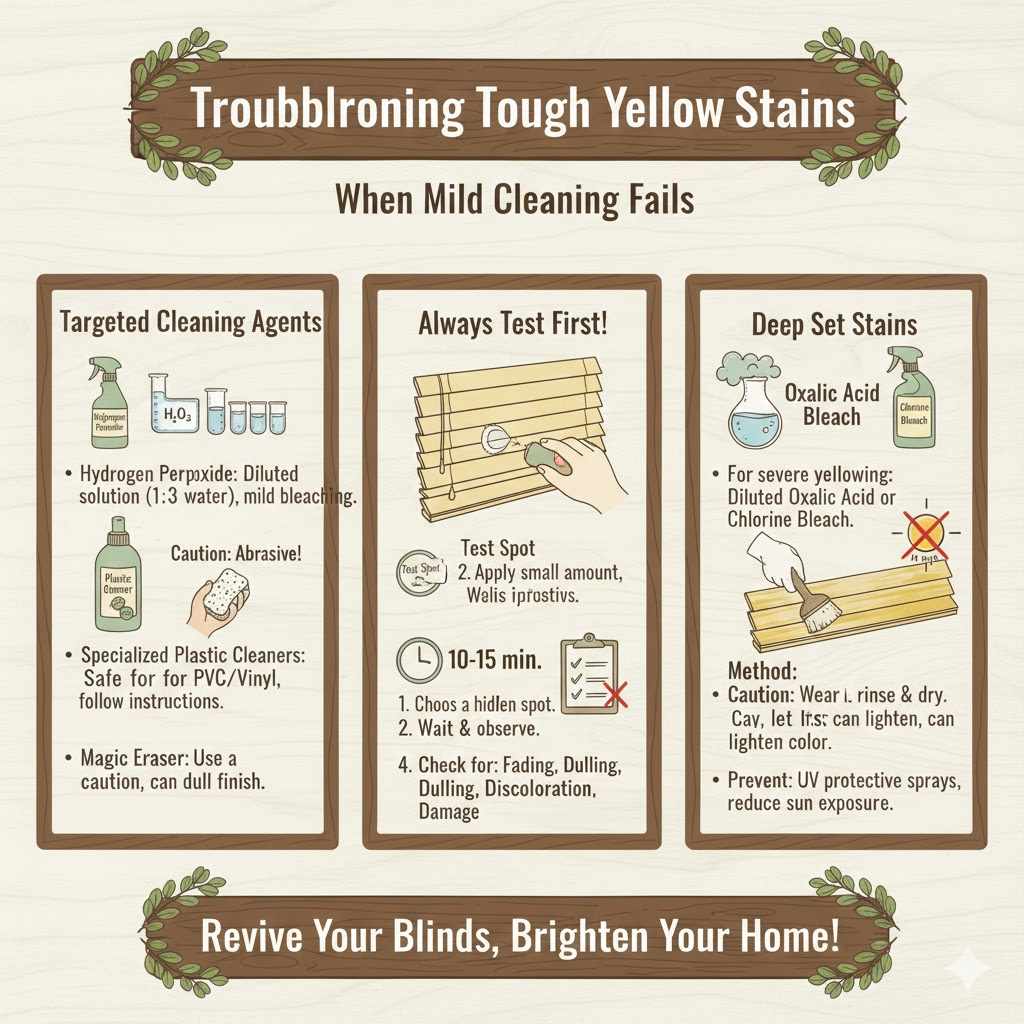
Troubleshooting Tough Yellow Stains
Sometimes, despite your best efforts, some yellow stains are particularly stubborn. These might require a more targeted approach or a slightly stronger cleaning agent. Don’t get discouraged; there are ways to tackle even the most persistent yellowing.
When Mild Cleaning Fails
If your standard soap and water or baking soda paste isn’t cutting it, it’s time to consider more potent, yet still safe, options. These methods are designed for when the yellowing is deeply set or caused by specific stains.
- Hydrogen Peroxide Solution: For significant yellowing, a diluted hydrogen peroxide solution can be very effective. Mix one part hydrogen peroxide with three parts water. Apply this solution to a cloth and gently wipe the stained areas.
- Allow it to sit for a few minutes before wiping with a clean, damp cloth and then drying thoroughly. Hydrogen peroxide acts as a mild bleaching agent.
- Specialized Plastic Cleaners: There are cleaning products specifically designed for plastics that can help remove yellowing. Look for products that are safe for PVC or vinyl. Always follow the manufacturer’s instructions and test the cleaner in an inconspicuous area first to ensure it doesn’t damage the blinds.
- Magic Eraser (Use with Caution): While a Magic Eraser can be effective on many surfaces, it is an abrasive. Use it very gently and sparingly on faux wood blinds. Rub lightly in a circular motion over stubborn spots.
Be aware that excessive rubbing can potentially dull the finish of the blinds, so test in a small area first.
Testing Cleaning Agents
It is always important to test any cleaning solution before applying it to the entire blind. This is to ensure it won’t damage the material, cause further discoloration, or dull the finish. A small, hidden area, like the back of a slat or a corner of the blind, is perfect for this.
- Choose a Test Spot: Select an inconspicuous slat or a small section of the blind that isn’t easily visible.
- Apply a Small Amount: Dab a small amount of your chosen cleaning solution onto the test spot using a clean cloth.
- Wait and Observe: Let the solution sit for the recommended time for that cleaner, or at least 10-15 minutes. Then, wipe it off with a damp cloth and dry the area.
- Check for Damage: Carefully inspect the test spot. Look for any signs of fading, dulling, discoloration, or damage to the material’s texture. If there are no adverse effects, you can proceed with cleaning the rest of the blinds.
Frequently Asked Questions
Question: How often should I dust my faux wood blinds?
Answer: It’s best to dust your faux wood blinds at least once a week. This prevents dust buildup that can lead to tougher grime and yellowing over time.
Question: Can I use window cleaner on faux wood blinds?
Answer: Some window cleaners might be too harsh and could damage the finish. It’s safer to use mild dish soap and water or natural alternatives like baking soda or vinegar solutions.
Question: How do I clean the cords and wands?
Answer: You can wipe the cords and wands with a damp cloth. For cords, gently pull them through a damp cloth a few times to clean them effectively.
Question: Will sunlight always make faux wood blinds yellow?
Answer: While sunlight is a major factor, not all faux wood blinds will yellow at the same rate. Quality matters, and some may have UV inhibitors. However, limiting direct sun exposure is always a good preventative measure.
Question: Can I remove my blinds to clean them?
Answer: Yes, you can often remove faux wood blinds for cleaning. This allows for a more thorough washing, but ensure you have a secure place to lay them flat and dry them completely afterward.
Wrap Up
Cleaning yellowed faux wood blinds is straightforward with the right approach. You can restore their original look using simple household items. Regular dusting and managing sunlight exposure are key to keeping them bright.
Don’t let yellowing dim your windows; a little effort brings back their shine.