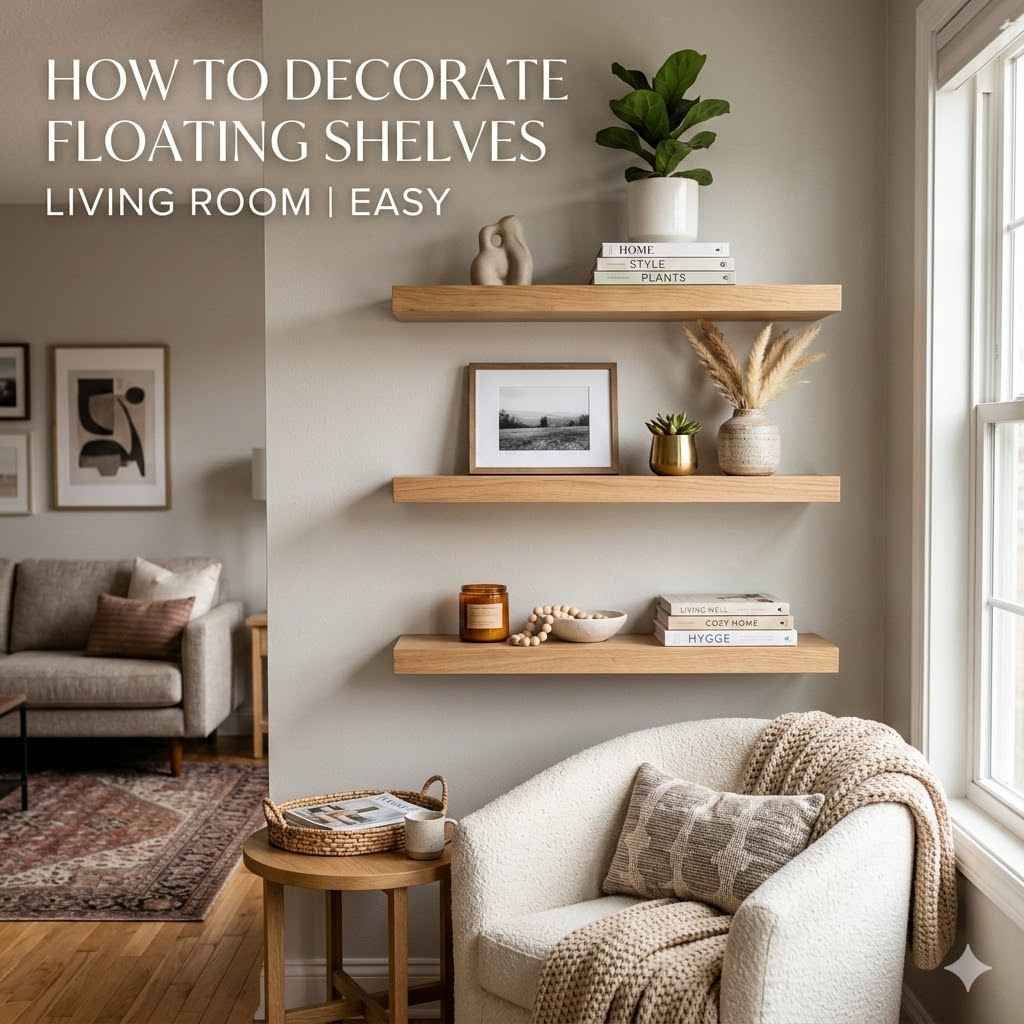
How to Decorate Floating Shelves Living Room Easy
This section will guide you through the basics of making your floating shelves look great in your living room. We will explore different styles and how to choose items that fit your personal taste. It’s all about creating a look that feels right for your home.
We will cover how to pick the right items and arrange them so they look balanced and attractive. This is where your creativity can really shine.
Choosing a Theme or Style
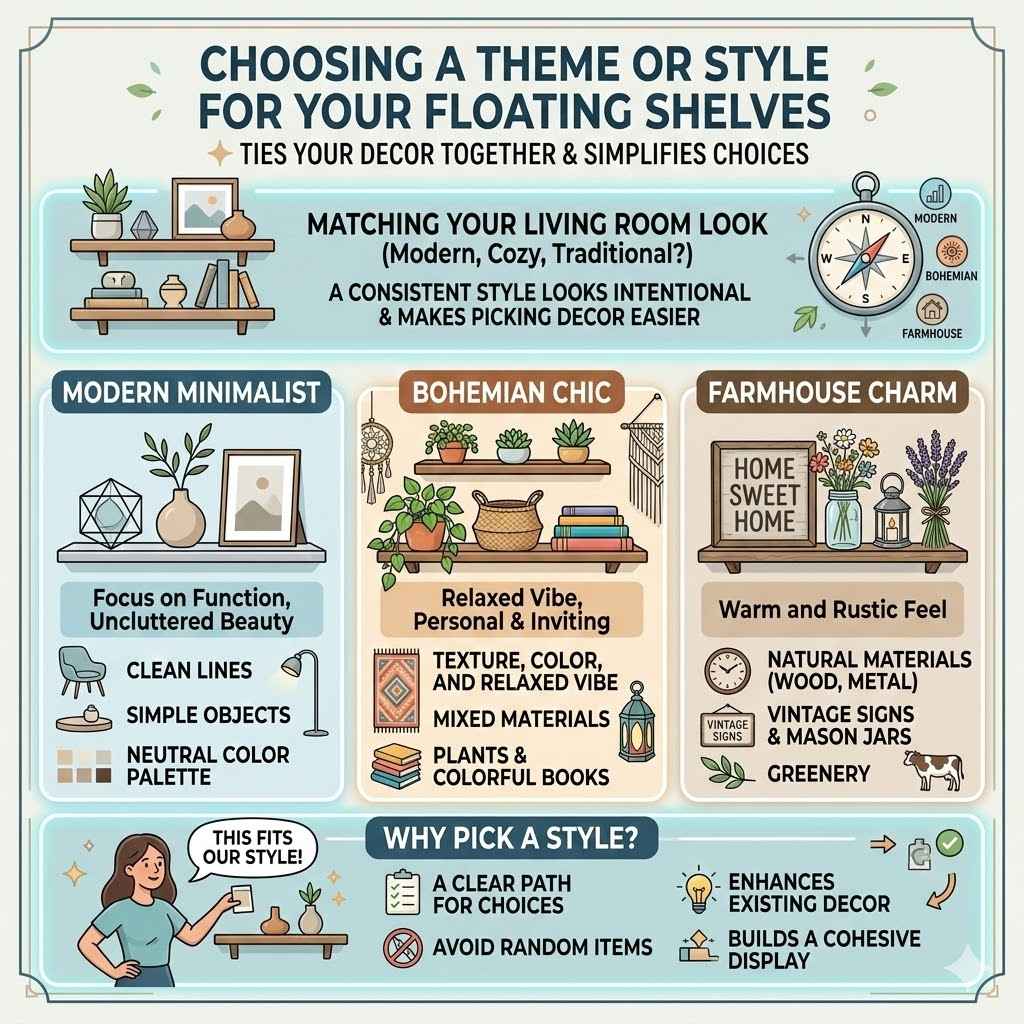
Selecting a theme or style for your floating shelves helps tie everything together. Think about the overall look of your living room. Do you prefer a modern, minimalist feel, or something more cozy and traditional?
A consistent style makes your shelves look intentional and well-put-together, not just a random collection of items. This also makes picking out decor much easier.
- Modern Minimalist: Clean lines, simple objects, and a neutral color palette. This style focuses on function and uncluttered beauty. Think a few carefully chosen ceramic vases or geometric sculptures.
- Bohemian Chic: This style is all about texture, color, and a relaxed vibe. Mix and match different items like woven baskets, plants, and colorful books. It feels personal and inviting.
- Farmhouse Charm: Think natural materials like wood and metal. Include items like mason jars, vintage signs, and greenery. This style offers a warm and rustic feel.
When you pick a style, it acts like a compass for your decorating choices. It prevents you from just grabbing whatever looks nice and helps you build a cohesive display. For example, if you’re going for modern, you’d skip the distressed wood signs and opt for sleek metal accents instead.
This focus ensures your shelves enhance your room’s existing decor.
Balancing Your Shelf Display
Balance is key to making your floating shelves look professionally styled. This means distributing visual weight evenly across the shelves. You don’t want one shelf to look too crowded while another looks empty.
Think about the size, shape, and color of each item you place.
- Use varying heights to create visual interest. Taller items like plants or lamps can anchor a shelf, while smaller items fill in the gaps.
- Group items in odd numbers, like threes or fives. This is a classic design principle that often looks more appealing than even numbers.
- Consider the negative space, or the empty areas on your shelves. This space is just as important as the items themselves. It gives the eye a place to rest.
Imagine you have a tall vase on one side of a shelf. To balance it, you might place a group of smaller books or a small framed picture on the other side. This creates a visual tug-of-war that feels stable and pleasing to the eye.
It’s like arranging elements on a scale; you want it to feel even.
A common mistake is overcrowding a shelf. This makes it look messy and chaotic. Instead, step back and look at your shelves from a distance.
Are there too many things? Is there enough breathing room? Adjust as needed to create that pleasing balance.
Good balance makes the shelves feel calm and organized.
Selecting the Right Decor Items
Choosing the items to place on your floating shelves is where the fun really begins. This is your chance to add personality and style to your living room. We will look at different types of decor, from practical items to decorative pieces, and how to combine them.
The goal is to create displays that are both beautiful and meaningful to you.
Functional Decor
Many items can serve a dual purpose—they look good and are useful too. This is a smart way to decorate, especially if you have limited space. Think about things you use regularly but also want to display attractively.
- Books are a classic choice. Stack them horizontally or vertically, mix hardcovers and paperbacks, and choose spines that add color or interest.
- Decorative boxes or baskets can hide clutter like remotes, coasters, or mail, while adding texture and color.
- Small plants, like succulents or air plants, add life and a touch of nature to your shelves. They also bring a fresh green color.
For instance, instead of a plain old stack of magazines, arrange a few favorite books with their spines facing out. You can even add a small, stylish clock or a decorative tray to hold keys or spare change. These everyday items, when chosen with care, can become beautiful parts of your shelf display.
They make the shelves look lived-in and practical.
Decorative Accents
Decorative accents are the pieces that truly bring your shelves to life. These are items chosen for their aesthetic appeal, to add color, texture, or a personal touch. They are the elements that express your style and interests.
- Vases and sculptures add form and interest. Choose different shapes and materials to create visual variety.
- Picture frames display cherished memories. Mix frame sizes and styles for a dynamic look.
- Candles and candle holders add warmth and ambiance, especially in the evening.
- Mirrors can make a small space feel larger and reflect light.
A well-placed sculpture can draw the eye and add a focal point to a shelf. A collection of frames showing family photos adds a personal touch that tells a story. Even simple decorative objects, like a colorful ceramic bowl or a unique paperweight, can add character.
These accents are like the jewelry of your shelves.
When selecting decorative items, think about scale. A tiny object on a large shelf can get lost, while a giant piece might overwhelm a smaller shelf. Try to choose items that are proportionate to the shelf space.
Variety is also important. Mix smooth textures with rough ones, and matte finishes with glossy ones. This variety makes the display more engaging.
Incorporating Personal Touches
The most beautiful shelves often include items that are meaningful to you. These personal touches tell your story and make your living room feel uniquely yours. They turn ordinary shelves into displays of your life and passions.
- Display souvenirs from your travels. These items carry memories and can spark conversations.
- Showcase artwork you or your family have created. This adds a personal and artistic flair.
- Include collections you are passionate about, like vintage cameras, figurines, or specific types of books.
- Frame meaningful quotes or letters. These can add a thoughtful and sentimental element.
For example, if you love to travel, a small Eiffel Tower figurine from Paris or a miniature Buddha statue from Thailand can add a global flair. If you have children, displaying their artwork or a favorite childhood toy can create a heartwarming display. These items have a story behind them, making your shelves more than just decoration.
They become conversation starters.
It’s important to display these personal items in a way that still looks organized and intentional. Don’t just pile them up. Give each piece a little space to be appreciated.
Mix them with other decor items to create a balanced and pleasing arrangement. This way, your personal touches enhance the overall aesthetic of your shelves.
Arranging and Styling Your Floating Shelves
Now that you have your items, it’s time to arrange them. This is where you bring everything together to create a visually appealing display. We’ll cover different arrangement techniques and tips for styling to make your floating shelves look their absolute best.
Getting the arrangement right makes a huge difference.
Creating Focal Points
A focal point is something that immediately catches the eye on your shelf. Having one or two strong focal points helps guide the viewer’s attention and prevents the shelf from looking too busy. This makes the display more impactful.
- A larger piece of art or a striking sculpture can serve as a natural focal point.
- A cluster of items arranged artfully can also create a focal point. For example, a stack of books topped with a decorative object.
- A unique vase with flowers or a statement lamp can draw attention.
For instance, imagine a shelf with a few books and a small plant. If you add a framed piece of art with vibrant colors, that art piece will likely become the focal point. All the other items then support this central element, making the shelf look more designed.
The goal is to have one or two items that stand out without being overwhelming.
Another way to create a focal point is through contrast. This could be a contrast in color, texture, or size. A dark, glossy vase on a shelf with matte, light-colored objects will stand out.
A tall, slender item against a background of smaller, rounder objects also creates a strong visual pull.
The Rule of Thirds and Visual Weight
The rule of thirds is a compositional guideline that suggests dividing your shelf into nine equal sections, like a tic-tac-toe board. Placing key items along these lines or at their intersections can create a more dynamic and interesting display. This technique helps make your arrangements feel less centered and more engaging.
- Place larger or more dominant items in one of the outer thirds of the shelf, rather than dead center.
- Use smaller items to balance the visual weight of larger ones, even if they are on opposite sides of the shelf.
- Consider the overall visual weight of each item. Darker colors, heavier textures, and larger sizes tend to feel heavier.
Think of a shelf that is three feet long. The rule of thirds suggests placing your main decorative item about a foot from either end. This creates a more pleasing composition than putting it exactly in the middle.
This principle is used in photography and art to create balanced yet interesting visuals.
Visual weight is about how much an object draws your eye. A heavy book with a dark cover has more visual weight than a light-colored, small trinket. You need to distribute this visual weight evenly across the shelf.
If you have a large, heavy item on the left, you might need a group of smaller items on the right to balance it out.
Layering and Depth
Layering means arranging items so they overlap or sit in front of each other, creating depth. This makes your shelves look more dynamic and less flat. It’s like creating a mini-scene on your shelf.
- Place taller items towards the back of the shelf.
- Then, place medium-sized items in front of them.
- Finally, use smaller decorative objects or plants in front of those to create multiple levels.
For example, you might place a framed picture against the wall at the back of the shelf. In front of that, you could place a stack of books. Then, in front of the books, a small succulent plant.
This layering creates a sense of depth and makes the arrangement much more visually interesting than if everything were lined up in a row.
Another way to layer is by using different depths. A small dish placed in front of a vase, or a trailing plant hanging over the edge of a book stack, adds another dimension. This technique makes your shelves look more thoughtful and curated.
It invites the viewer to look closer and explore the different elements.
Common Mistakes and How to Avoid Them
Even with the best intentions, it’s easy to make a few decorating mistakes. This section helps you identify those common pitfalls and offers simple solutions. Avoiding these can significantly improve the look of your decorated floating shelves.
Getting these right makes a big difference.
Overcrowding Shelves
One of the most common mistakes is putting too many items on a shelf. This makes the space look cluttered and can hide the beauty of individual pieces. Shelves need “breathing room” to look elegant.
- Always leave some empty space on each shelf. This negative space is crucial for a clean look.
- Edit your decor. If a shelf looks too full, remove a few items. It’s better to have fewer, well-chosen pieces than too many.
- Step back and view your shelves from a distance. This helps you see if it looks cluttered or balanced.
If you have many decorative items, consider rotating them. Keep some packed away and swap them out seasonally or when you want a fresh look. This way, you can enjoy all your items without making your shelves look messy.
It also keeps your decor feeling new and exciting.
A good rule of thumb is to fill about 60-70% of the shelf space. This leaves enough room for visual breathing space and makes the arrangement look intentional, not haphazard. Less is often more when it comes to shelf styling.
Lack of Cohesion
Another mistake is when decor items don’t seem to belong together. This can happen when you pick items randomly without a guiding style or theme. The shelves end up looking disjointed and unappealing.
- Choose a color palette and stick to it. Using a few recurring colors throughout your decor creates unity.
- Select items that share a similar style. If your living room is modern, avoid overly rustic or vintage pieces.
- Mix textures, but ensure they complement each other rather than clash.
Imagine you have a sleek modern vase, a chunky knit throw pillow, and a distressed wooden sign. These items might not work well together on the same shelf if you are aiming for a cohesive look. Instead, pick items that share a common thread, like a color, material, or design era.
This ensures your shelves feel like a curated collection.
Even a small detail, like using the same metal finish for picture frames and candle holders, can create cohesion. Consistency in these small details ties the whole display together and makes it look more professional.
Ignoring Scale and Proportion
Using items that are too large or too small for the shelf space is another common error. A tiny object on a wide shelf can disappear, while a giant item can overpower the shelf and make it look cramped.
- Always consider the size of your shelf when selecting decor.
- Mix item sizes to create visual interest, but ensure they are proportionate to the shelf.
- Avoid placing one extremely large item on a shelf meant for smaller groupings, unless it’s a deliberate focal point.
For example, if you have a narrow floating shelf above a sofa, a huge vase will likely look out of place and make the shelf feel crowded. Instead, opt for a few smaller decorative objects or a slim framed print. Conversely, on a very wide shelf, a single tiny item might look lonely.
Consider a group of items or a larger piece.
Proportion is also about how items relate to each other. If you have a large book, it might be best paired with smaller items that don’t compete with it for attention. A good balance of sizes makes the shelf look dynamic and well-arranged.
Creative Ways to Use Floating Shelves
Floating shelves are versatile and can be used in many creative ways beyond just displaying decor. This section explores some unique ideas to maximize the potential of your floating shelves in your living room and other areas. These ideas can inspire new ways to use your space.
Creating a Gallery Wall
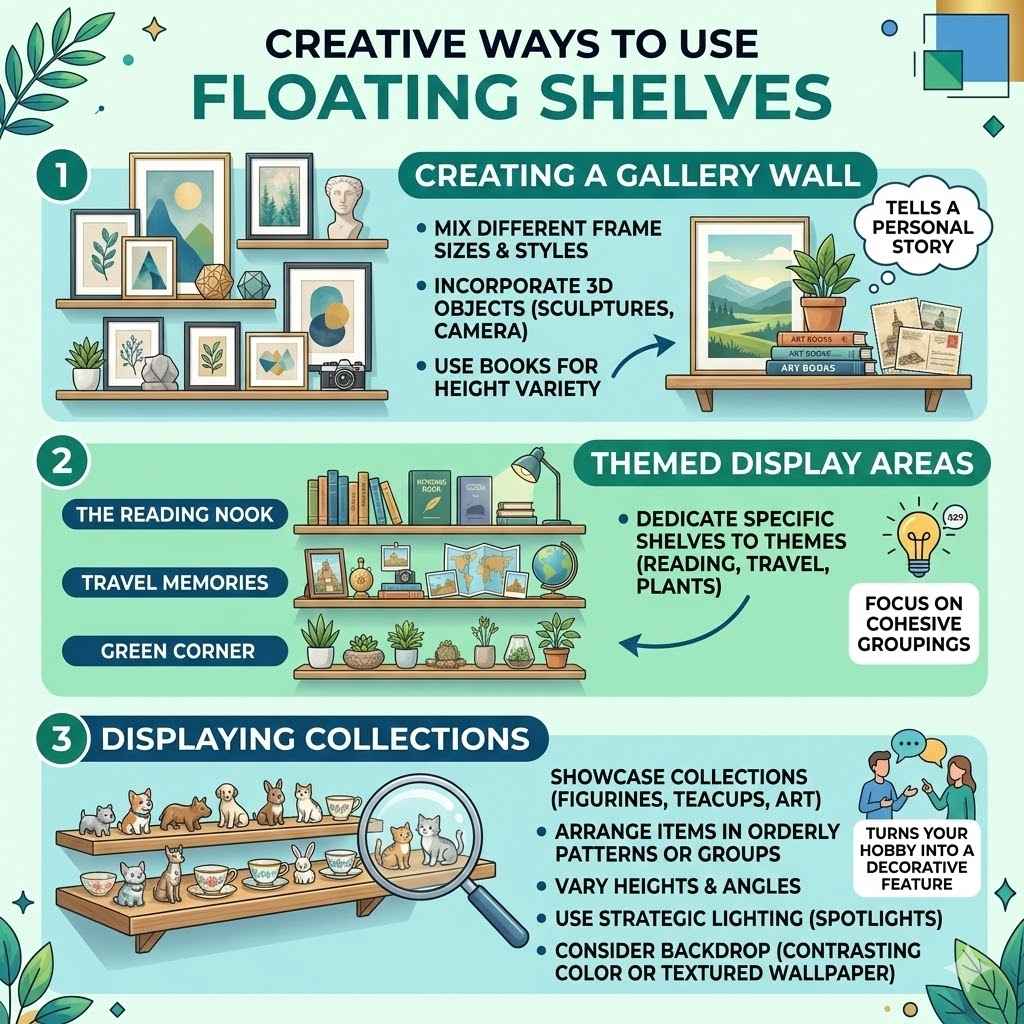
Floating shelves are perfect for creating a personalized gallery wall. Instead of just hanging pictures, you can combine framed art with small sculptures, plants, and books to create a more dimensional and interesting display. This approach adds texture and variety to traditional gallery walls.
- Mix different frame sizes, styles, and colors.
- Incorporate 3D objects like small statues, ceramic pieces, or even a vintage camera among the framed artwork.
- Use books to add different heights and break up the visual line of frames.
Imagine a wall with three floating shelves. On the top shelf, you might have a large landscape print. On the middle shelf, a smaller framed photo next to a small potted plant and a stack of art books.
On the bottom shelf, a collection of vintage postcards and a unique sculptural piece. This layered approach creates a visually rich and engaging display that draws the eye.
This method allows you to tell a story on your wall. You can curate a collection of items that reflect your interests, travels, or family history. It’s a more dynamic and less static way to display art and personal mementos compared to a wall of just framed pictures.
Themed Display Areas
You can dedicate specific floating shelves to different themes. This helps organize your decor and adds a unique touch to your living room. For example, one shelf could be dedicated to your love of reading, another to travel memories, and another to plants.
- Dedicate a shelf to books with interesting covers and a cozy reading lamp.
- Create a travel shelf with souvenirs, maps, and photos from your adventures.
- Design a green corner with a variety of small plants and nature-inspired decor.
Consider a shelf dedicated to your hobby, like photography. You could display vintage cameras, framed photos you’ve taken, and books about photography. This creates a focal point that clearly showcases your passion.
It makes your shelves feel purposeful and personal.
This approach also makes decorating less overwhelming. Instead of trying to find items that go with everything, you focus on creating cohesive groupings for each shelf. It’s like creating mini-exhibits within your living room that reflect different aspects of your life and interests.
Displaying Collections
Floating shelves are ideal for showcasing collections of items. Whether you collect vintage teacups, small figurines, or specific types of art, shelves provide a prominent place to display them. This turns your hobby into a beautiful decorative feature.
- Arrange items in a grid pattern for a very orderly look.
- Group similar items together, varying their heights and angles for visual interest.
- Use lighting strategically, perhaps with small spotlights, to highlight your collection.
If you collect ceramic animals, for instance, you can arrange them artfully on a floating shelf. You might place a larger piece at the back and smaller ones in front, creating a charming diorama. Adding a small plant or a relevant book can further enhance the display.
This makes your collection a talking point.
When displaying collections, consider the background. A shelf painted a contrasting color or lined with a textured wallpaper can make your collection stand out even more. The key is to make your collection feel special and integrated into the room’s design.
Frequently Asked Questions
Question: What is the best way to hang floating shelves?
Answer: The best way to hang floating shelves depends on their type and weight capacity. Always follow the manufacturer’s instructions. Generally, you will need to locate wall studs for secure mounting.
Use a level to ensure the shelf is straight. For heavier shelves, consider using specialized anchors designed for drywall if studs are not available or perfectly placed.
Question: How many items should I put on a floating shelf?
Answer: Aim for balance rather than filling every inch. Typically, about two-thirds of the shelf space should be occupied by items, leaving some negative space. Odd numbers of items, like three or five, often look more appealing.
Question: Can I put books on floating shelves?
Answer: Yes, absolutely. Books are a classic and stylish item for floating shelves. You can stack them horizontally or vertically, mix hardcovers and paperbacks, and even arrange them by color for a decorative effect.
Question: What if my living room is very small?
Answer: For small living rooms, focus on less clutter and more strategic placement. Use floating shelves to display a few key pieces that bring you joy. Mirrors can also be used on shelves to create a sense of more space and light.
Question: How often should I change the decor on my shelves?
Answer: There’s no strict rule! Many people like to change their shelf decor seasonally or for special occasions. You can also rotate items from storage to keep your displays fresh and interesting.
Do it whenever you feel your space needs a refresh.
Wrap Up
Decorating floating shelves in the living room is about personal expression and thoughtful arrangement. By choosing items that reflect your style, balancing visual weight, and creating depth, you can transform simple shelves into beautiful displays. Remember to avoid overcrowding and maintain cohesion for a polished look.
Enjoy making your shelves a unique part of your home’s charm.