How to Get Stains Out of Granite With Baking Soda
Cleaning granite can sometimes feel tricky, especially when it comes to stains. Many people get frustrated when they try to clean their granite and the stains just won’t budge. This is common because granite is porous and absorbs liquids. Luckily, learning How to Get Stains Out of Granite With Baking Soda is actually pretty straightforward. We’ll show you a simple step-by-step approach that anyone can follow. Get ready to discover how to tackle those stubborn spots and bring your granite back to its sparkling best. First, let’s explore some key cleaning ideas.
Understanding Granite and Its Vulnerabilities
Granite is a beautiful and durable natural stone, often chosen for countertops, floors, and other surfaces. However, its natural beauty comes with certain vulnerabilities. Granite is porous, meaning it has tiny holes that can absorb liquids. This is why spills can quickly lead to stains if not addressed promptly. Different types of granite have different levels of porosity; some absorb liquids faster than others.
Knowing the type of granite you have can help you choose the best cleaning and maintenance methods. A good sealant can help protect your granite, but it’s not a complete fix, so regular cleaning is essential. It’s also important to avoid harsh chemicals as they can damage the stone’s surface.
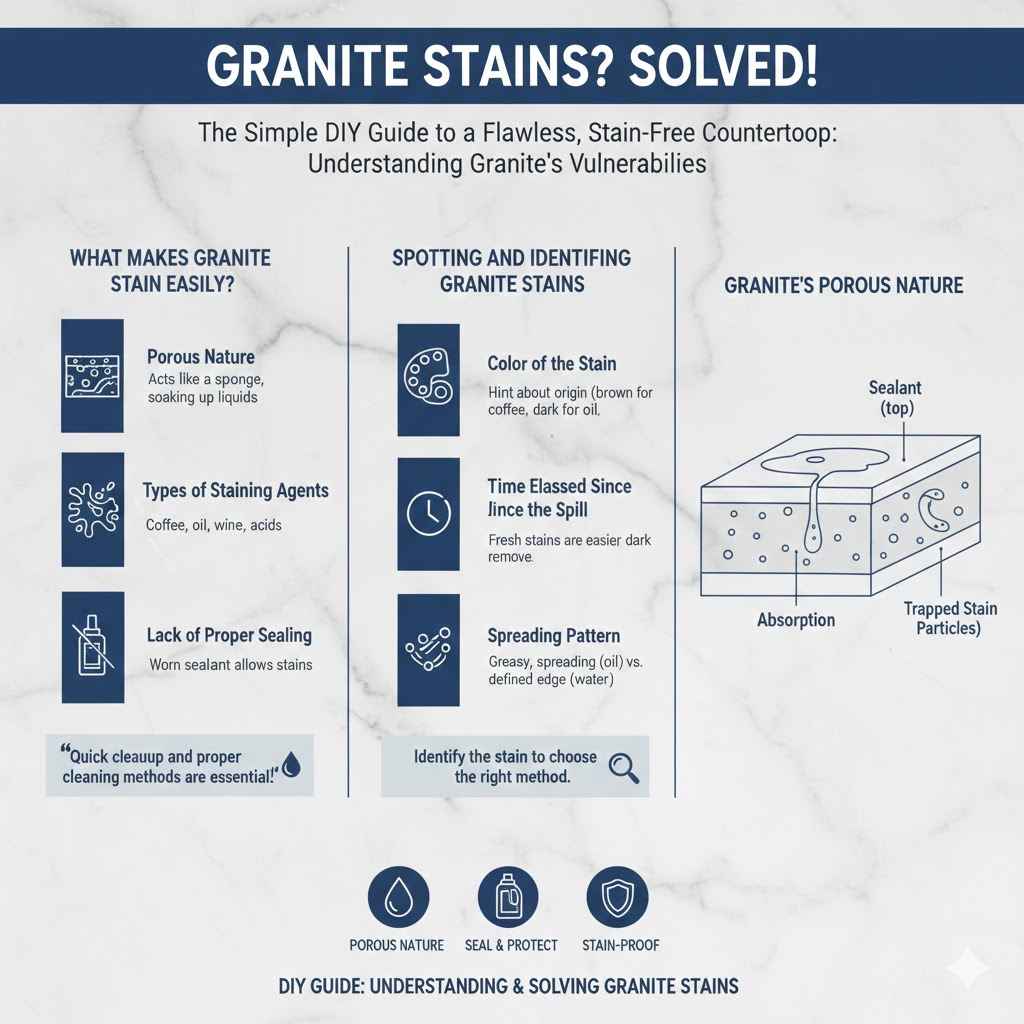
What Makes Granite Stain Easily?
Porous Nature: Granite’s pores act like tiny sponges, soaking up liquids and trapping staining agents. Think of it like a sponge that quickly absorbs spills.
Granite’s porous nature is the main reason it stains. When spills happen, the liquid quickly seeps into the stone. If the liquid contains coloring agents like coffee, juice, or oil, they get trapped within the pores. Regular sealants help, but they aren’t perfect. They can reduce the stain from becoming too bad. Without swift action, the stain sets in and becomes more difficult to remove. This highlights the importance of quick cleanup and proper cleaning methods.
Types of Staining Agents: Everything from food spills to acidic liquids can leave their mark.
Many substances can stain granite, and some are worse than others. Coffee, wine, and juice are common culprits because of their color. Greasy spills from cooking oils or food can also penetrate the stone. Acidic substances such as vinegar or lemon juice are especially bad because they can damage the sealant and even etch the granite’s surface, making it more vulnerable to staining. Knowing the kind of substance that caused the stain can also help decide the best removal method.
Lack of Proper Sealing: Unsealed or poorly sealed granite is more susceptible to staining.
Granite counters are sometimes not properly sealed. Sealant protects the granite. Sealant works by filling in some of the pores of the stone, making it more resistant to liquid absorption. If the sealant has worn off, the granite becomes a sitting duck for stains. Regularly resealing your granite, usually every one to three years, can help prevent future staining and keep your granite looking fresh. Regular sealing is just as important as regular cleaning.
Spotting and Identifying Granite Stains
Identifying the type of stain is a key step in effective cleaning. Different stains may require different methods. Recognizing the source of the stain helps determine the best approach for removing it. Before you start cleaning, carefully examine the stain’s appearance. Color, spread, and timeline all provide clues. By accurately identifying the type of stain, you can choose the right cleaning product and technique for the best outcome.
Color of the Stain: The color of the stain often gives a hint about its origin.
The color of the stain gives away what caused it. Brown or dark stains are often from coffee, tea, or red wine. Grease and oil stains tend to leave a darker, translucent mark. Knowing the color helps you decide what cleaner will work best. For instance, you might choose an alkaline cleaner for grease or a special stain remover for organic stains.
Time Elapsed Since the Spill: The longer a stain sits, the more difficult it is to remove.
The time since the spill happened changes everything. Fresh stains are easier to remove because the staining agent hasn’t had time to penetrate deeply into the stone. Old, set-in stains are more challenging and may need more work to remove. Addressing spills quickly is vital for preventing permanent staining. Time is of the essence when it comes to cleaning granite!
Spreading Pattern: How the stain spreads on the surface can help identify its nature.
The way a stain spreads can offer a good clue about its cause. An oil stain often appears as a greasy, spreading spot, while a water-based stain might have a more defined edge. Analyzing the stain’s spread gives you a better idea of how the staining substance interacted with the stone. This information will guide your cleaning process.
How to Get Stains Out of Granite With Baking Soda: The Process
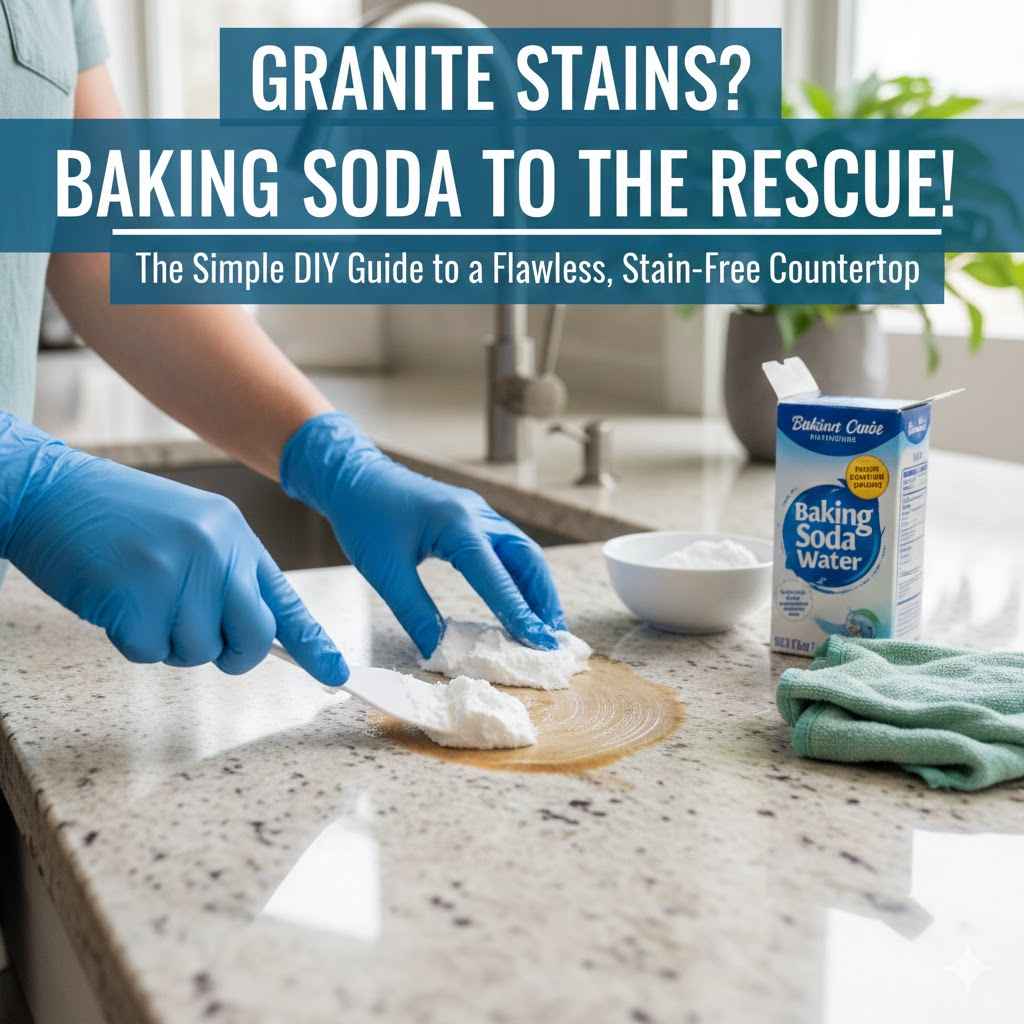
Baking soda is a gentle yet effective solution for removing stains from granite. Its mild abrasive qualities make it ideal for lifting stains without causing damage. The process is simple, and it utilizes materials often readily available at home. The key is to create a paste with baking soda and water, apply it to the stain, and allow it to work its magic. Understanding the steps involved will help you remove many common stains from your granite surfaces. Patience and careful attention to the process will give you the best results.
Creating the Baking Soda Paste
Ingredients: Baking soda and distilled water are all you need.
The ingredients are simple, baking soda and distilled water. Baking soda acts as the main cleaning agent, while the water helps create the paste. It is a natural cleaning solution, and it is usually safe for both you and the environment. You probably have these ingredients in your kitchen already. This simplicity makes it a popular option for cleaning granite.
Mixing Ratio: Aim for a thick, spreadable consistency.
The right consistency for your paste is crucial. The goal is to make a paste that’s thick enough to stick to the granite surface but not too runny that it spreads everywhere. Start by adding water to the baking soda a little bit at a time, mixing as you go. You want to create something similar to a thick toothpaste. This consistency will help the paste stay on the stain while it works, ensuring the most effective cleaning.
Preparing the Area: Clear the surface and protect surrounding areas.
Before you begin, clear your workspace and protect any areas that you don’t want to get wet. Remove any items from the counter. Place towels around the area to catch any drips or spills. These steps will protect your surfaces and make the cleaning process go smoothly. A clean, protected area is a step towards a successful stain removal.
Applying and Waiting for the Paste
Application: Apply the paste generously over the stained area.
Use a plastic spatula or a clean spoon to apply the baking soda paste to the stained area. Cover the entire stain, ensuring the paste extends slightly beyond the edges. This helps ensure that you are covering all of the stained area. The paste should be thick enough to completely cover the stain. This step sets the stage for the cleaning.
Covering the Paste: Use plastic wrap to keep the paste moist.
After applying the paste, place a piece of plastic wrap over the area. This helps keep the paste moist, preventing it from drying out too quickly. It also traps the cleaning action of the baking soda against the stain, helping lift the stain from the granite. The plastic wrap is a key step, as it improves the cleaning process.
Waiting Time: Allow the paste to sit for several hours or overnight.
Patience is vital for this method. Allow the paste to sit on the stain for at least a few hours. For tougher stains, you can let it sit overnight. The longer the paste sits, the more time it has to draw out the stain from the granite. Remember to keep the plastic wrap in place during this time to maintain moisture. Waiting patiently is key.
Cleaning and Finishing Up
Once the baking soda paste has done its work, the cleaning process continues with rinsing and drying. These final steps are important for revealing the clean granite surface. Careful rinsing will ensure that no baking soda residue remains. Proper drying helps prevent water spots and keeps your granite looking its best. The finishing touches are just as important as the initial application.
Rinsing and Wiping
Removing the Paste: Gently remove the plastic wrap and the dried paste.
After the waiting period, remove the plastic wrap. Then, scrape away the dried baking soda paste. Use a plastic spatula or a soft cloth. Be gentle to avoid scratching the granite. Once the paste is removed, you will get your first glimpse of how well the process worked. At this stage, you are on the brink of having clean, stain-free granite.
Rinsing with Water: Rinse the area thoroughly with clean water.
Rinse the area with clean water to remove any remaining baking soda residue. Use a damp cloth or sponge to wipe the surface. It is important to remove all traces of the baking soda because if it is left behind, it can leave a hazy appearance. Clean rinsing is important for the clean granite look.
Drying the Surface: Dry the granite with a clean, soft cloth.
Use a clean, soft cloth to dry the granite completely. Make sure there are no water spots left behind. This is the finishing touch that brings the process to an end and ensures a polished result. Proper drying adds the final shine and reveals your clean and beautiful granite.
Sealing and Ongoing Maintenance
Re-Sealing Granite: Seal granite regularly to prevent future staining.
After cleaning and stain removal, consider resealing your granite. Sealing helps keep your granite protected from future stains. Make it part of your routine. Regularly sealing your granite, typically every one to three years, will help keep it stain-resistant. By resealing, you will add an extra layer of protection to your granite.
Regular Cleaning: Clean spills promptly to avoid stains.
The best way to prevent stains is to clean up spills as soon as they happen. This includes food, drinks, and any liquids that can stain. Keep a granite cleaner on hand for quick and easy cleaning. Prompt cleaning and the correct cleaner will help keep your granite beautiful for many years.
Avoiding Harsh Chemicals: Use gentle cleaners designed for granite.
Avoid using harsh chemicals and abrasive cleaners on your granite. Always use cleaners designed specifically for granite. These cleaners are formulated to remove dirt and stains without damaging the stone’s surface or the sealant. Using the right cleaners is a vital step in maintaining and keeping the look of your granite.
How to Get Stains Out of Granite With Baking Soda: Advanced Techniques
For tougher stains, sometimes a simple baking soda paste isn’t enough. In these cases, there are advanced techniques you can try. These methods combine baking soda with other cleaning agents to boost its effectiveness. Remember to test these methods in a small, hidden area of your granite first to check that they do not damage the surface. Approaching advanced techniques with care will increase your chances of successfully removing stubborn stains.
Mixing Baking Soda with Other Agents
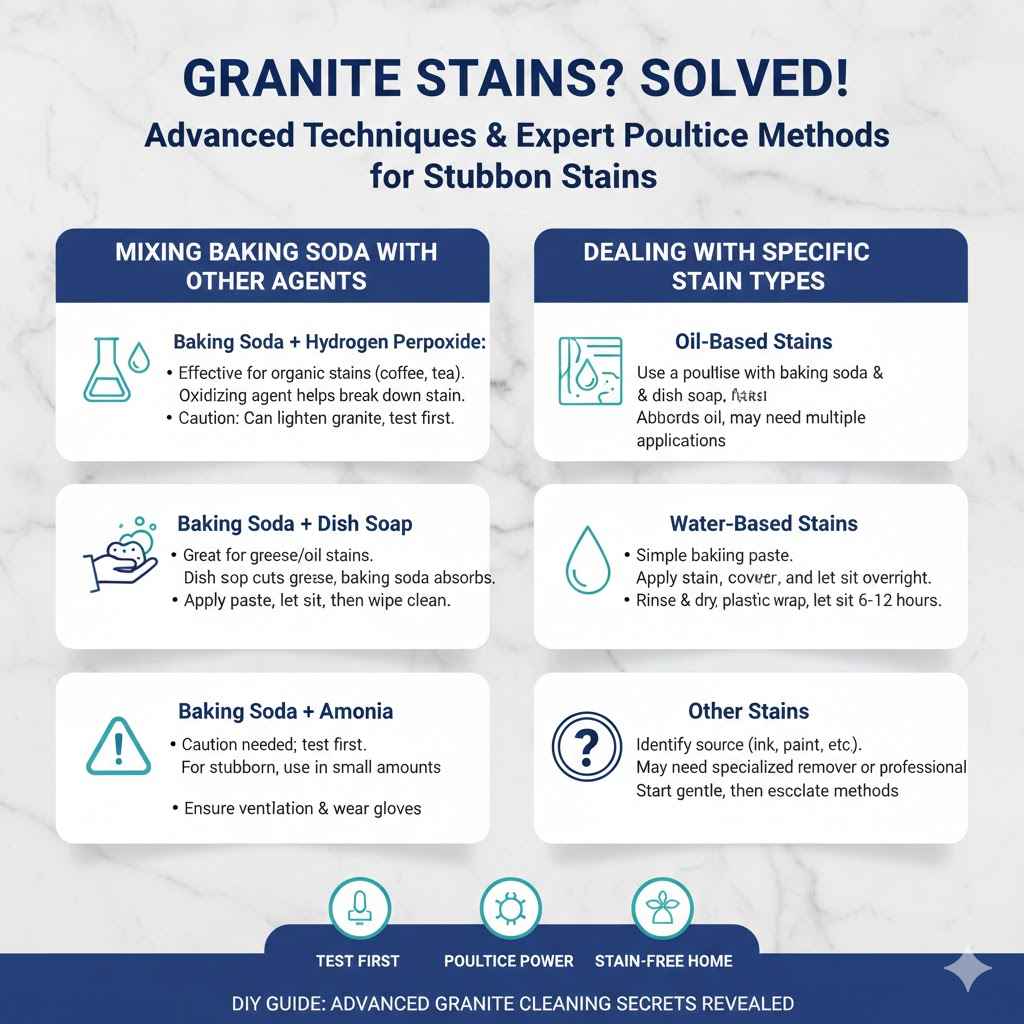
Baking Soda and Hydrogen Peroxide: Effective for organic stains.
Combining baking soda with hydrogen peroxide can be effective for removing organic stains. The hydrogen peroxide adds extra cleaning power, working to lift stains like coffee, tea, and juice. It is important to make a paste of baking soda and hydrogen peroxide, then apply to the stain. Hydrogen peroxide works as an oxidizing agent, helping to break down the stain. Be cautious when using hydrogen peroxide because it can sometimes lighten the granite, so test it first.
Baking Soda and Dish Soap: Great for grease or oil stains.
Combining baking soda with a few drops of dish soap can work well against grease or oil stains. The dish soap cuts through the grease, while the baking soda provides a gentle abrasive action. Make a paste and apply it to the stain. Allow the mixture to sit for a while before rinsing. Then wipe down the area with a wet cloth. Dish soap’s degreasing action combined with baking soda can make it a powerful combination.
Baking Soda with Ammonia: Caution needed; test first.
Use baking soda and a small amount of ammonia to try and lift stubborn stains. Be careful when working with ammonia, as it is a harsh chemical. Mix a small amount into the baking soda paste, apply it to the stain, and allow it to sit. Ensure the area is well-ventilated, and wear gloves to protect your hands. Always do a spot test first to check how it will react with the granite. It is important to approach with caution.
Dealing with Specific Stain Types
Oil-Based Stains: Use a poultice with baking soda and dish soap.
For oil-based stains, a poultice made with baking soda and dish soap is often effective. The dish soap works to break down the grease, while the baking soda helps to absorb it. Apply the poultice to the stain. It will absorb the oil. Cover with plastic wrap and let it sit for several hours. This method may require multiple applications for stubborn oil stains. Patience and repeating the process can help you get the best results.
Water-Based Stains: Apply a baking soda paste.
Water-based stains, like coffee or juice stains, may respond well to a simple baking soda paste. Apply the paste directly to the stained area. Cover with plastic wrap, and let it sit for several hours or overnight. Rinse and dry the granite surface. Sometimes this will require several tries to remove those stubborn stains. Quick action is important.
Other Stains: Identify the source, and adjust the method.
Other stains, like ink or paint, may require different approaches. Determining the stain type is the first step. You might need to use a specialized stain remover or seek help from a professional. For any new stain, start with the most gentle method before trying stronger solutions. Identifying the source of the stain is the key to choosing the right method.
Frequently Asked Questions
Question: Can baking soda damage granite?
Answer: When used correctly, baking soda is generally safe for granite. However, avoid harsh scrubbing, as this can damage the sealant or scratch the surface. Always test in an inconspicuous area first.
Question: How often should I seal my granite?
Answer: Reseal your granite every one to three years, or as recommended by the manufacturer. More frequent sealing may be needed for areas with heavy use.
Question: What if baking soda doesn’t remove the stain?
Answer: For stubborn stains, try combining baking soda with hydrogen peroxide or dish soap. If these methods fail, consider calling a professional granite cleaner.
Question: What type of cleaner should I use on granite daily?
Answer: Use a pH-neutral cleaner specifically designed for granite. Avoid acidic or abrasive cleaners, which can damage the stone.
Question: How can I prevent granite stains?
Answer: Clean up spills immediately, use trivets and cutting boards, and reseal your granite regularly. Always test cleaners on a hidden area first.
Final Thoughts
Learning How to Get Stains Out of Granite With Baking Soda is a valuable skill for any homeowner. As we’ve explored, the process is simple and uses common household ingredients. By combining baking soda with other agents, you can take on a variety of stain types. Remember to always test your cleaning method in an inconspicuous area first and to be patient. Prompt action is key. Prevent future stains by sealing your granite regularly, and immediately cleaning up spills. Knowing how to maintain your granite will help you keep the beauty and function of your counters.
With a bit of practice and care, you can keep your granite surfaces looking stunning. Now that you’ve got the knowledge, go ahead and tackle those stains.