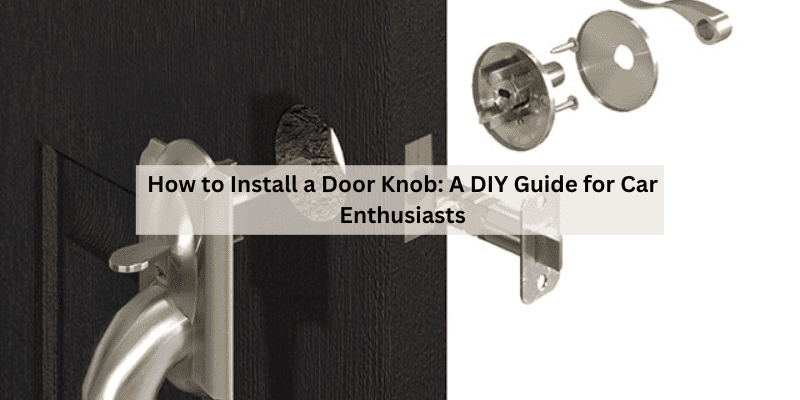
How to Install a Door Knob: A DIY Guide for Car Enthusiasts
Hey there! As a car enthusiast who’s spent countless hours tinkering with my beloved Pontiac GTO, swapping out carburetors, and cruising to car shows, I’m all about the thrill of a hands-on project. But sometimes, the fixes I tackle aren’t under the hood—they’re right in my own home. A while back, I noticed the door knob on my garage door was loose and rusty, making it tough to get to my tools.
Instead of calling a locksmith, I decided to learn how to install a door knob myself. It’s a project that’s surprisingly similar to working on a car: you need the right tools, a bit of patience, and a clear plan. I’ve installed door knobs in my house, my garage, and even helped a buddy upgrade his man cave. So, grab a seat, maybe a cold soda, and let me walk you through how to install a door knob with the same confidence you’d use to change a spark plug. This guide is packed with tips from my DIY adventures, and I’m excited to share them with you!
Why Install a New Door Knob?
Picture this: I’m heading to the garage for a late-night wrenching session, and the door knob jams, feeling like it’s about to fall off. It’s as frustrating as a sticky throttle pedal on a car. Installing a new door knob isn’t just about fixing a problem—it’s about upgrading your space. A new knob can improve security, boost your home’s style, and make daily life smoother, like adding a performance part to your ride.
Old knobs get worn, rusty, or loose, like a car’s aging components. They can also look dated, clashing with your modern, automotive-inspired decor. I replaced my garage knob with a sleek black one, and it’s like adding chrome trim to my GTO—small change, big impact. Plus, doing it yourself saves money for car mods, like that new exhaust you’ve been eyeing. Whether it’s for function or flair, installing a door knob is a win.
Types of Door Knobs to Choose From
Before I dive into the installation, I always pick the right door knob, like choosing the perfect tires for my car. There are a few types, each with its own vibe and purpose. Here’s what I’ve learned:
- Passage Knobs: These are for rooms like closets or hallways, with no lock, like a car’s basic trim level. I used one for my garage storage closet.
- Privacy Knobs: These lock from one side, perfect for bathrooms or bedrooms, like a car’s upgraded security system. I put one on my home office door.
- Keyed Entry Knobs: These have a key lock for exterior doors, like a car’s key fob. I installed one on my front door for extra security.
- Dummy Knobs: These don’t turn, just for looks, like decorative trim on a car. I used them on a double door in my living room.
I usually go for metal knobs—brass, nickel, or black—for durability and style, like choosing stainless steel car parts. Prices range from $10 for basic passage knobs to $50 for keyed entry ones. I got a satin nickel privacy knob at Home Depot for $20, and it’s held up great.
Tools and Materials You’ll Need
Installing a door knob is like doing a car repair—you need the right gear to make it smooth. I keep a toolbox in my garage, and most of what I need is already there. Here’s my list:
- New Door Knob Kit: Includes the knob, latch, strike plate, and screws. I check the door’s thickness (usually 1-3/8” to 1-3/4”) to ensure fit.
- Screwdriver: Phillips or flathead, depending on the screws, like the ones I use for car interior panels.
- Tape Measure: To check door thickness and alignment, like measuring for a car part.
- Chisel: For recessing the latch or strike plate, like shaping a car’s body panel.
- Hammer: To tap the chisel, like tapping a car part into place.
- Drill and Bits: For new holes, if needed, like drilling for a car accessory.
- Pencil: To mark screw holes, like marking a car’s frame for a mod.
- Level: To ensure the knob’s straight, like aligning a car’s headlights.
- Cleaning Rag: To wipe down the door, like detailing a car after a job.
I spent about $25 on my knob kit and already had the tools. You can find kits at Home Depot, Lowe’s, or Amazon, with styles to match any home.
Preparing to Install a Door Knob
Before I start, I prep like I’m about to swap my car’s oil filter. A little setup saves time and hassle. Here’s what I do:
- Check the Door: I make sure the door swings smoothly and latches properly, like checking a car’s alignment before a mod. If it’s sticky, I tighten hinges with a screwdriver.
- Measure the Door: I measure the door’s thickness and the backset (distance from the edge to the knob’s center, usually 2-3/8” or 2-3/4”). This ensures the knob fits, like checking a car part’s specs.
- Clear the Area: I move furniture or rugs away from the door, like clearing my garage workbench for a car project.
- Read the Instructions: Every knob kit is slightly different, like car models. I skim the manual to know what’s coming.
- Remove the Old Knob: I unscrew the old knob (usually two screws on the interior side) and pull it off, like removing a car’s door panel. I also remove the latch from the door’s edge.
One time, I skipped measuring the backset and bought the wrong knob. Now, I always double-check, like verifying a car part’s fitment.
Step-by-Step Guide to Installing a Door Knob
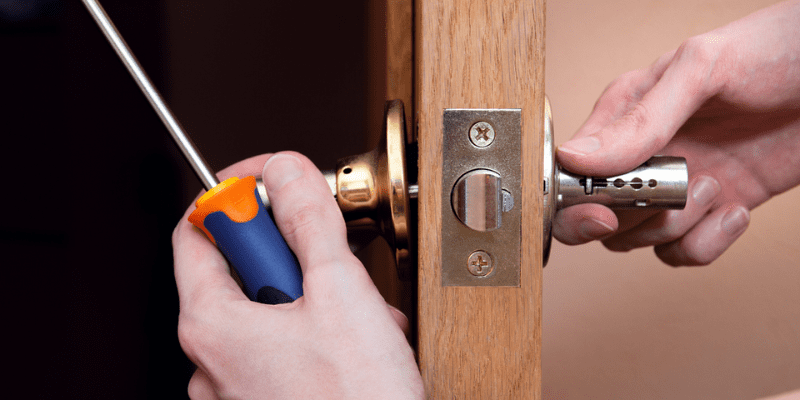
Now, let’s get to the fun part—installing that new knob. I’ve done this on interior and exterior doors, from my garage to my front entry, and it’s as satisfying as nailing a car repair. Here’s my step-by-step process, like a shop manual:
Step 1: Prepare the Door
If you’re replacing an old knob, the door’s holes are likely ready. For a new door, I use the template from the knob kit to mark where to drill. I measure the backset (2-3/8” or 2-3/4”) and mark the center for the knob hole (about 36” from the floor). I drill a 2-1/8” hole for the knob and a 1” hole for the latch, like drilling for a car’s accessory. I test-fit the latch to ensure it’s flush, chiseling if needed, like shaping a car’s panel.
Step 2: Install the Latch
I slide the latch into the edge hole, making sure the beveled side faces the door’s closing direction, like aligning a car’s gearshift. I trace the latch plate with a pencil, then chisel a shallow recess so it sits flush, like recessing a car’s badge. I screw the plate in with the provided screws, tightening them snugly, like torquing a car’s bolts. I test the latch to ensure it moves freely, like checking a car’s clutch pedal.
Step 3: Attach the Exterior Knob
I insert the exterior knob (the keyed or locking side, if applicable) through the door’s hole, aligning the spindle with the latch’s slot, like threading a car’s driveshaft. I make sure the knob’s screw holes line up vertically or horizontally, depending on the design, using a level to keep it straight, like aligning a car’s headlights. If it’s a keyed knob, I ensure the lock faces up, like orienting a car’s emblem.
Step 4: Attach the Interior Knob
I slide the interior knob onto the spindle from the other side, like mating a car’s transmission to the engine. I align it with the exterior knob and screw it in place, using the provided screws. I tighten them evenly, like balancing a car’s lug nuts, to avoid wobbling. I test the knob by turning it—it should move smoothly and engage the latch, like a car’s gearshift clicking into place.
Step 5: Install the Strike Plate
I close the door to mark where the latch hits the door frame, like checking a car’s door alignment. I position the strike plate over the mark, trace it, and chisel a shallow recess, like prepping a car’s frame for a new part. I screw the plate in, ensuring it’s flush, like mounting a car’s license plate. I test the door—it should latch securely when closed, like a car’s hood locking shut.
Step 6: Test and Adjust
I open and close the door a few times, turning the knob to check for smooth operation, like test-driving a car after a repair. If it sticks, I tighten screws or adjust the strike plate, like tweaking a car’s alignment. For keyed knobs, I test the lock with the key, ensuring it engages and disengages, like testing a car’s ignition. I also check for gaps, tightening hinges if needed, like adjusting a car’s door.
Step 7: Clean Up
I wipe down the knob and door with a rag to remove fingerprints, like polishing a car after a mod. I vacuum any sawdust from drilling or chiseling, like cleaning my garage after a project. I admire my work—it’s like stepping back to check a freshly waxed car.
I installed a front door knob in about 45 minutes, and it felt like swapping a car’s side mirror—straightforward but rewarding.
Common Challenges and How to Solve Them
Installing a door knob isn’t always smooth, like any car project. Here’s what I’ve run into and how I fixed it:
- Misaligned Holes: If the knob doesn’t fit, I double-check the backset or redrill, like correcting a car’s misaligned part.
- Sticky Latch: If the latch doesn’t move freely, I ensure it’s flush and lubricate it with graphite, like greasing a car’s hinges.
- Loose Knob: If it wobbles, I tighten screws evenly, like torquing a car’s wheel.
- Strike Plate Misalignment: If the door doesn’t latch, I adjust the plate’s position, like realigning a car’s bumper.
- Wrong Knob Type: I once bought a passage knob for a bathroom—oops! Now I double-check the function, like verifying a car part’s purpose.
Choosing the Right Door Knob
Picking a door knob is like choosing car accessories—it’s about function and style. Here’s how I decide:
- Function: I match the knob to the room—keyed for exterior, privacy for bathrooms, passage for closets, like choosing a car’s trim level.
- Material: Metal knobs (brass, nickel, steel) are durable, like stainless car parts. I avoid plastic for long-term use.
- Finish: Satin nickel or black fits my modern garage vibe, like matte wheels. Polished brass suits a classic look, like chrome trim.
- Budget: Basic knobs start at $10, while high-end ones hit $50. I balance cost and quality, like picking car parts.
- Ease of Installation: I choose kits with clear instructions, like buying a car part with a good manual.
I learned to read reviews online to avoid flimsy knobs, like researching a car mod before buying.
Where to Buy Door Knobs
Finding a good knob took some shopping, but here are my go-to spots:
- Home Depot: Tons of styles, from $10 passage knobs to $40 keyed ones. I got my garage knob there.
- Lowe’s: Great for brands like Schlage or Kwikset. I picked up a bathroom knob for $20.
- Amazon: Perfect for deals and variety. I found a black keyed knob for $25 with fast shipping.
- Walmart: Budget-friendly for basic knobs and tools. I grab the screwdrivers there.
- Local Hardware Stores: For unique styles and advice, like a good auto parts shop.
Maintaining Your New Door Knob
Once installed, I keep my knobs in top shape, like maintaining my car after a mod. Here’s how:
- Tighten Screws: I check screws every few months, like checking a car’s bolts.
- Clean Gently: I wipe with a damp cloth and mild soap, like washing a car with a soft sponge.
- Lubricate: I use graphite powder on sticky knobs, like greasing a car’s hinges.
- Inspect for Wear: I look for scratches or looseness, like checking a car’s body for damage.
- Avoid Abuse: I tell my kids not to swing on knobs, like warning them not to redline my car.
How This Ties to the Automotive Lifestyle
As car enthusiasts, we love projects that let us get our hands dirty, whether it’s tuning an engine or installing a door knob. This job feels like swapping a car’s interior part—same tools, same satisfaction. I’ve installed knobs at home, at friends’ places, and even at a car show venue’s office, approaching each like a car repair: methodical and confident.
A new knob makes my space feel polished, like a freshly detailed car. It’s practical, too—nobody wants a janky knob when they’re rushing to the garage for a wrench. Plus, saving on locksmith fees means more cash for car parts, like that new intake I’ve been eyeing. It’s all about bringing that gearhead mindset to every project.
Comparison Table: Door Knob Types
Here’s a table I made to compare knob types I’ve used:
| Knob Type | Best For | Locking Mechanism | Style Vibe | Cost Range |
|---|---|---|---|---|
| Passage | Closets, hallways | None | Simple, functional | $10-$20 |
| Privacy | Bathrooms, bedrooms | Push-button/turn | Modern, secure | $15-$30 |
| Keyed Entry | Exterior doors | Key lock | Secure, professional | $20-$50 |
| Dummy | Decorative, double doors | None | Ornamental, classic | $5-$15 |
My Journey with Door Knobs
My first door knob install was a bit of a mess. I was replacing a bedroom knob, and I didn’t measure the backset, so the latch didn’t fit. It was like ordering the wrong car part—frustrating but a lesson learned. After some YouTube videos and a trip to Home Depot, I got it right, and the new knob looked awesome. That sparked my love for home DIY, like my early days learning car repairs.
Now, I’m the go-to guy among my car buddies for knob installs. I’ve helped friends upgrade their homes and even fixed a wobbly knob at a car show venue. Each project feels like a mini car mod, and I love the confidence it brings, like nailing a tricky engine tune-up.
Tips for a Successful Installation
Here are my top tips, learned from trial and error:
- Measure Everything: Check door thickness and backset, like verifying a car part’s fitment.
- Start Simple: If you’re new, try a passage knob first—it’s easier, like changing a car’s air filter.
- Use a Level: A crooked knob looks sloppy, like misaligned car headlights.
- Keep Screws Organized: I use a small container, like sorting car bolts.
- Test Before Finishing: Turn the knob and latch multiple times, like test-driving a car after a repair.
Conclusion: Open Doors with Confidence
Installing a door knob is one of those projects that’s as satisfying as a perfect car mod, like swapping out a worn part for something shiny and new. With a few tools, a bit of patience, and the steps I’ve shared, you can transform your home’s doors with the same grit you bring to the garage. Whether you’re upgrading security, adding style, or just fixing a wobbly knob, you’ve got the skills to make it happen. For us car enthusiasts, it’s another chance to roll up our sleeves, save money, and create a space that’s as smooth as our rides. So, grab that screwdriver, pick your perfect knob, and get installing. Your home will feel as sharp as your freshly waxed car, and you’ll have a story to share at the next car meet. Let’s keep everything turning—on the road and at home!
FAQs
What kind of door knob should I choose for my front door?
Go for a keyed entry knob for security, like a car’s key fob. I used a nickel one for my front door, and it’s solid.
Do I need special tools to install a door knob?
A screwdriver, a tape measure, and maybe a chisel are enough. I use the same tools as for car repairs, plus a $20 knob kit.
How long does it take to install a door knob?
About 30-45 minutes for a replacement, longer for a new door. It’s like swapping a car’s side mirror—quick with practice.
Can I install a door knob on any door?
Most doors work, but check thickness (1-3/8” to 1-3/4”) and backset. I measured my garage door first, like checking a car part’s fit.
What if the knob doesn’t latch properly?
Adjust the strike plate or tighten screws, like realigning a car’s door. I fixed a sticky latch this way in my bathroom.
How do I know if I need a locksmith?
If the door’s damaged or the knob won’t fit, call a pro. I did this once for an old door, like taking my car to a mechanic for a big fix.