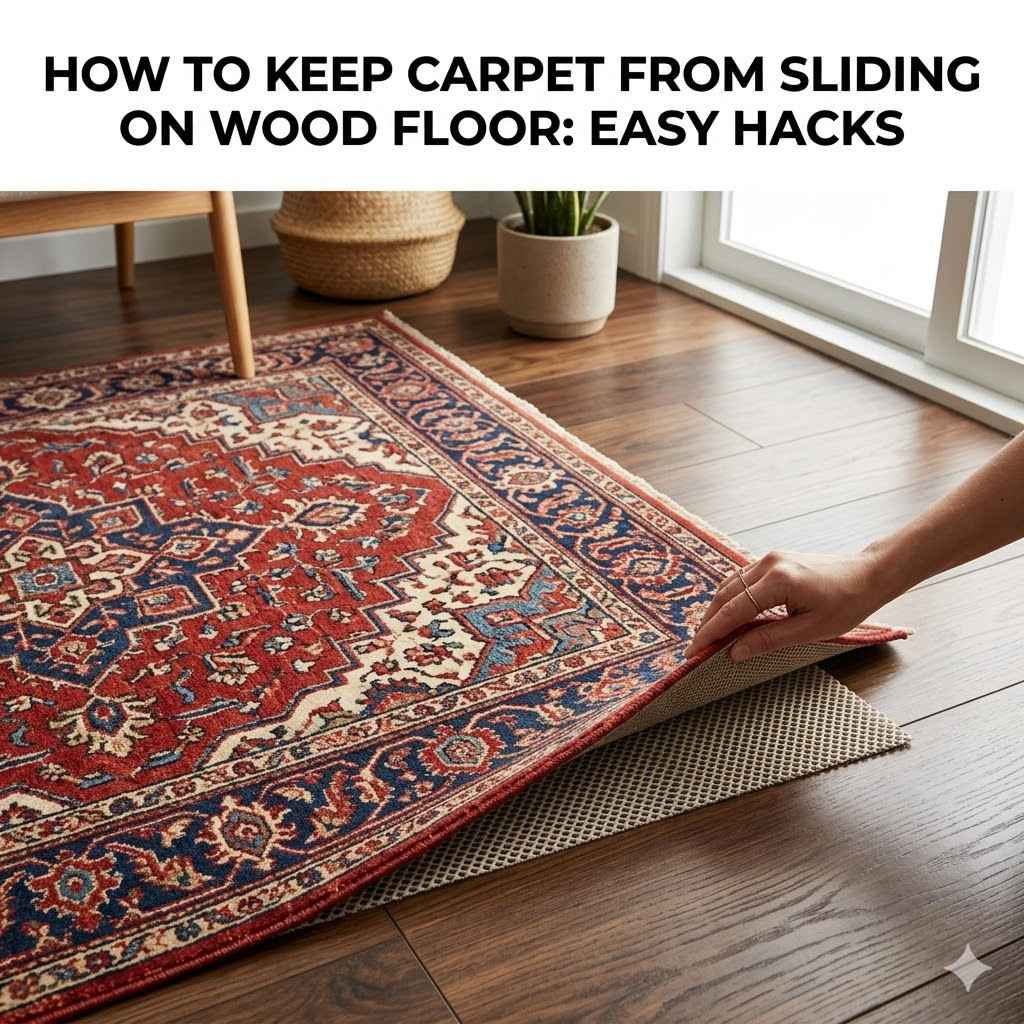
How to Keep Carpet From Sliding on Wood Floor: Easy Hacks
It can be super annoying when your rug keeps bunching up or sliding around on your nice wood floors. You might think there’s no easy fix, especially if you’re new to home decorating. But don’t worry!
There are simple, clever ways to make sure your carpets stay put. This guide will show you exactly how to do it, step by step. We’ll cover all the best tips and tricks for How to Keep Carpet From Sliding on Wood Floor: Easy Hacks so you can enjoy your rooms without any fuss.
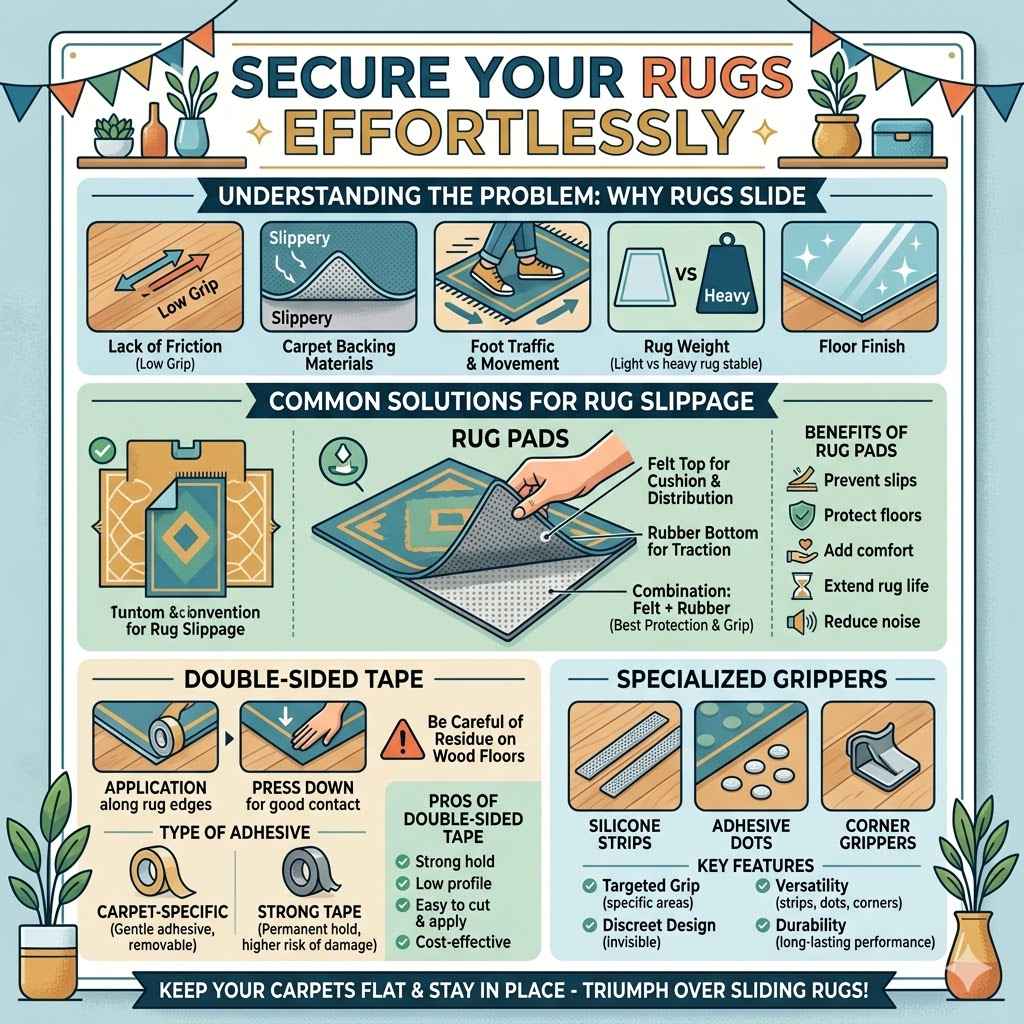
Secure Your Rugs Effortlessly
Keeping rugs from sliding on smooth floors is a common home challenge. Many people struggle with this, especially when they want to protect their wood floors from wear and tear. Sliding rugs aren’t just unsightly; they can also be a tripping hazard.
This section focuses on the most effective and simple methods to ensure your carpets lie flat and stay in place. We will explore various types of rug grippers and their applications, ensuring you find the perfect solution for your needs.
Understanding the Problem of Sliding Rugs
Rugs often slide on wood floors because of friction. Wood floors are smooth, and carpets have a soft backing. When someone walks on the carpet, or even when there’s a slight draft, the carpet can move.
This movement can damage your wood floors over time by causing scratches or wear. It also makes your room look untidy.
The materials of both the carpet and the floor play a big role. Some carpet backings are made to be non-slip, but not all of them are designed for smooth surfaces like polished wood. Likewise, very glossy or waxed wood floors offer less grip.
The weight of the rug itself is also a factor. Lighter rugs are more prone to sliding than heavier ones. The amount of foot traffic the rug receives will also influence how quickly it starts to move.
Here are some key reasons why rugs slide:
- Lack of friction: The smooth surface of wood floors provides very little grip for most carpet backings. This is especially true for polished or waxed finishes.
- Carpet backing materials: Some carpet backings are made of synthetic materials that can become slippery when exposed to heat or humidity, or simply due to their texture.
- Foot traffic and movement: Daily use, pets, or even just walking across the rug can cause it to shift and bunch up over time.
- Rug weight: Lighter rugs are more susceptible to sliding than heavier, denser carpets, as they have less inherent stability.
- Floor finish: The type of finish on your wood floor can affect how well a rug stays in place. For instance, very high-gloss finishes can be more slippery.
Common Solutions for Rug Slippage
There are several popular ways to keep rugs from moving. These range from simple DIY fixes to specialized products. Each has its own benefits and might work best for different types of rugs and floors.
We’ll look at some of the most common ones and why they are so effective.
Rug Pads
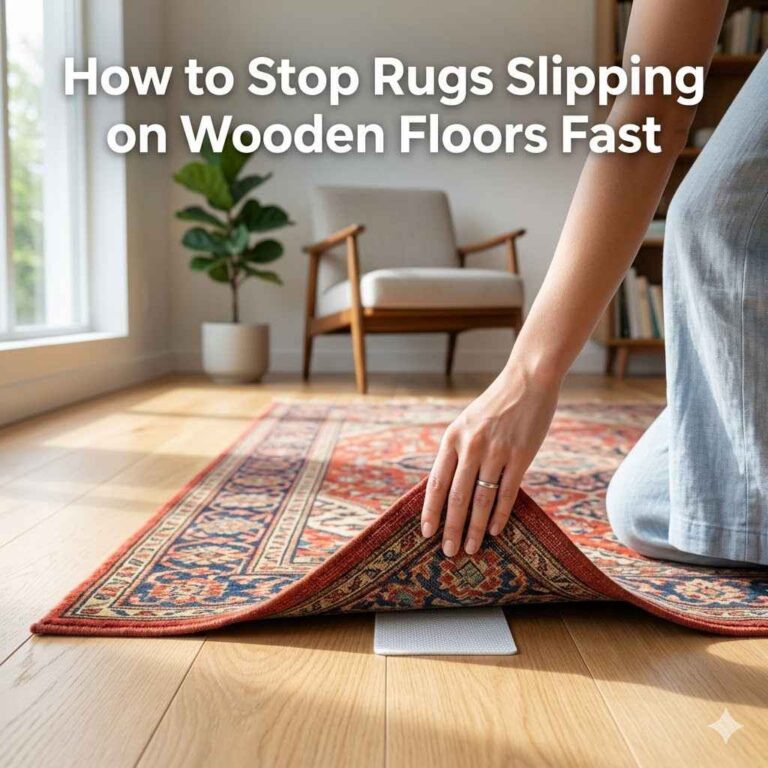
Rug pads are a very popular choice. They go underneath your rug and create a barrier between the carpet and the floor. Many are made of materials that grip both surfaces.
Some are made of felt, some of rubber, and others are a combination.
Felt pads offer cushioning and help to distribute weight, which can prevent rug slippage. They work well on their own for heavier rugs or in combination with other grippers. Rubber pads, on the other hand, provide excellent traction.
They are often made with natural or synthetic rubber that has a textured surface. This texture digs into both the carpet and the floor, holding the rug firmly in place.
A combination pad, with a felt top and a rubber bottom, offers the best of both worlds. The felt protects your wood floors from scratches and provides a soft feel underfoot, while the rubber grips the floor effectively. These pads also help to prolong the life of your rug by preventing excessive wear and tear from friction.
Here are some benefits of using rug pads:
- Preventing slips: Their primary function is to provide a non-slip surface, keeping your rug securely in place.
- Protecting floors: They act as a buffer, preventing scratches and wear on your wood floors from the rug backing.
- Adding comfort: Many rug pads offer extra cushioning, making your rug feel softer and more comfortable underfoot.
- Extending rug life: By reducing friction and bunching, rug pads help your rug last longer.
- Reducing noise: Some thicker rug pads can also help to dampen sound, making your room quieter.
Double-Sided Tape
Double-sided tape designed for rugs is another option. This tape sticks to the back of the rug and then to the floor. It’s a strong adhesive that can hold the rug down securely.
You need to be careful when applying it, though. Make sure the floor is clean. Also, some strong tapes might leave residue on your wood floor.
It’s best to test a small area first.
The type of double-sided tape matters. Some are specifically made for carpets and floors and are designed to be removable without damage. These often use a gentler adhesive.
For a more permanent solution, a stronger tape might be used, but this comes with a higher risk of damaging the floor finish.
Application is key. You want to apply the tape along the edges of the rug and possibly in the center for larger rugs. Press down firmly to ensure good contact.
When it’s time to remove the rug, you might need to gently pry it up or use a solvent to dissolve the adhesive.
Pros of using double-sided tape:
- Strong hold: When applied correctly, it offers a very secure way to keep rugs in place.
- Low profile: It doesn’t add thickness to the rug, so it won’t affect how the rug lies flat.
- Easy to cut and apply: You can cut the tape to fit the exact shape and size of your rug.
- Cost-effective: Generally, it is an inexpensive solution for rug stabilization.
Specialized Grippers
Beyond standard rug pads, there are specialized grippers. These can include silicone strips, adhesive dots, or corner grippers. Silicone strips are often very thin and flexible.
They can be cut to size and stuck to the underside of the rug. Their textured surface provides excellent grip on smooth floors.
Adhesive dots are small, round pieces of material that stick to the corners of the rug. They are discreet and work well for smaller rugs or runners. Some are reusable and can be washed to restore their stickiness.
Corner grippers are usually made of a strong plastic or rubber material. They are designed to hook onto the edge of the rug and press down onto the floor.
These specialized products often target specific problems, like very thin rugs or high-traffic areas. They are designed to be unobtrusive while providing reliable grip. Some are even designed to be washable and reusable, offering a sustainable solution.
Key features of specialized grippers:
- Targeted grip: Designed to address specific rug types or problem areas effectively.
- Discreet design: Many are thin, clear, or small, making them nearly invisible once applied.
- Versatility: Available in various forms like strips, dots, and corners to suit different needs.
- Durability: Often made from strong materials that resist wear and tear for long-lasting performance.
Advanced Techniques for Ultimate Stability
Sometimes, the simpler methods might not be enough, especially for larger rugs or in homes with a lot of activity. This section explores more robust solutions that offer superior stability and ensure your rugs stay perfectly in place, no matter what. We’ll go into detail about how these methods work and when they are the best choice.
The Power of Hook-and-Loop Fasteners
Hook-and-loop fasteners, like Velcro, can be an effective way to secure rugs. One side of the fastener attaches to the rug’s backing, and the other side attaches to the floor or a sub-pad. This system provides a very strong hold.
It allows for easy removal of the rug for cleaning.
For wood floors, it’s crucial to use fasteners that won’t damage the finish. You can attach the hook side to the rug and the loop side to a thin, sturdy material that then adheres to the floor. Or, you can use adhesive-backed loop fasteners that stick to the floor and then attach the hook side of the fastener to the rug.
This method is especially good for high-traffic areas or for rugs that are frequently moved. The strong bond created by hook-and-loop fasteners prevents even significant movement. When choosing the fasteners, look for industrial-strength options.
This ensures they can withstand the pressure from foot traffic and daily use.
Here’s why hook-and-loop fasteners are useful:
- Strong adhesion: They create a secure bond that keeps rugs from sliding, even under heavy use.
- Removability: Allows you to easily lift and remove the rug for cleaning or repositioning without difficulty.
- Customizable: You can cut the fasteners to the exact size and shape needed for any rug.
- Long-lasting: Industrial-grade fasteners are designed for durability and repeated use.
Non-Slip Backing Sprays and Treatments
For a more permanent solution, you can use non-slip backing sprays or treatments. These are liquid products that, when applied to the underside of the rug, create a rubbery, non-slip surface. They are often water-based and designed to be safe for most carpet and floor types.
Applying these sprays evenly is important for the best results. You usually need to apply a few coats, allowing each coat to dry completely. The finished product is a flexible, textured layer that grips the floor.
This can be a great option for rugs that are in areas with a lot of foot traffic.
Some of these treatments can also add a bit of stiffness to the rug backing, which helps it lie flatter. When choosing a spray, check for compatibility with your specific rug material and wood floor finish. It’s always a good idea to test on an inconspicuous area first.
Benefits of non-slip sprays:
- Permanent grip: Creates a long-lasting, non-slip surface directly on the rug’s backing.
- Custom application: Allows you to treat specific areas of the rug or the entire underside.
- Adds stability: Helps to keep the rug flat and prevents curling edges.
- Invisible solution: Once dry, the treatment is usually clear or blends with the rug backing.
The Importance of Proper Rug Size and Placement
Sometimes, the best way to prevent sliding is to ensure your rug is the right size and placed correctly. A rug that is too small for the space is more likely to shift. When a rug is too small, furniture legs might rest on the wood floor.
This can cause the rug to bunch up around them.
Ideally, a rug should be large enough to anchor the main furniture in the room. For living rooms, this means the front legs of sofas and chairs should be on the rug. In dining rooms, the rug should be large enough for all chairs to remain on it even when pulled out.
Proper placement also means ensuring the rug is centered within the space or aligned with architectural features. A rug that is constantly being stepped on from the sides or corners is more prone to movement. Making sure it’s balanced and has space around it can help it stay put.
Consider these placement tips:
- Anchor furniture: Ensure the rug is large enough to have at least the front legs of main furniture pieces on it.
- Symmetrical placement: Center the rug in the room or align it with major architectural elements for visual balance.
- Adequate spacing: Allow for a consistent border of wood floor around the rug, typically 12-18 inches.
- Avoid doorways: Ensure rugs don’t obstruct door swings or become a tripping hazard at entrances.
DIY Hacks and Budget-Friendly Fixes
You don’t always need to buy special products to keep your rugs from sliding. There are several clever DIY hacks that use common household items. These can save you money and are often surprisingly effective.
Here are some easy ways to tackle the sliding rug problem without breaking the bank.
Using Non-Slip Shelf Liner
Non-slip shelf liner is a fantastic and cheap solution. You can find it in most home goods stores. It’s usually made of a flexible plastic mesh that grips surfaces.
Simply cut pieces of the shelf liner to fit the corners or edges of your rug.
The mesh allows air to circulate, which can prevent moisture buildup. This is a big plus for wood floors. The texture of the liner creates friction against both the rug backing and the wood floor.
This friction stops the rug from moving. You can even layer pieces of the liner for extra grip if needed.
Make sure the shelf liner is clean and dry before placing it under the rug. Also, ensure your rug’s backing is free of dust and debris. This will help it grip better.
For larger rugs, you might need several pieces to cover the whole area under the rug.
Advantages of shelf liner:
- Affordable: Very inexpensive and widely available.
- Effective grip: The textured surface provides good traction.
- Breathable: Allows airflow, which is good for preventing moisture issues.
- Easy to cut: Can be trimmed to any size or shape needed for your rug.
The Hot Glue Method
A hot glue gun can be used to create raised dots or lines on the underside of your rug. These raised areas act like small bumps that grip the floor. This method is best for smaller rugs or areas that don’t get too much foot traffic.
When applying hot glue, make sure the rug is upside down on a protected surface. Use a low-temperature hot glue gun if possible, to avoid damaging the rug fibers. Apply small dots or zig-zag lines of glue along the edges and in the center of the rug.
Let the glue cool and harden completely before placing the rug back on the floor.
This method is a bit more labor-intensive, but it’s a very budget-friendly option. The glue creates a textured surface that prevents the rug from sliding by increasing friction. It’s important to use enough glue to create a noticeable grip, but not so much that it makes the rug lumpy.
Considerations for hot glue:
- Budget-friendly: Uses a common household item to solve the problem.
- Customizable grip: You control the pattern and density of the glue application.
- Low-profile solution: The raised glue dots are usually not noticeable through the rug.
- Test first: Always test a small area to ensure the glue doesn’t damage the rug backing.
Using Old Towels or Yoga Mats
Old towels or retired yoga mats can also be repurposed as rug grippers. Cut them to the size of your rug and place them underneath. The textured surface of a yoga mat, in particular, offers excellent grip.
Towels can provide a bit of cushioning too.
Ensure the towel or yoga mat is clean and dry. If using a towel, a thicker one will provide better grip. For yoga mats, the grippier side should face down towards the wood floor.
You might need to secure the towel or mat to the rug with a few stitches or tape to keep it from shifting itself.
This is a great way to reuse items you already have. It’s an eco-friendly and cost-effective approach. The material’s natural grip helps to stabilize the rug.
It’s a simple yet effective way to prevent slipping, especially for rugs that aren’t moved very often.
Benefits of using old towels or yoga mats:
- Recycling and reuse: A great way to upcycle items you no longer need.
- Readily available: Most people have these items at home.
- Good grip: The materials are designed to provide traction.
- Adds cushioning: Towels can offer a softer feel underfoot.
Maintaining Your Non-Slip Rug Solutions
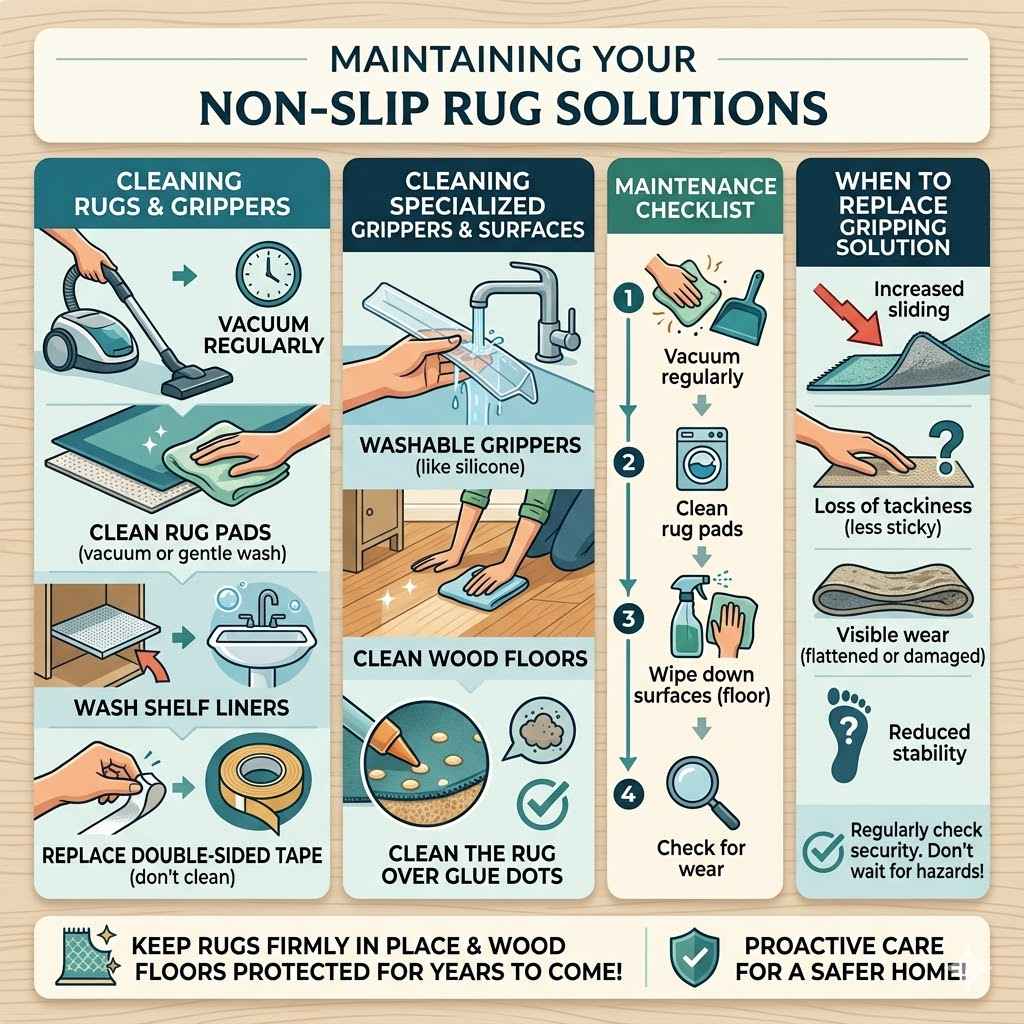
Once you’ve implemented a solution, it’s important to maintain it. Even the best rug grippers can lose their effectiveness over time. Regular checks and simple cleaning can keep your rugs firmly in place and your floors protected for years to come.
This section will guide you on how to keep your chosen non-slip methods working their best.
Cleaning Your Rugs and Grippers
Dust and dirt can accumulate on both the rug and the gripper. This grime reduces the friction between the surfaces, making the rug more likely to slide. Vacuuming your rugs regularly is essential.
When cleaning the grippers, follow the manufacturer’s instructions.
For many rug pads, a simple vacuuming is enough. Some can be gently washed with soap and water. If you used shelf liner, it can often be removed, washed, and dried.
Double-sided tape, of course, is not meant to be cleaned; it’s usually replaced when it loses its stickiness.
If you used hot glue, you can’t really clean the glue dots. However, you can clean the rug itself. For silicone strips or specialized corner grippers, check if they are washable.
Many are designed to be rinsed and dried to restore their grip.
Here’s a maintenance checklist:
- Vacuum regularly: Frequently clean your rug to remove dust and debris that can reduce grip.
- Clean rug pads: If your pad is washable, clean it periodically according to instructions.
- Wipe down surfaces: Keep the wood floor surface clean where the rug sits.
- Check for wear: Inspect your chosen gripper for signs of wear and tear.
When to Replace Your Rug Gripping Solution
No solution lasts forever. You’ll know it’s time to replace your rug gripping solution when you notice the rug starting to slide again, even after cleaning. For double-sided tape, the adhesive will eventually weaken.
For rug pads, the material can become compressed or worn down.
If you notice the rug bunching or shifting more easily, or if it feels less secure underfoot, it’s probably time for a change. For hot glue, if the dots start to wear off or become smooth, they won’t provide as much grip.
Don’t wait until the rug becomes a significant hazard. Regularly check how secure your rug feels. This proactive approach will save you from potential accidents and protect your wood floors.
Consider the age and type of the gripping solution when determining when to replace it.
Signs that replacement is needed:
- Increased sliding: The rug begins to move frequently again.
- Loss of tackiness: Gripping materials feel less sticky or grippy.
- Visible wear: The gripper shows signs of damage, flattening, or thinning.
- Reduced stability: The rug no longer feels firmly secured to the floor.
Frequently Asked Questions
Question: How can I stop my small rug from sliding on my wood floor?
Answer: For small rugs, you can use double-sided tape specifically made for rugs, or specialized corner grippers. Another easy DIY hack is to use strips of non-slip shelf liner under the corners of the rug.
Question: Will rug pads damage my wood floors?
Answer: Most quality rug pads are designed to be safe for wood floors. However, it’s always a good idea to choose a pad made of natural rubber or felt, and to test it in an inconspicuous area first. Avoid pads with harsh chemicals or adhesives that might seep into the wood.
Question: How often should I check my rug for sliding?
Answer: It’s a good practice to check your rug’s security at least once a month. You should also check it immediately if you notice any bunching or slipping, or after vigorous cleaning or heavy foot traffic.
Question: Can I use regular duct tape to keep my rug in place?
Answer: It is not recommended to use regular duct tape. It can leave sticky residue on your wood floors that is difficult to remove and can damage the finish. It might also not provide reliable grip for long.
Question: What is the best solution for a large area rug on a wood floor?
Answer: For large area rugs, a high-quality, thick rug pad designed for hardwood floors is usually the best option. For extra security, consider using hook-and-loop fasteners along the edges in addition to a good rug pad.
Conclusion
Keeping your carpets from sliding on wood floors is definitely achievable. You have many options, from simple, affordable hacks to specialized products. By using rug pads, double-sided tape, shelf liner, or other methods, you can ensure your rugs stay put.
This protects your floors and makes your home safer and tidier.