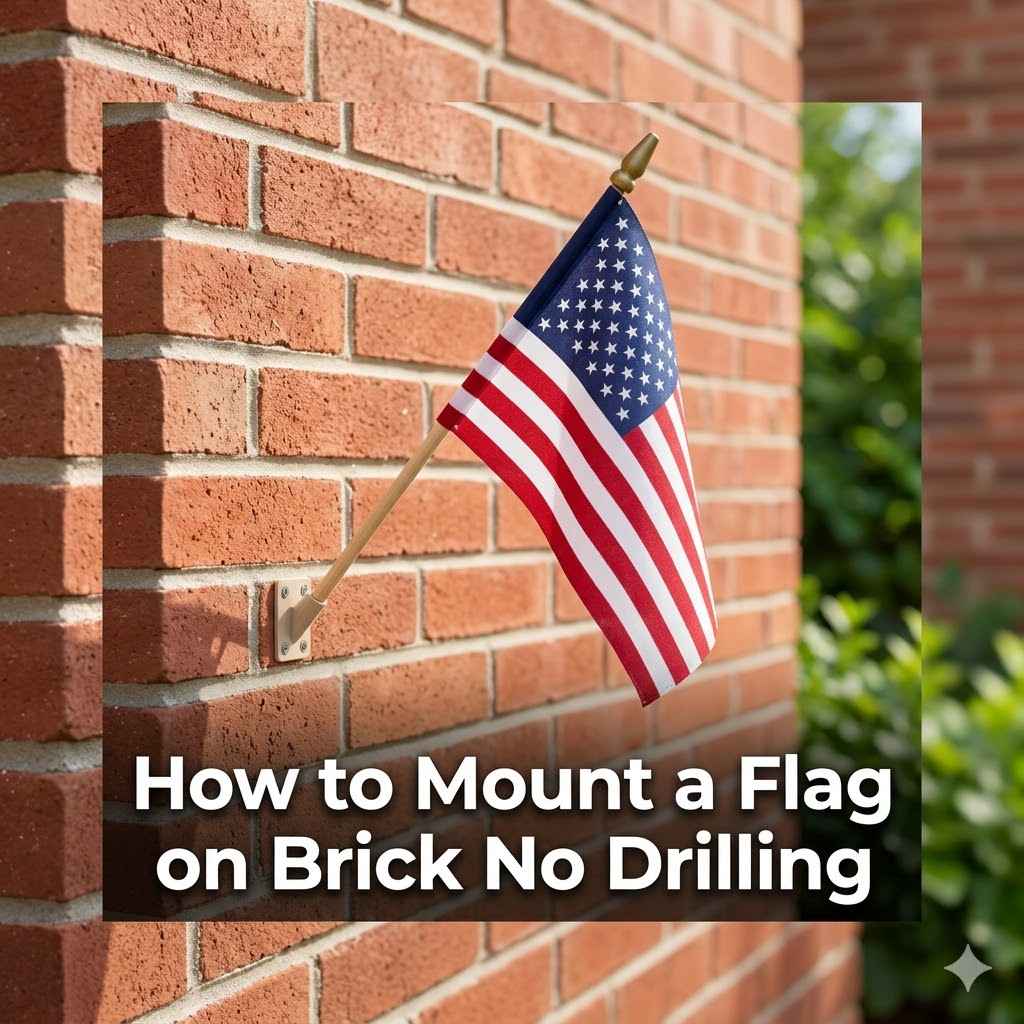
How to Mount a Flag on Brick No Drilling
Putting up a flag is a great way to show your pride. But when you have a brick wall, drilling holes can seem like a big problem. Many people worry about damaging their brick or not having the right tools.
You might be wondering, “How to Mount a Flag on Brick Without Drilling?” Don’t worry, it’s easier than you think! We’ll walk you through simple ways to hang your flag securely without ever needing a drill. Get ready for a quick and easy project!
Securely Mount Your Flag on Brick
This section will cover the best ways to attach a flag to a brick surface without making any permanent holes. We will explore different methods and the supplies you’ll need for each. The goal is to make sure your flag stays put, no matter the weather.
We will talk about strong adhesives, clever clips, and other handy tricks. You’ll learn how to choose the right option for your specific needs and brick type. This guide is designed to be super simple for anyone to follow.
Choosing the Right No-Drill Adhesive
When you want to avoid drilling into your brick, strong adhesives are a top choice. These products are made to stick to rough surfaces like brick and hold items in place. They work by creating a powerful bond that resists pulling forces.
This makes them ideal for hanging things outdoors where wind might tug at your flag. It’s important to pick an adhesive that is designed for outdoor use and can withstand different temperatures.
Types of adhesives to consider include heavy-duty mounting tapes and specialized brick adhesives. Mounting tapes often have a foam core that helps them conform to the uneven surface of brick. This ensures maximum contact and a stronger hold.
Brick adhesives are usually liquid or putty-like and can fill in the pores of the brick for a very secure connection. Always check the product packaging to see if it’s suitable for brick and exterior use.
Understanding Heavy-Duty Mounting Tape
Heavy-duty mounting tape is like super-strong double-sided tape. It uses a powerful adhesive on both sides. One side sticks to your flag mounting hardware, and the other side sticks firmly to your brick wall.
The key feature is its thickness, often a foam material. This foam gives it flexibility.
This flexibility is very important for brick walls. Brick isn’t perfectly flat. It has many tiny dips and bumps.
The foam tape can squish into these uneven spots. This makes more of the tape touch the brick. More contact means a much stronger stick.
For example, a flag pole bracket can be attached to the brick using a strip of this tape. Make sure to clean the brick surface thoroughly before applying the tape. Remove all dirt, dust, and loose debris.
This will help the tape stick as well as possible.
Exploring Specialized Brick Adhesives
Specialized brick adhesives are specifically formulated to bond with porous masonry materials like brick. They are often stronger than general-purpose adhesives and designed for outdoor durability. These can come in tubes, similar to caulk, or as putty-like compounds.
They fill the voids and pores in the brick, creating a mechanical lock as well as a chemical bond.
When using these, you typically apply the adhesive to the back of your mounting bracket or hardware. Then, you press it firmly onto the clean brick surface. Some adhesives might require a curing time of several hours or even a full day to reach their maximum strength.
It’s vital to follow the manufacturer’s instructions precisely to ensure a long-lasting hold.
Imagine you have a decorative flag holder that you want to attach. Instead of screws, you can apply a strong brick adhesive to the back of the holder. Press it firmly onto the brick and let it set.
This method is very secure and leaves no visible marks.
Preparing the Brick Surface for Adhesion
Before applying any adhesive, the brick surface must be clean and dry. Dirt, dust, cobwebs, and loose mortar can all prevent the adhesive from sticking properly. Use a stiff brush to scrub away any loose debris.
If the brick is particularly dirty, you might need to wash it with water and a mild detergent.
After washing, let the brick dry completely. This can take a day or two, depending on the weather. You can speed up the drying process by using a fan or a gentle heat source, but avoid extreme heat.
A clean, dry surface is the most critical step for any adhesive to work effectively.
Using Non-Drill Mounting Clips and Brackets
Another popular method for hanging things on brick without drilling involves special clips and brackets. These are designed to grip the brick itself or the mortar lines between bricks. They offer a strong hold without damaging the masonry.
This is a great option if you want a temporary solution or if you’re not comfortable using adhesives.
These clips often work by using tension or a clamping mechanism. They might hook over the edge of a brick or squeeze into a mortar joint. Some are made from durable metal, like stainless steel, to resist rust and corrosion, especially when used outdoors.
Choosing the right clip depends on the type of brick and the weight of the item you plan to hang.
Understanding Brick Clips and Hooks
Brick clips are ingenious devices that latch onto the edges or courses of bricks. They don’t require any holes. Think of them like a very strong clamp.
One common type has a hook that slides under the lip of a brick. This hook then holds onto the brick firmly.
Another style might pinch into the mortar joint. It uses pressure to stay in place. These are especially useful if you have very uniform bricks.
You attach your flag holder or bracket to the clip. The clip then bears the weight of the flag.
For example, a sturdy metal clip can be attached to the top edge of a brick. Your flag pole can then slot into a bracket attached to that clip. This is a very stable setup.
You can easily remove the clip later, leaving no trace.
Mortar Joint Clamps
Mortar joint clamps are designed to fit snugly into the gaps between bricks. These gaps are called mortar joints. The clamp usually has a part that goes into the joint and a part that sticks out.
This sticking-out part is where you can attach your flag hardware.
These are very strong because the mortar is often softer than the brick. This allows the clamp to get a good grip. They are like a little metal wedge.
You gently tap them into the joint. They expand slightly or use their shape to hold tight.
Consider using a mortar joint clamp if your flag isn’t too heavy. You can attach a small hook to the clamp. Then, hang a lightweight flag display from that hook.
Always ensure the clamp is seated properly and feels secure before attaching your flag.
How to Mount a Flag on Brick Without Drilling Using Clamps
To mount your flag using these clips, you first need to identify a suitable location on your brick wall. Look for bricks or mortar joints that are strong and in good condition. Avoid any areas that look crumbly or damaged.
Once you have a spot, carefully slide or push the clip into place. For brick edge clips, hook them under the brick’s lip. For mortar joint clamps, gently tap them into the mortar line.
Test the clip by giving it a firm tug. It should feel very secure and not move.
After the clip is securely in place, attach your flag pole bracket or a direct hook to the clip. Then, you can hang your flag. The beauty of this method is that it’s completely reversible.
When you want to take your flag down, simply remove the clip.
Creative No-Drill Flag Mounting Ideas
Beyond adhesives and clips, there are other creative ways to hang your flag without drilling. These methods often involve using existing structures or clever positioning. They can be less permanent and offer unique aesthetic options.
Thinking outside the box can lead to some great solutions.
One common approach is to use tension rods or poles. These can be placed between two parallel surfaces, like walls or posts, and exert outward pressure to stay in place. You can adapt this idea to your brick wall in various ways.
Another option might involve using strong, outdoor-rated zip ties or straps to secure a flag pole to a nearby railing or sturdy post.
Utilizing Tension Rods or Poles
Tension rods are commonly used in windows for curtains. However, heavy-duty versions can be adapted for outdoor use. You can position a sturdy tension rod across a porch or patio area near your brick wall.
Then, attach your flag to this rod.
The rod presses against two opposing surfaces, like two brick walls or a brick wall and a porch support. This outward pressure holds it securely. You need to make sure the surfaces are strong enough to handle the tension.
For a brick wall, you might place the rod across an alcove or between two nearby structures.
Imagine you have a garden gate next to your brick house. You can place a strong tension rod between the gate frame and the brick wall. Hang your flag from the rod.
This keeps your brick wall untouched.
Using Outdoor Zip Ties and Straps
For a quick and easy solution, strong outdoor zip ties or heavy-duty straps can be very effective. If you have a railing, fence post, or sturdy gutter near your brick wall, you can use these to tie a flag pole to it. Look for UV-resistant ties and straps that are made to withstand sun and rain.
You would wrap the zip tie or strap around the existing structure and then around your flag pole. Pull it tight for a secure fit. Make sure whatever you are tying to is strong enough to support the flag, especially in windy conditions.
For instance, if you have a sturdy wooden post for a mailbox close to your brick wall, you can use a heavy-duty strap to attach your flag pole to that post. This works well if your brick wall is just a decorative backdrop.
Temporary Flag Mounts Using Neighboring Structures
Sometimes, the easiest way to hang a flag near a brick wall is to use something else nearby. Think about porch columns, sturdy fences, or even large planters. If your brick wall is part of a building, you might have a window frame or a balcony railing close by.
You can position your flag pole so it leans against a secure part of a nearby structure. Then, use straps or ties to secure it. For example, if you have a porch with railings, you can clamp or strap your flag pole to the railing.
This way, the flag is displayed prominently beside your brick wall without touching it at all.
This method requires careful assessment of the surrounding structures. They must be stable and able to withstand the forces of the flag. It’s a great way to get the look you want without any modifications to the brick itself.
Preparing Your Flag and Hardware
Before you can mount your flag, you need to make sure your flag and any hardware you plan to use are ready. This involves checking the condition of your flag and selecting the right mounting accessories that will work with your chosen no-drill method. Having everything prepared beforehand will make the installation process much smoother.
This part is about making sure your flag itself is in good shape and that the parts you’ll use to attach it are compatible with the no-drill methods. It’s a good idea to have a plan for what you’re going to attach to the brick. This could be a bracket, a hook, or something else entirely.
Ensuring these pieces fit your chosen mounting solution is key.
Selecting Appropriate Flag Mounting Hardware
The type of hardware you use will depend heavily on your chosen no-drill mounting method. If you’re using adhesives, you’ll need something to stick to the brick that can then hold your flag pole. This could be a mounting bracket with a flat back surface.
If you’re using clips, you’ll need a flag pole holder or a bracket that can attach to those clips. For tension rods or straps, you might just need a way to loop the flag onto the rod or secure the pole with the straps. Always consider the weight of your flag and the potential wind load it will experience.
For example, if you’re using heavy-duty mounting tape, a simple metal flag pole bracket with a smooth back would be ideal. You would clean the bracket’s back and the brick, then apply the tape between them. If you’re using mortar joint clips, you might attach a small, sturdy hook to the clip.
Flag Pole Brackets for Adhesive Mounting
When using adhesives, a flat-backed flag pole bracket is your best friend. These brackets are typically made of metal, like aluminum or steel, and have a surface designed to be glued or taped down. They come in various designs, some holding a single flag pole, others designed for multiple poles.
The key is to find a bracket whose back surface is as flat and smooth as possible. This ensures maximum contact with the adhesive, leading to a stronger bond. Clean both the back of the bracket and the brick surface thoroughly before application.
Consider a bracket that has a good lip or holder for your flag pole. This prevents the pole from slipping out, especially in breezy conditions. Many standard flag pole brackets can work, provided their mounting surface is suitable for adhesive attachment.
Hooks and Holders for Clips and Straps
If you’re going the route of clips or straps, you might need specialized hooks or holders. For clips, this could be a small carabiner or a sturdy S-hook that attaches to the clip. This hook then holds your flag pole or a loop on your flag.
For straps, you might loop the strap directly around your flag pole and then secure it to a railing or post. Some straps come with built-in buckles or fasteners for easy tightening. The goal is to have a secure connection point for your flag pole.
Think about a lightweight decorative hook you might buy from a hardware store. You can attach this hook to a strong mortar joint clamp. Then, you can hang a smaller, lighter flag directly from this hook.
Checking Flag Condition and Size
Before you mount anything, give your flag a good look. Is it torn? Are the grommets (those little metal rings) still strong?
A damaged flag might not last long outdoors, especially with wind. If it’s in good shape, consider its size and weight.
A large, heavy flag will put more stress on your mounting system than a small, light one. This is especially true on windy days. Make sure your chosen no-drill method can handle the flag’s size and weight.
Some methods are stronger than others.
For instance, if you have a large, heavy flag, you might need to use two mounting points with adhesives rather than relying on a single clip. For smaller decorative flags, a single well-placed clip might be perfectly sufficient. Always err on the side of caution and choose a method that can handle more than you think you need.
Maintaining Your No-Drill Flag Mount
Even with the best no-drill methods, some maintenance is good to keep your flag looking great and securely mounted. This involves occasional checks and cleaning. It ensures that your efforts last and your flag remains a proud display.
Regular attention makes a big difference.
This part focuses on what to do after your flag is up. It’s about keeping an eye on things. You want to make sure the adhesive is still sticking well or that the clips are still firmly in place.
A little bit of upkeep can save you from a flag falling down unexpectedly.
Regularly Inspecting Adhesives
If you used mounting tape or brick adhesive, give it a periodic check. Look for any signs of peeling or loosening, especially around the edges. Water can seep under adhesives over time and weaken the bond.
Strong winds can also put pressure on the adhesive.
If you notice any lifting, you might be able to reinforce it. For mounting tape, you could try adding more tape around the edges. For brick adhesives, some products allow for reapplication or touching up.
Always follow the manufacturer’s guidelines for repairs.
For example, after a strong storm, it’s a good idea to step back and look at your flag mount. See if the bracket holding the flag pole still looks solid against the brick. If you see any small gaps forming, you might need to apply a little extra adhesive to seal them.
Checking Clips and Brackets for Stability
For clips and mortar joint clamps, a quick inspection is also important. Make sure they haven’t shifted or become loose. Sometimes, vibrations or repeated stress can cause them to move slightly.
Gently try to wiggle the clip or bracket. It should feel very solid. If it moves at all, it’s best to remove it and re-seat it, or even try a different spot.
Ensure that any part of the clip that grips the brick or mortar is still firmly in place.
Imagine you used a mortar joint clamp. After a few months, give it a gentle push. Does it feel as tight as it did on day one?
If not, you might need to remove it and tap it back in a little deeper, or consider using a fresh clamp if the old one seems worn.
Cleaning and Weather Protection
Over time, your flag mount will be exposed to the elements. Dust, pollen, and grime can build up on both the flag and the mounting hardware. Gently cleaning these parts can help maintain their appearance and function.
You can often wipe down the mounting hardware with a damp cloth. For the flag itself, check the care instructions, but most outdoor flags can be gently washed. Consider using a water-repellent spray on the mounting hardware if it’s metal and prone to rust, although many outdoor products are already treated.
If you live in an area with harsh weather, like heavy rain or strong sun, your mounting method will be tested. While these no-drill methods are designed for outdoors, extreme conditions can shorten their lifespan. Protecting the area around the mount, if possible, can help.
For instance, if the mount is under an overhang, it will be exposed to less direct rain.
Frequently Asked Questions
Question: What is the easiest way to mount a flag on brick without drilling?
Answer: Using heavy-duty outdoor mounting tape on a flag pole bracket is often the simplest method. Just make sure the brick is clean and dry.
Question: Can I use suction cups to mount a flag on brick?
Answer: Suction cups generally do not work well on the rough, porous surface of brick. They are best for smooth surfaces like glass or tile.
Question: How long will adhesive mounts last on brick?
Answer: This varies depending on the product and weather conditions, but a good quality outdoor adhesive can last anywhere from a few months to a couple of years.
Question: Will clips damage my brick mortar?
Answer: If installed correctly and not forced, most brick clips and mortar joint clamps are designed to grip without causing damage. However, always be gentle.
Question: Is it safe to hang a heavy flag on brick without drilling?
Answer: For heavier flags, it’s crucial to use strong, specialized mounting solutions like heavy-duty adhesives or multiple robust clips. Always check the weight capacity.
Conclusion
You’ve learned how to mount a flag on brick without drilling. Methods like strong adhesives and special clips offer secure options. Prepare your flag and hardware carefully.
Inspect your mount regularly for best results. Enjoy your proud display.