How to Paint Parking Lot Lines Without a Machine
Painting parking lot lines can seem tricky if you don’t have a special machine. Many people wonder how to get clean, straight lines for their driveways or small lots. It might feel like a big job, but it’s simpler than you think!
This guide will walk you through How to Paint Parking Lot Lines Without a Machine step-by-step. We’ll cover what you need and how to get great results easily.
Painting Parking Lot Lines Yourself
You might need to paint parking lot lines for many reasons. Maybe you manage a small business, or you want to organize your home driveway better. Sometimes, the old lines fade and make it hard for people to know where to park.
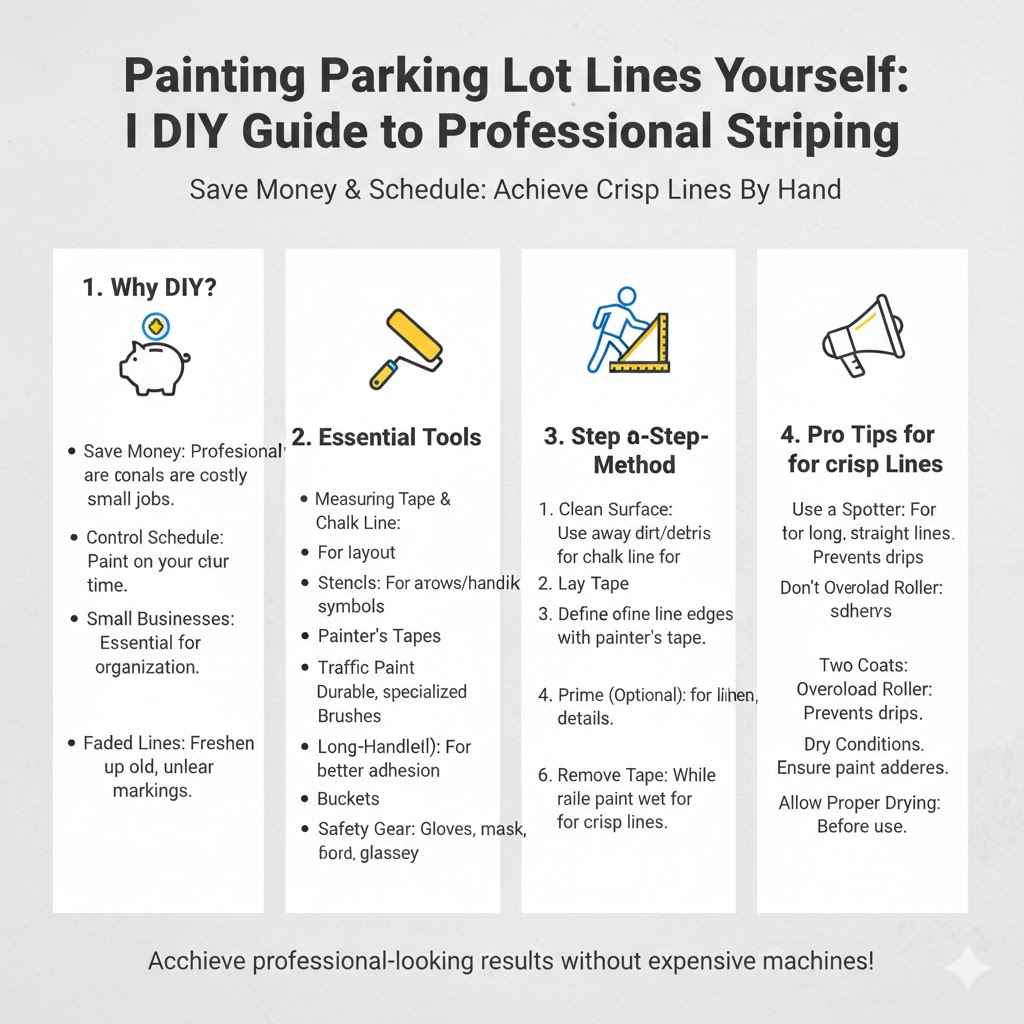
Getting a professional service can cost a lot of money, especially for small jobs. That’s why knowing how to do it yourself is super helpful. You can save money and get the job done on your schedule.
Doing it without a machine just means you need to be a bit more careful with your tools. It’s all about preparation and using the right methods. We will show you the best ways to mark your lines so they look neat and last a good while.
You don’t need fancy equipment to make your parking area look professional.
Gathering Your Supplies
Before you start painting, it’s important to have everything ready. This makes the painting process go much smoother. You’ll want to gather your materials in one place.
This way, you won’t have to stop painting to look for something.
Paint Type
Choosing the right paint is key. You need paint that is made for outdoor use and can stand up to cars driving over it. Asphalt or concrete paint is best.
These paints are tough and can handle the weather and tire wear. They usually come in bright, visible colors like white or yellow. Make sure the paint is suitable for the surface you are painting, whether it’s asphalt or concrete.
Marking Tools
You will need something to mark your lines before you paint. This helps ensure your lines are straight and where you want them.
- Chalk Line or String Line A chalk line uses chalk dust to mark a straight line.You pull a string tight and then snap it to leave a chalk mark. A string line is simply a tight string you can follow.
- Measuring Tape To measure the distances between lines and the width of your parking spots.
- Stakes or Heavy Objects To hold your string line in place.
- Spray Chalk or Temporary Marking Paint For initial layout marks.
Painting Tools
These are the tools you’ll use to apply the paint.
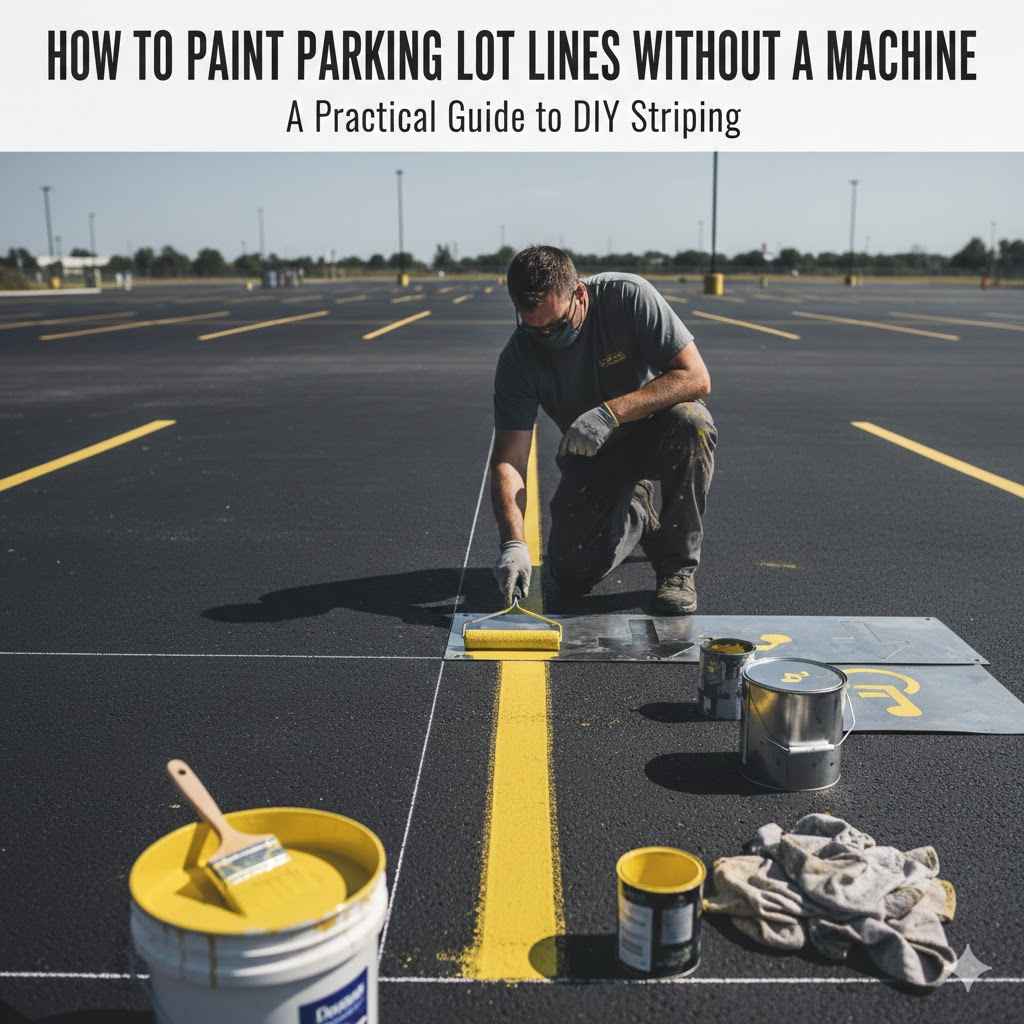
- Paint Rollers with Extension Poles Using a roller on an extension pole is the best way to get even lines. You can buy rollers specifically for line painting, or a standard medium-nap roller can work.
- Paint Tray or Bucket To hold the paint for your roller.
- Paint Brushes For touching up edges or making small repairs.
- Cones or Barricades To block off the area while you are painting and while it dries. This is very important for safety.
Safety Gear
Don’t forget safety! You’ll be working around traffic and using paint.
- Gloves To protect your hands from paint.
- Safety Glasses To keep paint out of your eyes.
- Work Clothes Wear old clothes you don’t mind getting paint on.
Preparing the Surface
A good paint job starts with a clean surface. If the ground is dirty or oily, the paint won’t stick well. This means your lines might peel off quickly.
Taking time to prepare the surface will make your new lines look better and last longer.
Cleaning the Area
First, sweep or blow away all loose dirt, leaves, and debris from the area where you will paint. If there are any oil stains or grease spots, you will need to clean those. You can use a strong degreaser designed for concrete or asphalt.
Scrub the stains well, then rinse the area thoroughly with water. Let the surface dry completely before you paint.
Any loose gravel or old paint chips should also be removed. You want a smooth, clean surface for the best adhesion. If the area has weeds growing through cracks, pull them out and clean the cracks as well.
Marking Your Lines
This is a crucial step for getting straight, professional-looking lines. Don’t try to just freehand it!
Layout and Measuring
Start by marking the exact spots where your lines will go. Use your measuring tape to plan your parking spaces. Standard parking space sizes vary, but a common width is about 8.5 to 9 feet wide and 18 feet long.
Measure and mark the corners of your desired parking spots.
Using a String Line
For long, straight lines, a string line is your best friend.
- Drive stakes into the ground at the beginning and end of your line. Make sure the stakes are firmly in place.
- Tie a strong string tightly between the two stakes.The string should be pulled taut to create a perfectly straight guide.
- If you need to mark the line itself, you can run a chalk line along the string.
This method ensures your painted line will follow a perfectly straight path.
Creating the Outline
Once your string line is set, you can use chalk or temporary spray paint to mark the line on the ground. Follow your string guide carefully. If you are creating a series of parking spots, repeat this process for each line.
Ensure your spacing is consistent for all spots.
Painting the Lines
Now comes the fun part! With your surface clean and your lines marked, you are ready to paint.
Applying the First Coat
If you’re using a roller, pour some of your asphalt or concrete paint into a paint tray or bucket. Dip your roller into the paint, making sure it’s not dripping too much. Roll it onto the surface, following your chalk or spray-paint guide.
Keep the roller moving at a steady pace.
When using an extension pole, it helps to keep your strokes consistent. Try to paint in one direction for each line, or use overlapping strokes for even coverage. If your line is narrow, you can use the edge of the roller to stay within your marked boundaries.
For small touch-ups or getting into corners, a paint brush can be useful. However, try to use the roller for the main body of the line to get a smooth, even finish.
Second Coat and Touch-Ups
Depending on the paint and the surface, you might need a second coat. This is especially true if your first coat looks a bit thin or uneven. Let the first coat dry according to the paint manufacturer’s instructions before applying the second coat.
This usually takes a few hours.
After the paint has dried enough to walk on carefully, check for any areas that need touch-ups. You can use a smaller brush to fix any wobbly edges or thin spots. It’s better to do this while the paint is still fresh if possible, or after the final coat has cured.
Tips for Success
Here are some extra tips to help you paint like a pro, even without a machine.
Weather Conditions
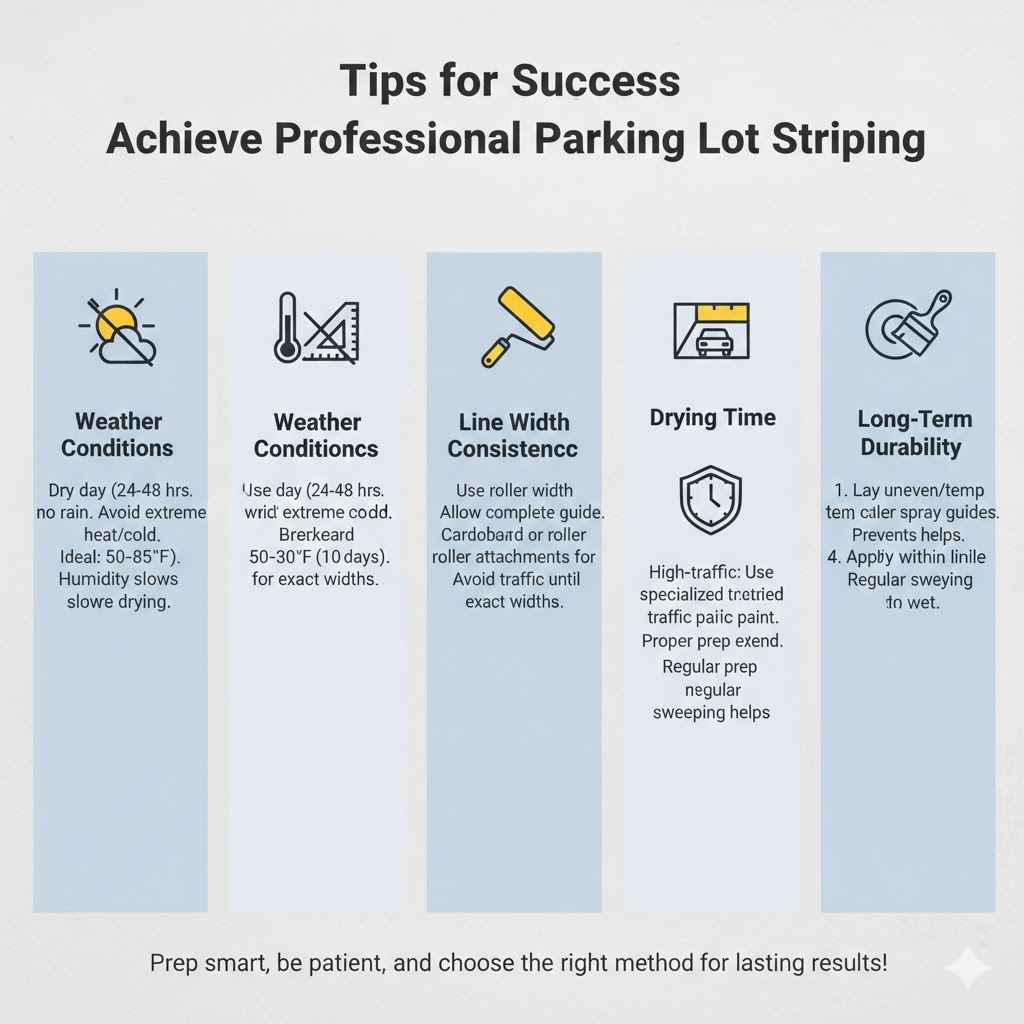
Always check the weather before you start. You need a dry day with no rain expected for at least 24-48 hours. Also, avoid painting in extreme heat or cold.
Ideal temperatures are usually between 50°F and 85°F (10°C and 30°C). High humidity can also slow down drying time.
Line Width Consistency
To get consistent line widths, use your roller’s width as a guide. If you need a specific width, you can use guides attached to your roller or carefully use the edge of a piece of cardboard as a straight edge to guide your roller.
Drying Time
Patience is key! Allow the paint to dry completely before allowing cars to drive over it. Check the paint can for recommended drying and curing times.
Curing time is when the paint reaches its maximum hardness, which can take several days. Until it’s fully cured, the paint can be more easily damaged.
Long-Term Durability
The type of paint you use and how well you prepare the surface will affect how long your lines last. For very high-traffic areas, consider specialized traffic paint. Regular maintenance, like sweeping the area regularly, can also help keep your lines visible.
Alternative Marking Methods
If you’re painting on a very uneven surface, or if you need very precise lines, you might consider using masking tape.
- Paint your guide lines with chalk or temporary spray paint.
- Carefully lay down high-quality painter’s tape along your guide lines. Press the tape down firmly to prevent paint from bleeding underneath.
- Paint within the taped lines.
- Remove the tape while the paint is still wet for the cleanest edges.
This method requires extra time but can yield very sharp results.
Frequently Asked Questions
Question: What kind of paint should I use for parking lot lines?
Answer: You should use specialized asphalt or concrete paint. These paints are designed to be durable, weather-resistant, and able to withstand traffic. Look for paints labeled for outdoor use on driveways or parking lots.
Question: How do I ensure my lines are straight without a machine?
Answer: The best way to get straight lines is by using a taut string line as a guide. Mark the ends of your line, tie a strong string between them, and then follow the string with your chalk or temporary marker before painting.
Question: How wide should parking lot lines be?
Answer: Standard parking space lines are typically 4 to 6 inches wide. The exact width can depend on local regulations or your personal preference for visibility.
Question: How long will paint applied this way last?
Answer: The lifespan of the paint depends on the quality of the paint used, the condition of the surface, weather, and traffic volume. High-quality traffic paint applied to a well-prepared surface can last for several years, but lighter use areas might see lines fade sooner.
Question: Can I paint lines on a hot day?
Answer: It’s best to avoid painting on extremely hot days. High temperatures can cause the paint to dry too quickly, leading to poor adhesion and an uneven finish. Mild to warm temperatures (50-85°F or 10-30°C) are ideal.
Final Thoughts
Painting parking lot lines yourself without a machine is totally doable. You just need the right tools and a little patience. Clean your surface well, mark your lines carefully with a string, and use a roller for smooth application.
Follow these steps, and you’ll have clear, neat parking lines that make a big difference.