How to Prevent Dogs From Scratching Hardwood Floors: Genius
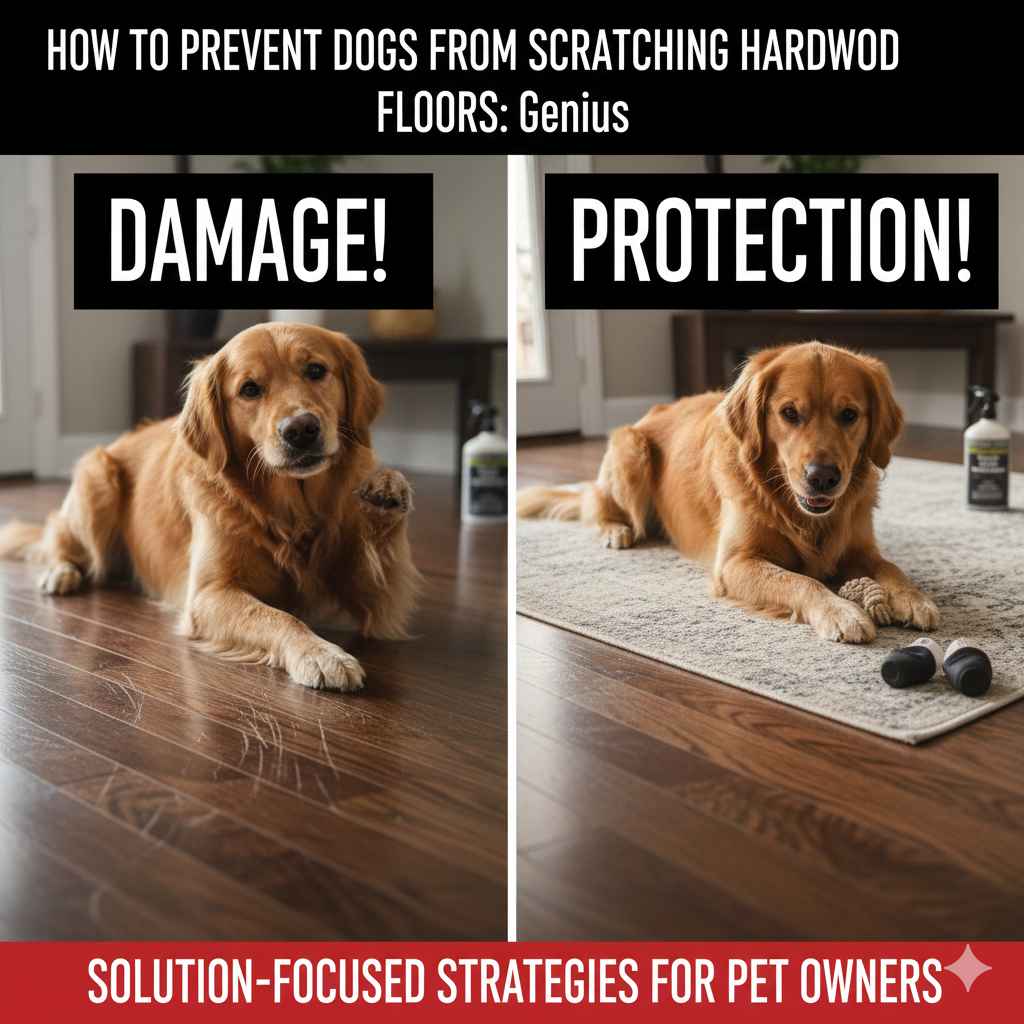
To prevent dogs from scratching hardwood floors, trim their nails regularly and consider using soft nail caps. Place durable area rugs and runners in high-traffic areas. Apply a strong, scratch-resistant polyurethane finish to the wood. Finally, redirect your dog’s playful energy with toys and designate a specific play zone on a rug.
Hello there! It’s Md Meraj, your friendly guide for all things home improvement. I know how much you love your beautiful hardwood floors. I also know you love your furry best friend just as much. Sometimes, it feels like you can’t have both without a little bit of stress. You hear the click-clack of your dog’s nails and cringe, worrying about new scratches.
Well, take a deep breath. You absolutely can have a happy dog and pristine floors at the same time. It’s not about choosing one over the other. It’s about using a few simple, smart tricks to protect your wood. In this guide, I’ll walk you through everything you need to know. We’ll cover easy nail care, simple floor protection, and even some fun training tips. Let’s get started!
Start with the Source: Your Dog’s Nails
The most direct way to stop scratches is to manage the thing doing the scratching: your dog’s nails. Think of them like tiny, hard points pressing into your floor with every step. When they’re long and sharp, they act like little daggers. But when they’re short and smooth, the risk drops dramatically. This is your first and most important line of defense.
Keep Nails Trimmed Short
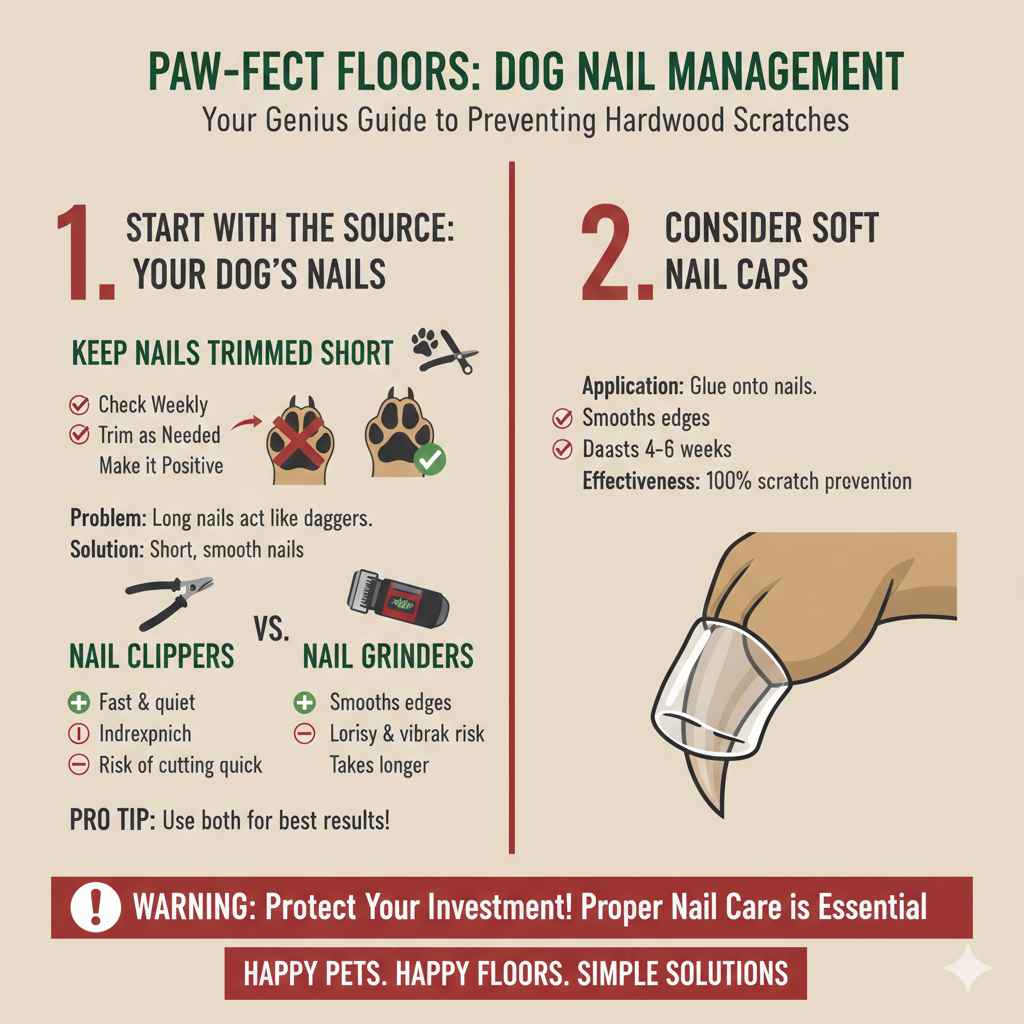
Long nails are the number one cause of floor scratches. When a dog’s nails are too long, they are forced to walk on them, which puts pressure on the nail and pushes it into the wood. A good rule of thumb is this: if you can hear your dog’s nails clicking on the floor as they walk, they’re too long.
Here’s a simple routine to get into:
- Check Weekly: Make it a habit to look at your dog’s nails once a week. You don’t have to trim them every week, but checking helps you stay on top of it.
- Trim as Needed: For most dogs, a trim every two to four weeks is perfect. The goal is to keep the nail from touching the ground when they are standing still.
- Make it Positive: Nail trimming can be stressful for some dogs. Use plenty of treats, praise, and patience. Start slow, maybe doing one paw at a time. This makes it a better experience for everyone.
If you’re new to trimming, ask your veterinarian or a professional groomer to show you the right way. They can point out the “quick,” which is a blood vessel inside the nail that you want to avoid cutting. Learning this will give you the confidence to do it yourself.
Nail Clippers vs. Nail Grinders: Which is Best?
You have two main tools for the job: traditional clippers and electric grinders. Neither one is “better” than the other—it all comes down to what you and your dog are most comfortable with. Clippers are fast, while grinders give you a smoother finish.
Here’s a simple breakdown to help you decide:
| Tool | Pros | Cons |
|---|---|---|
| Nail Clippers | – Fast and quiet – No batteries or charging needed – Inexpensive |
– Can pinch the nail if dull – Higher risk of cutting the quick – Can leave a sharp edge |
| Nail Grinder | – Smooths the nail and rounds the edges – Lower risk of cutting the quick – Great for dogs afraid of clippers |
– Can be noisy and vibrate – Takes longer than clipping – Creates nail dust |
Many owners find that a combination works best. Use clippers to take off the length, then use a grinder to smooth the edges. Smooth, rounded nails are far less likely to scratch your floors.
Consider Soft Nail Caps
If regular trimming isn’t enough or your dog is especially active, nail caps are a fantastic solution. These are tiny, soft vinyl caps that you glue onto your dog’s nails. They create a soft buffer between the nail and your floor.
Here’s how they work:
- Application: You fill the cap with a special adhesive and slide it over the nail. It’s a painless process.
- Duration: They stay on for about four to six weeks, falling off naturally as the nail grows.
- Effectiveness: They completely prevent nail scratches because the hard nail never touches the floor. They are a great option for dogs with mobility issues who may scramble to get up.
Nail caps are a safe and effective way to give you total peace of mind. Just be sure to check them weekly to make sure none have fallen off.
Create a Protective Barrier on Your Floors
While managing your dog’s nails is key, protecting your floors directly adds another layer of security. You can think of this as creating a shield between your dog and the wood. These methods are simple, effective, and can even add style to your home.
Lay Down Rugs and Runners
This is the easiest and most effective way to protect your floors. Area rugs and runners cover the wood in the spots your dog uses most. They absorb the impact of running, jumping, and playing.
Focus on these key areas:
- Entryways: A durable mat at every door traps dirt, grit, and moisture that can act like sandpaper on your floors.
- Hallways: Dogs often run down hallways. A long runner protects this “racetrack” area.
- Main Living Areas: Place a large area rug where your family and dog spend the most time, like in the living room or under the dining table.
- At the Bottom of Stairs: Dogs often scramble for traction here, so a small rug can prevent scratches from take-offs and landings.
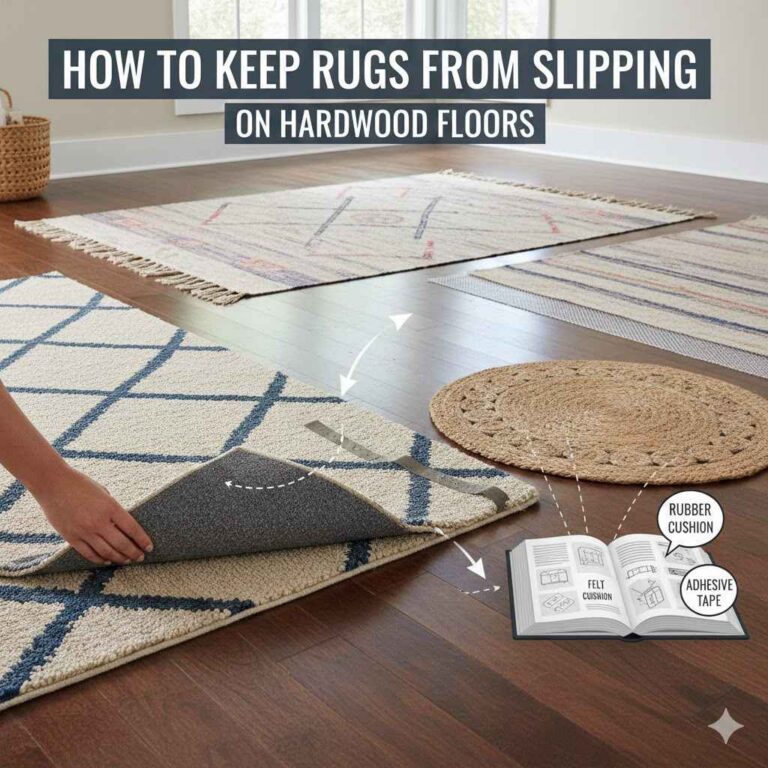
Always use a high-quality, non-slip rug pad underneath. This prevents the rug from sliding, which is safer for both you and your dog, and it protects the floor finish from being worn down by a shifting rug.
Apply a Strong, Durable Floor Finish
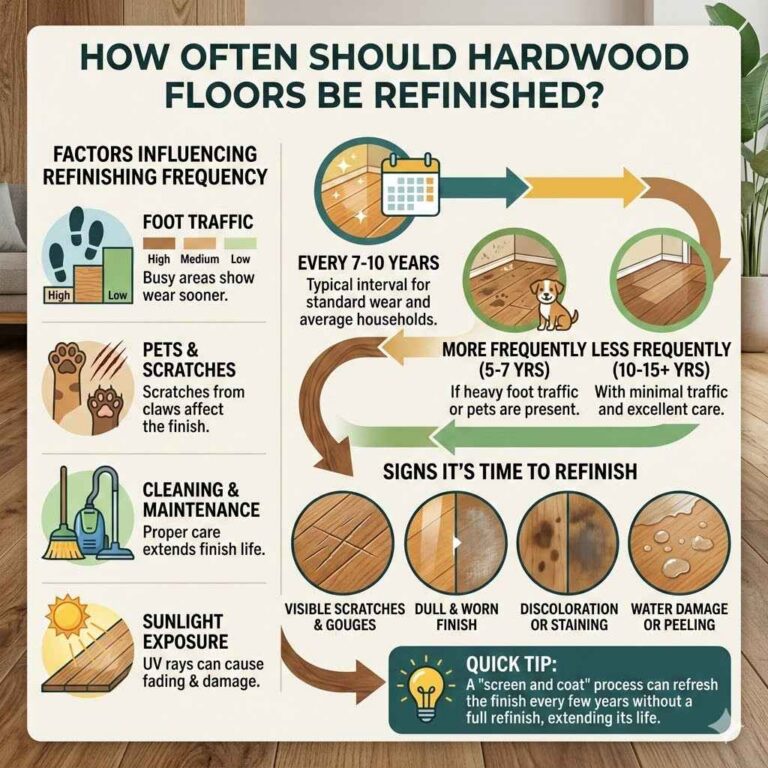
The clear coat on top of your hardwood is its only defense. If you have an older floor with a worn-out finish, it’s going to scratch much more easily. Applying a fresh, durable topcoat is one of the best long-term investments you can make.
The best choice for a home with dogs is an oil-based polyurethane finish. It’s incredibly tough and resists scratches and scuffs better than most other options. While it takes longer to dry and has a stronger smell during application, its durability is unmatched. Water-based polyurethane is a good alternative if you need something that dries faster and has a lower odor, but you may need to apply more coats to get similar protection.
A fresh finish doesn’t just protect against scratches—it also seals the wood from spills and stains, making your floors look shiny and new for years to come.
Guide Your Dog’s Behavior
A little bit of training and management can go a long way. Much of the scratching happens not from walking, but from energetic playing, scrambling, and those excited “zoomies.” By guiding your dog’s behavior, you can teach them how to live in harmony with your beautiful floors.
Encourage Calm Indoor Manners
Teaching your dog to be calm inside the house is good for your floors and your peace of mind. You don’t need to stop them from being a dog, but you can set some simple boundaries.
- Teach a “Place” Command: Train your dog to go to a specific spot, like their bed or a comfy mat. This is super helpful when guests arrive or when things get too rowdy. Reward them for staying there calmly.
- Reward Calm Behavior: When you see your dog lying down peacefully, give them a quiet “good dog” and a gentle pat. Positive reinforcement teaches them that being calm gets them good attention.
- Avoid Hype Indoors: Keep exciting games like fetch and tug-of-war for the backyard or the park. Inside is for relaxing.
Redirect Energy with Toys and Play
A bored dog is often a destructive dog. If your dog doesn’t have a good outlet for their energy, they might create their own fun by running laps around your living room. Redirecting that energy is simple and fun.
According to the American Kennel Club, mental stimulation is just as important as physical exercise. Provide plenty of puzzle toys, treat-dispensing balls, and safe chew toys. These activities keep their minds busy and their bodies tired without needing to race across your hardwood.
Genius Hacks for Extra Protection
Ready for a few extra tricks? These small adjustments can make a surprisingly big difference. They are easy to do and add even more layers of protection for your precious floors.
Moisturize Your Dog’s Paws
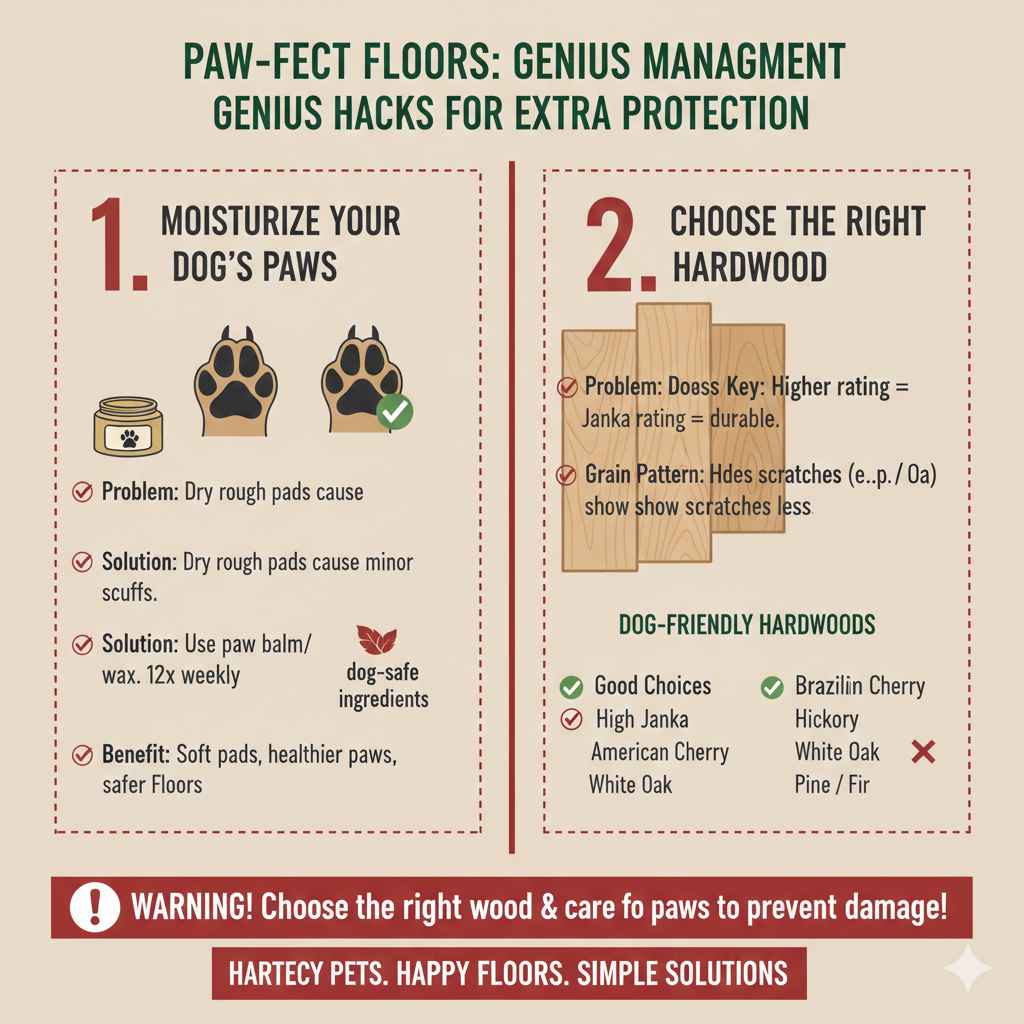
Just like our skin, a dog’s paw pads can get dry, cracked, and rough. Rough paw pads can be abrasive and contribute to minor scuffs and scratches. A simple solution is to use a paw balm or wax. These products are made with dog-safe, moisturizing ingredients that soften their pads. Applying it once or twice a week keeps their paws healthy and your floors safer.
Choosing the Right Hardwood
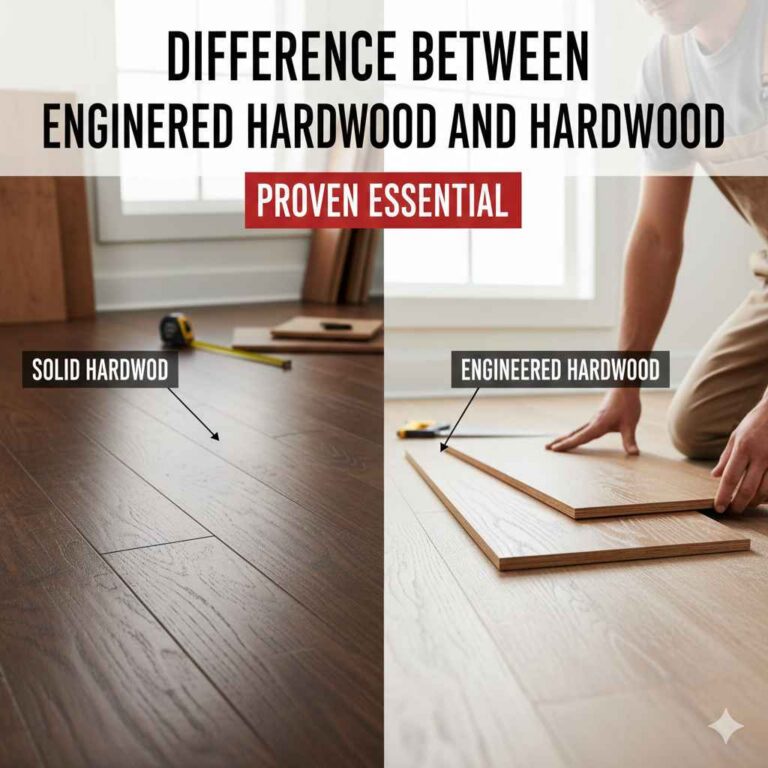
If you’re planning to install new floors or refinish old ones, you have the chance to choose a wood that stands up better to pets. Hardness is key. The Janka Hardness Test measures how resistant a wood is to denting and wear. The higher the Janka rating, the tougher the wood.
Additionally, choose a wood with a strong, visible grain pattern. Woods like Red Oak or Hickory are great because their busy grain helps hide any minor scratches that do occur. Lighter-colored woods also tend to show scratches less than very dark woods.
Here’s a quick look at some good and not-so-good choices:
| Wood Type | Janka Hardness Rating (Approx.) | Good for Dogs? |
|---|---|---|
| Brazilian Cherry | 2350 | Excellent (Very Hard) |
| Hickory | 1820 | Excellent (Very Hard & Strong Grain) |
| Hard Maple | 1450 | Very Good |
| White Oak | 1360 | Very Good (Classic & Durable) |
| Red Oak | 1290 | Good (Industry Standard) |
| American Cherry | 950 | Poor (Scratches Easily) |
| Pine / Fir | 600 – 800 | Poor (Very Soft) |
You can find more details on wood species from resources like the USDA Forest Products Laboratory, which provides extensive data on wood properties. Choosing a harder wood from the start will save you a lot of headaches down the road.
Frequently Asked Questions
Can dog nails really ruin hardwood floors?
Yes, absolutely. Over time, untrimmed dog nails can cause thousands of tiny scratches that wear down the floor’s finish. This can make the wood look dull and can eventually expose the raw wood to damage and moisture. Keeping nails short is the most important step to prevent this.
What is the best floor finish for a house with dogs?
An oil-based polyurethane finish is generally considered the most durable and scratch-resistant option for homes with pets. It creates a hard, protective shell over the wood. While it has a stronger odor and longer drying time, its toughness is worth it for high-traffic homes.
Do nail caps for dogs actually work?
Yes, they work incredibly well. Nail caps are soft vinyl covers that you glue over your dog’s nails. They create a soft barrier so the sharp nail never touches the floor. They are a painless and highly effective solution, especially for very active dogs or delicate floors.
How often should I trim my dog’s nails?
A good general rule is to trim them every 2-4 weeks. However, the best indicator is sound. If you can hear your dog’s nails clicking on the hardwood floor when they walk, it’s time for a trim. The nails should be short enough that they don’t touch the ground when your dog is standing still.
Are some hardwood floors better for dogs than others?
Definitely. Harder woods like Hickory, Brazilian Walnut, or Hard Maple are much more resistant to scratches than softer woods like Pine or American Cherry. Also, woods with a strong, visible grain pattern and a lighter, matte finish are great at hiding any minor wear and tear that might happen.
How do I fix light scratches that are already on my floor?
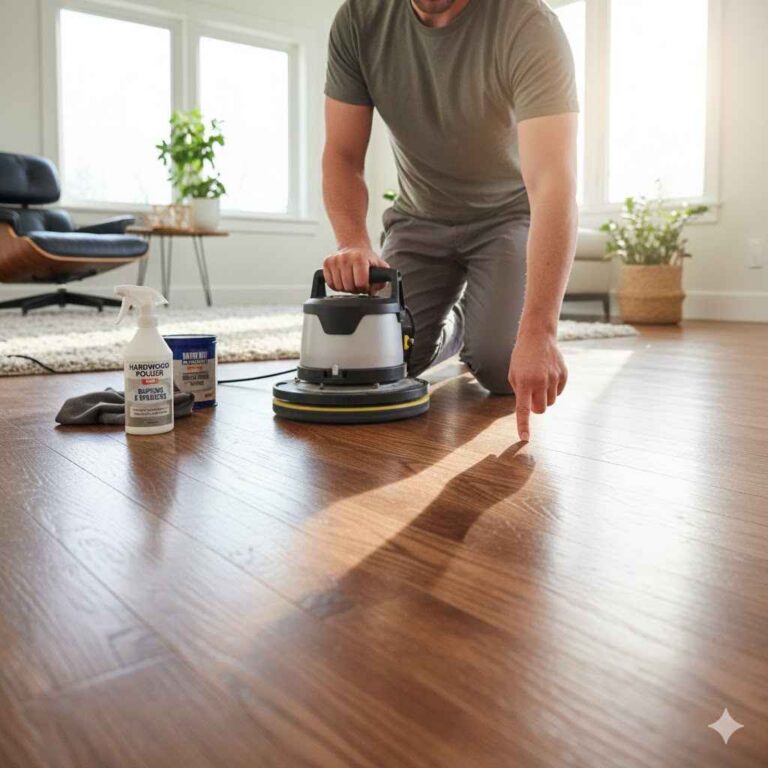
For very light surface scratches, you can often use a special wood floor polish or a stain-filled marker designed to match your floor’s color. For slightly deeper scratches that haven’t gone through the finish, a product like a paste wax can sometimes fill and hide them. For deep scratches, you may need to lightly sand the area and reapply a bit of finish.
You Can Have Beautiful Floors and a Happy Dog
And there you have it! Protecting your hardwood floors from your dog isn’t a complicated battle. It’s all about a few simple, consistent habits. By keeping your dog’s nails trimmed and smooth, using rugs in key spots, and making sure your floor has a tough finish, you can practically eliminate the worry of scratches.
Remember, it’s a team effort. A little bit of paw care, a few well-placed rugs, and some positive training create a home where both your beautiful floors and your four-legged family member can coexist peacefully. You don’t have to choose between them. With these steps, you can relax and enjoy the home you’ve worked so hard to create—doggy zoomies and all.