How to Remove a Stripped Allen Screw from a Faucet
A stripped Allen screw means the hex key no longer bites, so the fastest safe fix is to try the correct-size hex key first, then a Torx bit or friction aid, and leave drilling or extraction for last. I have seen the wrong tool chew up a faucet finish, round the screw farther, and crack trim pieces that cost far more than the screw.
What you’ll need


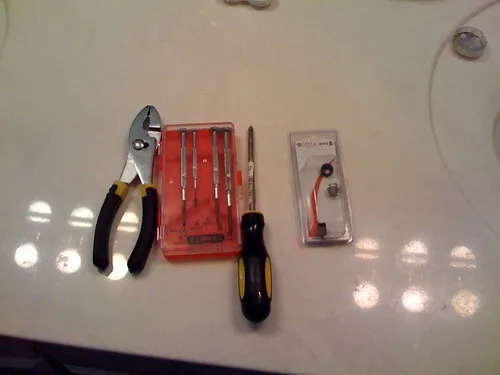
- Correct-size Allen key or hex wrench, with short and long arms for access
- Torx bit or Torx wrench, one size larger than the rounded hex recess in many cases
- Rubber band or glove material for added traction in a lightly stripped recess
- Channel-lock pliers for a screw head that stands proud of the surface
- Screw extractor for a failed grip-based removal
- Drill bit for last-resort removal
- Heat source for seized or corroded fasteners
- Use painter’s tape, thin cardboard, or a plastic sheet to protect the finish.
- Small brush, cloth, and a pick or toothpick for cleaning mineral buildup
- Use penetrating oil if corrosion or thread locker seems to be involved.
Which method should you try first?
Start with the least aggressive method that fits the screw’s access and the faucet’s finish. I begin with the method that matches the opening, then move up only if it slips. A recessed screw needs a tight bit and traction aids. A flush screw may sometimes take a Torx bit. A raised screw can sometimes be gripped from the outside without touching the trim. (wikihow.com)
- Identify the screw condition: recessed, flush, or raised.
- Choose the first method that matches the access instead of jumping to drilling.
- Mask nearby trim before turning anything.
- Stop as soon as the driver starts camming out again.
How do I remove a stripped Allen screw from a faucet?
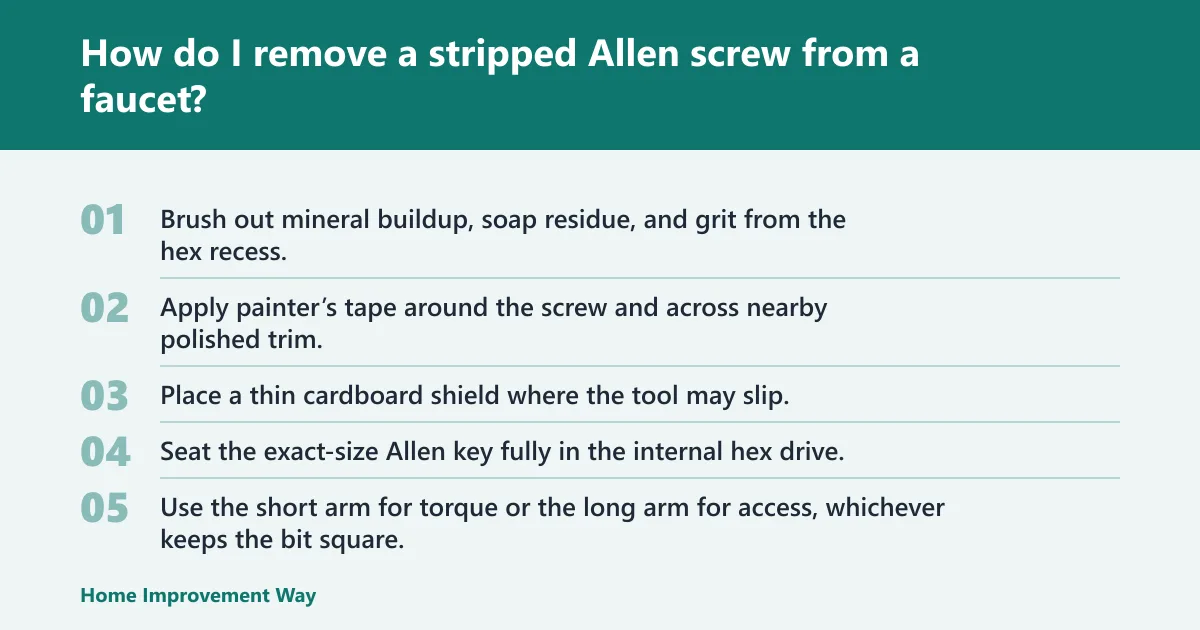
Use the faucet handle set screw as the main target and work from the least damaging method upward. Clean the recess, try the correct hex key, then move to a better-grip substitute such as a Torx bit or friction aid. Save extraction and drilling for screws that still will not turn after simpler methods.
Step 1: Clean the screw and protect the faucet finish
- Brush out mineral buildup, soap residue, and grit from the hex recess.
- Apply painter’s tape around the screw and across nearby polished trim.
- Place a thin cardboard shield where the tool may slip.
On a faucet, a tiny slip can scar chrome or nick an escutcheon. Cleaning first helps the bit seat fully, and masking gives the driver a safer place to miss.
Step 2: Try the correct-size Allen key again
- Seat the exact-size Allen key fully in the internal hex drive.
- Use the short arm for torque or the long arm for access, whichever keeps the bit square.
- Turn slowly and stop if the key rises out of the recess.
Many stripped faucet screws were damaged by a key that was slightly off size or not fully seated. A snug fit is still the best first test.
Step 3: Add traction before going harder
- Place a wider rubber band or a piece of glove material over the recess.
- Press the hex key through the material and keep the bit centered.
- Try a Torx bit slightly larger if the recess is rounded but still holds enough shape.
Rubber band material helps most when the stripping is light. Friction drops can also fill gaps in the hex hole and give the bit a better bite.
What can I use if my Allen key keeps slipping in a faucet screw?
If the key keeps slipping, add traction first and change the driver shape second. A rubber band or glove material may help a lightly damaged recess, while a Torx bit can sometimes bite better into a rounded hex opening. That order usually beats raw force and protects the finish.
- Re-seat the correct-size hex wrench and press straight in.
- Try a wide rubber band or glove material over the hole.
- Switch to a Torx bit that fits tightly enough to bite.
- Stop if the screw head starts to deform further.
Can a raised screw be removed with pliers?
Yes, but only when enough of the screw head stands above the faucet surface for a firm external grip. Channel-lock pliers can work on a raised screw head, yet they are a poor choice for recessed fasteners and can crush soft trim or mar visible finishes quickly.
- Open the pliers just enough to grip the exposed head.
- Pad the jaws if the finish matters and the grip is secure.
- Turn slowly, keeping the pliers off the trim ring and escutcheon.
- Stop if the head starts to shear or slip.
Faucet-specific removal decision table
Use the screw’s position to decide how far to go before escalating. Recessed screws can be especially delicate because the driver has little purchase. Flush screws give a little more room. Raised screws are the only ones that can sometimes be handled from the outside with pliers.
| Screw condition | Safest first method | Stop point for escalating to extraction or drilling |
|---|---|---|
| Recessed | Correct-size Allen key, then rubber band or glove material, then a Torx bit one size larger | When the bit cam-outs twice or the recess turns rounder |
| Flush | Correct-size Allen key with added traction, then Torx bit, then friction drops | When the recess is too damaged for the bit to seat without slipping |
| Raised | Channel-lock pliers on the exposed head, with finish padding if needed | When the head rounds off, crushes, or slips under the pliers |
Finish protection note: wrap the faucet body, handle base, and escutcheon before any method that may slip. On black or polished finishes, one stray jaw mark can be more noticeable than the screw itself.
What should I do if the faucet screw is rusted or corroded?
If corrosion or mineral buildup has seized the screw, loosen the bond before applying more torque. Penetrating oil and gentle heat can help, but heat must be used cautiously near seals, cartridges, and plated trim. Corrosion often needs patience more than force.
- Brush the screw clean and apply penetrating oil to the threads.
- Let it sit, then try the correct hex key again.
- Use brief, careful heat only if the faucet parts around it can tolerate it.
- Escalate to extractor or drilling only after grip methods fail.
Heat can sometimes free a stuck faucet screw when thread locker or corrosion seems to be the problem. It is risky near plastic parts, cartridge seals, and delicate finishes, so keep the heat source moving and avoid overheating the surrounding hardware.
When should I use a screw extractor on a faucet screw?
Use a screw extractor after the hex key, friction aid, and Torx bit have not worked, and only if the recess or head still has enough material for a centered pilot hole. The extractor is a backup tool, not a first move, because alignment matters more on a faucet than on rough framing hardware.
- Center-punch the screw so the drill bit stays in the middle.
- Drill the smallest workable pilot hole for the extractor.
- Turn the extractor slowly and keep it straight.
- Stop if the extractor binds hard, because breakage makes removal harder.
On a faucet, a crooked pilot hole can wander into the handle bore or scar nearby trim. That is why extraction comes after all grip-based methods have failed.
Can I remove a stripped Allen screw without drilling?
Yes, many faucet screws come out without drilling if the recess still offers any bite. A snug Allen key, a Torx bit, friction material, pliers on a raised head, or light heat often solves the job before destructive methods are needed. Drilling is the last resort.
- Try the correct-size hex key with clean seating.
- Try a rubber band, glove material, or friction drops.
- Try a Torx bit that fits tightly.
- Use pliers only if the head is raised enough to grip.
If those fail, move to extractor work before a drill bit. The less material you remove from the screw, the less chance you have of damaging the faucet body.
How do I protect a faucet finish while removing a stripped screw?
Protect the finish by masking before turning anything, keeping the tool square, and using the smallest effective force. Chrome, nickel, and black trim scratch easily when a bit skates out of a rounded recess. The escutcheon and nearby cartridge parts need protection too.
- Cover the area with painter’s tape and a thin shield.
- Choose a driver that fits tightly, not one that is merely close.
- Keep plier jaws off visible trim unless the screw head is exposed.
- Use drilling only with tight alignment and controlled pressure.
One useful prevention step: keep the correct-size Allen key in the faucet repair kit so the next set screw is less likely to strip during reassembly.
Common mistakes
The usual failures come from skipping the fit check, using force too early, or treating every faucet screw like an open, exposed fastener. A recessed set screw is fragile. A polished handle base is easy to scar. Both punish haste.
- Using the wrong-size key and rounding the recess further.
- Jumping straight to drilling without checking access and alignment.
- Using pliers on a fully recessed head.
- Overheating near seals, cartridges, or plated trim.
- Letting extractor or drill bits wander into the faucet finish.
Frequently asked questions
How do I remove a stripped Allen screw from a faucet?
Start with the exact-size hex key, then move to a Torx bit or friction aid if the recess is worn. If the screw head is exposed, use channel-lock pliers. Save extractor tools and drilling for the point where the bit will no longer seat safely.
What can I use if my Allen key keeps slipping in a faucet screw?
Try a wider rubber band or glove material over the recess, then test a Torx bit one size larger. If the screw is only lightly stripped, friction drops can also help by filling the gap inside the hex hole.
Will a Torx bit work on a stripped Allen screw?
Often, yes. A Torx wrench can bite into a rounded hex recess better than the original Allen key, especially when the screw is still recessed enough to hold the bit straight. Stop if the Torx starts to chew the edges.
Can I remove a stripped Allen screw without drilling?
Usually, yes. The sequence is clean the recess, try the correct hex key, then add traction or switch to Torx. Use pliers only when the screw head is raised. Drilling belongs at the end, not the beginning.
What should I do if the faucet screw is rusted or corroded?
Apply penetrating oil, wait, and try the correct bit again before adding force. If the screw still will not turn, use brief heat with care around seals and finishes. Corrosion often needs chemical loosening more than brute torque.
How do I protect a faucet finish while removing a stripped screw?
Mask the area with painter’s tape, keep the bit centered, and cover nearby chrome or black trim with a thin shield. If you must use pliers or a drill, work slowly. One slip can mark the faucet faster than the screw comes out.
When should I use a screw extractor on a faucet screw?
Use an extractor after grip methods fail and the screw is still centered enough for a pilot hole. Align the drill carefully, keep the extractor straight, and stop if it binds hard. A misaligned extractor can damage the handle bore.
Can heat help loosen a stripped Allen screw in a faucet?
Yes, when the screw is seized by corrosion or thread locker. Use heat cautiously and keep it away from plastic parts, seals, and plated trim. A few careful minutes of heat can do more than heavy torque on a stuck faucet screw.
Sponsored / affiliate links. As an Amazon Associate I earn from qualifying purchases. I may earn additional commission from eligible campaigns.