How to Remove Musty Smell from Wood Furniture
It’s frustrating when your favorite wooden furniture starts smelling a bit off, isn’t it? That damp, musty odor can really make a beautiful piece feel unpleasant. Many people wonder How to Remove Musty Smell from Wood Furniture because it seems tricky to get rid of without damaging the wood.
Don’t worry, though! This guide will walk you through simple, step-by-step methods that are easy for anyone to follow. We’ll explore the causes and offer practical solutions to make your wood smell fresh again.
Understanding the Musty Smell in Wood
This section explores why wood furniture develops a musty smell. We will look at the common culprits and the conditions that encourage this unpleasant odor. Knowing the source helps in finding the best way to tackle the problem.
We’ll also touch upon how moisture and poor air circulation play a big role.
Moisture is the Main Culprit
Wood is a natural material that can absorb moisture from its surroundings. When wood stays damp for too long, it can become a breeding ground for mold and mildew. These tiny organisms are what cause that distinctive musty or mildewy smell.
Even a small amount of persistent dampness can lead to problems. Leaks from plants, spills, or even high humidity in a room can contribute. Over time, the wood fibers soak up this moisture, and the smell can become quite noticeable.
Poor Air Circulation
Furniture tucked away in dark corners or enclosed spaces often suffers from poor air circulation. Without fresh air moving around it, any trapped moisture has nowhere to go. This stagnant air can trap odors and make them worse.
Think about antique armoires or closed-off storage rooms. These places are prime spots for musty smells to develop. Good airflow helps keep wood dry and prevents the buildup of dampness.
The Role of Mold and Mildew
Mold and mildew are types of fungi. They thrive in damp, dark environments. When they grow on wood, they release spores and volatile organic compounds (VOCs).
These compounds are what we detect as musty smells.
While not all mold is visible, its presence is often indicated by that characteristic odor. These organisms feed on organic material, and wood provides a perfect food source. If left untreated, they can even cause damage to the wood itself over time.
Common Sources of Humidity
Several everyday things can increase humidity around your furniture. Basements are notoriously damp. Bathrooms can also be very humid.
Even kitchens can contribute if there’s a lot of steam from cooking.
Seasonal changes can also play a part. Humid summers or damp winters can bring more moisture into your home. Understanding these sources helps you protect your furniture.
Simple Ways to Remove Musty Smell from Wood Furniture
Now that we know why furniture gets musty, let’s talk about fixing it. This part covers practical, easy-to-use methods. You can often use common household items to tackle the smell.
We’ll go through cleaning, airing out, and absorbing odors.
Natural Cleaning Solutions
Many natural cleaners can help. They are safe for wood and effective at neutralizing odors. You don’t need harsh chemicals.
Vinegar Solution
Vinegar is a fantastic natural disinfectant and deodorizer. It can break down the compounds that cause musty smells.
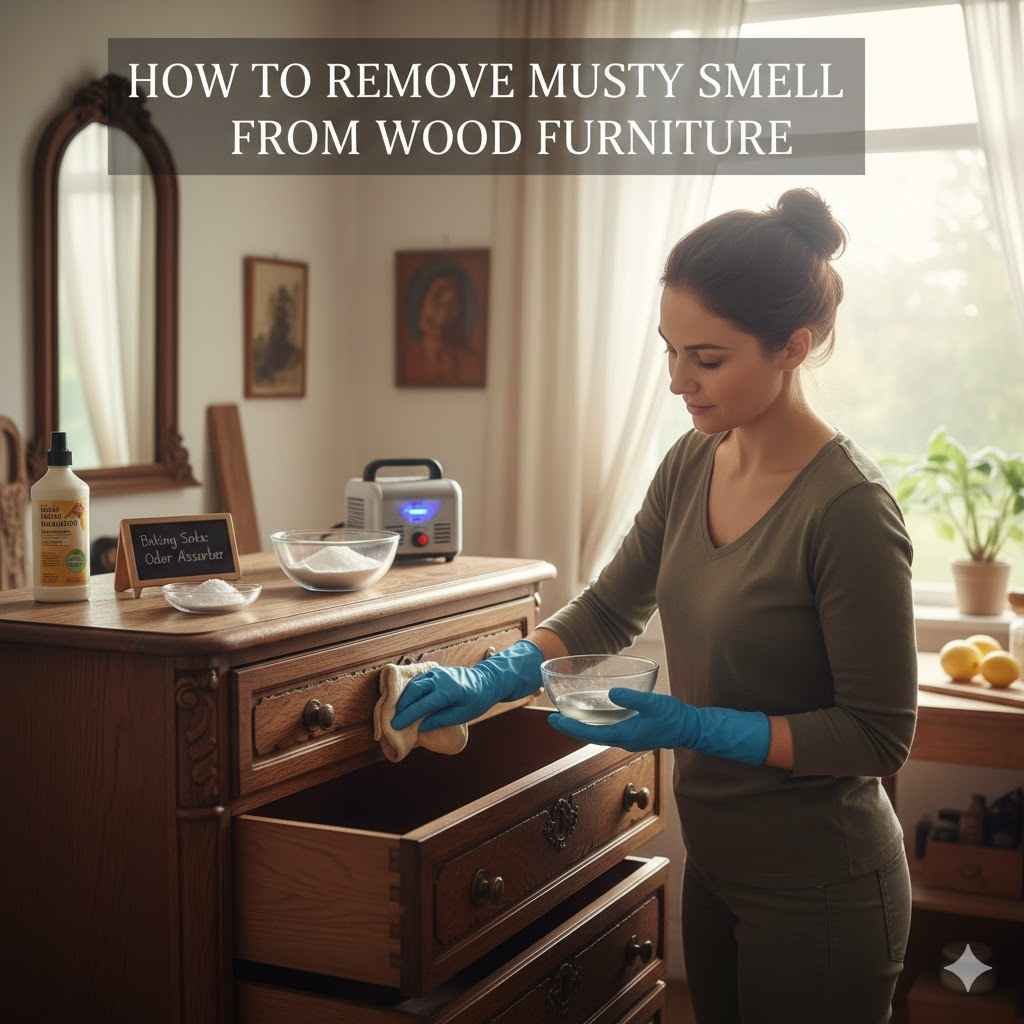
To make a cleaning solution, mix equal parts white vinegar and water. Use a soft cloth that has been wrung out so it’s just damp, not soaking wet. Gently wipe down the surfaces of the wood furniture.
Vinegar’s strong smell will disappear as it dries, taking the musty odor with it. Make sure to work in a well-ventilated area when using vinegar. This helps the vinegar smell dissipate faster.
Baking Soda Paste
Baking soda is known for its ability to absorb odors. You can make a paste to clean stubborn spots.
Mix baking soda with a little water to form a thick paste. Apply this paste to any affected areas on the wood. Let it sit for about 15-30 minutes.
Then, gently wipe away the paste with a clean, damp cloth. Rinse the cloth and wipe again to remove any residue. This method is great for deep cleaning and odor removal.
Lemon Juice and Olive Oil
This mix is good for cleaning and conditioning wood. It can also help with light musty smells.
Combine a quarter cup of lemon juice with a quarter cup of olive oil. Mix them well. Apply a small amount to a soft cloth.
Rub it into the wood surface in a circular motion. Wipe off any excess with a clean, dry cloth. The lemon can help brighten the wood and the oil conditions it.
Airing Out Your Furniture
Sometimes, the best solution is simply to let the furniture breathe. Fresh air can work wonders.
Move Furniture Outdoors
If possible, move the furniture outside on a dry, sunny day. Sunlight and fresh air are natural deodorizers.
Place it in a spot where it won’t get direct, harsh sunlight for too long, as this can fade the finish. A shaded porch or patio is ideal. Let it air out for several hours.
Ensure it is protected from any rain or dew. This process allows trapped moisture and odors to escape, leaving the wood smelling fresh.
Open Windows and Doors
If moving the furniture isn’t an option, improve air circulation in the room. Open windows and doors to create a cross-breeze. Use fans to help move the air around.
This constant flow of fresh air helps to
Odor Absorbers
Certain items are excellent at soaking up smells. You can place them near or inside your wooden furniture.
Activated Charcoal
Activated charcoal is highly porous and can absorb many types of odors. It’s very effective.
You can buy activated charcoal sachets or bags specifically designed for odor absorption. Place these inside drawers, cabinets, or closets where the musty smell is present.
Leave them in place for a few days or even weeks. You might need to replace them if the smell is very strong. It’s a set-it-and-forget-it kind of solution.
Coffee Grounds
Dry, unused coffee grounds can also absorb odors. Place a small bowl of dry coffee grounds inside the furniture.
Make sure the coffee grounds are completely dry. Damp grounds could add more moisture. Leave the bowl there for a few days.
The coffee smell will likely replace the musty smell, and then that will fade too. This is a cheap and readily available option for many households.
Cat Litter
Unused clumping cat litter is designed to absorb moisture and odors. It can be surprisingly effective for furniture.
Place some unused cat litter in an open container or a breathable bag. Put this inside the furniture or near the affected area.
It will soak up moisture and smells from the air. Check it periodically and replace if it becomes saturated or starts to smell itself.
Advanced Techniques for Stubborn Smells
Sometimes, simple airing out isn’t enough. For deeply embedded musty smells, you might need to try a few more intensive methods. These steps require a bit more effort but are still manageable.
Dealing with Interior Surfaces
If the smell seems to be coming from inside drawers or cabinets, you need to treat those surfaces. These areas often trap smells more effectively.
Sanding and Refinishing
For very old or deeply affected furniture, light sanding might be necessary. Sanding removes the top layer of wood where odors can get trapped.
After sanding, you’ll want to seal the wood again. A good quality wood sealant or a fresh coat of varnish can help prevent future odor issues. This is a more involved process but can be very effective.
Make sure to sand in the direction of the wood grain. Clean away all dust before applying any new finish. This method revitalizes the wood and seals in freshness.
Using Specialized Products
There are products specifically made to combat mold, mildew, and odors in wood.
Odor Eliminator Sprays
Look for natural odor eliminator sprays that are safe for wood. Some are enzyme-based and break down odor-causing molecules.
Always test a small, inconspicuous area first to ensure it doesn’t damage the finish. Spray lightly and allow the area to dry completely.
These sprays are often effective for lingering smells that cleaning alone doesn’t fully resolve. They offer a targeted approach to odor removal.
Mold and Mildew Removers
If you suspect actual mold growth, a dedicated mold and mildew remover might be needed.
Use these products with caution and follow the manufacturer’s instructions carefully. Ensure good ventilation when using them.
These cleaners are designed to kill mold and mildew spores, which are the source of the smell. After using, let the wood dry completely before closing it up.
Essential Oils for Freshening
Certain essential oils can add a pleasant scent and have mild antimicrobial properties.
Tea Tree Oil
Tea tree oil is known for its antifungal properties. It can help combat mold and mildew.
Dilute a few drops of tea tree oil with water or a carrier oil like coconut oil. Wipe down the affected areas with a cloth dipped in this solution.
Use sparingly, as essential oils are potent. The scent of tea tree oil itself is quite strong but fades as it works.
Other Pleasant Scents
Oils like lavender, eucalyptus, or citrus can mask and help neutralize odors.
Mix a few drops of your chosen essential oil with water or rubbing alcohol in a spray bottle. Lightly mist the furniture.
This adds a pleasant aroma while helping to keep the space fresh. Again, always test first on an inconspicuous spot.
Preventing Future Musty Smells
The best way to deal with musty smells is to stop them from happening in the first place. This section focuses on simple preventative measures you can take to keep your wood furniture smelling fresh and clean. Regular care is key.
Maintain Proper Humidity Levels
Controlling humidity is the most important step in preventing musty odors.
Use Dehumidifiers
In humid climates or areas like basements, a dehumidifier can significantly reduce moisture in the air. Keeping humidity levels between 30-50% is generally ideal for wood furniture.
A dehumidifier actively removes moisture from the air, which in turn helps to keep your wood dry and less prone to developing mold or mildew. This is a proactive step that saves a lot of hassle later.
Ensure Good Ventilation
Regularly open windows and doors to allow fresh air to circulate. If you have closets or cabinets that tend to be stuffy, consider installing small vents or using battery-operated fans to keep air moving.
Good airflow prevents moisture from accumulating. It’s a simple habit that makes a big difference in maintaining a fresh environment for your furniture.
Regular Cleaning and Dusting
Dust can trap moisture. Keeping your furniture clean is a simple but effective preventative measure.
Dust Regularly
Use a soft, dry cloth to dust your wooden furniture at least once a week. This prevents dust buildup, which can absorb and hold moisture.
Regular dusting also allows you to spot any potential issues, like spills or condensation, early on. It keeps the wood looking good and smelling fresh.
Wipe Down Spills Immediately
Accidents happen. If you spill something on your wood furniture, clean it up right away.
Use a clean, dry cloth to blot up as much liquid as possible. Then, use a slightly damp cloth to wipe the area clean. Make sure to dry it thoroughly afterwards.
Prompt action prevents moisture from soaking into the wood.
Proper Storage Practices
How you store your furniture can impact its tendency to smell musty.
Avoid Damp Areas
Try not to place wooden furniture directly on concrete floors, especially in basements. Concrete can leach moisture into the wood.
If you must store furniture in a damp area, use a moisture barrier like a plastic sheet or a thick rug underneath. This creates a buffer against moisture.
Use Moisture Absorbers
Even in dry storage, placing a few silica gel packets or activated charcoal bags inside drawers and cabinets can help absorb any residual moisture.
These small additions are inexpensive and work passively to keep the air dry. They are like little guardians against dampness for your cherished pieces.
Consider Environmental Factors
Think about the environment your furniture lives in.
Manage Indoor Plants
Houseplants can add beauty, but overwatering them can lead to damp soil and increased humidity around nearby furniture. Be mindful of placement.
Ensure plants are not sitting directly on or too close to wooden surfaces. Use saucers and try not to overwater. This small adjustment can prevent moisture issues.
Frequently Asked Questions
Question: How long does it take for vinegar to get rid of a musty smell?
Answer: The smell of vinegar itself is strong but temporary. It should dissipate within a few hours as it dries and carries the musty odor away. For very stubborn smells, you might need to repeat the process.
Question: Can I use bleach to clean musty wood furniture?
Answer: It is generally not recommended to use bleach on wood furniture. Bleach can damage the wood’s finish and alter the color of the wood. Natural cleaners are a safer choice.
Question: Is it safe to use essential oils on antique furniture?
Answer: With caution, yes. Always dilute essential oils heavily and test on an inconspicuous spot first. Overuse or using undiluted oils can potentially harm antique finishes.
Stick to very small amounts.
Question: How often should I air out my furniture to prevent musty smells?
Answer: If you live in a humid environment or notice any signs of mustiness, aim to air out your furniture, or at least improve circulation in the room, weekly. For less humid areas, monthly might suffice.
Question: What if the musty smell returns after cleaning?
Answer: If the smell returns, it means the source of moisture or the mold/mildew hasn’t been fully eliminated. You may need to try a more intensive cleaning method or address underlying humidity issues in your home.
Summary
Dealing with musty smells in wood furniture is manageable. By understanding the causes like moisture and poor airflow, you can effectively clean your pieces. Natural cleaners, airing out, and odor absorbers work well.
For tough smells, consider sanding or specialized products. Prevention is key through humidity control, good ventilation, and regular cleaning.