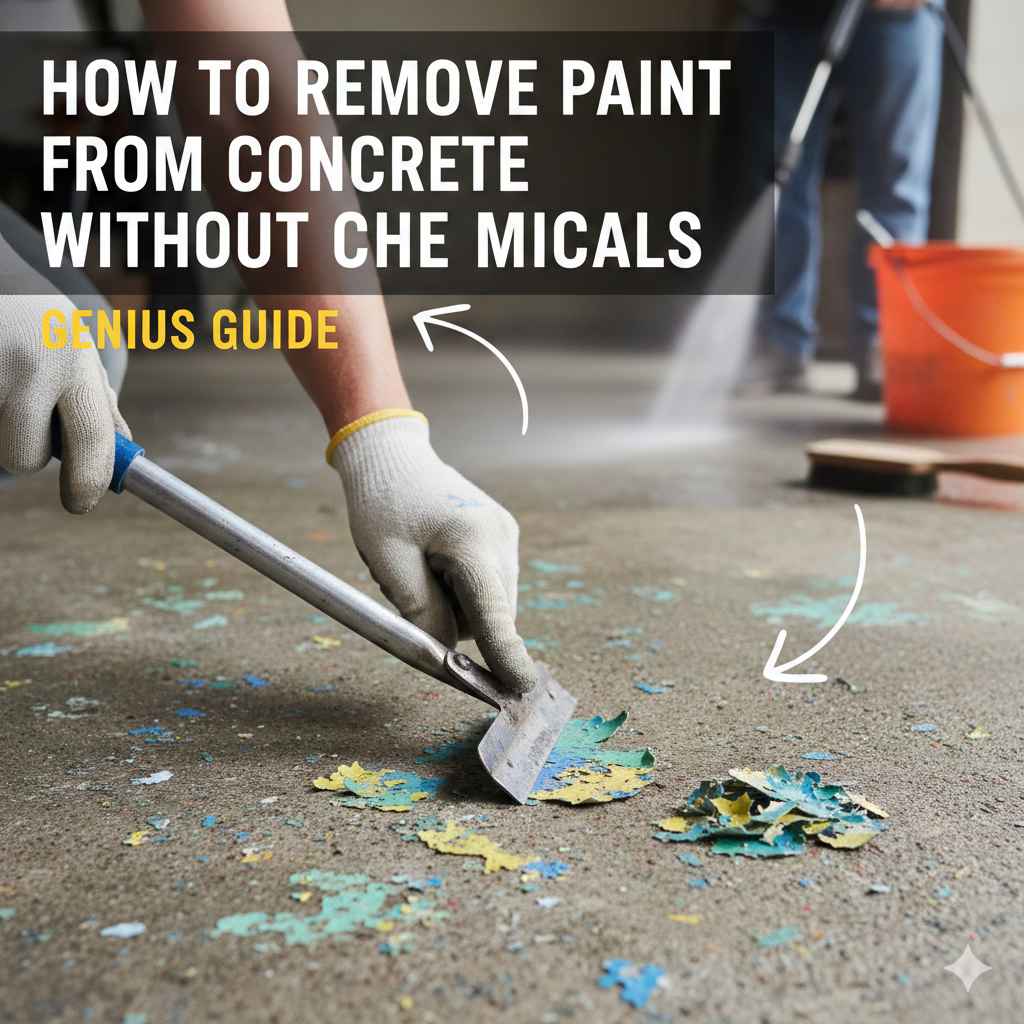
How To Remove Paint From Concrete Without Chemicals: Genius Guide
To remove paint from concrete without harsh chemicals, focus on heat, mechanical abrasion, and gentle scraping. The best non-chemical methods involve using a heat gun followed by a scraper, or aggressive scrubbing with a stiff wire brush and baking soda paste, offering safe and effective results for DIYers.
Seeing old, peeling paint on your driveway, patio, or basement floor can really dull your space. You want a clean concrete look, but the thought of strong chemical strippers—with their fumes and disposal hassles—makes you hesitate. I get it! Safety and simplicity are key when tackling DIY projects around the home.
Good news: you don’t need toxic chemicals to reclaim that beautiful concrete surface. With a few common tools and a little elbow grease, you can strip away that old coating safely. This guide will walk you through the best non-chemical techniques, step-by-step, so you can feel confident taking on this job yourself.
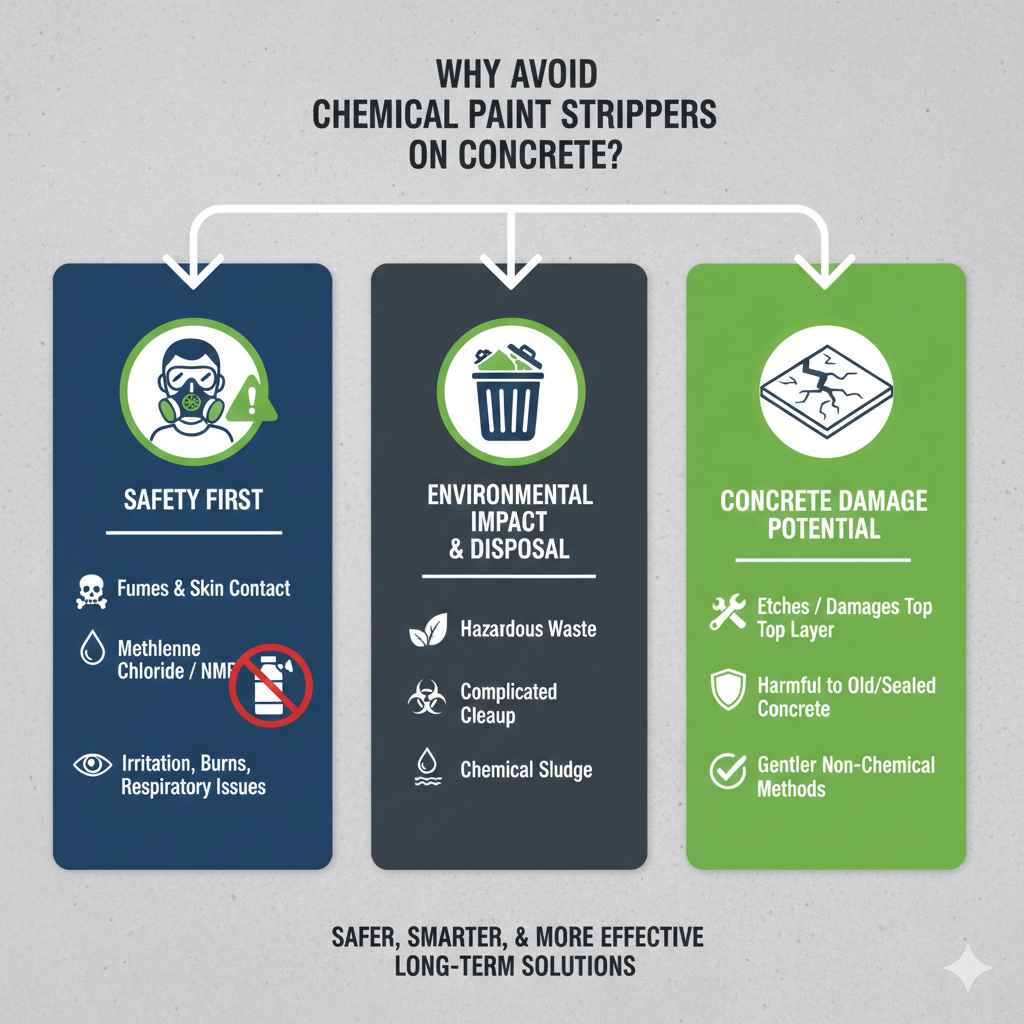
Why Avoid Chemical Paint Strippers on Concrete?
Chemical strippers are powerful for a reason, but they often come with big downsides, especially for beginners tackling outdoor or garage surfaces. When we skip the chemicals, we choose safer, often more effective, long-term solutions.
Safety First: Fumes and Skin Contact
Most strong chemical strippers contain methylene chloride or N-Methyl-2-pyrrolidone (NMP). These chemicals can cause serious skin irritation, eye damage, and respiratory issues. Working in a poorly ventilated area, like a garage, can be dangerous.
Environmental Impact and Disposal
Disposing of chemical sludge safely can be a headache. Many local waste facilities classify leftover stripper as hazardous waste. By going chemical-free, you eliminate this complicated cleanup process entirely.
Concrete Damage Potential
In some cases, strong solvents can actually etch or damage the top layer of your concrete, especially if it’s older or has a sealant. Non-chemical methods tend to be gentler on the substrate itself.
The Top Three Chemical-Free Paint Removal Methods
When aiming for zero chemicals, we focus on applying heat or utilizing mechanical force to break the paint’s bond with the concrete. Here are the three most reliable methods, ranked by effectiveness for different paint types.
Method 1: Heat Gun and Scraper (Best for Thick Layers)
This is my go-to method for stubborn, thick layers of latex or oil-based paint. Heat softens the paint, making it pliable and easy to peel away, much like warming up melted plastic.
Tools You Will Need:
- Heavy-duty heat gun (Look for one with variable temperature settings).
- Sturdy floor scraper or wide putty knife (A 4-inch scraper works best).
- Wire brush (Optional, for follow-up).
- Thick work gloves and safety goggles.
Step-by-Step Guide to Using Heat:
- Prep the Area: Clear all debris. If you are working indoors, ensure excellent ventilation. Turn off any nearby gas lines if you are near them, just as a precaution against accidental ignition.
- Set the Temperature: For standard latex paint, start with your heat gun set between 500°F and 700°F. If you are dealing with old lead paint (common in homes built before 1978), you must keep the temperature below 600°F to prevent vaporizing lead, which is highly toxic. See the Environmental Protection Agency (EPA) guidelines on safe lead paint removal for critical safety steps if you suspect lead.
- Apply Heat Evenly: Hold the heat gun about 1 to 2 inches away from the painted surface. Keep the gun moving constantly in small circles or back-and-forth motions. You are waiting for the paint to bubble, wrinkle, or soften—not burn!
- Scrape While Hot: As soon as the paint softens, immediately use your floor scraper. Push the scraper under the softened paint at a low angle. It should lift away in manageable strips.
- Reheat Stubborn Spots: If the paint hardens before you can scrape it, simply reheat that small section. Work in small manageable sections (about 6 inches square) at a time so the paint doesn’t cool off.
- Final Cleanup: After the bulk paint is gone, you might have a thin residue left. Use a stiff wire brush, perhaps lightly dampened with water, to scrub off the last bits while the concrete is still warm.
Method 2: Mechanical Abrasion (Best for Light Coats/Stains)
When heat isn’t enough, or you have a very thin coat, physical scraping and sanding become necessary. This involves aggressive scrubbing or grinding to wear down the paint layer.
Tools for Mechanical Removal:
- Stiff wire brush (non-rusting is a bonus).
- Electric drill with a wire wheel attachment (for smaller areas).
- Angle grinder with a diamond cup wheel (for large, tough areas—this requires more caution).
- Heavy-duty push broom.
Tips for Safe Grinding (Use Caution!):
If you opt for an angle grinder, remember that you are removing concrete surface material along with the paint. Go slow. Keep the grinder flat to the surface, never tilted deep into the concrete. Wear a high-quality dust mask or respirator, as concrete dust (silica dust) is a health hazard.
For small-scale, lighter paint jobs, a simple, vigorous scrub with a wire brush works wonders, especially when paired with a safe abrasive cleaner (see Method 3).
Method 3: Abrasive Scrubbing with Natural Cleaners
While we aren’t using chemical strippers, we can use common household items that have abrasive or slightly alkaline properties to help lift the paint bond during vigorous scrubbing.
The Power of Baking Soda (Sodium Bicarbonate)
Baking soda is mildly abrasive and slightly alkaline, which helps break down some paint binders without the corrosive nature of heavy chemicals like lye.
Step-by-Step for the Baking Soda Scrub:
- Create a Paste: Mix a large batch of baking soda with just enough water to form a thick, spreadable paste—like thick frosting.
- Apply Thickly: Slather the paste over the painted area you intend to tackle. For better results, cover a 3×3 foot section at a time.
- Let it Dwell (The Waiting Game): Allow the paste to sit for several hours, or even overnight if possible. This gives the mild alkali time to work on the paint surface tension.
- Scrub Hard: Use your stiff wire brush or a heavy-duty scrubbing pad. Apply significant pressure and scrub in tight, circular motions. The baking soda acts as the fine grit that helps lift the loosened paint.
- Rinse and Repeat: Rinse the area thoroughly with a garden hose. If residue remains, reapply the paste and scrub again.
Comparing Non-Chemical Methods
Choosing the right method depends heavily on the type of paint and the size of the area. Here is a quick comparison to help you decide:
| Method | Best For | Pros | Cons |
|---|---|---|---|
| Heat Gun & Scraper | Thick latex, oil-based paint, small to medium areas. | Very effective, no solvents needed. | Labor-intensive, risk of scorching concrete if overheated. |
| Mechanical Abrasion (Grinding) | Extremely tough, previously sealed or epoxy paint. | Fastest for large areas, highly effective. | Requires specialized, powerful tools; creates significant dust/wear on concrete. |
| Baking Soda Scrub | Light surface coats, stains, or residue after initial stripping. | Safest method, inexpensive, non-toxic cleanup. | Requires significant physical effort, slow on heavy paint. |
Preparing Concrete for Paint Removal: Essential First Steps
No matter which chemical-free method you choose, proper preparation ensures the job goes smoother and faster. Think of this as setting the stage for success!
Clearing the Area and Safety Check
Always start by sweeping and rinsing the concrete surface. You need a clean base to see where the paint actually ends and the bare concrete begins.
Safety Checklist:
- Eye Protection: Goggles are essential for flying debris, whether from scraping or grinding.
- Gloves: Heavy-duty gloves protect against scrapes and heat.
- Respirator/Mask: Necessary if using grinders or if the paint is suspected of containing lead.
- Ventilation: If indoors, open all doors and use fans to pull air outward.
Identifying the Paint Type
Knowing what you are fighting helps you apply the right heat setting or abrasive pressure. While chemical tests are out, observation helps:
- Latex Paint: Usually softens easily with moderate heat and peels off in larger sheets.
- Oil-Based Paint: Tends to get stickier and may require slightly higher heat or more aggressive scraping.
- Epoxy/Industrial Coating: These are the toughest. They often require mechanical grinding (Method 2) as heat may not fully penetrate the bond.
Advanced Non-Chemical Technique: The Power of Pressure Washing (With Caveats)
A high-powered pressure washer can sometimes remove loose or compromised paint without chemicals. This technique relies purely on hydraulic force.
When to Use Pressure Washing
This method works best on concrete that is already showing signs of peeling or blistering paint. If the paint is perfectly adhered, pressure washing alone will likely only etch the top layer without removing the coating.
Important Pressure Settings
Concrete is porous. Using too much pressure can cause pitting and damage the surface structure. For removing paint, you need higher PSI than standard cleaning.
- Standard Cleaning: 1,500 – 2,000 PSI.
- Paint Removal: Aim for 2,500 PSI, using a 15- or 25-degree nozzle (avoiding the zero-degree “pencil jet” nozzle entirely).
Keep the nozzle moving constantly and maintain a consistent distance (about 6–10 inches) from the surface. This method is often best used after preliminary softening with heat to ensure the paint is loose enough to be blasted away cleanly. For more information on proper pressure washing techniques for masonry, organizations like the Pressure Washer Manufacturers Association (PWMA) provide good safety standards.
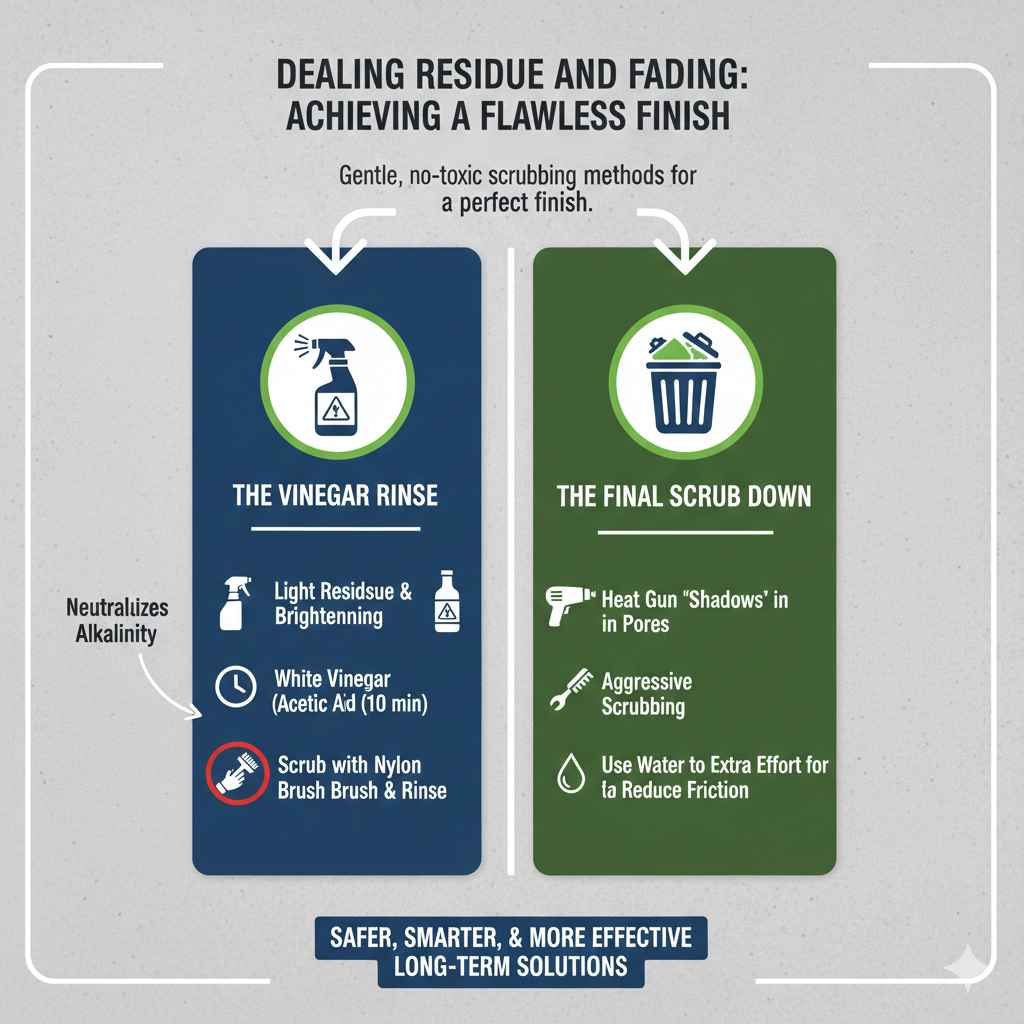
Dealing with Residue and Fading: Achieving a Flawless Finish
Once the thick paint layers are gone, you almost always face a slight discoloration or thin stain left behind. This is where our gentle, non-toxic scrubbing methods shine.
The Vinegar Rinse
For light residue, white vinegar (acetic acid) can act as a gentle brightener. After thoroughly rinsing off any baking soda paste, spray the surface with straight white vinegar.
Allow it to sit for 10 minutes, then scrub lightly with a nylon brush (not wire this time, as vinegar won’t need abrasion) and rinse clean. This helps neutralize any slight alkalinity left behind and brightens the concrete surface.
The Final Scrub Down
If you used the heat gun method, you may have some paint “shadows” deep in the pores of the concrete. Scrubbing these aggressively with a wire brush (using water to keep the friction down) is often the final key.
Remember: Concrete is porous. Chemical-free removal means you might have to work harder to get every microscopic speck out of the tiny holes, but the safety trade-off is well worth the effort.
FAQ: Non-Chemical Concrete Paint Removal
Q1: Can I just use hot water to strip paint off concrete?
A: Very hot or boiling water might help soften very fresh, thin latex paint, but it usually isn’t hot enough to break the bond on older, cured paint without significantly increasing the risk of burns during the scraping process. Heat guns are much more controlled.
Q2: Is sanding concrete paint removal better than scraping?
A: Scraping (especially after heating) removes bulk material quickly and cleanly. Sanding, while effective, generates a massive amount of fine concrete dust. If you must sand, use a wet-sanding technique or use a grinder with a dust shroud attachment for safety.
Q3: How long will it take to remove paint without chemicals?
A: It is significantly slower than using chemical strippers. For a typical 10×10 foot garage floor using the heat gun method, plan for one full weekend. Manual scrubbing methods can take much longer, depending on the paint thickness.
Q4: What is the safest non-chemical cleaner to use before stripping?
A: For general cleaning prior to stripping, a simple degreaser made from dish soap and water is safest. For lifting residue after stripping, baking soda paste or white vinegar rinse are excellent, mild, non-toxic choices.
Q5: Will a propane torch work instead of a heat gun?
A: Absolutely not recommended. Propane torches get much hotter than required and can easily scorch, crack, or even ignite surrounding materials. They pose a serious fire hazard on concrete surfaces, especially if there is any residual solvent or oil present.
Q6: Can I paint over the remaining faint residue?
A: If the residue is very light and the new paint is a darker color, you might get away with it. However, paint adheres best to bare, clean concrete. Any remaining film or shadow will likely lead to poor adhesion and future peeling of your new coat. Take the extra time to get it as clean as possible.
Conclusion: Confidence in Your Chemical-Free Cleanup
Removing old paint from concrete without resorting to harsh chemicals is completely achievable, and I promise, the satisfaction of a clean, safe job done right is worth the extra effort. You’ve seen that by harnessing the power of targeted heat, focused mechanical action, and a little elbow grease paired with simple household abrasives like baking soda, you can strip paint effectively.
Take your time, respect the process, and always prioritize safety gear. Start small, use the heat gun to test how the paint reacts, and work your way across the surface methodically. Before you know it, you’ll have that beautiful, bare concrete ready for whatever project comes next—a new stain, a fresh coat of sealer, or just a clean look. You’ve got this!