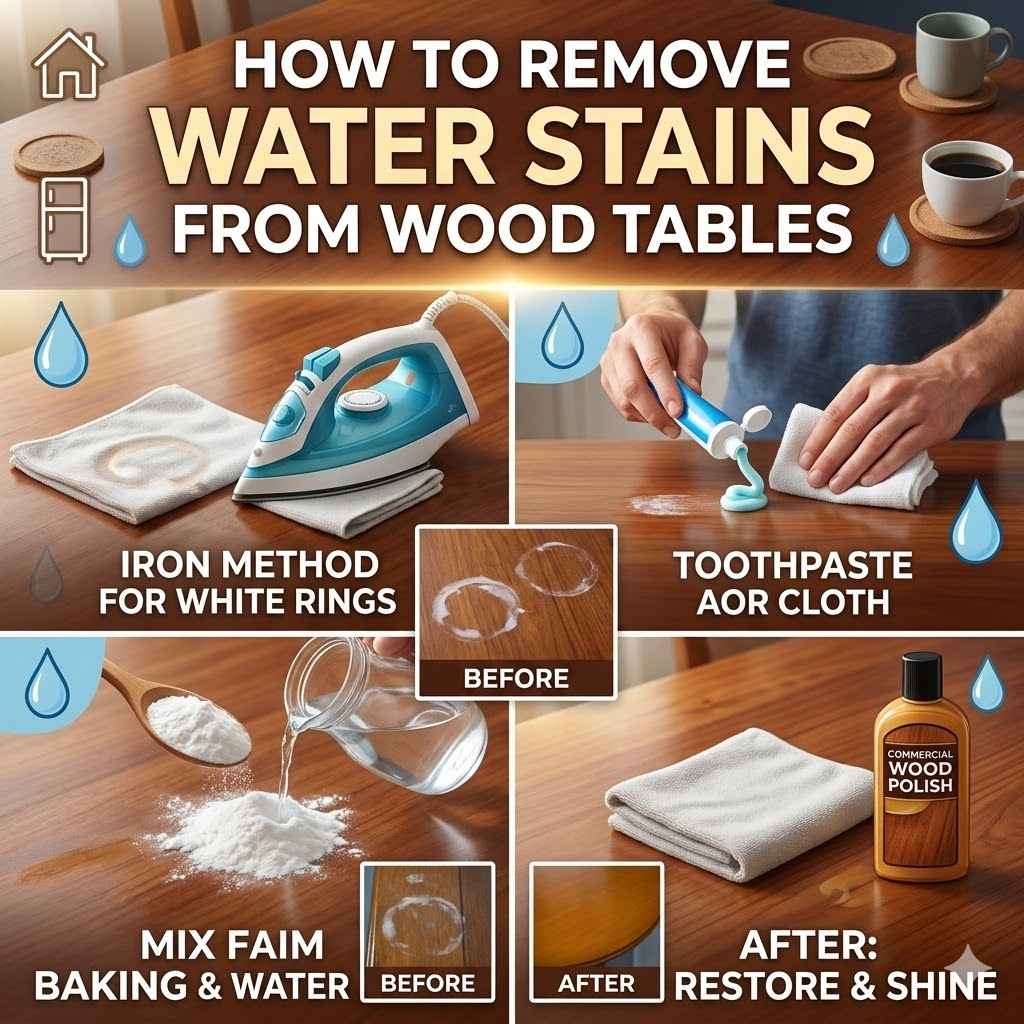
How to Remove Water Stains From Wood Tables
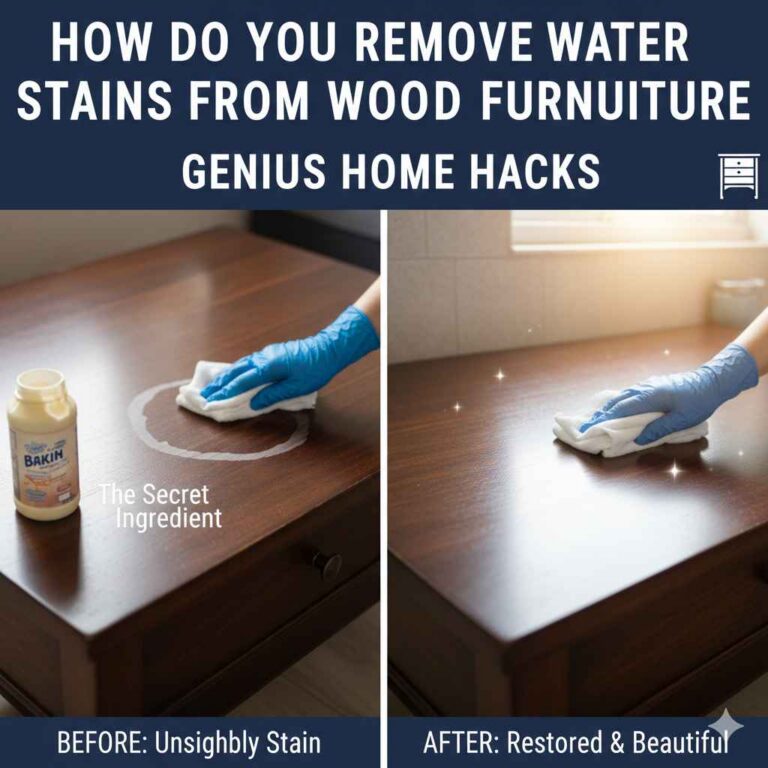
Wood tables can look beautiful, but water stains are a common problem. You might notice white rings or darker spots after a wet glass sits for too long. Dealing with these can feel tricky, especially if you’re new to furniture care.
Many people wonder how to remove water stains from wood tables without damaging the finish. Don’t worry, it’s often simpler than you think! We’ll walk through easy steps to make your table look great again.
Get ready to discover how to tackle these common blemishes.
Understanding Wood Water Stains
This section explains the common causes and types of water stains that appear on wood furniture. It covers the difference between white and dark stains and why they happen. Knowing the cause helps you pick the best cleaning method.
We will look at how moisture interacts with the wood’s finish and what signals are sent to the wood. This knowledge is key to getting the best results and protecting your valuable tables.
What Are Water Stains on Wood
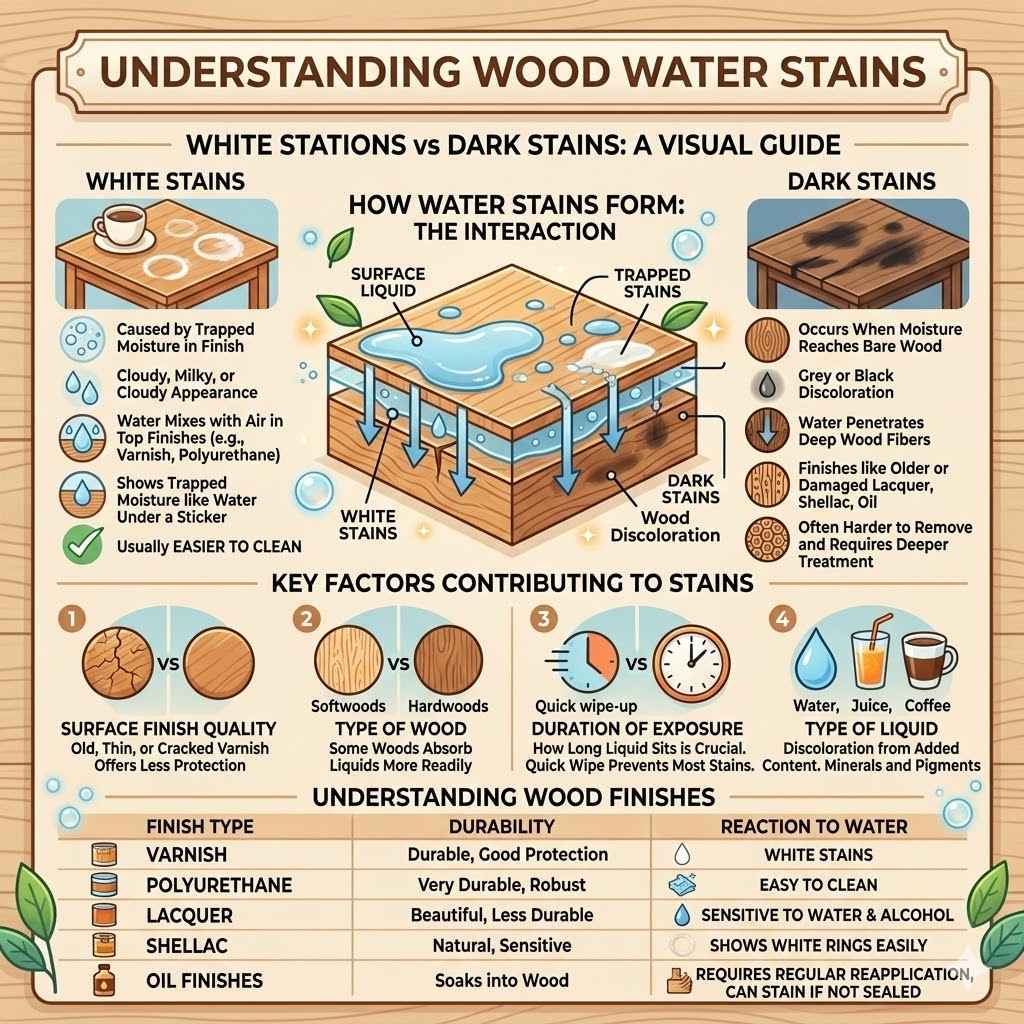
Water stains are marks left on wooden surfaces when water or other liquids spill and are not cleaned up quickly. These stains can appear in two main forms: white stains and dark stains. White stains are the most common and happen when moisture seeps into the top layers of the wood finish, like varnish, lacquer, or polyurethane.
The water traps air in the finish, making it look cloudy or milky.
Dark stains are usually more serious. They occur when water penetrates deeper, all the way to the bare wood. This can happen if the finish is already damaged or worn away.
The moisture then causes the wood itself to discolor, often turning grey or black. This type of stain indicates that the wood fibers have absorbed the liquid and possibly some discoloration from minerals in the water or from the wood itself.
Why Do Water Stains Appear
The primary reason water stains appear is the porous nature of wood and the way different finishes react to moisture. Most wood furniture has a protective coating, but this coating isn’t always perfectly waterproof. When water sits on the surface, it can find tiny cracks or pores in the finish.
For white stains, the water doesn’t reach the wood itself. Instead, it gets trapped between the wood and the protective coating. The finish might be compromised or simply not fully sealed against moisture.
Think of it like water getting under a sticker on a smooth surface. The air trapped underneath makes it look white.
Dark stains mean the water has gone through the finish and into the wood. This often happens with older furniture or areas where the finish has been scratched or worn off. The wood fibers absorb the water.
This can lead to swelling, and as the wood dries, it can leave behind a permanent dark mark. Some woods are more prone to staining than others, especially softer woods.
Factors Contributing to Stains
- Surface Finish Quality: A good quality, intact finish acts as a barrier. If the finish is old, thin, or has cracks, it offers less protection against spills, making stains more likely.
- Type of Wood: Some wood types have more open pores and absorb liquids more readily than others. Hardwoods generally resist stains better than softwoods.
- Duration of Exposure: How long the liquid sits on the wood is crucial. A quick wipe-up prevents most stains. Prolonged contact allows moisture to penetrate the finish or the wood.
- Type of Liquid: While water is common, other liquids like juice or coffee can also leave stains, sometimes with added discoloration from their content.
Types of Wood Finishes
Different finishes on wood tables react differently to water. Knowing your table’s finish helps in choosing the right cleaning method. Some finishes are more delicate and can be damaged by harsh cleaning agents.
Others are more robust and can withstand more aggressive treatments.
Common finishes include varnish, polyurethane, lacquer, shellac, and oil finishes. Varnish and polyurethane are very durable and provide good protection. They are often the easiest to clean and may only develop white stains.
Lacquer is beautiful but less durable; it can be sensitive to heat and alcohol. Shellac is a natural finish that is also sensitive to water and alcohol, often showing white rings easily. Oil finishes soak into the wood, giving it a natural look, but they require regular reapplication and can stain if not sealed properly.
Methods to Remove White Water Stains
White water stains are usually surface-level and can often be removed with simple household items. This section offers several easy-to-follow methods for tackling those frustrating white rings and spots. You’ll learn about common products you likely already have in your home that can bring your wood table back to its former glory.
These techniques focus on gently drawing the moisture out of the finish without causing further damage.
Using Household Items
Many everyday items can effectively lift white water stains from wood. These methods are gentle and work by either absorbing the moisture or slightly heating the finish to allow the trapped air to escape. It’s important to test any method on an inconspicuous area of the table first to ensure it doesn’t harm the finish.
The Hair Dryer Method
This is one of the simplest and safest methods. The gentle heat from a hairdryer can help to evaporate the trapped moisture in the finish.
- Set your hairdryer to its lowest heat setting.
- Hold the hairdryer several inches away from the stained area.
- Move the hairdryer constantly over the stain for a few minutes.
- As you heat the area, gently buff it with a soft, lint-free cloth.
- Continue this process, alternating between heating and buffing, until the stain disappears.
This method works because the low heat helps to “sweat” the moisture out of the finish. It’s like gently warming up dried glue to make it pliable again. The key is to use low heat and keep the dryer moving to avoid overheating and potentially damaging the finish.
Many users have success with this gentle approach.
The Iron and Cloth Method
Similar to the hairdryer, a warm iron can also help. The key is to use the iron on a low setting and never place it directly on the wood.
- Empty all water from your iron.
- Set the iron to its lowest heat setting.
- Place a clean, dry cloth (like a cotton t-shirt or tea towel) over the water stain.
- Briefly hold the warm iron over the cloth for about 10-15 seconds.
- Lift the iron and cloth to check the stain. Repeat if necessary, allowing the wood to cool between applications.
The cloth acts as a buffer, protecting the wood finish from direct heat. The gentle heat encourages the trapped moisture to rise out of the finish and into the cloth. This method is particularly effective for stubborn white rings that haven’t responded to other treatments.
It’s crucial to be patient and avoid overheating, which could melt or damage the finish.
The Mayonnaise or Petroleum Jelly Method
The oils in mayonnaise and petroleum jelly can help to displace the moisture and restore the finish. This is a gentle, less abrasive option.
- Apply a small amount of full-fat mayonnaise or petroleum jelly directly onto the white stain.
- Let it sit for at least an hour, or even overnight for tougher stains.
- Wipe away the excess with a clean, soft cloth.
- Buff the area to a shine.
The oils in these products work by penetrating the cloudy finish and pushing out the trapped water molecules. They act as a lubricant, helping to smooth the finish and make the stain invisible. This method is great for delicate finishes where heat might be too risky.
It often leaves the wood looking nourished as well.
The Toothpaste Method
A paste made from baking soda and toothpaste can act as a mild abrasive to gently buff out the stain.
- Mix equal parts white, non-gel toothpaste and baking soda to form a paste.
- Apply a small amount of the paste to a soft cloth.
- Gently rub the paste onto the water stain in the direction of the wood grain.
- Wipe the area clean with a damp cloth, then dry thoroughly with a separate soft cloth.
- Buff the area to restore the shine.
The mild abrasiveness of the baking soda and toothpaste helps to lift the cloudy layer of the finish without scratching deeply. It’s important to use white toothpaste and avoid colored or gel varieties, as these could potentially stain the wood. This method is best for tougher white stains that haven’t budged with gentler techniques.
The Steel Wool and Oil Method
For more stubborn white stains, superfine steel wool (grade #0000) can be used, but it requires extra care.
- Use only grade #0000 steel wool. This is the finest grade available.
- Apply a lubricant like mineral oil or lemon oil to the steel wool pad and the stained area.
- Gently rub the steel wool pad over the stain, always moving in the direction of the wood grain.
- Wipe away any residue and buff the area with a clean cloth.
The superfine steel wool acts as a very gentle abrasive to buff away the cloudy surface of the finish. The oil acts as a lubricant, allowing the steel wool to glide smoothly and preventing it from scratching the wood. This method can be very effective but carries a higher risk of damaging the finish if not done carefully.
Always start with the lightest pressure and check your progress frequently.
Commercial Wood Cleaners and Restorers
There are many products specifically designed to remove water stains from wood. These can be a convenient option if you prefer a dedicated solution.
Wood Stain Removers
- Many brands offer liquid or paste-based removers.
- These products often contain mild solvents or abrasives designed to lift stains without harming the finish.
- Always follow the product instructions carefully.
- Test in an inconspicuous area first.
Commercial stain removers are formulated to target specific types of stains. Some are specifically for white water rings, while others might address darker, deeper stains. They can save time and effort, providing a reliable solution when DIY methods are not enough.
Using a recognized brand can offer peace of mind due to their testing and formulation.
Wood Polishes and Conditioners
- These products can help restore the shine and hide minor imperfections.
- Some contain mild fillers or oils that can camouflage light water marks.
- Regular use can help prevent future stains by keeping the finish in good condition.
Wood polishes often contain natural oils or waxes that nourish the wood and fill in very fine scratches or cloudiness. They don’t necessarily “remove” the stain but can make it less visible by improving the overall appearance of the finish. They are excellent for ongoing maintenance and keeping your wood looking its best after stain removal.
How to Remove Dark Water Stains from Wood
Dark water stains indicate that the moisture has penetrated the wood itself. These are more challenging to remove than white stains and may require more intensive methods. This section covers techniques for dealing with these deeper, more serious marks.
We will explore options that involve gently bleaching the wood or sanding and refinishing.
The Salt and Oil Method
This method uses salt as a mild abrasive combined with oil to lift dark stains.
- Mix table salt with a bit of mineral oil or olive oil to create a thick paste.
- Gently rub this paste over the dark stain, moving with the wood grain.
- Allow the paste to sit for a few minutes.
- Wipe away the paste with a clean cloth.
- Buff the area to restore shine.
The salt acts as a mild abrasive that can help scrub away the discolored surface layer of the wood without being too harsh. The oil helps lubricate the process and can also help lift some of the embedded stain. This method is best for lighter dark stains and should be done with a gentle touch to avoid damaging the wood.
The Bleaching Method
For deep, dark stains, bleaching the wood might be necessary. This involves using a mild bleaching agent to lighten the discolored wood.
- Gather oxalic acid crystals and gloves.
- Mix oxalic acid with hot water according to the product’s instructions. Wear gloves and work in a well-ventilated area.
- Apply the oxalic acid solution to the stained area with a brush or cloth, ensuring it covers the stain completely.
- Let it sit for the time recommended by the product (usually a few hours).
- Rinse the area thoroughly with clean water and allow it to dry completely.
- If the stain is still visible, you may need to apply the solution again or try a stronger bleaching agent.
Oxalic acid is a wood bleach that is particularly effective at removing dark water stains, rust stains, and iron stains. It works by chemically lightening the wood fibers. It’s crucial to use protective gear, as oxalic acid can be irritating.
After bleaching, the wood may appear lighter than the surrounding area. You will likely need to reapply the wood finish to that spot.
Another type of bleach is a two-part product, often called a “wood bleach” or “bleaching kit,” that contains sodium hydroxide and hydrogen peroxide. This is generally more powerful than oxalic acid and is used for very stubborn stains. It requires careful handling and significant ventilation.
Sanding and Refinishing
If other methods fail, sanding down the affected area and refinishing is often the most effective solution for dark stains.
- Lightly sand the stained area with medium-grit sandpaper (e.g., 120-grit) to remove the damaged wood.
- Progress to finer grits (e.g., 180-grit, then 220-grit) to smooth the surface. Always sand in the direction of the wood grain.
- Wipe away all dust with a tack cloth or a slightly damp cloth.
- Apply a wood stain that matches your table’s original color.
- Once the stain is dry, apply a protective topcoat, such as polyurethane or varnish, to match the rest of the table.
Sanding removes the stained wood layers entirely, giving you a fresh surface to work with. This method is very effective but requires care to ensure the sanded area blends seamlessly with the rest of the table. Matching the stain and finish can be tricky, so it might be best to refinish the entire tabletop for a uniform look if the stain is extensive or difficult to match.
Understanding Sandpaper Grits
- Coarse grits (e.g., 60-80) are for removing a lot of material quickly, like old finishes or deep damage.
- Medium grits (e.g., 100-150) are good for initial sanding to remove stains or smooth out rough areas.
- Fine grits (e.g., 180-220) are for smoothing the wood surface after coarser grits and preparing it for finishing.
- Superfine grits (e.g., 320+) are used for final smoothing and between coats of finish.
When sanding to remove stains, you typically start with a grit that can remove the stain without digging too deep. For dark water stains, a 120-grit sandpaper might be sufficient to get below the stain. Then, you would gradually move to finer grits like 180 and 220 to ensure a smooth surface before applying any new stain or finish.
This step-by-step approach ensures a professional-looking repair.
Preventing Future Water Stains
Prevention is always better than cure. This section provides practical tips to protect your wood tables from water damage in the future. By taking a few simple precautions, you can keep your furniture looking beautiful for years to come and avoid the need for stain removal.
Regular Maintenance and Care
Keeping your wood table’s finish in good condition is the first line of defense against water stains. A well-maintained finish acts as a robust barrier.
Cleaning Habits
- Always wipe up spills immediately. Use a soft, absorbent cloth.
- Avoid using harsh chemicals or abrasive cleaners on your wood table, as they can damage the finish.
- Dust your table regularly with a soft, dry cloth.
Immediate action is key. A spill that is wiped up within minutes is unlikely to cause any damage. For everyday cleaning, a slightly damp cloth followed by a dry one is usually sufficient.
This removes dust and light grime without introducing excess moisture.
Periodic Re-finishing or Oiling
- Depending on the type of finish, you may need to reapply protective layers periodically.
- For oil finishes, this might involve applying a coat of furniture oil every few months.
- For varnished or polyurethaned surfaces, a quality furniture polish or wax can help maintain the protective layer and add a barrier against moisture.
Re-applying finishes or using protective waxes can help fill in minor scratches and reinforce the protective layer of your table. This proactive approach makes the surface more resistant to liquids and everyday wear and tear. Check the manufacturer’s recommendations for your specific furniture’s finish to know when and how to reapply or condition it.
Using Protective Accessories
Simple accessories can make a big difference in protecting your wood surfaces.
Coasters and Trivets
- Always use coasters for glasses, mugs, and bottles.
- Use trivets or hot pads under hot dishes coming from the stove or oven.
- These simple items prevent condensation and heat from directly contacting the wood surface.
Coasters and trivets are your best friends when it comes to preventing water rings. They create a physical barrier that stops moisture and heat from reaching the wood. Make them readily available in the areas where drinks and hot items are usually placed, like living rooms and dining rooms.
Their use is an easy habit to adopt that saves a lot of potential trouble.
Tablecloths and Placemats
- Consider using tablecloths for everyday meals or special occasions.
- Placemats offer targeted protection for individual place settings.
- These offer a larger protective area, especially useful for children’s activities or messy meals.
A tablecloth can protect the entire surface of your table during meals or activities. It’s a great way to guard against spills, scratches, and heat marks. For less formal protection, placemats can cover the areas where plates and glasses are placed, offering localized defense.
Choosing water-resistant materials can further enhance their protective capabilities.
FAQ
Question: Can I remove any water stain from a wood table
Answer: While many common water stains, especially white ones, can be removed with simple methods, very deep or old dark stains might be permanent and require sanding and refinishing. Always assess the severity of the stain first.
Question: How do I know if my wood table is sealed
Answer: Most modern wood tables have a protective sealant like varnish or polyurethane. You can test this by dropping a small amount of water on the surface. If it beads up, the sealant is intact.
If it soaks in quickly, the sealant may be worn or absent.
Question: Is it safe to use baking soda to remove stains
Answer: Yes, baking soda can be safe when used in moderation as a mild abrasive, especially when mixed with toothpaste or oil for white stains. However, always test in an inconspicuous area and use gentle pressure to avoid scratching the finish.
Question: What is the best method for dark water stains
Answer: Dark water stains often require more intensive treatment. Bleaching with oxalic acid or a commercial wood bleach can be effective for lighter dark stains. For stubborn stains, sanding down to the bare wood and refinishing is usually the most reliable solution.
Question: How often should I condition my wood table
Answer: For oil finishes, conditioning might be needed every few months. For varnished or polyurethaned surfaces, a good quality furniture polish or wax applied every 6-12 months can help maintain the finish and provide protection against moisture and minor damage.
Wrap Up
You now have clear steps on how to remove water stains from wood tables. From simple household tricks for white rings to more involved methods for dark marks, these techniques restore beauty. Prioritizing prevention with coasters and quick spill clean-ups is key.
Your wood tables can look their best with a little care and the right approach.